Chengdu J-10 Multirole Fighter Air Craft News & Discussions

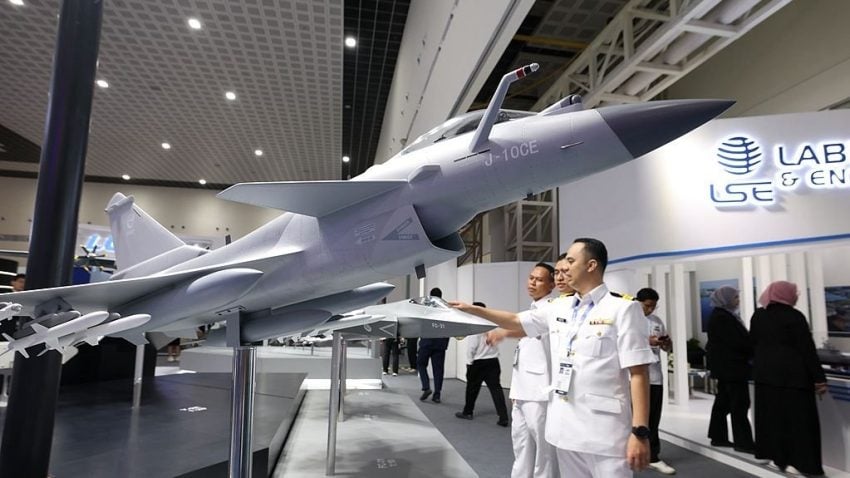
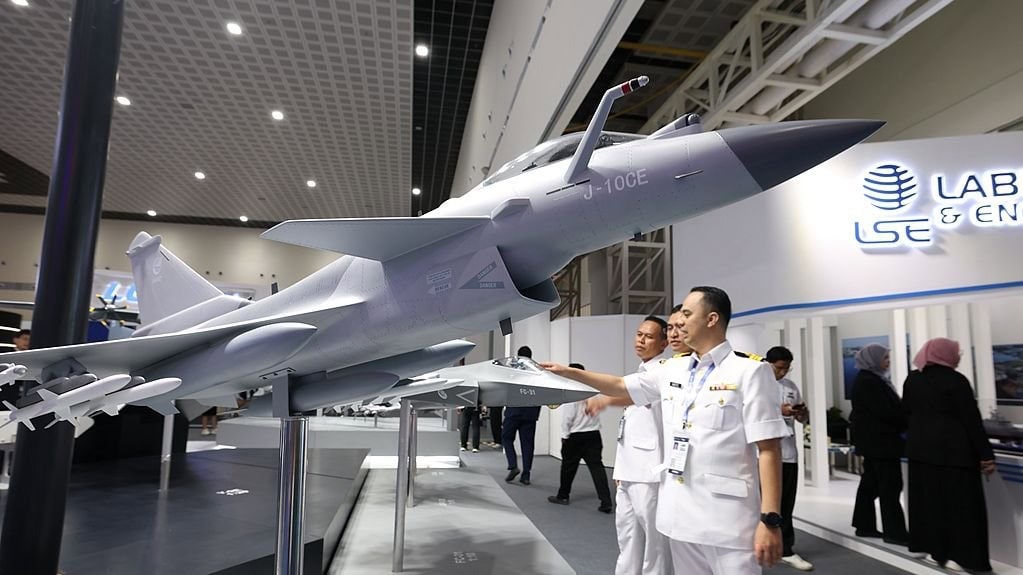
Ok, but - what if any, prospects is there for a future J10D variant, i.e. a future development of the platform, or is the J10CE the last version ?
Please discuss related issues in the correct thread.

Regarding the future development of the J-10 series fighter jets, until official information is released by AVIC/CAC/PLA, we can only offer personal speculation.

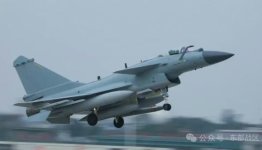
1. The J-10C fighter jet may be the last J-10 series fighter aircraft to be mass-produced and deployed by the PLAAF.

2. The J-10 series fighter jet may or may not continue to be developed into improved versions in the future, depending on sales and development trends in the international export market. Possible development directions include:
A two-seat version based on the J-10C.​
An advanced version based on the WS-15 engine instead of the WS-10B engine.​
A stealth version.​
But, these are merely speculations. It is very, very difficult for them to actually materialize. ------ The PLAAF has no interest in these versions of the J-10 fighter jet, and the international customers of the J-10 fighter jet lack the capability to support CAC in producing such products.
So, a more realistic speculation is that the J-10C might appear in a version with minimal upgrades (for example, directly transplanting some mature equipment from 5th/6th-generation fighter jets or UADF/UCAV/CCA aircraft onto the J-10CE fighter jet).

3. The WS-10B engine itself has limited capabilities. it is difficult for it to provide much additional power to drive the generator to produce electricity. As is well known, EW systems consume a great deal of electrical power; their power consumption is directly proportional to their EW capabilities.
If a J-10C fighter jet platform based on the WS-10B engine were to be modified into a dedicated EW fighter, it would inevitably have to make significant sacrifices in terms of other payloads and range, and the operational capabilities of the EW system would be very limited. ------ It did not meet the requirements of the PLAAF, other international customers were unable to afford its high procurement costs.

Theoretically, the production line for the J-10CE fighter jet could be exported in the next few years. If a country were to purchase the complete production line and technology for the J-10CE from CAC, its future development would be unpredictable.
 
To view this content we will need your consent to set third party cookies.
For more detailed information, see our cookies page.
 
  • Like
Reactions: TAC
To view this content we will need your consent to set third party cookies.
For more detailed information, see our cookies page.
 
  • Like
Reactions: TAC
Is there is any chance of twin seat version for latest J10c
 
To view this content we will need your consent to set third party cookies.
For more detailed information, see our cookies page.

Is it actually the YJ-12E?
This is just a weighted projectile used for daily training.

Is there is any chance of twin seat version for latest J10c
Currently, there is no two-seat version of the J-10C fighter jet based on modifications to the existing design.

The PLAAF does not have a requirement for such an aircraft.

If a foreign customer had such a requirement and was willing to bear the associated costs, CAC might develop it. However, this possibility is very low.
 

Breakthrough in Chinese Airpower: J-10C Fighter Spotted Carrying YJ-21E Hypersonic Missile​

First confirmed sighting of China’s J-10C multirole fighter carrying the YJ-21E hypersonic anti-ship ballistic missile signals a major shift in Indo-Pacific strike doctrine and airborne A2/AD warfare.​

1000605564-750x430.jpg
 
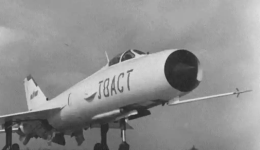
Historical stories: J-8ACT
1766815157108.png
In 1982, China began developing the J-8ACT (ACT = Active Control Technology) technology demonstrator based on the J-8 fighter jet. It was used to validate active control technology for aircraft.

On December 8, 1988, the J-8ACT completed its maiden flight.
On January 28, 1989, the J-8ACT successfully completed a validation flight of its fly-by-wire control system.
On June 24, 1990, the J-8ACT successfully completed a validation flight of its digital fly-by-wire control system.
On April 23, 1991, the J-8ACT crashed during a routine test flight; the pilot ejected and survived.

Only one J-8ACT was ever manufactured by China. Afterward, it permanently disappeared from public view.

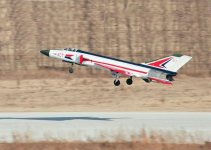
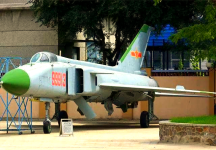
Subsequently, China developed a new J-8II ACT based on the J-8II. This aircraft successfully completed its maiden flight on December 29, 1996. It completed all test flights and was retired in 1999, and is now housed in the SAC Museum.
1766813996379.png
1766815657538.png
However, the J-8ACT provided us with invaluable experience. The technologies validated through the J-8ACT directly paved the way for the successful development of later Chinese fighter jets such as the J-10 and J-20.

Let us pay tribute to the heroes of history!
 
Last edited:
To view this content we will need your consent to set third party cookies.
For more detailed information, see our cookies page.


Basically the same capability that Israel has to loft ALBM into Iran in the recent conflict, albeit with higher terminal speed that makes it more difficult to intercept.
 

China Officially Claims First Combat Success of J-10CE Fighter in 2025

Jan 13, 2026, 03:21 AM IST
The J-10CE is an all-weather, single-engine, single-seat, multi-role fighter jet developed by China. As per the Xinhua report, the achievement is expected to drive more domestic aviation hardware toward the international market.

New Delhi: Even as relations between the two Asian capitals continued to warm, Beijing announced that Chinese-made fighter jets exported to Pakistan had achieved combat success, shooting down multiple aircraft with zero losses during an engagement in mid-May 2025.

On January 9, China's State Administration of Science, Technology and Industry for National Defence released its "Top Ten News Stories of the National Defence Science and Technology Industry for 2025," listing the J-10CE fighter's combat debut. It didn’t mention the battlefield, but the state media which reported on the press release gave more details.

According to the Xinhua report dated January 12, the J-10CE export fighter "successfully shot down multiple enemy aircraft while sustaining zero losses" during an aerial engagement in mid-May 2025. Chinese officials stated the combat results demonstrate that domestically produced aviation equipment is "practical, effective, and highly competitive compared to similar foreign equipment."

The J-10CE is an all-weather, single-engine, single-seat, multi-role fighter jet developed by China. As per the Xinhua report, the achievement is expected to drive more domestic aviation hardware toward the international market.

Pakistan operates J-10C fighters supplied by China, according to the Pentagon's December 2025 report on Chinese military developments. It is so far the only country to which China has exported these jets, numbering around 36 since 2020.

In April 22, terrorists killed 26 people in the tourist town of Pahalgam, which New Delhi blamed on Pakistan-based terror groups India responded on May 7 with “Operation Sindoor,” launching drone and missile strikes against terror infrastructure in Pakistan-occupied Kashmir and mainland Pakistan. There was retaliation and counter-retaliation for four days, before ceasefire was announced on May 10.

During the clashes, Pakistan deployed Chinese-origin military equipment and claimed to have shot down Indian military planes. The annual report of US-China Economic and Security Review Commission stated “Pakistan’s military success over India in its four-day clash showcased Chinese weaponry”.

So far, India has only said that there have been losses, but didn’t give any numbers.

Meanwhile, a Communist Party of China delegation led by Vice-Minister Sun Haiyan met Bharatiya Janata Party (BJP) leaders at party headquarters on January 12, in the first such encounter since the 2020 Galwan clash. The delegation, including Chinese ambassador Xu Feihong, is scheduled to meet Rashtriya Swayamsevak Sangh (RSS) leaders on January 13 and a Congress delegation led by Salman Khurshid in coming days.

BJP general secretary Arun Singh and the party's foreign affairs cell head Vijay Chauthaiwale were part of the interaction, with the former stating discussions focused on enhancing inter-party communications. The meetings follow a 2024 thaw that saw China resume the Kailash Mansarovar Yatra and reinstate direct flights between the two countries.

The Communist Party of China (CPC) and BJP last met almost six years ago. In January 2011, a BJP delegation travelled to China, and in 2009, BJP and RSS leaders visited Beijing. The current visit comes as India negotiates trade issues with the United States, which has imposed a 50% tariff on Indian goods.

The renewed engagement comes amid rhetoric over lingering territorial disputes.

At a January 12 press conference, China's foreign ministry spokesperson Mao Ning defended Chinese infrastructure projects in Shaksgam Valley, stating the territory "belongs to China" and that construction there is "fully justified."

Her remarks responded to India's criticism of Chinese infrastructure development in the area. India considers Shaksgam Valley to be Indian territory and has reiterated non-recognition of the China-Pakistan Economic Corridor (CPEC).

The Ministry of External Affairs spokesperson said India has never recognised the China-Pakistan boundary agreement signed in 1963, calling the agreement "illegal and invalid." India also reserved the right to take necessary measures to safeguard its interests in the region.

Mao said the 1963 boundary agreement was within the sovereign rights of China and Pakistan, and that neither the agreement nor CPEC affects China's position on the Kashmir issue.
 
Last edited:

China confirms J-10CE fighter scored first combat success in India-Pakistan war​

Published on: January 13, 2026 4:48 AM
Untitled-4
China has confirmed that its J-10CE fighter jet achieved first combat success during a brief India-Pakistan military conflict in May 2025, Chinese state news agency Xinhua reported on Monday.

The intense, four-day standoff saw Pakistan and India attack each other with missiles, fighter jets, drones and artillery, killing nearly 70 people on both sides.

Islamabad claimed victory in the standoff, saying it had shot down six Indian aircraft, including French-made Rafale jets. India acknowledged losses but did not specify a number.

Citing China’s State Administration of Science, Technology and Industry for National Defense, Xinhua reported that Chinese J-10CE jets shot down “multiple aircraft” in mid-May, without naming any country.

“In mid-May, the country’s export-oriented J-10CE fighter jet achieved its first combat victory, shooting down multiple aircraft in air combat without suffering any losses itself,” the state news agency said.

“The J-10CE’s combat success abroad fully demonstrates that domestically produced aviation equipment is practical and easy to use, possessing strong competitiveness compared to similar foreign equipment, and can also drive other domestically produced aviation equipment to enter the international market.”

The J-10CE fighter jet is an all-weather, single-engine, single-seat, multi-role fighter jet developed by China. The India-Pakistan conflict in May offered the world a first real glimpse into how advanced Chinese military technology performs against proven Western hardware.

A rising military superpower, China hasn’t fought a major war in more than four decades but has raced under President Xi Jinping to modernize its armed forces, pouring resources into developing sophisticated weaponry and cutting-edge technologies. It has also extended that modernization drive to Pakistan, long hailed by Beijing as its “ironclad brother.”

Defense Minister Khawaja Asif this month said Islamabad has witnessed a surge in aircraft orders after the May standoff with India and, if materialized, they could end the country’s reliance on the International Monetary Fund (IMF).

“Right now, the number of orders we are receiving after reaching this point is significant because our aircraft have been tested,” Defense Minister Asif told the media.

“We are receiving those orders, and it is possible that after six months we may not even need the IMF.”

Pakistan markets the Chinese co-developed JF-17, also flown during the May conflict, as a lower-cost multi-role fighter and has positioned itself as a supplier able to offer aircraft, training and maintenance outside Western supply chains.

The JF-17s have figured in a deal with Azerbaijan and the $4 billion weapons pact with the Libyan National Army. Pakistan is also eyeing a defense pact with Bangladesh that could include the Super Mushshak training jets and JF-17s, as ties improve with Dhaka.


Pentagon Confirms China Supplied J-10C To Pakistan: How The Fighter Jets Are Changing South Asia’s Air Power Post Op Sindoor​

A US defence report has confirmed long-suspected J-10C fighter deliveries to Pakistan, showing how Chinese aircraft and PL-15 missiles are changing South Asia’s air combat balance after Operation Sindoor.

By: Tarique Anwar|Last Updated: Jan 13, 2026, 03:21 AM IST

1890436-pakistan-j10c.jpg

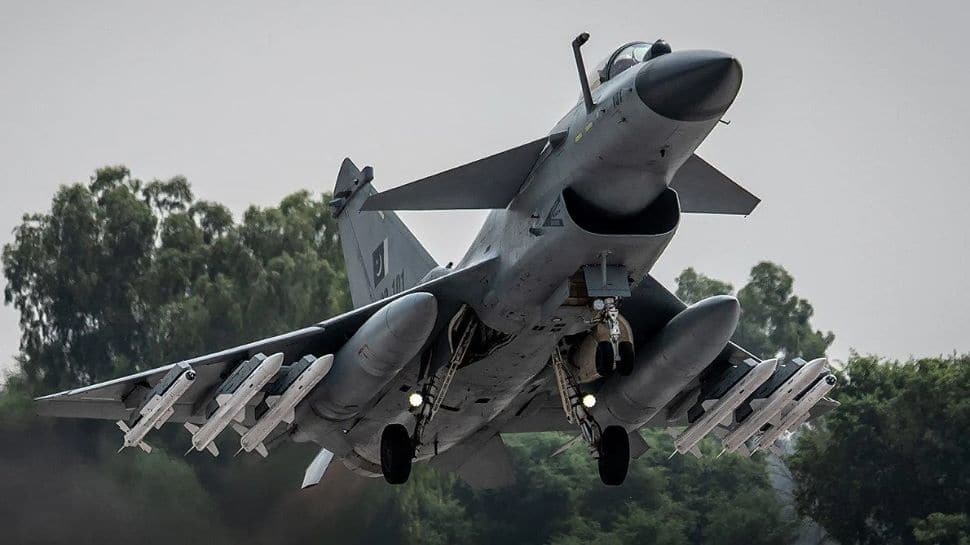
Pakistan Air Force J-10C fighter jet. (Photo: PAF)

New Delhi: The United States Department of Defense has officially confirmed that China supplied Pakistan with 36 Chengdu J-10C multirole fighter jets since 2020. The disclosure puts precise numbers on what had long circulated as informed speculation across military and security circles in South Asia.

The revelation was made by the Pentagon’s 2025 China Military Power Report, a congressionally mandated assessment submitted in December 2025. It has come at a time when regional air power equations are under scrutiny following the May 2025 India-Pakistan aerial confrontations, which were codenamed as Operation Sindoor.

The report states that by May 2025, Beijing had already delivered 20 J-10C aircraft to Islamabad under two separate orders placed since 2020. The remaining jets are scheduled for completion and delivery by early 2026. This effectively completes Pakistan’s first full J-10C fleet and establishes Islamabad as the only export operator of the aircraft anywhere in the world.

By formally acknowledging these transfers, the Pentagon has validated years of intelligence assessments and highlighted how Beijing’s defence exports have evolved into a strategic tool with direct geopolitical consequences. In South Asia, where air combat revolves around long-range missiles, sensor fusion and rapid engagement timelines, the arrival of the J-10C paired with the PL-15 beyond-visual-range missile has altered operational calculations along the Line of Control (LoC).

The report situates this development within the broader context of Operation Sindoor, during which Pakistan claimed that J-10C fighters armed with PL-15 missiles engaged Indian Air Force Rafale jets at extreme ranges. Regardless of competing narratives, these claims placed the Chinese platform under an international spotlight and led to fresh assessments across air forces from West Asia to Southeast Asia.

The Pentagon’s analysis also places the J-10C programme within China’s rise as the world’s fourth-largest arms exporter. It says that Beijing is increasingly offering aircraft that combine advanced avionics and long-range weapons at prices well below those of Western fighters, while avoiding the political conditions and export restrictions that often accompany US and European systems.

China’s decision to supply the J-10C only to Pakistan shows a deliberate approach in which Islamabad serves multiple roles at once. Pakistan serves as a close strategic partner and operates Chinese combat aviation technology in a high-risk environment. It also acts as a real-world demonstration platform, showing the capabilities of these aircraft under contested conditions.

The pairing of the J-10C with the PL-15 missile extends Pakistan’s engagement reach and compresses response times for opposing forces. This change reduces traditional warning margins and raises escalation risks in a region already prone to rapid military decision-making under pressure.

From an industrial standpoint, the Pentagon’s disclosure shows how China has moved beyond ad-hoc arms sales toward a more structured export model. That model relies on domestic supply chains, competitive pricing and platforms that have now entered real operational use rather than remaining purely theoretical offerings.

Taken together, the confirmed deliveries, the aircraft’s reported use during Operation Sindoor and the attention they have generated internationally point to a moment where Chinese fighter aircraft are being judged less on promise and more on perceived battlefield relevance.

Pakistan’s Role As The J-10C’s Primary Operator​

Pakistan’s emergence as the sole operator of the J-10C shows a change in its air force doctrine. For the first time, the Pakistan Air Force (PAF) has fielded a fourth-generation-plus fighter designed around long-range and network-centric combat rather than traditional close-range engagements.

Developed by the Chengdu Aircraft Corporation, the J-10C is a single-engine delta-canard fighter equipped with an Active Electronically Scanned Array (AESA) radar, integrated electronic warfare systems and modern datalinks. The export version flown by Pakistan, designated J-10CE, uses the WS-10 Taihang turbofan engine, reducing reliance on Russian powerplants and improving overall fleet sustainability.

Pakistan’s decision to place orders for the aircraft in 2020 coincided with rising tensions with India after the Balakot crisis and India’s induction of the Rafale. The acquisition was aimed at narrowing qualitative gaps rather than competing on fleet size.

The first J-10C aircraft arrived in Pakistan in March 2022. Deliveries accelerated after 2023, and by mid-2025, the PAF had activated at least two frontline squadrons, positioning them across important sectors covering Punjab, Kashmir and approaches from the Arabian Sea.

The Pentagon’s report states that Pakistan has become the main recipient of Chinese combat aircraft and the only country operating the J-10C. This highlights Islamabad’s role as more than just a customer. It emphasises Pakistan’s position as an operational proving ground for China’s most advanced export-grade fighter.

Cost has also played a role in the platform’s appeal. The J-10C is widely assessed to cost between $40-50 million per unit, while India’s Rafale acquisitions have been valued at roughly $120 million per aircraft once weapons, support and lifecycle expenses are included.

Pakistan’s air leadership has described the J-10C as a strategic equaliser that bridges older fleets and future ambitions while supporting deterrence objectives focussed on maintaining parity rather than superiority. The programme has also strengthened wider Sino-Pakistani defence cooperation, complementing joint work on the JF-17 Thunder, unmanned systems and shared training plans.

J-10C Fighter Profile In Operational Terms​

In its export J-10CE configuration, the Chengdu J-10C is a single-seat multirole combat aircraft designed for air superiority and precision strike missions. It measures roughly 15.7 metres in length, with a wingspan close to 9.75 metres and a height of about 4.78 metres. The aircraft has an empty weight of around 9,750 kilograms and a maximum take-off weight near 19,000 kilograms.

Using a WS-10 Taihang turbofan engine, the fighter is estimated to generate about 86 kilonewtons of thrust in dry mode and up to 113 kilonewtons with afterburner. It is capable of speeds exceeding Mach 2, with a combat radius of approximately 1,150 kilometres depending on mission profile and a ferry range of around 3,100 kilometres.

The aircraft operates at altitudes above 18,000 metres and features a high rate of climb estimated at roughly 254 metres per second. Its avionics suite centres on the KLJ-7A AESA radar, supported by an integrated digital datalink and internal electronic countermeasure systems.

The J-10C carries up to 11 hardpoints, supporting a payload of around 6,000 to 7,000 kilograms. Its air-to-air arsenal includes short-range infrared-guided missiles such as the PL-10 and the PL-15 active radar-guided missile for beyond-visual-range engagements. The aircraft also supports precision-guided bombs, anti-ship weapons and laser-guided munitions, along with an internal 23-millimetre cannon for close-range combat.

Defensive features include radar warning receivers, missile approach warning systems and chaff and flare dispensers, all managed through a digital fly-by-wire flight control system. The export configuration flown by Pakistan includes avionics and electronic warfare adjustments aligned with customer agreements.

The Pentagon confirmed that completing Pakistan’s J-10C fleet is more than a normal arms delivery. It shows a new way air power is being developed, sold and used in South Asia, with effects reaching far beyond the region.


China officially confirms J-10CE fighter jets’ first combat victory​

By Our Correspondent
11:56 Am | Jan 13, 2026

China Officially Confirms J 10ce Fighter Jets First Combat Victory

BEIJING – China has officially confirmed that its J-10CE fighter jet achieved its first combat victory in May of last year, downing multiple enemy aircraft without suffering any losses.

The announcement by China’s National Defense Science and Technology Industry Bureau marks the first time a Chinese government agency has officially reported the J-10CE’s success in combat.

While the statement referred to the events of May 2025, it did not specifically mention the India-Pakistan conflict.

Following the May skirmishes, Pakistan’s military claimed to have shot down six Indian aircraft, including Rafales. Later, in November, Prime Minister Shehbaz Sharif, during a speech at the UN General Assembly, asserted that seven Indian aircraft were downed.

US President Donald Trump also referred to the loss of seven to eight aircraft during the May conflict, while India’s Chief of Army Staff, General Anil Chauhan, acknowledged the damage to their aircraft but did not specify the exact number.

In a statement released by China’s State Administration of Science, Technology, and Industry for National Defense (SASTIND) on Monday, it was confirmed that J-10CE jets shot down multiple enemy aircraft during aerial combat in May without any damage to themselves.

This combat success has attracted the attention of international defense experts and the global aviation industry.

The J-10CE is a fully domestically produced, all-weather, single-engine, multi-role fighter aircraft capable of air superiority, interception, and various types of strike operations.

The aircraft is equipped with advanced radar, avionics, and weapons systems, positioning it as a reliable and competitive contender in the international defense market.

Chinese authorities have stated that the country’s aviation industry has rapidly advanced in both civil aviation and military exports in recent years.

The J-10CE, along with other Chinese military aviation platforms, has been showcased at major international airshows, strengthening China’s presence in the global defense industry.

 
Pakistan is fortunate to have a such an ironclad brother in china, and vice versa.
 

Users who are viewing this thread

Back
Top