Navigation
Install the app
How to install the app on iOS
Follow along with the video below to see how to install our site as a web app on your home screen.
Note: This feature may not be available in some browsers.
More options
Style variation
You are using an out of date browser. It may not display this or other websites correctly.
You should upgrade or use an alternative browser.
You should upgrade or use an alternative browser.
Chengdu J-10 Multirole Fighter Air Craft News & Discussions
- Thread starter SiliconBit (silicon0000)
- Start date
More options
Who Replied?


Funny & nice but not entirely correct since the real one is an original J-10 (not even a J-10A) and the model is a J-10B


Beijingwalker
VIP Member

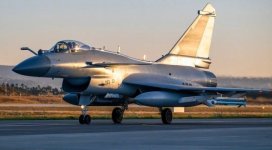
View attachment 196892
World’s Longest Range Air-to-Air Missile Integrated Onto China’s J-10C Fighters
This is NOT confirmed.
Beijingwalker
VIP Member
China claims J-10CE fighter jets defeated Eurofighters 9-0 in mock battles
The Chinese fighter jet features improved engines, an active electronically scanned array (AESA) radar system and advanced air-to-air weaponry.ByBojan Stojkovski
MilitaryMay 23, 2026 12:21 PM EST

Reported battlefield success boosts profile of China’s J-10CE fighter.Ministry of National Defense of the People's Republic of China
Reports in Pakistani media suggested the simulated encounters were carried out during the “Zilzal-II” joint air exercise held in Qatar in January 2024. According to those reports, Pakistan Air Force J-10CE fighter jets faced Qatar’s Eurofighter Typhoons in a series of mock aerial engagements and emerged undefeated.
The coverage claimed the Chinese-made aircraft secured victories in all five close-range dogfights, while also winning four beyond-visual-range combat scenarios. Media outlets across several Gulf countries later published reports that appeared to align with the results recently referenced by China’s state broadcaster CCTV.
Developed by the Chengdu Aircraft Corporation beginning in the 1980s, the J-10 was designed as a single-engine, multi-role fighter aircraft intended to strengthen China’s domestic air combat capabilities.
J-10C a cornerstone of the China’s modern air force
China introduced the upgraded J-10C fighter in 2017, marking a major step forward in the country’s military aviation programme. Classified as a 4.5-generation combat aircraft, the jet quickly became one of the leading products of China’s defence sector, the South China Morning Post writes.The aircraft features improved engines, an active electronically scanned array (AESA) radar system and advanced air-to-air weaponry, including the PL-10 and PL-15 missile systems. Beijing later launched the export-oriented J-10CE variant, which entered the international market in 2020 as China sought to expand its presence in global arms sales.
Meanwhile, the Eurofighter Typhoon was jointly developed by Britain, Germany, Italy and Spain during the 1980s and officially entered operational service across several European air forces in 2007. According to Pakistani media, Qatar operates the more advanced Tranche 3A version of the Eurofighter Typhoon. Analysts said the reported exercise results offered a rare glimpse into the combat performance of China’s J-10C fighter platform.
US defence publication Military Watch noted that the disclosure by CCTV underscored the growing maturity of China’s fourth-generation fighter technology. The outlet also argued that the reported outcome of the drills could further weaken the Eurofighter Typhoon’s position on the global arms market, particularly at a time when several operators, including countries involved in developing the aircraft, are gradually reducing their dependence on the jet.
Latest J-10CE performance may attract new international buyers
Military analysts said the reported results of the simulated air battles could improve the international appeal of China’s J-10CE fighter jet and strengthen its export prospects. At the same time, experts noted that geopolitical considerations may still make some countries cautious about purchasing Chinese military equipment, despite the aircraft’s reported performance.Analysts believe the fighter is most likely to attract interest from buyers in regions such as Southeast Asia, Central Asia and the Middle East, where governments are increasingly looking to diversify their defence suppliers and modernise their air forces at lower costs compared to many Western alternatives.
The latest claims surrounding the J-10CE come about a year after the fighter’s reported debut in real combat conditions. In May 2025, Pakistan said its Chinese-made fighter jets had downed several Indian aircraft during aerial clashes, including at least one French-built Rafale fighter.
If confirmed, the incident would represent the first known air-to-air victory achieved by a Chinese fighter jet in active combat, as well as the first reported combat loss involving a Rafale aircraft. Pakistan remains the only foreign country publicly known to operate the J-10C series, alongside China itself.
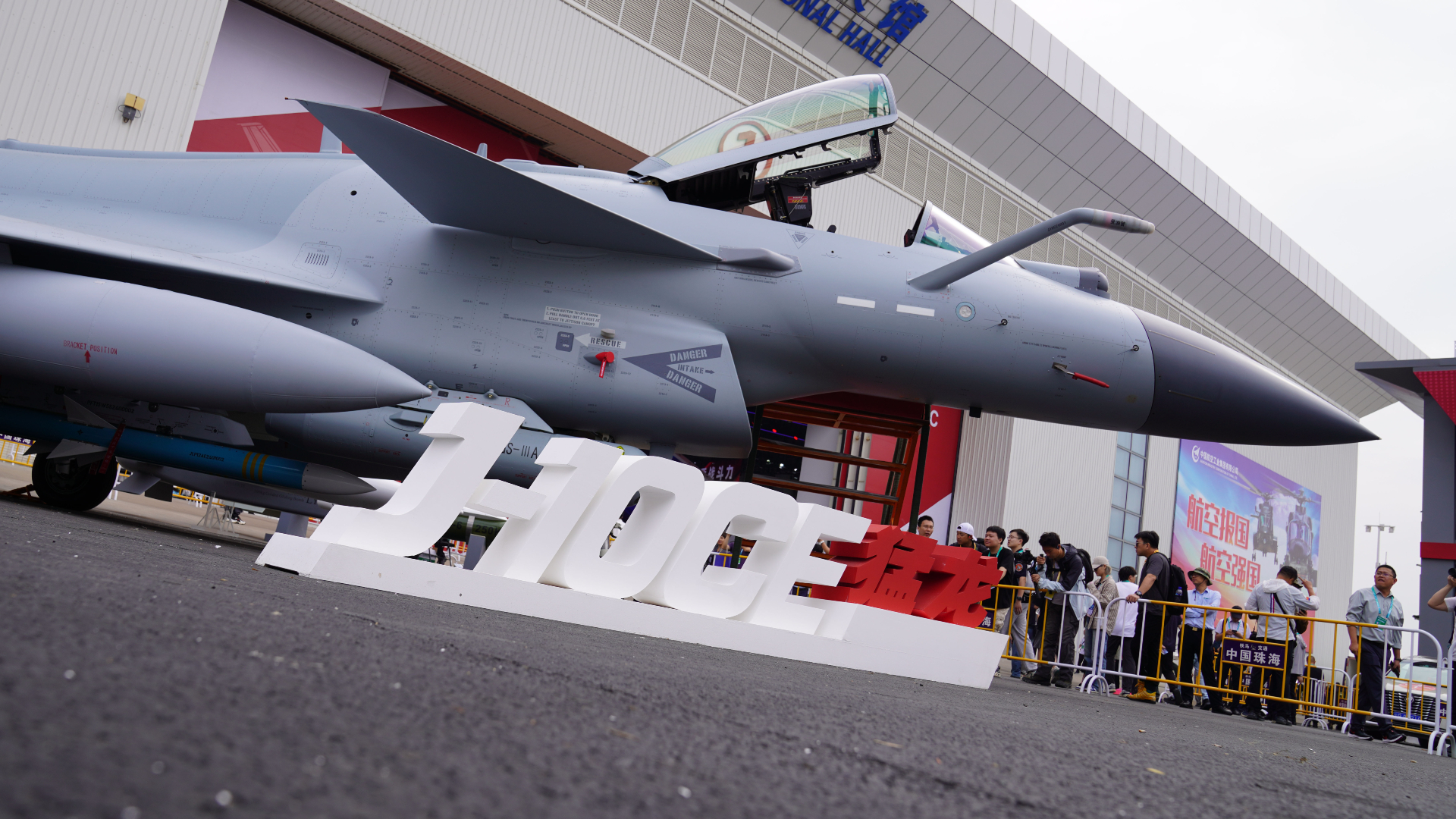
China’s J-10CE fighter jets defeated Eurofighters in mock battles: Report
Chinese state media says the country’s J-10CE fighter jet defeated Eurofighter Typhoons in nine simulated air combat engagements conducted in 2024.
 interestingengineering.com
Beijingwalker
VIP Member
China’s J-10CE Fighter Jet Scores Decisive Victory
A series of joint air exercises in Qatar saw China’s J-10CE outperform the Eurofighter Typhoon, raising questions about global military balance and export prospects.May 24, 2026
- Reporters confirmed the Pakistan Air Force's J-10CE fighter jet achieved a 9-0 victory over Qatar's Eurofighter Typhoons during the 'Zilzal-II' joint exercise.
- The J-10CE is the export variant of China's 4.5-generation J-10C fighter, featuring AESA radar and advanced missiles, introduced internationally since 2020.
- Chinese and Pakistani sources highlighted the exercise as evidence of J-10CE's capabilities and PAF's training, though Western analysts urge caution about undisclosed exercise conditions.
The news, first highlighted by CCTV and amplified by outlets such as the South China Morning Post and EurAsian Times, has sparked widespread debate and analysis in military circles. While Chinese state media celebrated the result as evidence of the J-10CE’s prowess, some Western analysts and defense commentators have urged caution, noting that the full details of the exercise—including the precise rules of engagement and pilot experience levels—have not been publicly disclosed.
The J-10CE is the export version of China’s J-10C, a 4.5-generation, single-engine multirole fighter developed by the Chengdu Aircraft Corporation. Introduced to the Chinese Air Force in 2017, the J-10C features a modern active electronically scanned array (AESA) radar, advanced avionics, and a suite of air-to-air missiles, notably the PL-10 and PL-15. The export-oriented J-10CE entered the international market in 2020, as Beijing sought to expand its influence in the global arms trade, especially among countries seeking sophisticated combat jets at a lower price point than Western or Russian alternatives.
On the other side of the simulated battlefield stood the Eurofighter Typhoon, a product of joint development by Britain, Germany, Italy, and Spain. Operational since 2007, the Typhoon is considered a mainstay of several European and Middle Eastern air forces, including Qatar, which operates the advanced Tranche 3A variant. Renowned for its agility, sophisticated sensors, and multirole capabilities, the Eurofighter has long been marketed as one of the world's premier fourth-generation fighters.
Pakistani media reports, echoed by Gulf outlets, linked the nine mock engagements to the "Zilzal-II" exercise in Qatar, describing the drills as some of the most complex joint air force exercises undertaken by the PAF and the Qatar Emiri Air Force. The PAF characterized the event as an opportunity to foster interoperability and shared learning between the two allied nations. According to EurAsian Times, the J-10CE’s clean sweep was seen not just as a technical achievement, but also as a testament to the effectiveness of the PAF’s training and the support provided by the People’s Liberation Army Air Force (PLAAF).
Chinese military analysts and influencers were quick to seize on the reported results. Liu Xiaofei, a prominent Chinese military commentator, stated in a Douyin video, "If this claim can be confirmed, it shows that China’s previous-generation fighter jets are being continuously improved and have achieved similar, or even superior, ability compared with European fighters." Rick Joe, a respected analyst of the People’s Liberation Army, told EurAsian Times, "It is certainly within reason. Of course, the usual caveats about DACT [Dissimilar Air Combat Training] parameters and exercise realism and conditions apply, but if one assumes somewhat common sense and equal conditions, the outcome is still within reason." Joe added that the PAF had received up-to-date training and tactics from the PLAAF, and that the J-10C was "a fairly impressive aircraft for its category and generation, even by international standards."
For China, the timing of these disclosures appears strategic. As Beijing ramps up its efforts to market the J-10CE to new international buyers, particularly in Southeast Asia, Central Asia, and the Middle East, the reported exercise results serve as a powerful promotional tool. Li Jun, a senior researcher at the Chengdu Aircraft Design and Research Institute and principal designer of the J-10C, told China Daily, "The J-10CE can adapt to customers’ needs, including air superiority and strike against ground targets, and can be customized based on the environments and mission requirements of different users. We can also offer optional payload packages to clients."
Yet, as military analysts have pointed out, mock battles—while valuable for training and benchmarking—do not definitively prove the overall superiority of one aircraft over another. Much depends on pilot skill, tactics, and the specific parameters of the exercise. The Eurofighter Typhoon, for instance, has itself scored notable victories in international exercises, including triumphing over the US Air Force’s fifth-generation F-22 Raptor during Red Flag drills in Alaska in 2012. Similarly, the French Dassault Rafale, another fourth-plus generation fighter, "scored a kill" against the American F-35 Lightning II in a 2025 exercise in Finland, according to EurAsian Times.
The J-10CE’s performance in simulated combat is not its only recent headline. In May 2025, Pakistan claimed its Chinese-made J-10C jets had shot down six Indian aircraft during aerial clashes, including at least one French-built Rafale fighter. If confirmed, this would mark the first known air-to-air victory achieved by a Chinese fighter jet in active combat, as well as the first reported combat loss involving a Rafale. China’s Aviation Industry Corporation of China (AVIC) later admitted it had provided technical support to Pakistan during the conflict, a rare public acknowledgment of Beijing’s growing role in international military affairs.
The geopolitical implications of these developments have not gone unnoticed. According to Livemint, the news of the J-10C’s simulated dominance comes at a time of heightened tensions over Taiwan, with some analysts viewing the reported results as a deliberate show of strength by Beijing. Taipei has responded with concern, warning that such outcomes could pose serious challenges in any potential cross-strait conflict.
Despite the fanfare, the J-10CE’s export success remains limited—so far, only Pakistan has publicly acquired the jet. However, with countries like Bangladesh and Indonesia reportedly considering the aircraft, the latest publicity may help China secure new contracts. Still, as Western analysts note, many potential buyers remain cautious, weighing not just performance but also geopolitical alliances and operational restrictions.
In the end, while the J-10CE’s reported 9-0 victory over the Eurofighter Typhoon is a remarkable marketing coup for China, the true test of any fighter jet lies not in simulated dogfights, but in real-world operations, where pilot skill, tactics, and the fog of war all come into play. For now, the world will be watching to see whether China’s rising star in military aviation can turn battlefield headlines into lasting influence on the global stage.
/tpg/sources/aac8e0e1-0435-4096-99f7-775f396ef8c1.jpeg)
China’s J-10CE Fighter Jet Scores Decisive Victory
China’s J-10CE fighter jet has captured international headlines after a series of simulated air combat exercises in January 2024 saw it claim a decisive victory…
/evrimagaci.org/public/gpt/images/logo//192.png) evrimagaci.org
evrimagaci.org

Via 00CuriousObserver/SDF:
„Allegedly J-10CE for UZ has appeared…And to answer a common question, from Ayi:Objectively speaking, these Uzbek pilots are really taking forever to learn the J-10CE. Otherwise, the aircraft would have been delivered long ago.“
„Allegedly J-10CE for UZ has appeared…And to answer a common question, from Ayi:Objectively speaking, these Uzbek pilots are really taking forever to learn the J-10CE. Otherwise, the aircraft would have been delivered long ago.“

Michael
VIP Member
Via 00CuriousObserver/SDF:
„Allegedly J-10CE for UZ has appeared…And to answer a common question, from Ayi:Objectively speaking, these Uzbek pilots are really taking forever to learn the J-10CE. Otherwise, the aircraft would have been delivered long ago.“
View attachment 207385

The first sentence of the original Weibo post is completely unrelated to this topic. It's a meme circulating on the Chinese internet.

mdmm55
Registered Member
Hello Mr. DEINO.
How are you doing.
Kindly provide clear information.
I saw some Indian vLoggers claiming that China will not provide J-10CE and J-35 jet fighters to Pakistan, due to security,privacy issue arising from F-16 ,parked on same airport runways.
Is it true or just propaganed and will china provide J-10CE ,J-35 to pakistan in coming months ?
"" """
How are you doing.
Kindly provide clear information.
I saw some Indian vLoggers claiming that China will not provide J-10CE and J-35 jet fighters to Pakistan, due to security,privacy issue arising from F-16 ,parked on same airport runways.
Is it true or just propaganed and will china provide J-10CE ,J-35 to pakistan in coming months ?
"" """
Last edited:
Pakistan Defence Latest

Country Watch Latest
-
-

-
Greek media lays out first 24 hours of hypothetical clash with Türkiye (14 Viewers)
- Latest: hyperman
-
-
Latest Posts
-
-

-

-
 France offers flexibility for India to integrate indigenous weapons with Rafale (34 Viewers)
- Latest: Pakistanithinktank
-
