China claims J-20 stealth fighter flew over Eastern Channel undetected, exposes Korea's outdated radars
Published: 27 Oct. 2025, 14:06
Chinese-made J-20 stealth fighters fly during the 15th China International Aviation and Aerospace Exhibition in Zhuhai in southern China's Guangdong province on Nov. 14, 2024. [AFP/YONHAP]
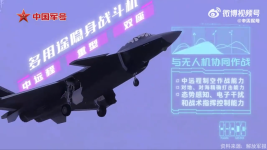
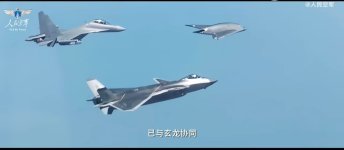
China’s fifth-generation stealth fighter J-20, assigned to the elite First Air Brigade of the People’s Liberation Army Air Force, reportedly flew through the Eastern Channel of the Korea Strait on July 27 — but neither South Korea nor Japan detected it, according to the South China Morning Post.
Beijing has issued no official response to the Hong Kong-based newspaper’s report. By maintaining a NCND — or “neither confirm nor deny” — stance, China appears to imply that its fighter slipped through the air defense networks of South Korea and Japan. The position also suggests that even the United States failed to notice the flight.
Riding this momentum, China has since showcased its main stealth aircraft, the J-20 and J-35, at major events including the Sept. 3 Victory Day military parade — which marks the anniversary of the end of World War II — and the Changchun Airshow on Sept. 20.
But while China flaunts its expanding stealth capabilities, South Korea’s long-range radar systems — key to detecting such aircraft — are showing their age. Some of the fixed radar units, introduced as far back as 40 years ago, are now nearing obsolescence.
The existing radars must be shut down for 100 to 200 hours annually for maintenance, and any plans to acquire a radar system specifically designed to detect stealth aircraft remain undefined due to technological and budgetary limits.
J-20: Missed or never launched?
The issue surfaced again during a parliamentary audit of the Air Force held at the Air Force Headquarters in Gyeryong, South Chungcheong on Thursday.
People Power Party Rep. Lim Jong-deuk asked Air Force Chief of Staff Gen. Son Seok-rak, “Even if the Eastern Channel of the Korea Strait is not under our jurisdiction, it is only about 20 kilometers from our airspace. Are you saying the military was unaware that an enemy aircraft could have entered within one or two minutes?”
“The flight date was not specified, so there is no way to verify it,” Sohn replied, adding, “There is no concrete evidence confirming that a J-20 was present.”
The Air Force’s official stance is that the Eastern Channel lies outside South Korea's air defense identification zone (Kadiz), meaning it cannot confirm whether the aircraft was detected.
In a written response to Rep. Lim’s office, the Air Force added that “there have been no records of a J-20 entering or exiting the Kadiz in the past three years,” implying that the aircraft did not fly through the Kadiz en route to the channel.
Radar data from the Air Force’s Master Control and Reporting Center show no trace of a J-20 flight around July 27, according to military sources. If a Chinese fighter had flown to the Eastern Channel without passing through the Kadiz, it would likely have required aerial refueling due to the extended route.
The absence of evidence suggests that the aircraft may never have taken off — or that China deliberately obscured its flight path and timing. The military has not ruled out either possibility.
Kim Jong-un eyes stealth tech
The developments highlight how China’s stealth capabilities continue to advance. The Defense Intelligence Agency assessed the J-35 stealth fighter and the FH-97 unmanned aerial vehicle, unveiled at the Sept. 3 Victory Day parade, as among the Chinese military’s key next-generation weapons.
With the North Korea-China-Russia alignment strengthening, North Korea — which has focused on bolstering its air power — could seek to obtain stealth-related technologies from its allies.
Aviation experts note that Chinese and Russian stealth jets still lag behind American models. The radar cross-section (RCS) of the U.S. B-2 bomber and F-22 fighter, considered the most advanced stealth aircraft, is about 0.0001 square meters (0.16 square inches) — roughly the size of a fingernail.
In comparison, Russia's Su-57 measures around 0.5 square meters, and China's J-20 falls between 0.01 and 0.05 square meters.
Still, with Beijing pouring massive investment into research, analysts say the gap may narrow quickly. In April last year, researchers at the Air Force Engineering University in Shaanxi Province claimed to have developed radar technology capable of detecting an F-22 — normally invisible to radar — as if it had an RCS of 6 square meters, comparable to a conventional fighter.
Aging radars: South Korea's “farsighted eyes”
For now, South Korea’s existing long-range radar systems can still track stealth aircraft under favorable conditions. “By adjusting sensitivity settings, the radar can detect even flocks of migratory birds,” an Air Force official said.
But because those radars must serve multiple functions, the military concedes that specialized stealth detection systems are eventually necessary.
Of the 12 fixed long-range radar units currently in service, eight FPS-117K models were introduced between 1987 and 1992 and are nearing 40 years of operation. The remaining four FPS-117E1 units were installed in 2004 and are also over two decades old.
The Air Force reported 10 breakdowns of the FPS-117K this year alone, resulting in about 100 hours of downtime, and the FPS-117E1 experienced similar outages totaling 90 hours.
The government plans to spend 260.3 billion won ($180.8 million) by 2029 to upgrade the outdated radar systems, but until the modernization is complete, the Air Force will have to monitor potential stealth threats with what one official called “failing eyes.”






![Chinese-made J-20 stealth fighters fly during the 15th China International Aviation and Aerospace Exhibition in Zhuhai in southern China's Guangdong province on Nov. 14, 2024. [AFP/YONHAP]](https://koreajoongangdaily.joins.com/data/photo/2025/10/27/859e8868-22bc-4b57-92ec-595d174f44a6.jpg "Chinese-made J-20 stealth fighters fly during the 15th China International Aviation and Aerospace Exhibition in Zhuhai in southern China's Guangdong province on Nov. 14, 2024. [AFP/YONHAP]")



 KP govt backs out of counterterrorism commitments during talks: Naqvi (10 Viewers)


