'No longer science fiction': Flying cars could launch in China in months, says Xpeng
Copyright Xpeng
By
Pascale Davies
Published on 11 November 2026 - 12:39 GMT+1
"It’s no longer science fiction or just a single demo aircraft," Michael Du, vice president and chief financial officer of Chinese company XPeng, told Euronews Next.
People could start travelling in so-called flying cars in China as soon as summer 2027, the manufacturer of a two-seater autopilot vehicle told Euronews Next.
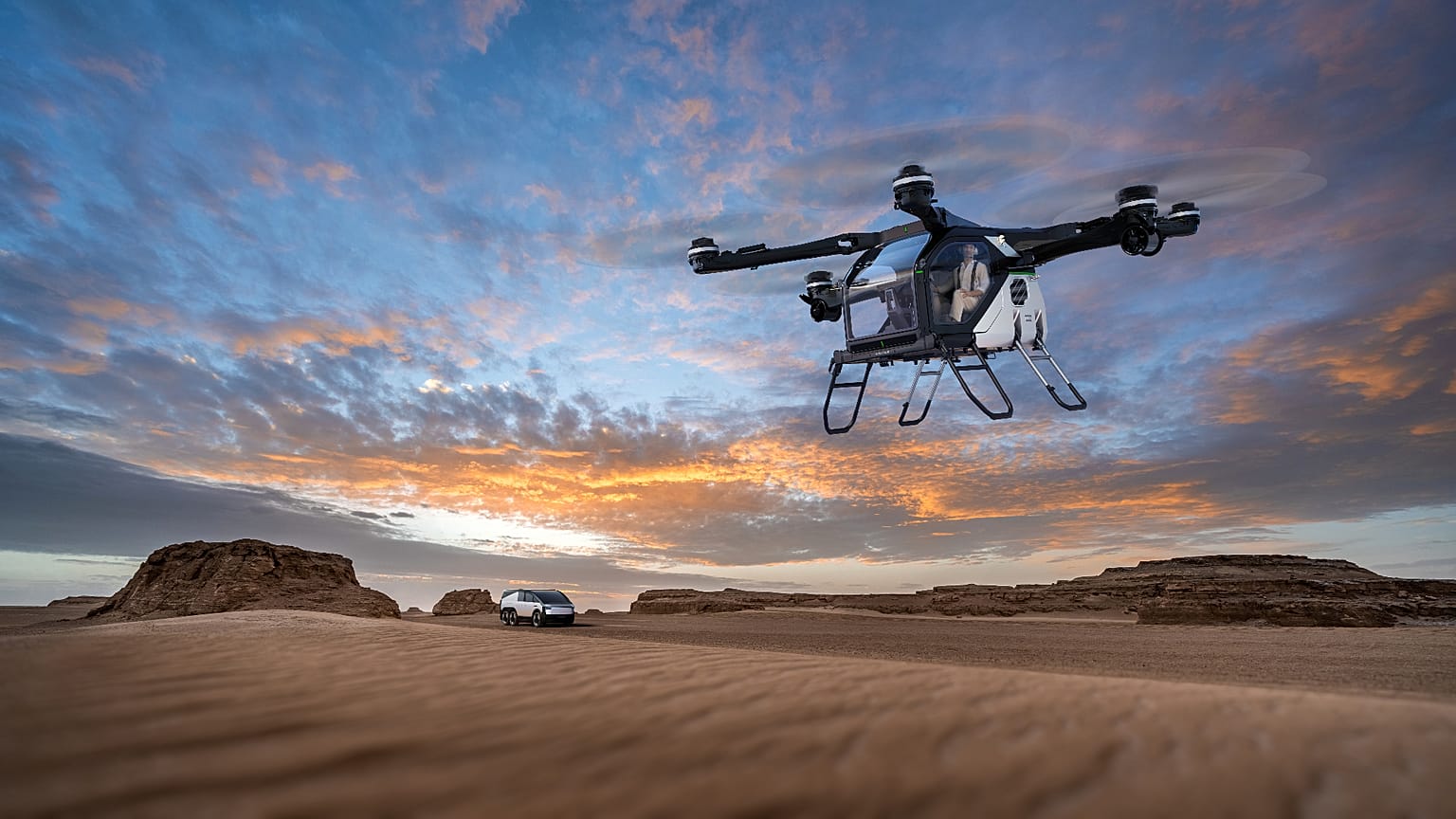
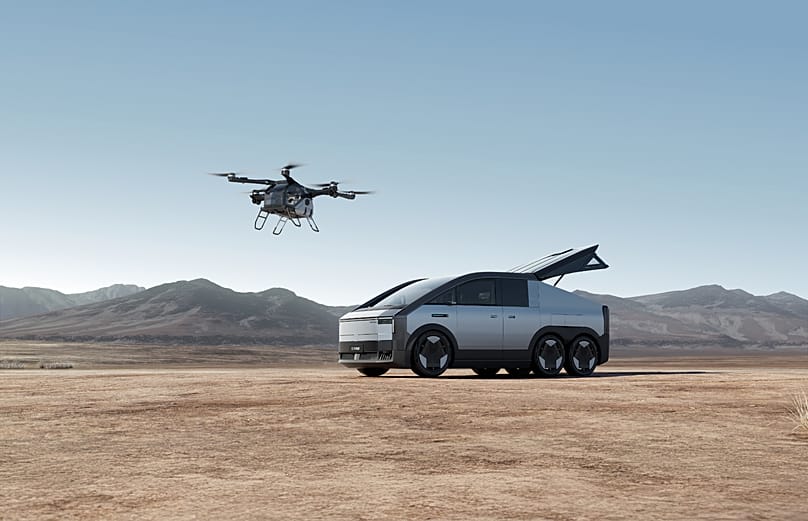
The low-altitude flying device by XPeng Aridge is close to large-scale commercialisation, with limited deliveries to partners in China expected within months and a wider roll-out to follow, and has been approved by China’s civil aviation authorities for limited use.
"It’s no longer science fiction or just a single demo aircraft," vice president and chief financial officer of Chinese company XPeng Michael Du said at the Web Summit technology event in Lisbon. "It’s really a commercial model."
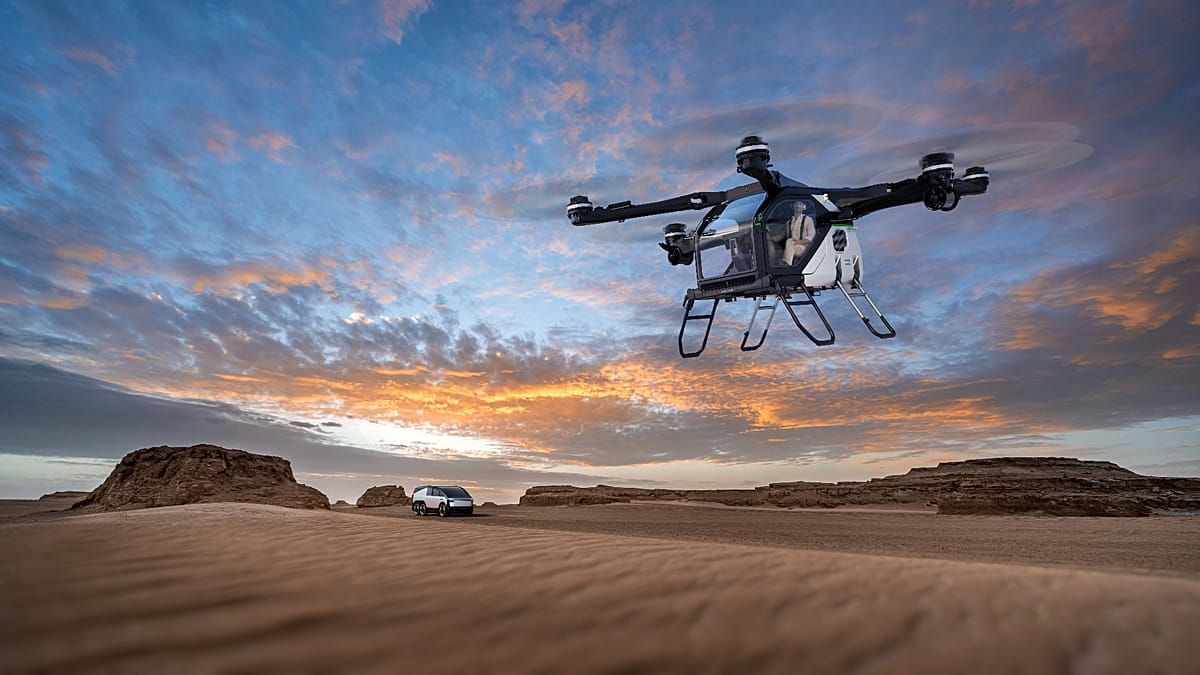
The two-seat electric vehicle costs $300,000 (€270,000) and has a cockpit the size of a small car.
The company has received more than 7,000 pre-orders worldwide, "most of them in China, but also some from the Middle East," Du said.
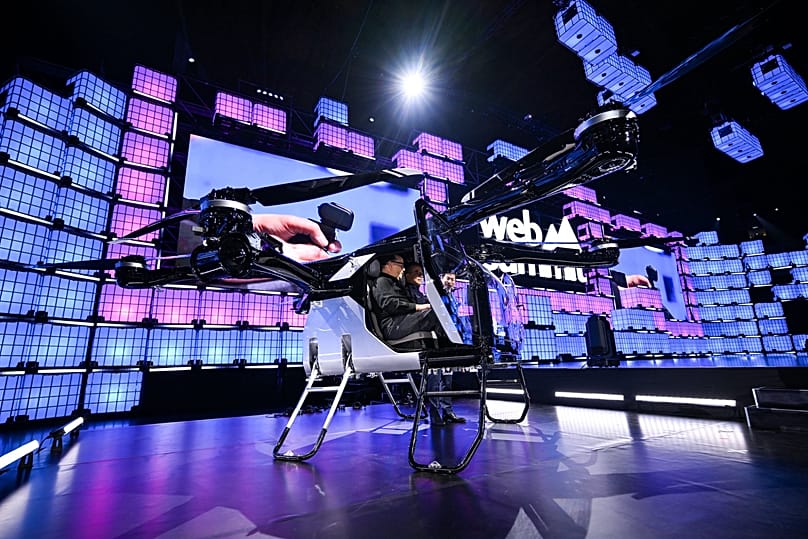
The device was shown off at Web Summit Lisbon 2026. XPeng
Buyers include individuals interested in personal flying and air tourism, as well as operators in emergency rescue and public services. "It showcases how wide a range of applications our products are capable of," he said.
The aircraft has completed its technical test flights across a range of conditions. "We tried it at sea level, high altitude, cold areas, hot areas, extreme wind or even rainy areas, a lot of extreme cases, so it’s safe," Du said.
The company has spent a decade building the technology from its own mass-production factory in Guangzhou.
The aircraft has completed its technical test flights, including at sea level and high altitude and in cold, hot, windy and rainy conditions.
It has also received a type inspection authorisation from the Civil Aviation Administration of China, whose test pilots completed all the test items. The company is now going through final type certification.
The future of mobility
Electric aircraft will reshape transport the way electrification reshaped cars, according to Du.
"Electrification has transformed and advanced the development of the car industry. Similar patterns will happen in the aircraft industry," he said, citing better power distribution, more redundancies and quieter operation.
Asked how the aircraft could change mobility in the long term, the executive used a Chinese saying about roads.
"In China, there’s a saying: if you want to develop the economy, you’d better build the roads," the executive said. "When you have better roads, it’s more accessible to everyone else."
That logic held while most travel happened on the ground, he said, but air mobility offers "a different format to improve transportation efficiency".
It "will completely change how people travel over time, from an efficiency perspective, from an economics perspective," he said.
The two-seat electric vehicle costs $300,000 (€270,000) and has a cockpit the size of a small car. XPeng
The main advantage, the executive said, is that aircraft skip the need for continuous infrastructure. "You don’t actually need to build infrastructure inch by inch from the starting point to the end," he said. "That’s the case for cars. That’s the case for high-speed rail."
The device could also benefit island nations and sparsely populated regions, Du said, "those areas will become so valuable" once air mobility arrives, as it will create economic value.
When will it come to Europe?
After China, the company plans to work with overseas regulators and partners, with the Middle East and Southeast Asia as the clearest early markets.
But Europe is "definitely a very attractive market", Du said, adding that the company hopes Web Summit will introduce European consumers, regulators and partners to the product.
However, Du said there were hurdles to overcome before entering Europe, including launching an affordable product at launch, and having the right infrastructure and places to fly to.
Geopolitics
Asked about US-China tensions, Du said the company would welcome more open markets and would be happy to enter the United States if regulations allow.
He noted that China, the US and Europe together account for only about half of the global aircraft market, so a temporary lack of access to one still leaves plenty of room to grow.
Du compared the situation to Chinese electric cars, which have now become widely accepted in Europe.
"Starting small, starting from outside the city, starting with some cargo, some passenger carrying, gradually into larger ones, entering into cities," Du said. "I think that could be one way the industry develops more positively."
"It’s no longer science fiction or just a single demo aircraft," Michael Du, vice president and chief financial officer of Chinese company XPeng, told Euronews Next.

www.euronews.com