Navigation
Install the app
How to install the app on iOS
Follow along with the video below to see how to install our site as a web app on your home screen.
Note: This feature may not be available in some browsers.
More options
Style variation
You are using an out of date browser. It may not display this or other websites correctly.
You should upgrade or use an alternative browser.
You should upgrade or use an alternative browser.
China blocking sale of tunnel boring machines to India: Piyush Goyal to German minister
- Thread starter zhanlong
- Start date
More options
Who Replied?

zhanlong
Registered Member
- Thread starter
- #62
But now the question is. India has been buying TBM from Chinese companies. India has never bought German TBM.Probably it is like iPhone. US-brand, but all components, especially core components are made by Chinese/Korean/Taiwanese/Japanese companies. In theory, the Chinese government can ban selling iPhones (at least some models with Chinese core components) to any country if they want, although the phone can be assembled in India.
The German TBM company must depend on Chinese core components
冖_冖
Registered Member

China imposes export controls on tunnel-boring machines sought by India, citing ‘national security’
China imposes export controls on tunnel-boring machines and drones, affecting India’s imports amid national-security concerns.
China imposes export controls ontunnel-boring machines sought byIndia, citing ‘national security’
China on Monday (October 19, 2026) said it would introduce export controls on tunnelboring machines “to better safeguard national security and interests”, startingNovember 18.
India has already been facing difficulties in customs clearance and delays in importingTBMs from China for several critical infrastructure projects. The latest announcementcomes days after Beijing announced a plan to impose sweeping export controls on 40cutting-edge technologies including those for certain advanced solar manufacturingand some AI platforms.
The Chinese Commerce Ministry said on Monday (October 19) in an announcement, itwas “introducing export controls on tunnel-boring machines and related items andoptimising and adjusting export-control measures for certain dredgers and relateditems.” The measures will take effect on November 18.
The Ministry said prior to the announcement, China had “notified the relevantcountries and regions with which it has established export-control dialoguemechanisms.”
“The items covered by these measures have clear dual-use (civilian and military)characteristics,” the announcement said. “The measures are intended to bettersafeguard national security and interests, while also enabling China to better fulfil itsinternational obligations, including those related to non-proliferation”.
India has previously raised with China the delays in customs clearance for imports ofTBMs, which are used in India for several critical projects including the construction ofmetro rail networks in cities, railway corridors and key tunnelling projects including inborder areas.
India is dependent on imports for the machines. Difficulties in imports from Chinastarted in 2024. In October of that year, Commerce Minister Piyush Goyal had publiclyraised the issue with visiting German Vice Chancellor Robert Habeck, pointing out thatChina was blocking the export of TBMs made by a German company in China.

retaxis
Trusted Member

back to using pick axe technology for indiansChina imposes export controls on tunnel-boring machines sought by India, citing ‘national security’
China imposes export controls on tunnel-boring machines and drones, affecting India’s imports amid national-security concerns.www.thehindu.com
China imposes export controls ontunnel-boring machines sought byIndia, citing ‘national security’
China on Monday (October 19, 2026) said it would introduce export controls on tunnelboring machines “to better safeguard national security and interests”, startingNovember 18.
India has already been facing difficulties in customs clearance and delays in importingTBMs from China for several critical infrastructure projects. The latest announcementcomes days after Beijing announced a plan to impose sweeping export controls on 40cutting-edge technologies including those for certain advanced solar manufacturingand some AI platforms.
The Chinese Commerce Ministry said on Monday (October 19) in an announcement, itwas “introducing export controls on tunnel-boring machines and related items andoptimising and adjusting export-control measures for certain dredgers and relateditems.” The measures will take effect on November 18.
The Ministry said prior to the announcement, China had “notified the relevantcountries and regions with which it has established export-control dialoguemechanisms.”
“The items covered by these measures have clear dual-use (civilian and military)characteristics,” the announcement said. “The measures are intended to bettersafeguard national security and interests, while also enabling China to better fulfil itsinternational obligations, including those related to non-proliferation”.
India has previously raised with China the delays in customs clearance for imports ofTBMs, which are used in India for several critical projects including the construction ofmetro rail networks in cities, railway corridors and key tunnelling projects including inborder areas.
India is dependent on imports for the machines. Difficulties in imports from Chinastarted in 2024. In October of that year, Commerce Minister Piyush Goyal had publiclyraised the issue with visiting German Vice Chancellor Robert Habeck, pointing out thatChina was blocking the export of TBMs made by a German company in China.
Sam6536
Registered Member

I think this is a good snub by China for India in the long run.
This has forced India to look at alternative supply chains and to localise supply chains in India. Last i checked state run BEML was also looking to manufacture the tech inhouse with help from Japan. There's an active PLI for players for state granted aid which I think is 1.2bn usd right now and 1.8bn usd in second tranche.
Iirc in this particular case India bought the TBM from a German company which manufactures it in China due to obvious economics of scale metrics. The machine then was lying in a Chinese port for over a year after which they cleared export clearance.
It's just like American Chips act for China, when external powers force you to adapt you do it even if you get pinched in the short run.
 www.herrenknecht.com
German Herrenknecht will produce the tech in Chennai locally now. It is already being used in the Mumbai-Ahmedabad bullet train project.
This has forced India to look at alternative supply chains and to localise supply chains in India. Last i checked state run BEML was also looking to manufacture the tech inhouse with help from Japan. There's an active PLI for players for state granted aid which I think is 1.2bn usd right now and 1.8bn usd in second tranche.
Iirc in this particular case India bought the TBM from a German company which manufactures it in China due to obvious economics of scale metrics. The machine then was lying in a Chinese port for over a year after which they cleared export clearance.
It's just like American Chips act for China, when external powers force you to adapt you do it even if you get pinched in the short run.
Herrenknecht is supplying India's largest tunnel boring machines
German Herrenknecht will produce the tech in Chennai locally now. It is already being used in the Mumbai-Ahmedabad bullet train project.
Last edited:
ety
Trusted Member

Good move by the Chinese gov, long overdue. TBM can be a strategic asset for both the military and civilian constructions. The Chinese gov is getting smarter in controlling its valuable tech and resources.China imposes export controls on tunnel-boring machines sought by India, citing ‘national security’
China imposes export controls on tunnel-boring machines and drones, affecting India’s imports amid national-security concerns.
China imposes export controls ontunnel-boring machines sought byIndia, citing ‘national security’
China on Monday (October 19, 2026) said it would introduce export controls on tunnelboring machines “to better safeguard national security and interests”, startingNovember 18.
India has already been facing difficulties in customs clearance and delays in importingTBMs from China for several critical infrastructure projects. The latest announcementcomes days after Beijing announced a plan to impose sweeping export controls on 40cutting-edge technologies including those for certain advanced solar manufacturingand some AI platforms.
The Chinese Commerce Ministry said on Monday (October 19) in an announcement, itwas “introducing export controls on tunnel-boring machines and related items andoptimising and adjusting export-control measures for certain dredgers and relateditems.” The measures will take effect on November 18.
The Ministry said prior to the announcement, China had “notified the relevantcountries and regions with which it has established export-control dialoguemechanisms.”
“The items covered by these measures have clear dual-use (civilian and military)characteristics,” the announcement said. “The measures are intended to bettersafeguard national security and interests, while also enabling China to better fulfil itsinternational obligations, including those related to non-proliferation”.
India has previously raised with China the delays in customs clearance for imports ofTBMs, which are used in India for several critical projects including the construction ofmetro rail networks in cities, railway corridors and key tunnelling projects including inborder areas.
India is dependent on imports for the machines. Difficulties in imports from Chinastarted in 2024. In October of that year, Commerce Minister Piyush Goyal had publiclyraised the issue with visiting German Vice Chancellor Robert Habeck, pointing out thatChina was blocking the export of TBMs made by a German company in China.
Sam6536
Registered Member
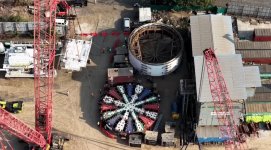
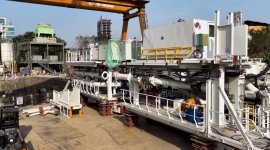
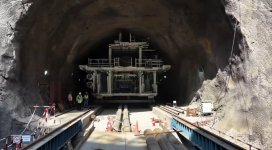
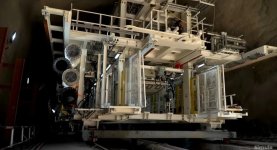
These projects are currently ongoing in India, mostly done using German TBM assembled in India
Mumbai-Ahmedabad Bullet Train Project: Assembly of India's largest-ever 13.56-meter TBM is progressing at Shaft 3 in Sawli, Mumbai. It will bore 9.7 km of the 16 km TBM section, highlight of which is India's first 7 km undersea rail tunnel beneath Thane Creek.
A section of Kolkata metro purple line was recently bored with TBMs named Durga and Divya. They were manufactured in Herrenknecht Chennai factory. Thane-Borivali corridor is another big project by MEIL which uses 13.34m TBMs for India's largest urban road project.
Attachments
-
 Screenshot_2026-10-20-11-55-11-36_b72a20be883aec8a014bd2b7c7038e87.jpg265.5 KB · Views: 3
-
 Screenshot_2026-10-20-11-55-20-75_b72a20be883aec8a014bd2b7c7038e87.jpg226.2 KB · Views: 3
-
 Screenshot_2026-10-20-11-55-27-59_b72a20be883aec8a014bd2b7c7038e87.jpg194.5 KB · Views: 3
-
 Screenshot_2026-10-20-11-55-35-04_b72a20be883aec8a014bd2b7c7038e87.jpg157.6 KB · Views: 3
Last edited:
冖_冖
Registered Member
India's metro and tunnel projects may face a new hurdle as China tightens export rules
What other equipment will face restrictions?
The new controls extend beyond tunnel boring machines.They cover certain walking excavators, which are designed to operate on uneven and difficult terrain, and plateau-type wet shotcrete machines used to spray concrete or similar materials onto surfaces at high altitudes.
These machines can be used in challenging construction conditions, including mountainous areas where specialised equipment is needed to build tunnels and other infrastructure.
China has also revised controls on specified dredging equipment and components, including slurry pumps, dragheads and cutterheads that meet technical thresholds.
Dredging equipment is used to remove sand, silt and other material from riverbeds, harbours and waterways. The restrictions could therefore have implications for projects that depend on the covered equipment, although the actual impact will depend on the products and shipments involved.
India's dependence on imported machinery
The restrictions bring renewed attention to India's efforts to develop domestic manufacturing capacity for specialised construction equipment.India is expanding its metro networks, highways and railway infrastructure, creating demand for machinery that can carry out complex excavation work. Dependence on a limited pool of overseas suppliers can leave projects exposed to export restrictions, customs delays and changes in trade policy.
Developing domestic manufacturing and diversifying suppliers could help reduce these risks over time. But replacing specialised imported equipment may require investment, technical expertise and time.

GatlingGunZ
Registered Member
temporary halt. longterm self reliance for India and customers across the world.
 theprint.in

 www.instagram.com
German tunnel-boring machine maker to set up shop in India after China delays exports of machinery
The last machine is on its way to India, as Germany seeks to diversify its reliance on China, says German Ambassador Philipp Ackermann in an exclusive interaction with ThePrint.
theprint.in
Rising India Updates on Instagram: "India has launched a massive Made-in-India Tunnel Boring Machine (TBM), developed by MEIL in collaboration with Germany’s Herrenknecht. This development is significant because India has long depended on imported T
2,485 likes, 14 comments - rising.india.updates on April 29, 2026: "India has launched a massive Made-in-India Tunnel Boring Machine (TBM), developed by MEIL in collaboration with Germany’s Herrenknecht. This development is significant because India has long depended on imported TBMs...
www.instagram.com
Pioneer
Registered Member
What other equipment will face restrictions?
The new controls extend beyond tunnel boring machines.They cover certain walking excavators, which are designed to operate on uneven and difficult terrain, and plateau-type wet shotcrete machines used to spray concrete or similar materials onto surfaces at high altitudes.
These machines can be used in challenging construction conditions, including mountainous areas where specialised equipment is needed to build tunnels and other infrastructure.
Pioneer
Registered Member
Dredging equipment also under scrutiny
Beijing has also tightened export controls on specified dredging equipment, including slurry pumps, dragheads and cutterheads.
The restrictions cover slurry pumps with inlet diameters of at least 0.55 metres and maximum rotational speeds of 400 revolutions per minute, along with certain large pump casings and impellers.
Controls will also apply to dragheads used in trailing suction hopper dredgers and cutterheads deployed in cutter suction dredgers that meet specified technical thresholds.
Such equipment is important for port development, harbour maintenance, maritime infrastructure and underwater excavation.
For India, which is pursuing major port expansion and maritime connectivity programmes, restrictions on specialised dredging components could introduce another layer of supply-chain uncertainty.
Beijing tightens its grip on technology exports
The latest announcement follows a draft proposal released by MOFCOM on Friday seeking additional export restrictions on 14 technologies across sectors including artificial intelligence, biotechnology and photovoltaic solar power.
Together, these measures point to China’s increasing use of export controls over advanced technologies and specialised industrial equipment.
Under the new rules, exporters must obtain licences from MOFCOM under China’s Export Control Law and regulations governing dual-use items.
Exporters will also have to declare the relevant control codes and provide detailed technical specifications. Chinese customs authorities can hold shipments pending verification of the information submitted.
This licensing framework gives Beijing greater oversight of sensitive equipment exports and could create uncertainty for overseas buyers even where shipments are not explicitly prohibited.

 psuwatch.com
Beijing has also tightened export controls on specified dredging equipment, including slurry pumps, dragheads and cutterheads.
The restrictions cover slurry pumps with inlet diameters of at least 0.55 metres and maximum rotational speeds of 400 revolutions per minute, along with certain large pump casings and impellers.
Controls will also apply to dragheads used in trailing suction hopper dredgers and cutterheads deployed in cutter suction dredgers that meet specified technical thresholds.
Such equipment is important for port development, harbour maintenance, maritime infrastructure and underwater excavation.
For India, which is pursuing major port expansion and maritime connectivity programmes, restrictions on specialised dredging components could introduce another layer of supply-chain uncertainty.
Beijing tightens its grip on technology exports
The latest announcement follows a draft proposal released by MOFCOM on Friday seeking additional export restrictions on 14 technologies across sectors including artificial intelligence, biotechnology and photovoltaic solar power.
Together, these measures point to China’s increasing use of export controls over advanced technologies and specialised industrial equipment.
Under the new rules, exporters must obtain licences from MOFCOM under China’s Export Control Law and regulations governing dual-use items.
Exporters will also have to declare the relevant control codes and provide detailed technical specifications. Chinese customs authorities can hold shipments pending verification of the information submitted.
This licensing framework gives Beijing greater oversight of sensitive equipment exports and could create uncertainty for overseas buyers even where shipments are not explicitly prohibited.
China tightens export curbs on TBM raising fresh concerns over India’s infrastructure projects
New Delhi: China has announced sweeping new export controls on tunnel boring machines (TBMs) and other specialised heavy equipment, raising fresh concerns over
Nimble
SpeedLimited
This will make our domestic industrial big boys to come forward and make home-made TBMs.....temporary halt. longterm self reliance for India and customers across the world.
German tunnel-boring machine maker to set up shop in India after China delays exports of machinery
The last machine is on its way to India, as Germany seeks to diversify its reliance on China, says German Ambassador Philipp Ackermann in an exclusive interaction with ThePrint.Rising India Updates on Instagram: "India has launched a massive Made-in-India Tunnel Boring Machine (TBM), developed by MEIL in collaboration with Germany’s Herrenknecht. This development is significant because India has long depended on imported T
2,485 likes, 14 comments - rising.india.updates on April 29, 2026: "India has launched a massive Made-in-India Tunnel Boring Machine (TBM), developed by MEIL in collaboration with Germany’s Herrenknecht. This development is significant because India has long depended on imported TBMs...

K2RULEZ
Elite Member


temporary halt. longterm self reliance for India and customers across the world.
German tunnel-boring machine maker to set up shop in India after China delays exports of machinery
The last machine is on its way to India, as Germany seeks to diversify its reliance on China, says German Ambassador Philipp Ackermann in an exclusive interaction with ThePrint.Rising India Updates on Instagram: "India has launched a massive Made-in-India Tunnel Boring Machine (TBM), developed by MEIL in collaboration with Germany’s Herrenknecht. This development is significant because India has long depended on imported T
2,485 likes, 14 comments - rising.india.updates on April 29, 2026: "India has launched a massive Made-in-India Tunnel Boring Machine (TBM), developed by MEIL in collaboration with Germany’s Herrenknecht. This development is significant because India has long depended on imported TBMs...
Wishful thinking. You will be facing two front war.
K2RULEZ
Elite Member
This will make our domestic industrial big boys to come forward and make home-made TBMs.....
Only to find out that Pakistan amd China will break you into pieces in a two front war.
Pakistan Defence Latest
-
 Federal cabinet gives nod to imposition of emergency in KP; summary sent to president (13 Viewers)
- Latest: Forsvaret
-

-
-

-
Country Watch Latest
-
-
-
 China blocking sale of tunnel boring machines to India: Piyush Goyal to German minister (10 Viewers)
- Latest: GatlingGunZ
-
-
Latest Posts
-
Federal cabinet gives nod to imposition of emergency in KP; summary sent to president (13 Viewers)
- Latest: Forsvaret
-
-
 Yemen's Houthi rebels claim attack on Aramco facility after fire, smoke seen in Riyadh (17 Viewers)
- Latest: El Sidd
-
-