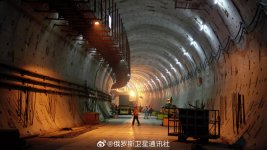
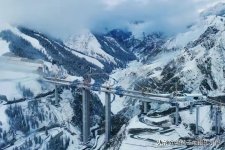
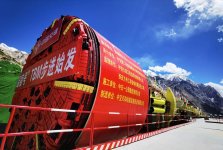
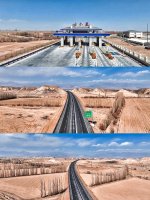
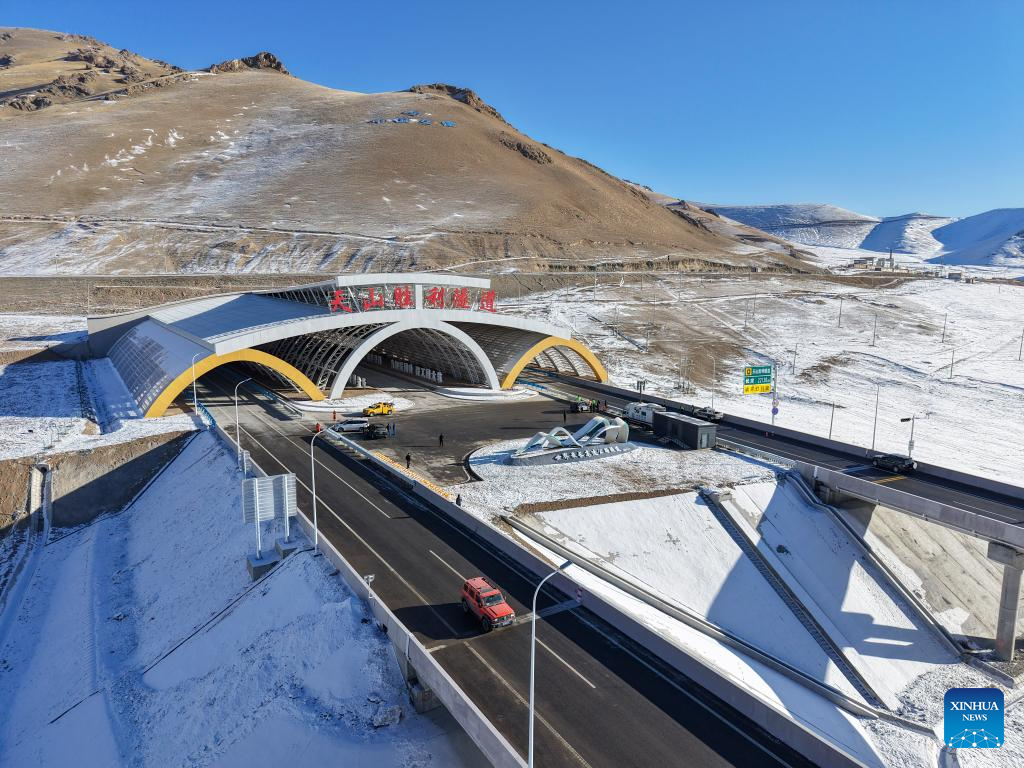
China is building the world's longest highway tunnel in Xinjiang

MUCH ANTICIPATED, Wuwei Highway project, The biggest and most difficult mega project China ever taken, scheduled to open by 2025
To view this content we will need your consent to set third party cookies.
For more detailed information, see our cookies page.
 
After almost a decade construction, Wuwei Highway in Xinjiang will complet and open in 2025
To view this content we will need your consent to set third party cookies.
For more detailed information, see our cookies page.
 
After almost a decade construction, Wuwei Highway in Xinjiang will complet and open in 2025
To view this content we will need your consent to set third party cookies.
For more detailed information, see our cookies page.

Will be the most spectacular highway on this planet, can't wait to drive on it :love::love::love::love:
 
China drills through the world longest highway tunnel

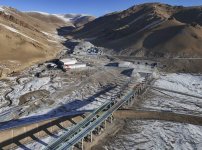
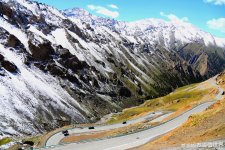
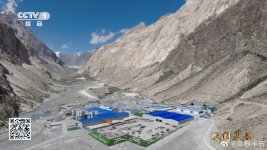
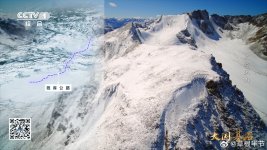
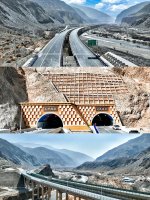
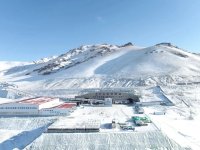
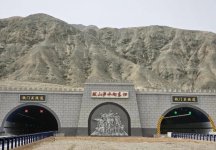
新疆_天山胜利隧道 现今全球最长的高速隧道_2_阿达西-与疆与你_来自小红书网页版.jpg天山胜利隧道顺利贯通_6_老周9797_来自小红书网页版.jpg通了!刷新世界纪录!_6_央视文旅_来自小红书网页版.jpg通了!刷新世界纪录!_7_央视文旅_来自小红书网页版.jpg
 
Waiting for you at the other side of the Mighty Tianshan Mountains

能看见乌鲁木齐全城和博格达同框的观景台_1_彗星_来自小红书网页版.jpg
 
Breakthrough in world's longest expressway tunnel marks leap in Xinjiang's infrastructure
Last Updated: 2024-12-31 09:23 | Xinhua

* The Tianshan Shengli Tunnel, the world's longest expressway tunnel, completed tunneling Monday morning. The 22.13-kilometer tunnel will reduce the time it takes to drive across the middle section of the Tianshan Mountains from several hours to about 20 minutes once operational.

* The tunnel will significantly improve communication between northern and southern Xinjiang, fostering closer ties among ethnic groups and promoting balanced regional growth.

* The construction of the tunnel has faced multiple challenges, such as extreme cold, high altitudes, high ground stress, strong seismic activity and strict environmental requirements.

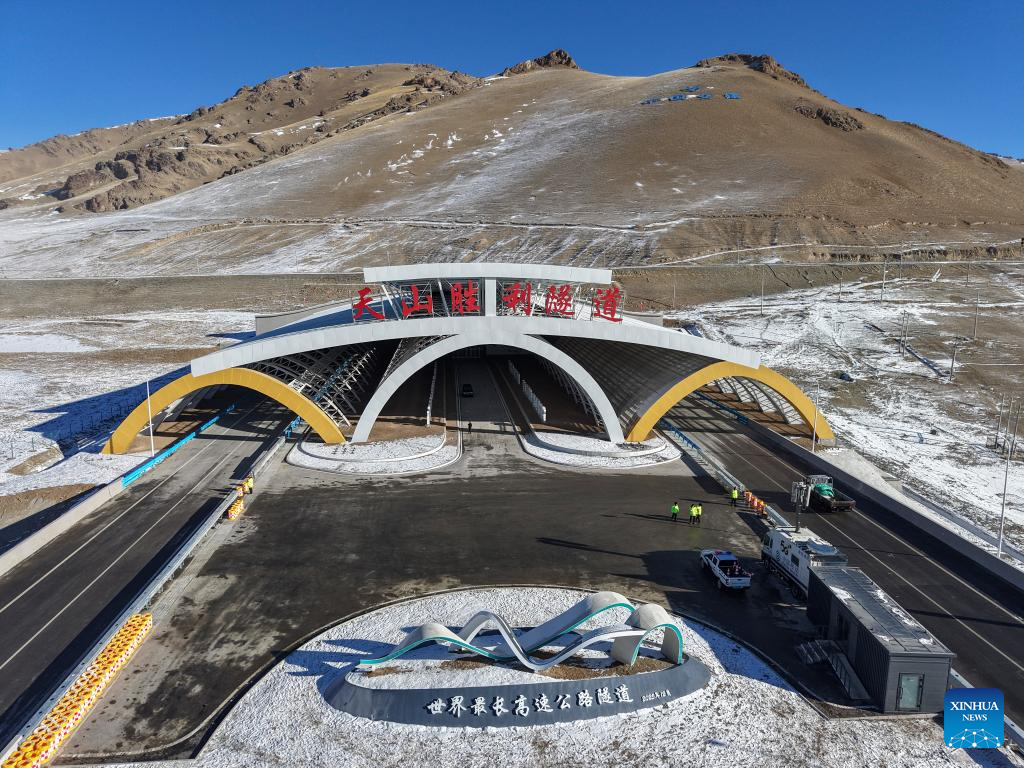
URUMQI, Dec. 30 (Xinhua) -- The Tianshan Shengli Tunnel, the world's longest expressway tunnel, completed tunneling Monday morning, paving the way for the opening of a new shortcut linking southern and northern parts of China's Xinjiang Uygur Autonomous Region.

The 22.13-kilometer tunnel will reduce the time it takes to drive across the middle section of the Tianshan Mountains from several hours to about 20 minutes once operational.

It is a key project of the Urumqi-Yuli Expressway, which runs from the regional capital of Urumqi in northern Xinjiang to Yuli County in southern Xinjiang. The expressway is expected to be fully completed and open to traffic in 2025. The driving time between the two locations will be reduced from about seven hours to just over three hours.

W020241231338298369104.JPG
W020241231338298369104.jpg
A drone photo taken on Dec. 25, 2024 shows the exit of the Tianshan Shengli Tunnel in Hejing County of Mongolian Autonomous Prefecture of Bayingolin, northwest China's Xinjiang Uygur Autonomous Region. (Xinhua/Hu Huhu)

SHORTCUT CONNECTING NORTH AND SOUTH

Covering one-sixth of China's total land area, Xinjiang is divided into northern Xinjiang and southern Xinjiang by the Tianshan Mountains, stretching over 2,500 kilometers from east to west and forming a formidable natural barrier.

Qadir Abliz, a truck driver from Urumqi who makes regular trips between the north and south of the Tianshan Mountains, said the winding mountain roads would often freeze in the winter, and many trucks carrying coal, agricultural produce and livestock products would be stranded on the way across.

"There will be no need to worry about such situations anymore when the tunnel opens next year," he said.

Baye, a herdsman whose family has lived near the tunnel at the foot of the Tianshan Mountains for generations, has a deep connection with this project.

"I really hope it opens to traffic soon! In the past, when a family member had an emergency, and we needed to go to northern Xinjiang for medical treatment, we would drive up the mountain and might encounter road closures due to heavy snow at altitudes above 3,000 meters," said Baye.

The Tianshan Shengli Tunnel stands as a landmark project showcasing China's unwavering commitment to improving people's well-being through transportation development, according to Li Zhicui, a professor at the Business School of Xinjiang Normal University.

"The tunnel will serve as a key tourism corridor and enhance the market competitiveness of local products by making transportation faster and cheaper, thus playing a vital role in driving regional economic development," said Li.

In addition, the tunnel will significantly improve communication between the north and the south, fostering closer ties among ethnic groups and promoting balanced regional growth, according to Li.

W020241231338298427892.jpg

This photo taken on Dec. 30, 2024 shows a ceremony held to mark the drill-through of the Tianshan Shengli Tunnel along the Urumqi-Yuli Expressway in northwest China's Xinjiang Uygur Autonomous Region. (Xinhua/Hu Huhu)

OVERCOME MOUNTAINOUS CHALLENGES

Since the 1950s, China has worked to connect northern and southern Xinjiang with roads such as the Urumqi-Korla and Dushanzi-Kuqa highways. However, rapid economic and social development, along with the growing needs for transportation, have outpaced the capacity of these routes.

Over the past decade, Xinjiang has invested heavily in building transportation infrastructure, improving its network of highways, railways, airports, and logistics hubs to support its role as the core area of the Silk Road Economic Belt.

"Xinjiang has entered a period featuring unprecedented investment scale and development speed," said Zheng Mingquan, deputy director of the regional administration of transportation law enforcement.

The new tunnel, whose construction began in April 2020, is no small feat. It has faced multiple challenges, such as extreme cold, high altitudes, high ground stress, strong seismic activity and strict environmental requirements, according to Mao Jinbo, an engineer on the project.

The Tianshan Mountains are known as a "geological museum," featuring numerous fault zones, 16 of which the tunnel passes through. Its No. 2 ventilation shaft reaches a depth of 706 meters -- taller than China's highest building, the Shanghai Tower.

The builders broke down construction into smaller, more manageable segments and employed domestically-designed hard rock tunnel boring machines, developed using innovative pressure injection methods. As a result, the original construction timeline was shortened by more than 25 percent.

Also, the four ventilation shafts together form the tunnel's "respiratory system," addressing the ventilation challenges of an ultra-long tunnel.

Not far from the tunnel's entrance lies Tianshan No. 1 Glacier, the source of Urumqi's drinking water. To minimize the environmental impact on the glacier and snow leopard habitats, on-site facilities were established to contain wastewater and fully utilize gravel, helping the project meet key environmental protection goals, said the engineer Mao.


China builds world’s longest expressway tunnel​

To view this content we will need your consent to set third party cookies.
For more detailed information, see our cookies page.
 
The 320 kilometers long Wuwei highway will be in operation by this October

新疆乌尉高速后峡2号大桥_1_房车租赁骆驼刺杨_来自小红书网页版.jpg这是天山天山隧道,隧道,隧道。全长近22公_1_小红薯65202C27_来自小红书网页版.jpg大国重器_正式上线开凿西天山隧道!_1_行游万里_来自小红书网页版.jpg什么?居然只需要20分钟了?!_1_舍得智慧说_来自小红书网页版.jpg
 
Korla to Barentai section openned in April, cutting the travel time by 4 hours between Korla to Urumqi

乌鲁木齐到库尔勒有望只用3个小时⁉️_1_新疆弘昇高端定制旅行_来自小红书网页版.jpg乌鲁木齐到库尔勒有望只用3个小时⁉️_2_新疆弘昇高端定制旅行_来自小红书网页版.jpg乌鲁木齐到库尔勒有望只用3个小时⁉️_3_新疆弘昇高端定制旅行_来自小红书网页版.jpg乌鲁木齐到库尔勒有望只用3个小时⁉️_4_新疆弘昇高端定制旅行_来自小红书网页版.jpg
 
Wuwei Highway will be in operation in the end of this year

搜狗截图20250621135418.png
 

China opens world's longest expressway tunnel, cutting Tianshan crossing time from hours to 20 min​

Dec 26, 2025

To view this content we will need your consent to set third party cookies.
For more detailed information, see our cookies page.


China’s 22.13-km Tianshan Shengli Tunnel, the world’s longest expressway tunnel, opened on Friday, cutting travel time through the central Tianshan Mountains from hours to just 20 minutes. It is equivalent to five Nanjing Yangtze River Bridges and faces extreme geological pressure, where a finger-sized rock inside the tunnel would have to bear a weight of over 200 kg. Builders used China’s self-developed rock-drilling machines, dividing the tunnel into sections to reduce difficulty and cut construction time by 25%.

This tunnel is a key part of the G0711 Urumqi-Yuli Expressway, which reduces the travel time between Urumqi, the largest city in the northern Xinjiang, and Korla, the largest city in the southern Xinjiang, from 7 hours to 3 hours.

With a 46.7 billion yuan (6.63 billion USD) investment, the expressway spans 324.7 km and includes 17 tunnels and hundreds of bridges. One section alone has 14 bridges and 5 tunnels, making the bridge-tunnel ratio over 90%, essentially “building roads on roads”.

Xinjiang’s highway network now exceeds 8,000 km, cutting travel times across the region.
 

China Focus: World's longest expressway tunnel opens to traffic in Xinjiang

Xinhua

2025-12-26 17:10:30
4876e0cd981c4805b221da9c2ce9bf21.jpg


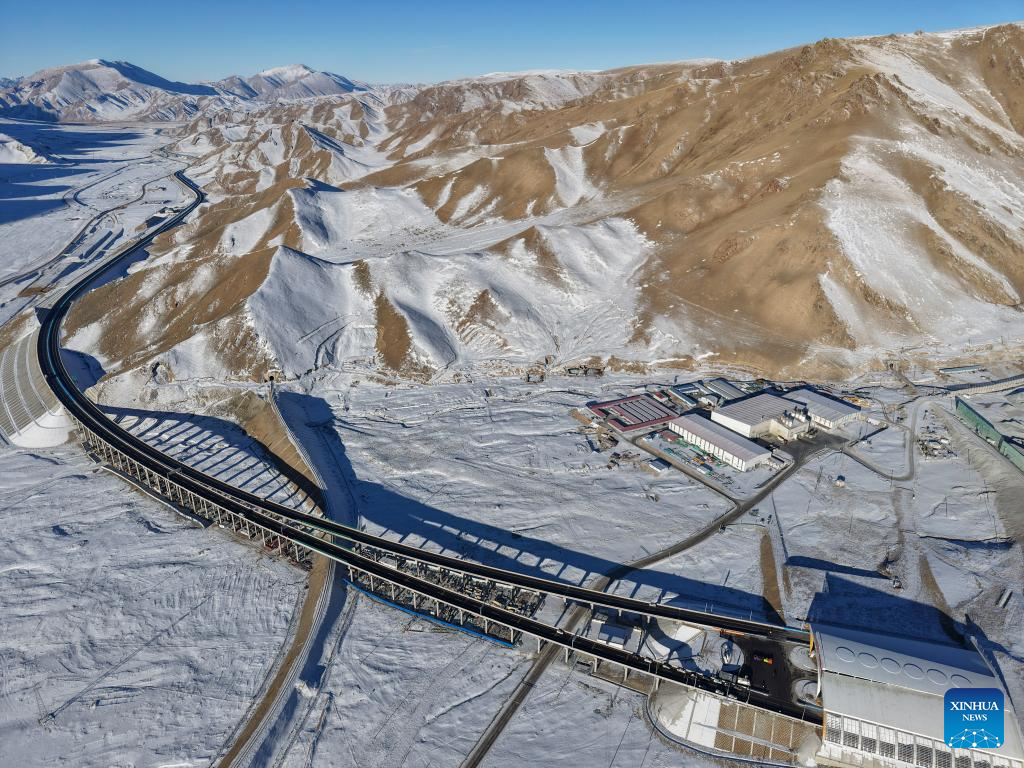
An aerial drone photo shows the exit of the Tianshan Shengli Tunnel on the Urumqi-Yuli Expressway in northwest China's Xinjiang Uygur Autonomous Region, Dec. 26, 2025. The 22.13-km Tianshan Shengli Tunnel, the world's longest expressway tunnel, officially opened to traffic on Friday. Traversing the central Tianshan Mountains in northwest China's Xinjiang Uygur Autonomous Region, the tunnel slashes what was once a several-hour mountain drive to just 20 minutes. As a vital artery linking city clusters in northern and southern Xinjiang, the G0711 Urumqi-Yuli Expressway, including the tunnel, entered operation on the same day. (Xinhua/Hu Huhu)

URUMQI, Dec. 26 (Xinhua) -- The 22.13-km Tianshan Shengli Tunnel, the world's longest expressway tunnel, officially opened to traffic on Friday.

Traversing the central Tianshan Mountains in northwest China's Xinjiang Uygur Autonomous Region, the tunnel slashes what was once a several-hour mountain drive to just 20 minutes.

As a vital artery linking city clusters in northern and southern Xinjiang, the G0711 Urumqi-Yuli Expressway, including the tunnel, entered operation on the same day.

Via existing expressways, the new route extends to the Beijing-Tianjin-Hebei region, the Yangtze River Delta, the Guangdong-Hong Kong-Macao Greater Bay Area, and the Chengdu-Chongqing region, thereby becoming a key hub that connects China's eastern economic circle with countries in Eurasia.

"This is an all-weather, high-efficiency, large-capacity transport corridor that will significantly enhance the resilience and security of national energy resources and agricultural supply chains," said Huang Tao, deputy director of the transportation bureau of the Bayingolin Mongolian Autonomous Prefecture, where Yuli County is located.

Stretching 2,500 kilometers, the Tianshan Mountains span central Xinjiang, separating Urumqi, the largest city in the north, from Korla, the largest city in the south. With the opening of the expressway, travel time between these two major cities is reduced from 7 hours to approximately 3 hours, promoting economic integration between northern and southern Xinjiang and creating new channels for external exchanges.

"Previously, transporting raw materials from northern Xinjiang to Yuli took three to four days; now it can be done in one to two days," said Tao Feng, manager of Yuli Lihua Textile Co., Ltd., noting that the company's transport costs and time will be significantly reduced.

The expressway, constructed over five years, spans 324.7 kilometers with a total investment of 46.7 billion yuan (about 6.63 billion U.S. dollars).

"Building roads in the Tianshan Mountains presented extreme challenges at every step," said Zhou Zheng, general manager of the project of China Communications Construction Company. The complex terrain along the route includes an 11-km section with 14 bridges and five tunnels, resulting in a bridge-tunnel ratio exceeding 90 percent.

The tunnel's construction saw world-class challenges due to its extraordinary scale. It spans 22.13 kilometers, reaches a maximum burial depth of 1,112.2 meters, crosses 16 geological fault zones and faces five major difficulties -- high ground stress, high seismic intensity, stringent environmental requirements, extreme cold and high altitude.

To address these challenges, Chinese builders implemented innovative solutions: constructing eco-friendly access roads to minimize ecological disruption and improve material transport efficiency; adopting a construction method that shortened the main tunnel's construction period by over a quarter; and deploying China's independently developed global-first pressurized hard rock tunnel boring machine to overcome industry inefficiencies in hard rock excavation.

The expressway traverses diverse landscapes, allowing tourists to experience the Tianshan Mountains' glaciers, pastoral grasslands, forested valleys, Gobi desert and wetlands while witnessing the project's commitment to ecological conservation.

"Day trips between northern and southern Xinjiang may become routine, attracting more tourists," said Han Jun, a long-distance bus driver who frequently travels between the regions.

"Xinjiang's expressway length has exceeded 8,000 kilometers, while the total length of expressways and first-class highways has surpassed 13,000 kilometers," said Guo Sheng, deputy director of the regional transport department.

He emphasized that as more expressways and first-class highways traverse the Tianshan Mountains, they will accelerate the two-way flow of commercial logistics and cultural tourism resources between northern and southern Xinjiang, injecting strong momentum into the core area of the Silk Road Economic Belt. ■

54f3139de2db4eeb8fe2f1af19ffe163.jpg


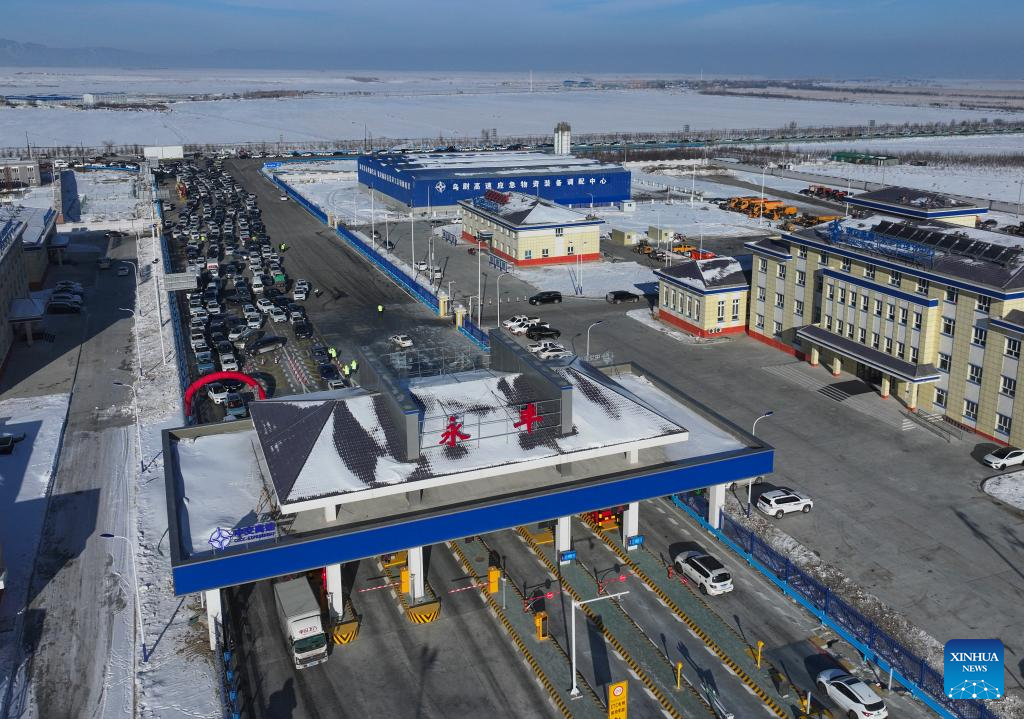
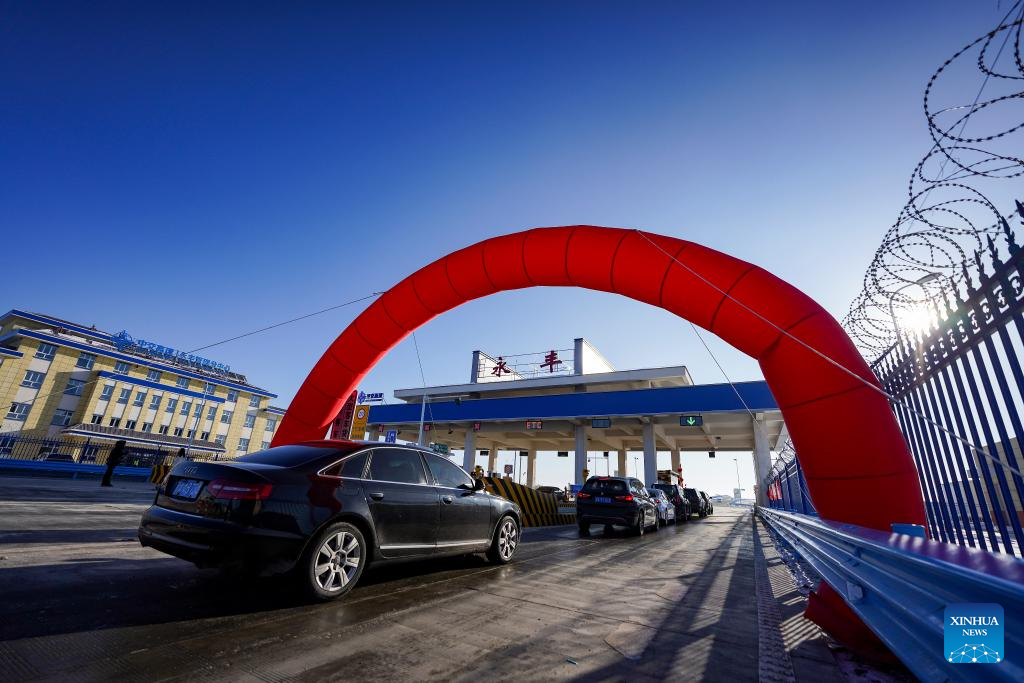
An aerial drone photo shows vehicles waiting to pass a toll station for the Urumqi-Yuli Expressway in Urumqi County, northwest China's Xinjiang Uygur Autonomous Region, Dec. 26, 2025. The 22.13-km Tianshan Shengli Tunnel, the world's longest expressway tunnel, officially opened to traffic on Friday.

Traversing the central Tianshan Mountains in northwest China's Xinjiang Uygur Autonomous Region, the tunnel slashes what was once a several-hour mountain drive to just 20 minutes.

As a vital artery linking city clusters in northern and southern Xinjiang, the G0711 Urumqi-Yuli Expressway, including the tunnel, entered operation on the same day. (Xinhua/Wang Fei)

e2d2b2d23bba4f7d9b5e93bd4c554200.jpg


A staff member (L) hands a passing card to a driver at a toll station for the Urumqi-Yuli Expressway in northwest China's Xinjiang Uygur Autonomous Region, Dec. 26, 2025. The 22.13-km Tianshan Shengli Tunnel, the world's longest expressway tunnel, officially opened to traffic on Friday.

Traversing the central Tianshan Mountains in northwest China's Xinjiang Uygur Autonomous Region, the tunnel slashes what was once a several-hour mountain drive to just 20 minutes.

As a vital artery linking city clusters in northern and southern Xinjiang, the G0711 Urumqi-Yuli Expressway, including the tunnel, entered operation on the same day. (Xinhua/Xu Hongyan)

79b1cacd976246c395b7fe00c6d18313.jpg


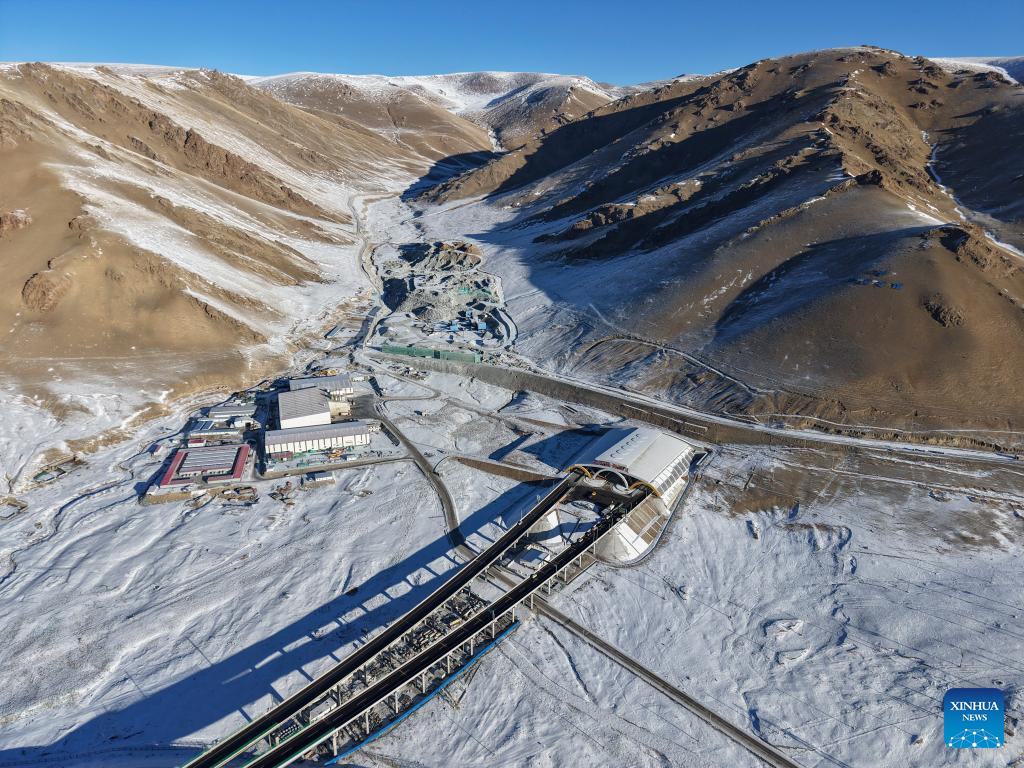
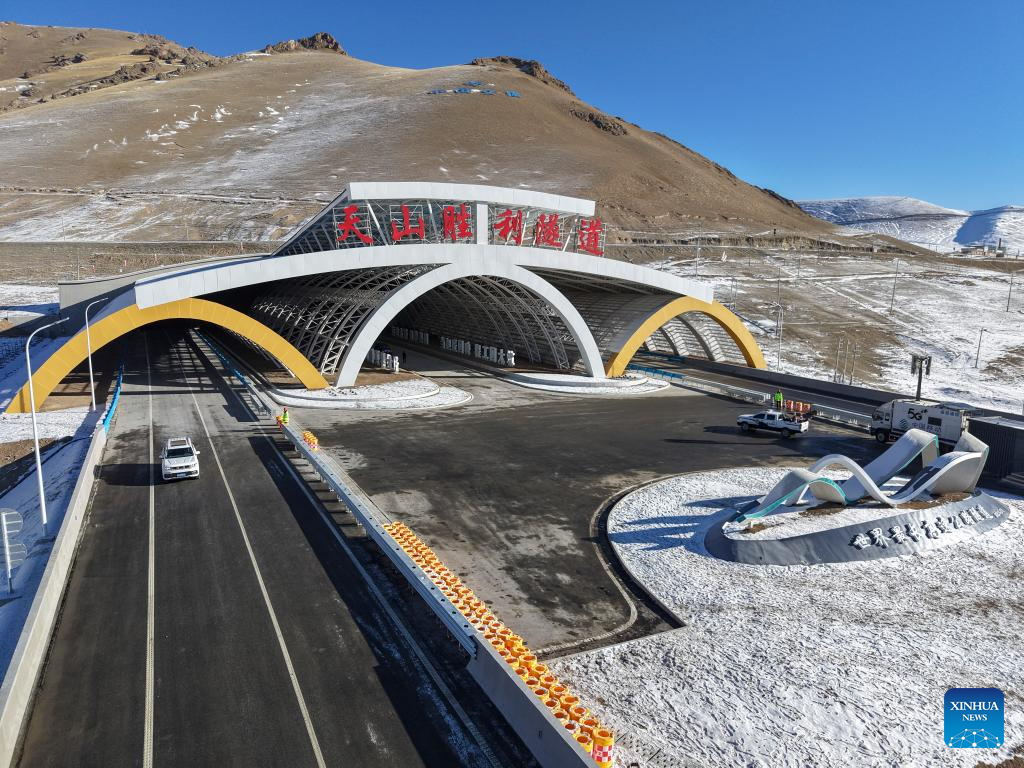
An aerial drone photo shows the exit of the Tianshan Shengli Tunnel on the Urumqi-Yuli Expressway in northwest China's Xinjiang Uygur Autonomous Region, Dec. 26, 2025. The 22.13-km Tianshan Shengli Tunnel, the world's longest expressway tunnel, officially opened to traffic on Friday.

Traversing the central Tianshan Mountains in northwest China's Xinjiang Uygur Autonomous Region, the tunnel slashes what was once a several-hour mountain drive to just 20 minutes.

As a vital artery linking city clusters in northern and southern Xinjiang, the G0711 Urumqi-Yuli Expressway, including the tunnel, entered operation on the same day. (Xinhua/Hu Huhu)

0c9a990005f34be1a3ba4e6892eba1da.jpg


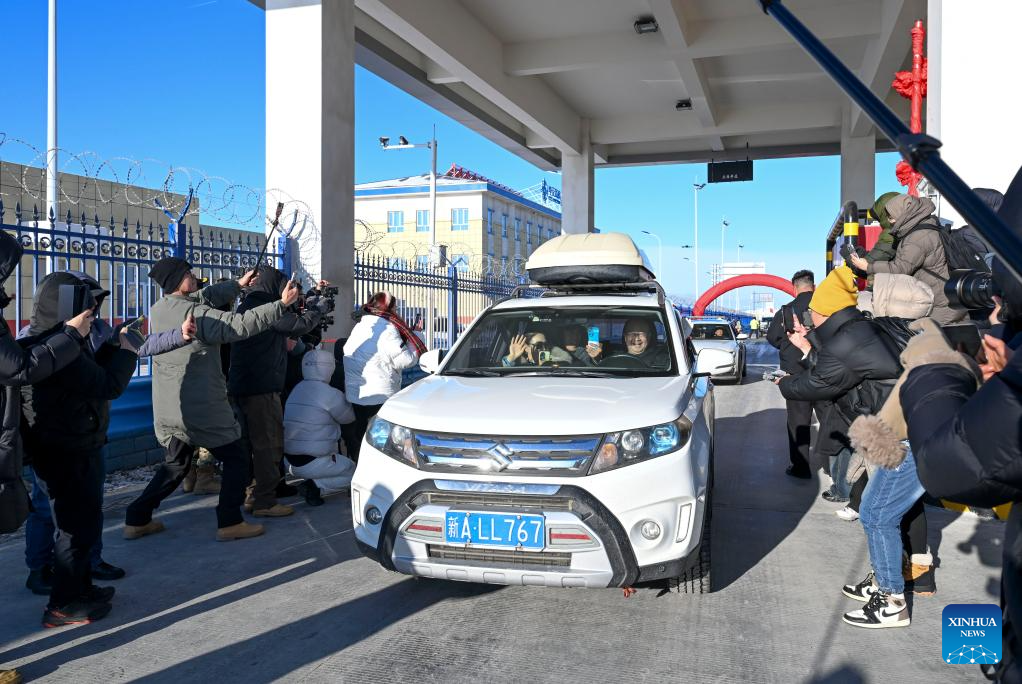
Media staff take photos of vehicles passing a toll station for the Urumqi-Yuli Expressway in Urumqi County, northwest China's Xinjiang Uygur Autonomous Region, Dec. 26, 2025. The 22.13-km Tianshan Shengli Tunnel, the world's longest expressway tunnel, officially opened to traffic on Friday.

Traversing the central Tianshan Mountains in northwest China's Xinjiang Uygur Autonomous Region, the tunnel slashes what was once a several-hour mountain drive to just 20 minutes.

As a vital artery linking city clusters in northern and southern Xinjiang, the G0711 Urumqi-Yuli Expressway, including the tunnel, entered operation on the same day. (Xinhua/Wang Fei)

13676a08413b406c8d32e4562c58148d.jpg


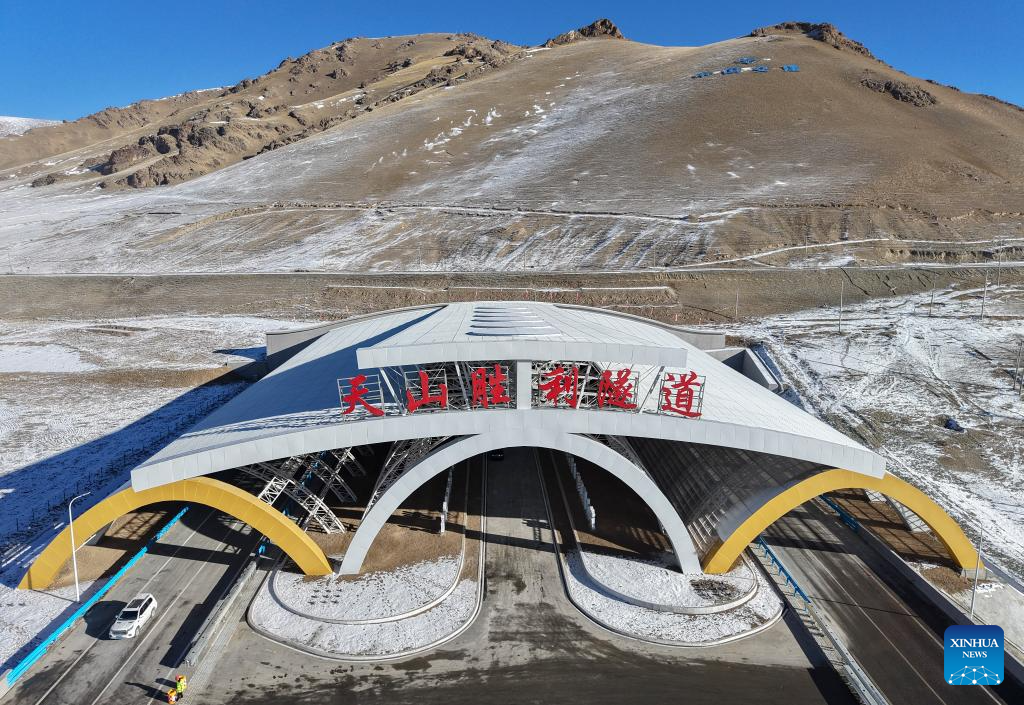
An aerial drone photo shows the exit of the Tianshan Shengli Tunnel on the Urumqi-Yuli Expressway in northwest China's Xinjiang Uygur Autonomous Region, Dec. 26, 2025. The 22.13-km Tianshan Shengli Tunnel, the world's longest expressway tunnel, officially opened to traffic on Friday.

Traversing the central Tianshan Mountains in northwest China's Xinjiang Uygur Autonomous Region, the tunnel slashes what was once a several-hour mountain drive to just 20 minutes.

As a vital artery linking city clusters in northern and southern Xinjiang, the G0711 Urumqi-Yuli Expressway, including the tunnel, entered operation on the same day. (Xinhua/Hu Huhu)

 
e83508b3efd447a082785df043cf210c.jpg


Vehicles wait to pass a toll station for the Urumqi-Yuli Expressway in Urumqi County, northwest China's Xinjiang Uygur Autonomous Region, Dec. 26, 2025. The 22.13-km Tianshan Shengli Tunnel, the world's longest expressway tunnel, officially opened to traffic on Friday.

Traversing the central Tianshan Mountains in northwest China's Xinjiang Uygur Autonomous Region, the tunnel slashes what was once a several-hour mountain drive to just 20 minutes.

As a vital artery linking city clusters in northern and southern Xinjiang, the G0711 Urumqi-Yuli Expressway, including the tunnel, entered operation on the same day. (Xinhua/Wang Fei)

6d5ab598a48d4245a5a0f88dd5d476a2.jpg


An aerial drone photo shows a vehicle driving out from the Tianshan Shengli Tunnel on Urumqi-Yuli Expressway in northwest China's Xinjiang Uygur Autonomous Region, Dec. 26, 2025. The 22.13-km Tianshan Shengli Tunnel, the world's longest expressway tunnel, officially opened to traffic on Friday.

Traversing the central Tianshan Mountains in northwest China's Xinjiang Uygur Autonomous Region, the tunnel slashes what was once a several-hour mountain drive to just 20 minutes.

As a vital artery linking city clusters in northern and southern Xinjiang, the G0711 Urumqi-Yuli Expressway, including the tunnel, entered operation on the same day. (Xinhua/Hu Huhu)

19341ae9858a473883cdf64d4aa43e7d.jpg


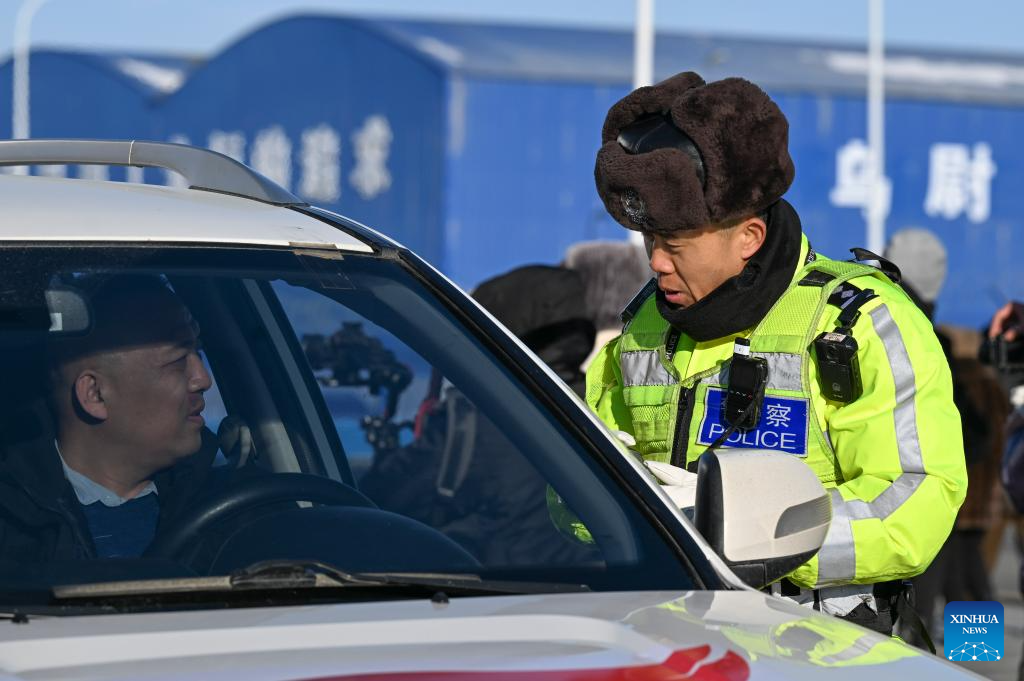
A policeman reminds a driver of safety precautions at a toll station for the Urumqi-Yuli Expressway in Urumqi County, northwest China's Xinjiang Uygur Autonomous Region, Dec. 26, 2025. The 22.13-km Tianshan Shengli Tunnel, the world's longest expressway tunnel, officially opened to traffic on Friday.

Traversing the central Tianshan Mountains in northwest China's Xinjiang Uygur Autonomous Region, the tunnel slashes what was once a several-hour mountain drive to just 20 minutes.

As a vital artery linking city clusters in northern and southern Xinjiang, the G0711 Urumqi-Yuli Expressway, including the tunnel, entered operation on the same day. (Xinhua/Wang Fei)

573bd186b300481da6d12fa6e75881da.jpg


Vehicles wait to pass a toll station for the Urumqi-Yuli Expressway in Urumqi County, northwest China's Xinjiang Uygur Autonomous Region, Dec. 26, 2025. The 22.13-km Tianshan Shengli Tunnel, the world's longest expressway tunnel, officially opened to traffic on Friday.

Traversing the central Tianshan Mountains in northwest China's Xinjiang Uygur Autonomous Region, the tunnel slashes what was once a several-hour mountain drive to just 20 minutes.

As a vital artery linking city clusters in northern and southern Xinjiang, the G0711 Urumqi-Yuli Expressway, including the tunnel, entered operation on the same day. (Xinhua/Xu Hongyan)

d59217561cb749efb2754dd92c400c3a.jpg


An aerial drone photo shows a vehicle driving out from the Tianshan Shengli Tunnel on the Urumqi-Yuli Expressway in northwest China's Xinjiang Uygur Autonomous Region, Dec. 26, 2025. The 22.13-km Tianshan Shengli Tunnel, the world's longest expressway tunnel, officially opened to traffic on Friday.

Traversing the central Tianshan Mountains in northwest China's Xinjiang Uygur Autonomous Region, the tunnel slashes what was once a several-hour mountain drive to just 20 minutes.

As a vital artery linking city clusters in northern and southern Xinjiang, the G0711 Urumqi-Yuli Expressway, including the tunnel, entered operation on the same day. (Xinhua/Hu Huhu)
242b98a193234fecbbe7243d1c4a67c3.jpg


An aerial drone photo shows a vehicle driving out from the Tianshan Shengli Tunnel on Urumqi-Yuli Expressway in northwest China's Xinjiang Uygur Autonomous Region, Dec. 26, 2025. The 22.13-km Tianshan Shengli Tunnel, the world's longest expressway tunnel, officially opened to traffic on Friday.

Traversing the central Tianshan Mountains in northwest China's Xinjiang Uygur Autonomous Region, the tunnel slashes what was once a several-hour mountain drive to just 20 minutes.

As a vital artery linking city clusters in northern and southern Xinjiang, the G0711 Urumqi-Yuli Expressway, including the tunnel, entered operation on the same day. (Xinhua/Hu Huhu)
 

Users who are viewing this thread

Country Watch Latest

Latest Posts

Back
Top