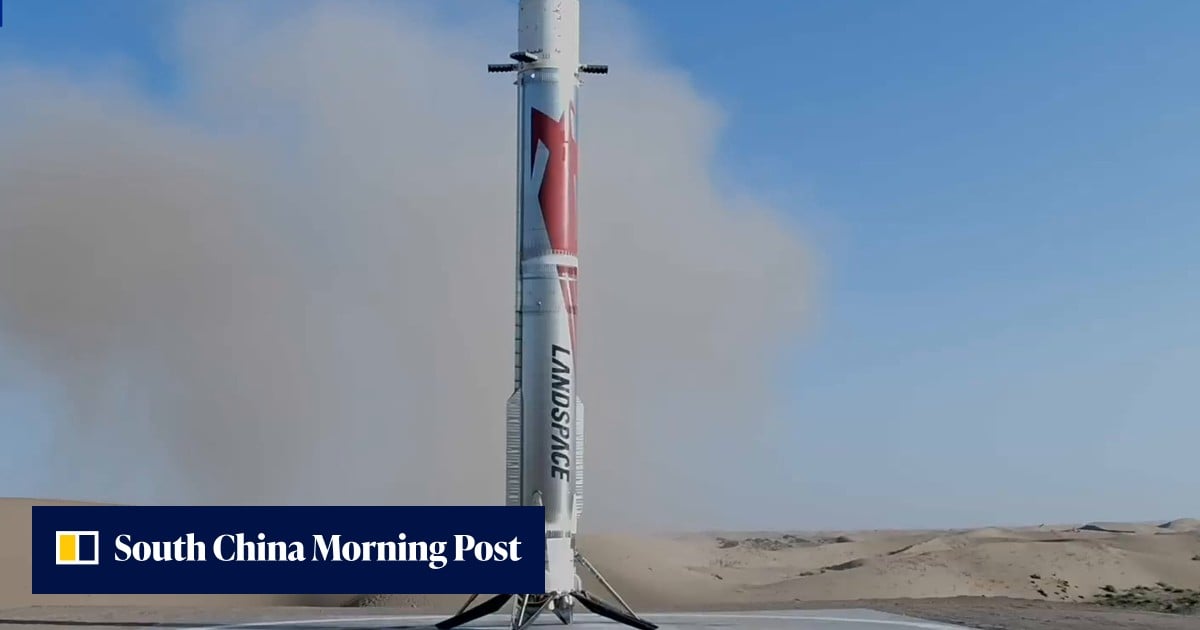
China launches Zhuque-3, achieving its first rocket recovery on land

chinasun

Registered Member
Joined
Apr 11, 2024
Messages
733
Reaction score
902
Reputation
1,638.3
Country of Origin
Country of Residence
China launches Zhuque-3, achieving its first rocket recovery on land


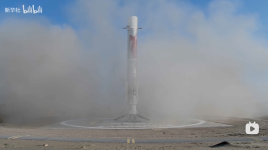
China launched the reusable rocket Zhuque-3 on Wednesday morning, achieving its first recovery of a rocket's first stage on land. #Zhuque-3
To view this content we will need your consent to set third party cookies.
For more detailed information, see our cookies page.


China's LEO constellation launches are climbing year by year. In 2027, launches will exceed 1,000, with Qianfan and GW aiming for 1,296 and 900 in-orbit satellites, respectively. Entering an intensive phase in 2028, the two constellations plan a combined 7,600 launches, which will scale up to over 8,600 by 2030.
 
Last edited:
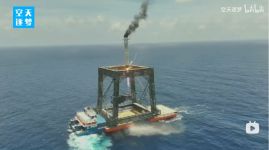
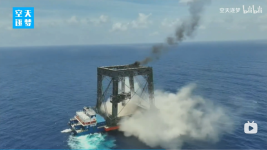
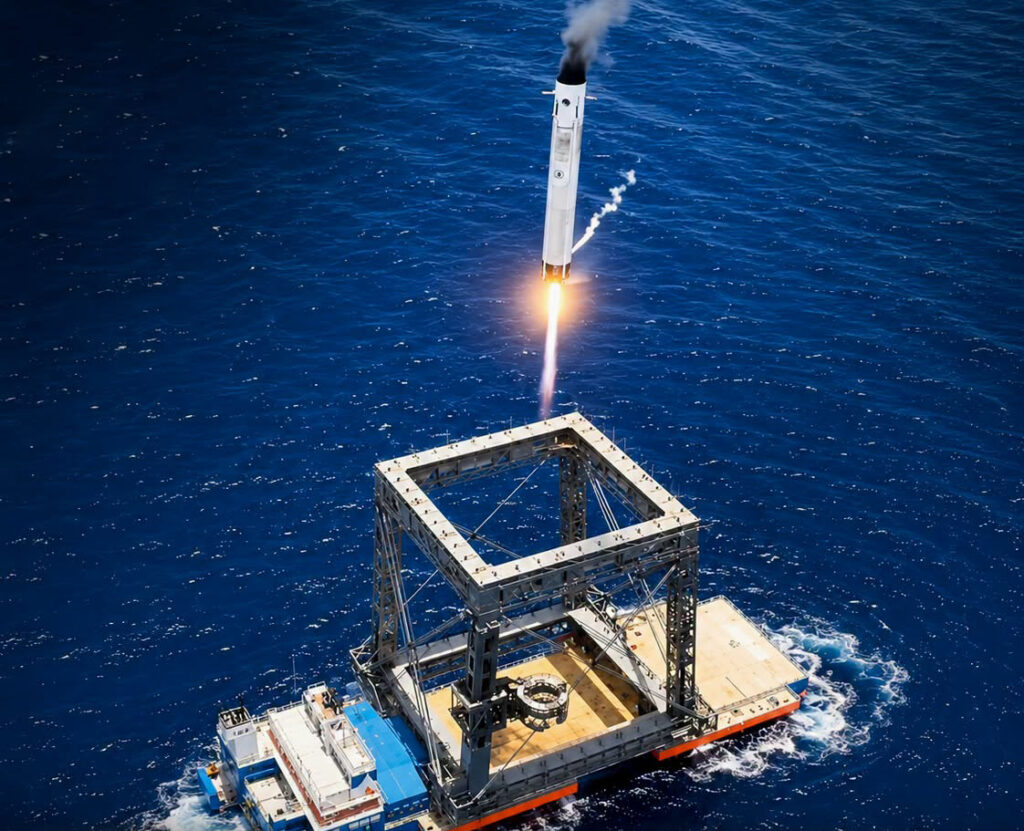
On July 10, 2026, the Changzheng-10B carrier rocket had a successful maiden flight at the Hainan Commercial Space Launch Site, with one of its first-stage rockets accurately recovered on a sea platform using the world’s first net-style capture method.
1787106536825.png
1787106573273.png
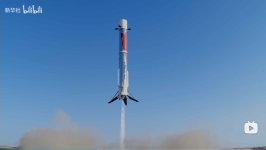
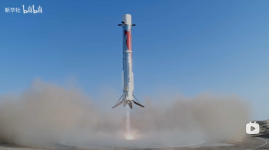
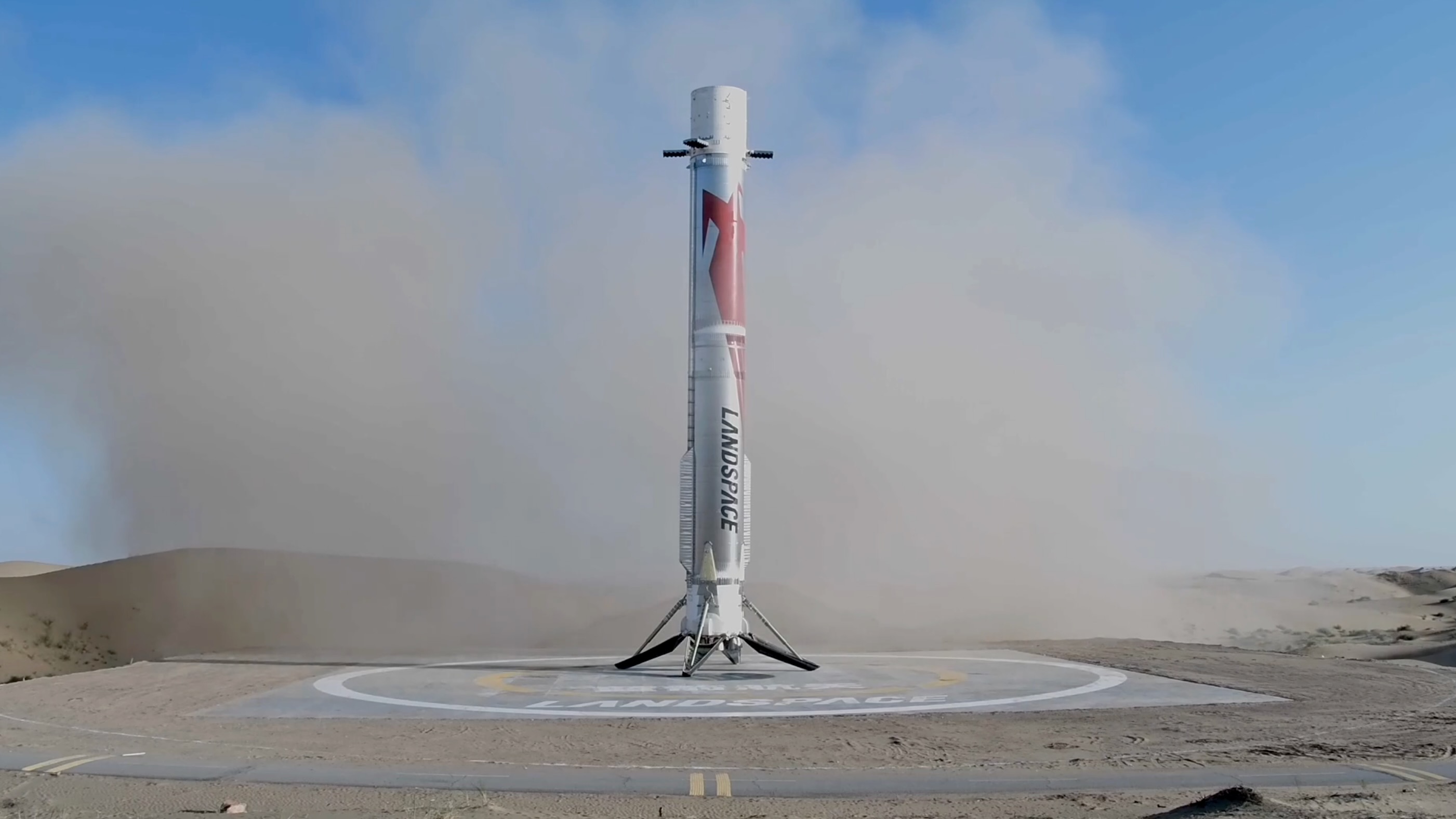
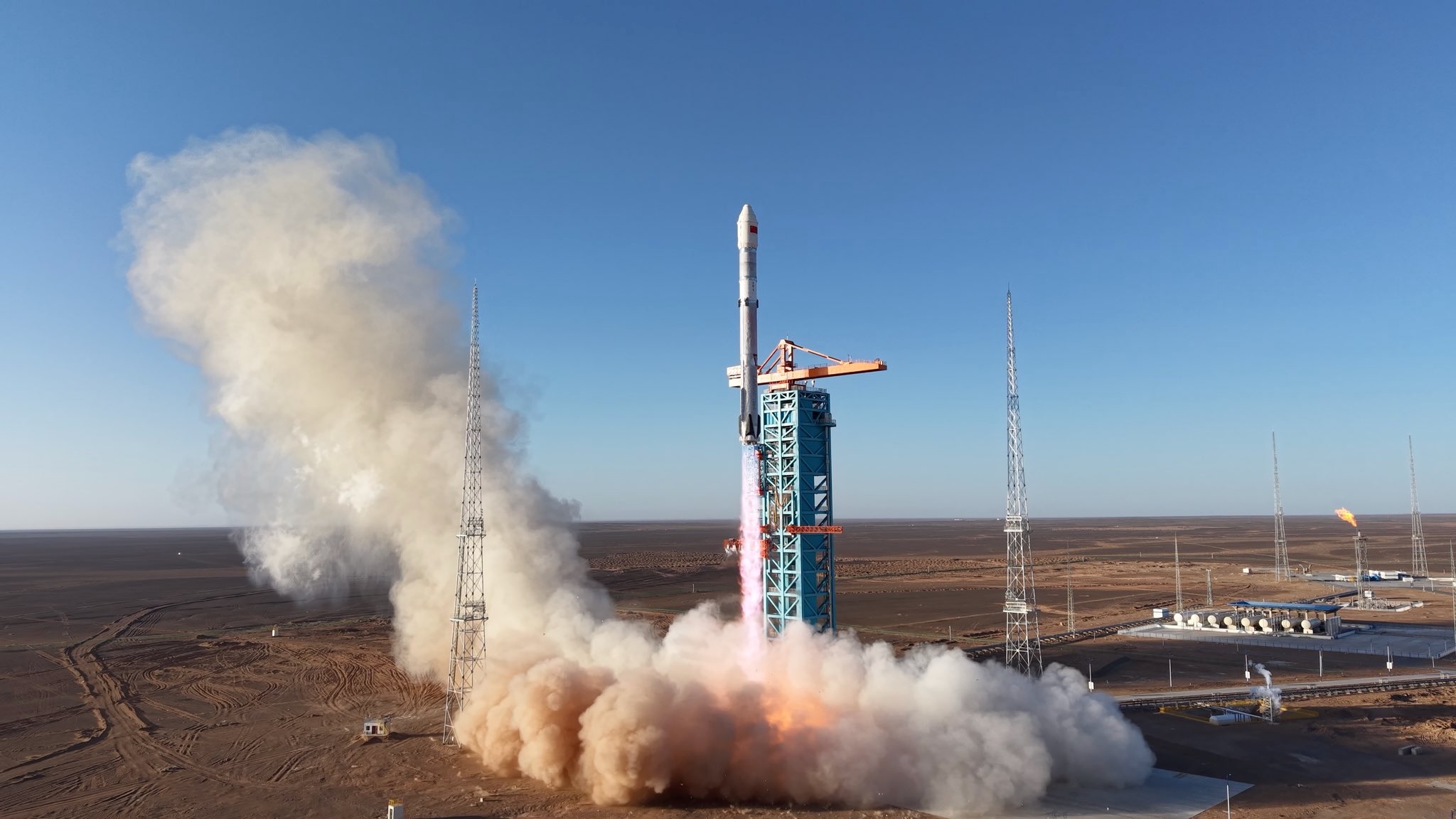
On August 19, 2026, the Zhuque-3 carrier rocket was successfully launched, and one of its first-stage rockets landed precisely on the planned landing site according to the scheduled procedure.
1787106668177.png
1787106693382.png
1787106722408.png
Both completed their satellite launch missions and successfully recovered a first-stage rocket. China became the first country in the world to master both "net recovery" and "land recovery" rocket technologies at the same time.

The difference between Chinese technology and Musk’s technology lies in their approaches. Chinese technology reduces launch costs and offers more technical diversity. Musk’s technology has an advantage in launch frequency. Chinese tech is creating competition in the commercial satellite launch sector and is expected to lead to a drop in Musk’s stock.
 
It is impressive for China's reusable rocket milestone, and hopefully it could be soon commercialized like the Falcon 9 in large scale.

Also, don't forget the main dish which is the lunar version of the Long March 10 in next year.
 

Touchdown! Private Chinese rocket aces landing on 2nd-ever flight

By Mike Wall
Published 1 hour ago

"This mission marks China's first-ever successful recovery attempt of the first stage of an orbital-class launch vehicle using landing legs, and China's first successful booster recovery on land."
a red and white rocket rests on a landing pad beneath a blue sky


The first stage of LandSpace's Zhuque-3 rocket rests on its landing pad shortly after its historic touchdown on Aug. 18, 2026. (Image credit: LandSpace)

China just notched another big spaceflight milestone.

The Beijing startup LandSpace successfully landed the first stage of its Zhuque-3 rocket this evening (Aug. 18), becoming the first Chinese company ever to do so during an orbital launch.

It was just the second Chinese orbital rocket touchdown overall. The first was pulled of on July 10 by a Long March 10B, which is built by the state-owned China Aerospace Science and Technology Corporation (CASC).

The Long March 10B had some help returning to Earth, settling softly into a net-like device affixed to a ship at sea. But Zhuque-3 came down on terra firma and stayed upright thanks to a set of landing legs, like those sported by SpaceX's workhorse Falcon 9 rocket.

"This mission marks China's first-ever successful recovery attempt of the first stage of an orbital-class launch vehicle using landing legs, and China's first successful booster recovery on land," LandSpace said via X this evening.

"It is a pivotal flight test for Zhuque-3 as it transitions from the technological demonstration and verification phase toward the engineering application phase of reusability," the company added. "This mission further verified the design correctness and reliability of the Zhuque-3 reusable launch vehicle system, validated its first-stage recovery capability and engineering maturity."

Zhuque-3 broadly resembles the Falcon 9, which made its first landing way back in 2015 and now has more than 600 of them under its belt. Both feature a reusable booster and an expendable upper stage, and they're about the same height — 230 feet (70 meters) for the Falcon 9 and 216 feet (66 m) for Zhuque-3.

Their lifting power is similar as well. Zhuque-3 can haul about 40,350 pounds (18,300 kilograms) to low Earth orbit, while the Falcon 9's LEO payload capacity is 50,265 pounds (22,800 kg).

The two rockets use two very different fuels, however — a combination of liquid oxygen (LOX) and rocket-grade kerosene for the Falcon 9, compared to LOX and liquid methane for Zhuque-3. This "methalox" mixture is also used by Starship, the fully reusable megarocket that SpaceX is developing to help humanity settle the moon and Mars, among other spaceflight tasks.

a white and red rocket launches from a desert spaceport

LandSpace's Zhuque-3 rocket launches on its second-ever mission on Aug. 18, 2026. The flight was a success, and Zhuque-3's first stage returned to Earth for a landing — the first ever for a private Chinese orbital rocket. (Image credit: LandSpace)

Today's launch — which occurred from the Dongfeng Commercial Space Innovation Pilot Zone in northwest China at 7:35 p.m. EDT (2335 GMT; 7:35 a.m. on Aug. 19 Beijing time) — was the second overall for the Zhuque-3. The rocket first flew on Dec. 2, 2025, on a mostly successful debut; Zhuque-3's upper stage reached orbit as planned, which is rare for a first flight.

LandSpace tried to bring the booster back for a touchdown that day as well, but the attempt failed. Zhuque-3 suffered "an abnormal combustion" as it neared the ground, according to the state-run outlet Xinhua (translation by Google), and ended up exploding near the designated landing pad.

Today's mission, however, was an unqualified success for the Zhuque-3: The rocket's upper stage delivered a satellite called Honghu 03, which was developed by Hongqing Technology, to its designated orbit, LandSpace wrote in another X post today.

Zhuque-3 is part of a concerted Chinese push toward rocket reusability, an efficiency-boosting feature that has helped make the Falcon 9 the world's leading launcher by far. (The SpaceX rocket flew 165 times in 2025, roughly equalling the activity of all other orbital launchers combined.)

For example, CASC isn't just working on the Long March 10 line (which includes the 10A crew-carrying variant); its Long March 12A and 12B rockets will also have reusable first stages. The Long March 12A has lifted off once to date, in December 2025, and its debut was similar to that of Zhuque-3: The Long March 12A second stage reached orbit successfully, but its booster failed to stick the landing.

And then there are the private rockets. A number of Chinese companies in addition to LandSpace are working on vehicles with reusable first stages, including CAS Space, Deep Blue Aerospace, Galactic Energy, iSpace, Orienspace and Space Pioneer. So Chinese rocket landings may not be a novelty for much longer.

 
China's LandSpace lands rocket booster; joins SpaceX, Blue Origin with reusable tech
August 19, 20267:59 AM GMT+8

BEIJING, Aug 19 (Reuters) - Chinese startup LandSpace on Wednesday recovered the first stage of its Zhuque-3 rocket, joining SpaceX and Blue Origin as the only private companies to land ‌an orbital-class booster and narrowing China's gap with the U.S. in reusable rockets.

The ability to return, recover and reuse a booster is crucial to reduce cost and make it easier to put satellites into orbit, turning space exploration into a commercially viable business similar to civil aviation.

The achievement occurred during LandSpace's second attempt to land the engine-packed first stage of the Zhuque-3, a stainless-steel rocket billed as China's answer to SpaceX's Falcon 9.

The 66.1-metre (216-foot) Zhuque-3 lifted off from the Dongfeng Commercial Space Innovation Pilot Zone in ⁠northwestern China, with the nine-engine first stage – or booster – returning to a landing site in the province of Gansu, 390 km (242 miles) southeast of the launch pad, state media reported.

The landing is likely to increase investor confidence as LandSpace pursues a listing on the Shanghai Stock Exchange's tech-focused STAR Market. LandSpace seeks to raise 7.5 billion yuan ($1.11 billion) through an initial public offering to support development and expand reusable launch services.

The firm submitted an updated IPO prospectus to the bourse in June that said it aimed to be profitable by 2029.

LandSpace said the Zhuque-3 is made of stainless steel which offers greater heat resistance and the prospect of reduced production costs compared with the Falcon 9's aluminium-lithium alloy body. It also runs on methane and liquid oxygen which can burn cleaner than the Falcon 9's liquid oxygen and kerosene mix.

The rocket ‌can lift ⁠14.2 metric tons to low Earth orbit on a one-way trip versus the Falcon 9's 22.8 tons, LandSpace said.

LandSpace aims for the Zhuque-3 booster to be reused up to 20 times. SpaceX launches the Falcon 9 around 150 times a year, or roughly three times a week, and reuses its booster dozens of times.

FOURTH ATTEMPT​

Wednesday's launch marked China's fourth orbital booster recovery attempt. LandSpace made history in December 2025 as the first Chinese entity to conduct a ⁠reusable rocket test. The rocket entered orbit as planned, but its first stage did not complete a controlled landing.

Weeks later, China launched the state-developed Long March 12A, which also reached orbit but failed in recovery.

In July, China successfully tested an experimental booster retrieval system using a net-capture system on a floating seaborne platform, ⁠becoming just the second country to land an orbital-class rocket.

Unlike deployable legs, the Long March 10B reusable rocket used four lightweight hooks to engage with steel cables on the platform's net system, an innovation Beijing says simplifies the rocket's onboard structure, reduces vehicle mass and increases payload capacity.

With ⁠Wednesday's landing, LandSpace has now delivered China's first successful ground-based, leg-landed recovery of an orbital-class booster.

LandSpace plans to reuse a recovered first-stage booster in the next six months, a step it says will lay a foundation for future high-frequency and low-cost commercial launches.

 
WATCH: China's Zhuque-3 Rocket Blasts Off, First Stage Returns to Land | APT

To view this content we will need your consent to set third party cookies.
For more detailed information, see our cookies page.
 
It is impressive for China's reusable rocket milestone, and hopefully it could be soon commercialized like the Falcon 9 in large scale.

Also, don't forget the main dish which is the lunar version of the Long March 10 in next year.
Our goal is the stars in the sky.

So far, our country has carried out 48 international commercial launches for more than 20 countries or regions, launching 56 satellites. We’ve provided 17 rideshare launch services to international clients, sending up 23 small satellites or payloads.

These numbers are far below Musk’s launch missions. But Musk’s launch data mainly comes from internal Starlink deployment and orders from the U.S. government and military, which is an inevitable result of the U.S. tech blockade and trade protection.

As the International Space Station gradually ages, China and Russia have decided to extend its service until 2030, and so far, no replacement work has started. We have a clear advantage: astronauts from friendly countries can travel to the Chinese space station on Chinese spacecraft to conduct scientific experiments, which is a very appealing bargaining chip.
 
FULL VIDEO: New close-up footage of historic Zhuque-3 launch and landing

To view this content we will need your consent to set third party cookies.
For more detailed information, see our cookies page.
 

China’s LandSpace beats SpaceX with steel-booster recovery after orbital launch​

Zhuque-3 is China’s second orbital rocket to demonstrate first-stage recovery after Long March-10B first stage was captured by net in July


Published: 8:28am, 19 Aug 2026

382908cc-0196-46c0-b3c2-1be5f0efd243_919a7994.jpg


In a global first, China’s leading commercial rocket company LandSpace has recovered a stainless-steel booster after an orbital launch, marking a major step in the country’s efforts to develop lower-cost, reusable rockets.

The successful mission makes Zhuque-3 China’s first commercial rocket to both reach orbit and have its first stage recovered.

SpaceX’s Super Heavy booster, which is also made of stainless steel, is awaiting US Federal Aviation Administration (FAA) approval for its first recovery flight to send the Starship into orbit.

LandSpace also became the fourth entity – after US companies SpaceX and Blue Origin, and the state-owned China Aerospace Science and Technology Corporation – to recover a launch vehicle.

The 66-metre (217-foot) rocket, powered by liquid methane and oxygen, lifted off from the Jiuquan Satellite Launch Centre in the Gobi Desert at 7.35am on Wednesday, according to state news agency Xinhua.

The rocket delivered a Honghu-3 internet satellite into its designated orbit, while its first stage returned to Earth and touched down vertically at a recovery site in Minqin county, Gansu province, about 390km (242 miles) southeast of the launch pad.

It was LandSpace’s second attempt to launch Zhuque-3 into orbit and recover its first stage. During its maiden flight in December, the second stage successfully reached orbit, but the first stage erupted in a dramatic fireball during its final powered descent towards the landing pad.


Users who are viewing this thread

  • voo

Pakistan Defence Latest

Country Watch Latest

Back
Top