
hydrabadi_arab
Trusted Member

BEIJING, Sept. 20 (China Economic Net) -- New research into ancient river civilizations, historical routes and the firsthand memories of Karakoram Highway builders is offering fresh perspectives on the long history of exchanges between China and Pakistan, as the two countries mark the 75th anniversary of the establishment of diplomatic relations.
The research was showcased at a dialogue held on September 13 at Tsinghua University, where scholars presented the multilingual book Indus and Yangtze: A Journey of Two Rivers from One Origin, research on ancient routes in the Yarkand River Valley, an oral history of Karakoram Highway builders, and doctoral research on Pakistan.
The event was attended by Pakistani Ambassador to China Khalil Hashmi and Shi Anbin, Party Secretary and Chair of the School Board of Tsinghua University's School of Journalism and Communication, along with scholars, researchers and representatives from academic and cultural institutions in China and Pakistan. It was hosted by the Pakistan Center for Culture and Communication at Tsinghua University.
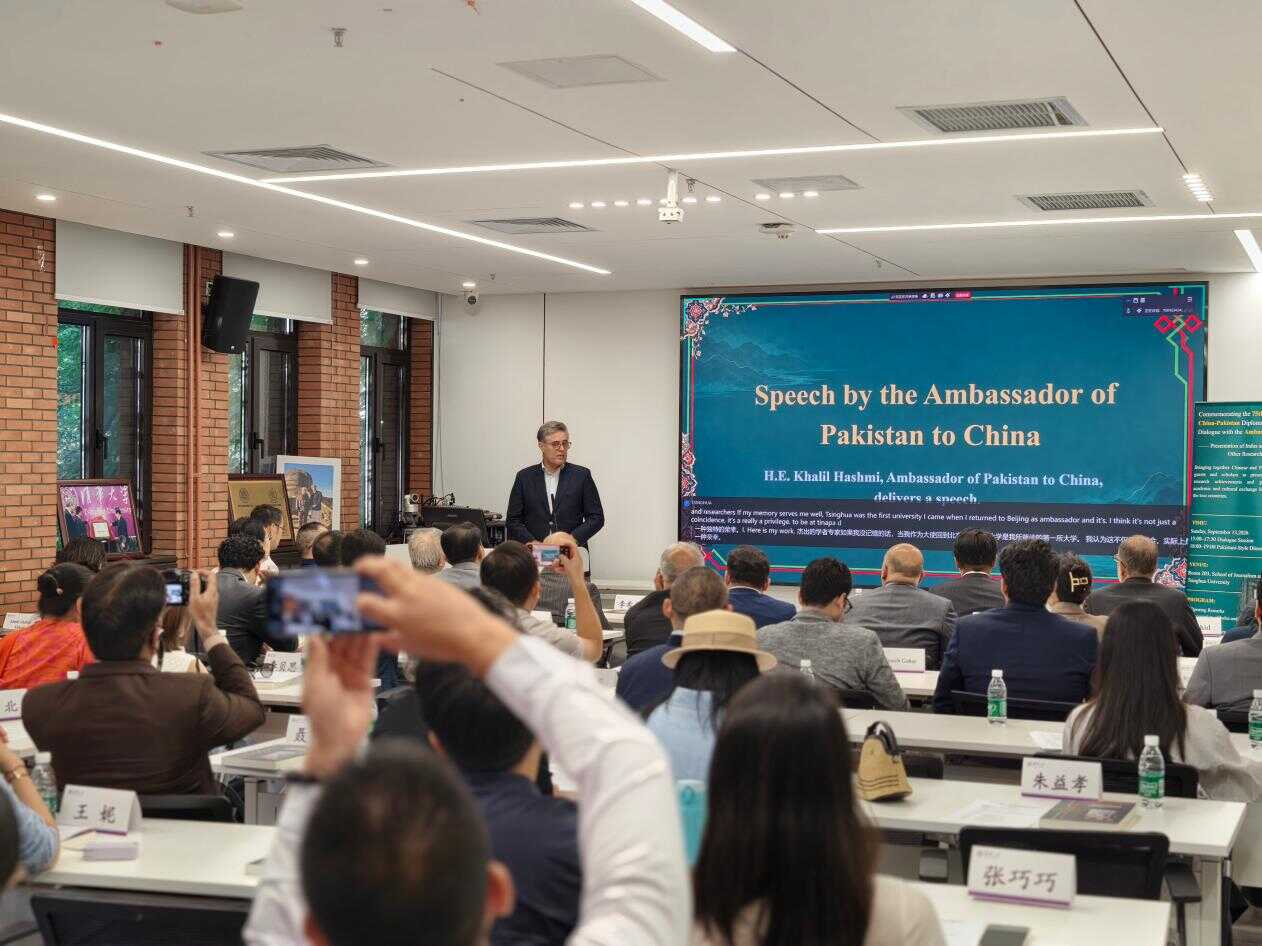
Pakistani Ambassador to China Khalil Hashmi delivers a speech at the event. photo provided to CEN
In his remarks, Hashmi said strategic trust had been a defining foundation of Pakistan-China relations, describing it as a product of decades of exchanges among political leaders, diplomats, scholars, media professionals and people from different sectors.
As his 34-month tenure in China draws to a close, the ambassador reflected on his extensive travels across the country, saying he had been privileged to "travel the length and breadth" of China and visit almost all of its regions and municipalities.
"These experiences gave me insights and opportunities to learn from the transformation that has occurred in China," he said, adding that his travels had also deepened his understanding of what China's leaders mean when they speak of "harmony between humanity and nature," as well as the broader concepts of "harmony, shared development, shared prosperity and shared future."
Shi Anbin said the role of academic and communication institutions extended beyond the transmission of knowledge and skills.
"Journalism and communication education is not only about the transmission of knowledge and skills; it can also serve as an important bridge connecting different countries and peoples," Shi said.
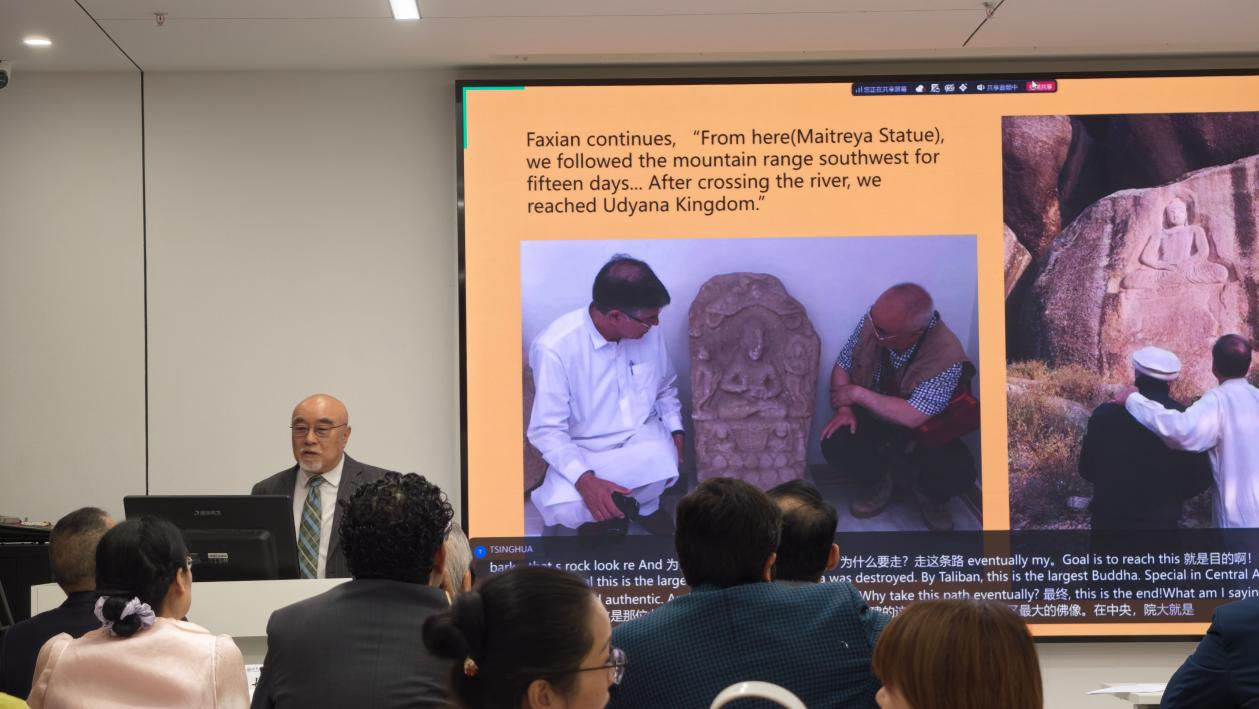
Professor Li Xiguang gives a keynote speech introducing his research team's field investigations into ancient routes. photo provided to CEN
At the center of the event was Indus and Yangtze: A Journey of Two Rivers from One Origin, edited by Li Xiguang, former executive vice dean of Tsinghua University's School of Journalism and Communication, and Zahid Anwar, former vice chancellor of the University of Peshawar.
Presented in English, Urdu and Chinese, the book uses the two rivers as a lens to examine the civilizations they nurtured, the economic development they supported and the networks of cultural exchange that developed across the region.
Li said the research seeks to clarify the geographical and civilizational significance of the Indus River while using the two rivers to better understand the historical connections between China and Pakistan.
The research highlights the Gandhara civilization, the spread of Buddhism and ancient transportation networks in the Indus basin, as well as their connections with the journeys of Chinese Buddhist monk Faxian and exchanges along the ancient Silk Road.
Zahid said the two rivers had shaped societies from ancient agricultural civilizations and urban development to modern energy production, industry and international trade.
"The development trajectories of the Yangtze and Indus show that great rivers not only nurture civilizations, but also continue to drive modern economic and regional cooperation," he said.
The research presented at the event also sought to reconstruct the routes through which people, ideas and cultures traveled between the two regions.
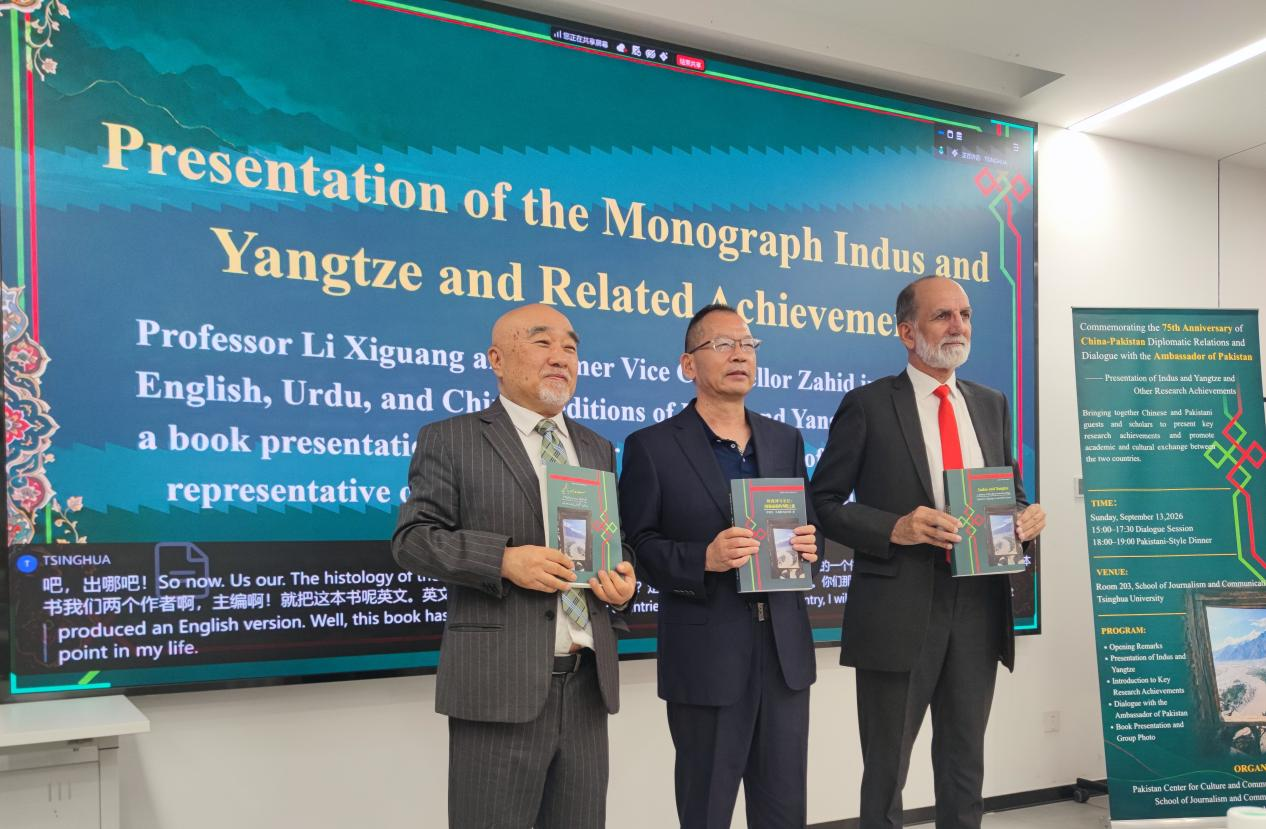
Professor Li Xiguang (L1), Yao Yuanjun (L2), Senior Advisor and Deputy Secretary-General of Yangtze River Culture Promotion Association, and Zahid Anwar (L3), former vice chancellor of the University of Peshawar, present the book Indus and Yangtze: A Journey of Two Rivers from One Origin in Urdu, Chinese and English. photo provided to CEN
Li Xiguang presented research on the westward journey of the Chinese monk Faxian to the ancient Kingdom of Udyana, drawing on historical documents, early maps and field investigations to examine ancient mountain routes connecting China with areas of present-day Pakistan.
"Research on ancient routes cannot remain only in historical documents. We need to go to the places where history happened and look for traces left by exchanges between civilizations," Li said.
Professor Guo Xiaoke presented the Yarkand River Valley — Exploring the Ancient Route to Pakistan project, combining field research, historical inquiry and documentary filmmaking to investigate ancient routes linking present-day Xinjiang and Pakistan.
The event also brought history into a more personal dimension through an oral history project on the builders of the Karakoram Highway.
Zhang Jing, a lecturer at Xinjiang University of Finance and Economics, presented interviews and documentary material documenting people involved in the construction of the highway. The project has contacted more than 100 people connected with the project and interviewed a number of firsthand participants, seeking to preserve their memories as the generation that experienced the construction ages.
"The Karakoram Highway is not merely a road, but also a concrete witness to the shared memories and friendship between China and Pakistan," Zhang said.
The program further featured doctoral research on Pakistan by Tsinghua University graduates Wen Sanmei and Liu Bei, while scholars from Nankai University, Sichuan University, Hebei Normal University and Beijing Foreign Studies University discussed field research, civilizational exchange and academic cooperation.
Taken together, the projects presented at the event offered different ways of looking at China-Pakistan relations — through rivers that nurtured ancient civilizations, routes that carried people and ideas across mountains, and personal memories preserved through oral history.
By connecting historical records with field research and individual experiences, the projects also highlighted the role of academic and cultural exchange in deepening mutual understanding between the two countries, while opening new possibilities for cooperation among universities, researchers and young people.
The research was showcased at a dialogue held on September 13 at Tsinghua University, where scholars presented the multilingual book Indus and Yangtze: A Journey of Two Rivers from One Origin, research on ancient routes in the Yarkand River Valley, an oral history of Karakoram Highway builders, and doctoral research on Pakistan.
The event was attended by Pakistani Ambassador to China Khalil Hashmi and Shi Anbin, Party Secretary and Chair of the School Board of Tsinghua University's School of Journalism and Communication, along with scholars, researchers and representatives from academic and cultural institutions in China and Pakistan. It was hosted by the Pakistan Center for Culture and Communication at Tsinghua University.
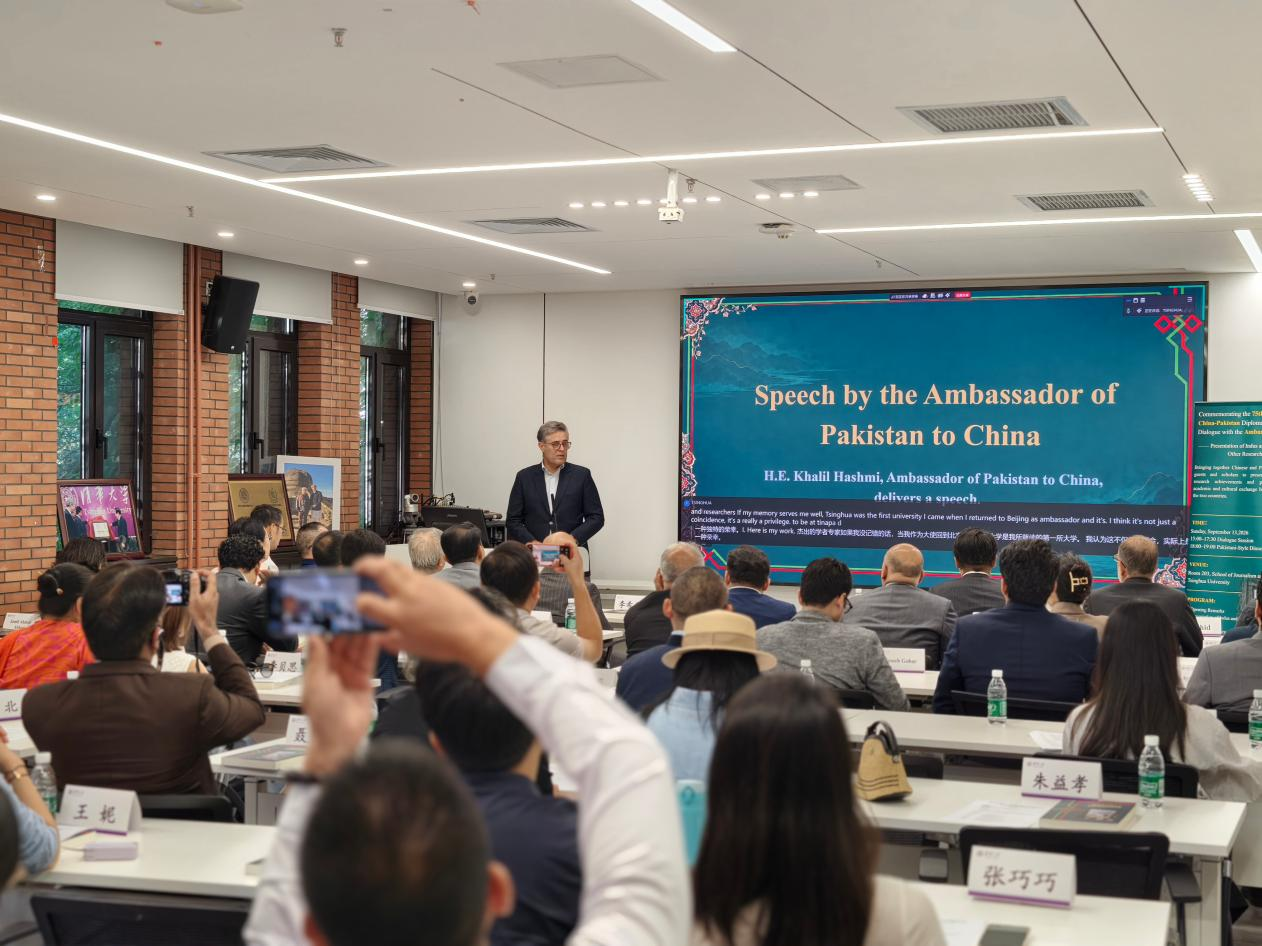
Pakistani Ambassador to China Khalil Hashmi delivers a speech at the event. photo provided to CEN
In his remarks, Hashmi said strategic trust had been a defining foundation of Pakistan-China relations, describing it as a product of decades of exchanges among political leaders, diplomats, scholars, media professionals and people from different sectors.
As his 34-month tenure in China draws to a close, the ambassador reflected on his extensive travels across the country, saying he had been privileged to "travel the length and breadth" of China and visit almost all of its regions and municipalities.
"These experiences gave me insights and opportunities to learn from the transformation that has occurred in China," he said, adding that his travels had also deepened his understanding of what China's leaders mean when they speak of "harmony between humanity and nature," as well as the broader concepts of "harmony, shared development, shared prosperity and shared future."
Shi Anbin said the role of academic and communication institutions extended beyond the transmission of knowledge and skills.
"Journalism and communication education is not only about the transmission of knowledge and skills; it can also serve as an important bridge connecting different countries and peoples," Shi said.
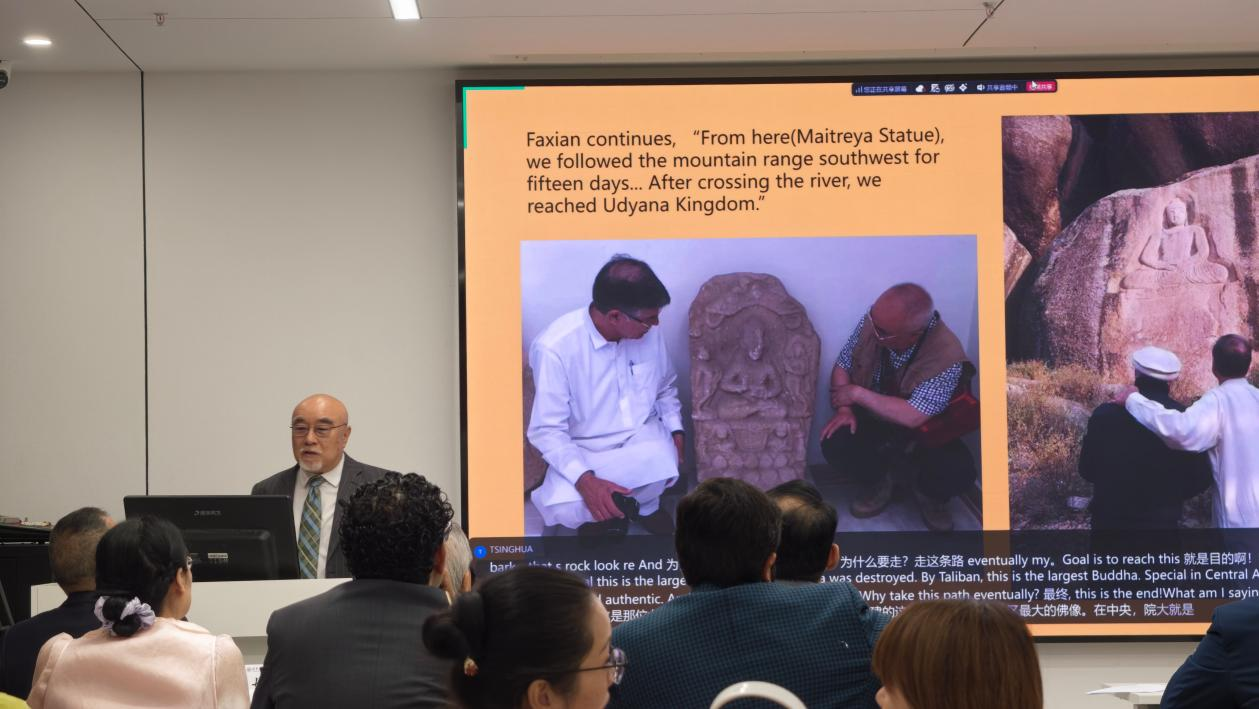
Professor Li Xiguang gives a keynote speech introducing his research team's field investigations into ancient routes. photo provided to CEN
At the center of the event was Indus and Yangtze: A Journey of Two Rivers from One Origin, edited by Li Xiguang, former executive vice dean of Tsinghua University's School of Journalism and Communication, and Zahid Anwar, former vice chancellor of the University of Peshawar.
Presented in English, Urdu and Chinese, the book uses the two rivers as a lens to examine the civilizations they nurtured, the economic development they supported and the networks of cultural exchange that developed across the region.
Li said the research seeks to clarify the geographical and civilizational significance of the Indus River while using the two rivers to better understand the historical connections between China and Pakistan.
The research highlights the Gandhara civilization, the spread of Buddhism and ancient transportation networks in the Indus basin, as well as their connections with the journeys of Chinese Buddhist monk Faxian and exchanges along the ancient Silk Road.
Zahid said the two rivers had shaped societies from ancient agricultural civilizations and urban development to modern energy production, industry and international trade.
"The development trajectories of the Yangtze and Indus show that great rivers not only nurture civilizations, but also continue to drive modern economic and regional cooperation," he said.
The research presented at the event also sought to reconstruct the routes through which people, ideas and cultures traveled between the two regions.
Professor Li Xiguang (L1), Yao Yuanjun (L2), Senior Advisor and Deputy Secretary-General of Yangtze River Culture Promotion Association, and Zahid Anwar (L3), former vice chancellor of the University of Peshawar, present the book Indus and Yangtze: A Journey of Two Rivers from One Origin in Urdu, Chinese and English. photo provided to CEN
Li Xiguang presented research on the westward journey of the Chinese monk Faxian to the ancient Kingdom of Udyana, drawing on historical documents, early maps and field investigations to examine ancient mountain routes connecting China with areas of present-day Pakistan.
"Research on ancient routes cannot remain only in historical documents. We need to go to the places where history happened and look for traces left by exchanges between civilizations," Li said.
Professor Guo Xiaoke presented the Yarkand River Valley — Exploring the Ancient Route to Pakistan project, combining field research, historical inquiry and documentary filmmaking to investigate ancient routes linking present-day Xinjiang and Pakistan.
The event also brought history into a more personal dimension through an oral history project on the builders of the Karakoram Highway.
Zhang Jing, a lecturer at Xinjiang University of Finance and Economics, presented interviews and documentary material documenting people involved in the construction of the highway. The project has contacted more than 100 people connected with the project and interviewed a number of firsthand participants, seeking to preserve their memories as the generation that experienced the construction ages.
"The Karakoram Highway is not merely a road, but also a concrete witness to the shared memories and friendship between China and Pakistan," Zhang said.
The program further featured doctoral research on Pakistan by Tsinghua University graduates Wen Sanmei and Liu Bei, while scholars from Nankai University, Sichuan University, Hebei Normal University and Beijing Foreign Studies University discussed field research, civilizational exchange and academic cooperation.
Taken together, the projects presented at the event offered different ways of looking at China-Pakistan relations — through rivers that nurtured ancient civilizations, routes that carried people and ideas across mountains, and personal memories preserved through oral history.
By connecting historical records with field research and individual experiences, the projects also highlighted the role of academic and cultural exchange in deepening mutual understanding between the two countries, while opening new possibilities for cooperation among universities, researchers and young people.


