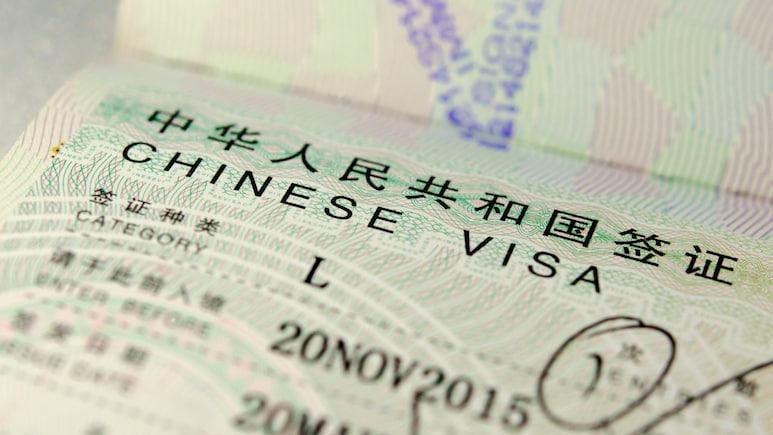
China Rejects Up To 95% Of Business Visa Applications From India

Beijingwalker

VIP Member
Joined
Nov 4, 2011
Messages
93,135
Reaction score
113,578
Reputation
2,092.1
Country of Origin
Country of Residence

China Rejects Up To 95% Of Business Visa Applications From India. Here's How To Apply​

Chinese business visa approvals for Indian companies fall sharply, causing travel delays and operational challenges.

China Rejects Up To 95% Of Business Visa Applications From India. Here's How To Apply

Business visa approvals for Indians traveling to China drop.

Indian professionals travelling to China for work are facing a new issue as business visa approvals have fallen significantly. It has been harder for companies to send executives, engineers and technical teams to the country.

As Economic Times reports, some Indian companies are able to get only 20% to 40% of their Chinese business visa applications approved. Earlier, almost all the applications used to get easy approvals. For some companies, executives say the rejection rate has climbed as high as 95%.

Indian Companies Face Massive China Visa Problem

Chinese business visas were earlier considered relatively routine for Indian companies with regular business ties in China. That process has now become slower and less predictable, according to executives cited by ET.

Applications are now being examined more closely. Yes, rejected applications have to be filed again, but it doesn't guarantee approval either. Consequently, it is turning into a growing problem for businesses that regularly conduct company dealings in China.

Many Indian manufacturers still depend heavily on China. Depending on the industry, up to 50% of capital goods and parts are imported from China, according to executives from electronics and automotive contract manufacturing companies who spoke with ET. It means that travelling to China remains a significant part of their business operations.

Several Indian businesses send workers to China for tasks related to manufacturing, technical assignments, sourcing, business negotiations, and other purposes. When those employees cannot get visas on time, even ordinary plans can be put on hold.

The visa problems are already changing how some companies conduct business. Indian and Chinese companies are reportedly shifting meetings to Singapore, Thailand, Malaysia and Hong Kong.

A business trip that may previously have been relatively straightforward could now involve longer processing times, possible rejection, fresh applications, and meetings moved to another country. This particularly affects executives, engineers, technical specialists, sales teams and management personnel who need to travel frequently.

Is China Stopping Indian Business Visas Completely?
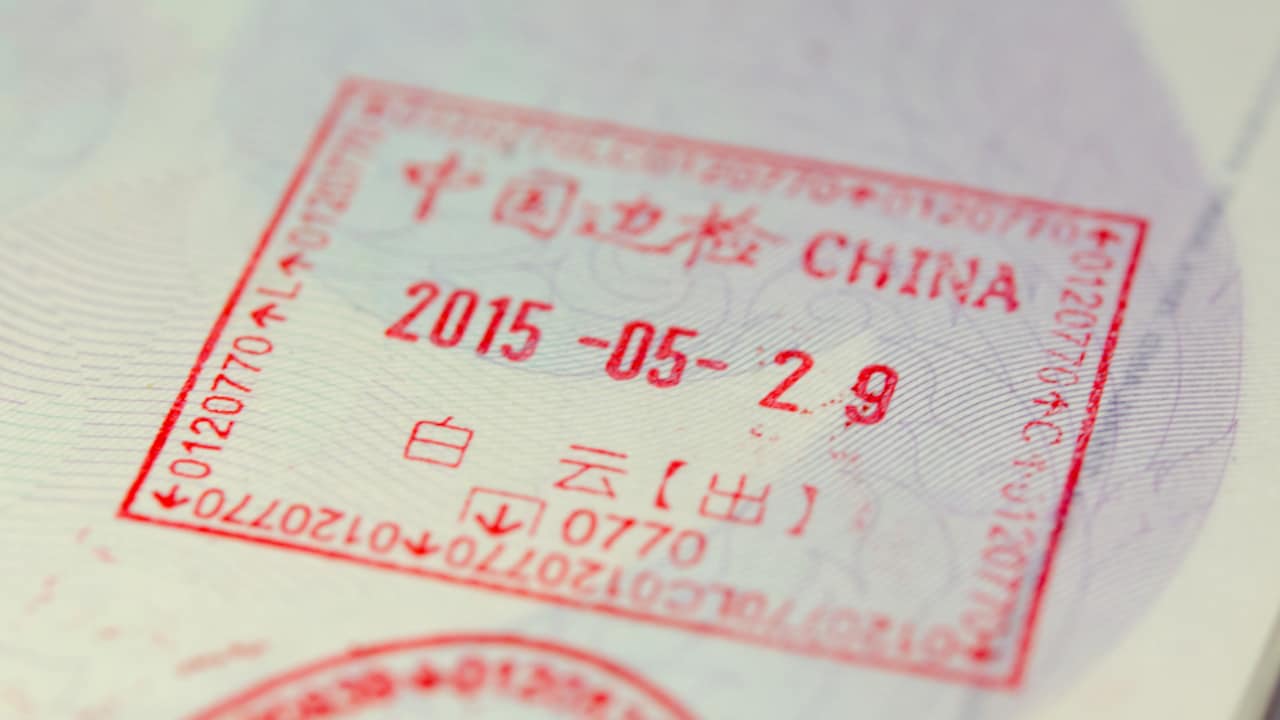
Business visa approvals for Indians traveling to China drop.

Photo: Canva

According to Economic Times reports, there's no blanket ban on Indian business visas. However, companies are reporting sharply lower approval rates and increased scrutiny. Sure, some firms have reportedly received approvals, but the number of successful applications has fallen significantly compared with earlier periods.

Indian companies may be able to hold a meeting in Singapore or Thailand instead of China. But some work cannot be easily moved. Equipment installation, factory visits, technical troubleshooting and certain manufacturing discussions may require personnel to be physically present in China.

That is why the visa restrictions could create complications for some businesses.

China's Business Visa

The M visa is China's business visa that lets foreigners travel to China for commercial and trade activities such as business meetings, workshops, training sessions, or other business-related activities.

It is generally suitable for people making work-related visits to China who are not employed or paid by a company incorporated in China and who spend less than six months in China in a given year. A key requirement is a business invitation from a company based in China.

The Process Of Application

  • The first step is to establish that the trip is genuinely for commercial or trade-related purposes.
  • Next, it is imperative to obtain a business invitation, one of the most important documents. It should include all the details of the applicant, the specifics of the trip, like the purpose of the visit, arrival and departure dates, places to be visited, the relationship between the applicant and the inviting party, and who will pay for the trip. It should also mention the inviter's details. The invitation should also be on the company's letterhead and carry its official company seal or stamp.

Documents Required

  • Passport with at least six months' validity remaining
  • At least two blank passport pages
  • Previous passport containing a valid Chinese visa, if applicable
  • Completed visa application form
  • Photograph attached to the application form
  • Business covering letter
  • Company registration certificate
  • Business invitation letter from the Chinese company
The application cannot be submitted online, by fax or by post. The applicant or an authorised agent must submit the documents to the relevant Chinese Visa Application Centre based on the applicant's state of residence.

After the documents are successfully submitted, the applicant receives a receipt containing the visa application reference number.

The visa fee is paid once the application has been approved and processed.

How Can Applicants Reduce Avoidable Problems?

Given the current reports of increased scrutiny and rejection rates, even applicants with complete paperwork may face delays or rejection.

However, applicants can avoid preventable documentation problems by making sure:

  • The M visa matches the actual purpose of travel.
  • The Chinese company invitation is complete.
  • The applicant's details are identical across the passport, application and invitation.
  • The inviting company's details are clearly mentioned.
  • The invitation is properly signed and stamped.
  • All supporting documents are submitted according to the applicable checklist.
While the application process remains available, the approval rates for some Indian companies have fallen dramatically. Hence, ensuring the all the documents are in order is more crucial than ever.
 

The not-so-great visa wall of China: Why Indian business is stuck​

ET BureauLast Updated: Aug 20, 2026, 11:08:40 PM IST

Synopsis​

China's security focus is now restricting Indian business visas, impacting economic ties. India eased investment rules, and China tightened its security matrix afterward. Indian executives face visa hurdles, affecting on-site supplier visits for procurement needs. China's rare earth export controls have caused manufacturing supply bottlenecks for India. New Delhi must diplomatically address these visa issues to normalize trade relations.

China's touchiness over national security is affecting business visas being granted to Indians, and poses a challenge to normalising economic engagement between the two countries. India and China agreed last year to resume direct flights. New Delhi subsequently eased investment restrictions on Chinese companies.

These measures were intended to separate strategic and economic relations between the neighbours. Beijing has since tightened its security matrix to prevent sensitive industrial information and technologies from leaking out of the country. As a result, Indian execs are hitting a Chinese visa wall. Meetings in third countries don't serve the purpose for medium enterprises in India that are dependent on on-site visits to Chinese suppliers for procurement. So, what's up with Beijing?

China's use of export controls on rare earth elements as leverage in trade disputes has caused supply bottlenecks in Indian manufacturing. New Delhi has had to intervene to avert disruptions to the automobile and electronics industries. But Chinese manufacturing exports have remained robust and India remains a significant destination.

So, there are economic limits to the new visa dispensation taking shape in China. The situation can be normalised with a proactive diplomatic initiative by New Delhi. India can make the case of an easier investment environment to work on Chinese trade security concerns.

Trade disruptions caused by US tariff action require China and India to seek out common ground over globalisation. Cross-border trade and investment flows have to be secured against geopolitical uncertainty. Since China persists in its investment-led growth strategy, it needs access to markets where domestic consumption is strong. India offers that to China, as well as a base to diversify global manufacturing supply chains. This can happen only in an environment of receding suspicion. New Delhi may have to work on its powers of persuasion to get around Beijing's business visa wall in the first instance.

 
They will spread . . Like a virus.... Just look at the West... Can't get away from the Patel's
 

Indian diaspora in China flags anti-India hate & abuse on social media; Embassy reaffirms to counter misinformation​

Aug 2, 2026, 04:20 pm IST

vikram-doraiswami-india-envoy-t-750x394.webp


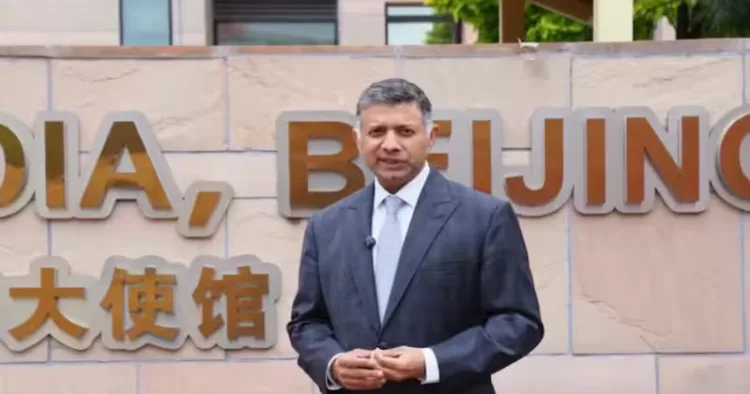
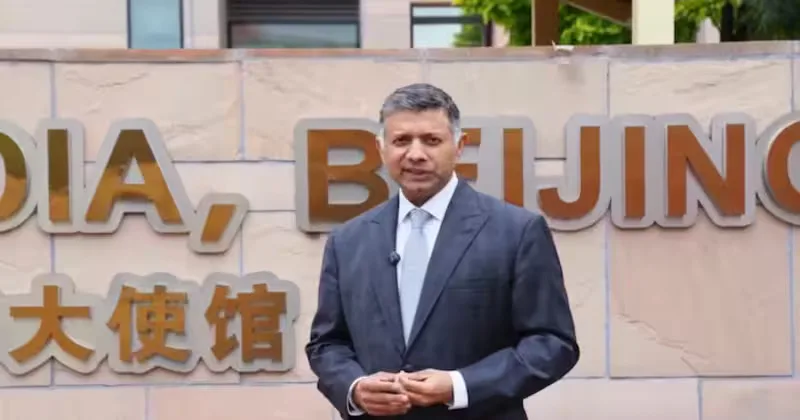
Beijing: Indian professionals and the diaspora living and working in China have raised serious concerns over a stark rise in abusive anti-India content on Chinese social media platforms. The diaspora also mentionned about the declining work visas and restrictions preventing spouses from taking up employment in China. These concerns were expressed during the Indian Embassy’s first Open House interaction in recent years, as New Delhi and Beijing work to gradually rebuild ties after years of fractured diplomatic relations, post the Galwan clash in 2020.

The outreach programme, held in Beijing on July 31, Friday, brought together a large number of Indian professionals from different sectors. Indian Ambassador Vikram Doraiswami, along with Counsellor (Consular, Education and Community Affairs) Nitinjeet Singh and Counsellor (Visa) Ramesh Singh, interacted with members of the Indian community and heard concerns related to their professional and personal lives in China.

The engagement assumes significance as India-China ties have entered a cautious phase of recovery following the military stand-off in eastern Ladakh. Since the October 2024 patrolling agreement, both sides have taken gradual steps towards restoring people-to-people exchanges, business links and travel after an intense period of military stand-off.

Among the key issues raised at the Open House was the growing presence of abusive and negative content targeting Indians on Chinese social media platforms. Community members pointed to posts and comments attacking Indians over their food habits, culture and other aspects of the Indian society.

Restrictions on spouses taking up jobs in China were another major concern raised during the interaction. Responding to concerns over online abuse, India’s Ambassador to China Vikram Doraiswami said that the Chinese government was also aware of the rise in such content and was taking steps to address the issue.

He added that the Indian Embassy was working to counter misinformation by disseminating fact-based information through its official social media platforms.

The Indian embassy also announced measures aimed at strengthening people-to-people engagement between India and China. Doraiswami said documentation requirements for Chinese nationals applying for Indian visas would be further simplified from next week to facilitate greater travel to India. The move comes amid efforts by both countries to gradually restore travel and broader exchanges following years of strained relations.

The ambassador also announced plans to organise more cultural programmes in China. These initiatives will build on the strong response received by events such as the annual Vasant Mela, which provides a platform to showcase India’s cultural diversity, traditions and c
The embassy’s cultural outreach is expected to play a role in improving public understanding of India at a time when online narratives and misinformation have emerged as concerns among members of the Indian community.

The Indian mission is also working towards creating a support mechanism involving legal professionals to assist Indian nationals facing workplace-related difficulties in China. Such a mechanism could provide community members with greater access to professional guidance when dealing with employment-related disputes or other workplace issues.

To improve consular services further, Doraiswami said the embassy would hold Open House interactions periodically, allowing members of the Indian diaspora to directly raise concerns with embassy officials. The latest interaction comes against the backdrop of broader efforts by New Delhi and Beijing to normalise bilateral ties. The two countries have been gradually restoring direct flights, travel links and diplomatic engagement after relations remained largely frozen for nearly four years following the Galwan clash.

 
Good. At least the Chinese gov is listening. I have long argued that the approval rate on all types of Indian visa applications should be controlled to less than 5%. That's what the Indian gov has been doing to Chinese applicants for years. Chinese doesn't want hordes of Indians flooding China.
 
Last edited:
Good. At least the Chinese gov is listening. I have long argued that the approval rate on all types of Indian visa applications should be controlled to less than 5%. That's what the Indian gov has been doing to Chinese applicants for years. Chinese doesn't want hordes of Indians flooding China.

Business will ultimately govern the ppl exchanges between nations.
Neither CCP dictatorship neither Democratic Leadership of India can control the same.
China has pretty much stagnated on consumption now and even cant match the pace of USA consumption market.
India has not even started growing fully yet.

Many experts doubts real population of China, some say its not even a billion, chinese will need to open up to survive otherwise it will be like japan but poorer
 
Good. At least the Chinese gov is listening. I have long argued that the approval rate on all types of Indian visa applications should be controlled to less than 5%. That's what the Indian gov has been doing to Chinese applicants for years. Chinese doesn't want hordes of Indians flooding China.
Send them to Singapore, Singapore government loooves indians so much they ban chinese media about indians
 
Business will ultimately govern the ppl exchanges between nations.
Neither CCP dictatorship neither Democratic Leadership of India can control the same.
China has pretty much stagnated on consumption now and even cant match the pace of USA consumption market.
India has not even started growing fully yet.

Many experts doubts real population of China, some say its not even a billion, chinese will need to open up to survive otherwise it will be like japan but poorer
We are open to everyone! Just not to Indian scammers unfortunately for you.
 
We are open to everyone! Just not to Indian scammers unfortunately for you.

Biggest scammers are Chinese nationals which are regularly caught in south east asia and I heard in even pakistan 🤣
 
Biggest scammers are Chinese nationals which are regularly caught in south east asia and I heard in even pakistan 🤣
Yep thats why we are the greatest trading nation in the world by far while everyone hates indians and their disgusting habits and trash india on youtube/facebook/tiktok etc.

Your country is a hellhole that even sub saharans would never want to live there.
 

Users who are viewing this thread

Back
Top