China Science And Technology News

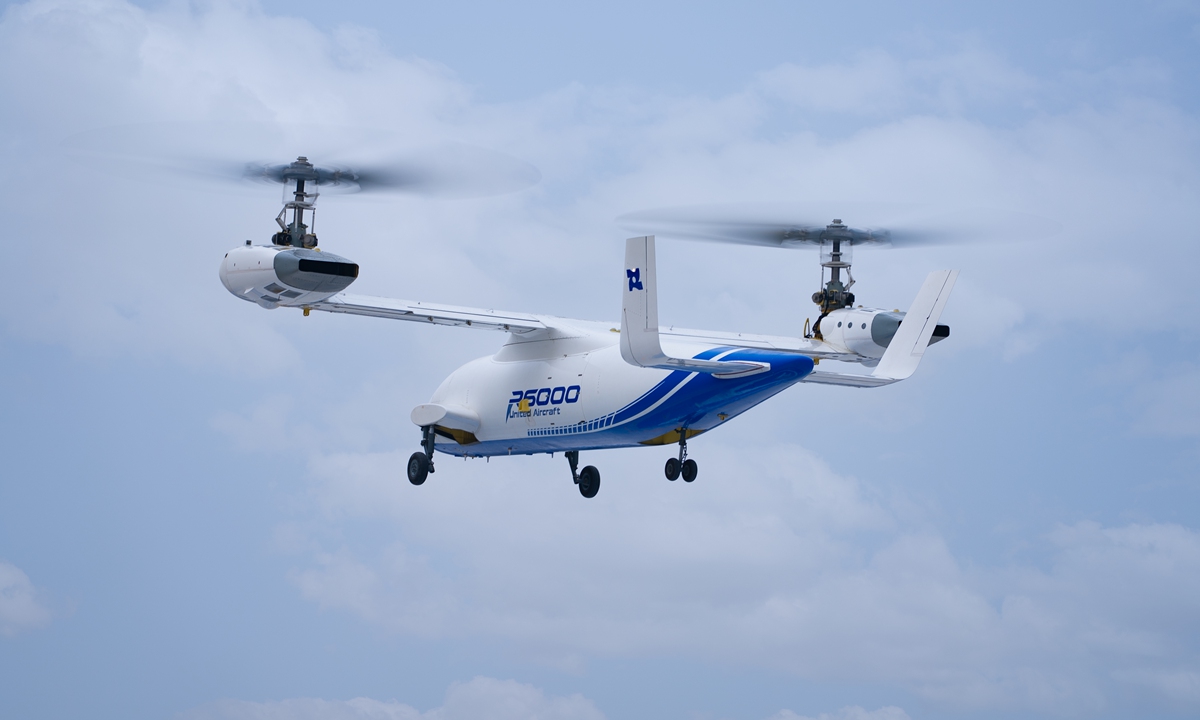
A 6-ton-class tiltrotor aircraft, named the Lanying R6000 and independently developed by the Chinese company United Aircraft, successfully completed its maiden flight in Southwest China’s Sichuan Province on Sunday, the Global Times learned. According to the company, it is the world’s first aircraft of its kind. This “flying car” is expected to serve point-to-point air commuting.
To view this content we will need your consent to set third party cookies.
For more detailed information, see our cookies page.
 

Nuclear game changer: China builds crab-walking electric ICBM mobile launcher prototype​

In less than two years, scientists have developed a technology that ‘fundamentally overturns’ conventional heavy-vehicle design

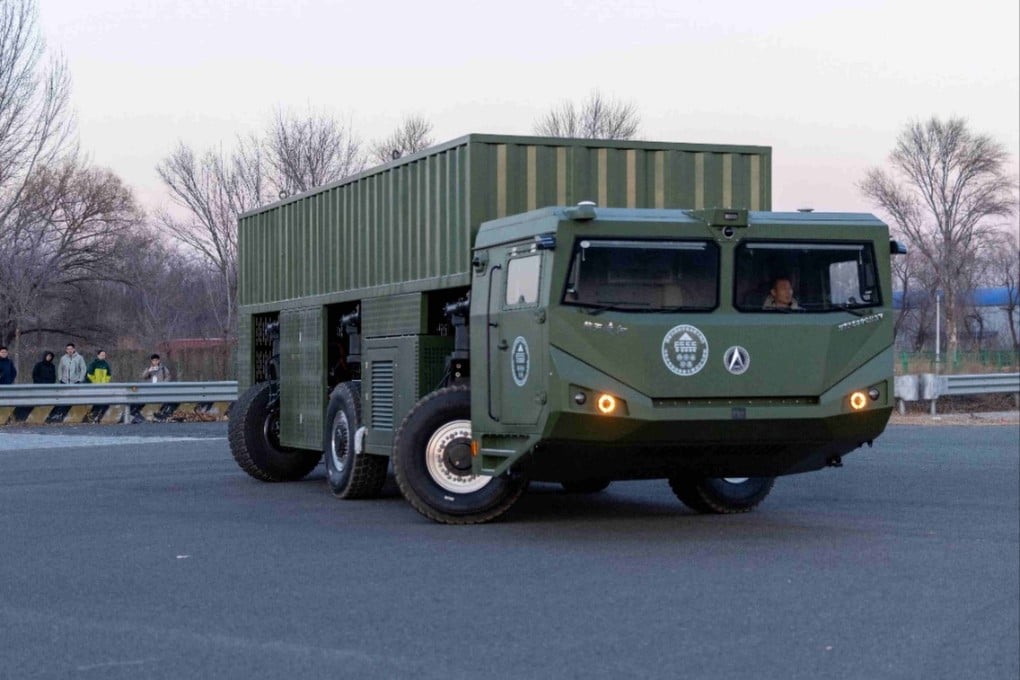
The prototype modular electric-drive heavy-duty truck. Photo: Tsinghua University


Published: 10:00pm, 29 Dec 2025Updated: 10:38pm, 29 Dec 2025

Researchers in China have developed a fully modular, intelligent electric-drive heavy-duty vehicle that could be used as a mobile launcher for an intercontinental ballistic missile (ICBM).

The researchers said the vehicle could “crab walk” through tight or obstructed terrain that would defeat conventional launchers and its near-silent operation improved its stealth abilities.

A prototype was unveiled in Beijing on December 21, less than two years after the project was approved in January 2024 as a major initiative under the National Natural Science Foundation of China.

Led by Tsinghua University, the project brought together research institutes that included the Beijing Institute of Launch Vehicle Technology, Jilin University, Beijing Institute of Technology, and Southeast University.

According to the project outline, the researchers set out to develop a technology that could potentially reshape heavy-load logistics, one that could move large rocket bodies, transformers, wind turbines and other massive loads safely and efficiently.

Yang Diange, from Tsinghua University’s school of vehicles and mobility, said the new-configuration prototype was “a world first” that fundamentally overturned conventional design by integrating electric drive with intelligent control.

Powered entirely by electricity, the vehicle is near-silent, emits no exhaust smoke and produces a minimal heat signature. These improved stealth features would allow it to operate covertly and increase its survival rate during critical launch operations.

The vehicle has been built on a modular concept and can be scaled up or down by adding and removing wheel modules. This means it can transport everything from ICBMs to large rocket stages with optimal efficiency, according to a report on the Tsinghua University website.

By expanding or reducing the number of wheel modules – designed to work like building blocks – the prototype’s load capacity could be adjusted according to transport needs, overcoming the limitation of traditional fixed axle and wheel configurations.

Heavy-duty specialised vehicles are crucial for national defence systems, where they frequently provide logistical support, transport heavy weaponry and serve as missile launch platforms.

Unlike traditional vehicles – with their fixed axles and rigid connections that constrain them to large turning circles and poor terrain adaptability – the prototype has achieved what the developers called a “full decoupling” of its wheels from all mechanical linkages.

Each wheel independently handles driving, braking, steering and suspension functions, which are coordinated through an intelligent electronic control system. The result was a vehicle that could perform crablike lateral movements and travel diagonally, they said.

The prototype is also capable of “centre steering” – pivoting around its own centre to drastically reduce its turning radius and enabling remarkable manoeuvrability in confined spaces, according to the developers.

The control logic manages each wheel’s torque and steering, allowing the vehicle to steadily ascend steep slopes in a zigzag pattern, opening up previously inaccessible terrain.

According to the report, the control mechanism also improves the vehicle’s autonomous recovery ability in extreme conditions, in addition to its improved mobility and braking safety.

The software-controlled electric-drive tyres suppress roll and pitch for better stability at high speeds and on winding routes. Each wheel is driven by its own motor, delivering maximum torque from start-up for advantages in starting, climbing and extrication.

The elimination of complex mechanical components such as gearboxes and steering linkages also greatly reduces potential failure points, according to the developers. If one motor fails, others will continue working, maintaining operations.

The quiet operation in pure electric mode also makes the vehicle better suited for military operations or urban transport uses, according to the developers, who completed development and roll-out in just two years.

Academic and government experts praised the team’s work, saying it could reshape the future of special-purpose vehicles and even transform the fundamentals of vehicle engineering, the report said.

The technology has been added to the latest iteration of the country’s new energy vehicle technology road map, released in October by the China Society of Automotive Engineers, with derivative models scheduled for ground transport of future aerospace equipment.
 
Last edited:
To view this content we will need your consent to set third party cookies.
For more detailed information, see our cookies page.
 

Surreal humanoid robots are set to begin border patrol duties between China and Vietnam​

By Raquel Brandao
12-26-2025

image


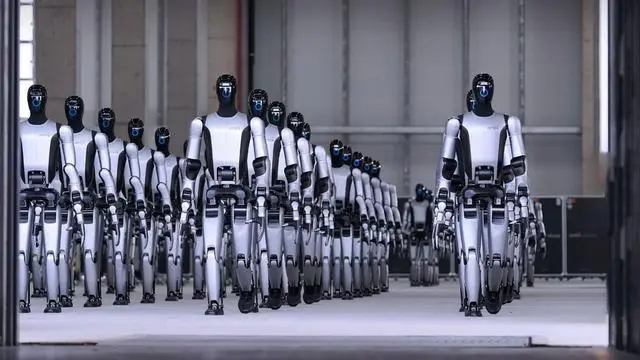
China is about to send humanoid robots to work at a busy border with Vietnam. UBTECH Robotics has won a $37 million contract, to deploy its Walker S2 machines there starting this month.

The assignment is led by UBTECH Robotics Corp., a Shenzhen-based company that builds full-size humanoid robots for industry and public services.

Its engineers focus on embodied intelligence, which is artificial intelligence that controls a physical robot body, so these machines can handle messy, real-world environments.

Fangchenggang is a coastal city in Guangxi near the border with Vietnam, where cargo trucks, coaches, and day travelers constantly cycle through.

Chinese planners see a border crossing as a tough, real-world test, because schedules are tight and inspections cannot easily stop.

If these robots perform reliably there, it will be easier to argue for similar deployments at airports, seaports, and crowded train stations.

Inside the Walker S2 robots​

Walker S2 is an adult-sized humanoid machine with jointed legs, a torso, and arms, designed to move wherever people already walk.

It uses autonomous battery swapping, which involves robots changing battery packs without human help, so that it can work with very little downtime.

To stay balanced and avoid collisions, the robot combines cameras, depth sensors, and force feedback in its joints to monitor nearby movement.

That mix of hardware and software makes Walker S2 closer to a general purpose worker than many single-task factory machines.

What Walker S2 units can do​

At the Fangchenggang project, Walker S2 units will help border staff guide passenger queues, direct vehicles, and answer simple questions from travelers.

Some robots will patrol corridors and waiting areas, watching for blocked exits or crowd patterns that might require human officers to intervene.

Others will move between cargo lanes to support logistics teams, checking container IDs, confirming seals, and relaying status updates to dispatch centers.

Away from the border itself, the fleet is expected to inspect steel, copper, and aluminum facilities, walking structured routes through hot industrial yards.

Walker S2 units are popular​

The Fangchenggang order is not UBTECH’s first big humanoid contract; earlier deals in 2025 covered factories and data centers in other provinces.

“This isn’t just a number; it’s proof of real-world value and the accelerating commercialization of humanoid robots globally!” wrote scientists at UBTECH in a post.

Including the September procurement deal and domestic projects, UBTECH says 2025 orders for the Walker S2 series now total around $157 billion.

Yet the company remains loss-making, even as revenue grows, and must convince investors that these orders will turn into sustainable profit.

Policy moves behind border trial​

In 2023, China’s Ministry of Industry and Information Technology issued guidance calling for a national innovation system around humanoid robots by 2025.

The ministry opened consultation in 2024 on a standardization technical committee, an expert group that writes industry rules for humanoid robots.

Chinese officials treat humanoid robots as a strategic industry, inviting company leaders onto national standard writing bodies that will review deployments like Fangchenggang.

This border trial fits that agenda, putting humanoids into a regulated space where safety, reliability, and accountability will be watched closely by regulators.

Training the humanoid robots​

Beijing has opened a humanoid robot data training center, where robots practice tasks to collect training data in Shijingshan District.

The site covers about 3,000 square meters, roughly 32,000 square feet, and already deploys more than 100 humanoid machines in staged workplaces.

For training, robots there assemble parts in mock workshops, clean bathrooms, make beds, and even tend plants and small indoor gardens.

A center like this gives developers data, so future humanoids arrive at places like Fangchenggang with tested skills instead of guesswork.

A recent survey of industrial robotics research found that perception systems are critical when machines and human workers share the same space.

In that work, researchers highlight how cameras, depth sensors, and other detectors let robots recognize people, avoid collisions, and adjust speed near crowds.

Those capabilities line up with the Fangchenggang plans, where humanoids will follow patrol routes yet respond to unexpected human movements in real time.

Researchers also warn that safety is never automatic, so systems must be tested carefully and monitored continuously when robots operate close to people.

What this means for real humans​

For travelers, the most visible change will be sharing lines and inspection halls with machines that can talk, point, and give basic directions.

Border officers may spend less time managing queues or repeating simple instructions, and more time on identity checks, risk assessments, and complex investigations.

Some people will welcome shorter waits and clearer information, while others may feel uneasy seeing humanoid robots watching movements and recording every interaction.

For border staff, the rollout raises practical questions about training, authority, and responsibility whenever a robot makes a mistake or misses signals.

Questions remain about Walker S2​

The Fangchenggang deployment will test whether humanoids can keep their balance, avoid glitches, and handle messy weather at an outdoor, high-traffic crossing.

It will also show whether continuous robot patrols and inspections save money once equipment costs, software development, maintenance, and supervision are fully counted.

China’s economic planners have already warned humanoid robot firms against overpromising and overbuilding. This reflects their concerns about hype and potential overcapacity in the sector.

If the trial succeeds, future deployments might extend to other borders and critical infrastructure, but if it fails, companies could face tougher scrutiny.

To view this content we will need your consent to set third party cookies.
For more detailed information, see our cookies page.


Details obtained from an online post by Interesting Engineering.
 

World’s First AI Hospital In China Signals A New Era For Modern Healthcare​

Inside a hospital where artificial intelligence leads care.​

by Ella Chan
December 30, 2025

World’s First AI Hospital In China Signals A New Era For Modern Healthcare

China has taken a major step in healthcare by developing the world’s first AI-powered hospital. The project shows how artificial intelligence is moving beyond research labs and into real medical spaces.

Screenshot-2025-12-29-225258-300x169.png

In recent years, China has increased its focus on AI, and healthcare has become one of the main areas of development. This move is now drawing attention from around the world.

A Hospital Built Around AI Doctors

In 2024, Tsinghua University introduced Agent Hospital, the world’s first AI hospital. At the beginning, the system included 14 AI doctors. Later, the hospital expanded its abilities with a new AI system called “Zijing AI Doctor.” The system can now support more than 40 AI doctors working across many medical fields.

These AI doctors are trained using large numbers of virtual patient cases. They are designed to study symptoms, suggest diagnoses, and follow treatment steps inside a controlled digital environment.

Testing before public use

Before working with real hospitals, the AI doctors went through long testing stages. In November 2024, the system was tested internally using simulated patients. This allowed developers to improve accuracy and decision-making speed.

Sources say, the AI doctors were able to review thousands of cases in a short time. This testing stage helped prepare the system for real-world use.

Moving into real hospitals

In April 2025, Tsinghua University announced that Agent Hospital would work with Beijing Tsinghua Chang Gung Hospital. This marked the move from testing to real public use. AI doctors began supporting areas such as eye care, lung treatment, and medical imaging.

The system does not replace human doctors. Instead, it helps by managing data, offering suggestions, and supporting daily hospital work.

A hospital with a digital core

In May 2025, Beijing Tsinghua Chang Gung Hospital expanded its building and added 500 new beds. At the same time, AI systems were built into daily hospital operations. These systems help with patient registration, medical alerts, and treatment planning.

Technology and design were also combined to create a calm environment for patients, showing how digital tools can work quietly in the background.

Another AI approach inside hospitals

While Agent Hospital follows a full-system model, another AI system called DeepSeek is being added inside existing hospitals. It works within hospital networks and helps doctors with documents, disease checks, and medical analysis. This method allows hospitals to use AI without changing their entire structure.

A growing focus on AI healthcare

China’s AI hospital projects show how quickly healthcare systems are changing. From digital doctors to smart hospital systems, these developments highlight a strong national push toward AI-supported medical care.

As testing and expansion continue, China’s approach is becoming a key example of how technology and healthcare are coming together in real settings.
 
interesting field experiment.
And that’s something we can copy the Chinese.
Should not be difficult to clone them.
 
They are not cheap, don't steal them.
No worry, we don’t steal we will try to buy, disassemble to the last screw and reverse engineer.

To view this content we will need your consent to set third party cookies.
For more detailed information, see our cookies page.
 
China already deploying robots to patrol borders in the Himalayas with India.


To view this content we will need your consent to set third party cookies.
For more detailed information, see our cookies page.


To view this content we will need your consent to set third party cookies.
For more detailed information, see our cookies page.


Indian media reports that Chinese robots are already patrolling the border, leaving the Indian army worried about people freezing to death in the winter.​


Military Sub-Dimension
December 4, 2025, 11:55:00 AM , from Beijing


[Military Sub-Dimension] Author: --All-Domain Mobility★Unmanned Intelligence--

28EF35A866845D2F8F6947D745079B5CFFB500C4_size56_w640_h493.jpg


A video from the China-India border recently sparked heated discussion on Indian social media. In the video, several Indian border soldiers filmed a silver-gray metallic figure standing silently among the rocks and wasteland on the Chinese side.

The Indians weren't so naive; they quickly recognized it as a fixed-position patrol robot deployed by China along the border, carrying out its routine patrol duties. The person filming the video even laughed, seemingly finding the use of robots for guard duty quite novel.

However, Indian netizens and media quickly stopped laughing, which meant that China's advanced robotics technology had been widely applied, and perhaps in the near future, they would be facing a Chinese robot army.

86E95F92522F261B2FD140CC335CF58E9AA77B30_size27_w640_h286.jpg


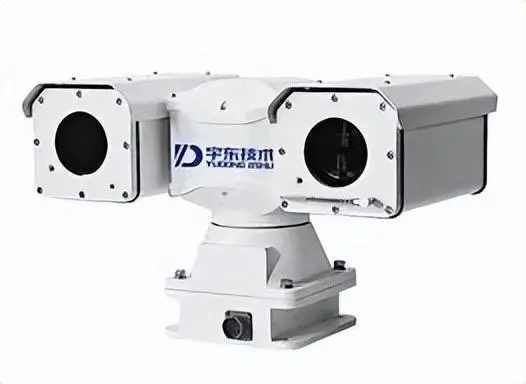
▲Indian media calls it a spy robot

This robot is quite well-equipped. According to analysis (or perhaps just speculation) by overseas military experts, this border patrol robot is equipped with a dual-spectrum camera with 40x optical zoom, capable of infrared thermal imaging monitoring within a 1500-meter range, and can operate around the clock. As for its other features, including whether it has offensive capabilities, that remains unclear.

1D15A8F49CAC16C55B9FE19A6756A860498BB7FD_size17_w526_h384.jpg


At altitudes of four to five thousand meters, human soldiers need to take turns resting every few hours, while robots can maintain a 24-hour watch. More importantly, these intelligent devices are immune to altitude sickness, sub-zero temperatures, and logistical support. Combined with fixed high-definition intelligent cameras, multi-functional fusion telescopes, and other equipment, Chinese border troops can manage this intelligent control system from the comfort of their barracks.

The difference is stark when compared to the situation in India. Indian troops in Ladakh face non-combat casualties every winter. In this high-altitude region, where altitudes generally exceed 4,000 meters, winter temperatures can drop to -30 to -50 degrees Celsius, causing frostbite that has a burn-like effect.

856FF22ACD77AB1E6114506B0C872572A05730F3_size39_w640_h419.jpg


▲Indian mountain troops, holding INSAS rifles

Indian media have repeatedly reported on soldiers freezing to death or suffering from frostbite on the border. Some soldiers got lost during night patrols and ended up suffering frostbite, requiring treatment by the People's Liberation Army. On the Siachen Glacier—the world's highest-altitude battlefield—countless Indian soldiers die each year from frostbite, avalanches, or falling into crevasses; it is known as a death trap.

The Indian military has invested considerable resources in this effort. According to estimates by Indian military logistics experts, at least 80 types of supplies are needed to survive the winter in the Ladakh region, including special three-layer snow jackets, thick trousers, cold-weather boots, snow goggles, face masks, and other equipment, as well as large quantities of fuel such as kerosene, diesel, and gasoline. The total supply required for the entire winter is as high as 500,000 tons.

Following the border standoff in 2020, India urgently purchased a large quantity of winter clothing adapted to high altitudes from the United States and also set up imported Arctic tents for 3 to 5 soldiers. However, what it received were mostly second-hand items that the US military did not want, and some of the clothes had not been washed since the last time the US soldiers took them off 20 years ago.


Even so, the Indian Army's logistical support capabilities remain severely compromised. With a population of only 260,000, the Ladakh region cannot realistically support tens of thousands of troops using local resources alone; all supplies must be transported from elsewhere, making the supply lines long and vulnerable.

On the Chinese side, not only are the frontline camps beautifully constructed, but they are also fully equipped with living facilities and even hyperbaric oxygen chambers. In border patrols and other missions, the focus has shifted to leveraging technology. In addition to stationary border defense robots, the PLA has also deployed various unmanned systems along the high-altitude border. Drones can perform reconnaissance and patrol missions in extreme weather conditions, while quadrupedal robotic dogs can transport supplies and coordinate combat operations.

F510453259A055E24B8E7674BCA71E61AEDF2538_size46_w640_h412.jpg


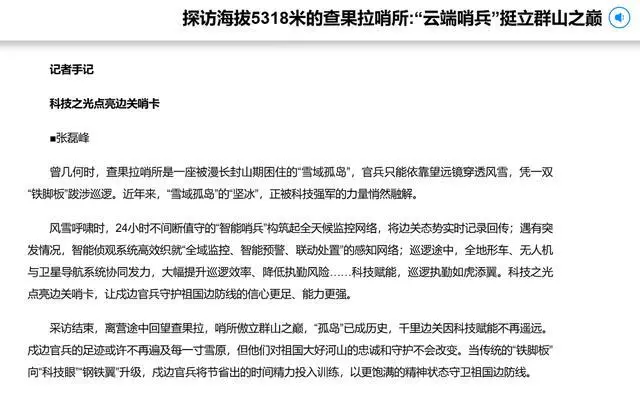
▲Xinhua News Agency report

At the Chagola outpost at an altitude of 5,318 meters, soldiers are equipped with a variety of unmanned and intelligent reconnaissance and observation devices. These intelligent sentries can be on duty 24 hours a day, greatly reducing the pressure of manual patrols. With this equipment, border guards can observe the area under their jurisdiction through a remote monitoring system from their warm barracks, without having to be exposed to the frigid environment for long periods of time as before.

While Chinese border troops are already exploring an integrated air-ground multi-domain control model, the Indian army is still struggling to keep its soldiers alive during the winter. People often ask why the Indians seem to reduce their activity on the border in winter, attempting to project a friendly image. The reason is simple: they can't withstand the pressure and lack the capacity to cause trouble.

26C3A5E08D55C72ECAC5073A919B941CC353181C_size42_w640_h360.jpg


▲A few days ago, a company's robots were shipped in batches.

The unveiling of the unmanned sentry robot is merely a microcosm of the equipment and system gap between China and India. Border guards are equipped with drones, robots, and robotic dogs; frontline camps have advanced land warfare equipment including Type 15 light tanks; and hundreds of kilometers further back, air force bases house J-20 and J-16 fighter jets… These are beyond India's capabilities to counter. No matter what posture they adopt, ultimate victory will belong to us. Whether they are overwhelmed by a robot army or combined arms operations, these are not their concerns now; after all, people are freezing to death and have no time for such things.
 

China Now Owns the Action Cam Market the US Once Dominated

DEC 30, 2025
JEREMY GRAY
Three action cameras are displayed against a colorful, blurred background: Insta360 Ace Pro (top left), DJI Osmo Action 4 (top right), and GoPro Hero 12 Black (bottom center).


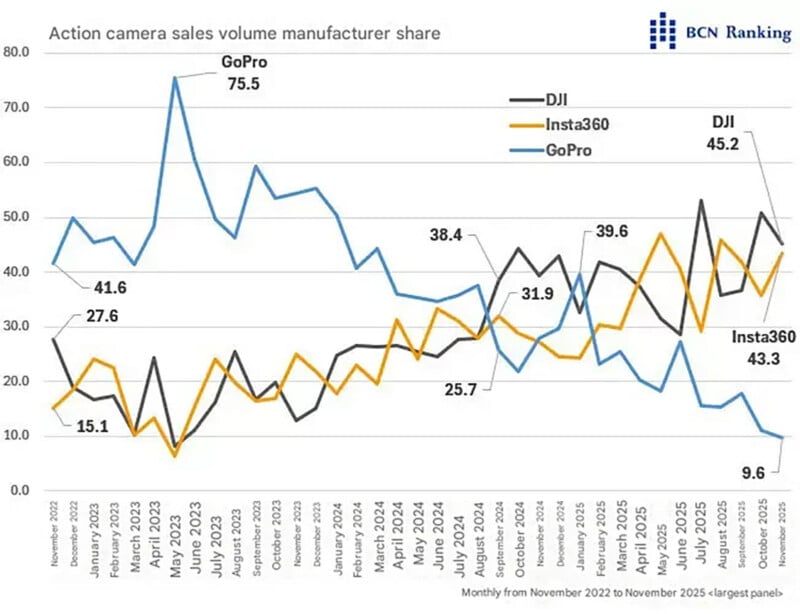
The action camera market, once almost entirely owned by the American company GoPro, is now dominated by Chinese companies like DJI and Insta360, which together hold nearly 90% of the market share in Japan.

As reported by Digicame-Info, Japanese retail analyst BCN+R recently published a story on GoPro’s plummeting market share, remarking on the company’s nearly continual loss of share to its Chinese rivals.

“GoPro, once synonymous with action cameras, has seen its market share plummet,” writes Ichiro Michikoshi. Back in May 2023, GoPro made over three-quarters of all action cameras sold in Japan. However, shortly thereafter, it lost its top spot to DJI, and then Insta360 took over second place. Speaking of GoPro and Insta360, the two companies remain in a legal dispute over patents.

Line graph showing action camera sales share (Nov 2022–Nov 2025) for DJI, Insta360, and GoPro. GoPro starts highest at 75.5%, falls to 9.6%. DJI rises to 45.2%, Insta360 peaks at 41.6% before dipping.


Credit: BCN+R

Precisely how and why this happened is a matter of some debate, but BCN+R believes that GoPro’s failed drone business, which launched in 2016 and was killed off just a couple of years later, is a key factor. GoPro’s attempt to capitalize on a growing drone market required significant capital and investment, which BCN+R believes splintered the company’s overall R&D, something it has not yet fully recovered from.

In the meantime, as GoPro struggled to rebound from its expensive drone experiment, DJI and Insta360 invested heavily in new camera technology across their entire product lineups, including stabilization, image sensor, processing, apps, and more. Insta360 has even gone all-in on image quality by working alongside Leica for its action cameras.

To view this content we will need your consent to set third party cookies.
For more detailed information, see our cookies page.


While DJI and Insta360 continually release new action cameras with highlight-grabbing features, GoPro’s pace of innovation has trailed far behind the Chinese competition. GoPro does have some great cameras still, including the recent 8K GoPro Max2 360° and the impressive GoPro Hero13 Black released last year.

This is a tough time for GoPro, too, as the action camera market is growing at an incredible rate. BCN+R notes that at least in Japan, year-over-year sales have increased by double digits nearly every month over the past few years. For example, last month, sales were up about 161% while the total value of sold cameras was up 173%. So not only are DJI and Insta360 grabbing larger and larger pieces of the pie, the pie itself is growing at an impressive clip. GoPro is being left in the dust. But that can change fast; the company could absolutely rebound in a big way with an exceptional product launch or two in 2026.
 

World's first 30MW-class pure hydrogen gas turbine put into operation

2025-12-28 17:47 Last Updated At:21:07

World's first 30MW-class pure hydrogen gas turbine put into operation

World's first 30MW-class pure hydrogen gas turbine put into operation

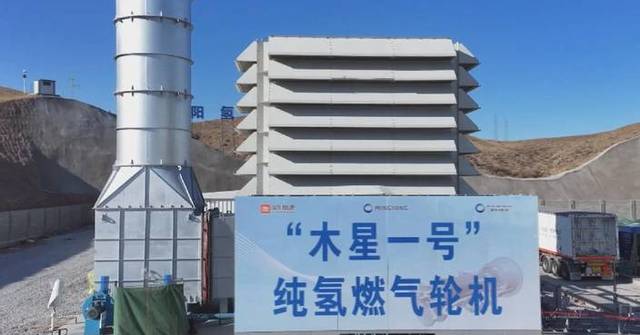
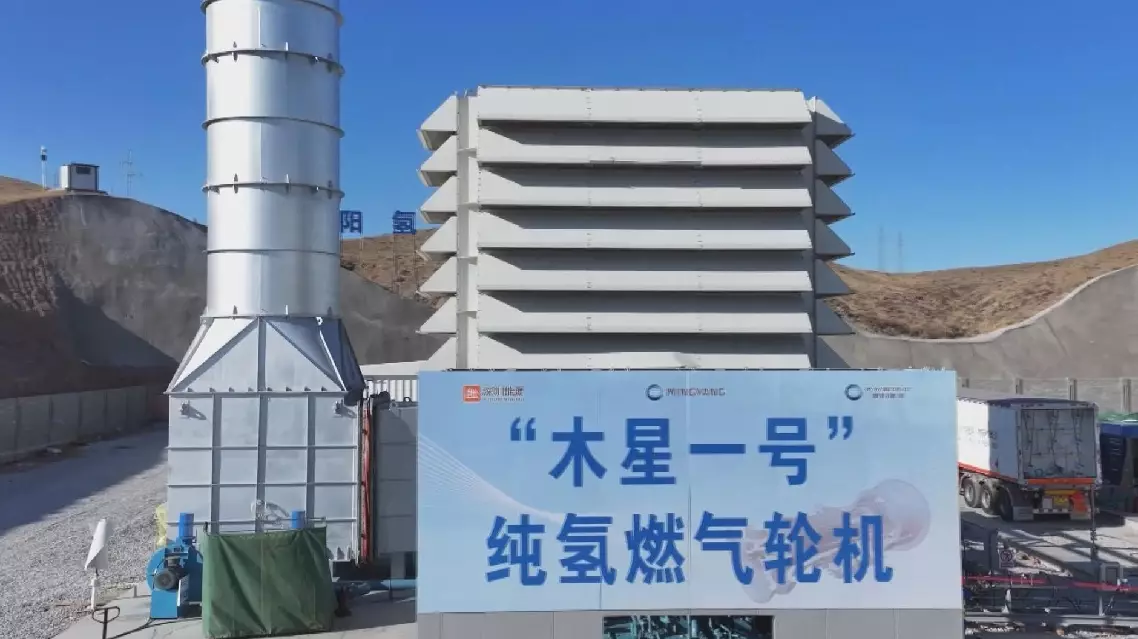
China's domestically developed gas turbine Jupiter I, the world's first 30MW-class pure hydrogen gas turbine, has on Sunday achieved pure hydrogen power generation and maintained stable operation in north China's Inner Mongolia Autonomous Region, offering a key solution for renewable energy storage and utilization.

The gas turbine Jupiter I is the world's largest single-unit power pure hydrogen generator, capable of converting hydrogen from storage tanks back into electricity during peak demand periods, according to the Mingyang Group.

It has effectively solved the problem of consuming surplus electricity from new energy sources, and provides an integrated solution that is feasible and scalable for building a new energy system with new energy as the main power source. It has been selected as one of the first batch of national-level hydrogen energy pilot projects in the energy field.

"Compared with a thermal power unit of equivalent capacity, the Jupiter I pure hydrogen gas turbine reduces carbon emissions by more than 200,000 tons annually. In combined-cycle operation, it generates 48,000 kilowatt-hours of electricity per hour, which can meet the daily power needs of 5,500 households," said Wang Yongzhi, general manager of Mingyang Hydrogen Gas Turbine Technology.

The project will effectively mitigate fluctuations in renewable energy output, enhance grid regulation capabilities, provide a replicable model for energy transition practices, and contribute to building a national-level hydrogen energy demonstration zone, according to its operator.

Renewable energy installations in China account for over 50 percent of the nation's total power generation capacity. The country has pledged to peak its carbon dioxide emissions by 2030 and achieve carbon neutrality by 2060.
 
China's "artificial sun" experiment finds way to break fusion plasma density limit
To view this content we will need your consent to set third party cookies.
For more detailed information, see our cookies page.


To view this content we will need your consent to set third party cookies.
For more detailed information, see our cookies page.
 
China’s Longi to Replace Silver in Solar Panels to Reduce Costs
Updated on January 6, 2026 at 12:51 PM GMT+8

Longi Green Energy Technology Co. will begin substituting base metals for silver in its solar cells, the latest move by the industry to mitigate the surging cost of the precious metal.

Mass production using base metals is expected to start in the second quarter, which will help “further lower the costs of solar modules,” Longi said in a filing on Monday.

Record high silver prices, fueled by strong haven demand amid geopolitical tensions, and interest-rate cuts by the Federal Reserve, have only accelerated the process.

Other Chinese solar manufacturers taking a similar approach include Jinko Solar Co., which said in December it could achieve large-scale output of panels this year that use base metals such as copper. Shanghai Aiko Solar Energy Co., a smaller rival, has already launched production of silver-free solar cells, with initial capacity of 6.5 gigawatts.

In October, silver prices trading in the $50-an-ounce range translated to more than 17% of the per-watt price of solar modules, up from 12% two months previously and 3% in 2023, according to BloombergNEF. Since then, prices have risen to the mid-$70s.

Unlike most of its rivals, Longi produces back-contact solar cells, which generate more power from the same amount of sunlight. Although they hold a smaller share of the market compared with the more mainstream TOPCon technology, it’s easier to replace silver with base metals in BC cells, Longi said in May.
 
Thread for all China related science and technology

refers to the idea that China's current economic size is a return to its historical position as a dominant global economy after a period of relative decline. Historically, China has held a massive share of the world's GDP for centuries due to its large population. :coffee:

Historical Context
  • Pre-19th Century Dominance: For centuries, China and India each accounted for a quarter to a third of the global GDP. ☕
  • 19th and 20th Century Decline: China's share of the global economy significantly shrank during the 19th and 20th centuries due to foreign and civil wars, internal strife, and the industrialization of Western nations. By 1978, its share of global GDP had fallen to a low of 4.9%.
  • Modern Resurgence: China's economic reforms initiated in the late 1970s led to rapid, sustained growth, averaging around 10% annually for several decades. This rapid expansion has restored China as a major global economic power.
  • Current Economic Size
    Today, the idea that "time is turning its back" is a poetic way to describe this historical cycle coming full circle: 👍
    • Largest Economy by PPP: When measured by Purchasing Power Parity (PPP), which adjusts for price differences, China became the world's largest economy as early as 2014 and accounted for over 18% of global GDP in 2023. Forecasts suggest this share could reach over 20% by 2030. 👍
    • China's current economic status, therefore, is not a new phenomenon in a long-term historical view, but rather a recovery to its previous standing as a massive economic force driven by its huge population and modern industrialization.
 

Users who are viewing this thread

Pakistan Defence Latest

Latest Posts

Back
Top