China Science And Technology News

China Still Dominates Critical Mineral Refining in 2030

December 23, 2025

VCE_Chinas-Critical-Mineral-Refinery_Website_12092025-1.webp

Key Takeaways​

  • China is projected to have the largest share (60%) of global refined critical mineral supply by 2030.
  • Nickel is the only mineral which another country, Indonesia (71%), is expected to have a larger market share than China (6%).
The energy transition hinges on the availability of refined critical minerals. Where will they come from in the future?

This visualization shows the projected refining shares by 2030, based on data from Benchmark Mineral Intelligence and the International Energy Agency.

With one major exception, the data shows that one country will dominate future refining shares. China.

China to Dominate the Future of Critical Mineral Refining​

By 2030, China will play a dominant role in lithium, rare earth elements (REEs), cobalt, and graphite, controlling nearly 60% of all critical mineral refining. Such concentrated processing capacity offers efficiencies that may lower costs but heightens geopolitical risk for downstream buyers.

Nickel’s Outlier: Indonesia Leads, China Trails​

Nickel is the one mineral where China is not on top. Indonesia will command over 71.24% of refined nickel by leveraging its large ore reserves, expanding low-cost refineries, and enforcing a ban on raw ore exports.

China’s share is just 6.24%, with Russia at 3.26% and the rest of the world spread across “Other” at 19.27%. This shift positions Indonesia as a price-setting force in nickel used for stainless steel or EV batteries.

Copper Is More Fragmented; North America Plays Niche Roles​

Copper refining is relatively diversified. China holds 44.63%, but “Other” countries make up 40.99%, indicating broader global refining capacity.

The U.S. appears notably in rare earths (REEs) at 5.14%, while Finland and Canada register meaningful shares in cobalt at 5.87% and 5.73%, respectively.

These footholds can strengthen regional EV supply chains, but they still pale in comparison to China’s scale.

 
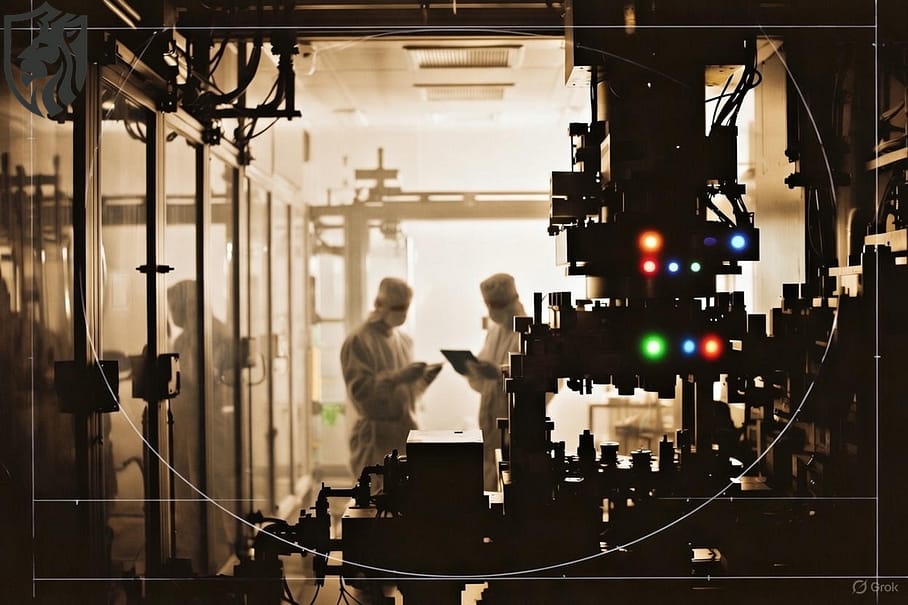
China EUV Lithography Machine — Strategic Breakthrough

China EUV Lithography Machine—Strategic Breakthrough

Why EUV Is the Bottleneck​

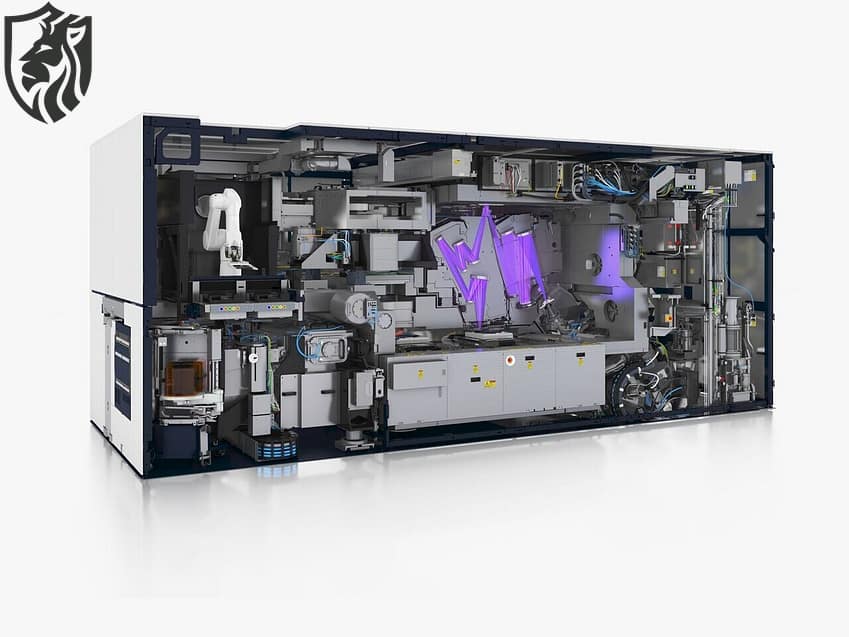
Modern chip power starts with pattern density. Therefore, advanced nodes rely on extreme-ultraviolet lithography to print tiny features at scale. EUV systems also sit at the center of a supply chain that mixes precision optics, vibration control, ultra-clean vacuum, and brutal calibration requirements.

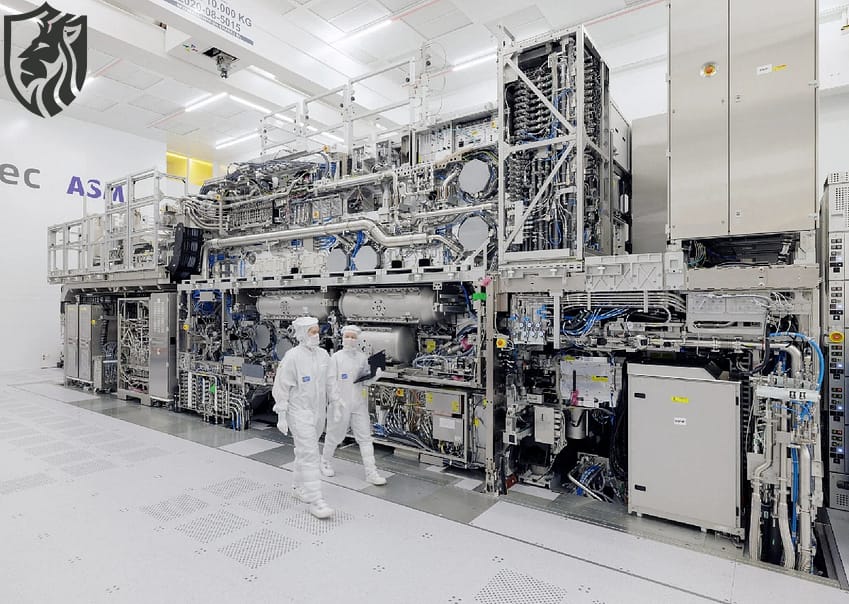
That is why ASML’s EUV toolchain became the bottleneck for cutting-edge chips. One machine can cost roughly $150–$250 million, depending on the model and configuration. Moreover, the tool’s complexity is extreme. Industry reporting commonly describes EUV platforms as built from 100,000+ components and a vast specialist supplier network.


What We Know About China’s EUV Push​

Recent Reuters reporting says a high-security team in Shenzhen built a prototype EUV system that can generate EUV light, and it became operational in early 2025. However, the same reporting also says the prototype has not produced working chips yet. That detail matters. EUV is not “on/off.” You must hit overlay, focus, throughput, defectivity, and yield targets together.

In addition, independent analysts urge caution with headline claims about Chinese lithography “breakthroughs.” They stress that announcements can outpace manufacturable capability, especially when vendors still need production-grade reliability and repeatable output.

Timeline Reality Check​

You mentioned Western expectations of “decades.” People often underestimate China’s capacity to throw money, talent, and state coordination at bottlenecks. Even so, Reuters-sourced reporting describes an internal goal of 2028, while sources suggest 2030 looks more plausible for working chips. So, the most defensible view today is simple: a prototype is a milestone, not a finished industrial capability.

China EUV Lithography Machine — Strategic Breakthrough
China EUV Lithography Machine—Strategic Breakthrough

Will Domestic EUV Cut Chip Costs?​

Not automatically. Yes, localization can cut exposure to sanctions and reduce import frictions. It can also tighten learning loops for process engineers. However, the price of chips depends on more than the scanner:
  • Yield drives cost per good die.
  • Uptime and throughput drive factory economics.
  • Resists, masks, inspection, and metrology can dominate bottlenecks at advanced nodes.
  • Packaging and HBM supply can set the ceiling for AI accelerators.
In other words, a Chinese-made EUV platform could reduce strategic vulnerability first. Cost reductions might follow later, but they will hinge on yields and supply chain maturity, not the headline “machine exists.” For more stories and news like these, visit Defense News Today’s Cyber Security section.

Why It Matters for AI and Defence Now​

Compute is national power now. Therefore, any credible path to domestic advanced-node production supports:

  • AI model training resilience during export shocks,
  • secure chips for sensitive workloads,
  • The aim is to prevent adversaries from gaining any leverage.
Reuters explicitly frames EUV access as central to chips used in AI, smartphones, and advanced weapons. Meanwhile, open analysis of China’s AI industrial policy still highlights bottlenecks from export controls on both chips and manufacturing equipment.

On the “Nvidia Ban” Claim​

You argued that restricting Nvidia purchases proves China can already replace them. That’s not a safe inference. Reporting in 2025 has pointed to tighter Chinese guidance on Nvidia purchases in some contexts. At the same time, very recent reporting describes US policy shifts that may permit exports of specific Nvidia AI chips to China under licensing and political conditions. So the picture looks mixed: policy signalling, supply risk management, and export-control bargaining can drive “bans” even when domestic alternatives still lag.

Dutch EUV Lithography Machine

Proof Points That Matter​

Use a lengthy checklist. It keeps the analysis honest.
  • Wafer results: do we see credible evidence of patterned wafers at advanced nodes in the reported tool?
  • Overlay + CDU: can the system hold tight overlays and critical dimension uniformity across full wafers?
  • Throughput: can it run at rates that make commercial fabs viable?
  • Uptime and serviceability: can it sustain production without constant teardown?
  • Optics supply: can domestic suppliers match the precision optics stack required for production-grade EUV?
  • Ecosystem completeness: do metrology, inspection, masks, and resist scale alongside the scanner?
If those boxes start ticking, then the strategic shift becomes real.

Conclusion​

When a country can print advanced chips at home, its defense planning changes overnight. A China EUV Lithography Machine would reduce the leverage of export controls and supply shocks. That, in turn, helps keep radar processors, EW modules, secure comms, and guidance electronics flowing in a crisis. It also shortens the upgrade cycle, because designers can test, tweak, and respin hardware faster.

Modern kill chains need edge compute that works every time, not just in peacetime. Still, the real payoff depends on yields, uptime, and high-volume throughput. Even so, a credible China EUV Lithography Machine program signals endurance—and resilience often determines military outcomes.

References

 
China EUV Lithography Machine — Strategic Breakthrough

China EUV Lithography Machine—Strategic Breakthrough

Why EUV Is the Bottleneck​

Modern chip power starts with pattern density. Therefore, advanced nodes rely on extreme-ultraviolet lithography to print tiny features at scale. EUV systems also sit at the center of a supply chain that mixes precision optics, vibration control, ultra-clean vacuum, and brutal calibration requirements.

That is why ASML’s EUV toolchain became the bottleneck for cutting-edge chips. One machine can cost roughly $150–$250 million, depending on the model and configuration. Moreover, the tool’s complexity is extreme. Industry reporting commonly describes EUV platforms as built from 100,000+ components and a vast specialist supplier network.


What We Know About China’s EUV Push​

Recent Reuters reporting says a high-security team in Shenzhen built a prototype EUV system that can generate EUV light, and it became operational in early 2025. However, the same reporting also says the prototype has not produced working chips yet. That detail matters. EUV is not “on/off.” You must hit overlay, focus, throughput, defectivity, and yield targets together.

In addition, independent analysts urge caution with headline claims about Chinese lithography “breakthroughs.” They stress that announcements can outpace manufacturable capability, especially when vendors still need production-grade reliability and repeatable output.

Timeline Reality Check​

You mentioned Western expectations of “decades.” People often underestimate China’s capacity to throw money, talent, and state coordination at bottlenecks. Even so, Reuters-sourced reporting describes an internal goal of 2028, while sources suggest 2030 looks more plausible for working chips. So, the most defensible view today is simple: a prototype is a milestone, not a finished industrial capability.

China EUV Lithography Machine — Strategic Breakthrough
China EUV Lithography Machine—Strategic Breakthrough

Will Domestic EUV Cut Chip Costs?​

Not automatically. Yes, localization can cut exposure to sanctions and reduce import frictions. It can also tighten learning loops for process engineers. However, the price of chips depends on more than the scanner:
  • Yield drives cost per good die.
  • Uptime and throughput drive factory economics.
  • Resists, masks, inspection, and metrology can dominate bottlenecks at advanced nodes.
  • Packaging and HBM supply can set the ceiling for AI accelerators.
In other words, a Chinese-made EUV platform could reduce strategic vulnerability first. Cost reductions might follow later, but they will hinge on yields and supply chain maturity, not the headline “machine exists.” For more stories and news like these, visit Defense News Today’s Cyber Security section.

Why It Matters for AI and Defence Now​

Compute is national power now. Therefore, any credible path to domestic advanced-node production supports:

  • AI model training resilience during export shocks,
  • secure chips for sensitive workloads,
  • The aim is to prevent adversaries from gaining any leverage.
Reuters explicitly frames EUV access as central to chips used in AI, smartphones, and advanced weapons. Meanwhile, open analysis of China’s AI industrial policy still highlights bottlenecks from export controls on both chips and manufacturing equipment.

On the “Nvidia Ban” Claim​

You argued that restricting Nvidia purchases proves China can already replace them. That’s not a safe inference. Reporting in 2025 has pointed to tighter Chinese guidance on Nvidia purchases in some contexts. At the same time, very recent reporting describes US policy shifts that may permit exports of specific Nvidia AI chips to China under licensing and political conditions. So the picture looks mixed: policy signalling, supply risk management, and export-control bargaining can drive “bans” even when domestic alternatives still lag.

Dutch EUV Lithography Machine

Proof Points That Matter​

Use a lengthy checklist. It keeps the analysis honest.
  • Wafer results: do we see credible evidence of patterned wafers at advanced nodes in the reported tool?
  • Overlay + CDU: can the system hold tight overlays and critical dimension uniformity across full wafers?
  • Throughput: can it run at rates that make commercial fabs viable?
  • Uptime and serviceability: can it sustain production without constant teardown?
  • Optics supply: can domestic suppliers match the precision optics stack required for production-grade EUV?
  • Ecosystem completeness: do metrology, inspection, masks, and resist scale alongside the scanner?
If those boxes start ticking, then the strategic shift becomes real.

Conclusion​

When a country can print advanced chips at home, its defense planning changes overnight. A China EUV Lithography Machine would reduce the leverage of export controls and supply shocks. That, in turn, helps keep radar processors, EW modules, secure comms, and guidance electronics flowing in a crisis. It also shortens the upgrade cycle, because designers can test, tweak, and respin hardware faster.

Modern kill chains need edge compute that works every time, not just in peacetime. Still, the real payoff depends on yields, uptime, and high-volume throughput. Even so, a credible China EUV Lithography Machine program signals endurance—and resilience often determines military outcomes.

References


They are coming in strong. They should thank Trump. He opened Chinese eyes to how vulnerable they were and took steps to rectify the situation.
 
Last edited:
It was only a matter of time.

How remembers the "Chinese economy is about to collapse" mantra we we're hearing around a decade ago?
 

China Tests Homegrown EUV Lithography Machine in Major Huawei Push

Dec 20, 2025 at 7:49 pm

China-EUV-machine.jpg


China is reportedly testing a domestically developed EUV lithography machine, marking a major milestone in the country’s long-running effort to localize advanced semiconductor manufacturing.

Sources cited by Reuters claim that a working EUV prototype has been completed and is now undergoing internal testing.

The system was reportedly developed by analyzing and replicating key technologies used in ASML’s EUV scanners, with some components sourced from older machines obtained through secondary markets.

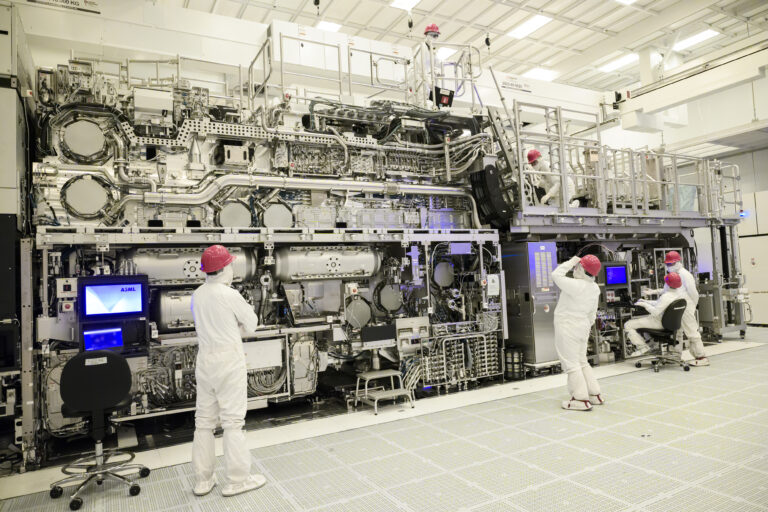
The prototype is described as a full-scale system, occupying an entire factory floor and comparable in size to modern high-NA EUV tools.

While still experimental, the machine is believed to be producing early test wafers for laboratory evaluation. The Chinese government has reportedly set a target of achieving functional chip production using this system by 2028.

Huawei is leading the project as part of its broader strategy to establish a self-sufficient semiconductor and AI supply chain. At its Guanlan facility, Huawei has built in-house semiconductor manufacturing capabilities capable of producing 7 nm-class chips for its own processors.

Due to limited access to advanced foundry capacity, Huawei has expanded its role to include materials sourcing, equipment development, wafer fabrication, and chip design.

This EUV initiative fits into Huawei’s wider push to reduce reliance on foreign technology amid ongoing export restrictions. The company is attempting to localize every major component of the AI ecosystem, from manufacturing equipment and compute hardware to software models and deployment platforms. EUV lithography is a key missing piece for further scaling.

Earlier reports from 2025 indicated that an experimental EUV tool was already being tested at Huawei’s Dongguan site. That system reportedly uses laser-induced discharge plasma technology to generate EUV radiation at 13.5 nm. Unlike ASML’s laser-produced plasma method, the LDP approach uses high-voltage electrical discharge to form tin plasma, potentially simplifying system design and reducing energy requirements.

Despite these potential advantages, significant challenges remain. The prototype must demonstrate competitive resolution, stable throughput, reliable uptime, and seamless integration into existing process flows. EUV lithography is among the most complex manufacturing technologies ever deployed, and achieving production-level performance will require extensive refinement.

If successful, the project could significantly alter the balance of power in advanced chip manufacturing. However, the path from prototype to high-volume manufacturing remains long and technically demanding

 
They are coming in strong. They should thank Trump. He opened Chinese eyes to how vulnerable they were and took steps to rectify the situation.
It's a matter of time before Nvidia and AMD will be replaced. The amount of money China put in R&D is insane. The amount of money they shove in R&D is somewhat greater than some countries' annual fiscal budget.
 

Is China quietly winning the AI race?​

2 days ago
Share
Save
Lily JamaliNorth America Technology correspondent
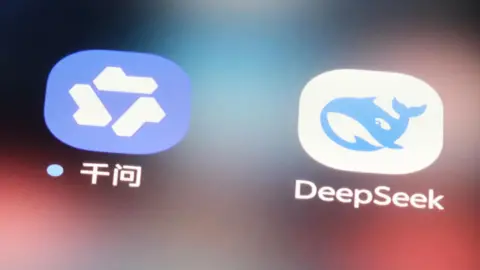
Getty Images Three icons for AI apps. On the left is ChatGPT. In the middle is Qwen, written in two Chinese characters. On the right is DeepSeek.
Getty Images
Every month, hundreds of millions of users flock to Pinterest looking for the latest styles.

One page titled "the most ridiculous things" is filled with plenty of wacky ideas to inspire creatives. Crocs repurposed as flower pots. Cheeseburger-shaped eyeshadow. A gingerbread house made of vegetables.

But what would-be buyers may not know is the tech behind this isn't necessarily US-made. Pinterest is experimenting with Chinese AI models to hone its recommendation engine.

"We've effectively made Pinterest an AI-powered shopping assistant," the firm's boss Bill Ready told me.

Of course, the San Francisco-based tastemaker could use any number of American AI labs to power things behind-the-scenes.

But since the launch of China's DeepSeek R-1 model in January 2025, Chinese AI tech has increasingly been a part of Pinterest.

Ready calls the so-called "DeepSeek moment" a breakthrough.

"They chose to open source it, and that sparked a wave of open source models," he said.

Chinese competitors include Alibaba's Qwen and Moonshot's Kimi, while TikTok owner ByteDance is also working on similar technology.

Pinterest Chief Technology Officer Matt Madrigal said the strength of these models is that they can be freely downloaded and customised by companies like his - which is not the case with the majority of models offered by US rivals like OpenAI, which makes ChatGPT.

"Open source techniques that we use to train our own in-house models are 30% more accurate than the leading off-the-shelf models," Madrigal said.

And those improved recommendations come at a much lower cost, he said, sometimes ninety percent less than using the proprietary models favoured by US AI developers.


'Fast and cheap'​

Pinterest is hardly the only US enterprise depending on AI tech from China.

These models are gaining traction across an array of Fortune 500 companies.

Airbnb boss Brian Chesky told Bloomberg in October his company relied "a lot" on Alibaba's Qwen to power its AI customer service agent.

He gave three simple reasons - it's "very good", "fast" and "cheap".

Further evidence can be found on Hugging Face, the place people go to download ready-made AI models - including from major developers Meta and Alibaba.

Jeff Boudier, who builds products at the platform, said it is the cost factor that leads young start-ups to look at Chinese models over their US counterparts.

"If you look at the top trending models on Hugging Face - the ones that are most downloaded and liked by the community - typically, Chinese models from Chinese labs occupy many of the top 10 spots," he told me.

"There are weeks where four out of five top training models on Hugging Face are from Chinese labs."

In September, Qwen topped Meta's Llama to become the most downloaded family of large language models on the Hugging Face platform.

Meta released its open-source Llama AI models in 2023. Up until the release of DeepSeek and Alibaba's models, they were considered the go-to choice for developers working on bespoke applications.

But the release of Llama 4 last year left developers underwhelmed, and Meta has reportedly been using open-source models with Alibaba, Google, and OpenAI to train a new model set for release this spring.

Airbnb also uses several models, including US-based ones, hosting them securely in the company’s own infrastructure. The data is never provided to the developers of the AI models they use, according to the company.

Chinese success​

Going into 2025, the consensus was despite billions of dollars being spent by US tech firms, Chinese companies were threatening to pull ahead.

"That's not the story anymore," Boudier said. "Now, the best model is an open-source model."

A report published last month by Stanford University found Chinese AI models "seem to have caught up or even pulled ahead" of their global counterparts - both in terms of what they're capable of, and how many people are using them.

In a recent interview with the BBC, former UK deputy prime minister Sir Nick Clegg said he felt US firms were overly focused on the pursuit of AI which may one day surpass human intelligence.

Last year, Sir Nick left his post as head of global affairs at Meta, the developer of Llama. Boss Mark Zuckerberg has committed billions of dollars to achieving what he calls "superintelligence."

Some experts are now calling these ambitions vague and ill-defined – giving China an opening to dominate the open-source AI space.

"Here's the irony," Sir Nick said. In the battle between "the world's great autocracy" and "the world's greatest democracy" - China and America - China is "doing more to democratise the technology they're competing over".

The Stanford report also suggested China's success in developing open-source models could be partly explained by government support.

On the other side of the world, US companies like OpenAI are under intense pressure to increase revenue and become profitable - and is now turning to ads to help get there.

The company released two open-source models last summer – its first in years. But it has poured most of its resources into proprietary models to help it make money.

OpenAI boss Sam Altman told me in October it has invested aggressively into securing ever more computing power and infrastructure deals with partners.

"Revenue will grow super fast, but you should expect us to invest a ton in training, in the next model and the next and the next and the next," he said.
 
China’s AI Industry Tops $172 Billion as Manufacturing Integration Accelerates

China’s core artificial intelligence (AI) industry exceeded an estimated 1.2 trillion yuan ($172 billion) in value in 2025, as the government stepped up efforts to integrate the advanced technology into the country’s vast manufacturing sector.

The data were released Wednesday by the Ministry of Industry and Information Technology (MIIT), underscoring how the world’s second-largest economy is seeking to upgrade industrial supply chains amid increasingly complex global and domestic challenges.


Experts: AI driving transformation of manufacturing in China

AI-driven integration with advanced manufacturing is becoming the decisive force in the transformation of China's manufacturing powerhouse, as intelligent technologies increasingly reshape factory floors and industrial systems nationwide, industry officials and experts have said.

Recent breakthroughs in artificial intelligence have made the deep integration of advanced manufacturing and intelligent technologies not only inevitable but essential, according to Zeng Jianping, deputy secretary-general of the National Manufacturing Strategy Advisory Committee.

"This will be the most critical factor in the transformation, upgrading and high-quality development of China's manufacturing sector over the next decade," Zeng said at a media briefing hosted by the All-China Journalists Association on Wednesday.

Latest data from the Ministry of Industry and Information Technology (MIIT) showed that AI has already been applied in more than 70 percent of business scenarios at China's "leading-tier" smart factories, giving rise to over 6,000 AI models tailored to vertical industrial applications. These advances have also driven the large-scale deployment of more than 1,700 key intelligent manufacturing equipment systems and industrial software solutions.

"A new generation of industrial intelligent agents equipped with sensing, decision-making and execution capabilities is accelerating the shift of intelligent manufacturing from automation toward autonomy," Xie Cun, head of the information and communications development department at the MIIT, said at Wednesday's briefing.

Empowered by AI technologies, manufacturing plants across China are rapidly enhancing their intelligence and customization capabilities.

At Haier's leading-tier smart factory in Qingdao, Shandong province, an AI-driven intelligent scheduling system now enables the factory to generate optimal production and adjustment plans, effectively resolving the long-standing tension between customized demand and large-scale manufacturing efficiency.

According to company data, the system has boosted scheduling efficiency by 50 percent, improved efficiency on best-selling product lines by 5.8 percent, and cut the work-in-progress inventory by 62.5 percent.

As of last year, Haier had built 13 global "lighthouse factories", 18 national-level "green factories" and one leading-tier smart factory.

This reflects a broader shift in China's manufacturing sector toward a new stage characterized by tiered cultivation and systematic upgrading of intelligent capabilities. Earlier this month, eight government departments jointly issued an action plan on AI + manufacturing, which sets the goal of achieving the secure and reliable supply of key AI technologies by 2027, while ensuring China remains a world leader in industrial scale and empowerment capacity.

The plan also calls for the deep application of three to five general-purpose large AI models in manufacturing, the development of industry-specific models with broad coverage, the creation of 100 high-quality industrial data sets, and the promotion of 500 typical application scenarios by 2027.
 
LLMs - generative AI can never become AGI or ASI despite seemingly giving people the impression of AGI. However, the path to AGI or ASI can include LLMs, especially their development.

China from the beginning of this AI race when it truly sparked off in 2010s pursued multiple forms of AI like the US also studied and experimented with neuro based multimodal models. But particularly interested in visual based ones. This led to China's government and industries focus more on narrow AI whereas the US chose to invest more in LLMs and reinforcement learning models.

LLMs and RLs are much more accessible and certainly make them seem like real AI but AI is essentially machine learning. AGI and ASI are purely theoretical and the best AI scientists don't have absolute agreement on what those things even are.

I don't think China is leading AI commercially but I do believe China is quietly head to head with US in LLMs and RLs but ahead of US in narrow specialised AI applications. I've spoken to people in industry and gov in China and the rush to apply specialised AI to all tech industries is incredible. Gov demand all workers to study utilisation and there is strong drive to create more specialist AI which China already applies to in many manufacturing sectors. It is relatively well hidden and they do not want to make a fuss about the progress.

You will just see progress in manufactured goods becoming much cheaper (already happened and is still happening) and just better optimisation for everything along the supply chain from product design to loading a container onto a ship.

The idea is to continue dominating all industries.

LLMs are useful for generating language based on pattern recognition and creating fake sources and hallucinations so has no great use except to be a good assistant, search engine, and replace things like law clerks and admin staff. Even the integration with software isn't good. Co-pilot is arguably the best but go outside Microsoft Office and there is hardly an agent you can train to really do even 1/10 your work without getting that 1/10 wrong in places.

LLMs/RLs are good for coding though.

QWEN, Deepseek, Kimi K2 and the others are every bit as good as Meta, Co-pilot, GPT, Claude, Grok. In some ways better, in some ways worse.

That's all the surface stuff. The more groundbreaking, bleeding edge AIs are the Tsinghua University and CAS ones. Huawei's Pangu AI is an example industrially useful AI not the GPT do all but can't do anything well LLMs.

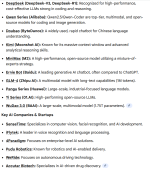
1769388580652.png

Just a small list of Chinese LLM/RL based AIs and some industry specialist "narrow" AIs.

All are ground up developed, not skins like the Indian ones.

The most impressive in my opinion is WuDao (means path to consciousness) and BaGuaLu which holds/held by far the most number of parameters. It had trillions of parameters when American models were in the billions.

Kling beat Sora to market and came with a better product.

This just goes to show how quiet China is. When Kling was at 95% complete it was still unknown and hidden from public when Sora was 50% complete and advertising.

Dall-E like many visual generation AIs runs based on Chinese advancements and work in ResNet - residual neural network. Only possible with those Chinese developed work in the 2010s.

Meta's HR leak proved that they were offering $100M salaries to Chinese born, Chinese educated and trained AI scientists/engineers. About half of US AI industry is built by Chinese born and educated. Even if they get ahead, they just need a few to turn spy or work in China. The reverse is also true. China gets ahead and US pay those Chinese scientists to become spies or work for US.

So this AI race is going to be head to head. But it's the only industry the US can claim some lead in now and to be honest that's only lead compared to what China shows as already dated stuff they had in the past.
 
LLMs - generative AI can never become AGI or ASI despite seemingly giving people the impression of AGI. However, the path to AGI or ASI can include LLMs, especially their development.

China from the beginning of this AI race when it truly sparked off in 2010s pursued multiple forms of AI like the US also studied and experimented with neuro based multimodal models. But particularly interested in visual based ones. This led to China's government and industries focus more on narrow AI whereas the US chose to invest more in LLMs and reinforcement learning models.

LLMs and RLs are much more accessible and certainly make them seem like real AI but AI is essentially machine learning. AGI and ASI are purely theoretical and the best AI scientists don't have absolute agreement on what those things even are.

I don't think China is leading AI commercially but I do believe China is quietly head to head with US in LLMs and RLs but ahead of US in narrow specialised AI applications. I've spoken to people in industry and gov in China and the rush to apply specialised AI to all tech industries is incredible. Gov demand all workers to study utilisation and there is strong drive to create more specialist AI which China already applies to in many manufacturing sectors. It is relatively well hidden and they do not want to make a fuss about the progress.

You will just see progress in manufactured goods becoming much cheaper (already happened and is still happening) and just better optimisation for everything along the supply chain from product design to loading a container onto a ship.

The idea is to continue dominating all industries.

LLMs are useful for generating language based on pattern recognition and creating fake sources and hallucinations so has no great use except to be a good assistant, search engine, and replace things like law clerks and admin staff. Even the integration with software isn't good. Co-pilot is arguably the best but go outside Microsoft Office and there is hardly an agent you can train to really do even 1/10 your work without getting that 1/10 wrong in places.

LLMs/RLs are good for coding though.

QWEN, Deepseek, Kimi K2 and the others are every bit as good as Meta, Co-pilot, GPT, Claude, Grok. In some ways better, in some ways worse.

That's all the surface stuff. The more groundbreaking, bleeding edge AIs are the Tsinghua University and CAS ones. Huawei's Pangu AI is an example industrially useful AI not the GPT do all but can't do anything well LLMs.

View attachment 174768

Just a small list of Chinese LLM/RL based AIs and some industry specialist "narrow" AIs.

All are ground up developed, not skins like the Indian ones.

The most impressive in my opinion is WuDao (means path to consciousness) and BaGuaLu which holds/held by far the most number of parameters. It had trillions of parameters when American models were in the billions.

Kling beat Sora to market and came with a better product.

This just goes to show how quiet China is. When Kling was at 95% complete it was still unknown and hidden from public when Sora was 50% complete and advertising.

Dall-E like many visual generation AIs runs based on Chinese advancements and work in ResNet - residual neural network. Only possible with those Chinese developed work in the 2010s.

Meta's HR leak proved that they were offering $100M salaries to Chinese born, Chinese educated and trained AI scientists/engineers. About half of US AI industry is built by Chinese born and educated. Even if they get ahead, they just need a few to turn spy or work in China. The reverse is also true. China gets ahead and US pay those Chinese scientists to become spies or work for US.

So this AI race is going to be head to head. But it's the only industry the US can claim some lead in now and to be honest that's only lead compared to what China shows as already dated stuff they had in the past.

China is ahead in AI development.

It's the world leader, and the gap between USA and China is getting bigger and bigger.

What USA do is copying China and relabeled as Made in USA.
 

Is China quietly winning the AI race?​

2 days ago
Share
Save
Lily JamaliNorth America Technology correspondent
Getty Images Three icons for AI apps. On the left is ChatGPT. In the middle is Qwen, written in two Chinese characters. On the right is DeepSeek.
Getty Images
Every month, hundreds of millions of users flock to Pinterest looking for the latest styles.

One page titled "the most ridiculous things" is filled with plenty of wacky ideas to inspire creatives. Crocs repurposed as flower pots. Cheeseburger-shaped eyeshadow. A gingerbread house made of vegetables.

But what would-be buyers may not know is the tech behind this isn't necessarily US-made. Pinterest is experimenting with Chinese AI models to hone its recommendation engine.

"We've effectively made Pinterest an AI-powered shopping assistant," the firm's boss Bill Ready told me.

Of course, the San Francisco-based tastemaker could use any number of American AI labs to power things behind-the-scenes.

But since the launch of China's DeepSeek R-1 model in January 2025, Chinese AI tech has increasingly been a part of Pinterest.

Ready calls the so-called "DeepSeek moment" a breakthrough.

"They chose to open source it, and that sparked a wave of open source models," he said.

Chinese competitors include Alibaba's Qwen and Moonshot's Kimi, while TikTok owner ByteDance is also working on similar technology.

Pinterest Chief Technology Officer Matt Madrigal said the strength of these models is that they can be freely downloaded and customised by companies like his - which is not the case with the majority of models offered by US rivals like OpenAI, which makes ChatGPT.

"Open source techniques that we use to train our own in-house models are 30% more accurate than the leading off-the-shelf models," Madrigal said.

And those improved recommendations come at a much lower cost, he said, sometimes ninety percent less than using the proprietary models favoured by US AI developers.


'Fast and cheap'​

Pinterest is hardly the only US enterprise depending on AI tech from China.

These models are gaining traction across an array of Fortune 500 companies.

Airbnb boss Brian Chesky told Bloomberg in October his company relied "a lot" on Alibaba's Qwen to power its AI customer service agent.

He gave three simple reasons - it's "very good", "fast" and "cheap".

Further evidence can be found on Hugging Face, the place people go to download ready-made AI models - including from major developers Meta and Alibaba.

Jeff Boudier, who builds products at the platform, said it is the cost factor that leads young start-ups to look at Chinese models over their US counterparts.

"If you look at the top trending models on Hugging Face - the ones that are most downloaded and liked by the community - typically, Chinese models from Chinese labs occupy many of the top 10 spots," he told me.

"There are weeks where four out of five top training models on Hugging Face are from Chinese labs."

In September, Qwen topped Meta's Llama to become the most downloaded family of large language models on the Hugging Face platform.

Meta released its open-source Llama AI models in 2023. Up until the release of DeepSeek and Alibaba's models, they were considered the go-to choice for developers working on bespoke applications.

But the release of Llama 4 last year left developers underwhelmed, and Meta has reportedly been using open-source models with Alibaba, Google, and OpenAI to train a new model set for release this spring.

Airbnb also uses several models, including US-based ones, hosting them securely in the company’s own infrastructure. The data is never provided to the developers of the AI models they use, according to the company.

Chinese success​

Going into 2025, the consensus was despite billions of dollars being spent by US tech firms, Chinese companies were threatening to pull ahead.

"That's not the story anymore," Boudier said. "Now, the best model is an open-source model."

A report published last month by Stanford University found Chinese AI models "seem to have caught up or even pulled ahead" of their global counterparts - both in terms of what they're capable of, and how many people are using them.

In a recent interview with the BBC, former UK deputy prime minister Sir Nick Clegg said he felt US firms were overly focused on the pursuit of AI which may one day surpass human intelligence.

Last year, Sir Nick left his post as head of global affairs at Meta, the developer of Llama. Boss Mark Zuckerberg has committed billions of dollars to achieving what he calls "superintelligence."

Some experts are now calling these ambitions vague and ill-defined – giving China an opening to dominate the open-source AI space.

"Here's the irony," Sir Nick said. In the battle between "the world's great autocracy" and "the world's greatest democracy" - China and America - China is "doing more to democratise the technology they're competing over".

The Stanford report also suggested China's success in developing open-source models could be partly explained by government support.

On the other side of the world, US companies like OpenAI are under intense pressure to increase revenue and become profitable - and is now turning to ads to help get there.

The company released two open-source models last summer – its first in years. But it has poured most of its resources into proprietary models to help it make money.

OpenAI boss Sam Altman told me in October it has invested aggressively into securing ever more computing power and infrastructure deals with partners.

"Revenue will grow super fast, but you should expect us to invest a ton in training, in the next model and the next and the next and the next," he said.

China is the winner.

The real enemy of LLM AI is cost.

If you notice, many AI models look pretty much the same—like DeepSeek.

This is because almost all of them run on DeepSeek and have only been slightly modified and rebranded.
 
China is the winner.

The real enemy of LLM AI is cost.

If you notice, many AI models look pretty much the same—like DeepSeek.

This is because almost all of them run on DeepSeek and have only been slightly modified and rebranded.
I hope China is the winner, and I hope China becomes the world's largest economy in NOMINAL GDP Terms. I think the world deserves it now.

But as constructive criticism for our Chinese friends, China is still behind USA economically, quite a bit. China still has some way to go. Best of Luck.
 

Users who are viewing this thread

Back
Top