China Science And Technology News

Tokamak regime sustains stable fusion plasma for one minute while easing heat loads
To view this content we will need your consent to set third party cookies.
For more detailed information, see our cookies page.


I still dont understand this. Like what are we expecting from this ? Are we expecting growth in technology to a point where this results in more energy production that it requires ?? Or make it sustainable ? Like, what is the ultimate goal of fusion. ?
 
I still dont understand this. Like what are we expecting from this ? Are we expecting growth in technology to a point where this results in more energy production that it requires ?? Or make it sustainable ? Like, what is the ultimate goal of fusion. ?
Ultimate goal of fusion? The most important advantage of fusion energy is unlimited fuel. Hydrogen as the most basic, lightest element in nature, is practically unlimited in the universe.

It work just like the sun, which is the ultimate source of energy for Earth, all form of energies whether solar, wind or hydrocarbon like oil and gas or firewood - they all originated from the sun.

Therotically, a fusion power plant can be build, and maintained forever. It is efficient, clean and work 24/7 as baseload for the power grid. In practice it is of course not that simple. I guess the goal is to make one that work that way and would in theory made other form of power generation unnecessary.
 
Ultimate goal of fusion? The most important advantage of fusion energy is unlimited fuel. Hydrogen as the most basic, lightest element in nature, is practically unlimited in the universe.

It work just like the sun, which is the ultimate source of energy for Earth, all form of energies whether solar, wind or hydrocarbon like oil and gas or firewood - they all originated from the sun.

Therotically, a fusion power plant can be build, and maintained forever. It is efficient, clean and work 24/7 as baseload for the power grid. In practice it is of course not that simple. I guess the goal is to make one that work that way and would in theory made other form of power generation unnecessary.


Thank you. I get it now. .
 

China Catastrophically Outpaced the US in the Drone War and Dominates in Ukraine and Iran - WSJ​

TECHNOLOGIES
Publication date 03.05.2026

China Catastrophically Outpaced the U.S. in the Drone War and Dominates in Ukraine and Iran - WSJ

Photo: dreamstime

The U.S. aims to dominate in the production and application of drones just as it has with previous military innovations. However, there is one problem: China has catastrophically outpaced them.

As The Wall Street Journal reports, an analysis of Russian drones from Ukraine indicates the scale of Chinese dominance in production. A recent analysis of a Russian first-person view quadcopter, conducted by the 'Bulava' unit of the Presidential Brigade of Ukraine, revealed numerous components, at least partially made in China: batteries, engines, and an unmarked central 'brain' chip. The Russian version could not have been created without the Chinese supply chain.

The extent of China's involvement in the creation of kamikaze drones used by Iran in the war against Israel and the U.S. is less clear. However, defense sector analysts and industry experts argue that China's control over global drone production means that Iran is likely as dependent on it as Russia and Ukraine.

"He has already won the Third World War because everything is in his hands. No one will be able to change this in the near future, nor in the long term," said a drone specialist from 'Bulava', known by the call sign 'Uda'.

At the same time, China has already demonstrated a willingness to use its control over the drone supply chain as a weapon. In late 2024, Beijing blacklisted California drone manufacturer Skydio for selling drones to Taiwan. Cut off from Chinese suppliers, the company was forced to ration battery supplies.

The U.S. Wants to Outpace China​

As WSJ writes, most drones are simple mechanisms, which means there are no technical reasons why the U.S. could not compete with China:

"The problem for the U.S. is that China's scale advantage – and therefore cost advantage – is enormous. American-made quadcopters sold to the military can cost over $15,000, which is at least three times more expensive than a comparable Chinese drone."

What Are the Main Problems​

To have any hope of creating a sustainable fleet of drones capable of competing with China, the U.S. needs to solve two problems.

First, they need to find a way to break China's monopoly on batteries and engines. The Trump administration invested billions of dollars in American companies producing critical minerals necessary for making engines and batteries, although experts warn that building the complex infrastructure needed for mass production could take a decade or more.

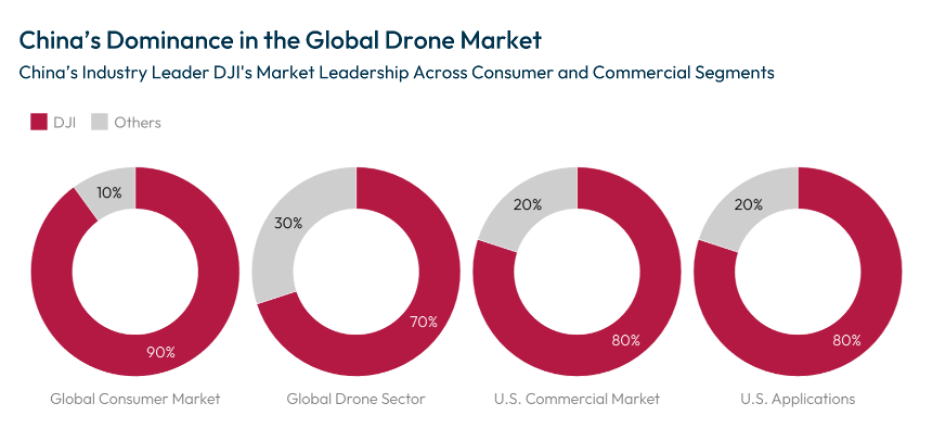
They also need to find ways to significantly reduce the cost of other components. Demand is a key issue here, industry insiders say. According to Drone Industry Insights, China owns 80% of the commercial drone market in the U.S. Almost all of this dominance is due to the activities of Chinese giant DJI Technology, a manufacturer of affordable yet high-performance drones popular among content creators, real estate agents, factory inspectors, and cash-strapped American police and fire departments.
 

The U.S. Wants to Break China’s Drone Dominance. Here’s Where It Will Struggle.​

A part-by-part breakdown of a typical first-person-view drone shows the strength of China’s stranglehold

May 2, 2026 10:00 pm ET

With drones revolutionizing the battlefield in Ukraine, Iran and beyond, the U.S. is striving to dominate this latest evolution in military technology the way it has with previous wartime innovations. There is just one problem: China got there first.

Teardowns of drones recovered in Ukraine hint at the extent of China’s stranglehold on production. A recent dissection of a Russian first-person-view, or FPV, quadcopter by the Bulava unit of Ukraine’s Presidential Brigade found numerous parts manufactured at least partially in China: batteries, motors and an unmarked central “brain” chip that Bulava traced to a Chinese supplier. Like Bulava’s own similar drones, the Russian version couldn’t have been built without the Chinese supply chain.


US push to win drone race faces big obstacle: China owns supply chain​

May 3 2026

The United States is accelerating efforts to build military drones at scale, but China’s grip on key components threatens to slow that ambition, The Wall Street Journal reported Saturday.

As drones reshape warfare in Ukraine, the Middle East and elsewhere, Pentagon leaders want America to dominate the next generation of low-cost unmanned systems. Yet batteries, motors, cameras and control electronics used in many frontline drones are heavily tied to Chinese manufacturing.

Recent drone teardowns in Ukraine found numerous Chinese-made or Chinese-linked parts inside systems used by both Russian and Ukrainian forces, underscoring how deeply China’s supply chain is embedded in modern battlefield hardware.

Defense Secretary Pete Hegseth has launched a $1.1 billion “Drone Dominance” program aimed at boosting U.S. production and lowering costs through large military purchases. The Pentagon plans to buy 340,000 first-person-view drones over multiple phases, targeting a future unit cost of about $2,300.

The challenge is steep. U.S.-made military quadcopters can cost more than $15,000, several times the price of comparable Chinese systems. China also controls much of the rare-earth magnet and battery supply chains needed for motors and power packs.

Industry experts say the issue is less about engineering than scale. China dominates commercial drones through DJI, which holds a large share of the U.S. market and benefits from mass production that American rivals lack.

Washington is also trying to restrict foreign-made drones on national-security grounds. A broader FCC ban on imported drones and critical components is expected to take effect in 2027, though some analysts warn it could raise costs for U.S. producers before domestic supply chains are ready.

Experts say the U.S. can build a competitive drone industry, but replacing an existing ecosystem that is already cheap, efficient and global will take years of investment and sustained demand.

 
China's drone manufacturing industry stands as a global powerhouse, commanding over 70% of global drone sales and maintaining its position as the world's largest producer and exporter of unmanned aerial vehicles (UAVs). The market demonstrates robust growth trajectories, with valuations reaching USD 10.55 billion in 2024 and projected to expand to USD 32.3 billion by 2033, representing a compound annual growth rate (CAGR) of 13.2-14.8%

image-15.png
 

Humanoid robots to drive next leg of China's export dominance — Morgan Stanley

Malcolm Scott / Bloomberg
Published on Thu, May 07, 2026 / 07:40 PM GMT+08 /
CHIna%20robot%20_Bloomberg.jpg


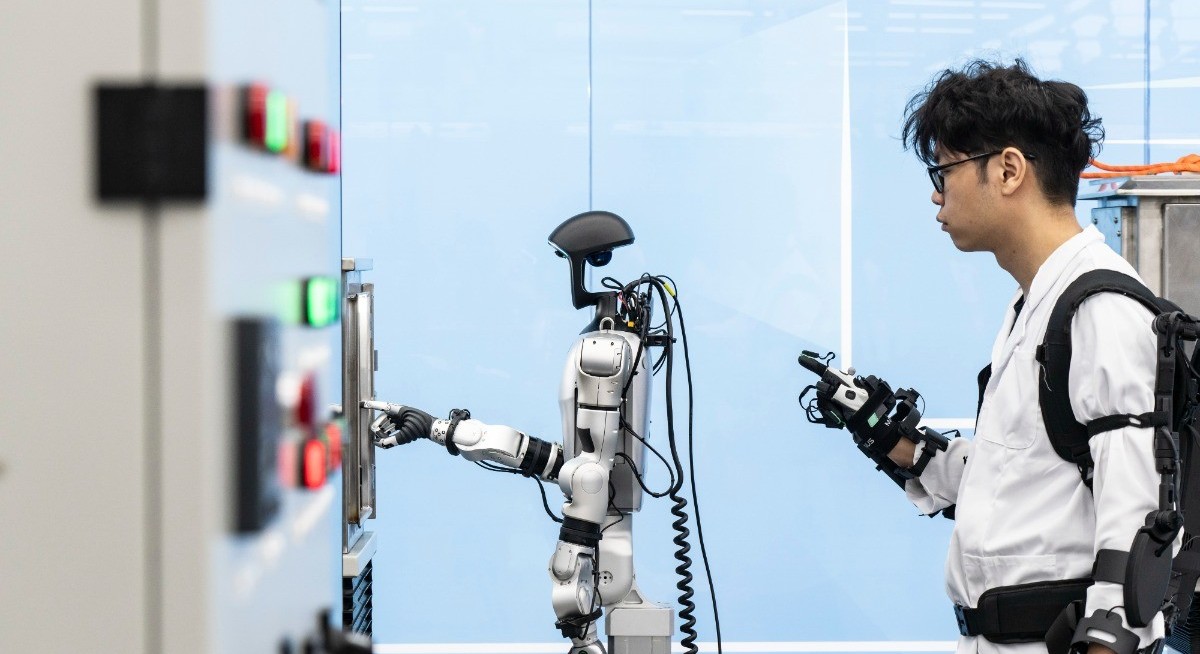
(May 7): China’s early lead in humanoid robots will help power the next phase of its global manufacturing and export dominance, according to new research from Morgan Stanley.

Much like the early identification of electric vehicles (EVs) as a growth driver a decade ago, China’s investments and early lead in humanoid robotics will see the nation’s share of global manufacturing expand to 16.5% by 2030, from 15% today, economists led by Chetan Ahya wrote in a report.

Over the past couple of years, robotics has shifted from the lab to the real world, with Chinese tech parks, factories and universities among those deploying humanoids. Government procurement is also kicking in, the Morgan Stanley economists note, paving the way for broader adoption.

“China has a track record of spotting the next big growth areas early and planning ahead,” Ahya, the bank’s chief Asia economist, wrote in the report, citing China’s now-dominant EV and battery industries. “The robotics industry has followed a similar path.”

Like with EVs, China is building out capacity across the humanoid supply chain. That gives it an edge over competitors including the US, Japan and South Korea, which often rely on Chinese inputs and components.

Almost every week, Chinese media reports on the next leap forward in humanoid robotics. A red humanoid recently completed a half-marathon in 50 minutes and 26 seconds — about seven minutes faster than the men’s world record. Robotics shares jumped on that news.

With American firms like Tesla Inc also investing heavily, the race to dominate the humanoid robot market is part of the broader strategic competition between the world’s two largest economies.

The US approach has been to focus on high-cost and high-spec prototypes, with an emphasis on testing before scaling up production, the Morgan Stanley economists wrote. Chinese firms have been quicker to roll out models, with the local market acting as a testing ground.

Protectionism will be a threat. Chinese EVs have run into tariffs and other restrictions around the world. While humanoid robotics is a new industry, meaning there’s less need to protect existing producers and workers, concerns over security and technical dependence could rise, according to the economists.

Excessive investment and competition that drags down profits and results in a production glut is another risk for the industry.

“A rapid rise in robot supply is likely to keep prices of automation equipment on a downward trajectory, which is a double-edged sword,” the economists wrote.

“Cheaper robots make faster global adoption possible — potentially boosting productivity and containing inflation for end products. But excessive supply expansion can create the problem of pricing power and returns for the industry.”


Chinese scientists develop "Jiuzhang 4.0," setting new world record in quantum computing​

2026-05-14 00:10:45
a8fff6bbfd6d4770b8c3454f44a22696.jpg


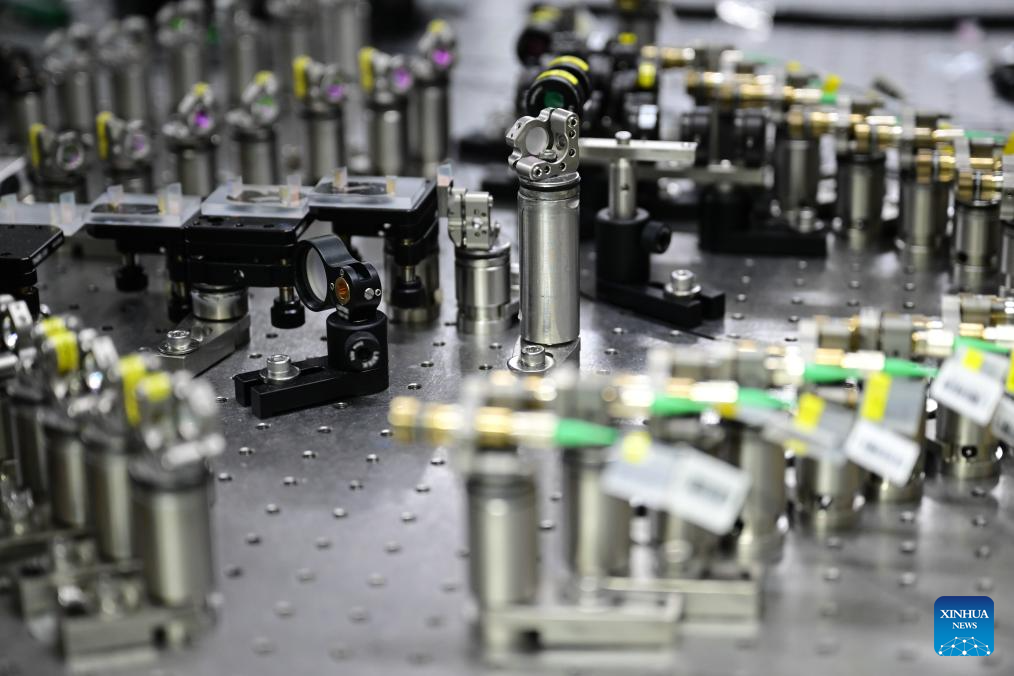
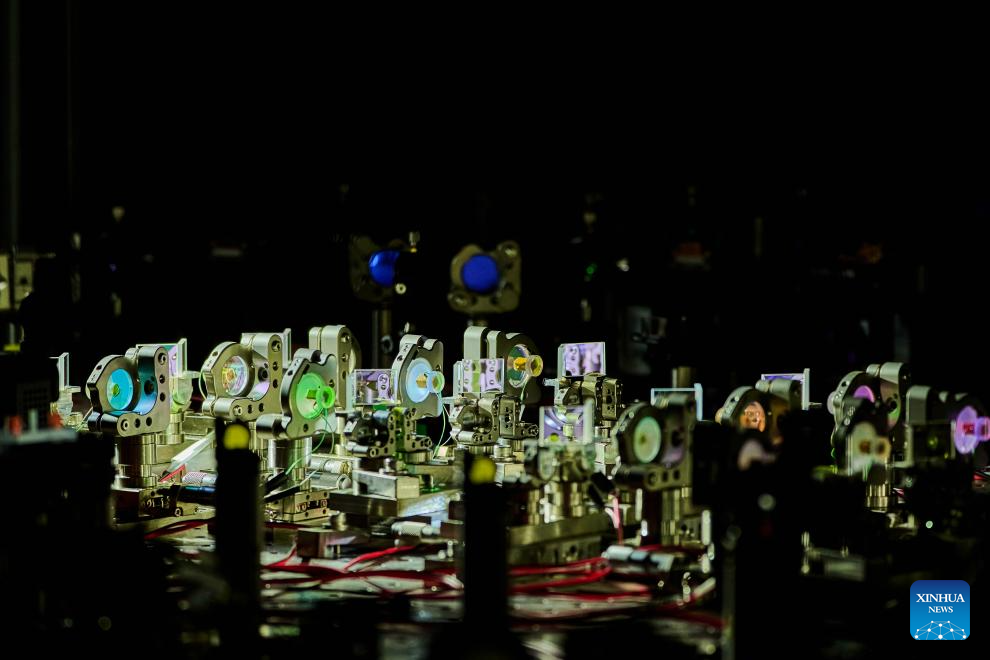
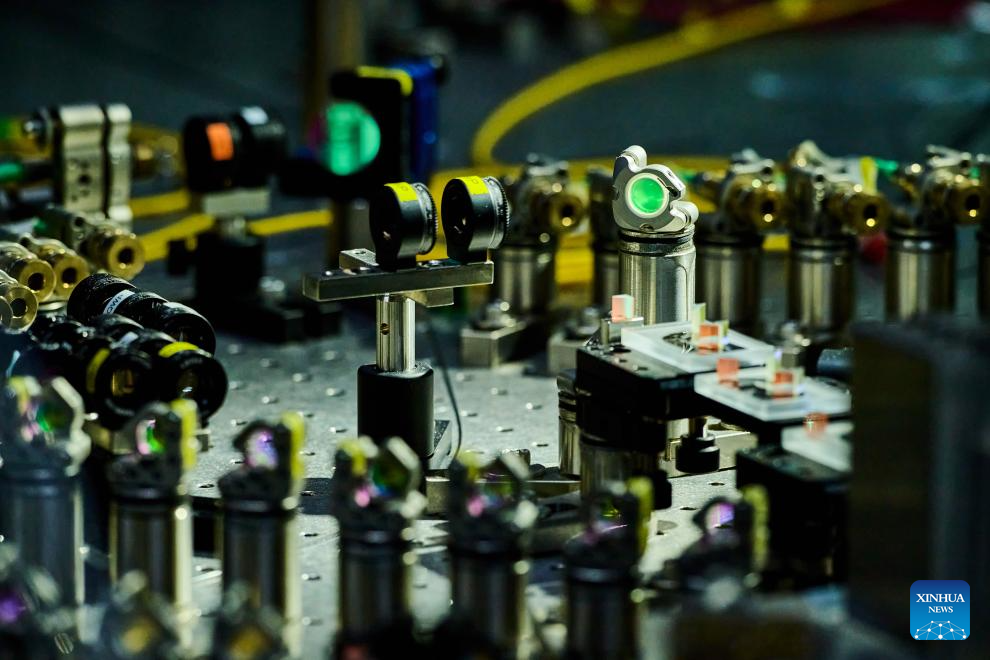
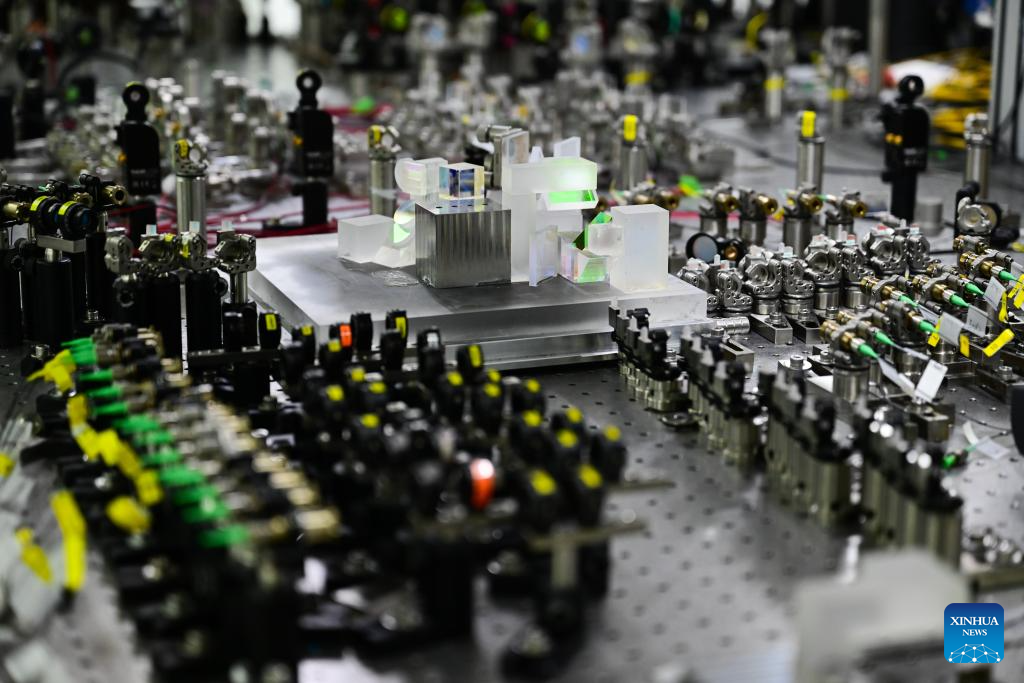
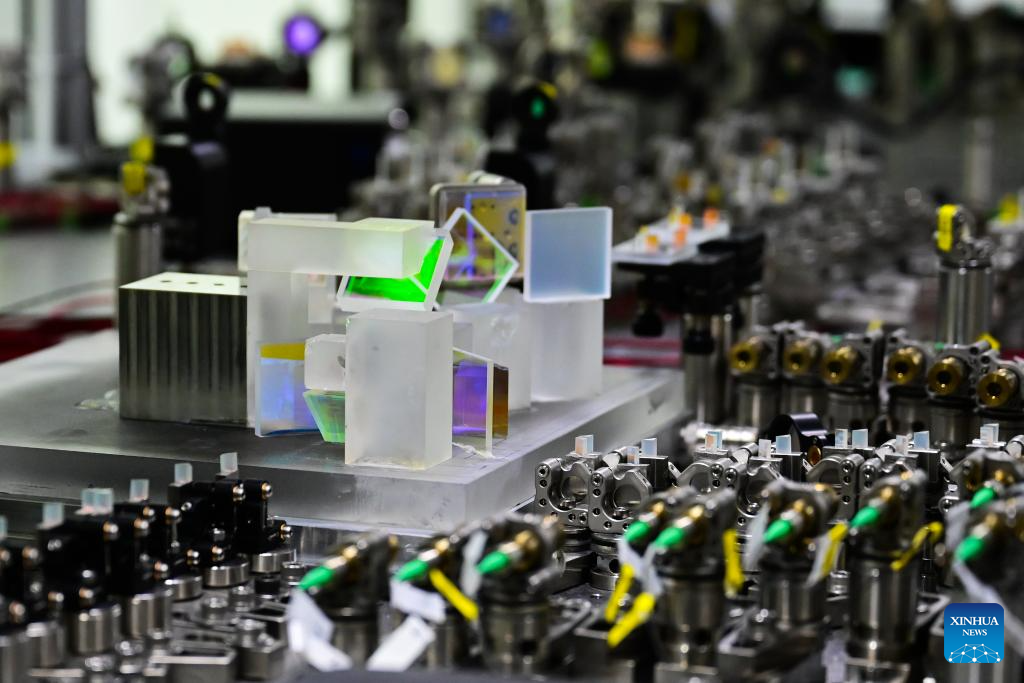
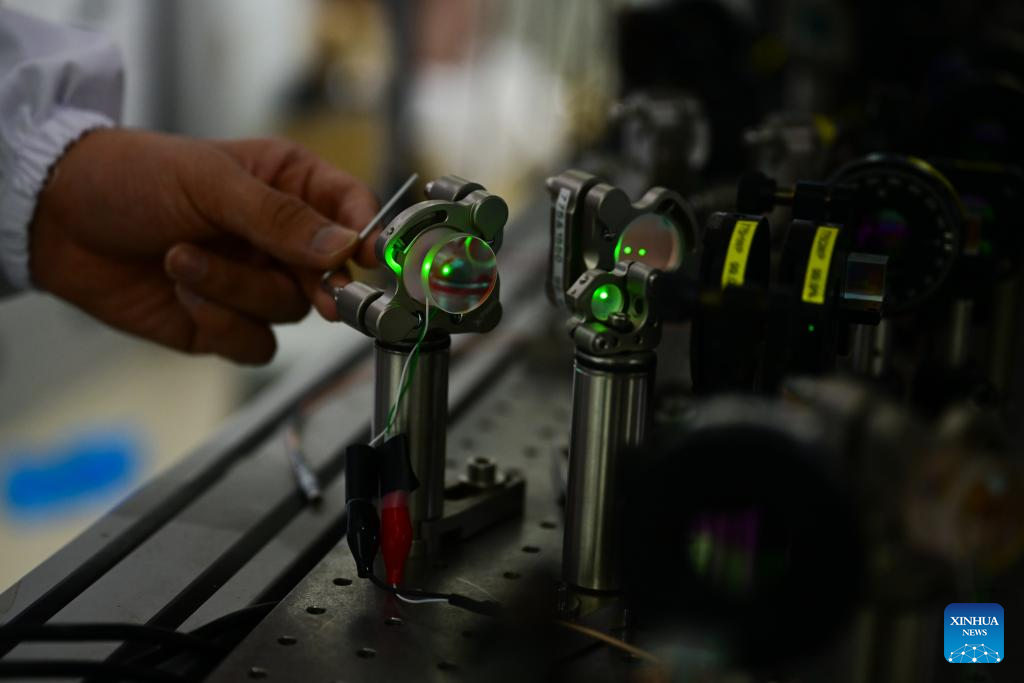
This photo taken on April 10, 2026 shows part of a programmable quantum computing prototype called "Jiuzhang 4.0". Chinese scientists have developed a programmable quantum computing prototype called "Jiuzhang 4.0" that has set a new world record for optical quantum information technology, according to a study published on Wednesday in the journal Nature. Led by the University of Science and Technology of China (USTC), the team used the prototype to solve the Gaussian boson sampling problem at a speed more than 10 to the 54th times that of the world's most powerful supercomputer, the study said. The researchers said they manipulated and detected quantum states of up to 3,050 photons -- a significant leap from the 255 photons achieved with the previous "Jiuzhang 3.0." (Xinhua/Zhou Mu)

HEIFEI, May 13 (Xinhua) -- Chinese scientists have developed a programmable quantum computing prototype called "Jiuzhang 4.0" that has set a new world record for optical quantum information technology, according to a study published on Wednesday in the journal Nature.

Led by the University of Science and Technology of China (USTC), the team used the prototype to solve the Gaussian boson sampling problem at a speed more than 10 to the 54th times that of the world's most powerful supercomputer, the study said.

The researchers said they manipulated and detected quantum states of up to 3,050 photons -- a significant leap from the 255 photons achieved with the previous "Jiuzhang 3.0."

Current mainstream quantum computing technological routes include superconducting, ion trap, photonic, and neutral atom systems. The "Jiuzhang" series of prototypes encodes quantum bits using photons and performs quantum computation through the manipulation and measurement of these photons.

Since its successful construction in 2020, the series has undergone several upgrades, achieving "quantum computational advantage" and repeatedly setting world records.

Lu Chaoyang, a professor at the USTC, said the research team developed a high-efficiency optical parametric oscillator light source and a spatiotemporally hybrid-coded interferometer.

By integrating 1,024 high-efficiency squeezed-state optical fields into an 8,176-mode spatiotemporally hybrid-coded circuit, the team was able to manipulate and detect up to 3,050 photons.

"This means that the most complex data sample generated by 'Jiuzhang 4.0' takes only 25 microseconds to produce -- shorter than the blink of an eye. In contrast, the world's most powerful supercomputer would require more than 10 to the 42nd years to calculate the same result," Lu said.

Lu noted that the results from "Jiuzhang 4.0" represent a major leap in the scale and complexity of low-loss photonic quantum processors, offering new possibilities for constructing "trillion-qubit-mode three-dimensional cluster states" and future "fault-tolerant optical quantum computing hardware." ■

f9300d12647b41e9991153e5cd622304.jpg


This photo taken on April 2, 2026 shows part of a programmable quantum computing prototype called "Jiuzhang 4.0". Chinese scientists have developed a programmable quantum computing prototype called "Jiuzhang 4.0" that has set a new world record for optical quantum information technology, according to a study published on Wednesday in the journal Nature.

Led by the University of Science and Technology of China (USTC), the team used the prototype to solve the Gaussian boson sampling problem at a speed more than 10 to the 54th times that of the world's most powerful supercomputer, the study said.

The researchers said they manipulated and detected quantum states of up to 3,050 photons -- a significant leap from the 255 photons achieved with the previous "Jiuzhang 3.0." (Photo by Cai Minhao/Xinhua)

a0e261b1e7e2402db37be1b572dcd2e0.jpg


This photo taken on April 2, 2026 shows part of a programmable quantum computing prototype called "Jiuzhang 4.0". Chinese scientists have developed a programmable quantum computing prototype called "Jiuzhang 4.0" that has set a new world record for optical quantum information technology, according to a study published on Wednesday in the journal Nature.

Led by the University of Science and Technology of China (USTC), the team used the prototype to solve the Gaussian boson sampling problem at a speed more than 10 to the 54th times that of the world's most powerful supercomputer, the study said.

The researchers said they manipulated and detected quantum states of up to 3,050 photons -- a significant leap from the 255 photons achieved with the previous "Jiuzhang 3.0." (Photo by Cai Minhao/Xinhua)

e6c0d8334c454679bd37d00484a47e8f.jpg


This photo taken on April 10, 2026 shows part of a programmable quantum computing prototype called "Jiuzhang 4.0". Chinese scientists have developed a programmable quantum computing prototype called "Jiuzhang 4.0" that has set a new world record for optical quantum information technology, according to a study published on Wednesday in the journal Nature.

Led by the University of Science and Technology of China (USTC), the team used the prototype to solve the Gaussian boson sampling problem at a speed more than 10 to the 54th times that of the world's most powerful supercomputer, the study said.

The researchers said they manipulated and detected quantum states of up to 3,050 photons -- a significant leap from the 255 photons achieved with the previous "Jiuzhang 3.0." (Xinhua/Zhou Mu)

16afd301b7ea4c41b6b23b5013c1b63d.jpg


This photo taken on April 10, 2026 shows part of a programmable quantum computing prototype called "Jiuzhang 4.0". Chinese scientists have developed a programmable quantum computing prototype called "Jiuzhang 4.0" that has set a new world record for optical quantum information technology, according to a study published on Wednesday in the journal Nature.

Led by the University of Science and Technology of China (USTC), the team used the prototype to solve the Gaussian boson sampling problem at a speed more than 10 to the 54th times that of the world's most powerful supercomputer, the study said.

The researchers said they manipulated and detected quantum states of up to 3,050 photons -- a significant leap from the 255 photons achieved with the previous "Jiuzhang 3.0." (Xinhua/Zhou Mu)

This photo taken on April 10, 2026 shows part of a programmable quantum computing prototype called "Jiuzhang 4.0". Chinese scientists have developed a programmable quantum computing prototype called "Jiuzhang 4.0" that has set a new world record for optical quantum information technology, according to a study published on Wednesday in the journal Nature.

Led by the University of Science and Technology of China (USTC), the team used the prototype to solve the Gaussian boson sampling problem at a speed more than 10 to the 54th times that of the world's most powerful supercomputer, the study said.

The researchers said they manipulated and detected quantum states of up to 3,050 photons -- a significant leap from the 255 photons achieved with the previous "Jiuzhang 3.0." (Xinhua/Zhou Mu)
89a99a3ac3964fb7867eddb61ca88f96.jpg


This photo taken on April 10, 2026 shows part of a programmable quantum computing prototype called "Jiuzhang 4.0". Chinese scientists have developed a programmable quantum computing prototype called "Jiuzhang 4.0" that has set a new world record for optical quantum information technology, according to a study published on Wednesday in the journal Nature.

Led by the University of Science and Technology of China (USTC), the team used the prototype to solve the Gaussian boson sampling problem at a speed more than 10 to the 54th times that of the world's most powerful supercomputer, the study said.

The researchers said they manipulated and detected quantum states of up to 3,050 photons -- a significant leap from the 255 photons achieved with the previous "Jiuzhang 3.0." (Xinhua/Zhou Mu)
 
1778909211772.png
A Brief Summary of Key Information:

This month, the Executive Meeting of the State Council emphasized the need to "strengthen the planning and construction of water networks, new-generation power grids, computing power networks, next-generation communication networks, urban underground utility networks, and logistics networks." Regarding funding, the National Development and Reform Commission (NDRC) announced that total investment in these "six networks"—as well as related sectors—is projected to exceed RMB 7 trillion this year.
 
Is his mother side also of Chinese ancestry ? He looks like Chinese.
 
Motorcycle victory showcases China speed and youth power
By Global Times
Published: Apr 01, 2026 12:18 AM


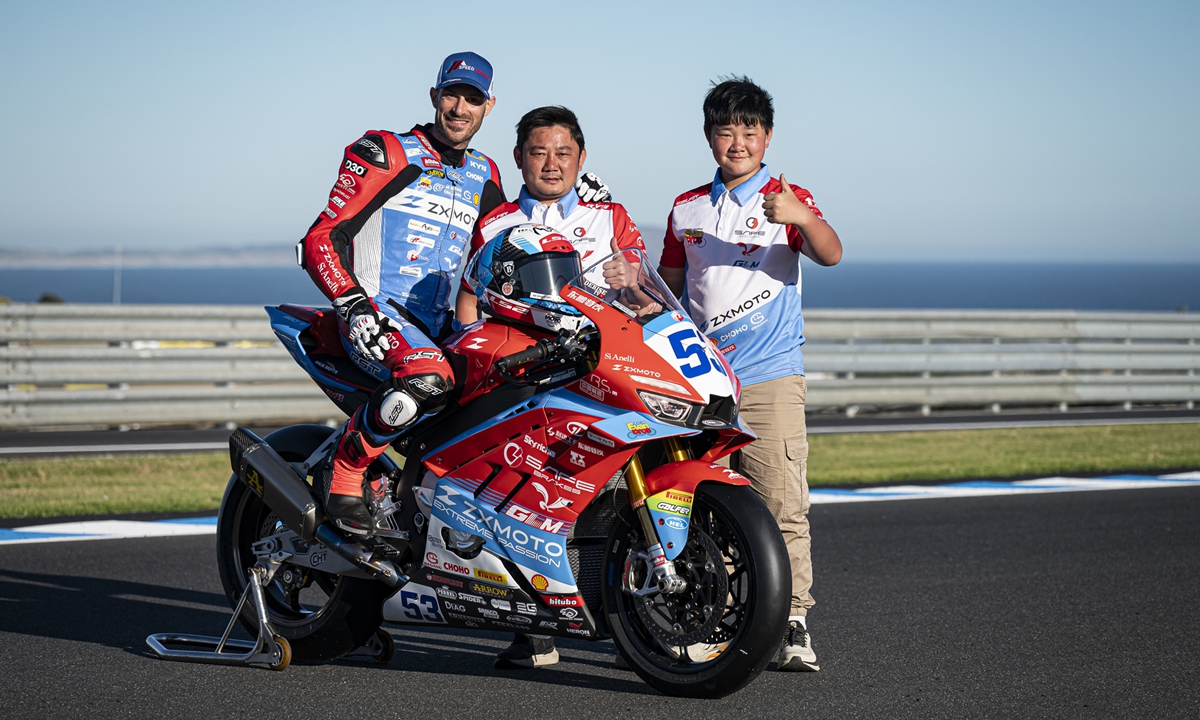
Zhang Xue (center) poses for a photo with his son (right) and motobike racing driver Valentin Debise. Photos: Courtesy of the Evan Bros team

Zhang Xue (center) poses for a photo with his son (right) and motobike racing driver Valentin Debise. Photos: Courtesy of the Evan Bros team

A ZXMOTO motorcycle, ridden by Valentin Debise, clinched a landmark double victory on March 28 and 29 at the Portuguese round of the Superbike World Championship, overwhelmingly outperforming competitors from Ducati, Yamaha and other brands. It became the first Chinese motorcycle brand to win at this event, breaking the decades-long dominance of European, American and Japanese manufacturers. What roared down the high-speed track was not just a machine, but a force of development that keeps pushing boundaries and redefining limits. An absolute lead of nearly 4 seconds created a stunning moment for Chinese motorcycles, offering a vivid footnote of "China speed" in the new era.

This breakthrough reflects a leap in technological innovation from "0 to 1." Chinese motorcycles were once labeled as "low-end" or "OEM." Today, the Chinese-made motorcycle shining on the international circuit demonstrates the shift from "Made in China" to "Created in China." High-performance motorcycles involve extremely complex core technologies. Facing the "moat" of key technologies built by Western companies, Chinese R&D teams chose not to bypass the challenge but to confront it head-on. The ZXMOTO team achieved independent breakthroughs in key areas such as engine efficiency and lightweight structures, pushing toward technological frontiers through constant trial and error and iterative optimization. This victory not only reshapes the competitive landscape but also vividly illustrates China's advance toward high-end manufacturing.

This leap also relies on systematic support from "1 to 100." As a true showcase of China's high-end manufacturing strength, the victory of the ZXMOTO motorcycle is supported by the decades-long industrial ecosystem of Chongqing, known as China's "motorcycle capital." Represented by Chongqing, China's motorcycle industry clusters have developed a complete chain covering R&D design, core component manufacturing, vehicle assembly, and testing and validation. This highly coordinated industrial structure enables rapid response and continuous iteration across all links, significantly shortening innovation cycles and reducing trial-and-error costs. This virtuous cycle, where innovation generates industry and industry feeds back into innovation, has become a key driver of China's climb up the value chain.

This victory also highlights the spirit of today's Chinese youth: stepping forward, taking responsibility, and daring to pursue their dreams. "A name unknown to the general public. A disproportionate ambition." As early as last October, an international motorsport website introduced the ZXMOTO as "the new Chinese bomb," predicting it would shake the global racing world. Driven by passion, ZXMOTO founder Zhang Xue pushed the limits of technological development and ultimately brought a homegrown motorcycle to the top of the world. The journey itself is powerful. It proves that dreams are meant to be pursued. "Because of courage, my life is more extraordinary." As long as you dare to think big, act boldly, and stay persistent, you can realize both personal and social value amid the tides of the times.

This achievement once again underscores the resilient and tenacious national character of the Chinese people. The endurance to avoid seeking immediate results and the willingness to engage in repeated experimentation, combined with the courage to confront challenges head-on, provide crucial spiritual support for the ongoing ascent of Chinese manufacturing.

An atmosphere that encourages innovation empowers young people to "strive relentlessly for what they love." Today, China places a greater emphasis on long-termism, offering more inclusivity and support to entrepreneurs. This characteristic of steadiness and ambition enables China to progress steadily in a complex and ever-changing international competitive landscape.

From a broader perspective, China's high-speed rail network crosses mountains and rivers, the new energy industry is rapidly expanding its global presence, and high-end equipment continues to achieve breakthroughs at elevated levels. The concept of "China speed" is evolving with deeper meanings. This represents not just an acceleration in the pace of development, but also a comprehensive enhancement of quality, efficiency, and structure. The leading position on the tracks shines like a beacon, illuminating the path for the advancement of Chinese manufacturing to higher levels while inspiring greater enthusiasm for innovation and hard work throughout society.

"Young people are the most dynamic and most creative group of our society, and should stand in the forefront of innovation and creation." Today, a large number of young innovators and entrepreneurs are emerging in cutting-edge fields such as humanoid robots, commercial space, and the low-altitude economy, with the average age of teams like Chang'e, Tianwen, Shenzhou, and Beidou being between 30 and 40. On the new journey of advancing Chinese modernization, more young people are needed to engage in practice with a spirited and upward attitude, continuously overcoming challenges in key areas. The roar of Chinese motorcycles on European racetracks, carrying the fighting spirit and belief in innovation, will continue to resonate across broader horizons.


4a44a93a-48e7-4705-a16d-c149bc26f2d6_86d4085f.jpg

China’s motorsports industry continues to rev up with country’s first race-grade fuel
The unveiling of the high-octane fuel at the Taklimakan Rally comes on the back of international success for the ZXMOTO motorbike marque

Published: 7:00pm, 17 May 2026

China’s first domestically developed fuel designed for motor racing has made its debut at a rally in the western deserts in what state media hailed as a milestone for the country’s oil refining industry.

As the first of its kind to be mass-produced in China, the fuel was described by state broadcaster CCTV as “filling a gap” in the domestic market, ending a long-standing reliance on imported fuel for high-level competitions.

The specially formulated new fuel, named Xpower103, has an octane rating of over 103 – five points higher than the standard 98-octane premium petrol available at regular pumps – and is designed to minimise the pressure on engines.

Published: May 17, 2026 11:05 PM

French rider Valentin Debise of China's ZXMOTO claimed a second consecutive victory of the FIM Supersport World Championship at the Czech Round on Sunday. By sweeping both races at this round, Derbis secured his fifth win of the season with the Chinese manufacturer.

May. 11, 2026, 02:08 AM

MISANO, Italy, May 11, 2026 (GLOBE NEWSWIRE) -- Geely Auto Group celebrates a monumental milestone in global motorsports. During the FIA TCR WORLD TOUR at the Misano World Circuit Marco Simoncelli, Geely Auto achieved a historic first victory with the all-new Geely Preface TCR, driven by Chinese driver Ma Qinghua.

image3.jpeg
 

Users who are viewing this thread

Pakistan Defence Latest

Back
Top