China Science And Technology News

China's Huawei reveals chip design breakthrough amid US sanctions​

By Che Pan, Eduardo Baptista and Casey Hall
May 25, 20269:32 AM GMT+8Updated 3 hours ago

  • Summary
  • Companies
  • Huawei unveils chip design strategy to boost performance
  • Strategy focuses on scaling, rather than making transistors smaller
  • Huawei expects to design chips by 2031 with density equivalent to 1.4 nm
  • 1.4 nm close to the global frontier of chipmaking by decade-end
SHANGHAI/BEIJING, May 25 (Reuters) - Huawei Technologies said on Monday its high-end chips will have transistor density equivalent to 1.4-nanometre processes in five years, underscoring Beijing's efforts ‌to neutralise U.S. sanctions that have made it hard for China to build advanced chips.
Huawei did not provide independent performance data, but the target, unveiled at a semiconductor symposium in Shanghai, is significant because 1.4 nm is expected to be close to the global frontier for advanced chipmaking around the end of the decade.

China is widely seen as unlikely to reach that level through conventional manufacturing alone because Washington has restricted its access to advanced lithography tools and other key semiconductor technologies.
Taiwan's TSMC (2330.TW), opens new tab, the world's largest producer of the most advanced chips, currently uses a 2-nm manufacturing technology and plans to introduce a 1.4-nm process for mass production ⁠in 2028.

'TAU SCALING LAW'​

Huawei unveiled on Monday a new principle for improving chips, noting the industry can no longer rely mainly on making transistors smaller.
The Tau Scaling Law, as the principle is called, focuses on cutting the time it takes signals and data to move through chips and computing systems, Huawei said. If successful, it could offer the company a way to improve performance and chip density despite restrictions on China's access to the most advanced semiconductor equipment.

The stakes of Huawei's chip breakthroughs are high, as frontier technologies have become an increasingly important pillar of future economic development and geopolitical leverage for China.
Huawei's Ascend chip series has become increasingly central to powering Chinese AI models, including DeepSeek's latest flagship model V4, released last month.
Huawei said its Kirin chips scheduled to launch later this year would be the first to use a related architecture called LogicFolding, which the company said would shorten wiring inside chips and considerably improve performance.
It had designed and mass-produced 381 chips over the past six years based on the Tau Scaling Law ‌for use ⁠in industries including smartphones and AI computing, the company said.
"What Huawei is proposing is a shift from traditional node-driven scaling to system-level efficiency scaling," said He Hui, director of semiconductor research at Omdia.

"Rather than depending solely on smaller transistors, the company is focusing on shortening interconnect, lowering latency and improving data movement inside the chip, which is a credible way to extract more performance when leading-edge lithography is constrained."

DOMESTIC ALTERNATIVE TO NVIDIA​

Huawei was placed on a U.S. trade blacklist in 2019 that cut it off many U.S.-origin technologies, including chips and software, and restricted its ability ⁠to rely on global contract chipmakers.
Huawei entered what it described as an "extreme survival mode" after the restrictions were imposed. A secret backup chip project led by He Tingbo, president of Huawei's semiconductor business and director of its Scientist Committee, became central to its survival strategy.
The company mounted a surprise comeback in 2023 with the launch of its 5G-capable Mate 60 series smartphones, powered by a system-on-chip ⁠produced by China's biggest contract chipmaker, Semiconductor Manufacturing International Corp (SMIC) (0981.HK), opens new tab, using 7-nm technology.

SMIC shares rose 7.6% on Monday after Huawei's announcement of its LogicFolding architecture.
Huawei's latest chip design strategy is seen as evidence that Huawei and its Chinese partners had made progress despite U.S. restrictions, though analysts say China remains behind global leaders in the most advanced process ⁠technology.
It also follows Huawei's October release of a long-term development roadmap for its AI chips including the Ascend series.

Demand for Ascend chips has risen in China this year, as domestic tech firms seek alternatives to U.S. company Nvidia (NVDA.O), opens new tab, whose most advanced AI processors are restricted from sale to China.
Nvidia CEO Jensen Huang said earlier this month that the company had "largely conceded" China's AI chip market to Huawei.
Reporting by Che Pan, Eduardo Baptista and Casey Hall; Editing by Miyoung Kim and Muralikumar Anantharaman
Our Standards: The Thomson Reuters Trust Principles.
 
There is no holding back China anymore. While the Western world is busy quarreling amongst itself, China is quietly making huge strides. It is peaceful, developed and powerful.

The West has finally found an adversary that it can neither bully nor threaten. China is indeed a miracle. What started as a slander campaign in many Western nations has now turned into a sobering, bitter realization.
 
Last edited:
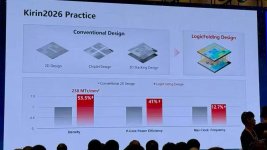
Huawei has revealed its Kirin 2026 details and it reveals massive upgrade in the chip arachitecture including transistor density.

kirin-2026-img1.jpg

He Tingbo, Director and President of Semiconductor Business, revealed the Tao (τ) Law for chip and electronics systems, while saying that the first Kirin chip with this new design will launch later this year. As shown by the Huawei leader, the Kirin 2026 chip will mark the start of new era, designed with new LogicFolding architecture.

Compared to the 2D design practice, the LogicFolding design, increases transistor density by 53.5%, adding 238 MTR/square millimeter. It means, 238 million transistors can be integrated per square millimeter of chip area. That’s theoratically on par with Intel’s 18A and TSMC’s 3nm process technology.
It is revealed that the chip’s performance core has improved by 41% and the maximum frequency has been improved by 12.7%, twice comparerd to last generation.

Research and Development​

Huawei said that the new chip breakthrough is a result of consistent innovation. It has been testing the LogicFolding design for the past six years. It has designed and mass produced 381 chip for smartphones, AI and other key platforms and devices.

With future developments, the chip is expected to achieve massive transistors density, achieving 1.4 nm process technology by 2031.

Kirin 2026 launch​

Huawei has announced that the new Kirin will make a debut with smartphones launching in fall of 2026, bringing massive performance upgrade.

Though, the company didn’t confirm the device, but it’s likely to be the Huawei Mate 90 series. Huawei has been launching its latest chip innovation with this lineup for the past 4 years and this year isn’t going to be any different.


However, this time around, the company could openly call it a real performance breakthrough, which has been under high scrutiny from the U.S. government. Huawei Mate 90 series will launch in the fall of 2026 with new upgrades but new Kirin chip is likely to be its biggest highlight.
 
Huawei has fulfilled the promise it made in 2025.

Huawei targets 3nm chip in 2026​

Huawei is working with Semiconductor Manufacturing International Corp (SMIC) on an advanced 3nm chip, with the US sanction-hit tech giant reportedly preparing to send the design to China’s largest chipmaker in 2026.

The Taiwan Economic Daily reported Huawei is shifting to a gate-all-around (GAA) architecture, which is used by Samsung Foundry, and moving away from traditional silicon designs.

The company is developing a so-called carbon-based 3nm design, featuring carbon nanotubes and two-dimensional materials, US-based chip and AI analyst Ray Wang noted on X, citing internal sources at Huawei.


Wong added the company completed lab validation of the 3nm chip, which is currently undergoing production line adaptation at SMIC.

Huawei’s current line-up of Kirin processors and Ascend AI chips are manufactured using 7nm node technology.

SMIC is barred from importing advanced extreme ultraviolet lithography equipment from ASML.

The joint R&D initiative clearly demonstrates US trade sanctions have failed to halt China’s efforts to create a viable domestic chip sector capable of producing advanced products.

Founder of industry blog Radio Free Mobile Richard Windsor, however, noted earlier in the month Huawei’s 7nm process, using a multi-patterning technique and equipment designed for processes around 14nm, involves many more steps and is more intricate, with substantially lower yields than those produced at Taiwan Semiconductor Manufacturing Co and others.

Nvidia CEO Jensen Huang recently acknowledged the gap between US and Chinese chips is narrowing, and last week called attempts by the US to restrict the export of AI chips to China a failure.

Last month, The Wall Street Journal reported Huawei plans to test the technical feasibility of a new Ascend chip, which it is positioning to be more powerful than Nvidia’s H100 chip, which was banned in China in late 2023.

 
China achieves full-chain mastery in aero-engine material manufacturing technology: report
By Global Times
Published: May 26, 2026 12:40 PM

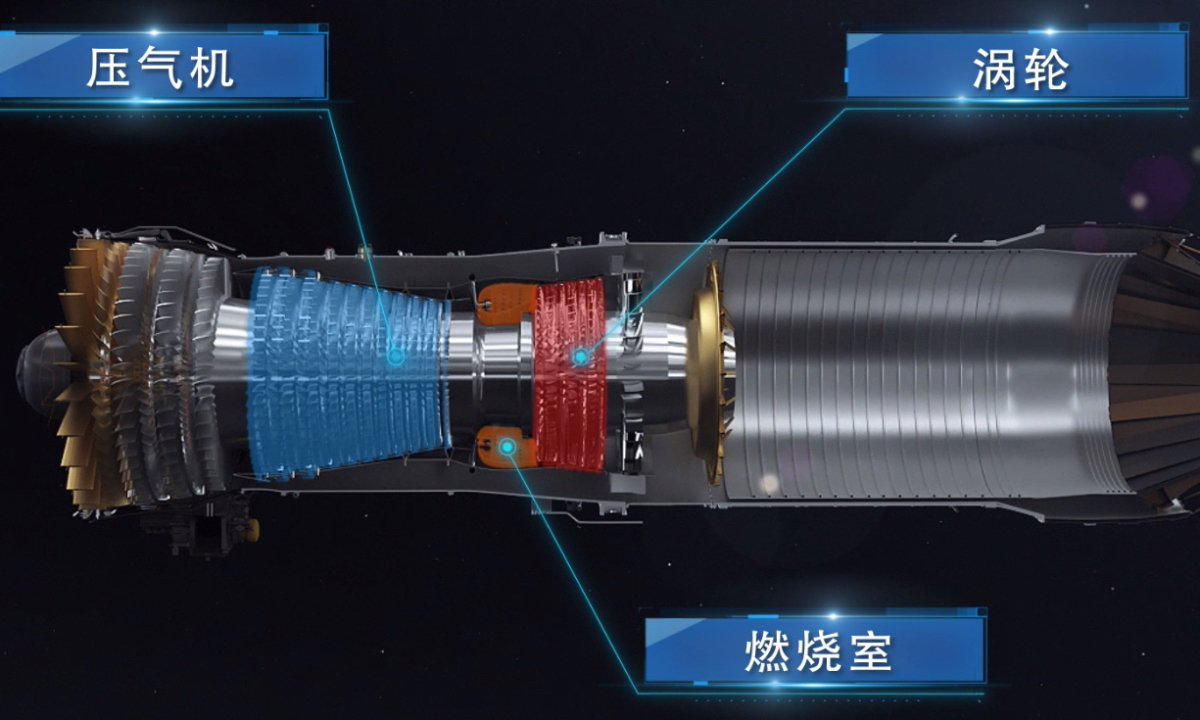
Photo: Screenshot from China Media Group

Photo: Screenshot from China Media Group

If the aero-engine is hailed as the “pearl on the crown of modern industry,” then the single-crystal turbine blade is the “diamond set upon that pearl.” At present, only five countries in the world — the US, the UK, Russia, France, and China — have independently mastered the complete technology chain for single-crystal turbine blades, covering the full spectrum from materials research and development, precision casting, to engineering application, China Media Group (CMG) reported on Tuesday.

The essence of an aero-turbine engine is that of an energy conversion device. It converts the chemical energy of aviation fuel into high-temperature and high-pressure thermal energy through combustion, then drives the turbine to rotate, transforming it into mechanical energy, and ultimately into the kinetic energy of the aircraft, said the report.

The higher the temperature that the engine’s hot-section components can withstand, the higher the energy conversion efficiency — resulting in greater thrust, lower fuel consumption, and superior overall performance. Therefore, single-crystal turbine blades operate under extremely harsh conditions. They are a critical factor determining the engine’s performance, reliability, and service life, and serve as an important benchmark for measuring a country’s aviation manufacturing capability, CMG reported.

Li Jiarong, chief engineer of the AECC Beijing Institute of Aeronautical Materials, along with his team, has developed a single-crystal superalloy with completely independent intellectual property rights that has reached the international advanced level.

Li was quoted as saying in the report that “we have achieved the independent development of single-crystal turbine blade materials in China. Our second-generation single-crystal superalloy, DD6, offers performance that is superior to or equivalent to the second-generation single-crystal superalloys widely used in Europe and the US.”

Moreover, it has a lower production cost. DD6 has become the most widely used single-crystal superalloy in China and has saved the country a large amount of strategic resources, according to Li.

Over the years, the single-crystal turbine blades developed and delivered by the institute have been applied in multiple types of advanced aero-engines, providing strong material support for military and civil aircraft — represented by advanced fighter jets — as well as helicopters, said Li.
According to CMG, the core mission of single-crystal turbine blades is to operate safely, stably, and reliably for long periods in extremely harsh environments involving ultra-high temperatures, high pressure, high rotational speeds, and corrosive gas erosion. Single-crystal turbine blades operate at temperatures that already exceed those of ordinary steel and even approach the melting point of their own alloy — so why can they still maintain long-term, stable operation?

Yue Xiaodai, a researcher from the institute, said in the report that nickel-based single-crystal superalloys use metallic nickel as the base. Researchers scientifically design and precisely add a variety of alloying elements according to multiple performance requirements, including high-temperature strength, creep resistance, and high-temperature corrosion resistance.

Although these elements have vastly different physical and chemical properties, the research team, through repeated experiments and persistent efforts, has not only achieved uniform melting and fusion of all elements, but also effectively controlled impurity elements, according to Yue.

Since the 1980s, the institute has taken the lead in developing single-crystal superalloys with independent intellectual property rights, along with China’s first single-crystal turbine blade and first single-crystal hollow turbine blade, among others. These achievements have filled multiple technological gaps in China, according to CMG.

The manufacturing of single-crystal turbine blades, from alloy smelting and preparation to final product delivery, involves more than ten major core processes. Each of these core processes is further subdivided into dozens or even tens of precise, detailed sub-steps. China has become one of only five countries in the world capable of independently mastering the complete technology chain, CMG noted.

 
China creates world's first intelligent transmission electron microscope
The system enables the entire workflow, from sample transfer to data analysis, to be fully automated


0dh5wv8pau1dvkfhqp20was9p2a4lsmy.jpg

Photo:
Totojang / iStock

26.05.26 17:00
Technology

The world's first intelligent transmission electron microscope system, Yuanyan-1, capable of operating autonomously, has been unveiled in Beijing. The development was carried out by scientists from the Dalian Institute of Chemical Physics under the Chinese Academy of Sciences (CAS). This was reported by Science and Technology Daily, a partner of TV BRICS.

The system performs all stages of analysis – sample transfer, imaging and data processing – in a fully automated mode without human intervention. This makes it possible to study the microscopic world with greater precision and clarity.

Transmission electron microscopes are key instruments for the development of new materials, energy technologies, chemical engineering and the biological sciences. However, for almost a century, the operation of such instruments has relied on manual control, resulting in low efficiency, subjectivity in results and difficulties in conducting quantitative analysis.

To address these challenges, the scientists joined forces with a research team from the Shenyang Institute of Automation. Together, they developed algorithms for a fully autonomous perception, analysis and control system for the intelligent microscope.

During the project, five key technological challenges were overcome: intelligent high-vacuum sample transfer, autonomous optical image adjustment, precise targeting of nanometre-scale objects, autonomous real-time image acquisition and analysis, and coordination of all subsystems.

This achievement marks a transition from “manual operation” to “AI-driven autonomous operation” in transmission electron microscopy, opening up new prospects for the intelligent application of high-precision scientific instruments.

It is expected to enable the large-scale acquisition of high-quality structural data to support the development of fields such as energy and chemical engineering, materials science and the life sciences.

 
Self-developed by the team of West China Hospital, Sichuan University: mRNA therapeutic vaccine achieves global first application, mainly targeting lymphoma and nasopharyngeal carcinoma

On May 28, the world's first EBV-related tumor therapeutic mRNA vaccine WGc-043 injection was put into clinical use in Boao Lecheng, Hainan, filling the global gap in precise mRNA treatment for EBV-positive tumors. This vaccine was developed by the team of West China Hospital, Sichuan University, and translated into practice by Chengdu Wiesin Biotech, bringing new solutions for patients with lymphoma, nasopharyngeal carcinoma, and other diseases.
 

Robots will trigger the real AI revolution – and China is in the lead

Humanoid machines have the potential to serve us well by enhancing productivity

Published 28 May 2026

Beijing has a fully automated robot-themed restaurant called Robot Flame Lab

Beijing has a fully automated robot-themed restaurant called Robot Flame Lab Credit: Adek Berry/AFP
An interesting feature of the AI revolution is how negative we feel about it. When you consider the potential, it is surprising how focused we are on the cloud around the silver lining. It is eating our jobs; the economic benefits will never justify the massive investment; it takes away what makes us truly human.

There is nothing new about this. From Luddites smashing looms to laws requiring red flags in front of cars, people have always leant towards the status quo and worried about the consequences of innovation.

But investment is the triumph of the optimists. Once you have taken sensible precautions against the unexpected, the best thing an investor can do is put their faith in the new and unproven. My biggest regret in 35 years of investing is a surfeit of caution.

And that is why I was gripped by the latest edition of the Barclays Equity Gilt Study, which, alongside its annual confirmation of the power of compounded equity market returns, focused on AI’s scarcely tapped potential to produce more with the same – and in doing so, to generate wealth.

Large-scale automation is relatively new. General Motors introduced the world’s first industrial robot as recently as 1961, to weld car parts. It was narrowly focused, and only possible in a highly structured environment, but it was a start.

The second wave of automation shifted from physical to cognitive tasks but, similar to factory automation, was essentially an acceleration and expansion of existing human capabilities. Large language models are just an extension, albeit a powerful one, of the productivity improvements that computers have been delivering for the past 60 years or so.
Zeekr, the Chinese electric car maker, is using the Walker S Lite robot to automate simple manual tasks

Zeekr, the Chinese electric car maker, is using the Walker S Lite robot to automate simple manual tasks Credit: Peng Peng, Ni Yanqiang/Zhejiang Daily Press Group/VCG via Getty Images
The next stage of the automation journey is different, and potentially more interesting. The creation of humanoid robots, with both physical and AI-powered cognitive capabilities, turns the logic of automation on its head. It will create machines to operate within the human world rather than fitting people into the machine. By enabling them to operate effectively within our messy, unstructured world, it significantly broadens AI’s potential to enhance productivity, to earn a return on the required investment and to free up people for more rewarding activities.

Existing automation has been largely task-specific, doing one thing better and faster. The new generation of AI-enabled humanoid robots will be able to perform a variety of functions, moving between different human environments and replacing broad sets of low-skill and mid-skill tasks. They will be able to operate in unstructured workplaces and homes, performing services in hospitality, household work and maintenance. This significantly expands the scope of the AI revolution. It is early days, but there is no practical barrier to us getting there.
Humanoid robots were deployed at a tea plantation in Huanggang, in China's Hubei province

Humanoid robots were deployed at a tea plantation in Huanggang, in China’s Hubei province Credit: Wang Jiang/VCG via Getty Images
For investors, there are a few key points to think about. First, the macroeconomic implications, then the market impact and finally the asset allocation consequences.

Starting with the macro, the shift from cognitive to physical AI will increase the number of activities able to benefit from the new technology and speed up adoption. This will lead to higher productivity gains for the whole economy. The areas that will benefit most from physical AI are precisely those relatively untouched by today’s digital version.

A second consequence that is relevant to investors is an acceleration of the shift away from labour to capital. The limiting factor will no longer be finding the right people but the funding for the physical infrastructure (including scarce metals and other rare-earth commodities). Putting together the brain (software) with the brawn (mechanics) and batteries will require similar investment to the gargantuan spending on the data centres powering today’s cognitive AI revolution.
Hangzhou, in China's Zhejiang province, deployed a robot 'intelligent police unit' squadron to help with traffic

Hangzhou, in China’s Zhejiang province, deployed a robot ‘intelligent police unit’ squadron to help with traffic Credit: AGATHA CANTRILL/AFP via Getty Images
That capital requirement has a further economic implication. If capital is scarce and in demand, its cost will rise. The neutral real interest rate will be higher in future than it has been during the capital-light growth of software. Even if more machines and fewer workers reduce inflation, bond yields could be persistently higher in the new world.

A potentially more important investment consideration is the tendency for investors to underestimate the impact of revolutionary new technologies. Barclays points to four recent breakthrough developments that were significantly underplayed, if not outright dismissed, in their early stages. Smartphones, streaming services, cloud computing and electric vehicles saw a similar pattern of early expectations anchored to narrow use-cases that underestimated the total addressable market.

There is a geographical allocation consideration for investors too. Barclays believes the decade of the robot will belong to China.

It already has a considerable lead, installing about half of the industrial robots globally (nearly 10 times as many as the US). It also dominates the market for humanoid robots that will drive this next phase of automation, accounting for 85pc of those built in 2025. This is not accidental. China has been responsible for 70pc of robotic patent filings since 2000, versus 4pc for the US. The robotic future is already China’s industrial policy. And don’t forget Japan either, which has deep expertise in this area.

The final investment conclusion for me is an optimistic, contrarian one at a time when anxiety about an AI bubble is prevalent. It is entirely possible that the AI narrative has got ahead of itself in the short run. I do not rule out a painful correction, possibly soon.

The transition will not be painless and there will be difficult social questions to address as wealth is concentrated in the hands of dominant companies, key individuals and first-mover countries. But in the end, higher productivity is the only viable path from low skills and poor wages to higher added value and decent incomes. We are on this journey. We must make the best of it.


Chinese scientists develop "Jiuzhang 4.0," setting new world record in quantum computing​

2026-05-14 00:10:45
a8fff6bbfd6d4770b8c3454f44a22696.jpg


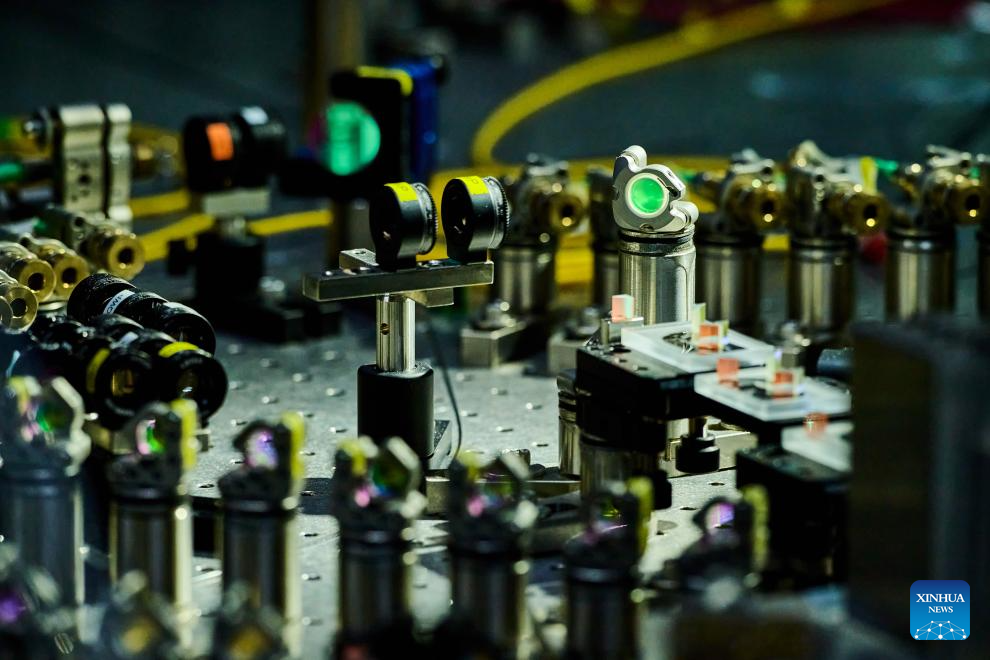
This photo taken on April 10, 2026 shows part of a programmable quantum computing prototype called "Jiuzhang 4.0". Chinese scientists have developed a programmable quantum computing prototype called "Jiuzhang 4.0" that has set a new world record for optical quantum information technology, according to a study published on Wednesday in the journal Nature. Led by the University of Science and Technology of China (USTC), the team used the prototype to solve the Gaussian boson sampling problem at a speed more than 10 to the 54th times that of the world's most powerful supercomputer, the study said. The researchers said they manipulated and detected quantum states of up to 3,050 photons -- a significant leap from the 255 photons achieved with the previous "Jiuzhang 3.0." (Xinhua/Zhou Mu)

HEIFEI, May 13 (Xinhua) -- Chinese scientists have developed a programmable quantum computing prototype called "Jiuzhang 4.0" that has set a new world record for optical quantum information technology, according to a study published on Wednesday in the journal Nature.

Led by the University of Science and Technology of China (USTC), the team used the prototype to solve the Gaussian boson sampling problem at a speed more than 10 to the 54th times that of the world's most powerful supercomputer, the study said.

The researchers said they manipulated and detected quantum states of up to 3,050 photons -- a significant leap from the 255 photons achieved with the previous "Jiuzhang 3.0."

Current mainstream quantum computing technological routes include superconducting, ion trap, photonic, and neutral atom systems. The "Jiuzhang" series of prototypes encodes quantum bits using photons and performs quantum computation through the manipulation and measurement of these photons.

Since its successful construction in 2020, the series has undergone several upgrades, achieving "quantum computational advantage" and repeatedly setting world records.

Lu Chaoyang, a professor at the USTC, said the research team developed a high-efficiency optical parametric oscillator light source and a spatiotemporally hybrid-coded interferometer.

By integrating 1,024 high-efficiency squeezed-state optical fields into an 8,176-mode spatiotemporally hybrid-coded circuit, the team was able to manipulate and detect up to 3,050 photons.

"This means that the most complex data sample generated by 'Jiuzhang 4.0' takes only 25 microseconds to produce -- shorter than the blink of an eye. In contrast, the world's most powerful supercomputer would require more than 10 to the 42nd years to calculate the same result," Lu said.

Lu noted that the results from "Jiuzhang 4.0" represent a major leap in the scale and complexity of low-loss photonic quantum processors, offering new possibilities for constructing "trillion-qubit-mode three-dimensional cluster states" and future "fault-tolerant optical quantum computing hardware." ■

f9300d12647b41e9991153e5cd622304.jpg


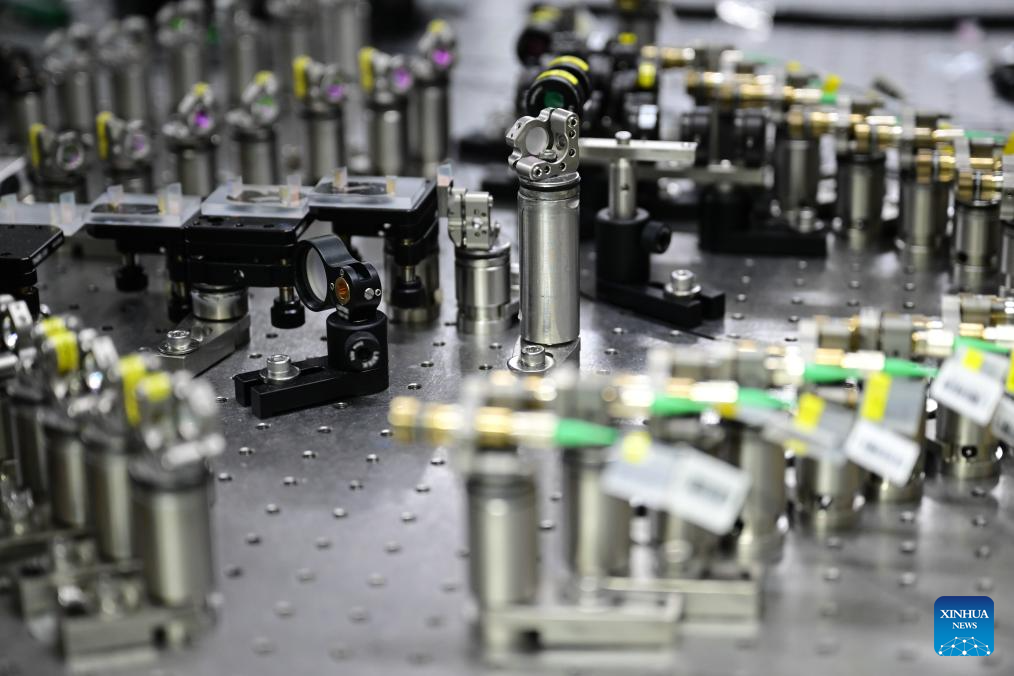
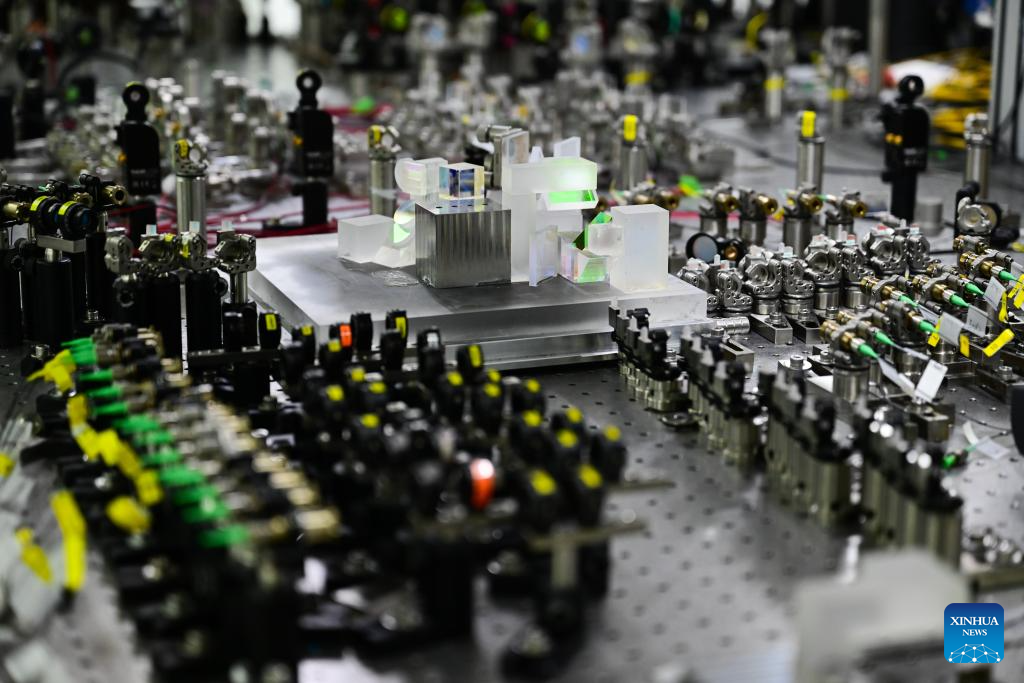
This photo taken on April 2, 2026 shows part of a programmable quantum computing prototype called "Jiuzhang 4.0". Chinese scientists have developed a programmable quantum computing prototype called "Jiuzhang 4.0" that has set a new world record for optical quantum information technology, according to a study published on Wednesday in the journal Nature.

Led by the University of Science and Technology of China (USTC), the team used the prototype to solve the Gaussian boson sampling problem at a speed more than 10 to the 54th times that of the world's most powerful supercomputer, the study said.

The researchers said they manipulated and detected quantum states of up to 3,050 photons -- a significant leap from the 255 photons achieved with the previous "Jiuzhang 3.0." (Photo by Cai Minhao/Xinhua)

a0e261b1e7e2402db37be1b572dcd2e0.jpg


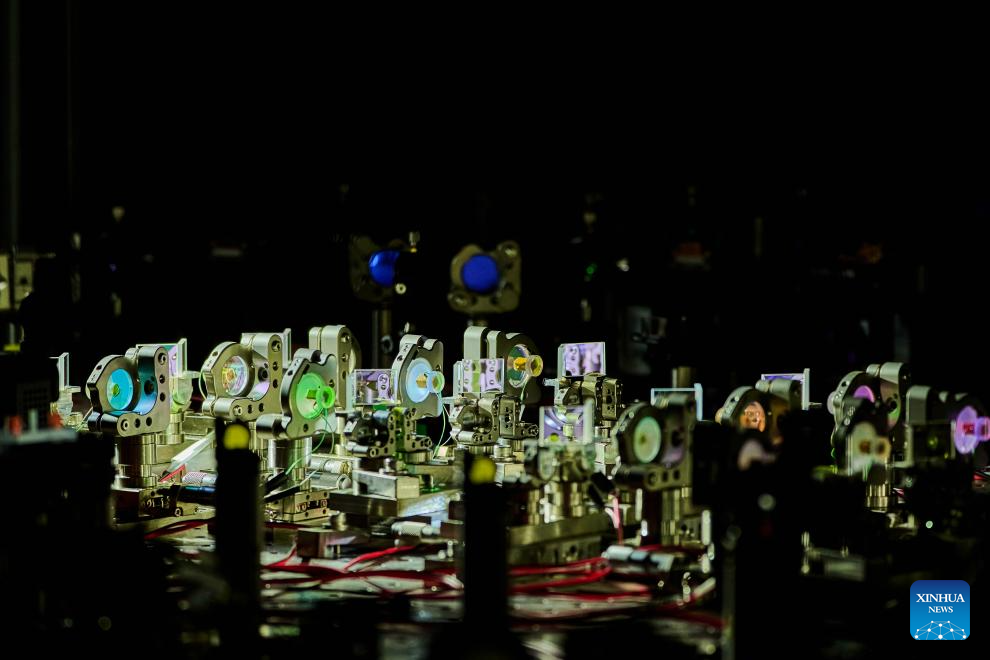
This photo taken on April 2, 2026 shows part of a programmable quantum computing prototype called "Jiuzhang 4.0". Chinese scientists have developed a programmable quantum computing prototype called "Jiuzhang 4.0" that has set a new world record for optical quantum information technology, according to a study published on Wednesday in the journal Nature.

Led by the University of Science and Technology of China (USTC), the team used the prototype to solve the Gaussian boson sampling problem at a speed more than 10 to the 54th times that of the world's most powerful supercomputer, the study said.

The researchers said they manipulated and detected quantum states of up to 3,050 photons -- a significant leap from the 255 photons achieved with the previous "Jiuzhang 3.0." (Photo by Cai Minhao/Xinhua)

e6c0d8334c454679bd37d00484a47e8f.jpg


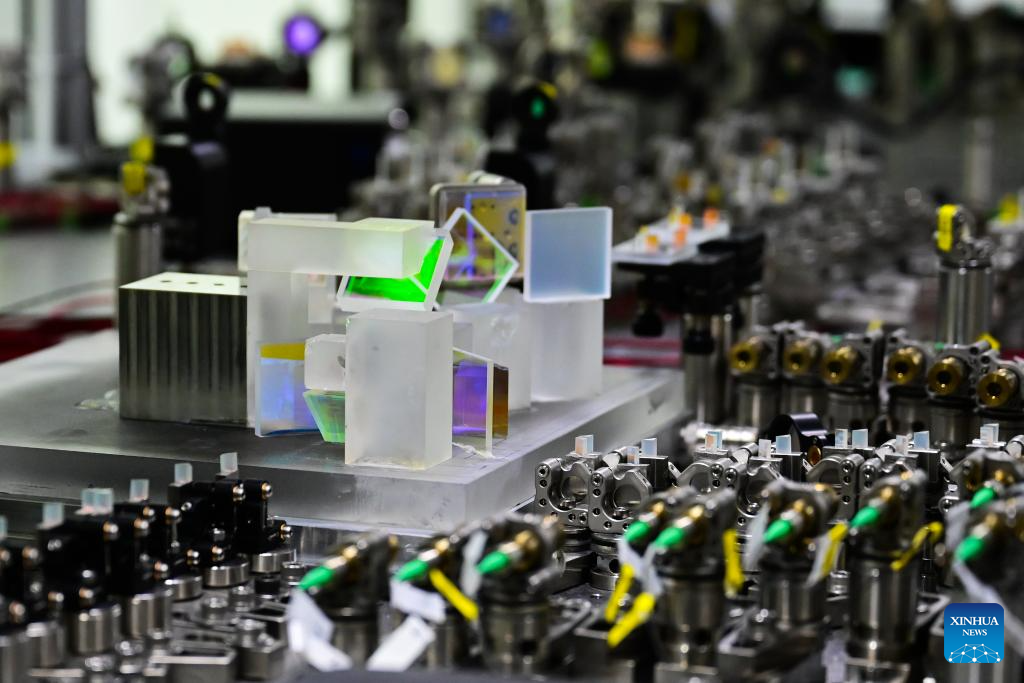
This photo taken on April 10, 2026 shows part of a programmable quantum computing prototype called "Jiuzhang 4.0". Chinese scientists have developed a programmable quantum computing prototype called "Jiuzhang 4.0" that has set a new world record for optical quantum information technology, according to a study published on Wednesday in the journal Nature.

Led by the University of Science and Technology of China (USTC), the team used the prototype to solve the Gaussian boson sampling problem at a speed more than 10 to the 54th times that of the world's most powerful supercomputer, the study said.

The researchers said they manipulated and detected quantum states of up to 3,050 photons -- a significant leap from the 255 photons achieved with the previous "Jiuzhang 3.0." (Xinhua/Zhou Mu)

16afd301b7ea4c41b6b23b5013c1b63d.jpg


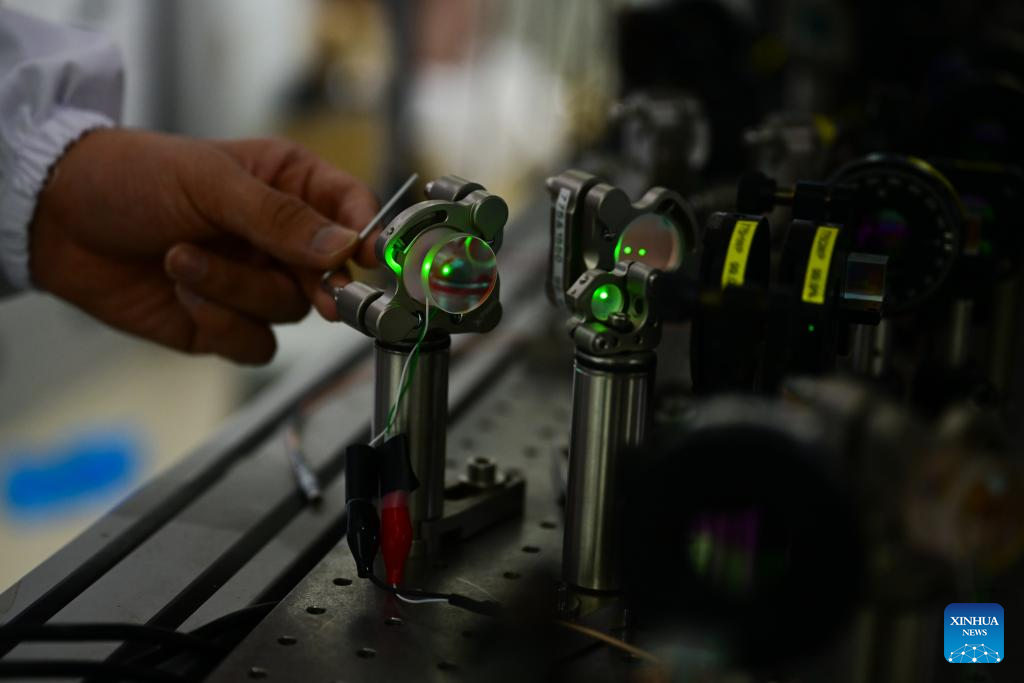
This photo taken on April 10, 2026 shows part of a programmable quantum computing prototype called "Jiuzhang 4.0". Chinese scientists have developed a programmable quantum computing prototype called "Jiuzhang 4.0" that has set a new world record for optical quantum information technology, according to a study published on Wednesday in the journal Nature.

Led by the University of Science and Technology of China (USTC), the team used the prototype to solve the Gaussian boson sampling problem at a speed more than 10 to the 54th times that of the world's most powerful supercomputer, the study said.

The researchers said they manipulated and detected quantum states of up to 3,050 photons -- a significant leap from the 255 photons achieved with the previous "Jiuzhang 3.0." (Xinhua/Zhou Mu)

This photo taken on April 10, 2026 shows part of a programmable quantum computing prototype called "Jiuzhang 4.0". Chinese scientists have developed a programmable quantum computing prototype called "Jiuzhang 4.0" that has set a new world record for optical quantum information technology, according to a study published on Wednesday in the journal Nature.

Led by the University of Science and Technology of China (USTC), the team used the prototype to solve the Gaussian boson sampling problem at a speed more than 10 to the 54th times that of the world's most powerful supercomputer, the study said.

The researchers said they manipulated and detected quantum states of up to 3,050 photons -- a significant leap from the 255 photons achieved with the previous "Jiuzhang 3.0." (Xinhua/Zhou Mu)

89a99a3ac3964fb7867eddb61ca88f96.jpg


This photo taken on April 10, 2026 shows part of a programmable quantum computing prototype called "Jiuzhang 4.0". Chinese scientists have developed a programmable quantum computing prototype called "Jiuzhang 4.0" that has set a new world record for optical quantum information technology, according to a study published on Wednesday in the journal Nature.

Led by the University of Science and Technology of China (USTC), the team used the prototype to solve the Gaussian boson sampling problem at a speed more than 10 to the 54th times that of the world's most powerful supercomputer, the study said.

The researchers said they manipulated and detected quantum states of up to 3,050 photons -- a significant leap from the 255 photons achieved with the previous "Jiuzhang 3.0." (Xinhua/Zhou Mu)


U.S. Government Begins Direct Backing of Quantum Firms as U.S.-China Quantum Computing Rivalry Intensifies​

May 28, 2026 03:34

The U.S. government has begun pouring massive funding into the quantum computing sector, widely regarded as a next-generation strategic industry, in a bid to strengthen technological competitiveness. As China accelerates the construction of a national quantum ecosystem through state-led investment and expanded research and development (R&D), Washington is responding with aggressive capital injections aimed at securing technological superiority. With quantum technologies increasingly viewed as core infrastructure capable of reshaping competition across finance, defense, communications, and energy industries, the U.S.-China rivalry is expanding into a prolonged hegemonic struggle centered on future industrial order and national security leadership.

U.S. Commerce Department Injects $2 Billion, Takes Direct Equity Stakes in Quantum Firms

According to The Wall Street Journal (WSJ) on May 27 local time, the U.S. Department of Commerce announced agreements to provide a combined $2 billion in subsidies to nine quantum computing companies. The funding will be distributed through resources allocated under the CHIPS and Science Act enacted in 2022, with the structure involving the U.S. government acquiring minority, non-controlling equity stakes in the companies. The move extends the so-called “Intel-style state-led industrial support” model previously seen in the Trump administration’s acquisition of Intel shares and investments in rare-earth mining companies such as Vulcan Elements and MP Materials. The strategy aims to encourage private capital inflows by allowing the government to share risk while guaranteeing policy certainty.

IBM emerged as the largest beneficiary of the initiative, securing a preliminary agreement worth $1 billion, equivalent to roughly half of the total funding package. Specific equity ratios, however, have not yet been disclosed. In a statement, IBM said, “The quantum industry could generate up to $850 billion in economic value by 2040,” adding that the sector would contribute to U.S. economic growth and national security enhancement.

Semiconductor manufacturer GlobalFoundries will receive $375 million in funding in exchange for transferring roughly a 1% equity stake to the government. D-Wave Quantum will also receive $100 million through a full-equity investment structure by the government. Other beneficiaries include Rigetti Computing, Infleqtion, and Diraq. These companies are expected to focus on resolving key commercialization bottlenecks such as error-rate reduction, ultra-fast readout technologies, optical loss minimization, and cooling-system integration. The Trump administration is also placing emphasis on securing domestic production infrastructure alongside R&D efforts. The goal is to establish core quantum computing manufacturing capabilities within the United States in response to supply-chain instability and technology leakage risks.

China’s Long-Term Bet on Quantum Supremacy

The Trump administration’s large-scale investment push into quantum computing is widely interpreted as part of a broader strategy to secure leadership in the next generation of critical technologies following artificial intelligence (AI), amid intensifying U.S.-China technological rivalry. China has spent nearly a decade steadily expanding state support for quantum computing, a field viewed as capable of transforming the foundations of security, energy, finance, and biotechnology industries. Concerns are growing in Washington that a reversal in the competitive landscape could eventually undermine national security itself.

China has already committed approximately $15 billion in government spending to quantum technologies, treating the sector as a core pillar of global scientific and technological competition. A long-term investment structure linking national research institutes, local governments, universities, and private corporations has become a central feature of China’s quantum ecosystem. In its “15th Five-Year Plan” unveiled in March this year, the Chinese government designated quantum technology as one of seven future strategic industries, elevating it to a national priority. Beijing plans to further expand industrial applications into quantum communication networks, quantum cryptography, and quantum sensing.

China has also accelerated the expansion of dedicated investment vehicles for the quantum industry. According to the National Development and Reform Commission (NDRC), Beijing allocated approximately $17 billion in quantum-focused funding through the National Venture Guidance Fund. The capital has been distributed across three major advanced industrial clusters, including the Beijing-Tianjin-Hebei region, the Yangtze River Delta, and the Guangdong-Hong Kong-Macau Greater Bay Area (GBA), with investment priorities focused on quantum computing, quantum sensing, quantum communications, and commercialized equipment development.

The Yangtze River Delta has reportedly specialized in quantum communications and industrial applications, the Guangdong region in commercial quantum products and startup incubation, and the Beijing region in quantum computing and precision sensing technologies. China has effectively built a state-level quantum industrial ecosystem by combining central government funding with local government financing, state capital, and private investment. Investment growth has accelerated sharply. First-quarter investment in China’s quantum technology sector this year has already surpassed total investment recorded during the entirety of last year. China’s quantum computing industry investment reached approximately $6.4 billion last year, while the number of related companies surged from 93 in 2023 to 153 last year.

China’s quantum achievements are also continuing to emerge. The Chinese Academy of Sciences unveiled the photon-based quantum computer “Jiuzhang 4.0,” claiming computational performance vastly exceeding conventional supercomputers. In superconducting systems, China has also introduced high-performance quantum processors such as “Zuchongzhi 3.0.” Meanwhile, Origin Quantum, spun off from the University of Science and Technology of China (USTC), is currently operating “Origin Wukong,” a 72-qubit commercial processor that reportedly recorded more than 20 million cloud-access sessions from 145 countries during its first year after launch. Although debates continue over technological verification and real-world general-purpose usability, analysts say it is increasingly evident that China is pursuing quantum leadership through a massive investment framework integrating state research institutions, universities, and corporations.

Quantum Computing Emerges as a Game-Changer for Future Industries

Behind the U.S. and China’s concentration of national resources into quantum computing lies the growing possibility of a breakdown in the cryptographic systems underpinning the current digital order. Once large-scale fault-tolerant quantum computers become commercially viable, existing RSA- and ECC-based public-key cryptographic systems used in financial transactions, government communications, military intelligence, and cloud security could face fundamental threats. The U.S. National Institute of Standards and Technology (NIST)’s confirmation of three post-quantum cryptography (PQC) standards in 2024 underscored how the issue has evolved from a long-term research topic into a tangible national security challenge. Transitioning cryptographic systems will require far more than simple software updates, demanding the reconstruction of financial networks, telecommunications systems, defense infrastructure, and industrial control systems.

Intelligence agencies across major nations are particularly wary of the “Harvest Now, Decrypt Later” strategy. Under this approach, encrypted confidential data that cannot currently be deciphered is collected and stored in advance, with the expectation that future quantum computing capabilities will eventually allow decryption of diplomatic documents, military intelligence, financial records, and intellectual property materials. As a result, the race for quantum computing dominance is simultaneously becoming a competition over protecting current national secrets. This concern explains why the U.S. National Security Agency (NSA) has urged operators of national security systems to begin preparing early transitions to quantum-resistant algorithms.

The technology’s economic impact is also driving rapid investment expansion in both countries. Global consulting firm McKinsey projects the quantum technology market could grow to as much as $97 billion by 2035, with quantum computing accounting for up to $72 billion of that figure. The chemical, pharmaceutical, financial, and mobility sectors are expected to experience some of the earliest and most significant benefits from quantum computing adoption. Analysts believe quantum computing could expose the limitations of existing supercomputing systems in highly complex combinatorial problems such as drug discovery, battery-material design, portfolio optimization, and logistics route calculations.

The strategic value of quantum technologies in defense is also significant. Quantum sensors are viewed as transformative technologies capable of enhancing the precision of surveillance and reconnaissance systems through submarine detection, gravity and magnetic field measurement, precision navigation, and underground structure exploration. Quantum communications are likewise attracting attention as core technologies for ultra-secure networks and eavesdropping detection. Quantum computing itself is increasingly expected to expand into cryptanalysis, satellite orbit calculations, battlefield simulations, and weapons-system optimization, positioning the technology as a next-generation pillar of military and national security capabilities.

From a supply-chain perspective, quantum computing is also deeply tied to advanced manufacturing competition. Although technological approaches differ between superconducting qubits, ion traps, and photonic quantum computing systems, all require highly sophisticated manufacturing capabilities involving cryogenic equipment, precision control chips, high-quality wafers, lasers, optical components, and signal-processing devices. This dynamic also explains why the United States is allocating funding to IBM and GlobalFoundries to support quantum-dedicated foundries and manufacturing infrastructure. Leadership in algorithms and research papers alone will not determine dominance. Long-term competitiveness will ultimately hinge on the ability to build stable manufacturing ecosystems capable of producing commercial quantum hardware at scale.
 

Chinese scientists develop "Jiuzhang 4.0," setting new world record in quantum computing​

2026-05-14 00:10:45
a8fff6bbfd6d4770b8c3454f44a22696.jpg


This photo taken on April 10, 2026 shows part of a programmable quantum computing prototype called "Jiuzhang 4.0". Chinese scientists have developed a programmable quantum computing prototype called "Jiuzhang 4.0" that has set a new world record for optical quantum information technology, according to a study published on Wednesday in the journal Nature. Led by the University of Science and Technology of China (USTC), the team used the prototype to solve the Gaussian boson sampling problem at a speed more than 10 to the 54th times that of the world's most powerful supercomputer, the study said. The researchers said they manipulated and detected quantum states of up to 3,050 photons -- a significant leap from the 255 photons achieved with the previous "Jiuzhang 3.0." (Xinhua/Zhou Mu)

HEIFEI, May 13 (Xinhua) -- Chinese scientists have developed a programmable quantum computing prototype called "Jiuzhang 4.0" that has set a new world record for optical quantum information technology, according to a study published on Wednesday in the journal Nature.

Led by the University of Science and Technology of China (USTC), the team used the prototype to solve the Gaussian boson sampling problem at a speed more than 10 to the 54th times that of the world's most powerful supercomputer, the study said.

The researchers said they manipulated and detected quantum states of up to 3,050 photons -- a significant leap from the 255 photons achieved with the previous "Jiuzhang 3.0."

Current mainstream quantum computing technological routes include superconducting, ion trap, photonic, and neutral atom systems. The "Jiuzhang" series of prototypes encodes quantum bits using photons and performs quantum computation through the manipulation and measurement of these photons.

Since its successful construction in 2020, the series has undergone several upgrades, achieving "quantum computational advantage" and repeatedly setting world records.

Lu Chaoyang, a professor at the USTC, said the research team developed a high-efficiency optical parametric oscillator light source and a spatiotemporally hybrid-coded interferometer.

By integrating 1,024 high-efficiency squeezed-state optical fields into an 8,176-mode spatiotemporally hybrid-coded circuit, the team was able to manipulate and detect up to 3,050 photons.

"This means that the most complex data sample generated by 'Jiuzhang 4.0' takes only 25 microseconds to produce -- shorter than the blink of an eye. In contrast, the world's most powerful supercomputer would require more than 10 to the 42nd years to calculate the same result," Lu said.

Lu noted that the results from "Jiuzhang 4.0" represent a major leap in the scale and complexity of low-loss photonic quantum processors, offering new possibilities for constructing "trillion-qubit-mode three-dimensional cluster states" and future "fault-tolerant optical quantum computing hardware." ■

f9300d12647b41e9991153e5cd622304.jpg


This photo taken on April 2, 2026 shows part of a programmable quantum computing prototype called "Jiuzhang 4.0". Chinese scientists have developed a programmable quantum computing prototype called "Jiuzhang 4.0" that has set a new world record for optical quantum information technology, according to a study published on Wednesday in the journal Nature.

Led by the University of Science and Technology of China (USTC), the team used the prototype to solve the Gaussian boson sampling problem at a speed more than 10 to the 54th times that of the world's most powerful supercomputer, the study said.

The researchers said they manipulated and detected quantum states of up to 3,050 photons -- a significant leap from the 255 photons achieved with the previous "Jiuzhang 3.0." (Photo by Cai Minhao/Xinhua)

a0e261b1e7e2402db37be1b572dcd2e0.jpg


This photo taken on April 2, 2026 shows part of a programmable quantum computing prototype called "Jiuzhang 4.0". Chinese scientists have developed a programmable quantum computing prototype called "Jiuzhang 4.0" that has set a new world record for optical quantum information technology, according to a study published on Wednesday in the journal Nature.

Led by the University of Science and Technology of China (USTC), the team used the prototype to solve the Gaussian boson sampling problem at a speed more than 10 to the 54th times that of the world's most powerful supercomputer, the study said.

The researchers said they manipulated and detected quantum states of up to 3,050 photons -- a significant leap from the 255 photons achieved with the previous "Jiuzhang 3.0." (Photo by Cai Minhao/Xinhua)

e6c0d8334c454679bd37d00484a47e8f.jpg


This photo taken on April 10, 2026 shows part of a programmable quantum computing prototype called "Jiuzhang 4.0". Chinese scientists have developed a programmable quantum computing prototype called "Jiuzhang 4.0" that has set a new world record for optical quantum information technology, according to a study published on Wednesday in the journal Nature.

Led by the University of Science and Technology of China (USTC), the team used the prototype to solve the Gaussian boson sampling problem at a speed more than 10 to the 54th times that of the world's most powerful supercomputer, the study said.

The researchers said they manipulated and detected quantum states of up to 3,050 photons -- a significant leap from the 255 photons achieved with the previous "Jiuzhang 3.0." (Xinhua/Zhou Mu)

16afd301b7ea4c41b6b23b5013c1b63d.jpg


This photo taken on April 10, 2026 shows part of a programmable quantum computing prototype called "Jiuzhang 4.0". Chinese scientists have developed a programmable quantum computing prototype called "Jiuzhang 4.0" that has set a new world record for optical quantum information technology, according to a study published on Wednesday in the journal Nature.

Led by the University of Science and Technology of China (USTC), the team used the prototype to solve the Gaussian boson sampling problem at a speed more than 10 to the 54th times that of the world's most powerful supercomputer, the study said.

The researchers said they manipulated and detected quantum states of up to 3,050 photons -- a significant leap from the 255 photons achieved with the previous "Jiuzhang 3.0." (Xinhua/Zhou Mu)

This photo taken on April 10, 2026 shows part of a programmable quantum computing prototype called "Jiuzhang 4.0". Chinese scientists have developed a programmable quantum computing prototype called "Jiuzhang 4.0" that has set a new world record for optical quantum information technology, according to a study published on Wednesday in the journal Nature.

Led by the University of Science and Technology of China (USTC), the team used the prototype to solve the Gaussian boson sampling problem at a speed more than 10 to the 54th times that of the world's most powerful supercomputer, the study said.

The researchers said they manipulated and detected quantum states of up to 3,050 photons -- a significant leap from the 255 photons achieved with the previous "Jiuzhang 3.0." (Xinhua/Zhou Mu)

89a99a3ac3964fb7867eddb61ca88f96.jpg


This photo taken on April 10, 2026 shows part of a programmable quantum computing prototype called "Jiuzhang 4.0". Chinese scientists have developed a programmable quantum computing prototype called "Jiuzhang 4.0" that has set a new world record for optical quantum information technology, according to a study published on Wednesday in the journal Nature.

Led by the University of Science and Technology of China (USTC), the team used the prototype to solve the Gaussian boson sampling problem at a speed more than 10 to the 54th times that of the world's most powerful supercomputer, the study said.

The researchers said they manipulated and detected quantum states of up to 3,050 photons -- a significant leap from the 255 photons achieved with the previous "Jiuzhang 3.0." (Xinhua/Zhou Mu)


U.S. Government Begins Direct Backing of Quantum Firms as U.S.-China Quantum Computing Rivalry Intensifies​

May 28, 2026 03:34

The U.S. government has begun pouring massive funding into the quantum computing sector, widely regarded as a next-generation strategic industry, in a bid to strengthen technological competitiveness. As China accelerates the construction of a national quantum ecosystem through state-led investment and expanded research and development (R&D), Washington is responding with aggressive capital injections aimed at securing technological superiority. With quantum technologies increasingly viewed as core infrastructure capable of reshaping competition across finance, defense, communications, and energy industries, the U.S.-China rivalry is expanding into a prolonged hegemonic struggle centered on future industrial order and national security leadership.

U.S. Commerce Department Injects $2 Billion, Takes Direct Equity Stakes in Quantum Firms

According to The Wall Street Journal (WSJ) on May 27 local time, the U.S. Department of Commerce announced agreements to provide a combined $2 billion in subsidies to nine quantum computing companies. The funding will be distributed through resources allocated under the CHIPS and Science Act enacted in 2022, with the structure involving the U.S. government acquiring minority, non-controlling equity stakes in the companies. The move extends the so-called “Intel-style state-led industrial support” model previously seen in the Trump administration’s acquisition of Intel shares and investments in rare-earth mining companies such as Vulcan Elements and MP Materials. The strategy aims to encourage private capital inflows by allowing the government to share risk while guaranteeing policy certainty.

IBM emerged as the largest beneficiary of the initiative, securing a preliminary agreement worth $1 billion, equivalent to roughly half of the total funding package. Specific equity ratios, however, have not yet been disclosed. In a statement, IBM said, “The quantum industry could generate up to $850 billion in economic value by 2040,” adding that the sector would contribute to U.S. economic growth and national security enhancement.

Semiconductor manufacturer GlobalFoundries will receive $375 million in funding in exchange for transferring roughly a 1% equity stake to the government. D-Wave Quantum will also receive $100 million through a full-equity investment structure by the government. Other beneficiaries include Rigetti Computing, Infleqtion, and Diraq. These companies are expected to focus on resolving key commercialization bottlenecks such as error-rate reduction, ultra-fast readout technologies, optical loss minimization, and cooling-system integration. The Trump administration is also placing emphasis on securing domestic production infrastructure alongside R&D efforts. The goal is to establish core quantum computing manufacturing capabilities within the United States in response to supply-chain instability and technology leakage risks.

China’s Long-Term Bet on Quantum Supremacy

The Trump administration’s large-scale investment push into quantum computing is widely interpreted as part of a broader strategy to secure leadership in the next generation of critical technologies following artificial intelligence (AI), amid intensifying U.S.-China technological rivalry. China has spent nearly a decade steadily expanding state support for quantum computing, a field viewed as capable of transforming the foundations of security, energy, finance, and biotechnology industries. Concerns are growing in Washington that a reversal in the competitive landscape could eventually undermine national security itself.

China has already committed approximately $15 billion in government spending to quantum technologies, treating the sector as a core pillar of global scientific and technological competition. A long-term investment structure linking national research institutes, local governments, universities, and private corporations has become a central feature of China’s quantum ecosystem. In its “15th Five-Year Plan” unveiled in March this year, the Chinese government designated quantum technology as one of seven future strategic industries, elevating it to a national priority. Beijing plans to further expand industrial applications into quantum communication networks, quantum cryptography, and quantum sensing.

China has also accelerated the expansion of dedicated investment vehicles for the quantum industry. According to the National Development and Reform Commission (NDRC), Beijing allocated approximately $17 billion in quantum-focused funding through the National Venture Guidance Fund. The capital has been distributed across three major advanced industrial clusters, including the Beijing-Tianjin-Hebei region, the Yangtze River Delta, and the Guangdong-Hong Kong-Macau Greater Bay Area (GBA), with investment priorities focused on quantum computing, quantum sensing, quantum communications, and commercialized equipment development.

The Yangtze River Delta has reportedly specialized in quantum communications and industrial applications, the Guangdong region in commercial quantum products and startup incubation, and the Beijing region in quantum computing and precision sensing technologies. China has effectively built a state-level quantum industrial ecosystem by combining central government funding with local government financing, state capital, and private investment. Investment growth has accelerated sharply. First-quarter investment in China’s quantum technology sector this year has already surpassed total investment recorded during the entirety of last year. China’s quantum computing industry investment reached approximately $6.4 billion last year, while the number of related companies surged from 93 in 2023 to 153 last year.

China’s quantum achievements are also continuing to emerge. The Chinese Academy of Sciences unveiled the photon-based quantum computer “Jiuzhang 4.0,” claiming computational performance vastly exceeding conventional supercomputers. In superconducting systems, China has also introduced high-performance quantum processors such as “Zuchongzhi 3.0.” Meanwhile, Origin Quantum, spun off from the University of Science and Technology of China (USTC), is currently operating “Origin Wukong,” a 72-qubit commercial processor that reportedly recorded more than 20 million cloud-access sessions from 145 countries during its first year after launch. Although debates continue over technological verification and real-world general-purpose usability, analysts say it is increasingly evident that China is pursuing quantum leadership through a massive investment framework integrating state research institutions, universities, and corporations.

Quantum Computing Emerges as a Game-Changer for Future Industries

Behind the U.S. and China’s concentration of national resources into quantum computing lies the growing possibility of a breakdown in the cryptographic systems underpinning the current digital order. Once large-scale fault-tolerant quantum computers become commercially viable, existing RSA- and ECC-based public-key cryptographic systems used in financial transactions, government communications, military intelligence, and cloud security could face fundamental threats. The U.S. National Institute of Standards and Technology (NIST)’s confirmation of three post-quantum cryptography (PQC) standards in 2024 underscored how the issue has evolved from a long-term research topic into a tangible national security challenge. Transitioning cryptographic systems will require far more than simple software updates, demanding the reconstruction of financial networks, telecommunications systems, defense infrastructure, and industrial control systems.

Intelligence agencies across major nations are particularly wary of the “Harvest Now, Decrypt Later” strategy. Under this approach, encrypted confidential data that cannot currently be deciphered is collected and stored in advance, with the expectation that future quantum computing capabilities will eventually allow decryption of diplomatic documents, military intelligence, financial records, and intellectual property materials. As a result, the race for quantum computing dominance is simultaneously becoming a competition over protecting current national secrets. This concern explains why the U.S. National Security Agency (NSA) has urged operators of national security systems to begin preparing early transitions to quantum-resistant algorithms.

The technology’s economic impact is also driving rapid investment expansion in both countries. Global consulting firm McKinsey projects the quantum technology market could grow to as much as $97 billion by 2035, with quantum computing accounting for up to $72 billion of that figure. The chemical, pharmaceutical, financial, and mobility sectors are expected to experience some of the earliest and most significant benefits from quantum computing adoption. Analysts believe quantum computing could expose the limitations of existing supercomputing systems in highly complex combinatorial problems such as drug discovery, battery-material design, portfolio optimization, and logistics route calculations.

The strategic value of quantum technologies in defense is also significant. Quantum sensors are viewed as transformative technologies capable of enhancing the precision of surveillance and reconnaissance systems through submarine detection, gravity and magnetic field measurement, precision navigation, and underground structure exploration. Quantum communications are likewise attracting attention as core technologies for ultra-secure networks and eavesdropping detection. Quantum computing itself is increasingly expected to expand into cryptanalysis, satellite orbit calculations, battlefield simulations, and weapons-system optimization, positioning the technology as a next-generation pillar of military and national security capabilities.


Uncle Sam Awards $2 Billion-Plus To Quantum Companies, But Wants A Cut​


BYD reveals China’s first in-house 4nm smart driving chip with massive computing power

Peter Johnson | May 28 2026 - 7:24 am PT

BYD-smart-driving-chip

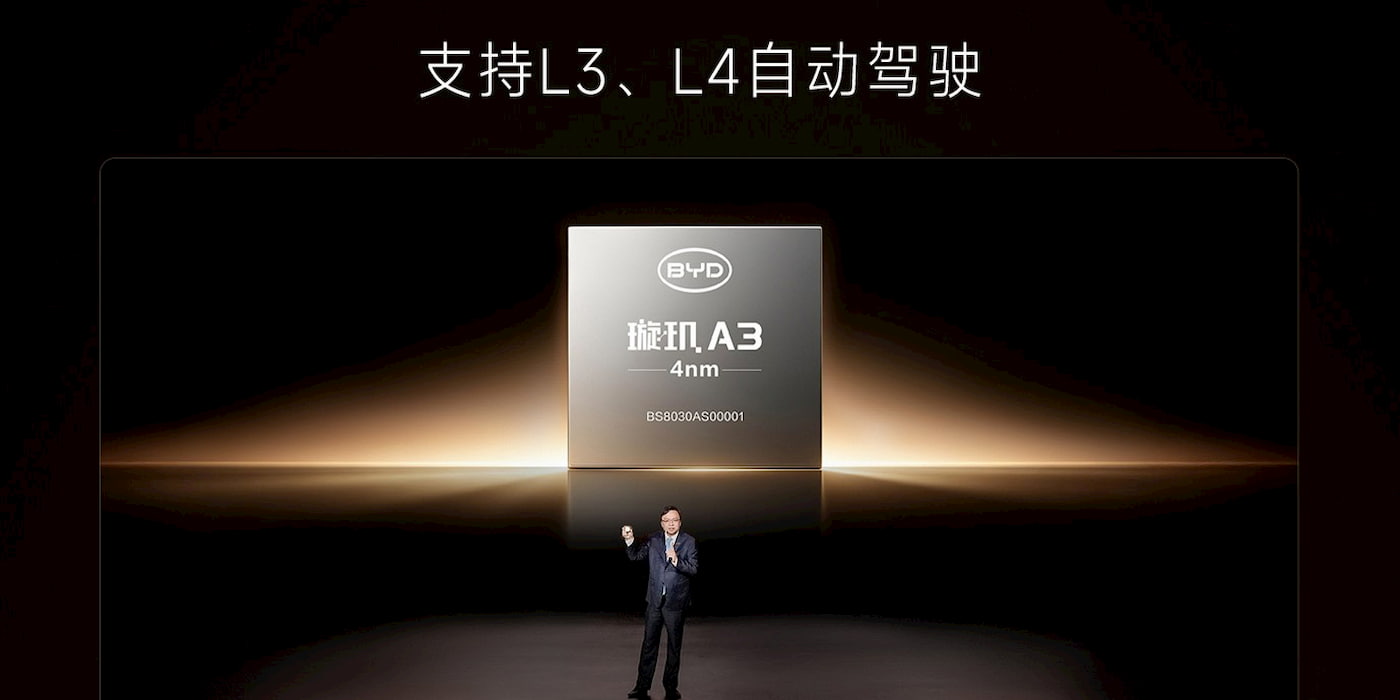
BYD’s new in-house 4nm smart driving chip, China’s first, unlocks “the highest level of vehicle intelligence” with L3 and L4 autonomous driving capabilities.

BYD unveils China’s first 4nm in-house smart driving chip​

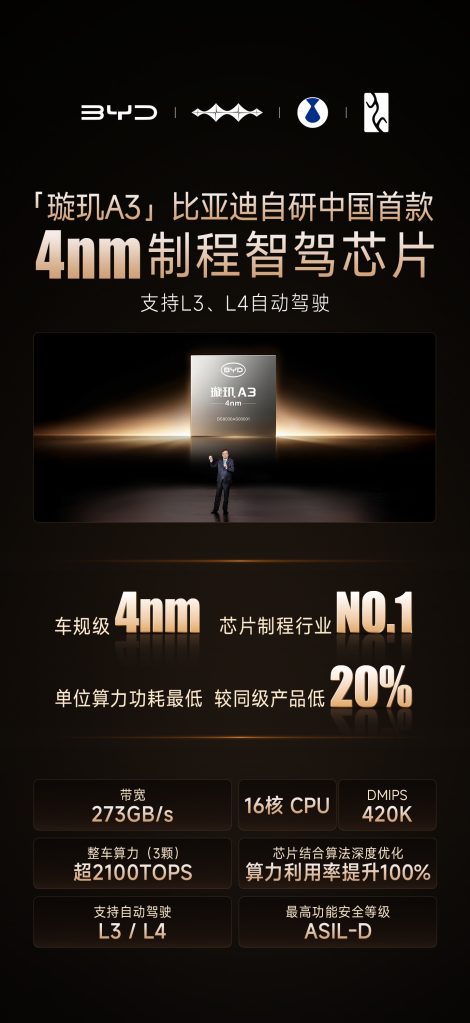
During its Intelligent Strategy Launch on Thursday, BYD unveiled its latest breakthrough technology, “Xuanji A3,” China’s first self-developed 4nm assisted-driving chip.

CEO Wang Chuanfu said during the event that the new chip supports Level 3 and Level 4 autonomous driving, claiming it “represents the highest level of intelligent driving chips in China.”

Combined with its in-house algorithms used in its God’s Eye ADAS system and Xuanji architecture, BYD said computing power utilization has doubled, up 100%.

Powered by three chips, the combined computing power exceeds a whopping 2,100 TOPS. According to BYD, the new Xuanji A3 smart driving chip has already entered mass production.

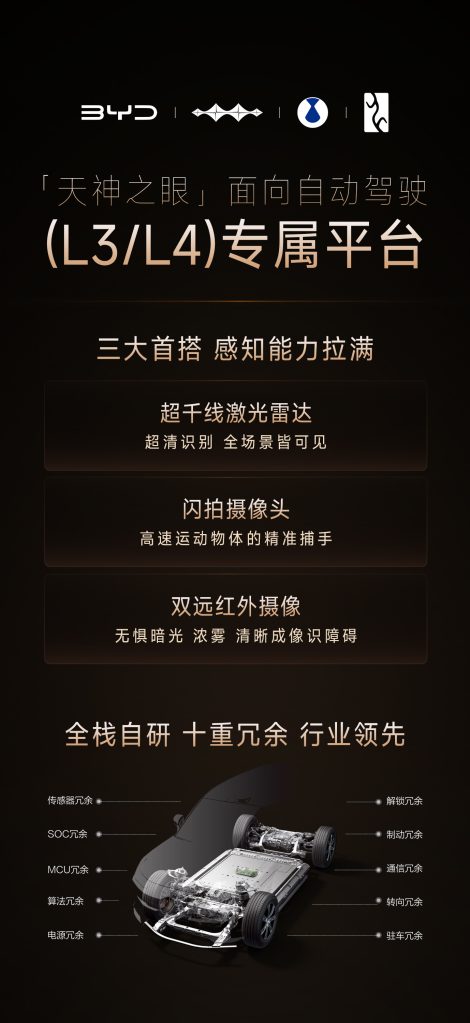
The bigger news, however, is that unlike most automakers that outsource chips, BYD builds the chips entirely in-house, along with nearly every other vehicle component.

BYD-4nm-smart-driving-chip

BYD-4nm-smart-driving-chip

Chuanfu said that BYD is now the only automaker in the world with full control over its assisted-driving supply chain, enabling it to cut costs and continue advancing the new tech.

Since establishing its first dedicated department for computer chips in 2002, BYD has introduced over 2,000 chips and owns five semiconductor manufacturing (wafer fab) facilities. The company has invested over 100 billion yuan ($14.7 billion) into semiconductors with a current team of over 7,000 dedicated to chip R&D.

Electrek’s Take​

The breakthrough assisted-driving chip comes after BYD launched its Blade Battery 2.0 and Flash Charging system during a disruptive tech event in March, enabling a CLTC range of over 1,000 km (621 miles) and fast charging in as little as five minutes.

BYD is betting not just on new technology like autonomous driving to fuel its rapid growth, but also on developing it in-house, giving the company full control over its supply chain.

While most automakers still rely heavily on outside suppliers, BYD is establishing a near-complete vertical supply chain, allowing it to roll out new tech and vehicles faster while keeping costs down.


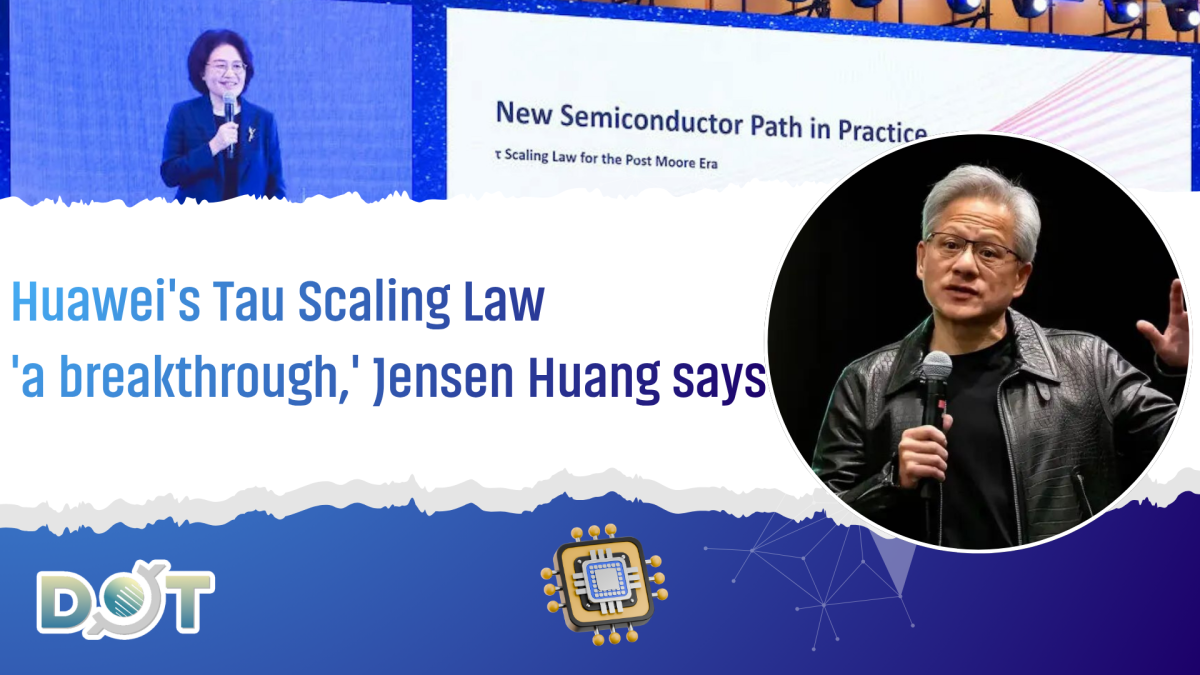
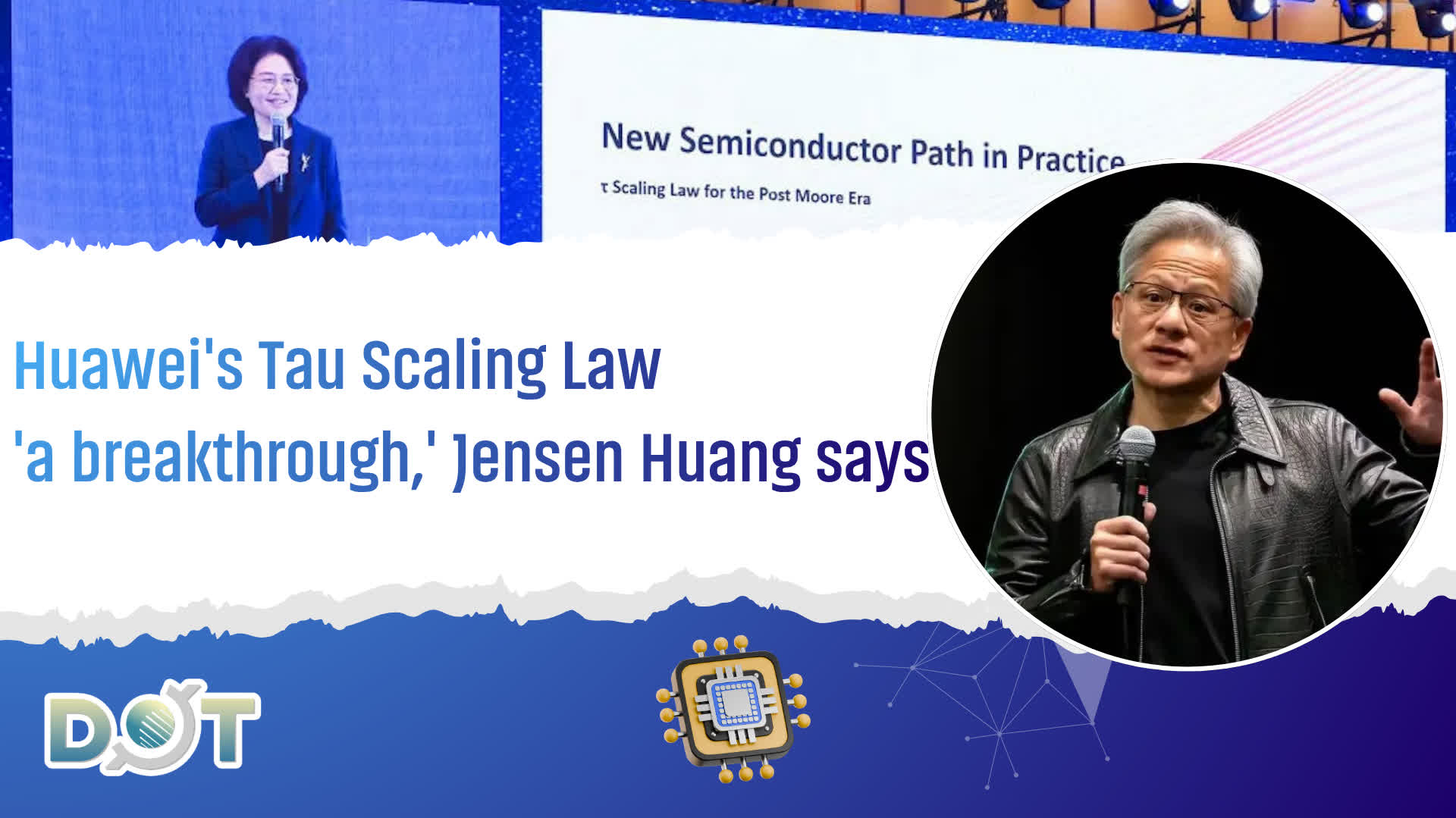
Huawei's Tau Scaling Law 'a breakthrough,' Jensen Huang says

2026.05.29 15:30

6a193c4de4b08c07fcf44ba6.png

On May 28, NVIDIA CEO Jensen Huang gave an interview to the media, sharing his views on hot topics, including competition in the AI industry and cloud service providers' development of their own chips. When asked about Huawei's recently announced Tau (τ) Scaling Law and "LogicFolding" technology, Huang said that while this represents a major technological breakthrough for Huawei, it does not pose a threat to TSMC.

Huang explained that by using chip stacking and 3D packaging technology, Huawei is able to double or even increase the number of transistors by three to four times without shrinking semiconductor process line widths. He acknowledged this as an excellent technical approach, but noted that TSMC has been developing and applying related technologies for nearly a decade, with a deep and highly advanced technical foundation.

It is reported that He Tingbo, President of Huawei's semiconductor business unit, formally introduced the Law at the 2026 IEEE International Symposium on Circuits and Systems (ISCAS) held on May 25. This marks the first time a Chinese company has proposed a new principle to lead industry development in the global semiconductor field, sparking extensive discussion within the industry.

 
the combined computing power exceeds a whopping 2,100 TOPS
In short BYD, in raw computing computing power, crossed the finish line before the race started against Tesla's AI5. :)
But please do explain that Tesla doesn't use Lidars/radars, so with an AI5 chip of rouhly 1200 TOPS, expected, not suffice from computational PoV? Like raw TOPS numbers can be deceiving.
 

AI Overview


Cusp-singularity gyroscopes represent a breakthrough in micro-electro-mechanical system (MEMS) sensors that overcome the sensitivity limits of traditional Coriolis vibratory gyroscopes (CVGs). By operating near a "cusp singularity," they use a cubic-root response to dramatically amplify the Coriolis effect, achieving precision levels previously reserved for much larger, expensive devices. [1, 2]

How They Work
Traditional chip-scale gyroscopes measure rotation by detecting the Coriolis force, but their sensitivity is physically constrained by a weak intrinsic Coriolis factor. [1]
  • Cusp Catastrophes: Researchers introduce stiffness coupling into the gyroscope's oscillation-frequency space to trigger "cusp catastrophes," resulting in a third-order mathematical singularity. [1, 2]
  • Cubic-Root Responsivity: Near this singularity, the relationship between the applied rotation and the frequency shift is no longer linear; instead, it scales by a cubic root, amplifying the Coriolis factor by up to three orders of magnitude. [1, 2]

Performance and Advantages
By trading linearity for extreme sensitivity near the cusp, these gyroscopes offer unprecedented performance for microchips: [1, 2]
  • Massive Signal Enhancement: They yield a roughly 250-fold improvement in the signal-to-noise ratio (SNR) and a nearly 300-fold increase in precision compared to standard operation. [1, 2]
  • Ultra-low Drift: They achieve sub-navigation level bias instability (around 0.035°/hour) and angle random walk (ARW) as low as 0.00036°/\(\sqrt{h}\). [1]
  • Miniaturization: This technology allows silicon-chip gyroscopes to rival the accuracy of bulky, expensive Hemispherical Resonator Gyroscopes (HRGs). [1]

Potential Applications
Because they fit on a standard semiconductor chip but provide navigation-grade accuracy, cusp-singularity gyroscopes are poised to revolutionize:
  • Aerospace and Autonomous Navigation: Providing high-precision inertial navigation for drones, aircraft, and spacecraft without the weight or size penalties of traditional systems.
  • Automotive: Improving advanced driver-assistance systems (ADAS) and autonomous vehicle dead-reckoning capabilities.
  • Consumer Electronics: Enabling high-accuracy pointing and motion tracking for VR/AR and mobile devices. [1, 2, 3, 4, 5]
For a detailed look at the physics and control mechanisms behind this technology, you can read the research published in Nature. [1]

To view this content we will need your consent to set third party cookies.
For more detailed information, see our cookies page.
 
To view this content we will need your consent to set third party cookies.
For more detailed information, see our cookies page.
 

Users who are viewing this thread

Pakistan Defence Latest

Back
Top