Navigation
Install the app
How to install the app on iOS
Follow along with the video below to see how to install our site as a web app on your home screen.
Note: This feature may not be available in some browsers.
More options
Style variation
You are using an out of date browser. It may not display this or other websites correctly.
You should upgrade or use an alternative browser.
You should upgrade or use an alternative browser.
China Science And Technology News
- Thread starter JsCh
- Start date
More options
Who Replied?

ety
Trusted Member

So, 9 out 10 of them are Chinese descendants. They are facing discriminations in the West esp in US.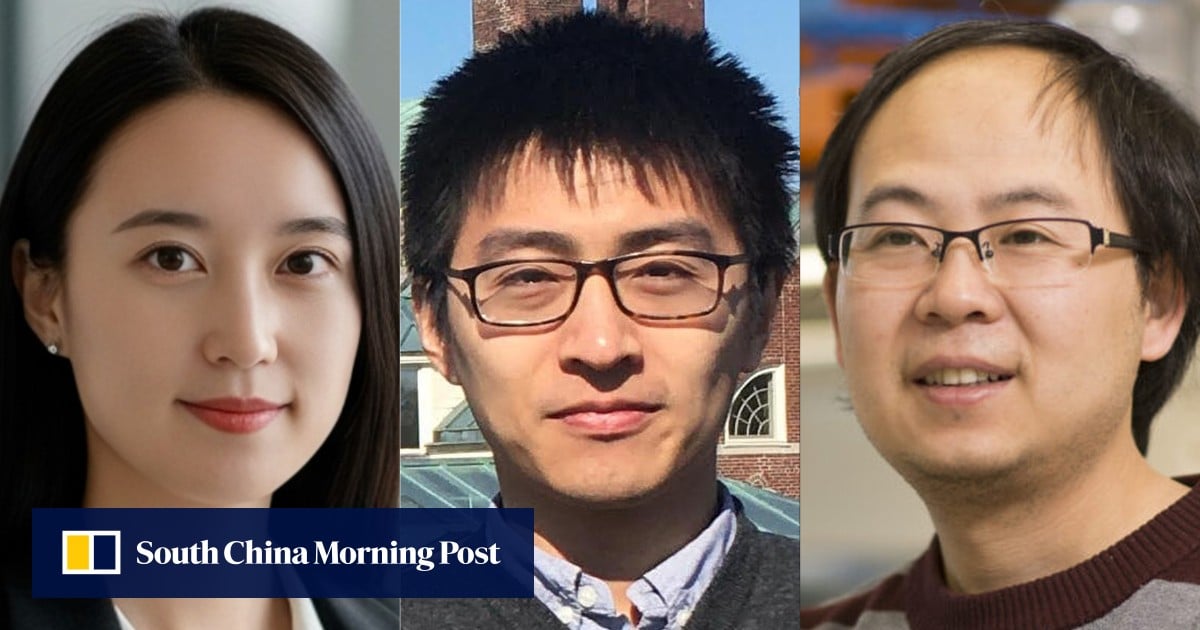
10 scientists and experts who have left US and UK for China so far in 2026
From a Nobel Prize winner to the creator of the first plant ID app, here are some of the scientists and experts who made the move.www.scmp.com
10 scientists and experts who have left the US and UK for China so far in 2026
神威98
Registered Member

I notice most posters here wouldn't make very good photographers in real life.
The one video of the rocket recovery that impressed me the most was the one where they shown the rocket deliberately aiming to the side of the ship in case something went wrong and you have a live missile striking the ship. Then it gradually changed it's trajectory towards the ship after safely decelerating. This video shown no where on PDF, which is why most contributors here will never make great photographers IRL!
The one video of the rocket recovery that impressed me the most was the one where they shown the rocket deliberately aiming to the side of the ship in case something went wrong and you have a live missile striking the ship. Then it gradually changed it's trajectory towards the ship after safely decelerating. This video shown no where on PDF, which is why most contributors here will never make great photographers IRL!

Beijingwalker
VIP Member
Recently I had this vujà dé—the opposite of déjà vu—where familiar sights suddenly offer a new perspective.
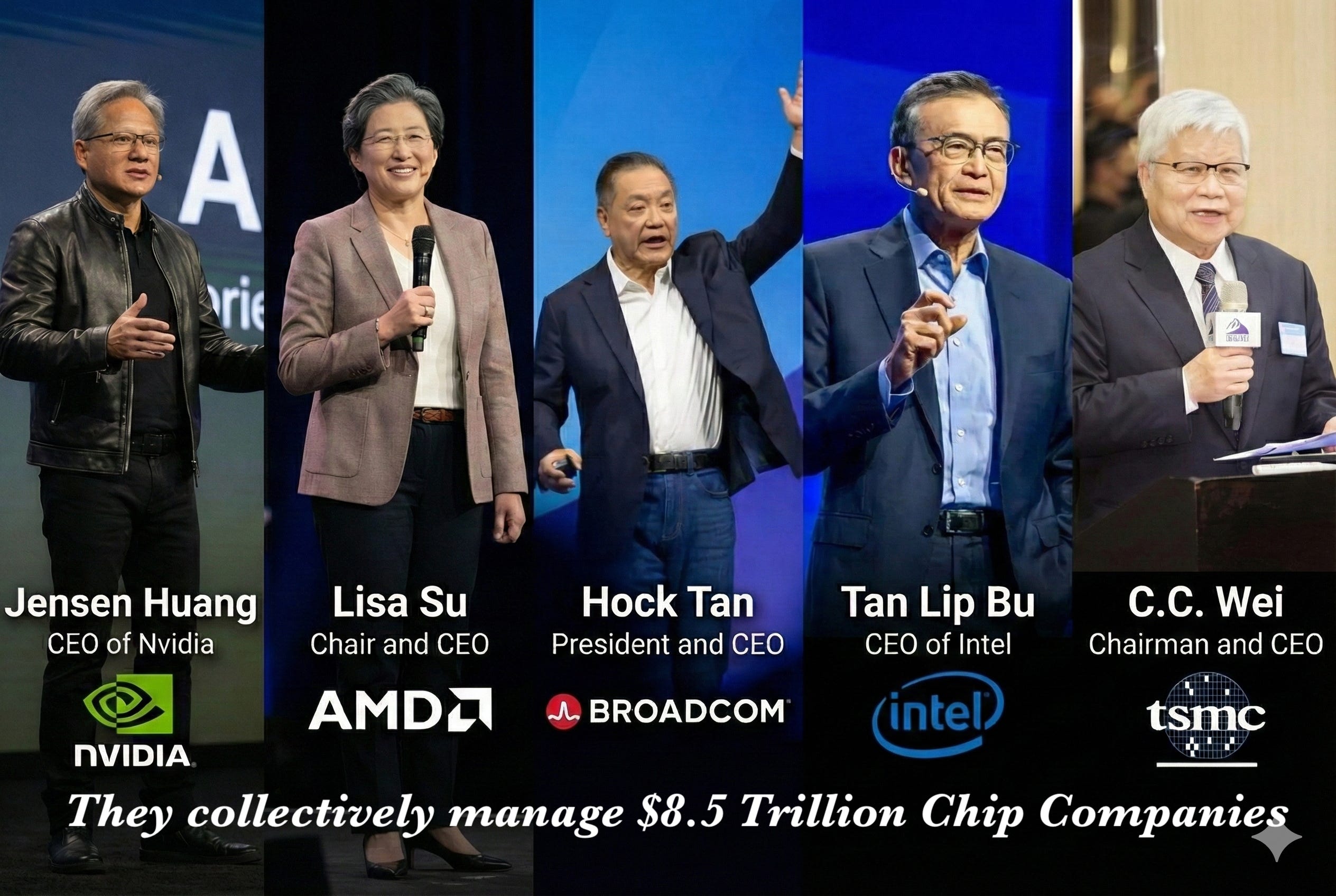
We’ve seen Jensen Huang and Lisa Su all over the media. But when you zoom out to look at other critical chip companies in the world, a pattern emerges: these firms are helmed by people of Chinese ethnicity. Collectively, they manage companies worth $8.5 trillion in market cap.
- Jensen Huang, Nvidia (market cap: $4.569T)
- Lisa Su, AMD ($422.76B)
- Hock Eng Tan, Broadcom ($1.517T)
- Lip-Bu Tan, Intel ($214.98B)
- C.C. Wei, TSMC ($1.736T)
Though of Chinese ethnicity, they’re not from China. In fact, Jensen, Lisa, Hock, and Lip-Bu are American citizens. Wei is Taiwanese. Jensen and Lisa were born in Taiwan, while Hock and Lip-Bu were born in Malaysia.
So no, this isn’t some claim that “the Chinese are controlling the chip industry.” Far from it—their allegiance is with the U.S.
I just find it more than coincidence that there’s such clear overrepresentation of ethnic Chinese at the helm of these companies.
Why So Many Asians?
One factor: these companies have an overwhelming number of Asians (not necessarily ethnic Chinese) compared to a typical U.S. company. About 6.5% of the total U.S. workforce is Asian, and in tech, that figure rises to 18.1% (2022, Equal Employment Opportunity Commission).
But Asian representation at these four U.S. companies (excluding TSMC, which is Taiwanese) is way above average, according to DiversIQ:
So it’s more likely an Asian would get promoted from within. The next question: why is there more Asian representation in these companies?
- NVIDIA: ~52.4% Asian
- AMD: ~48.3% Asian
- Broadcom: ~42.3% Asian
- Intel: ~37% Asian
First, Asians are well-trained in STEM, and many graduates have flowed into these technical jobs. The talent pool is there.
Second, TSMC is a Taiwanese company with many ethnic Chinese employees. As the most important foundry manufacturing what the Americans design, it might be easier to build trust and deep business relationships if American companies’ top echelons are also ethnic Chinese.
The differences are in the details. So let’s look at the story of each of these five ethnic Chinese chip bosses.
Why The Top AI Talent In The U.S. Are Chinese
Jul 8, 2026A meme circling around lately shows Sam Maltman from OpenAI sitting with Chinese researchers who helped him create his models. But this single data point helps us to uncover something even deeper, that the majority of AI top AI talent in the US in companies like OpenAI, Meta, and xAI are actually from China.
Beijingwalker
VIP Member
Why The Top AI Talent In The U.S. Are Chinese
Jul 8, 2026
A meme circling around lately shows Sam Maltman from OpenAI sitting with Chinese researchers who helped him create his models. But this single data point helps us to uncover something even deeper, that the majority of AI top AI talent in the US in companies like OpenAI, Meta, and xAI are actually from China.
US accuses China of stealing their technology, but US acutally steals our people who dominate the technology.
Beijingwalker
VIP Member
Beijingwalker
VIP Member

Beijingwalker
VIP Member
Accounting for 41%—China surpasses the U.S. in open-source model downloads
wallstreetcn· July 14 2026According to Hugging Face's Spring 2026 report, Chinese open-source models accounted for 41% of downloads on the platform, surpassing those from the United States. The top six most popular models on OpenRouter all originate from Chinese institutions, with Anthropic ranking seventh. Mounting corporate cost pressures are driving the adoption of 'model routing' strategies, and Chinese open-source models are now entering global enterprise procurement options at scale.
On another front of the AI arms race, Chinese open-source models are quietly reshaping the competitive landscape through download metrics.
According to Hugging Face's Spring 2026 report, Chinese open-source models accounted for 41% of the platform’s monthly and cumulative downloads, surpassing U.S. models. Recently, Hugging Face CEO Clem Delangue highlighted this figure again, sparking widespread discussion on social media.
Hugging Face is currently the world’s largest hosting platform for open-source AI models, hosting nearly 3 million public models and 1 million public datasets, with a new repository created on average every seven seconds. Half of the Fortune 500 companies have already deployed their own private or open-source models on the platform.
Moreover, the top six most popular models on OpenRouter all originate from Chinese institutions, including Tencent, Xiaomi, DeepSeek, MiniMax, and Zhipu AI.

Beijingwalker
VIP Member
Shanghai hospital completes world's first BCI for hand movement using Chinese device
chinadaily.com.cn | Updated: 2026-07-15 23:00
Following its market approval in March, the first prescription for Neural Electronic Opportunity, an implantable brain-computer interface hand motor function compensation system, was issued on Monday in Shanghai, with the world's first implantation surgery performed at the city's Huashan Hospital affiliated with Fudan University.
Currently, the patient's condition remains stable post-surgery, and intraoperative tests showed that the patient's epidural electroencephalogram signals collected by the system were stable and of good quality, according to the hospital.
Developed by Neuracle Medical Technology (Shanghai) Co Ltd, this cutting-edge technology was once limited to laboratories and clinical trials. It received its market approval on March 13, becoming the world's first approved implantable BCI Class III medical device.
Now, with its entry into real-world clinical practice, the system has become a medical device that eligible patients can use, bringing hope for millions of paralyzed patients with spinal cord injuries around the globe.
Severe spinal cord injuries can often cause impaired hand motor function, and medications and conventional rehabilitation methods still have limitations in treating it.
The patient who underwent this first surgery sustained a spinal cord injury in a car accident 10 years ago, resulting in impaired hand grasping function and limited ability to perform activities of daily living. After undergoing standardized rehabilitation treatment, the patient's functional improvement remained stagnant. Following screening and evaluation by a multidisciplinary team in accordance with the product's registered indications, the patient was selected for this implantation.
By capturing and decoding epidural EEG signals to identify motor intention, the NEO system establishes a communication pathway between the brain and an external functional compensation device. Assisting with compensation for hand-grasping function, it clearly helps improve the patient's ability to perform activities of daily living.

Shanghai hospital completes world's first BCI for hand movement using Chinese device
 www.chinadaily.com.cn
Beijingwalker
VIP Member
China is now world’s No 1 science power, top Russian scientist Artem Oganov says
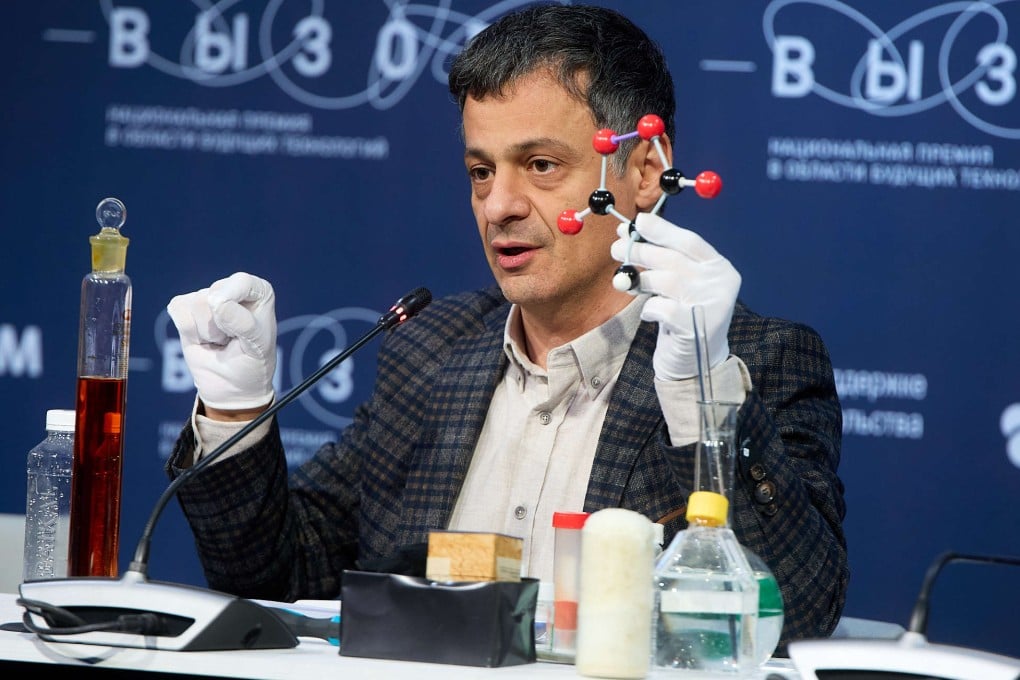
Victoria Bela
Published: 7:00pm, 15 Jul 2026Updated: 7:07pm, 15 Jul 2026
Leading Russian chemist and materials scientist Artem Oganov, who received China’s top international science and technology award, said the honour from the world’s No 1 science power was a sign he was “on the right track”.
Oganov, a distinguished professor at the Skolkovo Institute of Science and Technology in Moscow and long-time China collaborator, and eight other experts were awarded the International Science and Technology Cooperation Award by Chinese President Xi Jinping during a ceremony in Beijing last week.
After Oganov visited China in 2008, he told colleagues and friends in Europe that the country was “on the way” to being No 1 in both industry and science, but said this was met with scepticism at the time.
He told the South China Morning Post on Monday that, 18 years on, “China is No 1 – in industry, in economy, and indeed also in science.”
Noting that America used to be the top scientific power, he pointed to the fact that China now accounts for a third of global scientific publications, adding that it was not just numbers, but “quality”.
China holds the top spot in the 2026 Nature Index – an analysis of over 125,000 research articles published in 178 leading publications in 2025 – with the US in second place.
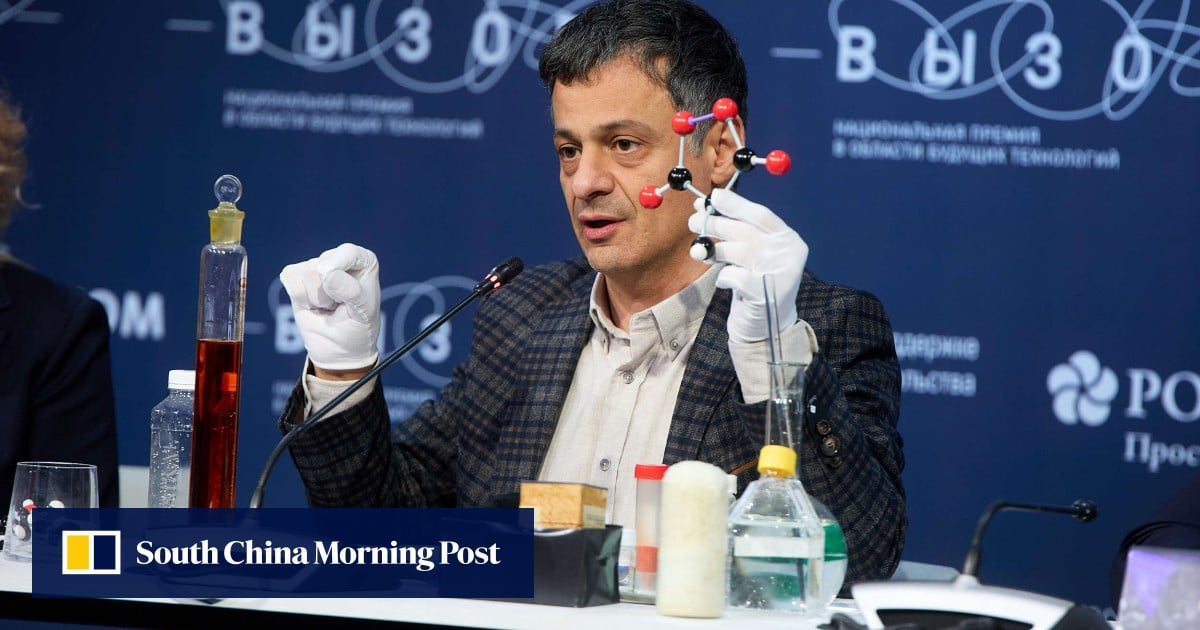
China is now world’s No 1 science power, top Russian scientist says
After receiving Chinese award, chemist and materials researcher says it gives him confidence that he’s ‘on the right track’.
www.scmp.com

VCheng
THINK TANK: CONSULTANT

China’s top international science and technology award
This one?
10 scientists help out China annually, and get a nice "reward".
That makes China Lumber One!


Han Patriot
Registered Member
Wechat pay has less advanced recognition tech. Alibaba system is able to link me to multiple patform and determine my identity.I just wanted to say Weixin/WeChat is shiet. We used it in China twice and then it stopped working. If it wasn't for Alipay that has less stringent requirements for foreigners to use their payment system, we would have needed to lug around huge wads of cash. But then how do you even buy train tickets without electronic payment?
Some companies in China like Tencent and Huawei command huge market shares. But they don't even work improve commerce and people's lives only inconvenience them to no ends...
Whilst companies that actually provide useful services and products are scrutinized by law enforcement to no ends.
What's funny was when Wechat didn't work, the cashiers immediately wanted us to use Douyin payment. Fuk it they both don't work/hassle to set up. I never seen someone in China immediately bring up Alipay as a second recommended choice.
Alibaba allows me to buy stuff cheaply from China to ship overseas via Aliexpress. What the fuk I need Tencent and Douyin for?
Beijingwalker
VIP Member
Why Best American Scientists Are Heading to China
Jul 11, 2026
The world's brightest minds are becoming the newest battleground in the U.S.-China rivalry. The latest name to make that shift is Nobel prize-winning chemist Omar Yaghi.
He has left the University of California, Berkeley, to join a public research university in Beijing, where he will lead a new institute that uses artificial intelligence to accelerate the discovery of advanced materials.

Users who are viewing this thread
Total: 2 (members: 0, guests: 2)
Pakistan Defence Latest
-
Federal cabinet gives nod to imposition of emergency in KP; summary sent to president (45 Viewers)
- Latest: SteppeWolff
-
 2 Pakistan Army pilots martyred as training aircraft crashes in Quetta: ISPR (9 Viewers)
- Latest: Starlord
-

-

-

Country Watch Latest


Latest Posts
-

-
Federal cabinet gives nod to imposition of emergency in KP; summary sent to president (45 Viewers)
- Latest: SteppeWolff
-
-
-