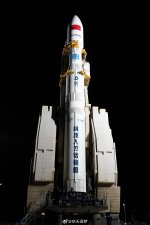
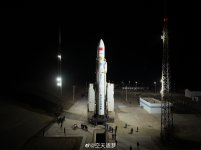
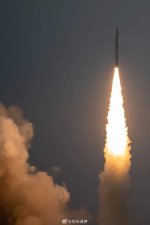
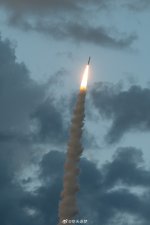
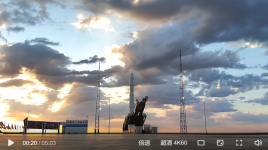
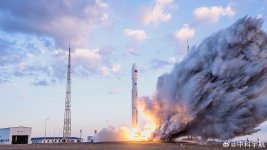
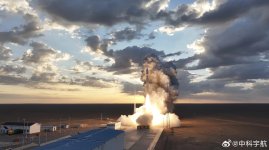
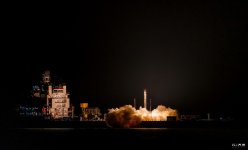
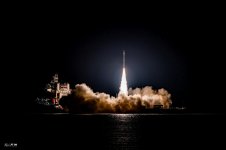
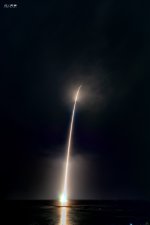
At 18:00 on December 16, 2024 (Beijing time), China successfully launched the satellite Internet LEO Group 01 at Wenchang Space Launch Site using the Long March 5B carrier rocket/Yuanzheng II upper stage.
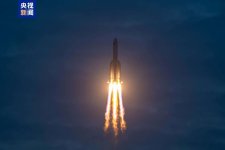
Satellite Internet LEO 01 satellites use Ka and other frequency band loads, mainly providing users with broadband communication, Internet access and other services
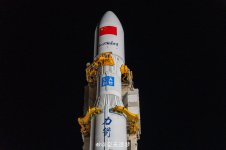
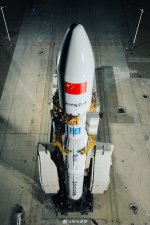
The Long March 5B is the carrier rocket with the largest near Earth orbit carrying capacity in China, with a total length of 53.7 meters and a takeoff weight of 837.5 tons. The envelope diameter of the fairing reaches 4.5 meters and the volume exceeds 345 cubic meters, making it the largest fairing in China's active rocket fleet.
The LEO low Earth orbit capacity of Long 5B is over 20 tons, which is higher than SpaceX's Falcon 9. The weight of the upper stage of Expedition 2 is about 10 tons, and the capacity of satellite related payloads is about 12 tons. Calculated based on 10 satellites, a single satellite weighs about 1 ton, and its performance is much higher than satellites launched before StarLink 2.0. If the Chang-5 launch is continued on this orbital surface in the future, there will be 5 more launch missions.
China's two major LEO satellite Internet constellations "Qianfan Constellation" and "Star Network" have begun to launch and deploy satellites——
The Qianfan constellation has completed the deployment of 54 satellites through three launches of Long March 6A for the time being.
The first batch of near polar orbit 01 satellites from Xingwang were launched today by Long March 5B, and the exact number of the first batch has not been officially announced yet.















 The bullet train travelling through the clouds in the Himalaya mountains (8 Viewers)