Beijingwalker
VIP Member

China’s Rise as a Global Biopharma Innovation Hub
SEPTEMBER 29, 2026Fifty years ago, Kleiner Perkins (then known as Kleiner & Perkins) made what many agree was the first venture capital investment in a life sciences company purely based on scientific research prior to the launch of a product: A $100k round to Genentech.
That investment launched an ecosystem that established the San Francisco Bay Area as one of the major global hubs of biotech innovation developing a deep reservoir of talent and leveraging research from leading academic institutions. Genentech alumni alone have gone on to launch more than 150 life sciences companies.
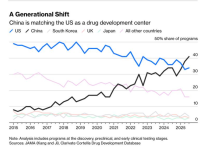
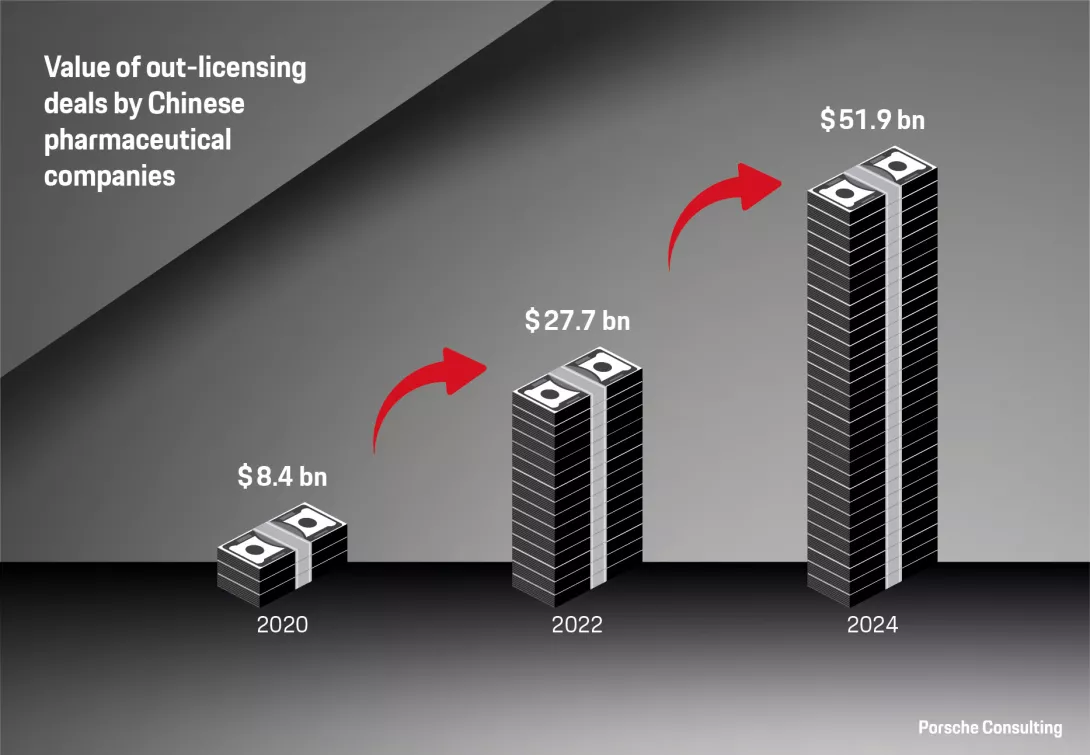
But that 50-year run as a premier innovation hub is under challenge. Increasingly, China is becoming the source of early-stage biotech innovation. For example, according to industry tracking platforms PharmaCube and GlobalData (using data from China’s National Medical Products Administration), the total value of in-licensing from Chinese biopharma companies by Big Pharma grew 161% in just one year from 2024 to 2025.
While the traditional U.S. innovation hubs such as the San Francisco Bay Area and Boston will not become irrelevant, they must reassess their competitive position and focus on the means to maintain it. Big Pharma and investors have identified Chinese biopharma companies as a source of innovation, and U.S. biopharmaceutical leaders must balance the crucial need to innovate with the risk that geopolitical tensions could quickly upend, or at least complicate, partnerships and strategic transactions with Chinese innovators.
CHINA'S RISE
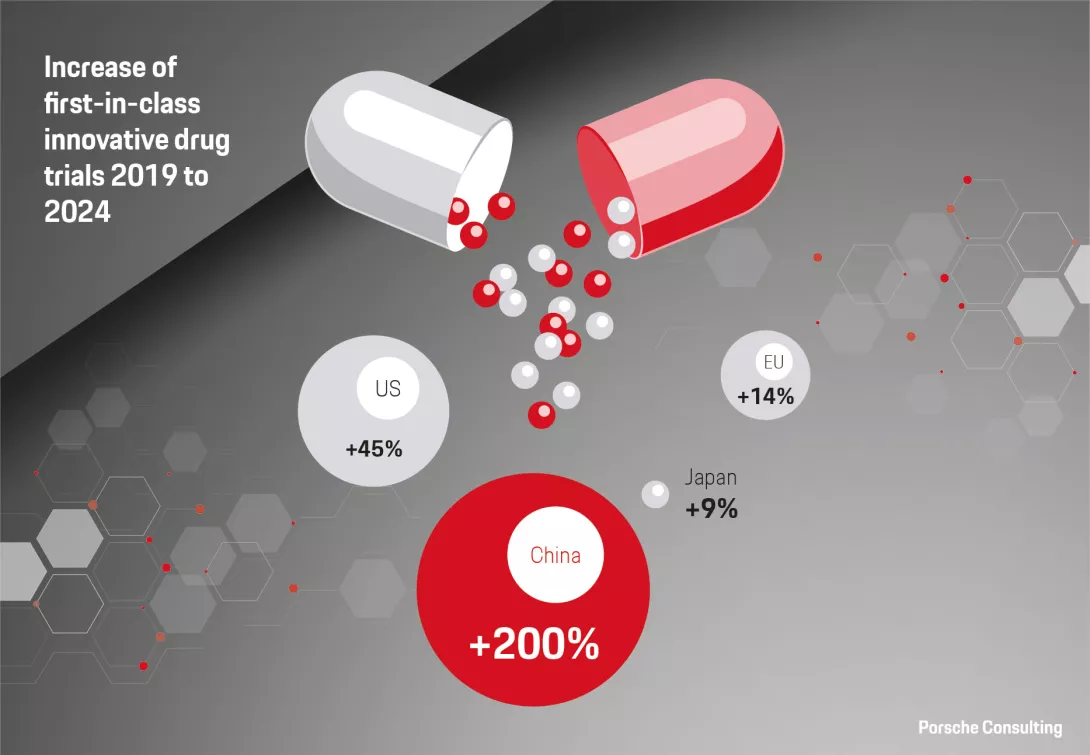
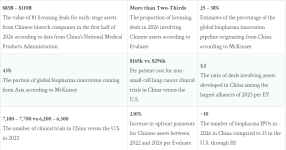
Long recognized as a source of chemical precursors and copycat drugs for both the Chinese domestic market and the rest of the world, in the past few years China has emerged as an important source of innovative early-stage research and Phase I and II assets.Consider:
Trends
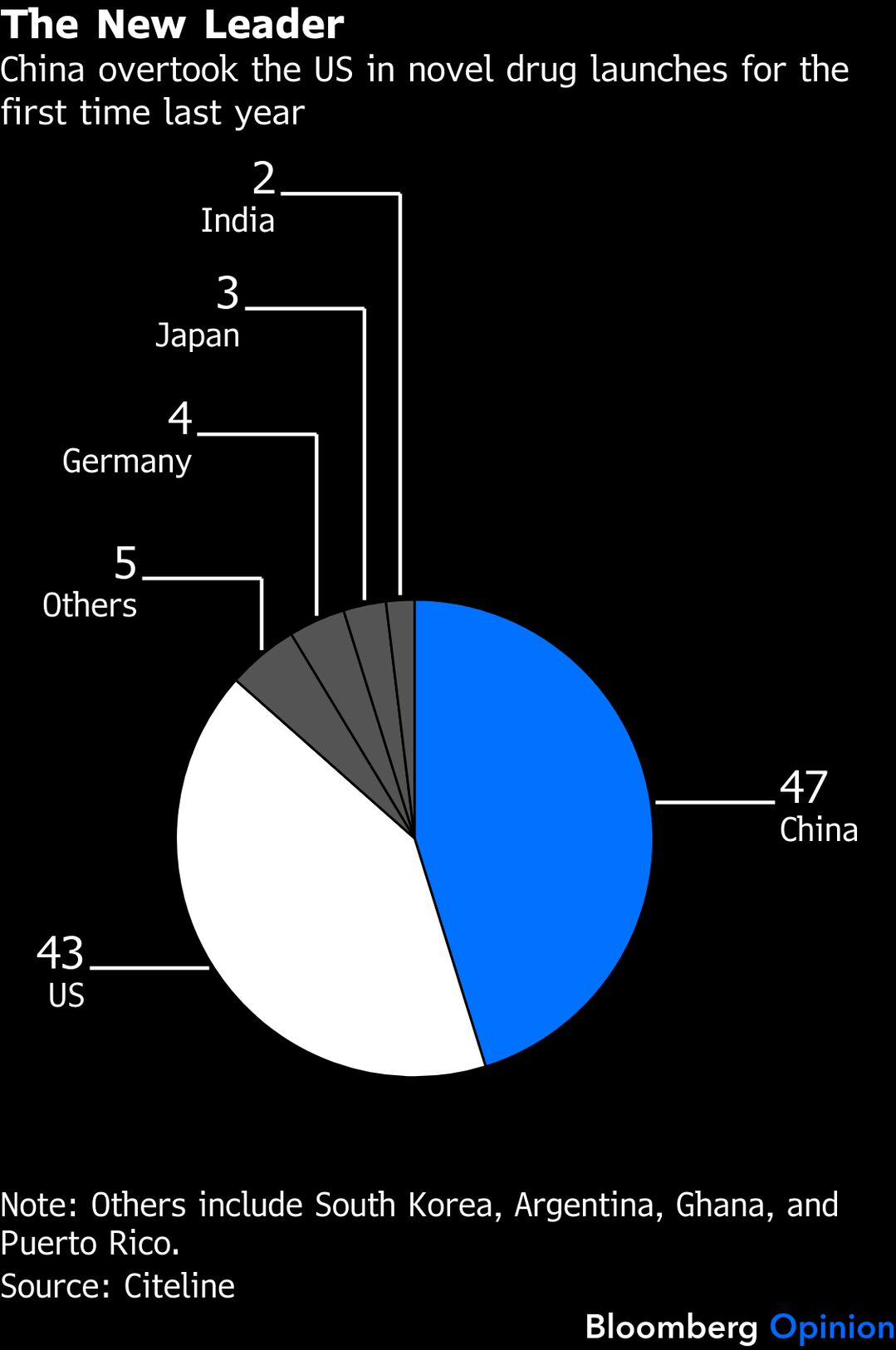
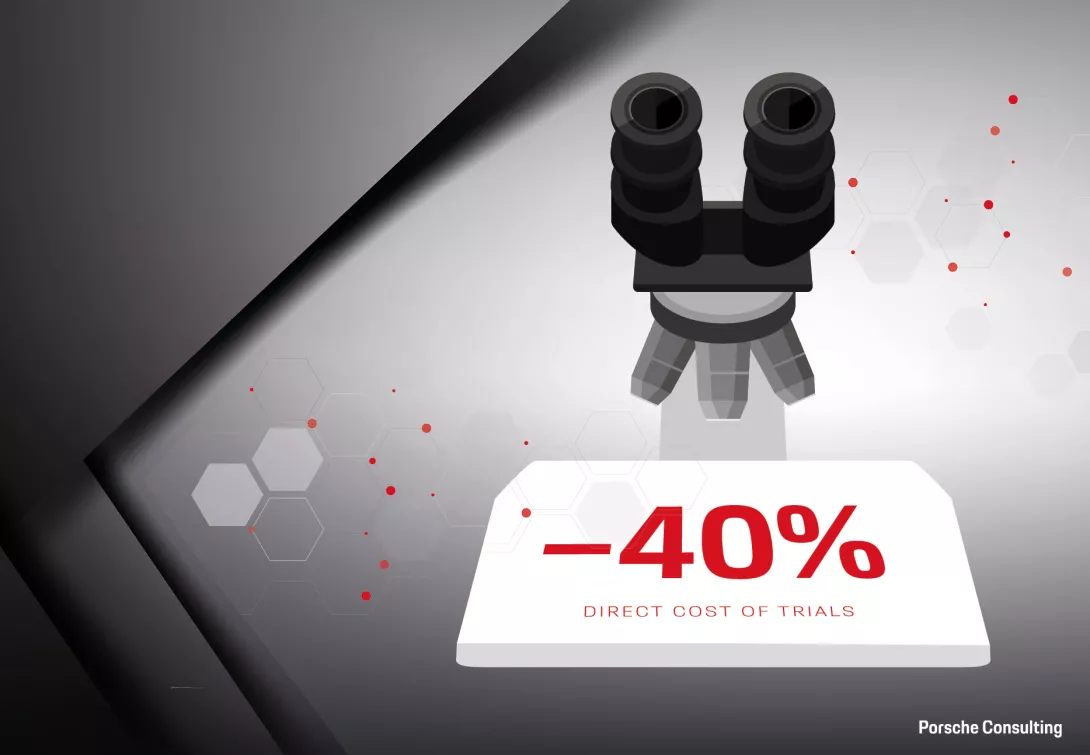
While many industry commentators initially dismissed the increase in early-stage development in China as a blip, by the end of 2025 it was clear that the sector is witnessing an undeniable and sustainable rise of a new player. China’s demonstrated advantage in terms of the speed of development and lower costs, at least in the area of early-stage assets, has made it an emerging partner of choice for companies looking to obtain access to innovative assets.
Data from PharmaCube and GlobalData reported in the South China Morning Post illustrates the rise of Chinese partnership deals vividly. From a baseline of 10 as recently as 2019, dealmaking with Chinese biopharma companies began to soar starting in 2023, with the deal count jumping to 157 in 2025. Through the first half of 2026, the number of deals is on track to match 2025’s total, but the value of those deals is projected to increase 62%.
Data from McKinsey reported in the Financial Times demonstrates that China has improved its metrics across several key measures over the past eight years while the U.S. has simultaneously lost ground across the board. These include the number of publications in scientific journals, the innovative pipeline, IPOs, and of course out-licensing deals to Western companies.
This data may not come as a surprise to those who follow Chinese domestic policy closely.
Driving Force
China’s Fourteenth Five-Year Plan (the Plan), covering the years 2021 through 2025, prioritized biopharma as a pillar industry with the specific goal of transitioning from a manufacturer to a global innovator.
Overall, the Plan encouraged policies to support foreign investment in R&D and manufacturing in hub cities such as Beijing, Shanghai, and Guangzhou and focused on key technologies including gene and stem cell therapies and artificial intelligence.
Driving Force
China’s Fourteenth Five-Year Plan (the Plan), covering the years 2021 through 2025, prioritized biopharma as a pillar industry with the specific goal of transitioning from a manufacturer to a global innovator.
Overall, the Plan encouraged policies to support foreign investment in R&D and manufacturing in hub cities such as Beijing, Shanghai, and Guangzhou and focused on key technologies including gene and stem cell therapies and artificial intelligence.
In May of 2022, China issued a five-year plan specific to the bioeconomy stating that, “ By 2025, China's bioeconomy will witness increases in its total scale, enhanced comprehensive strength of science and technology, and development of industrial integration, as well as enhanced biosecurity.”
As a result, McKinsey reports that:
- Early-stage to IND cycles in China are 50 – 70% faster than in the rest of the world.
- Clinical trials can be completed in China 2 – 5X faster than in the U.S. or EU due to concentrated patient pools, well-resourced sites, and maturing clinical capabilities.
- The share of clinical trials initiated globally that included at least one China site reached 39% in 2023.
- China-developed first-in-class drugs will account for at least a quarter of the global total
- Chinese drug makers will generate $522B
- Chinese biopharmas will produce at least five blockbuster drugs (those with revenues of more than $1B)
- China’s innovative drug sector will generate annual revenue growth of 20%.
U.S. Government Response
The rise of Chinese biotech has not escaped the attention of the U.S. government, which is responding with a variety of carrots and sticks.
In terms of carrots, the FDA has launched several initiatives to speed drug development, although not the kind of Agency-wide effort required for a sea change as of yet.
On the stick side, Congress is doing its part by encouraging the Administration to increase the scrutiny of Chinese biopharma partnerships by the Committee on Foreign Investment in the U.S. (CFIUS). Additionally, the Biotech Investment National Security Act (BINSA) was introduced in the House on June 2, 2026, and in the Senate on August 6, 2026, to amend title VIII of the Defense Production Act of 1950. This measure would expand the Treasury Department’s outbound investment rules to cover biotechnology under the framework established by the COINS Act (Comprehensive Outbound Investment National Security Act).
But government action may not be enough to counteract the momentum of Chinese innovation.
PLAN FOR A FUTURE OF GREATER INTERCONNECTIVITY
While traditional U.S. innovation hubs will continue to play an important role in the innovation economy, the combination of cuts to basic research in the U.S., tighter U.S. immigration policies, and a significant commitment of resources by the Chinese government will likely result in the U.S. and China working together closer than ever before despite the risks and challenges and being in competition with each other in the biopharma space.Strengths of U.S. Innovation Hubs
The traditional U.S.-based biotech innovation hubs still have many advantages over China. There is a critical mass that provides access to a deep reservoir of talent and experience for start-ups and growth companies as well as established support services.
There is also a well-established venture capital infrastructure, including that in the Bay Area and Boston, that allows investors to keep a close eye on their investments. Even in the age of virtual meetings, it is much more efficient to manage a start-up from across town than it is to manage one across the date line.
These legacy innovation hubs also benefit from deep and long-standing relationships with key academic institutions in their markets that have experience commercializing technologies developed in their labs.
And Western companies still dominate later-stage clinical trials and commercialization, but their lead may erode as Chinese companies focus on developing expertise and advantages in these areas as well.
It would be a mistake to think that this fact pattern will not change. China’s latest Five-Year Plan aims to build its sector’s strengths in all these areas. The brute force of China’s managed economy, if successful, may bring about change faster than many in the West might expect.
Navigating the Risks and Challenges
China’s rise as a global biopharma innovation hub and the U.S. government’s funding cuts to support U.S. basic research have contributed to both biotech and Big Pharma seeking to access assets from China. However, biopharma companies cannot ignore significant current and future challenges in these transactions:
- Geopolitical risks involving China.
- U.S. regulatory environment, such as OFAC, export controls, DOJ Data Security Program, Treasury Outbound Investment Regime, CFIUS, BIOSECURE Act, and proposed BINSA.
- China’s political system of choice, and its law and the legal system, including certain approval requirements for clinical trials and data export.
- Certain barriers or differences (actual or perceived) in language and culture (in general, impacting business, regulation, and science).
Evolving Deal Structures
In addition to the sheer growth in the number of biotech and pharma deals involving Chinese assets, deal structures themselves are evolving as the industry realizes the potential risks and challenges involved with accessing Chinese assets.
In general, Chinese biotech companies prefer to retain rights in the Greater China territory so that they can continue to exploit the assets. So long as the rest-of-world rights are available, the Chinese biotech company may be willing to out-license the asset to an existing U.S. or Europe-based biotech or pharma company based on customary terms.
Alternatively, the Chinese biotech company may be willing to “spin off” its asset into a newly formed entity that is funded by financial investors and in which the Chinese company or its affiliate would obtain an ownership interest. Such a newly formed entity would then hire a seasoned management team to move the asset forward.
Another variation on this model can be having a seasoned management team identify a Chinese asset and then engaging financial investors and forming a new company focused on such an asset in the U.S., with the Chinese biotech company or its affiliate obtaining an ownership interest in the newly formed entity.
Finally, these newly formed entities can be a wholly owned subsidiary of a “holding company” that has or will have multiple subsidiaries, e.g., on an asset-by-asset basis or that operates on an indication-by-indication basis.
CLOSING
The emergence of China as a hub of biopharma innovation has changed the long-standing dynamics of the sector. While U.S. regulatory agencies are trying to develop policies to support U.S. innovation, they will be hard pressed to overcome the inherent advantages in terms of time and cost that Chinese biotechs may offer.Several deal structures have emerged that enable Big Pharma to gain access to Chinese assets in the current political climate. However, geopolitical developments could cause China or the U.S. to put restrictions on such arrangements or render them less favorable.
Perhaps more significantly, China has made it clear that its objective is to develop its biopharma sector into a global commercial leader. Prudent investors, licensees, and acquirers may be well advised to plan for a future where China will not only be an important innovator but also an influential player among the ranks of Big Pharma.