China’s Startups Race to Dominate Humanoid Robot Market

Beijingwalker

VIP Member
Joined
Nov 4, 2011
Messages
92,364
Reaction score
113,109
Reputation
2,080.3
Country of Origin
Country of Residence

China’s Startups Race to Dominate Humanoid Robot Market​

May 30th, 2025, 11:01 PM GMT+0800

To view this content we will need your consent to set third party cookies.
For more detailed information, see our cookies page.


Chinese startups are rapidly developing AI-powered humanoid robots for complex roles in factories, households, and schools. Their swift progress has drawn global attention — Elon Musk has even expressed concern that China may soon dominate the field. Bloomberg TV’s Annabelle Droulers explains. (Source: Bloomberg)
 
Another BYD, Huawei, Xiaomi and DJI is emerging in China
 
Last edited:

China's race to dominate humanoid robotics​

To view this content we will need your consent to set third party cookies.
For more detailed information, see our cookies page.
 

Chinese AI-Powered Robots Show Off Fighting Skills​

To view this content we will need your consent to set third party cookies.
For more detailed information, see our cookies page.

To view this content we will need your consent to set third party cookies.
For more detailed information, see our cookies page.
 

China’s Startups Race to Dominate the Coming AI Robot Boom

Elon Musk worries the country will eventually lead in the field of humanoids
By Bloomberg News

2025年5月30日 at GMT+8 23:00

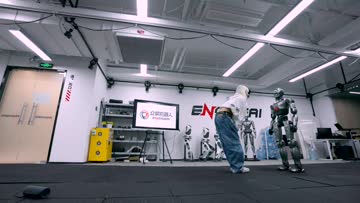
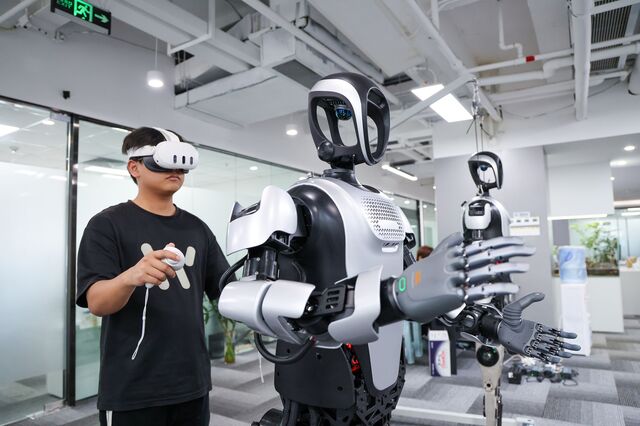
A few weeks ago, a Chinese startup called EngineAI gave an unusual demonstration of how today’s robots learn. A female instructor with long blonde hair showed off a series of dance steps and then encouraged the company’s humanoid robot to imitate her moves.

“Five, six, seven, eight,” she said. “Let’s go! Keep the flow.”

Using computer vision and machine learning algorithms, the machine watched and listened — and then mimicked a series of steps from her dance routine. Over a few days, EngineAI’s robot mastered the Axe Gang dance from the 2004 movie Kung Fu Hustle.

A bit silly perhaps, but the dance represents a serious step for China’s tech industry. After years of American companies like Boston Dynamics Inc. leading the development of humanoid — or people-shaped — machines, Chinese upstarts are now pushing the boundaries of innovation. In April, Beijing hosted the world’s first robot half-marathon, where the city’s X-Humanoid bested a field of 20 other bipedal machines. In May, Unitree Robotics, one of the country’s prominent players, showcased its machines in what was billed as the first robot kickboxing tournament. While these events don’t always go smoothly — 15 of 21 robots failed to complete the Beijing race — the point is progress, not perfection.

China, which already has a higher density of robots per human on its factory floors than the likes of the US and Japan, is preparing humanoids to move into increasingly complex roles. EngineAI, Unitree and their competitors have started trials for everything from sorting garbage and delivering medicines in nursing homes to patrolling the streets alongside police officers and guiding tours through museums. The bots are quietly being tested for military combat, according to local media reports.

Video poster

A video provided by EngineAI shows their PM01 humanoid robot being taught dance steps. Source: EngineAI

Zhao Tongyang, founder and chief executive officer of EngineAI, figures 50 or 60 companies in China are working on humanoid development now, benefiting from the country’s manufacturing expertise and robust government support. They’re harnessing artificial intelligence models so the machines can learn how to handle new tasks on their own, without laborious programming for each situation. The company says it has orders for hundreds of its humanoids.

“China has many players involved and there are some very good talents among them,” said the 43-year-old Zhao during an interview over Zoom. “I hope China will be first when it comes to robots.”

The country’s startups have caught the attention of Elon Musk, whose Tesla Inc. has set its sights on the humanoid market. On an April conference call, the billionaire said he thinks his Optimus robots lead the industry in performance, but China may end up dominating the field. “I’m a little concerned that on the leaderboard, ranks 2 through 10 will be Chinese companies,” he said.

Leadership in this field matters because humanoids appear poised to move beyond the realms of sci-fi and curiosity. Citigroup Inc. recently projected the market for the machines and related services will surge to $7 trillion by 2050 when the world could be populated by 648 million human-like bots.


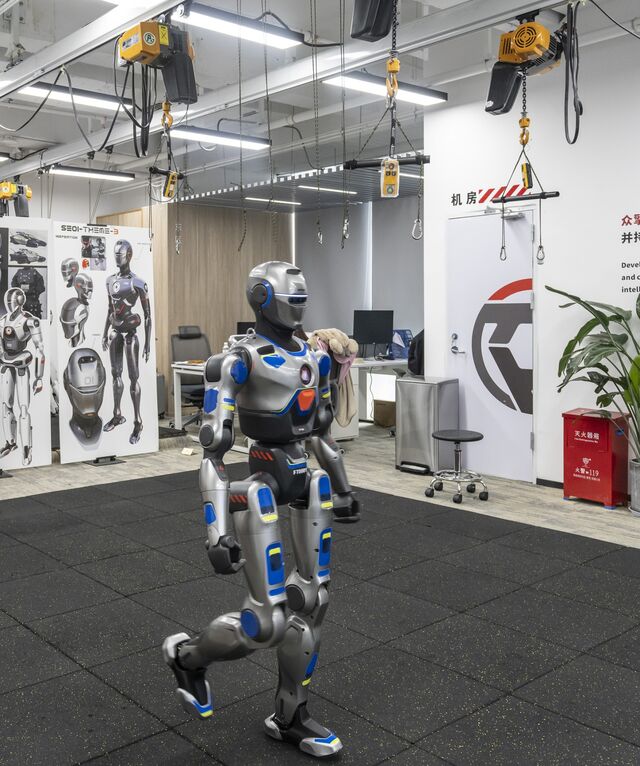
A PM01 humanoid robot. Zhao grew obsessed with figuring out how to create robots that could walk with a natural, human-like gait.

An EngineAI PM01 humanoid robot at the company’s showroom. Zhao grew obsessed with figuring out how to create robots that could walk with a natural, human-like gait. Photographer: Qilai Shen/Bloomberg

Beyond the monetary rewards are mind-rattling strategic implications for governments and countries. Whoever leads development of these humanoids could potentially command an army of indefatigable workers, caregivers and soldiers, redefining economic and political strength. Musk made the case in mid-May that the global economy could grow to 10 times its current size with the addition of robot labor.
“It unlocks an immense amount of economic potential,” Musk said during an appearance in Saudi Arabia. “We’re headed to a radically different world.”

China’s strength in this field isn’t an accident. President Xi Jinping and the Communist Party sketched out blueprints for developing strategic technologies — including robotics — more than a decade ago. Local officials then offered financial incentives and support to entrepreneurs to reach Beijing’s policy goals. In EngineAI’s case, the Shenzhen government helped connect Zhao with funding and other resources.

“Although it is not the government that directly invests in us, at least the government’s money is used to guide them to this industry and guide funds in this direction,” the founder said. “I think this is a great thing.”

China announced earlier this year it would invest 1 trillion yuan ($138 billion) in robotics and high tech in the next two decades, far more than the US or Europe.

The US has formidable players in robotics — including Boston Dynamics, Agility Robotics, Figure AI and Tesla — and a long track record of technology breakthroughs. Yet some scholars warn that Beijing’s approach may give China the edge in developing strategically important, capital-intensive sectors, like it has already done with electric vehicles and solar panels.

Boston Dynamics showcasing its humanoid robot Atlas in March. Source: Boston Dynamics/Anadolu Agency/Getty Images

“The Chinese model of state-run capitalism might actually be better equipped,” said Julian Mueller-Kaler, director of the Strategic Foresight Hub at the Washington D.C.-based think tank, Stimson Center. “Digital and tech advancements are geopolitical issues of the highest order.”

While it’s still possible the humanoid market never takes off, China is making an audacious bet that it will. The country is on track to produce more than 10,000 humanoid robots this year, or more than half of the machines globally, according to an April study from the China think tank Leaderobot and other institutions.

“China is winning the humanoids war, I have no doubt,” said Henrik I. Christensen, director of the Contextual Robotics Institute at the University of California San Diego.

Zhao’s career mirrors the country’s embrace of robotics. After majoring in automation at university, he got into the field eight years ago, motivated not so much by Beijing’s strategic priorities as the prospects for innovation. “I believed that humanoid robots would definitely change the way of life for human beings,” he said.

His timing was fortuitous. A few years earlier, Beijing had unveiled an ambitious program called Made in China 2025, which set goals for technological accomplishments over the next decade. The Communist Party’s drive to develop humanoid technology stemmed from a looming labor crunch. The working-age population is expected to shrink by about 22% through 2050, according to the Lowy Institute in Sydney. The squeeze is particularly acute in manufacturing, with a projected shortfall of 30 million workers in 10 sectors by the end of this year, according to a report from government agencies, including the Ministry of Industry and Information Technology. This gap is aggravated by the younger generation’s reluctance to take the kind of blue-collar factory jobs their parents embraced.

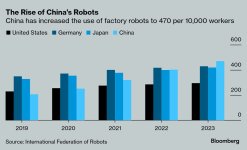
The Rise of China's Robots​

China has increased the use of factory robots to 470 per 10,000 workers
-1x-1.jpg
Source: International Federation of Robots

China’s strategy is to integrate people-like robots across sectors like manufacturing, healthcare and hospitality. Factory floors in China already boast a robot density that eclipses Germany and Japan, with levels doubling in just four years. It had 470 robots per 10,000 employees in 2023, well above the US at 295 robots for the same number of workers, according to the International Federation of Robots.


Artificial intelligence models are helping humanoid robots become smarter, more adaptable machines. Startups like EngineAI and Unitree are refining their AI applications, allowing robots to see and recognize objects, plan movements, coordinate with each other and teach themselves how to adapt to new situations.
“Previously, robots were very stupid, right?” said Chang Lin, the co-founder and CEO of Leju Robotics, another ambitious startup.

Today, the evolution of large language models, like those powering ChatGPT and DeepSeek, is bestowing intelligence on machines so they can learn tasks from their owners, he said. You could, for example, train one of the company’s Kuavo robots how you want it to clean the floors or care for the flowers in your house — and then it would take over.

“It’ll be easy,” he said. “Form a data set for watering flowers, it will naturally water the flowers.”

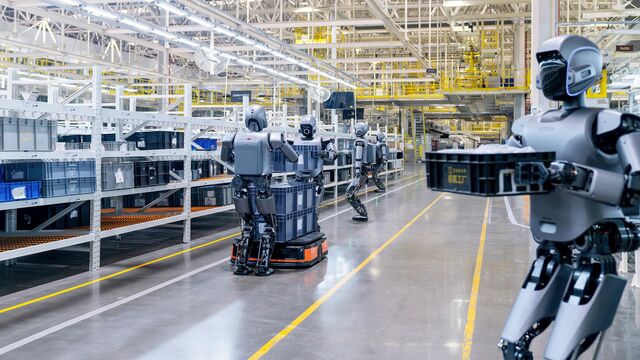
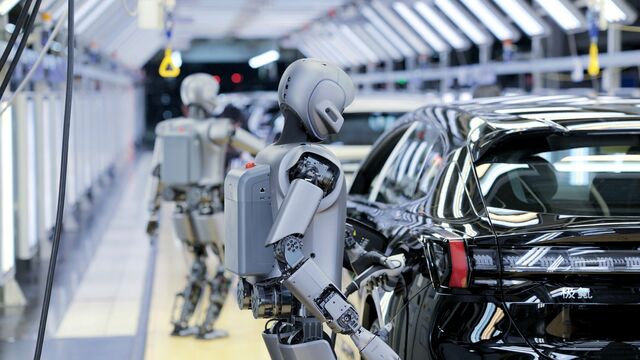
 UBTech's humanoid robots conduct practical training at Zeekr's 5G Intelligent Factory in Ningbo in March.

UBTech's humanoid robots conduct practical training at Zeekr’s 5G Intelligent Factory in Ningbo in March. Source: VCG/AP
 UBTech's humanoid robots at Zeekr's 5G Intelligent Factory. Factory floors in China already boast a robot density that eclipses Germany and Japan.

UBTech’s humanoid robots at the Zeekr factory. Factory floors in China already boast a robot density that eclipses Germany and Japan. Source: VCG/AP
Humanoid robot Kuavo at Leju Robotics in Shenzhen in March.

Humanoid robot Kuavo at Leju Robotics in Shenzhen in March. Source: Xinhua/Shutterstock
Staff at Leju

Leju is pushing the use of humanoid robots to sort and deliver medicines at elder-care facilities. Source: Xinhua/Shutterstock

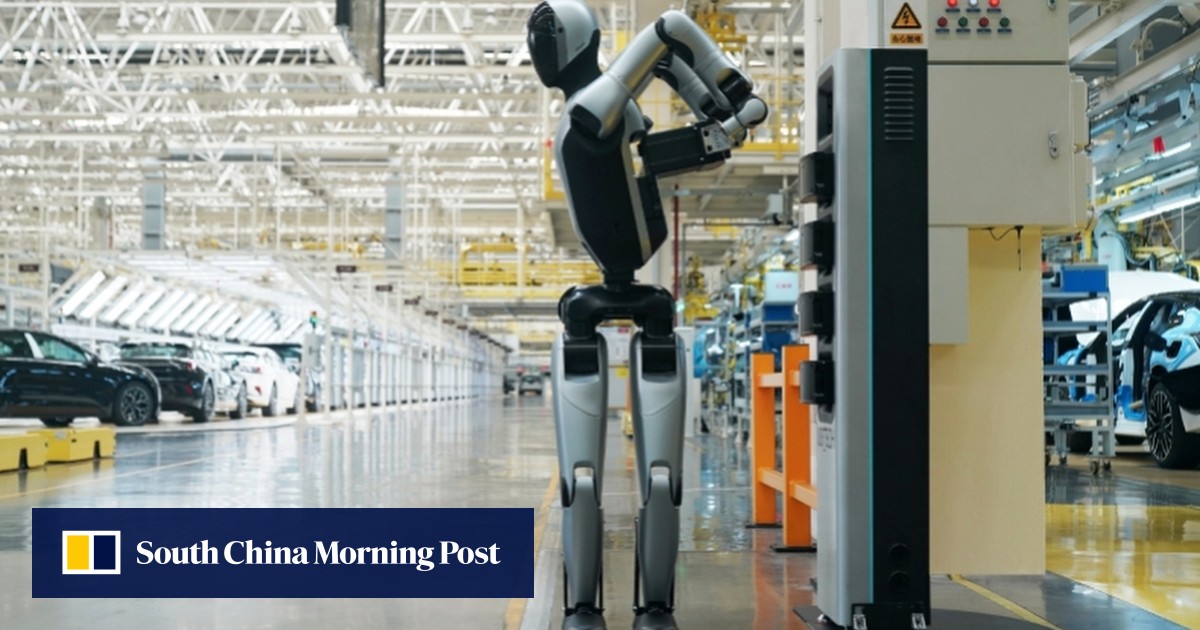
This kind of progress has China’s robots making their way into the real world. UBTech Robotics Corp., based in Shenzhen, has deployed its 5-foot-6-inch Walker S1 to help assemble iPhones for Apple partner Foxconn Technology Group. More than 500 of its machines work in the auto factories of BYD Co., Geely Automobile Holdings Ltd. and FAW-Volkswagen, lifting boxes, sorting components and testing instruments. At the FAW-Volkswagen plant, they detect refrigerant leaks in air-conditioning systems, a task that could hurt the lungs of humans.

Leju, also based in Shenzhen, is pushing the use of humanoids to sort and deliver medicines at elder-care facilities. At least a hundred of its machines have been delivered to carmakers including BAIC Motor Corp. and Nio Inc., exhibition halls in China and nursing homes in Suzhou. Colleges have also bought Leju robots for doing research.

Susanne Bieller, general secretary of the Frankfurt-based International Federation of Robotics, sees China emerging as a leading player in humanoids as the country’s startups work with its manufacturers to bring down costs and make machines more affordable. “Within the next 5 to 10 years, we can expect it to be more widely adopted in industry,” she said.

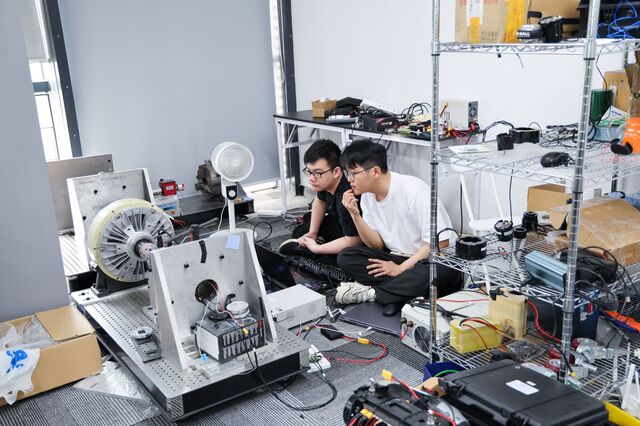
EngineAI spent years improving its robots’ joints, making them lighter and smaller, while whittling away at expenses. In one case, Zhao and his 40-person engineering team redesigned a power joint that cost 20,000 to 30,000 yuan so they could produce it themselves for one-tenth the cost.

Zhao also grew obsessed with figuring out how to create robots that could walk with a natural, human-like gait. He told staff early machines that take slow, awkward steps should be thrown in the trash. EngineAI built humanoids with refined leg joints and then integrated machine learning with neural networks so the machines could learn to walk, much like a real toddler.

“Collect a lot of very beautiful data from the human body, combine these data and let it walk,” he said.

Still, even the most elegant humanoids won’t have a future unless they provide value. People-like machines captured the popular imagination at least as far back as Isaac Asimov’s writings in the 1950s, yet they’ve remained largely a novelty. Boston Dynamics has impressed tech geeks since its founding in 1992, but it’s never built much of a business. Google and SoftBank Group Corp. each bought the startup and then sold it again without commercial success; it’s now owned by Hyundai Motor Co.

People-like machines have captured the popular imagination for decades. Source: Prelinger Archives/Getty Images

Isaac Asimov talks about what he calls the 'Frankenstein Effect', or the fear that people think robots will turn on them. Source: BBC Archive/Getty Images

The New York World’s Fair in 1940. Source: Archive Films Editorial/Getty Images

In Beijing, the humanoid half marathon meant to showcase the machines’ capabilities instead demonstrated their limitations. One robot participant fell at the starting line. Another had its head fall off and roll on the ground. In the kickboxing tournament this month, the Unitree robots often lashed out at thin air or toppled over on their own, even though they were controlled by humans ringside. The vibe was less Terminator, more Rock ‘Em Sock ‘Em Robots.

Humanoids “just don’t make economic sense for most people and companies for the foreseeable future,” said Romain Moulin, CEO of the French startup Exotec, which makes box-like robots for warehouses that he thinks are more utilitarian.

Nevertheless, the number of believers is growing. In its 83-page report, Citigroup tapped 10 of its own staff and seven contributors to explain why it sees robots as a yawning opportunity. It describes such machines as “physical AI” and predicts they will be used for autonomous driving, cleaning and deliveries. It forecasts


‘It is fake’: why US industry leader refused to believe China’s robot march video​

Doubt over dramatic footage due to a ‘lack of understanding’ about China’s strong manufacturing capability and supply chain, UBtech says


To view this content we will need your consent to set third party cookies.
For more detailed information, see our cookies page.


Published: 8:00pm, 29 Nov 2025

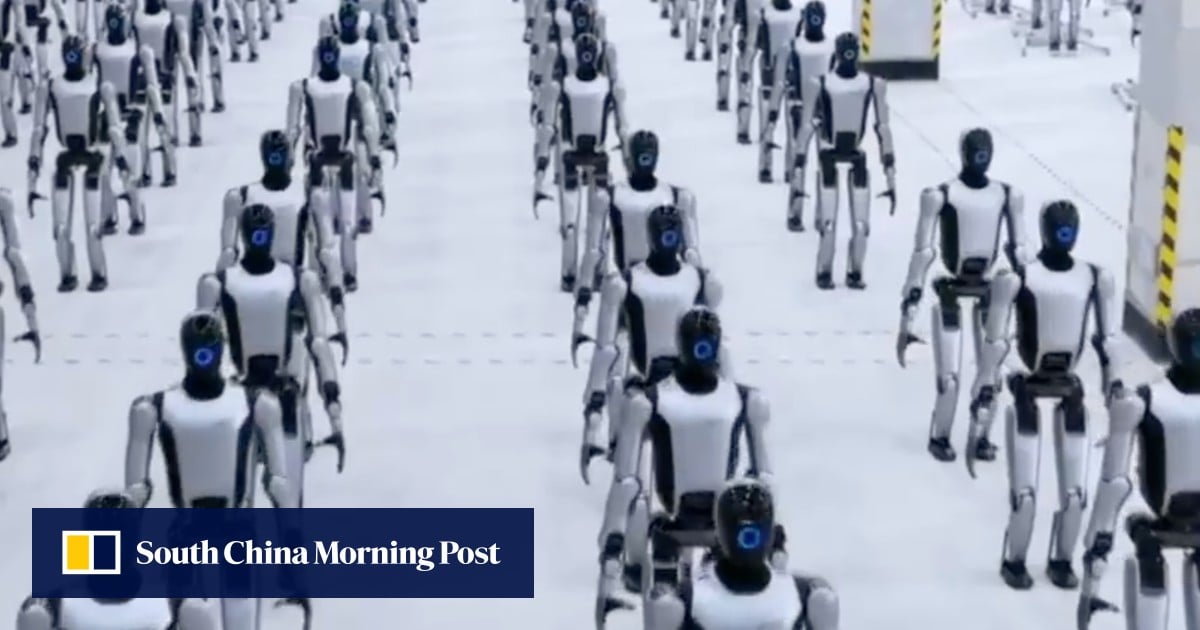
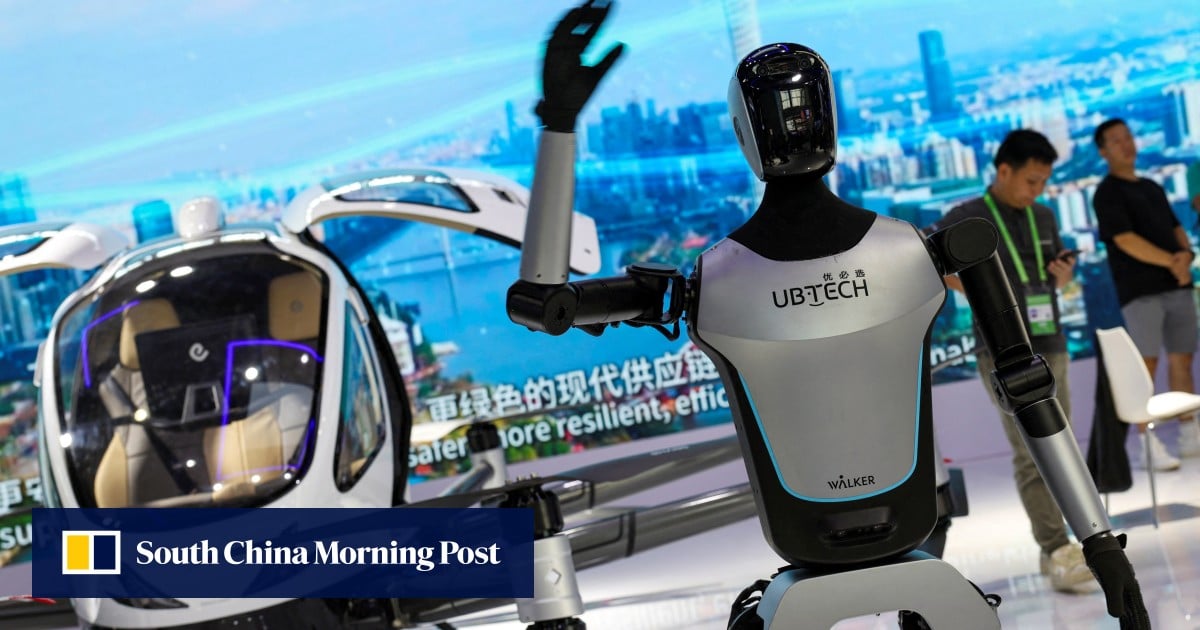
On November 14, Chinese robotics firm UBtech released footage showing hundreds of Walker S2 humanoid robots standing in precise formation inside a warehouse. The machines turned their heads in unison, waved their arms and marched into shipping containers – a scene so visually arresting it evoked sci-fi blockbusters like I, Robot.
Brett Adcock, founder and CEO of leading US robotics company Figure, responded with disbelief.

He immediately took to social media to suggest the footage was computer-generated.

“Look at the reflections on this bot, then compare them to the ones behind it. The bot in front is real – everything behind it is fake,” Adcock wrote, later adding: “If you see a head unit reflecting a bunch of ceiling lights, that’s a giveaway it’s CGI [computer-generated imagery].”

In response to Adcock’s post, Shenzhen-based UBtech swiftly released video shot with an FPV or “first-person view” drone, complete with raw audio, inviting sceptics to witness the robots’ feats first-hand.

To view this content we will need your consent to set third party cookies.
For more detailed information, see our cookies page.


Yet Adcock remains unconvinced, and he is not alone.


China’s humanoid robots get factory jobs as UBTech’s model scores US$112 million in orders​


UBTech wins US$37 million deal to deploy humanoid robots at China-Vietnam border crossings​

 
To view this content we will need your consent to set third party cookies.
For more detailed information, see our cookies page.


On December 14, Texas Instruments entered into a strategic partnership with UBTECH, and has procured UBTECH's industrial humanoid robot Walker S2, which is currently being deployed, debugged and put into use on its production lines. UBTECH will incorporate more components from Texas Instruments into the core parts of its humanoid robots.

Going forward, the two parties will conduct in-depth exchanges and discussions on humanoid robot products, technologies and practical applications, and carry out strategic cooperation on the application of humanoid robots in the semiconductor manufacturing industry.

1765763666123.png


Published: 8:00pm, 9 Jan 2026

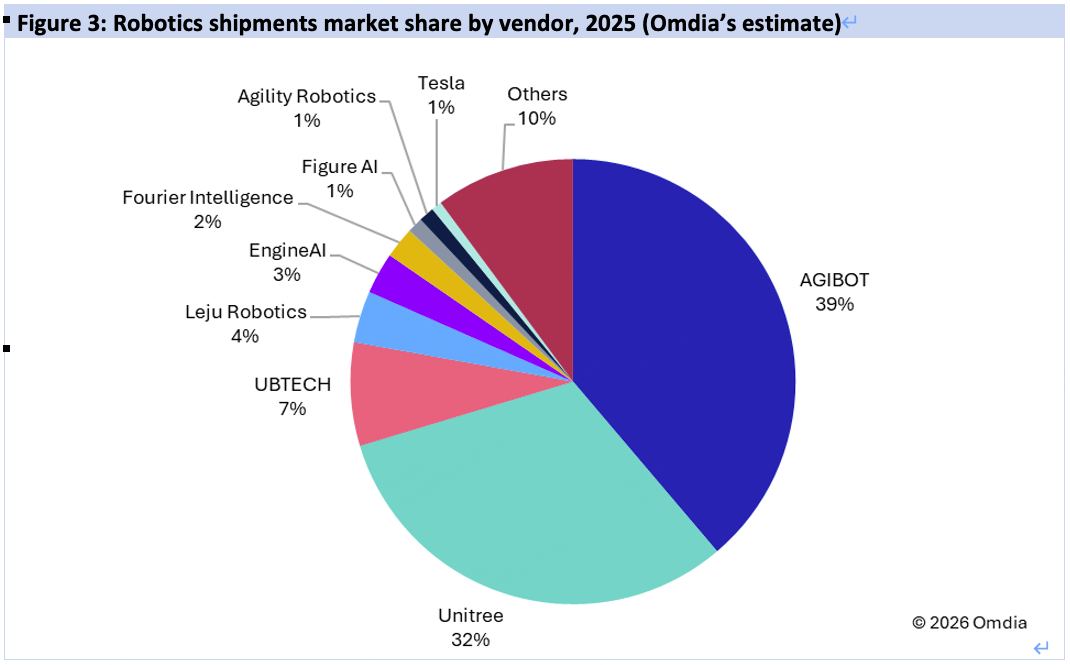
According to data released on Thursday by Omdia, AgiBot shipped 5,168 humanoid robots last year to lead five other Chinese companies in the research firm’s top 10 list.

Unitree Robotics, headquartered in Hangzhou, ranked second with 4,200 humanoids shipped last year, which accounted for 32 per cent of the market.

Hong Kong-listed UBTech Robotics, based in Shenzhen, was ranked third with 1,000 units shipped.

Leju Robotics, Engine AI and Fourier Intelligence ranked fourth, fifth and sixth in 2025 shipments, according to Omdia.

These humanoids have been commercially deployed across awide range of scenarios, including reception andhospitality, entertainment and commercial performances,industrial intelligent manufacturing, logistics sorting,security inspection and patrol, data collection andtraining, scientific research and education.

Shipments worldwide jumped nearly 480 per cent in 2025 to 13,318 units, according to Omdia. It projected the volume to reach 2.6 million units in 2035.

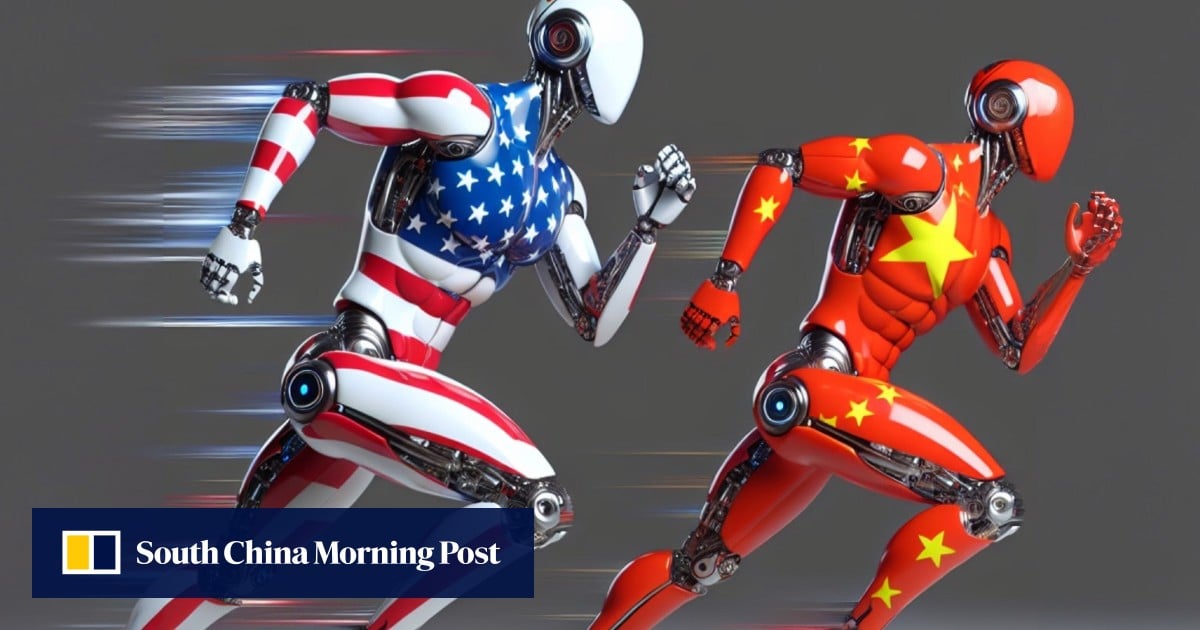
The 2025 shipment figures reflected how far Chinese manufacturers have pulled ahead in this fast-developing sector. These firms had issued five times as many related patents as the US over the past five years, Morgan Stanley said in its latest Robot Almanac.

By comparison, US robot maker Tesla shipped only 150 units in 2025, which accounted for 1 per cent of the global market, according to Omdia. American firms Figure AI and Agility Robotics also shipped 150 units each last year.

1767920263973858.png
 
Last edited:
To view this content we will need your consent to set third party cookies.
For more detailed information, see our cookies page.


On December 14, Texas Instruments entered into a strategic partnership with UBTECH, and has procured UBTECH's industrial humanoid robot Walker S2, which is currently being deployed, debugged and put into use on its production lines. UBTECH will incorporate more components from Texas Instruments into the core parts of its humanoid robots.

Going forward, the two parties will conduct in-depth exchanges and discussions on humanoid robot products, technologies and practical applications, and carry out strategic cooperation on the application of humanoid robots in the semiconductor manufacturing industry.

View attachment 165446


Following Texas Instruments, a US semiconductor giant, Airbus has also entered into a partnership with Ubtech Robotics.

Gelonghui Finance· 14:25

Gelonghui, January 18th | Recently, the European aviation giant Airbus signed a humanoid robot service agreement with "the first humanoid robot stock" Ubtech Robotics.

Airbus has purchased the latest industrial version of Ubtech's humanoid robot Walker S2 for its manufacturing plants, and in the future, both parties will jointly expand the application of humanoid robots in aviation manufacturing scenarios.

This cooperation with Airbus means that after forming a strategic partnership with Texas Instruments last year, Ubtech Robotics has gradually expanded the application of humanoid robots in China's industrial scenarios to five global scenarios: aviation manufacturing, automotive manufacturing, 3C electronics manufacturing, intelligent logistics, and semiconductor manufacturing. The industrial application value of humanoid robots as a new form of productivity has been further extended.

In 2025, Ubtech Robotics' humanoid robot orders will exceed 1.4 billion yuan, leading globally.

By 2026, Ubtech Robotics' production capacity of industrial humanoid robots will reach ten thousand units. In addition to the domestic Chinese market, Ubtech Robotics has also begun to gradually expand humanoid robots into overseas manufacturing markets such as Europe and America.

1768724874910.png
 
Last edited:

UBTECH Partners with Siemens to Advance Digital Transformation of Humanoid Robots, Paving the Way for 2026 Mass Production​

Edited by Taylor From Gasgoo|March 18 , 2026 20:04 BJT

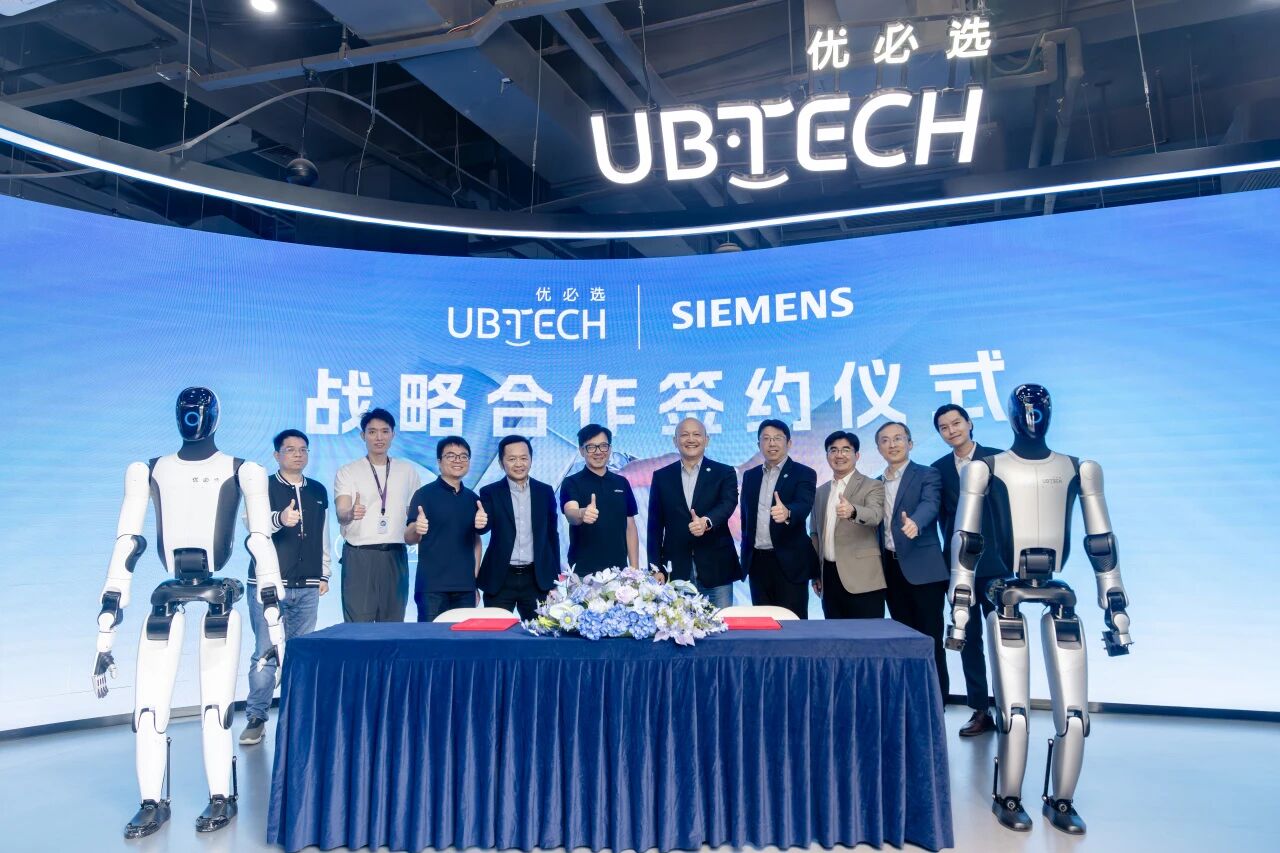
Gasgoo Munich-UBTECH and Siemens Industrial Software signed a strategic cooperation framework agreement in Shenzhen on March 16, according to an official statement obtained by Gasgoo.

d073647f7d7b37a857b2768a8b439fdb.jpg

Image Source: UBTECH

Under the agreement, the two companies will deepen cooperation across the entire value chain of humanoid robots, combining UBTECH’s full-stack technology capabilities with Siemens’ global expertise in digital manufacturing. The partnership aims to support UBTECH’s goal of reaching an annual production capacity of 10,000 industrial humanoid robots by 2026, accelerating the industry’s shift from research and development to mass production.

At the signing ceremony, Zhou Jian said demand for humanoid robots has surged this year, with order volumes climbing notably. Achieving 10,000-unit scale production is now a target the company must hit next year. Partnering with Siemens is a critical step to ensure that goal is met, leveraging the combined technological and resource strengths of both sides to drive mass production.

The collaboration will focus on strategic planning, technology integration, talent development, and ecosystem building. Siemens will draw on its global smart manufacturing practices and trends in the humanoid robotics sector to map out a comprehensive digital transformation strategy and technical roadmap for UBTECH, spanning from core technology R&D to mass production.

On the technology front, UBTECH will prioritize Siemens’ digital industrial software solutions—covering product design, simulation testing, process planning, manufacturing, and full lifecycle management—to digitize the entire R&D and production workflow. Siemens, for its part, will integrate its global technical resources to provide customized services and ongoing technical training to UBTECH. The two companies also plan to collaborate on market alignment and building a broader industrial ecosystem.


UBTECH (09880.HK) announced its 2025 annual results, achieving a revenue of RMB2.001 billion, representing a year-on-year increase of 53.3%. Among this, revenue from full-sized embodied intelligent humanoid robot products and solutions grew 22 times to RMB821 million. The loss narrowed from RMB1.124 billion in the previous year to RMB703 million, with a loss per share of RMB1.55. No dividend was declared.

During the year, the gross profit was RMB754 million, with a gross profit margin of 37.7%, an improvement of 9 ppts, mainly due to structural changes in revenue, as high-margin full-sized embodied intelligent humanoid robot products and solutions became the largest source of income.
 

Apr 14, 2026 8:00 AM Eastern Daylight Time

RobotShop Becomes AGIBOT’s Value Added Distribution Partner in North America


MIRABEL, Quebec & SHANGHAI--(BUSINESS WIRE)--RobotShop, a leading global platform for robotics solutions, today announced a strategic partnership with AGIBOT Innovation (Shanghai) Technology Co., Ltd., a company focused on general-purpose embodied robotics. Under this agreement, RobotShop becomes AGIBOT’s Value Added Distribution Partner in North America, helping customers across the United States and Canada move from discovery to deployment with a curated selection of AGIBOT robots and value-added services.

Through RobotShop, customers will be able to access AGIBOT’s portfolio across key categories, including legged robots for industrial inspection and security patrol, and humanoid platforms designed for customer interaction, research, and real-world operational environments. RobotShop will support customers with solution scoping, integration planning, onboarding, and deployment support, helping teams reduce friction and deploy physical AI responsibly and effectively.

“Humanoid robotics is entering a new phase of physical AI, where buyers need more than hardware - they need a trusted partner to validate use cases, plan deployments, and support operations at scale,” said Mario Tremblay, CEO of RobotShop. “With this launch, we are making it easier for North American customers to adopt AGIBOT’s embodied robotics portfolio, with the support required to move from idea and prototype to real-world robotic solutions.”

“North America is a key market for embodied intelligence,” said Patrick Gao, VP of AGIBOT North America. “By partnering with RobotShop as our Value Added Distribution Partner in the region, we aim to support customers with a practical path to adoption - combining a strong product portfolio with a platform that supports customers at every step, from discovery to deployment.”


NCS partners AGIBOT to deploy humanoid robots in Asia​

Mon, 20th Apr 2026

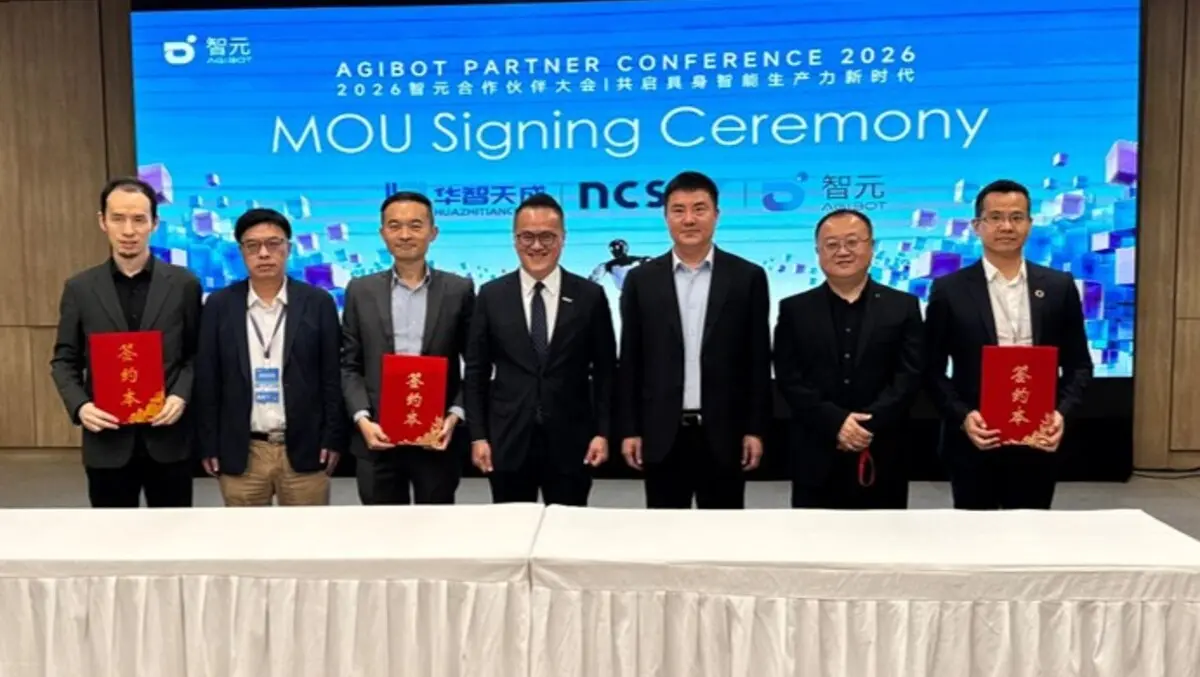
email_attachment20260417-970555-5ohof2.webp


Under the memorandum of understanding, signed in Shanghai, the three companies will work on customised deployments that combine AGIBOT's humanoid robotics platform with NCS's systems integration capabilities and HZTC's expertise in tailoring robotics systems to local requirements.

AGIBOT will provide humanoid robotics platforms, embodied AI functions and application programming interfaces. NCS and HZTC will adapt and integrate the systems for local operating needs, including language and behaviour.

The work will include pilot projects in public and private sector settings, with early use cases identified in social services, smart buildings and public safety.


Agibot Shipped A Staggering 5,000 Humanoid Robots In The Last 3 Months​


Shanghai-based Agibot announced today that it shipped a staggering 5,000 humanoid robots in the last three months alone. For context, it took the company two full years to ship the first 1,000 units and another year to scale to 5,000, a company representative told me via email. Now the company has surpassed that three-year total in just three months.

That’s exponential growth.

“Reaching 10,000 units is not simply about producing more robots, it reflects a fundamental shift in our ability to scale,” Agibot chief technology officer Peng Zhihui said in a statement. “As our supply chain matures and manufacturing standardizes, we are seeing a pivot from small-scale, niche applications to robust, large-scale commercial demand. The widespread deployment of Agibot’s robots is no longer about seeking technical viability, but about delivering scalable value and driving the adoption of embodied AI.”

Driving this massive acceleration in production capacity, Agibot says, is a now-mature supply chain and “continuous” innovations in manufacturing efficiency.

Independent research released in January of this year indicated that Agibot currently has the lion’s share of the global humanoid robot market. At that point, Omdia estimated that the company had shipped just under 5,200 units, with second place Unitree at 4,200, and the first American humanoid robot manufacturers, Figure, Agility Robotics and Tesla at around 150.

At that point, almost 90% of all built humanoid robots were manufactured in China, and with this new news from Agibot, that percentage will only go up.

According to Agibot, these robots are not just being sold and used in China’s domestic market, with “a substantial number” active in Europe, North America, Japan, Korea, Southeast Asia and the Middle East.

China's AgiBot Targets Revenue of USD1.4 Billion in 2027 on Embodied AI Push, New Ecosystem Plan

117408994860741.jpg


(Yicai) April 20 -- AgiBot aims to reach revenue of CNY10 billion (USD1.4 Billion) next year after years of exponential sales growth, with the Chinese humanoid robotics startup upbeat on embodied intelligence and its new ecosystem development strategy.

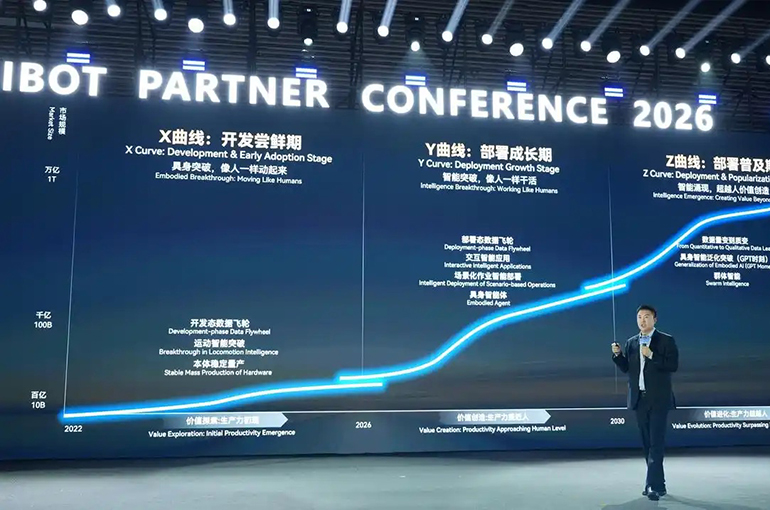
The confidence to hit the target stems from AgiBot's outlook on the embodied intelligence industry and its new Yuansheng Ecosystem Initiative, said founder, chairman, and chief executive Deng Taihua at a partner conference on April 17. Surging deliveries have led to rapid revenue growth over the past three years, he noted.

AgiBot's total shipments skyrocketed from 1,000 units early last year to 5,000 units by the end of the year and 10,000 units by March 31. In addition, its revenue has soared from CNY300,000 (USD42,000) in 2023, when the Shanghai-based firm was established, to CNY60 million (USD8.4 million) in 2024 and CNY1.1 billion (USD147 million) in 2025.
 

China’s Pudu Robotics To Open U.S. HQ in North Texas​

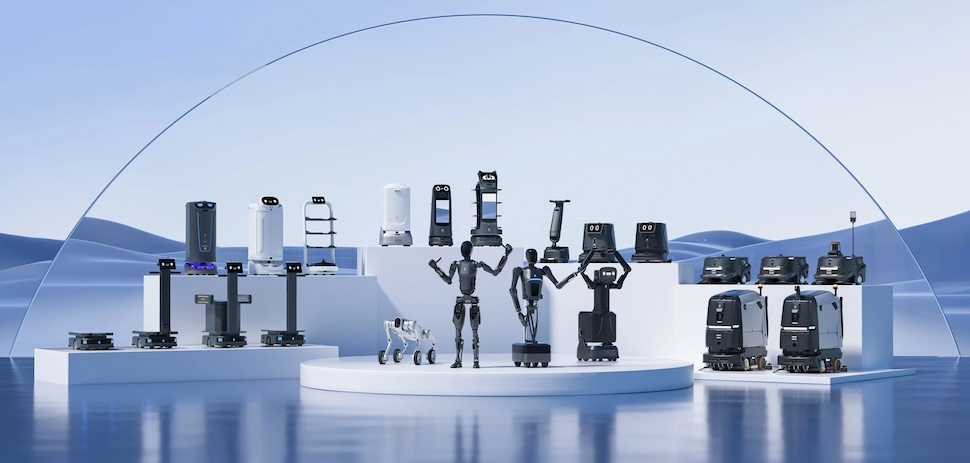
Pudu is relocating its U.S. HQ from Santa Clara, California, to Richardson's Sherman Tech Center. With nearly 15,000 of its robots deployed across the Americas to date for everyone from NASA to Walmart to Quik Trip, Pudu's solutions include service and industrial delivery, commercial cleaning, and "general embodied AI."

Robots-from-the-Pudu-Robotics-family-Photo-Pudu_970.jpg

Robots from the Pudu Robotics family [Photo: Pudu Robotics]
by David Seeley • Apr 22, 2026

Pudu Robotics, a global leader in service robotics based in Shenzhen, China, will open its new U.S. headquarters in Richardson’s Sherman Tech Center Thursday as part of a “global strategic expansion.” The relocation from Pudu’s former U.S. HQ in Santa Clara, California, aims to enhance Pudu’s regional capabilities while reinforcing its long-term commitment to the Americas, the company said.

The new U.S. HQ in Richardson combines a modern office space, product showroom, and on‑site warehousing and will enhance support management, operations, and long‑term regional coordination, the company said.

With nearly 15,000 of its robots deployed across the Americas to date, Pudu offers four major product lines: service delivery, commercial cleaning, industrial delivery, and general embodied AI. Its solutions are “widely deployed” across retail, hospitality, manufacturing, education, and other sectors, Pudu noted.

Dallas region offers a central hub with ‘strong strategic advantages’​

Pudu-Robotics-U.S.-headquarters-in-Dallas-Photo-Pudu.png

Pudu Robotics U.S. headquarters in Richardson. [Photo: Pudu]

Pudu Robotics called the Dallas area “a central hub for nationwide and cross‑regional operations across the Americas” ad said the region “brings strong strategic advantages.”

Raymond Pan, Pudu’s GM of the Americas, said his company is “building for the long-term in the Americas with a localized approach.”

“Our ambition over the next five years is to serve one million people across the U.S.,” he added in a statement. “Our new headquarters and infrastructure optimization provide a foundation for this ambition, alongside continuing investment in localized products, enhancing our local supply chain, and strengthening our partner ecosystem.”

Seeing new HQ as a springboard for ‘rapid, scalable growth’​

Pudu said Richardson and greater Dallas offer “well-developed logistics and supply chain infrastructure, a business‑friendly environment, and access to a broad base of enterprise customers.” The area’s central location will allow Pudu more efficient coverage across both North America and South America, as Pudu transitions into a phase of “rapid, scalable growth in the Americas,” the company said.

As part of Pudu’s broader infrastructure optimization, the company said it has transitioned its former U.S. HQ in Santa Clara into a “streamlined logistics support function outpost” and established a dual‑warehouse system on both coasts to support nationwide delivery.

Pudu’s top-selling robots​

Pudu-D5-Series-robot.png

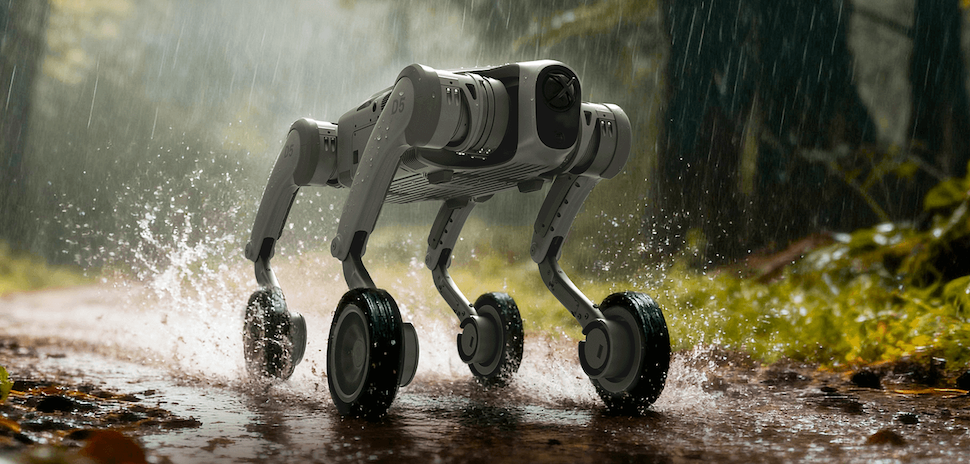
Pudu D5 Series robot [Photo: Pudu Robotics]

Pudu said its service delivery robots are led by the retail and hospitality “industry-favorite” BellaBot and the newly enhanced BellaBot Pro.

In the commercial cleaning sector, its recently launched PUDU BG1 series offers an AI-native large scrubber-dryer robot built for heavy-duty environments.

Pudu’s industrial T-series robots provide versatile logistics support with payload capacities ranging from 150kg to 600kg, streamlining warehouse and factory workflows, the company said.

And recently launched PUDU D5 series (above) is an autonomous, vaguely dog-like quadruped robot, “pushing the boundaries of how robots interact with and adapt to complex human environments.”

The company’s robots have been adopted by Walmart, Quik Trip, Accenture, NASA, Mayo Clinic, Norwegian Cruise Line, Honeywell, top automotive brands, and others, Pudu said.

Pudu said it will continue expanding its presence across key sectors including retail, logistics, food service, healthcare, and commercial cleaning, while bringing its service delivery, commercial cleaning, industrial delivery, and general embodied AI robotics solutions into broader industry scenarios.

The company said it has shipped more than 120,000 units shipped worldwide, with operations spanning over 80 countries and regions, and 23% market share in commercial service robotics—ranking No. 1 globally per Frost & Sullivan’s “Market Research on Global Commercial Service Robotics (2023).”
 

UBTECH, Hitachi Forge Strategic Partnership​

Edited by Aya From Gasgoo|May 13 , 2026 10:59 BJT

Gasgoo Munich- UBTECH has signed a strategic partnership agreement with Hitachi (China) Ltd., according to industry reports.

The agreement outlines deep collaboration across Hitachi Group's key sectors—including elevators, building systems, healthcare, industrial equipment, and semiconductor manufacturing gear. By leveraging UBTECH's technical capabilities in humanoid robotics and Hitachi's expertise in smart manufacturing and system integration, the pair will co-develop intelligent solutions tailored to diverse production environments.

6391411377732996123574081.jpg

Image Credit: UBTECH

Collaboration has entered the verification phase. Hitachi has deployed UBTECH's industrial-grade humanoid robot, the Walker S2, at select manufacturing sites, where the two companies are conducting joint field tests and validating application scenarios.

In one initiative focused on smart elevator manufacturing, Hitachi China Research Institute has teamed up with UBTECH and HITACHI ELEVATOR. The trio is conducting in-depth secondary development on humanoid robot applications directly on the factory floor, aiming to leverage technical synergy to resolve critical processes and achieve flexible, end-to-end smart workflows with seamless data integration.

Separately, the partners will launch joint research focused on the practical application and mass production of humanoid robots, aiming to unlock new value in smart manufacturing.

Known as the "first humanoid robot stock," UBTECH has made progress in driving the adoption and delivery of its robots. In 2025, total revenue increased 53.3% year-on-year to 2.01 billion yuan. Revenue from full-size embodied intelligent humanoid robots and solutions increased from 35.6 million yuan in 2024 to 821 million yuan, a 22-fold increase that made the division the company's largest revenue source.

This trend was reflected in shipment volumes: cumulative sales of full-size embodied intelligent humanoid robots reached 1,079 units in 2025, a 35,866.7% year-on-year increase. These robots are deployed across industrial sectors—including automotive manufacturing, smart logistics, 3C electronics, semiconductor and aviation production, and industrial data collection—which together account for more than 80% of usage.

UBTECH Partners with Honda Trading to Accelerate Humanoid Robot Integration in Automotive Supply Chain​

Edited by Taylor From Gasgoo|April 8 , 2026 20:33 BJT

Gasgoo Munich-On April 7, UBTECH's smart logistics subsidiary UQI signed a strategic partnership agreement with Honda Trading (China). The deal focuses on joint research, scenario validation, and business model exploration for automated solutions — specifically humanoid robots and autonomous logistics vehicles.

Chinese humanoids clock on at Japanese airports amid labour crunch
 

China's Robot Exports Reach Nearly 20 Billion Yuan in First Five Months of 2026​

Edited by Greg From Gasgoo|July 6 , 2026 15:57 BJT

Gasgoo Munich-Chinese robots are accelerating their global expansion. In the first five months, exports of separately listed robot types totaled 10.377 million units, valued at 19.99 billion yuan, reaching over 150 countries and regions. The European Union and ASEAN stood out as primary destinations.

A breakdown by category reveals a diversified export matrix.

Cleaning robots led the pack, with exports hitting 14 billion yuan—accounting for over 70% of the total value. Powered by core technologies like autonomous navigation, automatic dust collection, and smart water cycling, domestic cleaning robots are precisely tailored to diverse overseas living environments, offering a distinct competitive edge.

优必选.jpg

Image source: UBTECH

On the industrial front, exports of industrial robots reached about 70,000 units in the first five months, with overseas application scenarios continuously expanding. Material handling robots equipped with visual recognition and intelligent algorithms are being deployed in large-scale infrastructure and transport projects abroad; welding robots with automatic scanning and modeling capabilities can calculate optimal process solutions in real time; and collaborative robots are making their mark in light manufacturing sectors such as food, pharmaceuticals, and daily chemicals.

In emerging frontier sectors, exports of intelligent bionic robots surpassed 8,000 units, covering diverse scenarios including equipment inspection, research and education, and public services. Leveraging the advantages of a complete domestic supply chain, the scale of Chinese robot exports is steadily expanding.

As early as 2023, 17 government departments jointly issued the "Robot+" Application Action Plan. More recently in 2026, eight departments released the "Artificial Intelligence + Manufacturing" Special Action Implementation Opinions.

Policy has consistently focused on application scenarios, accelerating the intelligent, green, and integrated development of manufacturing while fostering the mutual empowerment of AI technology and industrial applications.

The Ministry of Industry and Information Technology and the State-owned Assets Supervision and Administration Commission recently issued a notice on the 2026 Special Campaign for Humanoid Robots and Embodied Intelligence Real-Scene Training. The directive sets a goal to achieve regular deployment of key products and a rollout at the scale of 10,000 units by the end of 2026.
 

Users who are viewing this thread

Latest Posts

Back
Top