Chinese 6th Generation Aircraft News & Discussions

It seems like a sideway turn which is very challenging especially for a fighter without tail fin.

If the J-36 do indeed include a true, controlled sideway turn (and sharp!), it would be a testament to the remarkable advancements in Chinese aerospace technology, particularly in flight control systems and potentially thrust vectoring for tailless aircraft. It would suggest a level of agility and maneuverability that is at the cutting edge of fighter jet design.

To view this content we will need your consent to set third party cookies.
For more detailed information, see our cookies page.

100000% this video has been doctored/edited. that is completely unnatural
 
I don't understand the fuss about six gen, china has HGVs that can target thousands of kms away why not produce thousands of them, than these expensive jets?

HGV is not multipurpose like J-36.

J-36 can serve for: Air Superiority, Close Air Support, Electronic Warfare, Intelligence, Surveillance, and Reconnaissance, Networked Warfare, and Strategic Deterrence.
 
100000% this video has been doctored/edited. that is completely unnatural
It is, I think it's with the phone turning, if the tailess plane with that size can achieved that maneuver, we are already out of the earth.
 
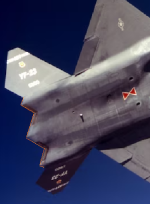
No this not proof that it has 2D TVC , in fact it supports my claim that J36 doesn't have any kind of TVC , it has similar nozzle geometry of YF-23 which can't allow to have a 2D TVC, and post the pictures of above engine nozzle, that clearly shows J36 will not have 2D TVC of any kind,

Your Pics clearly showed that J36 have ceramic tiles shielding similar to YF-23 which won't allow to have a 2D TVC
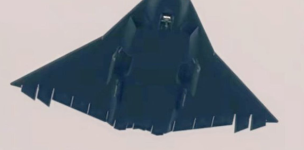
How come you did not address the elephant in the room? Do you not see these massive gaps between the Exhaust throughs that have similar size and design to the accompanying control surfaces on the wings? Please show me the exact similarities that show that it supports the J-36 has no kind of exhaust vector control like the YF-23, which has a completely smooth unsegmented undersurface. The gaps are so undeniably noticeable you can literally see the sky through them like the other control surfaces.1745290334498.png
1745290456627.png

The gaps are so noticeable you would almost mistake them as extra control surfaces on the rear of the aircraft, however they somehow exactly match right behind the engines.. I wonder what they could be for.
1745290721051.png
 
It seems like a sideway turn which is very challenging especially for a fighter without tail fin.

If the J-36 do indeed include a true, controlled sideway turn (and sharp!), it would be a testament to the remarkable advancements in Chinese aerospace technology, particularly in flight control systems and potentially thrust vectoring for tailless aircraft. It would suggest a level of agility and maneuverability that is at the cutting edge of fighter jet design.

To view this content we will need your consent to set third party cookies.
For more detailed information, see our cookies page.

The answer may be the three engines. Judging from the footage in the video, the reason why the J-36 can probably achieve an extremely small radius of tight air turns is probably its three-engine layout.

It can be imagined that when a fast right turn is required, the right engine quickly goes to idle and the middle engine continues to maintain high thrust to ensure that altitude and speed are not lost without fear of stalling. The left engine begins to rapidly increase power, thus achieving a fast right turn with the smallest radius.

If it is a left turn, the left engine quickly goes to idle and the middle engine continues to maintain high thrust. The right engine begins to rapidly increase power, achieving the fast left turn with the smallest radius.
 
The answer may be the three engines. Judging from the footage in the video, the reason why the J-36 can probably achieve an extremely small radius of tight air turns is probably its three-engine layout.

It can be imagined that when a fast right turn is required, the right engine quickly goes to idle and the middle engine continues to maintain high thrust to ensure that altitude and speed are not lost without fear of stalling. The left engine begins to rapidly increase power, thus achieving a fast right turn with the smallest radius.

If it is a left turn, the left engine quickly goes to idle and the middle engine continues to maintain high thrust. The right engine begins to rapidly increase power, achieving the fast left turn with the smallest radius.

What you said is way more difficult to do in reality than what it looks like. A minor miscalculate or change will simply cause this big plane to spin and loose control. Very risky specially for a plane with no tail.
 
How come you did not address the elephant in the room? Do you not see these massive gaps between the Exhaust throughs that have similar size and design to the accompanying control surfaces on the wings? Please show me the exact similarities that show that it supports the J-36 has no kind of exhaust vector control like the YF-23, which has a completely smooth unsegmented undersurface. The gaps are so undeniably noticeable you can literally see the sky through them like the other control surfaces.View attachment 113367
View attachment 113368

The gaps are so noticeable you would almost mistake them as extra control surfaces on the rear of the aircraft, however they somehow exactly match right behind the engines.. I wonder what they could be for.
View attachment 113369
You're just assuming, is that separation between engine is movable or fixed? We didn't even seen it it's movable surface to allow TVC to work, lets wait and see, I'm not saying will not have TVC, J36 is in early testing phase, we will know in near future for sure about TVC on J36, lets wait and watch
 
What you said is way more difficult to do in reality than what it looks like. A minor miscalculate or change will simply cause this big plane to spin and loose control. Very risky specially for a plane with no tail.
That is why the answer may lie in the three-engine layout. The stability and control for maneuvers of this type of twin-engine fighter without vertical tailplane could be seriously compromised. It is quite reasonable to expect it to employ TVC, which in my opinion, could be only the middle engine, without the need for TVC on the two side engines.
 
That is why the answer may lie in the three-engine layout. The stability and control for maneuvers of this type of twin-engine fighter without vertical tailplane could be seriously compromised. It is quite reasonable to expect it to employ TVC, which in my opinion, could be only the middle engine, without the need for TVC on the two side engines.

Theoretically, yes, what you said is quite possible; however, I still highly doubt it uses differential thrust. A much more logical choice would be the use of TVC. As we can only speculate here, nothing is out of the realm of possibility.
 
Last edited:
The answer may be the three engines. Judging from the footage in the video, the reason why the J-36 can probably achieve an extremely small radius of tight air turns is probably its three-engine layout.

It can be imagined that when a fast right turn is required, the right engine quickly goes to idle and the middle engine continues to maintain high thrust to ensure that altitude and speed are not lost without fear of stalling. The left engine begins to rapidly increase power, thus achieving a fast right turn with the smallest radius.

If it is a left turn, the left engine quickly goes to idle and the middle engine continues to maintain high thrust. The right engine begins to rapidly increase power, achieving the fast left turn with the smallest radius.

The engines aren't far enough apart, the drag is not high enough, and the engines are not strong enough to generate that kind of torque. Airliners with one blown out engine can't do this, with their much higher drag and farther apart engines. Fuselage mounted designs, such as the DC-9 family, are well know for their ease of operability with just one engine due to the engines' closer proximity.
 
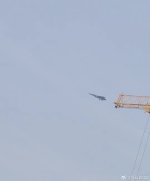
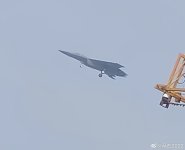
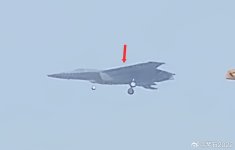
Another set of images showing SAC‘s J-XDS prototype with its landing gear down and from the side … unfortunately still very small & blurry!

(Images via @琴石2022 from Weibo)

IMG_2172.jpegIMG_2173.jpegIMG_2174.jpeg
 

Users who are viewing this thread

Back
Top