Navigation
Install the app
How to install the app on iOS
Follow along with the video below to see how to install our site as a web app on your home screen.
Note: This feature may not be available in some browsers.
More options
Style variation
You are using an out of date browser. It may not display this or other websites correctly.
You should upgrade or use an alternative browser.
You should upgrade or use an alternative browser.
Chinese 6th Generation Aircraft News & Discussions
- Thread starter SiliconBit (silicon0000)
- Start date
More options
Who Replied?


Beijingwalker
VIP Member
China’s sixth-generation fighter anxiety is growing from a French report, but the biggest problem is how little the outside world can verify from outside
Published On: June 23, 2026 at 6:00 PM
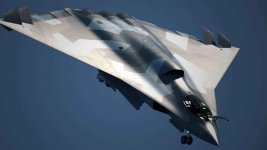
A new defense assessment cited by Arab Defense is putting China’s next combat aircraft under a brighter spotlight. The reported French evaluation says Beijing’s sixth-generation fighter project may be more technically mature than many Western estimates had assumed, with several core systems already moving beyond early trials.
That does not mean the aircraft is ready for combat, far from it, but it does suggest something important for Washington, Europe, and Asia’s air forces. The next race for air superiority may not begin sometime in the 2030s. In reality, it may already be underway.
A warning from France
According to the report cited by Arab Defense, the Chinese aircraft is not being viewed as a simple upgrade of the J-20 stealth fighter. The assessment describes it as a wider combat platform built around stealth, artificial intelligence, drone control, advanced sensors, hypersonic weapons, and adaptive propulsion.That is a big claim, and it needs care. The French institutions behind the assessment were not named in the public article, so the details cannot be treated as fully confirmed.
Still, the broader trend is backed by the Pentagon, which said in its 2025 China military power report that two Chinese companies conducted initial test flights of separate sixth-generation prototype aircraft in December 2024.
Not just another stealth jet
The most interesting part of the reported French assessment is its focus on the aircraft’s role. It suggests China is designing a fighter that can work as the brain of an air combat group, not only as a fast jet with missiles.What would that look like in the real world? A pilot could command stealth drones, often called “loyal wingmen,” while the aircraft collects sensor data, shares targeting information, and helps decide which platform should strike first. That kind of setup turns the fighter into something closer to an airborne quarterback.
The U.S. Defense Department made a similar point in more cautious language. It said future Chinese sixth-generation aircraft would likely be suited for air-to-air and air-to-surface missions, as well as guiding uncrewed aircraft in combat missions. That last part matters because drones are no longer side characters in modern warfare.
The J-36 mystery
Much of the public attention has centered on aircraft observers often link to the J-36 label. Images and videos that appeared in December 2024 showed a large, tailless Chinese aircraft flying in daylight, reportedly accompanied by a two-seat J-20S chase plane.A Royal Aeronautical Society analysis described the aircraft as large, stealthy, crewed, and supersonic, while also warning that calling it a normal sixth-generation fighter may be too simple. The design looked like something more unusual, possibly a long-range strike and counter-air platform built for the vast distances of the Pacific.
That is where the aircraft becomes strategically uncomfortable for the United States and its allies. Range is not just a number on a spec sheet. In the Pacific, it decides whether aircraft can reach contested areas without leaning too heavily on vulnerable tankers and forward bases.
Engines, sensors, and AI
The reported French assessment points to five key areas where China may be advancing quickly. They include multilayer stealth, manned and unmanned teaming, artificial intelligence for aerial combat, the ability to carry hypersonic systems, and variable-cycle adaptive engines.Those technologies are difficult on their own, but combining them into one aircraft is even harder. Adaptive engines, for example, are meant to balance fuel efficiency, speed, and power depending on the mission. That could help a fighter fly farther, stay airborne longer, and still sprint when it needs to survive.
Then there are sensors. The Arab Defense summary says French experts pointed to Chinese work on high-power gallium nitride radar, smart aircraft skin, advanced stealth coatings, and AI algorithms for air operations. If accurate, those areas would support the idea of a fighter designed to see, decide, and coordinate faster than today’s aircraft.
The U.S. is not standing still
The United States still has enormous advantages in stealth aviation, combat experience, logistics, training, and aerospace depth. It also has its own sixth-generation program moving ahead.In March 2025, the U.S. Air Force awarded Boeing the engineering and manufacturing development contract for the Next Generation Air Dominance platform, now designated the F-47. The Air Force described the contract as a major step toward future air superiority.
Even so, the timing matters. The Pentagon’s China report says Chinese sixth-generation aircraft remain in the “nascent stages” and are expected to be operational by 2035, but the appearance of flying prototypes means the program has already moved out of the purely conceptual phase.
Europe’s harder road
Europe’s position looks more complicated. The United Kingdom, Italy, and Japan are pushing ahead with the Global Combat Air Programme (GCAP), which aims to deliver a next-generation fighter by 2035. The British government has described GCAP as a trilateral program to develop a stealth aircraft with advanced technology and supersonic capability.Meanwhile, the Franco-German-Spanish Future Combat Air System has been battered by industrial disputes. Reuters reported in June 2026 that France and Germany had agreed to scrap the landmark new-generation fighter project after Airbus and Dassault Aviation failed to resolve major disagreements.
That leaves Europe facing a familiar problem. It has excellent aerospace companies and world-class engineers, but cooperation often gets stuck in arguments over leadership, intellectual property, and national workshare. Meanwhile, the clock keeps moving.
Why this matters
Sixth-generation aircraft are not just about dogfights. They are about who controls information, distance, and the first shot in a crowded battlespace.For Taiwan, Japan, the Philippines, and U.S. forces in the Pacific, that could change planning assumptions. A long-range Chinese aircraft able to direct drones, carry large weapons, and operate under heavy stealth protection would complicate defense of bases, tankers, carriers, and command aircraft.
Still, there is a long road from prototype flights to reliable combat squadrons. China must still prove flight performance, engine durability, software reliability, weapons integration, pilot training, and mass production. Those are not small hurdles. Anyone working around advanced fighter programs knows that the hardest part often comes after the dramatic first flight.
China is changing the race
For years, some Western analysts viewed China as a fast follower in military aviation. That view is becoming harder to defend.The latest reporting does not prove China has already won the sixth-generation race, but it does show that Beijing is forcing everyone else to update their assumptions. At the end of the day, airpower is not only about having the best aircraft on paper. It is about fielding enough of them, connecting them to the rest of the force, and keeping them ready when the pressure is real.

China’s sixth-generation fighter anxiety is growing from a French report, but the biggest problem is how little the outside world can verify from outside
China’s mysterious J-36 is fueling new debate over sixth-generation airpower and how far the program has advanced.
 www.vozpopuli.com


NGAD IS THE BEST
Elite Member


old video, bring something new
Beijingwalker
VIP Member
China Crosses Major Hurdle in Sixth Generation Fighter Development with Demonstration of Tailless Jet’s High Manoeuvrability
June-29th-2026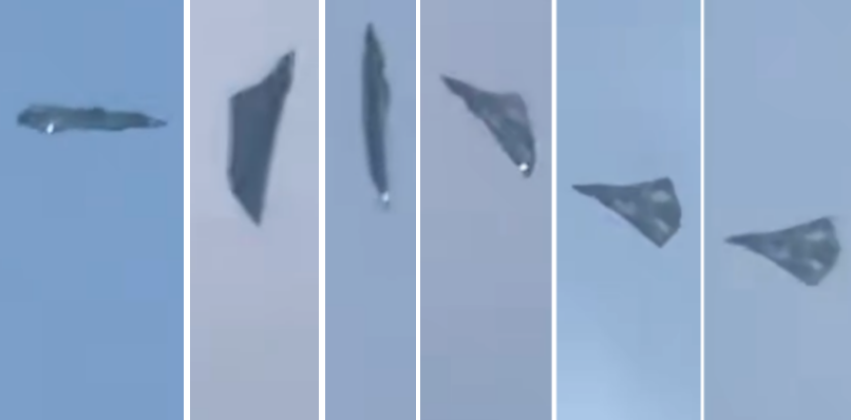
Demonstration of Chinese Sixth Generation Fighter Manoeuvrability (right to left)
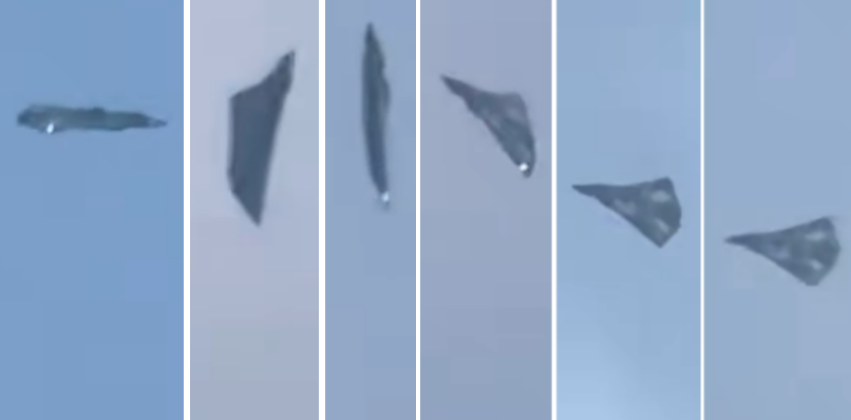
New footage of the Chinese three-engine heavyweight sixth generation fighter aircraft in flight has for the first time demonstrated the type’s high manoeuvrability, with the aircraft seen performing a sharp turn-climb that analysts had long questioned the ability of tailless aircraft to perform.
Developed by the Chengdu Aircraft Corporation, four flight prototypes of the new three engine aircraft are known to have been built, with the design on December 26, 2024, having become the first of its generation to have been unveiled in flight testing worldwide.
Tailless fighters are highly challenging to make manoeuvrable because they lack the horizontal tailplanes that conventional fighters use to control pitch, provide stability, and generate rapid changes in attitude.
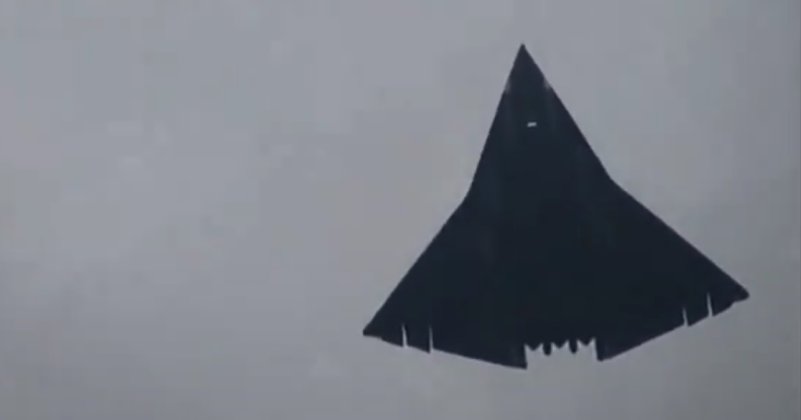
Chengdu Sixth Generation Fighter Flight Prototype
To compensate for the lack of horizontal tailplanes, designers must instead rely on sophisticated flight-control software and control surfaces integrated into the wing, making the aircraft inherently more challenging to control, particularly during aggressive manoeuvres.
The development of a fighter with control surfaces that can provide sufficient manoeuvrability to compensate for the lack of horizontal tailplanes is outstandingly challenging, and was only confirmed to have ever been achieved with the release of the latest Chinese footage.
China is thus the only country known to have flown a high manoeuvrability sixth generation fighter, and has three tailless fighter types at prototype stages, of which that developed by Chengdu is the heaviest.
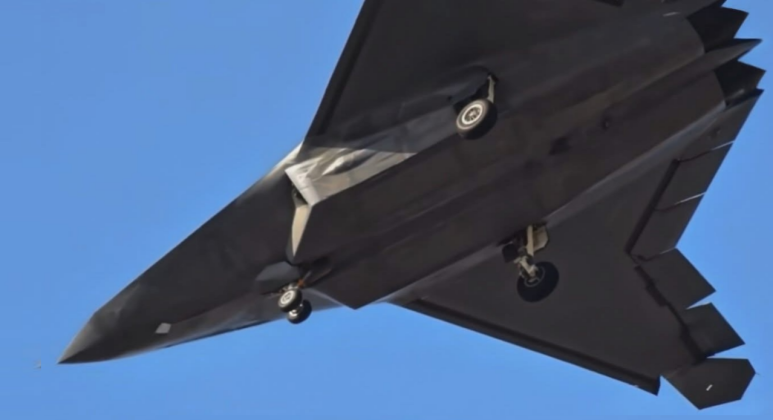
Shenyang Sixth Generation Fighter Flight Prototype
The biggest issue with tailless fighters is pitch control, as while fifth generation fighters’ horizontal stabilisers generate large pitching moments, allowing the nose to be raised or lowered very quickly, and act as powerful control levers positioned a considerable distance behind the aircraft's centre of gravity, a tailless aircraft loses this mechanical advantage, leaving only elevons or other wing-mounted control surfaces to perform the same task.
The absence of a tail can also reduce the aircraft's ability to generate very high instantaneous turn rates, cause significant challenges maintaining stability, and reduce control authority at low speeds and high angles of attack.
China’s defence sector has a history of developing innovative flight controls, most notably with the J-20 fifth generation fighter which uses a unique and radical delta-canard airframe design which improves stealth capabilities and flight performance particularly at supersonic speeds.
The layout provides a far greater lift coefficient than its closest foreign rivals, which is particularly useful for air superiority fighters to provide better control over their angles of attack. Leading edge extensions, body lift and canards between them increase the J-20’s lift by 80 percent, which in turn allows for a reduced supersonic drag through use of a smaller wing while ensuring a high turn performance by avoiding compromises to transonic lift-to-drag characteristics.
Tailless fighter designs are considered optimal for stealth because they eliminate one of the largest sources of radar reflections on a conventional aircraft. By removing the horizontal tailplanes, designers can create a cleaner, more continuous shape that scatters radar energy away from the emitter, significantly reducing the aircraft's radar cross section. Eliminating right-angle intersections between the horizontal tail and the fuselage, improving planform alignment, and reducing the number of external surfaces are all particularly beneficial.
China’s successful development of a tailless fighter with high manoeuvrability indicates that it has crossed one of the most challenging technological hurdles to develop a truly sixth generation fighter aircraft. China and the United States are the only countries expected to develop tailless fighters before the 2050s, with Chinese fighters projected to enter service in the early 2030s, followed by the U.S. F-47 in the early 2040s, and possibly the U.S. Navy F/A-XX near the end of the decade.
China Crosses Major Hurdle in Sixth Generation Fighter Development with Demonstration of Tailless Jet’s High Manoeuvrability
New footage of the Chinese three-engine heavyweight sixth generation fighter aircraft in flight has for the first time demonstrated the type’s high manoeuvrability, with the aircraft seen performing…

nang2
Registered Member
horizontal tailplanes?! It is the vertical stabilizer that it lacks.China Crosses Major Hurdle in Sixth Generation Fighter Development with Demonstration of Tailless Jet’s High Manoeuvrability
June-29th-2026
Demonstration of Chinese Sixth Generation Fighter Manoeuvrability (right to left)
New footage of the Chinese three-engine heavyweight sixth generation fighter aircraft in flight has for the first time demonstrated the type’s high manoeuvrability, with the aircraft seen performing a sharp turn-climb that analysts had long questioned the ability of tailless aircraft to perform.
Developed by the Chengdu Aircraft Corporation, four flight prototypes of the new three engine aircraft are known to have been built, with the design on December 26, 2024, having become the first of its generation to have been unveiled in flight testing worldwide.
Tailless fighters are highly challenging to make manoeuvrable because they lack the horizontal tailplanes that conventional fighters use to control pitch, provide stability, and generate rapid changes in attitude.
Chengdu Sixth Generation Fighter Flight Prototype
To compensate for the lack of horizontal tailplanes, designers must instead rely on sophisticated flight-control software and control surfaces integrated into the wing, making the aircraft inherently more challenging to control, particularly during aggressive manoeuvres.
The development of a fighter with control surfaces that can provide sufficient manoeuvrability to compensate for the lack of horizontal tailplanes is outstandingly challenging, and was only confirmed to have ever been achieved with the release of the latest Chinese footage.
China is thus the only country known to have flown a high manoeuvrability sixth generation fighter, and has three tailless fighter types at prototype stages, of which that developed by Chengdu is the heaviest.
Shenyang Sixth Generation Fighter Flight Prototype
The biggest issue with tailless fighters is pitch control, as while fifth generation fighters’ horizontal stabilisers generate large pitching moments, allowing the nose to be raised or lowered very quickly, and act as powerful control levers positioned a considerable distance behind the aircraft's centre of gravity, a tailless aircraft loses this mechanical advantage, leaving only elevons or other wing-mounted control surfaces to perform the same task.
The absence of a tail can also reduce the aircraft's ability to generate very high instantaneous turn rates, cause significant challenges maintaining stability, and reduce control authority at low speeds and high angles of attack.
China’s defence sector has a history of developing innovative flight controls, most notably with the J-20 fifth generation fighter which uses a unique and radical delta-canard airframe design which improves stealth capabilities and flight performance particularly at supersonic speeds.
The layout provides a far greater lift coefficient than its closest foreign rivals, which is particularly useful for air superiority fighters to provide better control over their angles of attack. Leading edge extensions, body lift and canards between them increase the J-20’s lift by 80 percent, which in turn allows for a reduced supersonic drag through use of a smaller wing while ensuring a high turn performance by avoiding compromises to transonic lift-to-drag characteristics.
Tailless fighter designs are considered optimal for stealth because they eliminate one of the largest sources of radar reflections on a conventional aircraft. By removing the horizontal tailplanes, designers can create a cleaner, more continuous shape that scatters radar energy away from the emitter, significantly reducing the aircraft's radar cross section. Eliminating right-angle intersections between the horizontal tail and the fuselage, improving planform alignment, and reducing the number of external surfaces are all particularly beneficial.
China’s successful development of a tailless fighter with high manoeuvrability indicates that it has crossed one of the most challenging technological hurdles to develop a truly sixth generation fighter aircraft. China and the United States are the only countries expected to develop tailless fighters before the 2050s, with Chinese fighters projected to enter service in the early 2030s, followed by the U.S. F-47 in the early 2040s, and possibly the U.S. Navy F/A-XX near the end of the decade.
China Crosses Major Hurdle in Sixth Generation Fighter Development with Demonstration of Tailless Jet’s High Manoeuvrability
New footage of the Chinese three-engine heavyweight sixth generation fighter aircraft in flight has for the first time demonstrated the type’s high manoeuvrability, with the aircraft seen performing…militarywatchmagazine.com

Beijingwalker
VIP Member
NGAD IS THE BEST
Elite Member
Unidentified aircraft shaped like a ginkgo leaf… China’s 6th generation fighter jet revealed for ...
looks like CGI to me, how the other pilot knows J-36 is coming to them and watched J-36 exact accurate time when J-36 flew through their aircraft?
niubi
Registered Member


looks like CGI to me, how the other pilot knows J-36 is coming to them and watched J-36 exact accurate time when J-36 flew through their aircraft?
The aircraft flying by in the clip may be CGI however the clip itself is an official one and basically the point of the clip is to hint that J-36 is their 6th generation fighter (along with the J-50) and the clip probably also means to imply that the J-36 will be in service sooner than people may expect.
People generally conservatively expecting initial active service in PLAAF and initial low rate production of J-36 in mid 2030s.


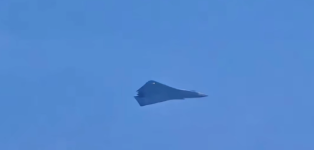
Recent photo surfacing, looks like some big refitting going on, it looks totally different.
View attachment 205772
Looks indeed different but at first sight I‘m not sure … where is it from?
ChineseTiger1986
Trusted Member
Looks indeed different but at first sight I‘m not sure … where is it from?
I think it is the J-36 with the 2D nozzles WS-15 just like the recent J-50.
Users who are viewing this thread
Total: 1 (members: 0, guests: 1)
Pakistan Defence Latest


Country Watch Latest
-
 Iran - Israel/US War: Israel-US declare war on Iran, Iran responds (55 Viewers)
- Latest: Asfandyar Bhittani
-

-
-
-

Latest Posts
-
Iran - Israel/US War: Israel-US declare war on Iran, Iran responds (55 Viewers)
- Latest: Asfandyar Bhittani
-
 Afghans yet to receive ‘genuine justice’ for Western coalition abuses: HRW (17 Viewers)
- Latest: Feroze
-
-
-
 FBI arrests alleged Chinese agent at LAX after she allegedly surveilled son of Taiwanese president (9 Viewers)
- Latest: Hamartia Antidote