World’s First Sixth Generation Fighter Program Enters New Phase as Fifth Prototype Begins Flight Testing in China
Military Watch Magazine Editorial Staff
July-24th-2026
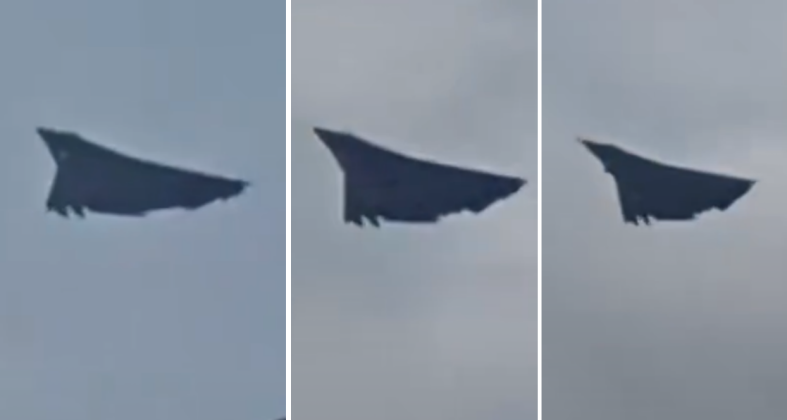
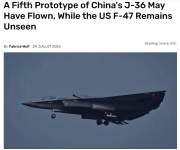
Footage released on July 23 has for the first time confirmed the initiation of flight testing of the fifth prototype of China’s
very heavy ultra long range sixth generation fighter, which is under development by the Chengdu Aircraft Corporation.
This follows the
unveiling of the first prototype in flight on December 26, 2024, the
unveiling of the third prototype in flight on December 25, 2025, and the
unveiling of the fourth flight prototype 36 days later on January 30, 2026.
The considerably greater time that passed between the unveiling of the fourth and fifth prototypes has fuelled expectations that the latest aircraft benefits from significantly greater incremental improvements than those seen between prior aircraft.
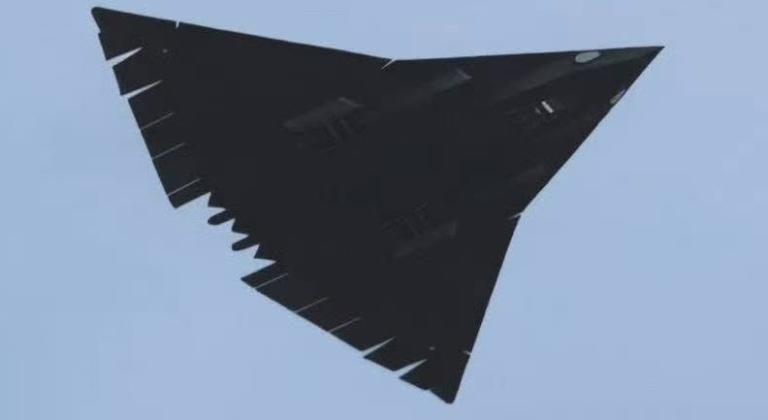
Fourth Flight Prototype of China`s Ultra-Long Range Sixth Generation Fighter
While the new prototype was confirmed on July 23, an image of a prototype in flight testing earlier in the month appeared to also feature some design changes, although the lack of image clarity made this difficult to determine.
A particular challenge in developing sixth generation fighters is the requirement for tailless designs to maximise radar cross section reduction across all radar wavebands, while at the same time avoiding sacrificing manoeuvrability.
Tailless fighters are highly challenging to make manoeuvrable because they lack the horizontal tailplanes that conventional fighters use to control pitch, provide stability, and generate rapid changes in attitude.
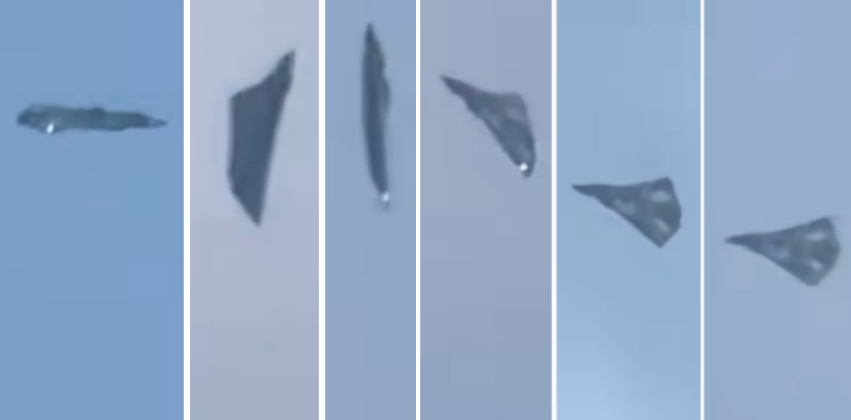
Chinese Ultra-Heavyweight Sixth Generation Fighter Prototype Demonstrates Unprecedented Manoeuvrability in Testing.
To compensate for the lack of horizontal tailplanes, designers must instead rely on sophisticated flight-control software and control surfaces integrated into the wing, making the aircraft inherently more challenging to control, particularly during aggressive manoeuvres.
Footage released in late June indicated that the Chinese ultra long range fighter had achieved
very high levels of manoeuvrability that had never before been seen on a tailless fighter type, which was particularly outstanding when considering the immense size of the aircraft.
While Western analysts had long posited that the aircraft was likely a bomber, rather than a fighter, due to its sheer size, its flight performance indicated that it was highly capable of operating as a fighter in the traditional sense.
Chinese Ultra-Long Range Sixth Generation Fighter Fifth Flight Prototype
China and the United States are the only countries expected to develop sixth generation fighters before the 2050s, with Chinese fighters projected to enter service in the early 2030s, followed by the U.S.
F-47 in the early 2040s, and possibly the U.S. Navy
F/A-XX near the end of the decade.
Although Russia and European states have referred to a number of programs as sixth generation, none of which are close to flight testing, they are not expected to meet remotely comparable standards due to the much more limited technological and industrial bases of these countries.
A notable example is European stealth fighters’ use of vertical tails, which seriously limits limit their stealth capabilities. U.S. sixth generation fighters are reportedly also expected to integrate canards, which while less compromising than vertical tails, still have negative implications for stealth capabilities particularly against longer waveband radars.
Chengdu’s sixth generation fighter stands out as the world’s first with a triple-engine configuration, and is expected to have by far the longest range, largest and most powerful radar, and highest weapons carrying capacity of any fighter type in the world. Its range is expected to be entirely in a league of its own with a combat radius exceeding 4,000 kilometres, combined to over 2,000 kilometres for the Chinese
J-20 fifth generation fighter, and 1,000 kilometres for the Western world’s most capable fighter type the F-35A/C.
The sixth generation fighter’s combination of advanced stealth capabilities, a particularly large radar, and a high weapons carrying capacity are expected to allow it to operate unsupported across much of the Pacific, making it a game changer for Western plans for an air power centric regional war effort against China.
Footage released on July 23 has for the first time confirmed the initiation of flight testing of the fifth prototype of China’s very heavy ultra long range sixth

militarywatchmagazine.com









 Makkah Defence Alliance: Turkey, Saudi Arabia, and Pakistan, news & updates (64 Viewers)