Navigation
Install the app
How to install the app on iOS
Follow along with the video below to see how to install our site as a web app on your home screen.
Note: This feature may not be available in some browsers.
More options
Style variation
You are using an out of date browser. It may not display this or other websites correctly.
You should upgrade or use an alternative browser.
You should upgrade or use an alternative browser.
Chinese AEW ISR and Special Mission Aircraft
- Thread starter iblini
- Start date
More options
Who Replied?
Beijingwalker
VIP Member

Second KJ-3000 Spotted: China’s Most Powerful AEW&C “Sky Command Center” Signals Kill-Web Warfare Shift Across Western Pacific Balance
Second KJ-3000 prototype confirms China is accelerating a heavy AEW&C program designed to control missiles, drones and sixth-generation fighters in network-centric warfare across the Western Pacific battlespace.
On Mar 22, 2026
Second KJ-3000
(DEFENCE SECURITY ASIA) — The confirmed appearance of a second KJ-3000 airborne early warning and control prototype has intensified strategic scrutiny among defence analysts because the aircraft is being positioned as the central airborne command node for China’s future network-centric combat architecture spanning missiles, drones, and next-generation fighters.
Fresh imagery of prototype serial number 7822 conducting flight activity near Xi’an Aircraft Corporation facilities in Shaanxi Province has reinforced assessments that Beijing is accelerating development of a heavy AEW&C platform intended to extend command-and-control reach deep into the Western Pacific battlespace.
Chinese observers circulating images on domestic platforms described the aircraft as “the world’s most powerful AEW&C” equipped with “the largest and most advanced radar array in the air anywhere,” framing the program as a decisive leap in airborne battle management capability, although those claims remain unverified outside Chinese sources.
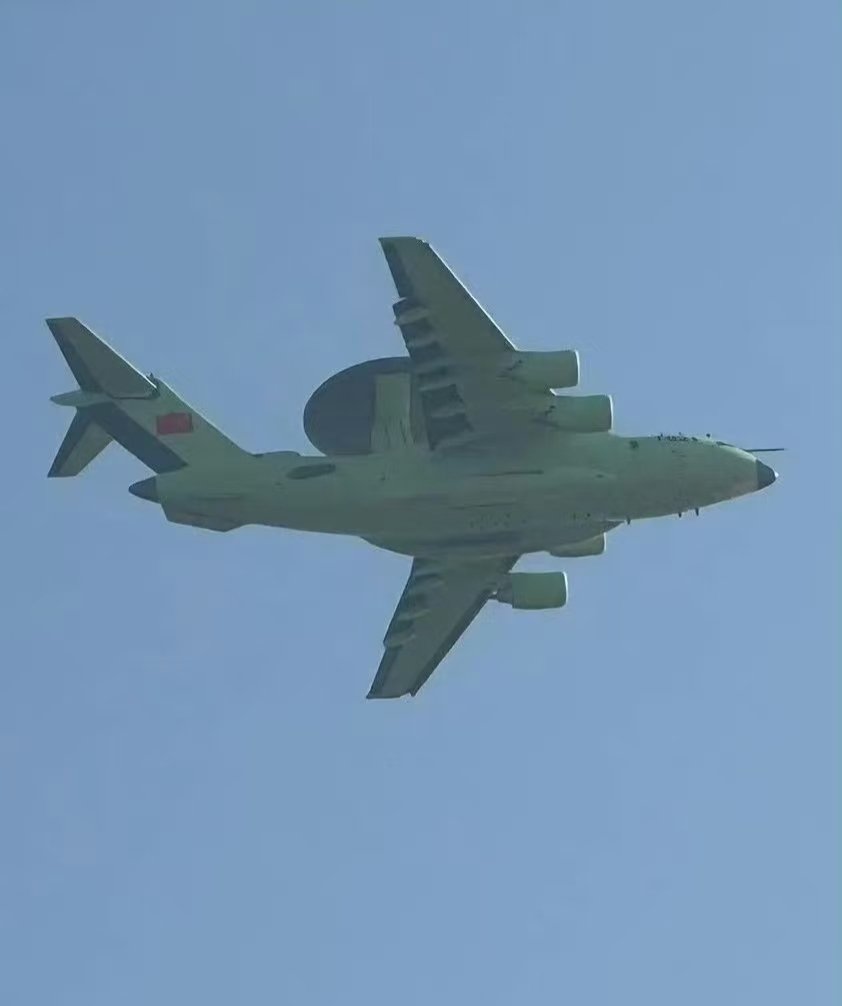
The second airframe follows the first prototype, serial 7821, which conducted its maiden flight in late December 2024, and the rapid transition to multiple active test aircraft suggests the program has been given high priority within the People’s Liberation Army’s modernization roadmap.
Multiple Chinese reports indicate testing tempo has increased significantly, with at least two airframes now flying, signalling an effort to shorten development timelines for what is intended to become the PLA’s primary high-end airborne command-and-control platform.
The aircraft remains in prototype configuration, often seen in primer paint or test markings, and has not entered operational service, with Chinese projections suggesting initial combat capability around 2027 if current testing progress continues without major technical delays.
The emergence of a second prototype while the aircraft is still in early evaluation phase indicates the program is moving beyond basic flight validation toward systems integration testing involving radar power management, data-link architecture, and long-range command-and-control functions.
The timing of the second airframe’s appearance also suggests the project is being synchronized with broader PLA modernization efforts focused on network-centric warfare, where airborne command platforms are required to coordinate long-range missiles, unmanned systems, and future fighter aircraft within a single operational framework.
Because heavy AEW&C platforms define the reach of sensor coverage and battle management in modern air warfare, the KJ-3000’s development pace is being interpreted by analysts as a signal that Beijing is prioritising the ability to control large-scale air and maritime operations far beyond China’s immediate coastline.
Until verified technical data becomes available, the aircraft’s true radar performance and operational role remain uncertain, but the decision to accelerate testing with multiple prototypes strongly indicates that the platform is intended to become the PLA’s primary airborne command center for high-intensity conflict scenarios.
KJ-3000 Built on Y-20B Platform Signals Shift to Heavy AEW&C Architecture
The KJ-3000 is built on the Y-20B strategic transport airframe, powered by four domestic WS-20 high-bypass turbofan engines, providing the size, electrical output, and endurance required for a heavy airborne early warning and control platform designed for extended mission duration.Imagery from recent test flights shows a large rotodome mounted above the fuselage, indicating the use of a rotating radar system rather than the fixed multi-panel arrays used on earlier Chinese AEW&C aircraft such as the KJ-500.
Additional visible features include an aerial refueling probe, multiple external antennas, and a prominent cooling intake near the tail, all consistent with the high power requirements of advanced radar and electronic systems expected on a next-generation airborne command platform.
The larger airframe compared to previous Chinese AEW&C types enables higher operating altitude, longer endurance, and greater onboard electrical generation capacity, all of which are critical for sustaining high-power radar operation and long-range communications links.
The decision to use the Y-20B as the base platform indicates a shift toward heavy AEW&C capability similar in concept to earlier large airborne command aircraft, allowing the PLA to maintain radar coverage over wider areas for longer periods.
Testing activity centered around Xi’an facilities, which also produce the Y-20 transport, suggests the program is closely integrated with China’s strategic airlift production line, potentially simplifying future manufacturing once the design is finalized.
The presence of multiple prototypes in flight testing at the same time typically indicates the program has passed early feasibility stages and is moving toward system integration trials involving radar, communications, and electronic warfare components.
Despite the visible progress, the aircraft is still undergoing evaluation, and no official specifications have been released, leaving most performance assessments dependent on imagery analysis and statements circulating in Chinese online sources.
If development continues at the current pace, the KJ-3000 could become the largest and most capable airborne early warning platform ever produced by China, marking a significant evolution from earlier systems.
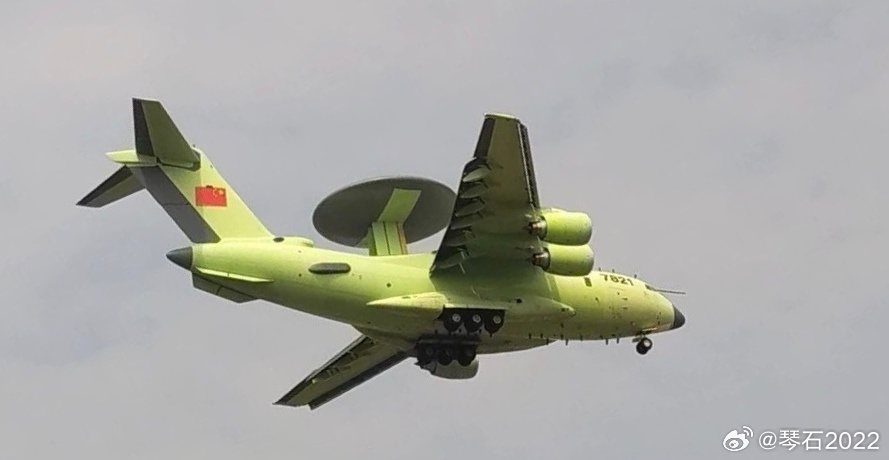
The first KJ-3000 (7821)
Radar System Claims Suggest 360-Degree AESA With Long-Range Detection Ambitions
Chinese descriptions of the KJ-3000 emphasize the use of a large rotating active electronically scanned array radar, intended to provide full 360-degree coverage while delivering greater detection range than previous Chinese AEW&C systems.Domestic reports claim detection ranges of roughly 1,000 kilometers against conventional aerial or maritime targets, with the ability to detect stealth aircraft at distances of around 400 kilometers, although these figures have not been independently verified.
The aircraft is also described as having strong capability against cruise missiles and low-altitude targets, indicating the radar is intended to support both air defence and maritime surveillance roles.
The use of a rotating AESA inside a large rotodome suggests a design focused on maximizing power output and radar aperture size, two factors that directly influence detection range and tracking capacity.
Western observers note that the exact number of transmit-receive modules, radar frequency bands, and power levels remain unknown, making direct comparison with other AEW&C systems difficult.
Claims that the radar is the largest airborne array ever installed are based on Chinese sources and have not been confirmed by open-source technical data, although the physical size of the rotodome appears larger than earlier Chinese platforms.
Independent analysts agree the system represents a substantial improvement over previous Chinese airborne early warning aircraft, even if the full extent of its performance remains uncertain.
The aircraft’s increased electrical generation capacity and cooling systems indicate that the radar and mission electronics are expected to consume significantly more power than earlier Chinese AEW&C designs.
Because radar performance data is classified, the true detection range and tracking capability may remain unknown for years after the aircraft enters service.
Designed as Airborne Command Node for Network-Centric Kill-Web Operations
Chinese descriptions of the KJ-3000 repeatedly characterize it as a “sky command center,” indicating its primary role is not only detection but also command, coordination, and real-time control of multiple combat assets across a wide battlespace.The aircraft is intended to operate as the central node in a network-centric combat system linking fighters, missiles, drones, and surface forces into a synchronized kill-web capable of engaging targets at long distance.
Reports from Chinese sources suggest the aircraft will be able to direct long-range air-to-air missiles, anti-ship weapons, and unmanned systems while maintaining continuous situational awareness across large areas of ocean and airspace.
The platform is expected to provide real-time data fusion, combining radar inputs, communications, and targeting information into a unified operational picture that can be shared with multiple units simultaneously.
Chinese commentary has linked the aircraft to future sixth-generation fighter programs, implying the KJ-3000 will serve as the airborne command element coordinating advanced aircraft during complex operations.
Western Analysis Confirms Major Capability Leap but Questions Performance Claims
Independent analysis from defence observers confirms that the aircraft exists and represents a significant expansion of China’s airborne early warning capability, although specific performance figures remain unverified.The use of a larger airframe than the Il-76-based KJ-2000 suggests the aircraft is intended to provide longer on-station time, higher radar horizon, and greater electrical power for advanced sensors.
Analysts note that the system appears designed to operate as part of a broader system-of-systems architecture rather than as a standalone radar aircraft.
Because the program is still in testing, final capabilities may change before the aircraft reaches operational service.
Rapid Testing Pace Suggests High Priority in PLA Modernization Strategy
The appearance of a second prototype within a relatively short period suggests the KJ-3000 program has been given significant priority within China’s military development plans.Testing activity around Xi’an, where the Y-20 transport is also produced, indicates the aircraft is being developed within an established industrial framework capable of supporting large-scale production.
The rapid expansion of prototypes coincides with reports of increased activity in other advanced aviation programs, suggesting multiple high-technology projects are being pursued simultaneously.
No official photographs or technical specifications have been released by the PLA, and most available information comes from leaked images and reports shared online.
The absence of official data means that performance claims must be treated with caution, particularly when they originate from unofficial sources.
Even with limited information, the visible scale of the aircraft indicates a clear intention to field a heavy airborne command-and-control platform.
If the aircraft enters service around the projected timeframe, it would represent a major increase in China’s ability to manage complex air and maritime operations.
The pace of development suggests the program is intended to support future combat systems rather than existing ones alone.
Until the aircraft reaches operational service, its true performance and impact on the regional balance of power will remain uncertain.
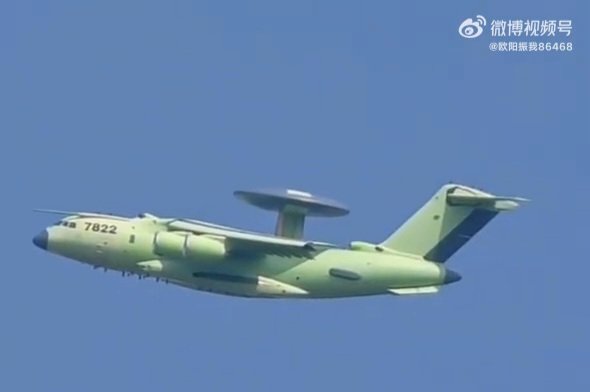
Second KJ-3000 Spotted: China’s Most Powerful AEW&C “Sky Command Center” Signals Kill-Web Warfare Shift Across Western Pacific Balance - Defence Security Asia
The second KJ-3000 AEW&C prototype confirms China is accelerating development of a heavy airborne command platform designed to direct missiles, drones and next-generation fighters, signalling a major shift in Western Pacific airpower balance.
 defencesecurityasia.com
Beijingwalker
VIP Member



Ali_Baba
VIP Member

Finally - that looks like the finished article for a pure home grown "grown up" AWACS platform for China.

Shui
Registered Member

Everything we have is in this platform.Finally - that looks like the finished article for a pure home grown "grown up" AWACS platform for China.
Great profile again made by @AVIATIONGRAPHIC
KJ-600 code 11
Carrier Air Wing FUJIAN (CV-18)
https://aviationgraphic.com/aviation-lithographs/4793-kj-600-planaf-jp-6710.html
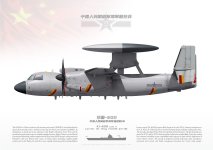
KJ-600 code 11
Carrier Air Wing FUJIAN (CV-18)
https://aviationgraphic.com/aviation-lithographs/4793-kj-600-planaf-jp-6710.html


Shui
Registered Member
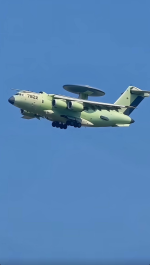
When Y-30 enter service, we are most likely going to see these platforms on the new MTA.

Fatman17
THINK TANK: CONSULTANT
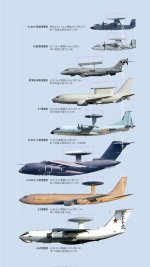
You beat me to itIt seems it was totally missed to post this one: Looks like one of the clearest images of the KJ-3000 … found at the CDF posted by Xinhui!
View attachment 190848


Users who are viewing this thread
Total: 1 (members: 0, guests: 1)
Pakistan Defence Latest
-
 PTI Murad Saeed in Afghanistan, was 'controlling KP govt' from there: Rana Sanaullah (3 Viewers)
- Latest: El Sidd
-

-

-

Country Watch Latest

Latest Posts
-
-

-
15-year-old allegedly run over by employer after workplace dispute in Multan (9 Viewers)
- Latest: KingQamaR
-

-
Powerful magnitude 7.7 earthquake hits Panama, damaging buildings (9 Viewers)
- Latest: AZ_HighCountry