China building world's largest naval replenishment ship to boost carrier operations
Jul 19, 2026, 11:20 IST
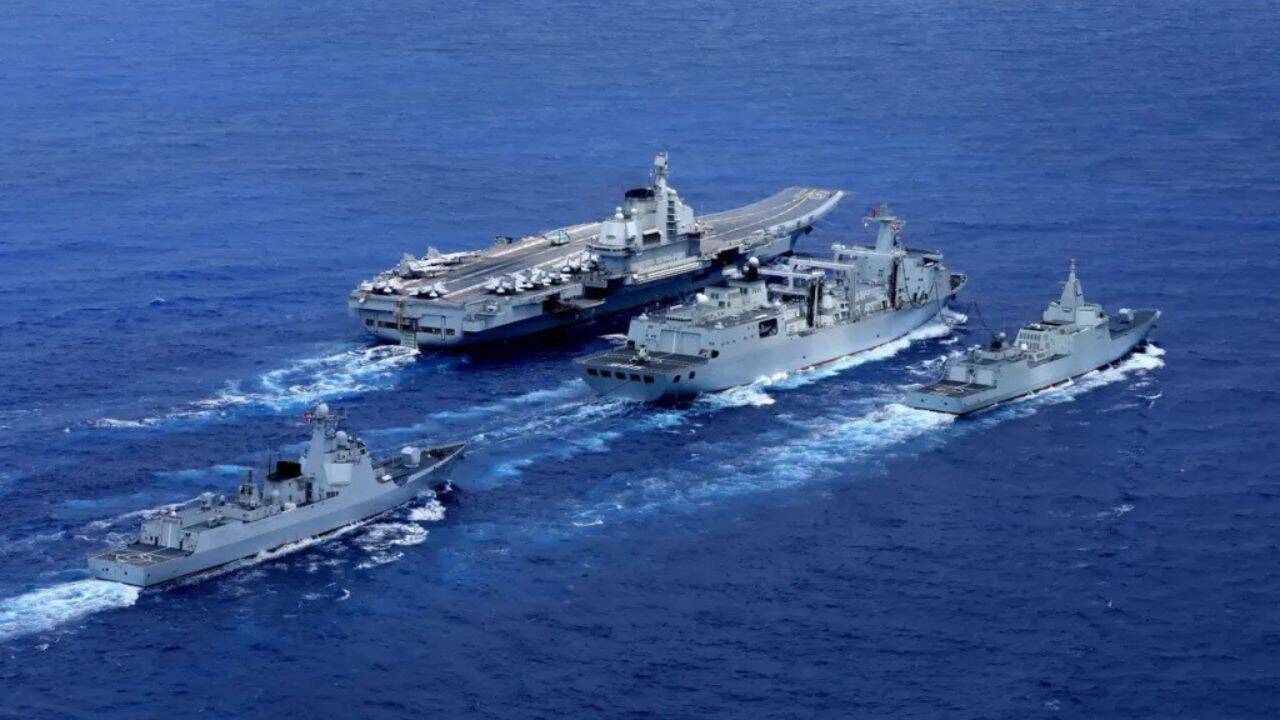
China is building what defence analysts believe could become the world's largest naval replenishment ship, a move that would significantly strengthen the People's Liberation Army Navy's ability to sustain aircraft carrier strike groups during long-range deployments.
According to The War Zone (TWZ), the satellite imagery of the vessel under construction at Guangzhou Shipyard International (GSI) appears to be larger China's existing Type 901 fast combat support ships.
The PLA navy currently operates two Type 901 fast combat support ships, Hulunhu and Chaganhu. With the length of around 240 metres, it has a displacement of around 45,000 tonnes at full load.Replenishment ship or fast combat support ship, is a naval auxiliary vessel that supplies warships with fuel, ammunition, aviation fuel, food, fresh water, spare parts and other essential stores while they remain at sea.
The ship is being built at a yard on Longxue Island, which is situated just southeast of the city of Guangzhou. A subsidiary of the China State Shipbuilding Corporation (CSSC) operates this facility.
That firm is currently known as the CSSC Offshore and Marine Engineering Company (COMEC).COMEC/GSI’s public portfolio is focused on large commercial vessels, including oil and liquid natural gas (LNG) tankers and cargo ships.
In recent years, the yard has become well known for the construction of unique and unusual vessels with clear military or at least dual-purpose applications.
Based on the satellite imagery, the ship appears to be approximately 885 feet (270 meters) long and 121 feet (37 meters) wide. There is a superstructure at the bow end with clear wings for a large bridge and a mast on top. There is also a separate superstructure at the stern end with exhaust stacks situated in front of it.
The ship’s design language also follows modern PLAN standards. Its layout, in broad strokes, is very similar to that of the Type 901 replenishment ship in PLAN service now. The PLAN also operates smaller Type 903 replenishment ships.
Replenishment ships are a critical part of any blue-water navy. They enable aircraft carriers, destroyers, frigates and submarines to operate for extended periods far from home ports, increasing a navy's operational reach and endurance.
Modern replenishment ships are equipped with multiple transfer stations, allowing them to refuel and resupply more than one ship simultaneously.
US navy operates the world's largest and most capable combat logistics fleet through its Military Sealift Command. Its largest replenishment ships are the Supply-class fast combat support ships (T-AOE), which displace about 48,500 tonnes at full load.
By comparison, the Indian navy's largest replenishment vessels are the Deepak-class fleet tankers, each displacing around 28,000 tonnes at full load. India is also building five new fleet support ships.
If the vessel's estimated size is confirmed, it would surpass the US navy's 48,500-tonne Supply-class fast combat support ships to become the world's largest replenishment ship.
The project reflects China's broader effort to strengthen the logistics backbone of the PLA navy as it expands carrier operations farther from its shores.
International News: China is building what defence analysts believe could become the world's largest naval replenishment ship, a move that would significantly strengthen .

timesofindia.indiatimes.com