Chinese-made aircraft C919 marks two years of commercial operations, exceeds 2 million passengers

I've been told the Chinese are now developing their own engines and not relying on Russian or US designs. Or is that for military applications only?

China’s C929 widebody takes a step forward with CJ-2000 engine thrust test​

Why the latest Chinese engine test heralds China approaching the final frontier of engine development to compete with the West.
Aaron Spray
January 12, 2026

Screenshot-2026-01-12-101301-1024x459.png

In a major step for China’s widebody ambitions, the CJ-2000 turbofan being developed to power COMAC’s upcoming C929 has now reached a thrust of 35.2 tonnes (70,400 lbf) in testing.

The milestone places the engine firmly in the same performance class as the GEnx and Trent 1000, and marks a significant advance in China’s long-running effort to develop an indigenous widebody powerplant.

China’s CJ2000 test 35.2-ton thrust record​

China appears to be making progress on developing its CJ-2000 turbofan engine for its in-development COMAC C929 widebody airliner.

To view this content we will need your consent to set third party cookies.
For more detailed information, see our cookies page.


“China’s ‘core’ reaches a new peak: CJ2000 large-bypass turbofan test engine sets a 35.2-ton thrust record,” the social media posts read.

Commenting on the news, the respected China-watching OSINT account, Hurin, stated, “[The CJ2000] Will compete with the likes of PW4K and Trent1000 Class. Last frontier yet to be conquered in aircraft engines.”

The CJ-2000 is designed to produce a thrust of around 35 tons, similar to that of the GEnx-1B that powers the Boeing 787 Dreamliner. It is planned to have a large bybass ratio of 12:1 and is intended to be competitive with international rivals.

Initial ground tests of the CJ-2000 core engine began in 2020. By 2025, the engine had advanced to full-power trials on a high-altitude test bed, simulating real flight conditions.
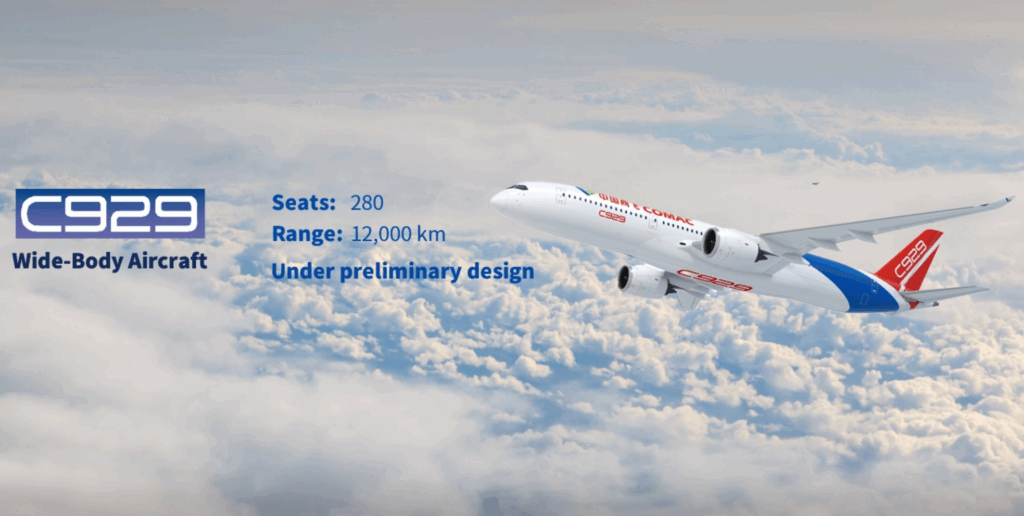
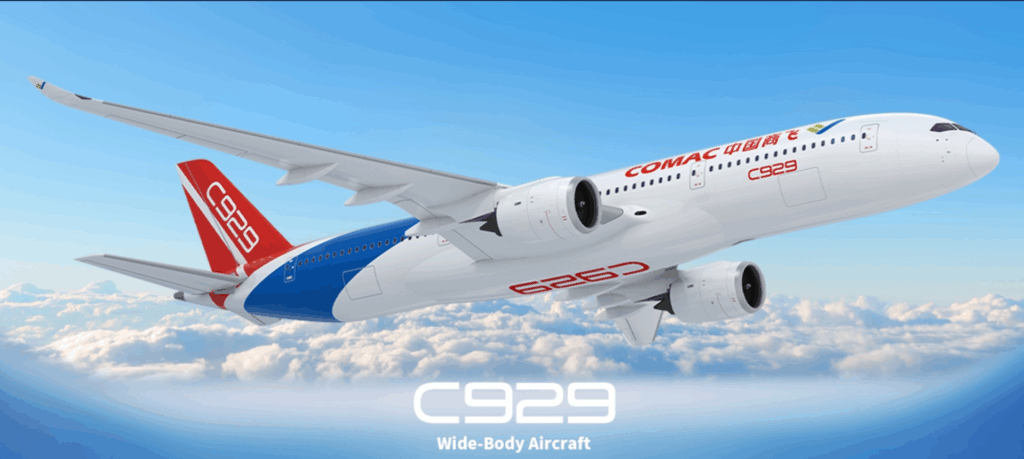
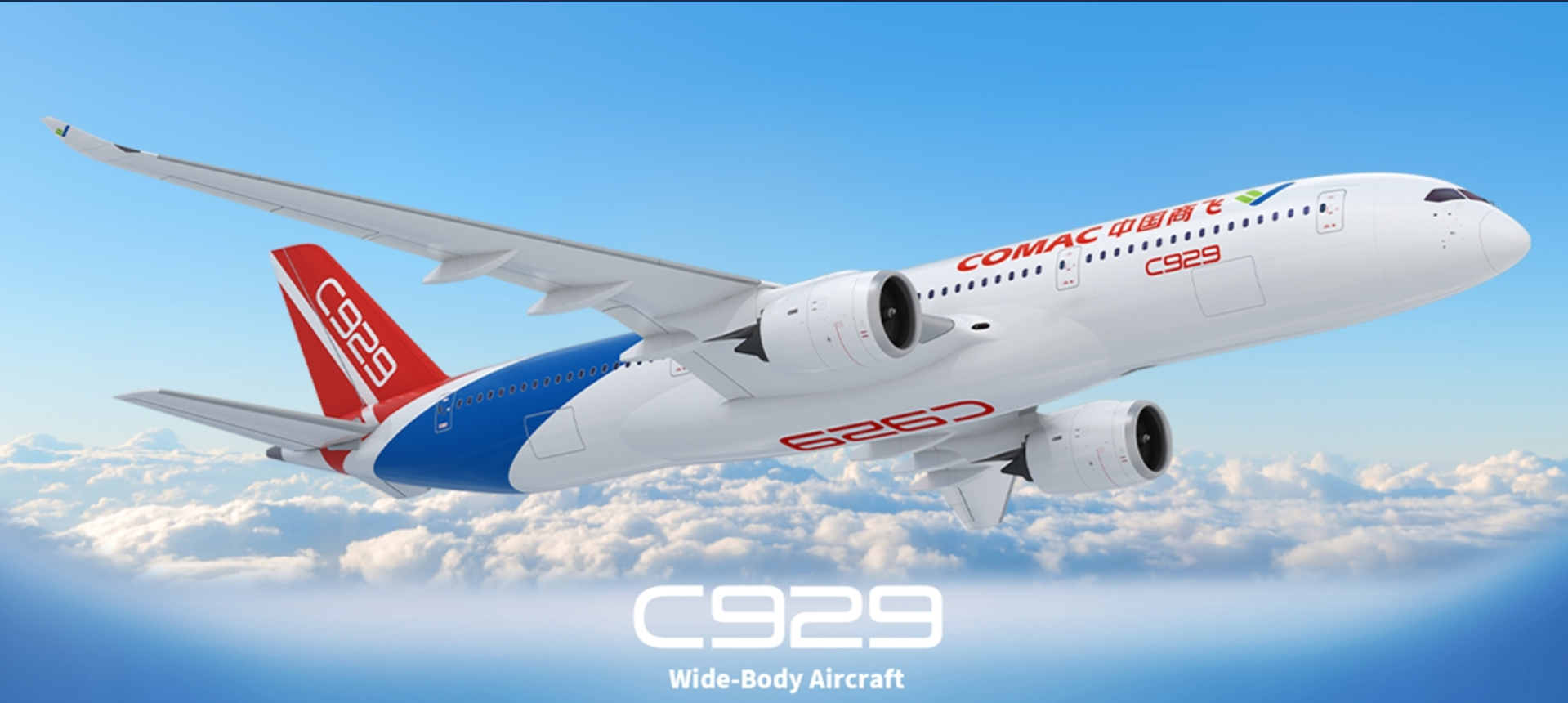
COMAC C929 rendering
Photo: COMAC
The CJ-2000 is a scaled-up version of the CJ-1000 turbofan being developed for the in-service COMAC C919 narrowbody airliner.

There are unconfirmed reports that derivatives of the CJ-2000 could also be used to power Chinese military strategic transports.

China’s upcoming COMAC C929 airliner​

COMAC is developing a full range of commercial airliners to comprehensively take on Boeing and Airbus. Having brought the regional C909 into service in 2016 and the narrowbody C919 into service in 2023, the next step is to develop the widebody C929.

To view this content we will need your consent to set third party cookies.
For more detailed information, see our cookies page.


The C929 is intended to be a medium widebody and a competitor to the Airbus A330 and Boeing 787 with nine-abreast seating.

These tests mark a major step in China’s aerospace engine capabilities. It is unclear when the engine will be operationally ready, but it seems unlikely before 2030. This would potentially be in line with the development timeline of the C929.

The C929 is expected to have a capacity for 280 to 400 passengers, depending on configuration, and a range of around 12,000 kilometres (6,500 nautical miles). Its airframe is expected to use over 50% lightweight composite materials. Its first flight is planned sometime around 2030, ahead of entering service in the 2030s.

VIetJet Comac C909
Photo: VietJet
Early COMAC aircraft typically don’t have to compete with Western aircraft in a traditional free-market sense within the Chinese market. This gives the aircraft a large market to mature in before competing internationally.

Air China signed a framework agreement in November 2024, paving the way for it to eventually be the C929’s launch customer.

China’s plans to produce turbofans domestically​

Parallel with developing new aircraft types, China is also working to gradually phase out Western components and develop its own substitutes. The engines are perhaps the most obvious example of this.
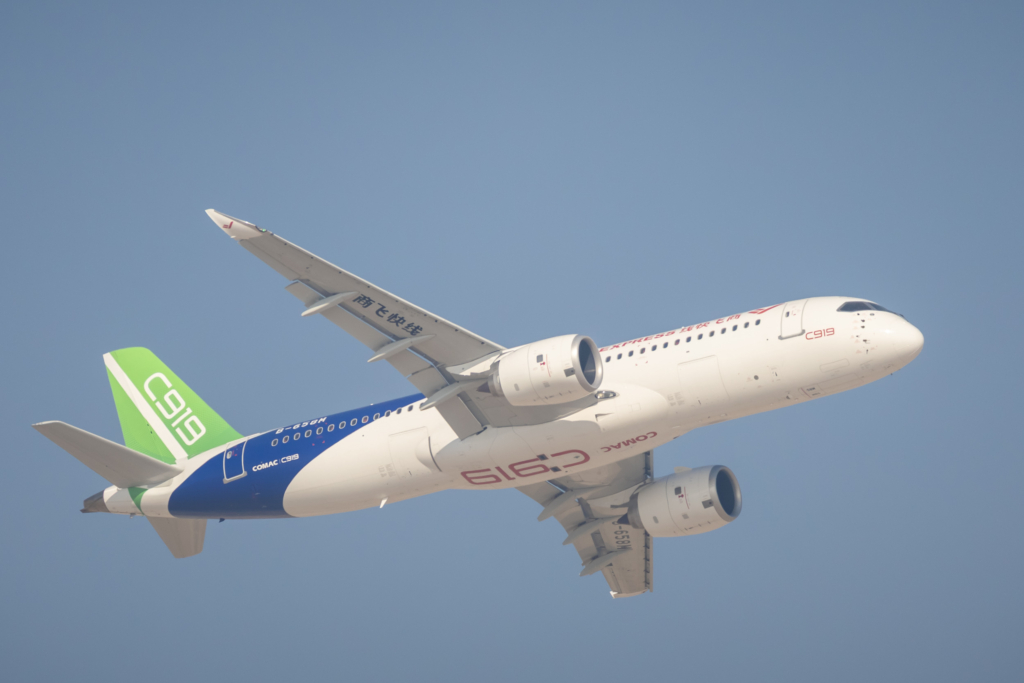
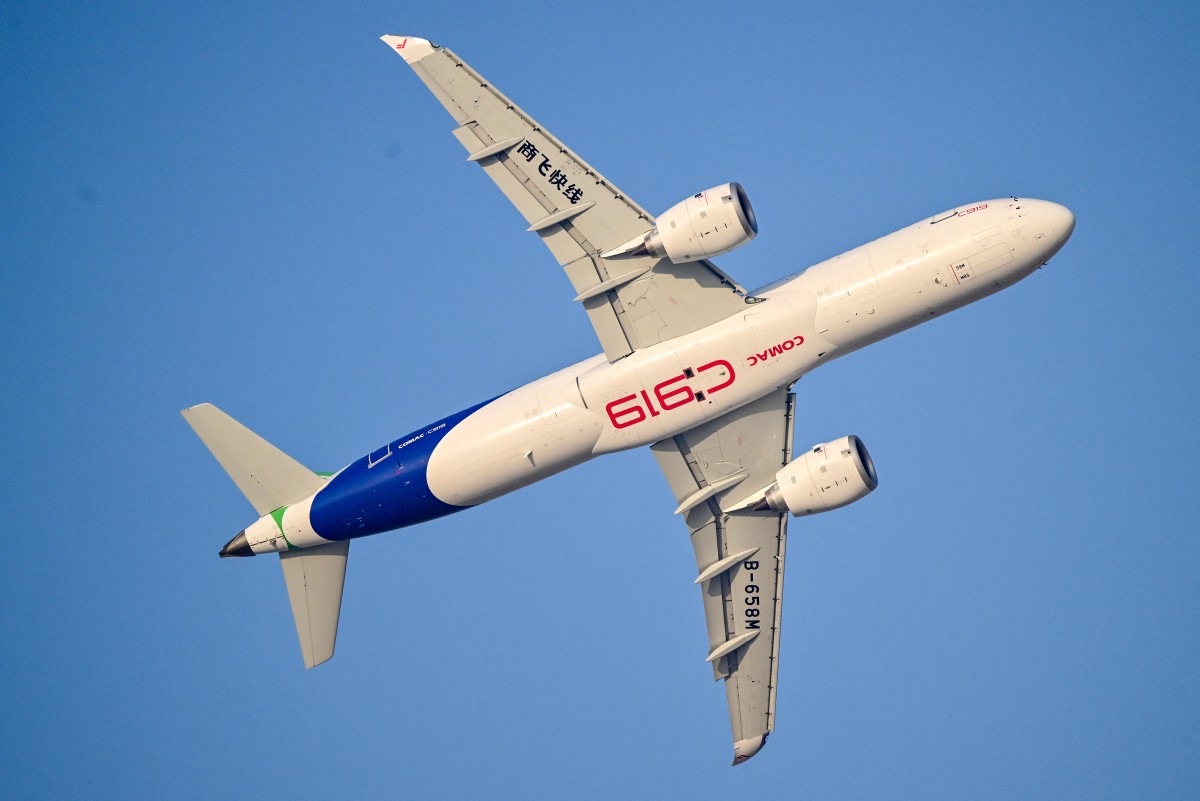
COMAC C919 at Dubai Airshow 2025 flying display
Photo: Dubai Airshow

China’s state-run COMAC is now building two types of passenger jets: the narrowbody C919 and regional C909 (formerly ARJ21). These are both powered by Western-supplied engines, with the Franco-American CFM International LEAP-1C powering the C919 and the General Electric CF34-10A powering the C909.

China is developing its domestic engines for these aircraft to cut reliance on Western engines. For a period in 2025, the US restricted the supply of LEAP-1C engines to China.

Something similar is happening in the military with fighter jets, where China is now replacing Russian engines with its own.
 
Embraer of Brazil has been most successful airplane maker since Airbus. But they seem to stay away from large planes.

Russians have built modern airliners but politics and poor after-market support means they remain restricted to Russia.
They do it for a reason. Look what It US did to Bombardier once itcstarted eating Boeings lunch in 737/717 category.
 

Why China is racing to develop its own commercial jet engine​

To reduce its dependence on the West, China is developing its own CJ-1000A jet engine, which is close to completing certification, but analysts predict mass production won't occur until around 2030.

AFP__20251120__84MW2CW__v1__MidRes__UaeTransportAviationAirshow.jpg

The Chinese Comac C919 performs a display flight at Al-Maktoum International Airport during the Dubai Airshow 2025 in Dubai on November 20, 2025. PHOTO: AFP

January 5, 2026

SINGAPORE – The year 2025 was supposed to be a big one for Chinese aircraft manufacturer Comac.

With more than 1,000 of its C919 passenger planes on order, the state-backed jet maker had pledged to ramp up production of the home-grown jetliner – Beijing’s answer to the Airbus A320neo and Boeing 737 Max.

Executives said in March 2025 that Comac would deliver up to 75 planes by the end of the year, up from an initial target of 50.

However, by September 2025, the annual delivery target was slashed to 25, and Comac ended the year well short – shipping only 13 C919 jets, according to a Dec 24 Bloomberg report.

The shortfall laid bare a central vulnerability in China’s commercial aviation ambitions: its reliance on Western-made aircraft engines.

An unsteady flow of aircraft parts, including engines that were subject to a two-month export ban earlier in the year, was cited as a reason for Comac’s faltering output, underscoring how exposed the programme remains to overseas suppliers.

It is also why China has, since 2016, been racing to develop its own domestic commercial jet engine to free itself of Western dependence and assert greater aerospace sovereignty.

While public updates have been scant, the CJ-1000A aircraft engine, developed by state-owned aerospace company Aero Engine Corporation of China (AECC), is said to be on the cusp of completing airworthiness certification – the regulatory approval required before an engine can be used on commercial passenger flights – after more than two years of test flights.

Getting the nod from China’s civil aviation authority would pave the way for the Chinese engine, which is named after the Yangtze river – Chang Jiang in Mandarin – to be installed on the C919 plane for commercial use.

The engine would replace the Leap-1Cs that power the C919s today, which are supplied by CFM International – a joint venture between US manufacturer GE Aerospace and France’s Safran Aircraft Engines.

The most recent hint of the CJ-1000A’s progress was given in August 2025 by Chinese Academy of Engineering member Zhang Yanzhong, a key figure in China’s aerospace push.

“The current progress is very positive. As for when it will be installed on Chinese aircraft – just wait for the good news,” he told state broadcaster CCTV.

Aviation analysts, however, cautioned that China remains far from achieving jet-engine self-sufficiency and loosening its reliance on Western suppliers.

Mr Mayur Patel, head of commercial and industry affairs for Asia-Pacific at aviation data consultancy OAG Aviation, told The Straits Times that domestic certification and initial deliveries for the CJ-1000A engine were more likely to happen in 2027 or 2028.

Mass production is expected around 2030, while international certification remains years away.

Mr Li Hanming, an independent expert on Chinese aviation, noted that the CJ-1000A has been used as a second engine on the Xi’an Y-20 military transport plane as part of testing, and the results are said to have exceeded initial projections.

But integrating the CJ-1000A with the Comac C919 would be more complex, requiring a redesign of the aircraft’s engine control system, the US-based analyst told ST.

“The way to a production-ready engine is still long, and I would not say that it has finished,” he added.

Mr Li said AECC has experience designing military jet engines, but the company still has a lot to learn on the commercial front.

He noted that military jet engines are used less often, maintained more frequently, burn more fuel, and can afford to fail; whereas commercial engines are expected to prioritise safety, require less maintenance and save fuel, among other requirements.

While the C919 jet plane, which made its domestic debut in 2023 and international debut in Singapore in 2024 , has been grabbing headlines, the development of the CJ-1000A engine has been equally key and closely watched.
Domestic engine development was listed among China’s strategic goals in the 14th Five-Year Plan – from 2021 to 2025 – and features in the “Made in China 2025” industrial masterplan.

China’s resolve to develop its own line of commercial aircraft engines has also been strengthened after past instances of Western export controls putting a stranglehold on its aviation ambitions.

In 2020, a decades-long project to develop a regional propeller plane, the Xi’an MA700, was left in limbo after Canada refused to issue an export licence to engine supplier Pratt and Whitney amid deteriorating bilateral ties.

More recently, in May 2025, the Trump administration suspended the sale of Leap-1C aircraft engines to China amid a tit-for-tat trade war.
While the sales ban was lifted in July 2025, the ripple effects continued to be felt despite Comac building up a stockpile of engines and other key components.

The hurdles facing China go beyond geopolitics. Analysts noted that the barrier to entry for commercial jet engine manufacturing is especially high.

In a review of the Made in China 2025 policy, the US-China Economic and Security Review Commission pointed out that while many countries – including China – have developed quality military jet engines, only three global companies produce commercial jet engines.

They are GE Aerospace, Pratt and Whitney, and Britain’s Rolls-Royce. All three are based in the West.

The high stakes have also fuelled accusations of industrial espionage. In 2021, a Chinese intelligence officer was sentenced to 20 years in prison over a plot to steal trade secrets related to GE Aerospace’s engines.

Mr Patel and Mr Li said that the hardest technical barrier for China to overcome is the manufacturing of advanced materials.

“Turbine blades must withstand 1,600 deg C temperatures and forces of 10 to 30 tonnes for thousands of hours. China struggles with consistent production of single-crystal superalloys and ceramic matrix composites at scale,” Mr Patel said.

Still, some analysts believe success is ultimately a matter of time.

Aviation analyst Shukor Yusof, founder of Endau Analytics, said that while China’s CJ-1000A programme has stuttered, it is a question of when, not if, the country will produce a safe and reliable jet engine.

“The Chinese are relatively new in this game and didn’t have a head start in aerospace engineering compared with the Americans, Europeans or even the Russians,” he added.

“When China starts making its own engines, they control the future of both their commercial aviation and military paths.”

Others remain sceptical about the outcome.

Mr Richard Aboulafia, managing director of aerospace consultancy AeroDynamic Advisory, said there are questions about whether the CJ-1000A will be as reliable as its Western equivalents, and how quickly the three major Western manufacturers can launch even better engines.

“The start of flight testing means exactly nothing,” said Mr Aboulafia. “These (questions) will determine whether this is a real, commercially viable engine, or just a kind of emergency backup device in the event China is cut off from Western engine exports.”

The consultant also noted that developing a completely indigenous aircraft engine is anomalous in the aerospace world, and the only other country to have tried it was the Soviet Union – to ultimately dismal results.

“All other engines involve technologies and capital crossing borders… Will China get different results from following the same Soviet formula? I tend to doubt it,” he added.


China’s C919 sees delivery delays in 2026, with 3 units shipped in 3 months​


Deliveries of China’s home-grown C919 narrowbody airliner, billed to challenge mainstream models from Boeing and Airbus, appear to be delayed, with only three units shipped to Chinese carriers in the first quarter of 2026.

Observers point to several factors holding back the Commercial Aircraft Corporation of China (Comac). While some C919s are said to be stuck on the tarmac waiting for engines, analysts also say prioritising quality over speed is the right bet for the planemaker.

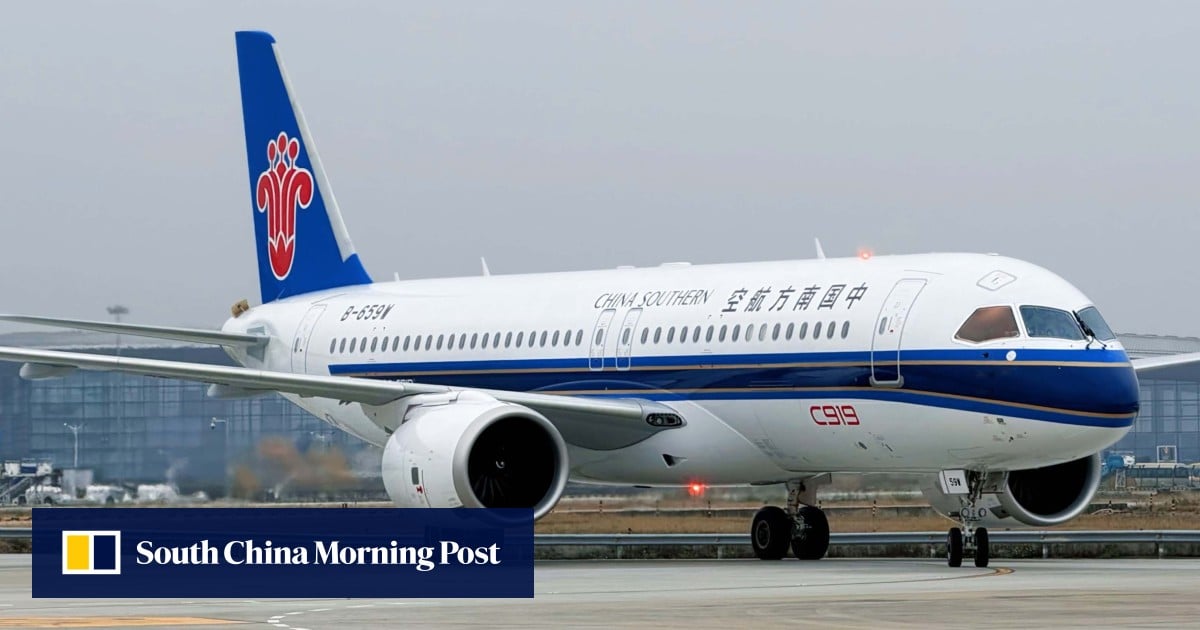
Only three C919 deliveries have taken place this year to date – two were issued to China Southern on February 5 and March 2 and one went to Air China on March 27 – with no shipment in January, checks of airline records by the South China Morning Post and data from UK-based aviation consultancy IBA showed.

A total of 35 C919s have been delivered since December 2022, when China Eastern received the first unit. The apparent stall suggests Comac may be falling behind its own schedule.

“It could again be C919s sitting with their wings bare – the CFM Leading Edge Aviation Propulsion (LEAP) engines are not arriving,” said Jason Zheng, an analyst with the Shanghai-based consultancy Airwefly.

“While planes wait for engines, engines wait for key parts like blades.”
 

China’s C919 sees delivery delays in 2026, with 3 units shipped in 3 months​


Deliveries of China’s home-grown C919 narrowbody airliner, billed to challenge mainstream models from Boeing and Airbus, appear to be delayed, with only three units shipped to Chinese carriers in the first quarter of 2026.

Observers point to several factors holding back the Commercial Aircraft Corporation of China (Comac). While some C919s are said to be stuck on the tarmac waiting for engines, analysts also say prioritising quality over speed is the right bet for the planemaker.

Only three C919 deliveries have taken place this year to date – two were issued to China Southern on February 5 and March 2 and one went to Air China on March 27 – with no shipment in January, checks of airline records by the South China Morning Post and data from UK-based aviation consultancy IBA showed.

A total of 35 C919s have been delivered since December 2022, when China Eastern received the first unit. The apparent stall suggests Comac may be falling behind its own schedule.

“It could again be C919s sitting with their wings bare – the CFM Leading Edge Aviation Propulsion (LEAP) engines are not arriving,” said Jason Zheng, an analyst with the Shanghai-based consultancy Airwefly.

“While planes wait for engines, engines wait for key parts like blades.”
No threat to Boeing or Airbus anytime soon.
 

China’s C929 widebody takes a step forward with CJ-2000 engine thrust test​

Why the latest Chinese engine test heralds China approaching the final frontier of engine development to compete with the West.
Aaron Spray
January 12, 2026

Screenshot-2026-01-12-101301-1024x459.png

In a major step for China’s widebody ambitions, the CJ-2000 turbofan being developed to power COMAC’s upcoming C929 has now reached a thrust of 35.2 tonnes (70,400 lbf) in testing.

The milestone places the engine firmly in the same performance class as the GEnx and Trent 1000, and marks a significant advance in China’s long-running effort to develop an indigenous widebody powerplant.

China’s CJ2000 test 35.2-ton thrust record​

China appears to be making progress on developing its CJ-2000 turbofan engine for its in-development COMAC C929 widebody airliner.

To view this content we will need your consent to set third party cookies.
For more detailed information, see our cookies page.


“China’s ‘core’ reaches a new peak: CJ2000 large-bypass turbofan test engine sets a 35.2-ton thrust record,” the social media posts read.

Commenting on the news, the respected China-watching OSINT account, Hurin, stated, “[The CJ2000] Will compete with the likes of PW4K and Trent1000 Class. Last frontier yet to be conquered in aircraft engines.”

The CJ-2000 is designed to produce a thrust of around 35 tons, similar to that of the GEnx-1B that powers the Boeing 787 Dreamliner. It is planned to have a large bybass ratio of 12:1 and is intended to be competitive with international rivals.

Initial ground tests of the CJ-2000 core engine began in 2020. By 2025, the engine had advanced to full-power trials on a high-altitude test bed, simulating real flight conditions.

COMAC C929 rendering
Photo: COMAC
The CJ-2000 is a scaled-up version of the CJ-1000 turbofan being developed for the in-service COMAC C919narrowbody airliner.

There are unconfirmed reports that derivatives of the CJ-2000 could also be used to power Chinese military strategic transports.

China’s upcoming COMAC C929 airliner​

COMAC is developing a full range of commercial airliners to comprehensively take on Boeing and Airbus. Having brought the regional C909 into service in 2016 and the narrowbody C919 into service in 2023, the next step is to develop the widebody C929.

To view this content we will need your consent to set third party cookies.
For more detailed information, see our cookies page.


The C929 is intended to be a medium widebody and a competitor to the Airbus A330 and Boeing 787 with nine-abreast seating.

These tests mark a major step in China’s aerospace engine capabilities. It is unclear when the engine will be operationally ready, but it seems unlikely before 2030. This would potentially be in line with the development timeline of the C929.

The C929 is expected to have a capacity for 280 to 400 passengers, depending on configuration, and a range of around 12,000 kilometres (6,500 nautical miles). Its airframe is expected to use over 50% lightweight composite materials. Its first flight is planned sometime around 2030, ahead of entering service in the 2030s.

VIetJet Comac C909
Photo: VietJet
Early COMAC aircraft typically don’t have to compete with Western aircraft in a traditional free-market sense within the Chinese market. This gives the aircraft a large market to mature in before competing internationally.

Air China signed a framework agreement in November 2024, paving the way for it to eventually be the C929’s launch customer.

China’s plans to produce turbofans domestically​

Parallel with developing new aircraft types, China is also working to gradually phase out Western components and develop its own substitutes. The engines are perhaps the most obvious example of this.

COMAC C919 at Dubai Airshow 2025 flying display
Photo: Dubai Airshow

China’s state-run COMAC is now building two types of passenger jets: the narrowbody C919 and regional C909 (formerly ARJ21). These are both powered by Western-supplied engines, with the Franco-American CFM International LEAP-1C powering the C919 and the General Electric CF34-10A powering the C909.

China is developing its domestic engines for these aircraft to cut reliance on Western engines. For a period in 2025, the US restricted the supply of LEAP-1C engines to China.

Something similar is happening in the military with fighter jets, where China is now replacing Russian engines with its own.


While China is working on the C-919, C-929, and C-939, it should, IMHO, go back and remake the C-909 into the equivalent of the Bombardier Global 8000. Chinese Businessmen have been buying fewer business jets, while Chinese businesses are increasingly dependent on trade deals in more locations globally. Building a jet that can basically go anywhere globally in one hop, at Mach 0.95, and with enough space for a full team of businessmen and experts on one flight could open up a new market (or make China competitive in a large domestic and global market). The current C-909 is seen as a lack luster jet, but if a fuel efficient jet that can catch up to global leaders with a variant that could also serve as an airliner, China could really give bombardier, embraer and Airbus with their C-220 a run for their money. A success at this price point of $80 million could open up more customers that would be more open to comac jets down the line.

Sales to Chinese businessmen could alone subsidize this development, while profits from foreign sales could open up more operators worldwide for COMAC (civil and military)

If China “re-design” the C-909 to be on par with the performance of the Global 8000 (operational max altitude of 51,000 feet, speed of Mach 0.95, range 8000 nautical miles or nearly 15000 km range, a takeoff distance of 5760 feet and a landing distance of 2220 feet, and pressurized to make it feel like it is much lower altitude and so more comfortable and quieter for passengers) it could not only attract businessmen, countries with smaller runways, high altitude airports, and its use to replace turboprops in the PLAAF and PLANAF for long range higher speed and higher endurance operations, replacing the Y-8 and Y-9 for uses such as AEW, MPA, EW, ISR, etc. the higher electrical power on a jet platform would allow more powerful electronics to be used. (This platform would not be ideal as a tanker as it would have approx. half the internal volume of the C-919, ~63 cubic meters vs 128 cubic meters of the A320 sized jets)

A jet such is this would open up Chinese operations much further out, a large swath of the Indo-Pacific within thousands of km of China. For example, such a plane taking off from Djibouti and Cambodia could help China monitor SLOCs in the Indian Ocean. In a period of heightened tensions a small fleet of these planes could take up rotation in the northern Arabian Sea with MPAs and AEWs to monitor Indian (and others) operations while having similar AEW operating in Tibet; such that with the latest 1000 km range AEW radars each, could cover the entire India-Pak border, and able to provide weapons grade tracks while not being an active open participant in the conflict. This very threat could be the kind of capability to be a deterrence itself, increasing stability in the region.

The high altitude would give a radar the furthest radar horizon possible of any jet on the market.

 
Last edited:
production rate of C919 is not very high for 2026

I dont know if engines are a issue

China needs it own engine for C919 and CJ-1000A is still a few years away

this could be a issues for China
 

Users who are viewing this thread

Country Watch Latest

Back
Top