
Beijingwalker
VIP Member

Chinese missile AI tracks F-22, F-35-like heat signatures with over 90% accuracy
Lightweight, low-cost, heat-seeking missiles could be used to identify stealth fighters in future air combat with strong accuracy
Published: 10:00pm, 13 Aug 2026
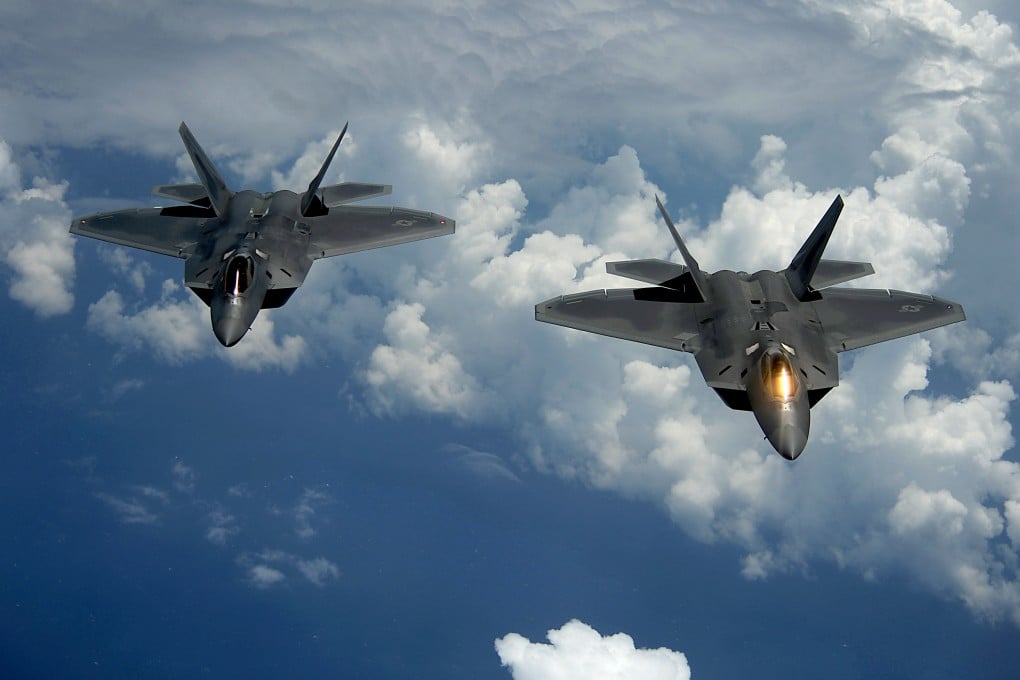
The F-35 and F-22 may be among the world’s most advanced stealth fighters, but they cannot hide one thing: heat.
When heat-seeking missiles lock onto aircraft, fighters release flares to confuse infrared sensors and break missile tracking.
But the infrared signals produced by fighters, including heat from engine exhaust and air friction over the fuselage, are different from those generated by flares.
These heat signatures could provide valuable infrared information for target detection and recognition in future air combat, while making flares useless.
Chinese researchers have created a lightweight artificial intelligence (AI) system that could help heat-seeking air-to-air missiles identify advanced fighter jets, and they demonstrated its high accuracy in laboratory tests against mock-up F-22 and F-35 targets.
“Lightweight recognition models could become widely used in future air-to-air missiles because they can provide high-speed recognition while maintaining strong identification capabilities,” An Jiangshan, first author of the study, said on August 10.
The study, published in the Chinese peer-reviewed Journal of Electronic Measurement and Instrumentation, involved researchers from the Beijing Institute of Technology, which is known for its strong military research background and is among the few Chinese universities subject to US sanctions.
The collaborators also included researchers from the China Airborne Missile Academy and a national key laboratory for near-surface detection.
“The model enables efficient classification and recognition of targets in missile-borne scanning infrared imaging systems, achieving a recognition accuracy of 97.1 per cent during testing,” the researchers wrote.
The system is relatively inexpensive.
“The Zynq7020 [AI] platform used in the paper costs only a few hundred yuan, and the hardware cost is relatively low,” An said.
The researchers said the proposed solution provided a lightweight structural design for missile-borne infrared scanning imaging systems.
When asked about the method’s potential accuracy in identifying fifth-generation fighters such as the US F-22 and F-35, An said the relevant test data set involved “confidentiality issues and could not be disclosed”.
“For the simulated targets in the current [test] data set, the recognition rate can reach about 90 per cent,” An added.
The study focused on missile-borne scanning infrared imaging systems, where computing resources were limited by strict requirements on size, weight and power consumption.
Traditional deep learning models can achieve high recognition accuracy, but their large number of parameters and heavy computing requirements make them difficult to deploy on small embedded devices.
The team therefore developed a lightweight neural network.
Compared with previous methods, the new model reduced its parameters to 16.1 per cent and lowered computational requirements to 19.2 per cent, according to the study.
The model uses structural optimisation, batch normalisation fusion and 8-bit quantisation to reduce computing costs
To make the AI system suitable for missile-mounted platforms, the researchers designed a dedicated AI accelerator.
The accelerator included optimised convolution modules, parallel computing structures and data buffering methods to improve efficiency.
“The final system achieved a balance between recognition accuracy, inference speed, hardware power consumption and hardware resources,” corresponding author Liu Ming and his team wrote.
Tests were conducted using a total of 3,245 infrared target images collected by a missile-borne scanning infrared imaging system.
The data set included three categories of airborne targets, including two types of aircraft mimicking the F-22 and F-35 and a loitering munition.
After statistical error processing, the hardware accelerator achieved a recognition accuracy of 96.4 per cent, with an average inference time of about 1.5 milliseconds and overall power consumption of 2.2 watts.
“This paper mainly focuses on the close-range fuses of air-to-air missiles, and the effect on surface-to-air missiles remains to be verified,” An said.
The researchers said future work would focus on improving recognition accuracy and processing speed to achieve more efficient airborne infrared target recognition.


