Chinese Missile Development News

China-built world’s first operational hypersonic glide weapon could be ready for launch​

Chinese military observers reportedly believe the DF-17 is capable of launching rapid strikes against strategic targets with minimal warning time.

image

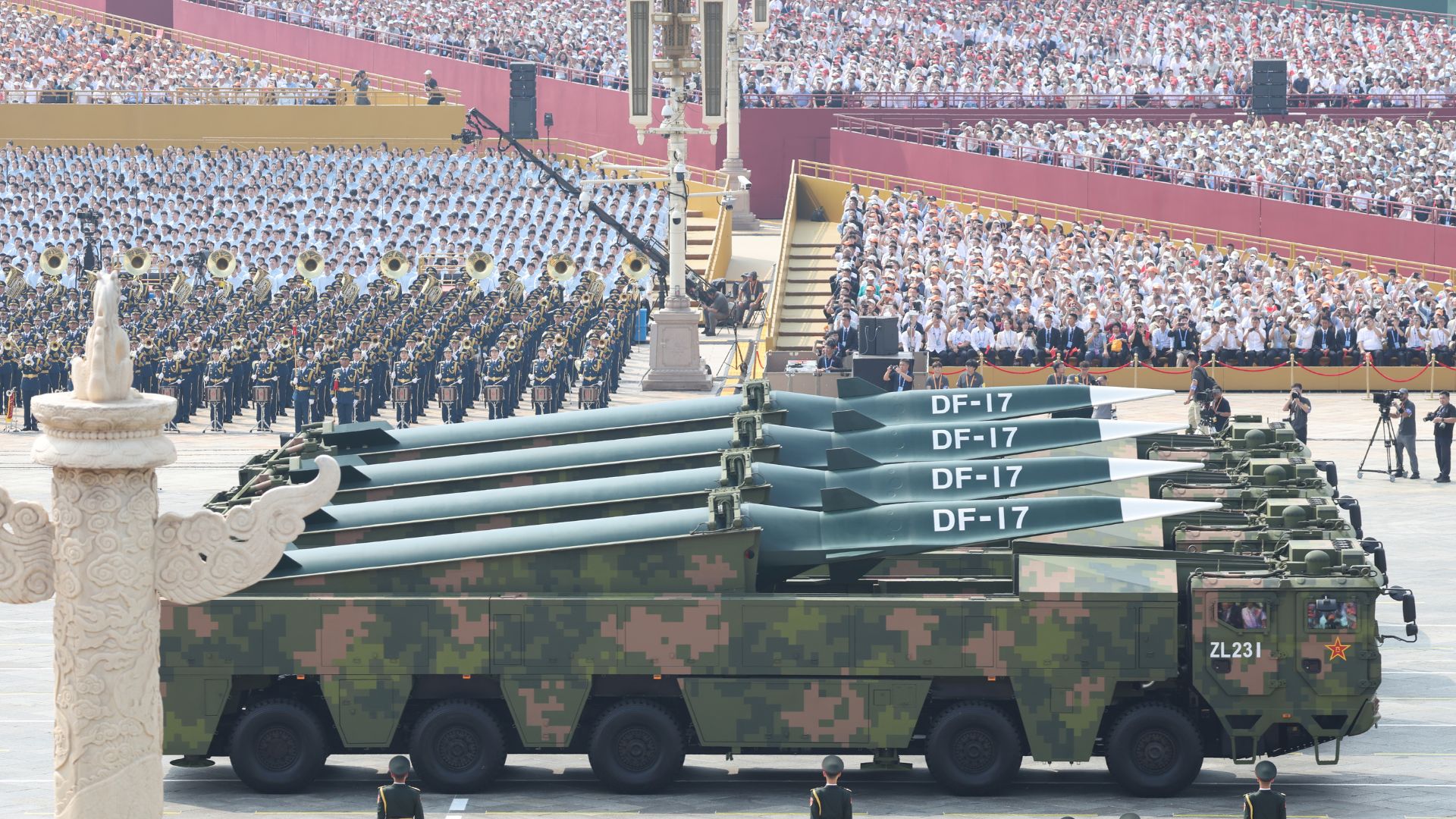
China first showcased the DF-17 during the 2019 National Day military parade in Beijing.

Aug 05, 2026 10:59 AM EST

A new documentary recently showcased on China’s state television has suggested that the world’s first operational hypersonic glide weapon could be ready for launch, according to a report.

Called the DF-17, the weapon system was possibly showcased on the state television documentary that aimed to mark 99th anniversary of the People’s Liberation Army (PLA).

The DF-17 combines a ballistic missile with a hypersonic glide vehicle (HGV). After launch, the glide vehicle separates from the rocket booster and travels through the atmosphere at speeds above Mach 5 while making course adjustments. This manoeuvrability makes it far more difficult for existing missile defence systems to detect, track, and intercept compared with conventional ballistic missiles.

Missile shown in documentary matches DF-17​

The distinctive wedge-shaped profile and fins of the missiles onboard the transporter-erector-launcher (TEL) vehicles showcased in the documentary matched previous sightings of the DF-17, although the documentary did not identify them and did not give details of the time or location of the test, as per the report.

Capable of launching rapid strikes​

Chinese military researchers reportedly believe the DF-17 is capable of launching rapid strikes against strategic targets with minimal warning time. Its ability to change direction during flight is intended to increase the chances of penetrating sophisticated air defense networks and striking high-value military assets.

The report also revealed that during the filmed exercise, a TEL unit was ordered to abort its launch preparations. It was then directed to relocate and execute a delayed strike at a designated time.

China first showcased the DF-17 during the 2019 National Day military parade in Beijing, demonstrating its progress in hypersonic weapons development. Since then, the missile has attracted close attention from defense planners around the world, particularly in the United States and among its regional allies, who have accelerated their own hypersonic weapons and missile-defense programmes.

As global competition in advanced military technology continues, the DF-17 highlights China’s growing emphasis on developing next-generation weapons capable of improving strategic deterrence and expanding its precision-strike capabilities.

The missile is estimated to have a range of approximately 1,500 miles (1,800 to 2,500 kilometres), allowing it to reach targets across large parts of the Western Pacific. This includes military bases, command centres, and naval forces operating within China’s surrounding strategic region. As a result, the DF-17 has become an important component of Beijing’s anti-access and area-denial (A2/AD) strategy, which aims to discourage or delay the intervention of rival militaries in a potential conflict.

The latest assessment also reflects China’s broader investment in hypersonic technology. Over the past several years, Beijing has accelerated research into next-generation missile systems capable of travelling at extremely high speeds while remaining highly manoeuvrable. Defense experts believe such weapons reduce an opponent’s reaction time and complicate existing missile-defence systems.
 

China Fires World's First Hypersonic Glide Weapon; US Military On Edge | 'No Time To React'​

Aug 5, 2026


China has revealed a new exercise involving its DF-17 hypersonic missile system, demonstrating that the launcher can reportedly relocate even after advanced launch preparations have begun. Featured in the documentary Securing Victory, the operation showed a PLA Rocket Force unit travelling to another firing position before successfully launching the weapon.
The DF-17 combines a rocket booster with a manoeuvrable hypersonic glide vehicle, producing a less predictable flight path than a conventional ballistic missile. Its estimated range could place Taiwan and military targets across much of the first island chain within reach.
The latest footage focuses on survivability rather than speed: if a launcher can abandon a compromised site while the weapon is already prepared, enemy surveillance has less time to locate and destroy it. China is developing the DF-17 as part of a mobile strike network capable of evading detection and attacking from unexpected positions.
 

China Tests New Modular HQ-16F Air Defense System in First Live-Fire Assessment​

PLA's 73rd Group Army completes inaugural combat evaluation of advanced medium-range air defense system derived from the HQ-16 family, signaling a significant step in Beijing's push to modernize its layered air defense architecture

August 16 2026

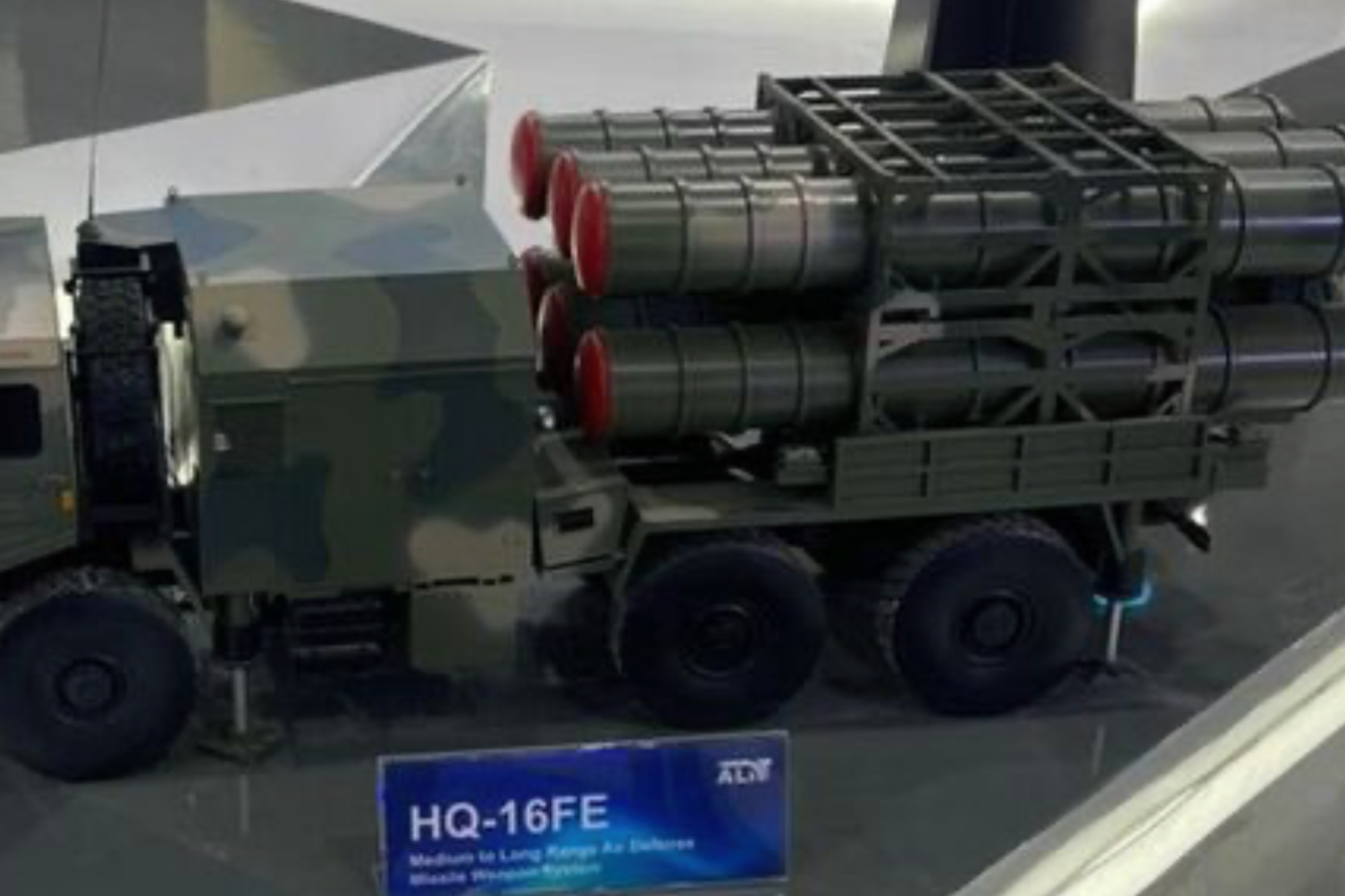
A scale model of the HQ-16FE (Egypt Defence Expo 2025)

- China has successfully tested a new modular air defense system derived from the HQ-16 missile family, with the People's Liberation Army's 73rd Group Army completing the first live-fire assessment of the system, designated the HQ-16F, in a development first reported by China's official Global Times and subsequently followed by international defense media outlets including GlobalSecurity.org and Defence Blog.

The live-fire evaluation represents a significant milestone in China's ongoing effort to develop and field a layered, flexible air defense architecture capable of protecting maneuvering ground forces from the full spectrum of modern aerial threats, including drones, cruise missiles, helicopters, and fixed-wing aircraft at low and medium altitudes.

The HQ-16 Family and What the F Variant Adds

The HQ-16 is a medium-range surface-to-air missile system that China has developed and fielded across multiple variants over the past two decades, serving as the backbone of the PLA's medium-altitude area air defense capability. The system was originally developed as a land-based adaptation of naval air defense technology and has been progressively enhanced across successive variants to extend its range, improve its guidance systems, and broaden the categories of targets it can engage.

As Jane's Defence Intelligence confirmed in indexed reporting on the HQ-16F, the new variant introduces a modular design philosophy that represents a departure from earlier iterations of the system. Modularity in air defense architecture allows components of the system, including its radar, command and control elements, and missile launchers, to be configured, transported, and deployed more flexibly than integrated systems that require fixed relationships between their constituent parts. For the PLA, which has increasingly emphasized operational mobility and survivability in its force modernization doctrine, a modular air defense capability that can be rapidly reconfigured to suit different threat environments carries significant tactical value.

Protecting Maneuvering Forces

As Army Recognition reported in its coverage of China's mobile air defense development programme, the broader context of the HQ-16F's development is Beijing's recognition that maneuvering ground forces face an increasingly dangerous aerial threat environment, driven by the proliferation of armed drones, loitering munitions, and precision cruise missiles that have transformed the battlefield risk calculus for armored and mechanized units. The conflicts in Ukraine and the Middle East have provided vivid operational evidence that conventional ground force formations operating without effective short-to-medium range air defense cover are acutely vulnerable to aerial attack.

China's military planners have studied those conflicts carefully, and the HQ-16F's emphasis on mobility and modularity reflects lessons drawn from the operational experience of other militaries in high-intensity combat. A system that can be rapidly displaced, reconfigured, and redeployed alongside maneuvering forces offers a fundamentally different protective model than static area defense installations that can be located, targeted, and suppressed by a sophisticated adversary.

Naval Terminal Defense Advances in Parallel

The HQ-16F live-fire assessment arrived alongside a separate but related development in China's air defense modernization. Global Times reported in May 2026 that the PLA Navy's new terminal defense system completed its type certification trials, marking the formal qualification of a close-in defensive capability designed to protect naval vessels against the final-stage threat posed by anti-ship missiles, drones, and other fast-moving projectiles in the terminal phase of their flight path.

The parallel advancement of land-based modular medium-range defense and naval terminal defense reflects a comprehensive Chinese approach to air defense modernization that spans domains and engagement ranges, from the long-range HQ-9B family that Army Recognition confirmed was unveiled in an enhanced variant in 2024, to the medium-range HQ-16 series, to the close-in naval terminal systems now entering certification.

Strategic Implications

The timing of the HQ-16F's first live-fire assessment, reported in June 2026 at the height of the US-Iran conflict that has demonstrated the decisive impact of advanced air defense systems on the course of modern warfare, adds a layer of strategic significance to what might otherwise be characterized as a routine development milestone. The conflict has provided the world's major military powers with extensive real-world data on the performance of American, Israeli, and Iranian air defense systems under genuine combat conditions, data that Chinese military planners will be absorbing and integrating into their own development priorities.

China's ability to field a modular, mobile medium-range air defense system capable of protecting maneuvering ground forces is directly relevant to the scenarios that feature most prominently in PLA operational planning, including potential operations across the Taiwan Strait and the Korean Peninsula, where the ability to sustain credible air defense coverage for ground force formations operating under sustained aerial threat would be a critical determinant of operational success.

 
Rare black-coated shipborne missile test shown by state media, Chinese expert says coating improves radar, visual stealth and penetration
By Liang Rui
Published: Aug 25, 2026 10:40 PM

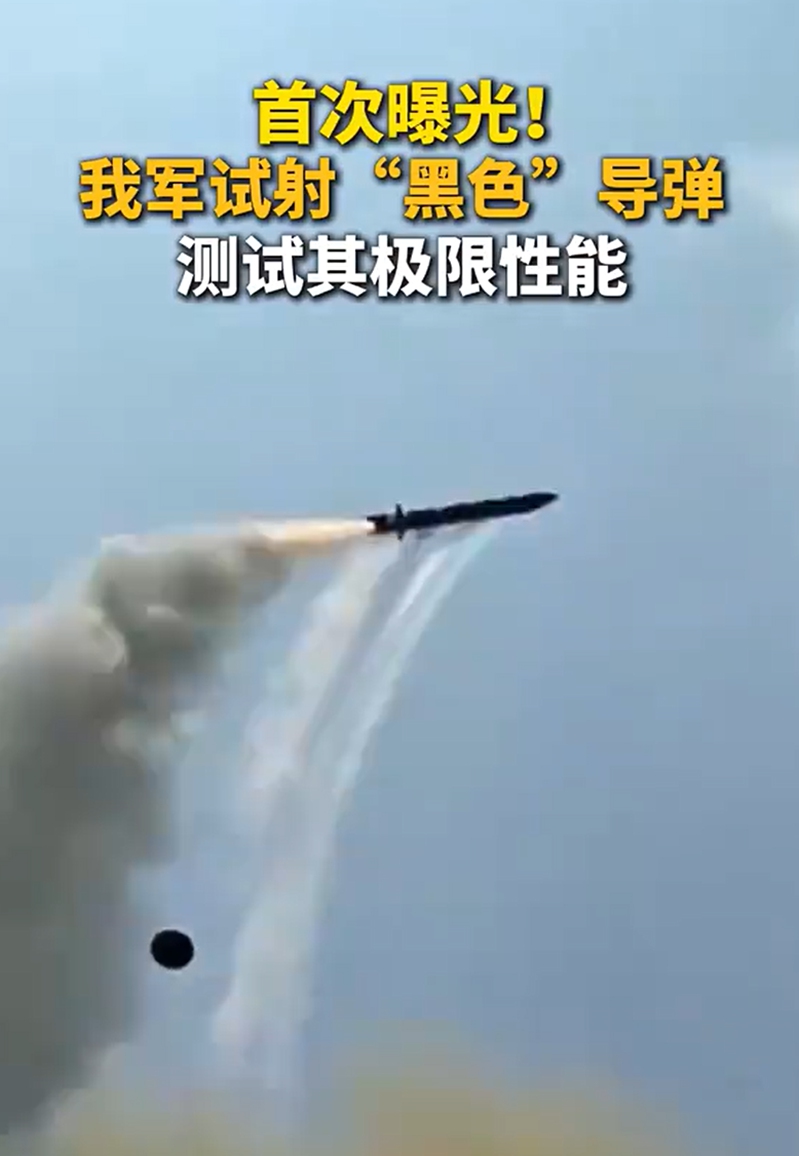
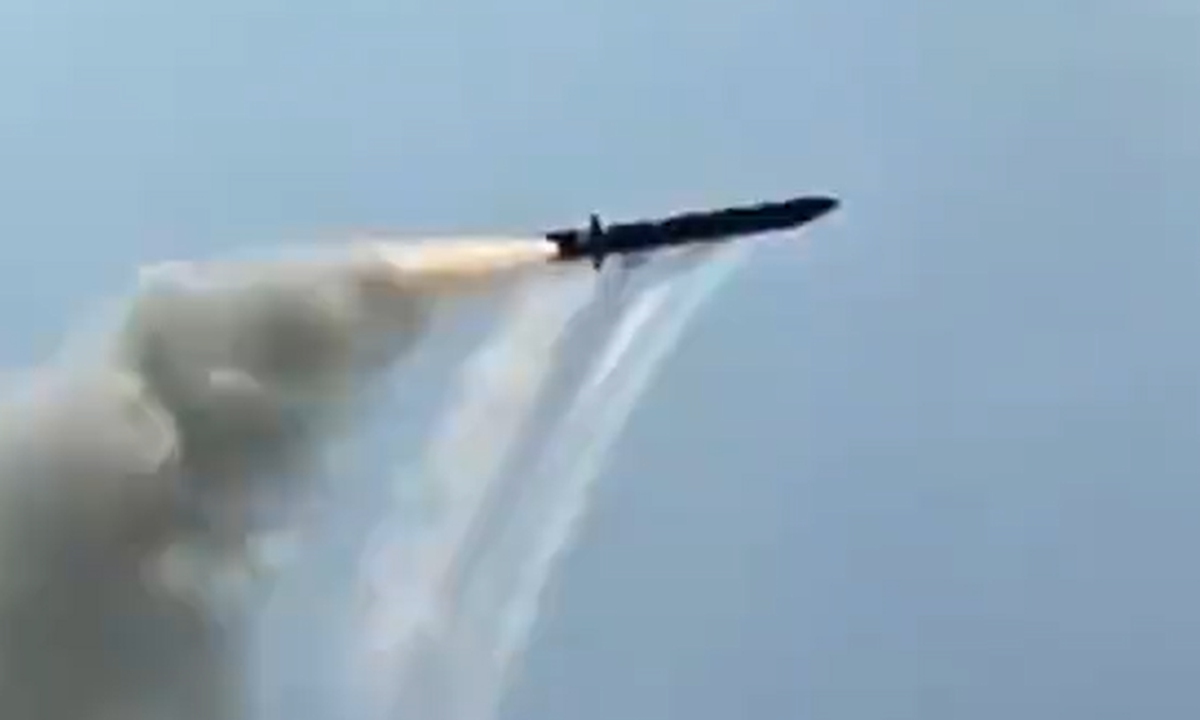
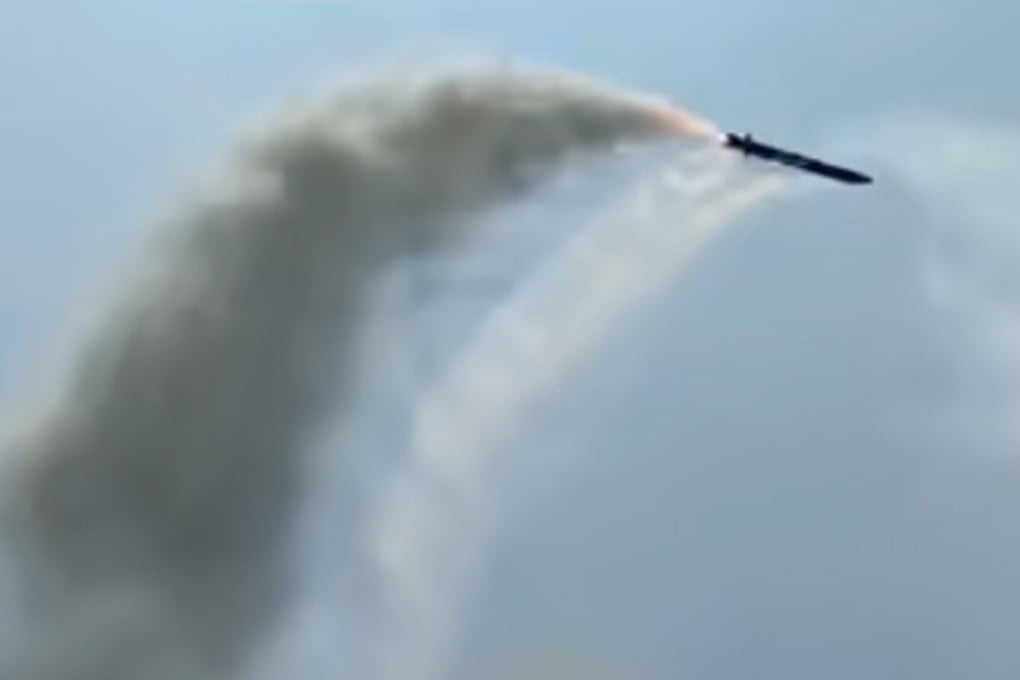
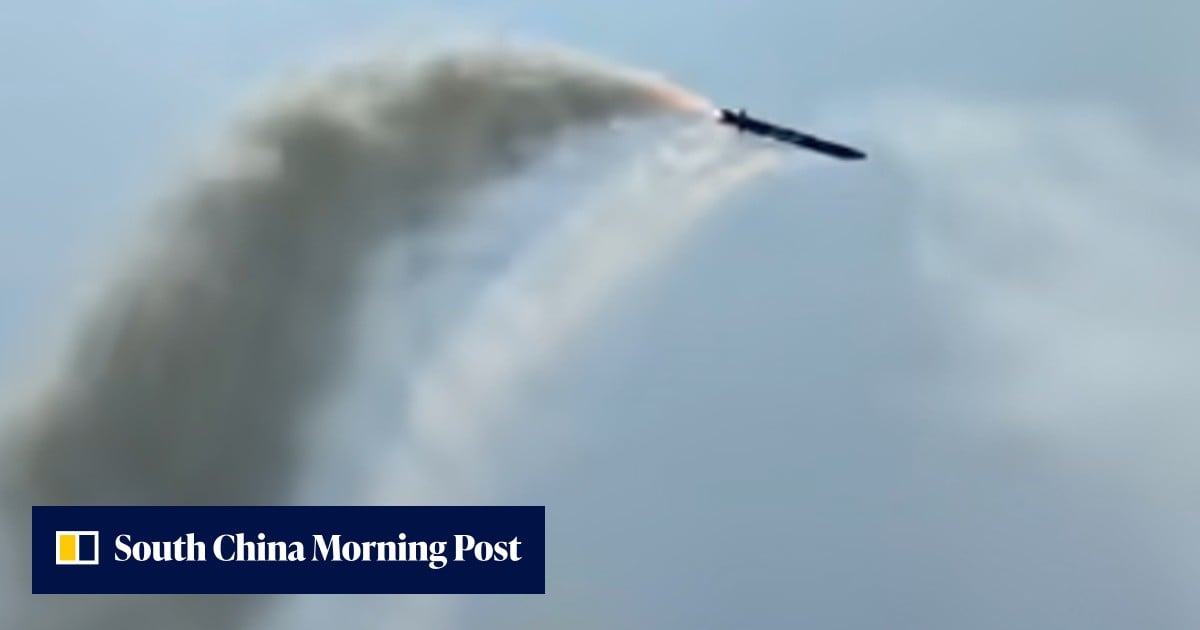
A black-coated shipborne missile takes off into the air. Photo: Screenshot from CCTV News

A black-coated shipborne missile takes off into the air. Photo: Screenshot from CCTV News

Chinese state broadcaster CCTV News released a dedicated 12-second video on Tuesday, which showcased for the first time a Chinese People's Liberation Army (PLA) test launch of a black-coated missile, stating that it was a test of the missile's extreme performance limits.

A Chinese military affairs expert said the black coating is likely designed to combine radar and visual stealth, further enhancing its penetration capability.

The brief footage was originally featured in a longer report about a PLA Navy equipment test unit in July, during which the black-coated missile was not elaborated upon and did not draw particular attention. This marks the first time CCTV has isolated and released the clip separately.

Based on available footage, the main point of interest is the color of the coating, Song Zhongping, a Chinese military affairs expert, told the Global Times on Tuesday. Most active-duty shipborne missiles are painted in light tones such as gray, white or blue, making this black coating relatively rare.

The black coating suggests the missile could be covered with a stealth coating that may have strong radar-absorbing properties, preventing radar waves from being effectively reflected back, Song said.

Meanwhile, the deep sea itself is darker in color, so the black coating may not only hide it from radar but also make it more difficult to be seen against the background of the sea, Song said.

In the video, after launch, the missile quickly changes direction, accelerating to skim above the sea surface at low altitude to reduce its flight profile and minimize exposure.

Song said that this was a test of the missile's extreme penetration capability, with the core objective of verifying its ability to rapidly turn after launch and fly at low altitude over the sea.

If a missile's trajectory remains too high before turning after vertical launch, it becomes more vulnerable to detection. Rapid turning effectively lowers its flight altitude and reduces the chances of being detected. By combining radar and visual stealth, the missile may further enhance its penetration capabilities, Song said.

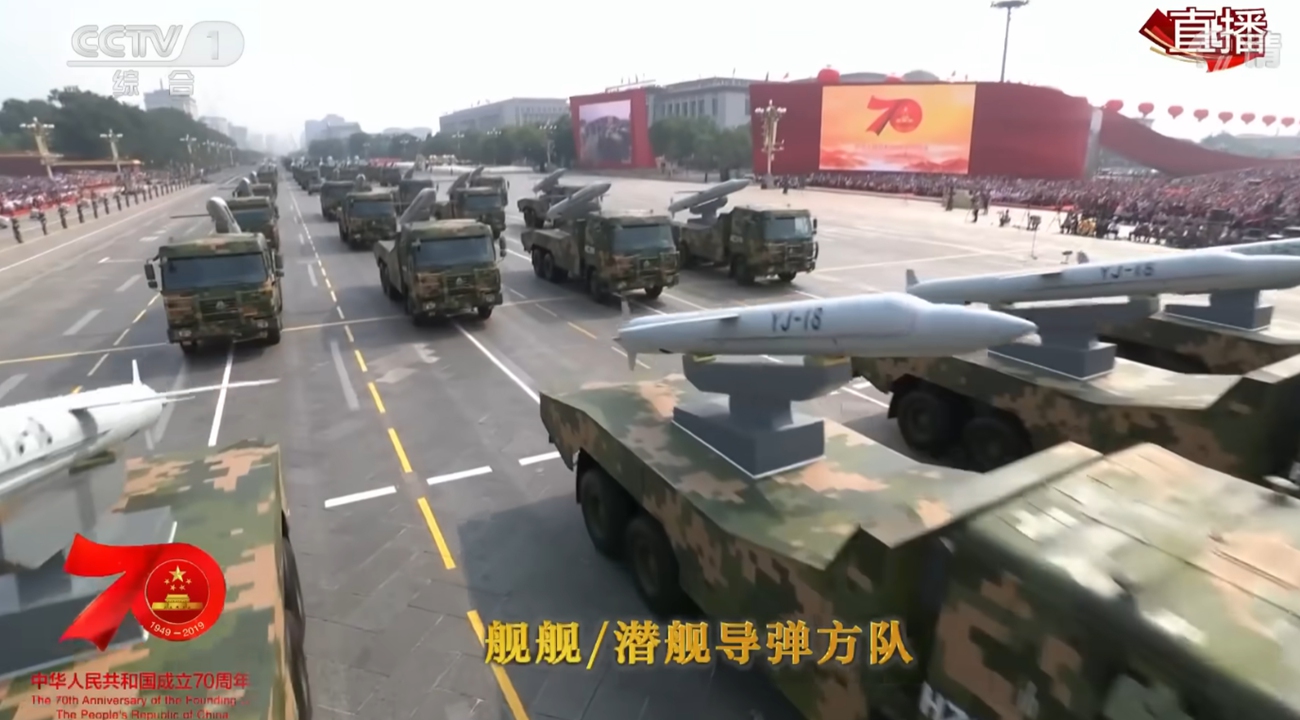
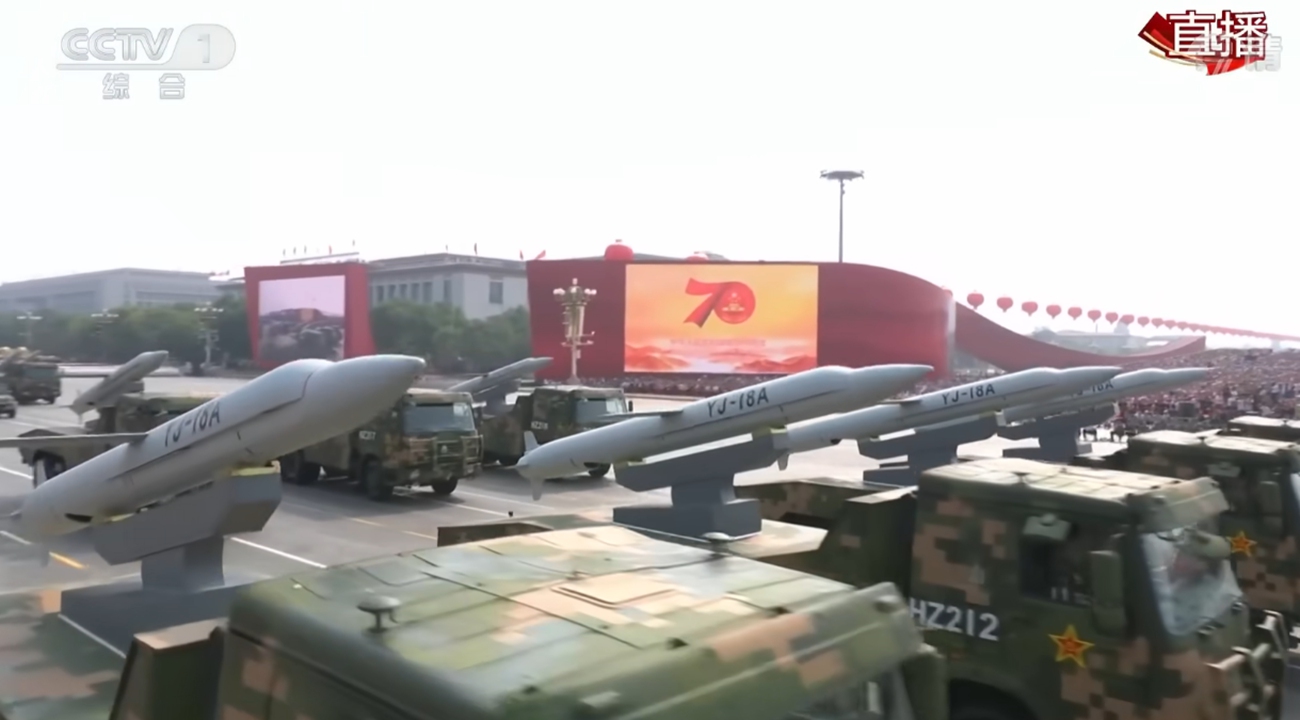
YJ-18 anti-ship cruise missiles take part in a grand military parade celebrating the 70th anniversary of the founding of the People's Republic of China in Beijing, capital of China, Oct. 1, 2019. Photo: CCTV News

YJ-18 anti-ship cruise missiles take part in a grand military parade celebrating the 70th anniversary of the founding of the People's Republic of China in Beijing, capital of China, Oct. 1, 2019. Photo: CCTV News

Song assumed that, based on the footage, the black-coated missile appears to be an improved variant of the YJ-18 anti-ship cruise missile. Its black-coating makes it different from the YJ-18, YJ-18A and YJ-18C variants officially displayed in the past.

The YJ-18 and YJ-18A missiles made their public appearances at the 70th anniversary of the founding of the People's Republic of China in 2019 as the country's new submarine-launched and ship-launched anti-ship cruise missiles. Known for being well concealed, accurate and powerful, they are key assets in the maritime joint strike system, according to the CCTV News.

YJ-18A anti-ship cruise missiles take part in a grand military parade celebrating the 70th anniversary of the founding of the People's Republic of China in Beijing, capital of China, Oct. 1, 2019. Photo: CCTV News

YJ-18A anti-ship cruise missiles take part in a grand military parade celebrating the 70th anniversary of the founding of the People's Republic of China in Beijing, capital of China, Oct. 1, 2019. Photo: CCTV News

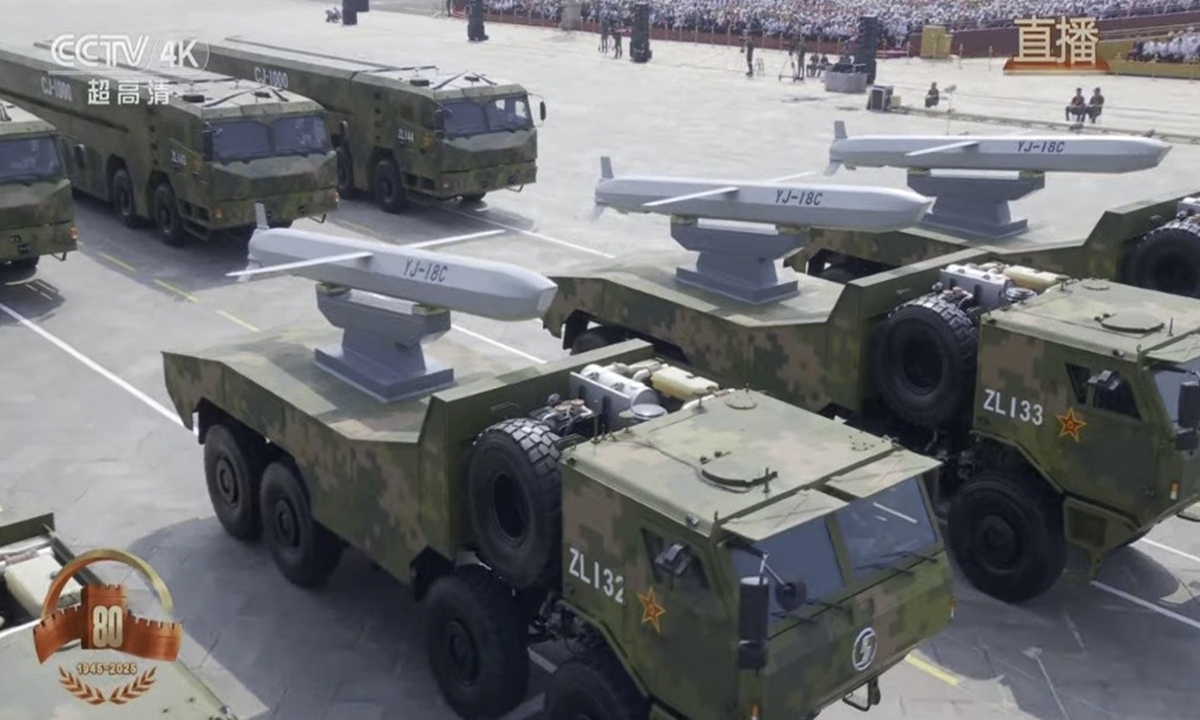
The YJ-18C cruise missile was reviewed at the September 3, 2025 V-Day parade. The YJ-18C cruise missile not only has a different role from the previously unveiled YJ-18 anti-ship cruise missile, but also features a distinctly different appearance.

YJ-18C cruise missile is reviewed at China's V-Day military parade on September 3, 2025. Photo: CCTV News

YJ-18C cruise missile is reviewed at China's V-Day military parade on September 3, 2025. Photo: CCTV News

Chinese military affairs expert Zhang Xuefeng told the Global Times that from its appearance, it is clear that the YJ-18C has adopted a stealth design. If it uses a low-altitude flight trajectory, its concealment and penetration capability will be even stronger, often enabling surprise attacks with unexpected effectiveness.

"As a versatile cruise missile, the YJ-18C can be used to strike key targets such as enemy missile positions, airfields, ports, docks and logistics hubs," Zhang said. He noted that the missile has long-range precision strike capability, enabling "surgical" strikes, and is also considered a key asset for breaking through the so-called First Island Chain.


Users who are viewing this thread

Pakistan Defence Latest

Back
Top