Beijingwalker
VIP Member

- Thread starter
- #631
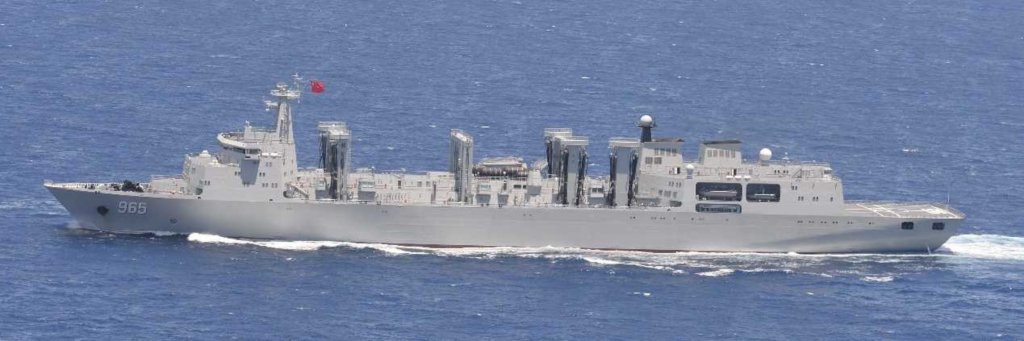
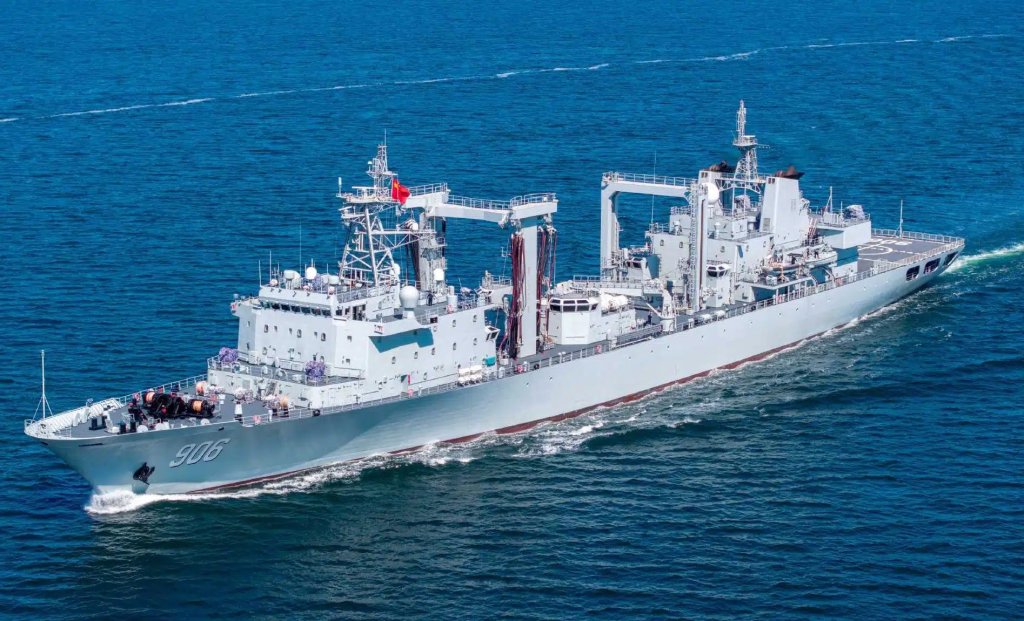
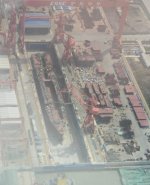
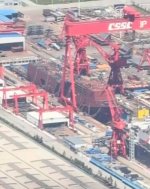
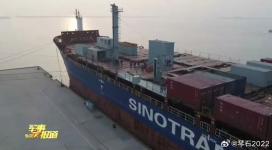
Overall, the new ship under construction at the COMEC/GSI yard looks very much like a Type 901, but substantially scaled up. The Type 901 is quite large already, with a length of around 787 feet (240 meters) and a beam measuring just under 102 feet (31 meters). It is also said to displace some 45,000 tons with a full load. As another point of comparison, the U.S. Navy’s newest John Lewis class replenishment oilers are just under 746 feet (227.3 meters) long and have roughly a 105-foot (32.2-meter) wide beam, according to the official fact sheet.
What other, more specific features and capabilities the new ship might have remains to be seen. What kind of armament it might have, even just for localized self-defense, is unknown. The Type 901 has four 30mm H/PJ-13 Gatling-type guns in turrets to provide close-in defense.
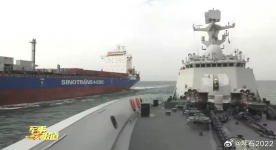
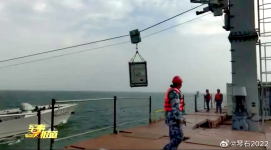
At-sea replenishment, in general, is a critical capability for any major navy that desires to conduct sustained blue water operations without having to rely on friendly ports. Even during peacetime in the broad expanses of the Pacific, port facilities of any kind, let alone ones capable of supporting large warships, can be few and far between and under direct threat.
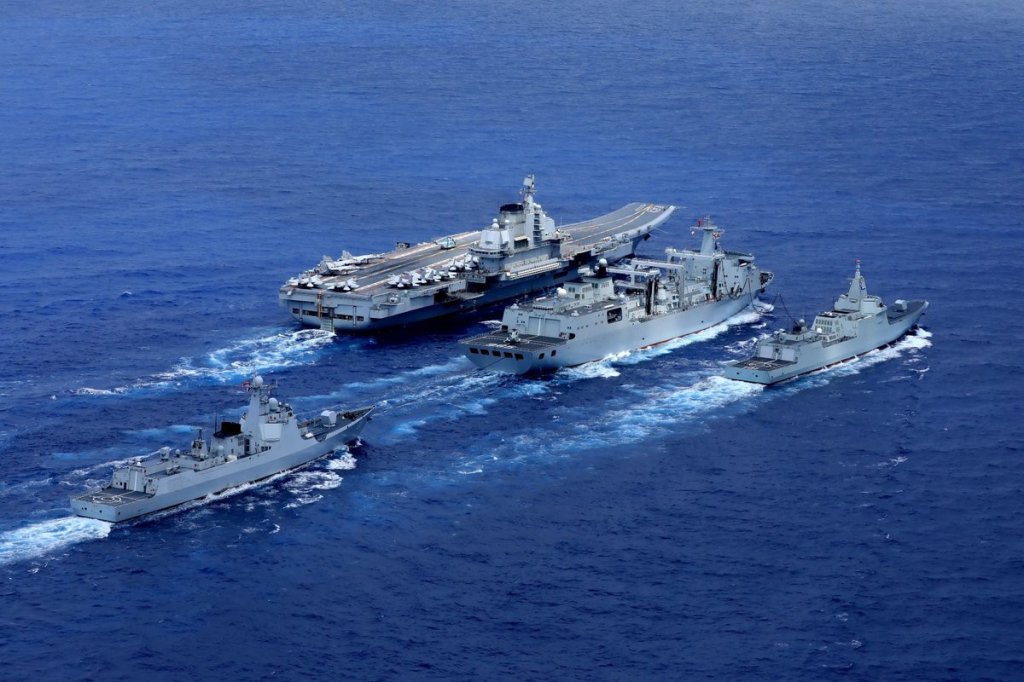
For the PLAN, there is the added demand for at-sea replenishment support that comes from operating a growing fleet of so-far conventionally-powered aircraft carriers. Those carriers require steady streams of gas for their air wings on top of the fuel and other support needed to keep them sailing at all.

The PLAN is also conducting more regular operations involving full carrier strike groups with conventionally-powered escorts that also need refueling and other support to keep up. During combat operations, replenishment ships also bring vital additional supplies of munitions to forward-deployed vessels.
It really cannot be overstressed how important at-sea replenishment is to modern blue water naval operations. This was underscored just earlier this year by challenges the U.S. Navy faced in keeping its conventionally-powered warships in the Middle East fueled amid Iranian attacks on friendly ports.
“So traditionally, for 25 years, we’ve been at war in the Middle East and that war was effectively fought in the parking lot of a giant gas station,” Robert Hein, Director of Maritime Operations for the U.S. Navy’s Military Sealift Command (MSC), said during the Navy League’s annual Sea-Air-Space exposition in April. “Iran has effectively shut down that gas station. So we’ve had to come up with really creative ways of, ‘how do we replenish the fleet?’”
You can read more about the “tanker treadmills” the Navy instituted in response, as well as other steps the service is taking now to bolster its at-sea replenishment capabilities and capacity, here.
It is worth noting here that America’s aircraft carriers are now all nuclear-powered, which eliminates their need to be refueled at sea. However, they still need gas for their air wings and other support to conduct sustained forward operations. Their escorts are all conventionally-powered, as well. As an aside, China may now be in the process of building its first nuclear-powered aircraft carrier.
Other fighting in the Middle East in recent years has also rammed home the vital importance of at-sea rearming capabilities for the U.S. Navy, especially methods for reloading vertical launch system cells on warships that it currently does not possess. Last year, in the midst of operations against Yemen’s Houthis, the service acknowledged that its warships were having to leave their stations in and around the Red Sea for weeks at a time to rearm in ports.
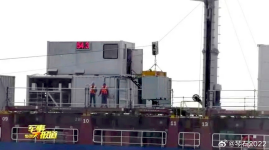
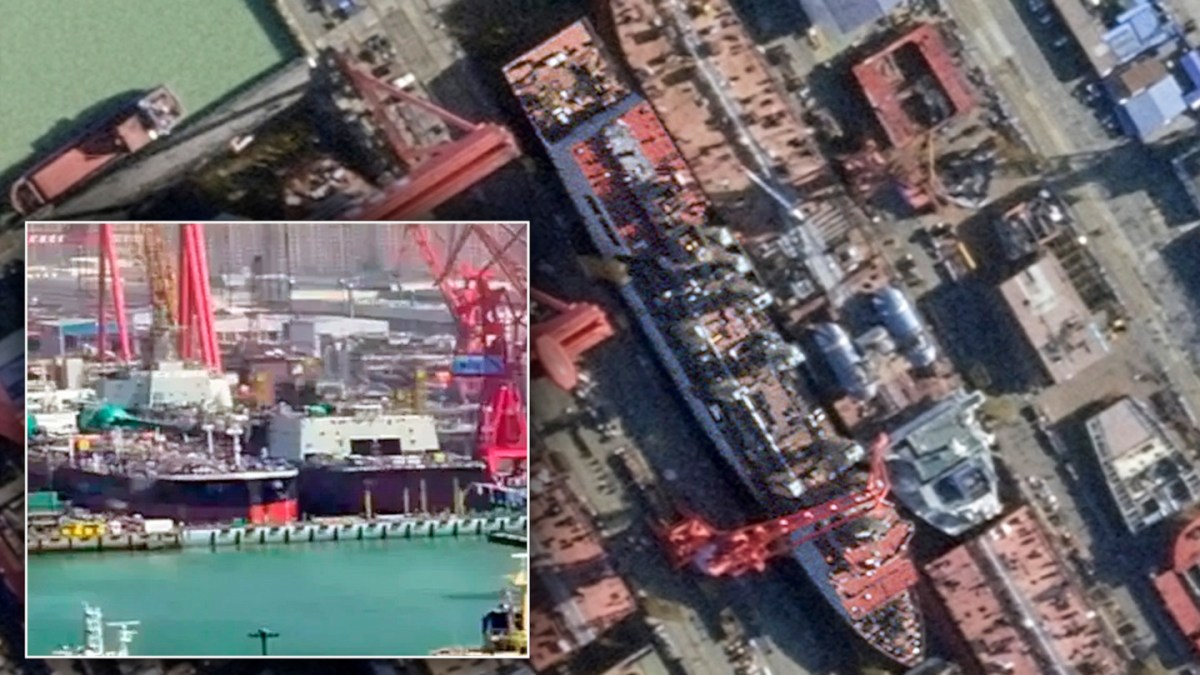
There may be a possibility that the ship under construction at the COMEC/GSI yard could be something other than a huge new at-sea replenishment ship, but this seems extremely unlikely. As noted, the ship has an array of distinct features that are exactly what one would expect to see on a replenishment vessel, and an overall configuration in line with that of the Type 901.
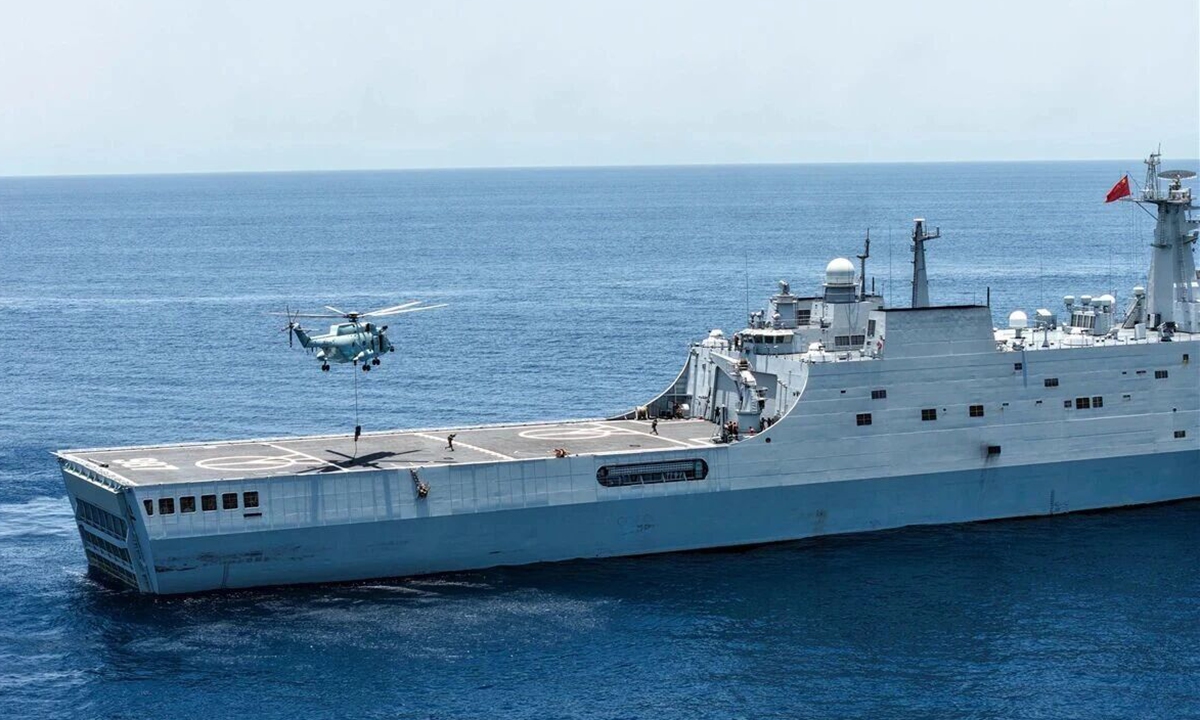
The new ship’s large size, both in terms of length and width, will offer far more internal volume for fuel, munitions, spare parts, food, and everything else needed to keep a carrier strike group operating far out to sea. China has a growing number of other ships that will require blue water support, too. This includes its massive Type 076 amphibious assault ship, which is expected to carry a substantial air wing, as well as a growing number of smaller Type 075 types.
The appearance of this ship at the COMEC/GSI also comes as the PLAN continues to modernize and expand its fleets across the board, in scale and scope, with a clear eye toward more regular and sustained blue water operations. China has been investing heavily in establishing a network of naval port facilities around the Pacific and elsewhere globally to help support these activities, as well. As noted, having to rely on friendly ports is not always desirable or even possible, especially during a conflict when the countries in question may be neutral parties.
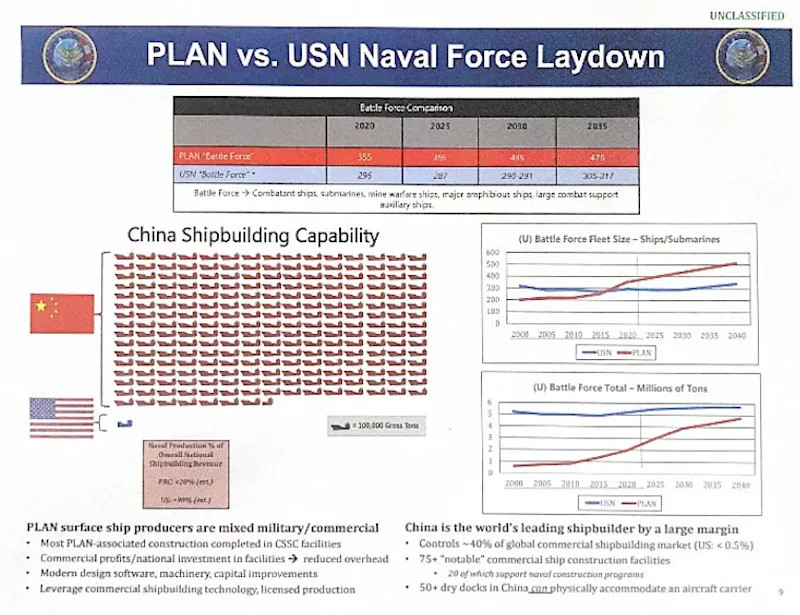
The steady flow of warships and other naval vessels, many of them very large, from shipyards across China underscores the PLAN’s broader ambitions. As TWZ regularly points out, this has created an increasingly worrisome disparity between Chinese and U.S. naval shipbuilding capacity, or lack thereof in the latter case. The U.S. government has been trying to reverse this trend, including by leveraging foreign shipbuilders, but significant challenges remain.
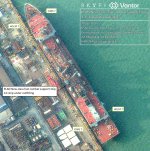
Satellite imagery shows significant progress on the new ship of interest at the COMEC/GSI yard since the start of this year. More insights into the design and capabilities of what is likely to be the world’s largest dedicated naval replenishment vessel should emerge as that work wraps up.
China Is Building A Monster Supply Ship For Its Carrier Groups
What looks to be the largest at-sea replenishment ship anywhere in the world is taking shape at a Chinese shipyard.
 www.twz.com