Navigation
Install the app
How to install the app on iOS
Follow along with the video below to see how to install our site as a web app on your home screen.
Note: This feature may not be available in some browsers.
More options
Style variation
You are using an out of date browser. It may not display this or other websites correctly.
You should upgrade or use an alternative browser.
You should upgrade or use an alternative browser.
Chinese PLAAF News
- Thread starter Fatman17
- Start date
More options
Who Replied?
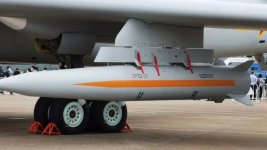


View attachment 169830
The Chinese Air Force may have begun equipping its J-10C fighters with the new YJ-21 hypersonic anti-ship missile
Unlikely … IMO up to impossible!
The YJ-21 is a massive missile and simply cannot be carried by the J-10C. What „COULD“ be is its smaller sibling called YJ-21E, but even this is not confirmed.
@Michael surely can explain better.
niubi
Registered Member


Unlikely … IMO up to impossible!
The YJ-21 is a massive missile and simply cannot be carried by the J-10C. What „COULD“ be is its smaller sibling called YJ-21E, but even this is not confirmed.
@Michael surely can explain better.
Well if JF-17 can use CM-400, J-10 can likely use YJ-21E.
Although it seems a strange choice for J-10 since China has dedicated H-6, JH-7A, and J-11/16 aircraft that would be better suited for YJ-21E, this could be aimed for J-10CP fighters.
On the other hand, J-10 inner most pylons are sort of dedicated for tanks or air to ground weapons like YJ-91 so it is possible that this is a decent application for J-10.
Well if JF-17 can use CM-400, J-10 can likely use YJ-21E.
Although it seems a strange choice for J-10 since China has dedicated H-6, JH-7A, and J-11/16 aircraft that would be better suited for YJ-21E, this could be aimed for J-10CP fighters.
On the other hand, J-10 inner most pylons are sort of dedicated for tanks or air to ground weapons like YJ-91 so it is possible that this is a decent application for J-10.
The point is - and as such my post above - the smaller YJ-21E might be an option, the real YJ-21 is never ever one.

Michael
VIP Member

The YJ-21/KD-21 is a hypersonic missile weighing approximately 2-4 tons. Neither the J-10C nor the J-10CE can carry such a large munition.The YJ-21 is a massive missile and simply cannot be carried by the J-10C. What „COULD“ be is its smaller sibling called YJ-21E, but even this is not confirmed.
China did display a model of the YJ-21E at an air show. I don't have any more information. I can only analyze based on the knowledge I possess.
I used AI for purely technical analysis.
Based on existing propulsion systems, guidance systems, warheads, and other factors, a hypersonic missile with a range of approximately 800 km weighs about 1.5-2.5 tons; a missile with a range of 500 km weighs about 1-1.5 tons; and a missile with a range of 300 km weighs about 0.8-1.2 tons. ------ This calculation is based on a solid-fuel rocket engine propulsion system. If an air-breathing scramjet engine were used, its weight would decrease, but the cost would increase dramatically.
Based on this calculation, a hypersonic missile weighing approximately 1 ton (the heaviest single payload that the J-10C/CE can carry) would have a range of about 300 km. ------ This is the minimum standard based on practical operational needs.
According to publicly available information, the J-10C/CE fighter jet, when carrying one-ton class air-to-ground munitions (LT/GB series munitions), uses the ventral hardpoint, while the hardpoints at the root of each wing are typically used for two external fuel tanks, thus forming a long-range precision strike configuration.
In the officially released photos, the suspected missile is located on the middle of the three hardpoints under the wing. This position is incapable of carrying any heavy ordnance.
====================================================
Theoretically, a hypersonic missile with a range of approximately 300 km and a weight of around one ton is militarily significant and complies with MTCR standards, making it suitable for export. Therefore, the YJ-21E is indeed a reasonable project.
However, carrying it on a manned fighter jet would entail excessively high tactical risks. We see that all of China's propaganda regarding this missile shows it paired with a UCAV, which is a more logical combination.

Beijingwalker
VIP Member
China Churns J-20, J-35 Stealth Jets at Breakneck Speed; 1,300 Fighters Likely By 2030. A Wake-Up Call?
January 16, 2026Nearly eight years after initiating procurement under the Multi-Role Fighter Aircraft (MRFA) programme, the Ministry of Defence (MoD) is finally poised to sign a ₹3.25 lakh crore ($36B) deal to procure 114 Rafale fighter aircraft for the Indian Air Force (IAF).
Roughly speaking, India currently operates around 600 fighter aircraft and is now poised to acquire 114 more.
In contrast, in 2025 alone, the People’s Liberation Army Air Force (PLAAF) is estimated to have inducted an additional 120 J-20A and J-20S heavy stealth fighters. (The J-20A is the dual-seat variant of the J-20.)
Also in 2025, the PLAAF inducted between 100 and 170 additional fighters, including the J-16/D, J-15/T/DH/DT, and J-10A/B/C.
In other words, the PLAAF may have added up to 300 heavy stealth and non-stealth fighters to its inventory in a single year.
A Royal United Services Institute (RUSI) projection suggests that by 2030, around 1,000 J-20A/S fighters and 900 J-16s will be in service with the PLAAF.
The number of J-20s manufactured increased from around 150 in August 2022 to 208 in November 2023. Production rates likely reached 100 aircraft per year in 2023 and have since stabilised at approximately 120 aircraft annually.
In addition to the projected 1,000 J-20A/S stealth fighters, the PLAAF may also induct several hundred land-based J-35 variants.
The J-35 is believed to be in low-rate initial production, but output is expected to ramp up in the coming years. Based on the rapid ramp-up of J-20 production, between 200 and 300 J-35s could be operational by 2030.
Notably, the J-35 will field highly capable sensors and weapons derived from systems painstakingly perfected for the J-20.
India’s Foolhardy Nonchalance
Oblivious to this burgeoning threat, Indians are hotly debating the need for additional Rafale fighters. Worse still, the Indian government appears to be ignoring the Russian offer, despite the fact that the IAF has projected the need for two to three squadrons of an interim stealth fighter to plug a widening operational gap.Frankly, the only plausible explanation for India sitting on the Russian offer appears to be deep Central Intelligence Agency (CIA) and United States military–industrial complex (MIC) penetration of Indian corporates, the bureaucracy, and the political leadership. If so, Indian sovereignty is largely illusory. I hope this assessment is wrong—but the issue warrants serious reflection.
Urgent Need to Delink ToT from Weapon Acquisition
The primary reason for the approximately 30 per cent decline in the IAF’s squadron strength—from 42 to 29 squadrons—has been persistent delays in the delivery of the Tejas fighter and its follow-on variants, including the Tejas Mk-1A and Tejas Mk-2.Shockingly, the Ministry of Defence and the political leadership never moved beyond superficial tinkering with procurement procedures to address these crippling delays. The outcome was predictable: the process stalled and eventually ran aground. Was this paralysis by analysis? Possibly. More likely, despite the optics, defence has never been more than a desultory priority for the political leadership.
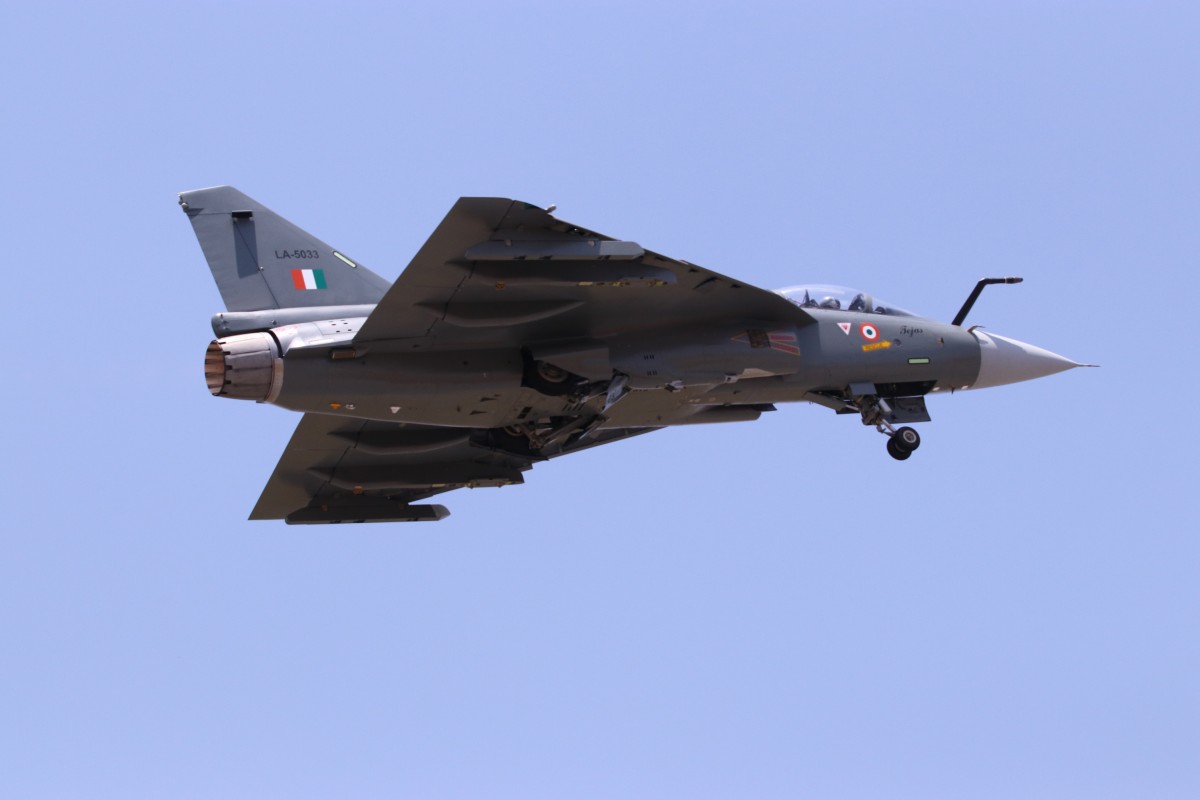
Let us focus on the optics. No one disputes the need—or urgency—of Make in India for defence-related equipment. But where is the logic in allowing defence procurement to collapse because Make in India timelines cannot be met?
The problems with Make in India cannot be addressed through procurement policy changes alone; they are endemic to the current state of India’s industrial base.
For many technologically advanced components used in modern weapon systems—such as aero and marine engines, sensors, and advanced materials—India possesses neither the industrial base nor the technical know-how required for local manufacture. Indeed, the absence of know-how is itself a consequence of the absence of a mature industrial base.
The industrial base of any country evolves in response to market dynamics. When substantial demand emerges, the private sector—driven by profit incentives—moves rapidly to meet it. Firms upgrade industrial capacity, enter technology transfer arrangements, raise capital, hire skilled personnel, and undertake a range of other, often complex, adjustments necessary to compete.
India’s inability to develop several critical weapon-system components is not a failure of intelligence or talent. It stems from the absence of a mature industrial base, which in turn limits engineering excellence, advanced semiconductor fabrication capability, materials science depth, and related competencies. The gap is so fundamental that India is not even positioned to reverse-engineer, let alone replicate, cutting-edge technologies.
Defence Procurement & Make in India Are Parallel Processes
For reasons that remain unexplained, the Ministry of Defence and the Government of India (GoI) have tethered India’s defence preparedness to the Make in India programme. This flawed linkage has allowed national security to be held hostage to industrial policy.It is a dangerous and indefensible conflation.
A familiar refrain follows: India should not buy Rafales because France has not agreed to transfer technology. This framing is faulty. It is not France but Dassault Aviation that has declined extensive transfer of technology—and understandably so. How can a private design house be expected to part with its core intellectual property when India lacks the industrial base and the pool of trained, experienced personnel required to absorb it? Moreover, Dassault’s very survival depends on intellectual property accumulated painstakingly over decades.
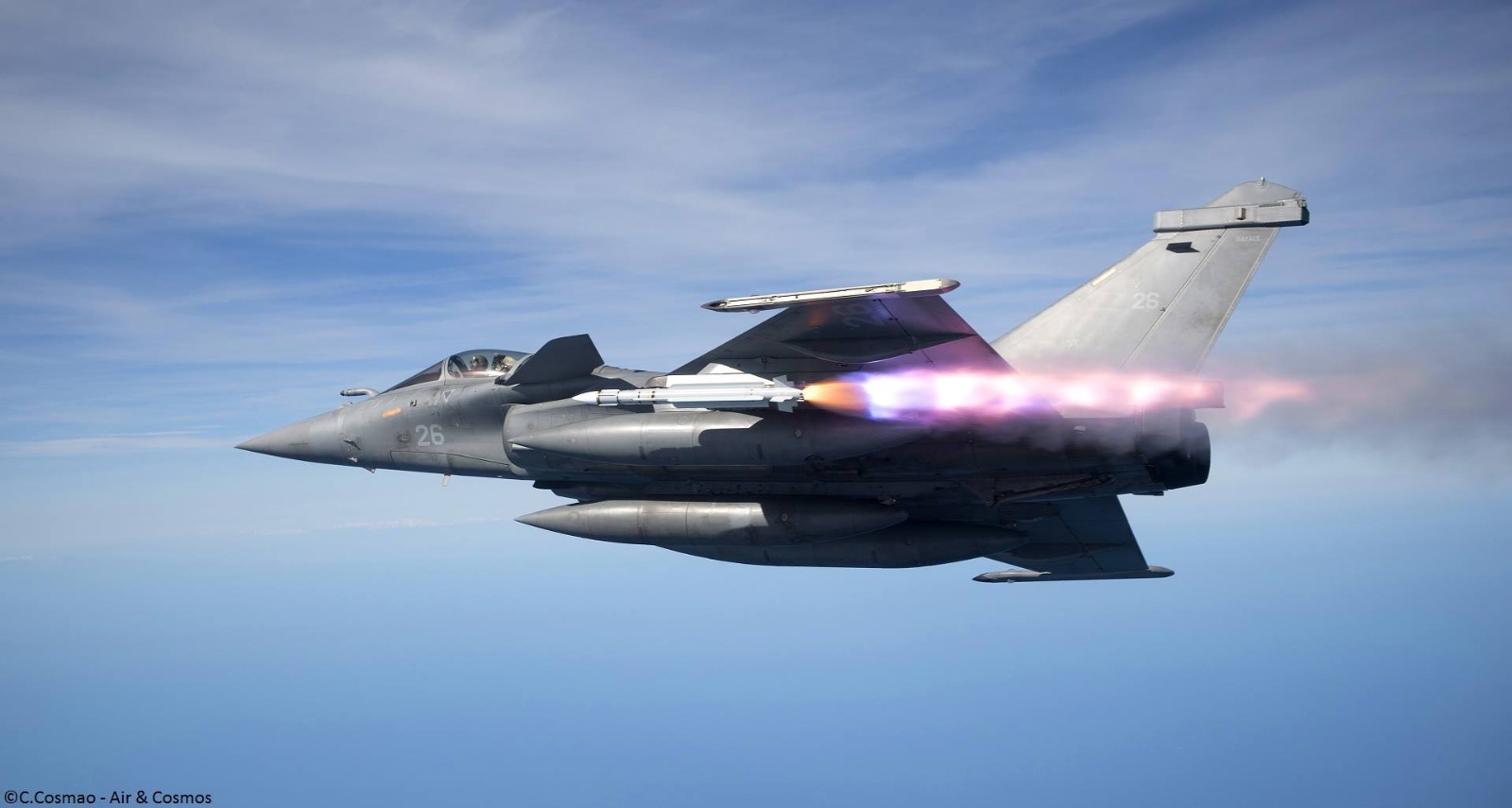
This raises a more fundamental question: why is India insisting on transfer of technology as part of every fighter aircraft procurement deal?
The Defence Research and Development Organisation (DRDO) and Hindustan Aeronautics Limited (HAL) already know how to design and manufacture fighter aircraft. They have done so twice—first with the HF-24 Marut, and later with the Tejas.
What they may need is targeted transfer of technology to plug specific capability gaps—high-temperature engine technology, for instance. Such transfers should be negotiated independently, rather than being tied to acquisitions meant to address urgent operational shortfalls.
Indeed, Safran and the Gas Turbine Research Establishment (GTRE) are reportedly poised to sign a contract to co-develop an engine for India’s Advanced Medium Combat Aircraft (AMCA) stealth fighter. The deal—reportedly cleared by the Ministry of Defence, the National Security Council, and the Finance Ministry—is awaiting final approval from the Cabinet Committee on Security (CCS).
The proposed agreement, valued at over ₹30,000 crore, reportedly involves full transfer of technology for a 120–140 kilonewton thrust-class engine, with joint intellectual property ownership and manufacturing in India.
So why does India need Rafale engine technology at all? After all, HAL has been assembling and partially manufacturing the AL-31F engine for the Su-30MKI locally for decades.
The core issue is this: if every fighter aircraft acquisition is made contingent on comprehensive transfer of technology, will India ever acquire fighters from abroad at all? Revisit the opening paragraphs and ask whether India can realistically counter the Chinese threat through local production of the Light Combat Aircraft (LCA) Mk-1A, LCA Mk-2, and Advanced Medium Combat Aircraft (AMCA), supplemented by roughly 150 Rafales and about 270 Su-30MKIs—many of which have not undergone a major upgrade in nearly 25 years.
Conclusion
China’s military build-up has already reached overwhelming proportions.Indian Air Force light fighters such as the Tejas Mk-1 and Mk-1A lack the range and payload required to effectively defend Indian airspace against the PLAAF—particularly against its stealth fighters (J-20A/S, J-35) and heavy multirole aircraft (J-16/D, J-15/T/DH/DT).
The IAF must urgently rebuild its combat strength to the authorised level of 42 fighter squadrons—and not with just any aircraft, but with platforms capable of credibly countering the PLAAF’s current and emerging threat.
Make in India remains an important long-term objective. It cannot, however, be India’s immediate operational strategy.
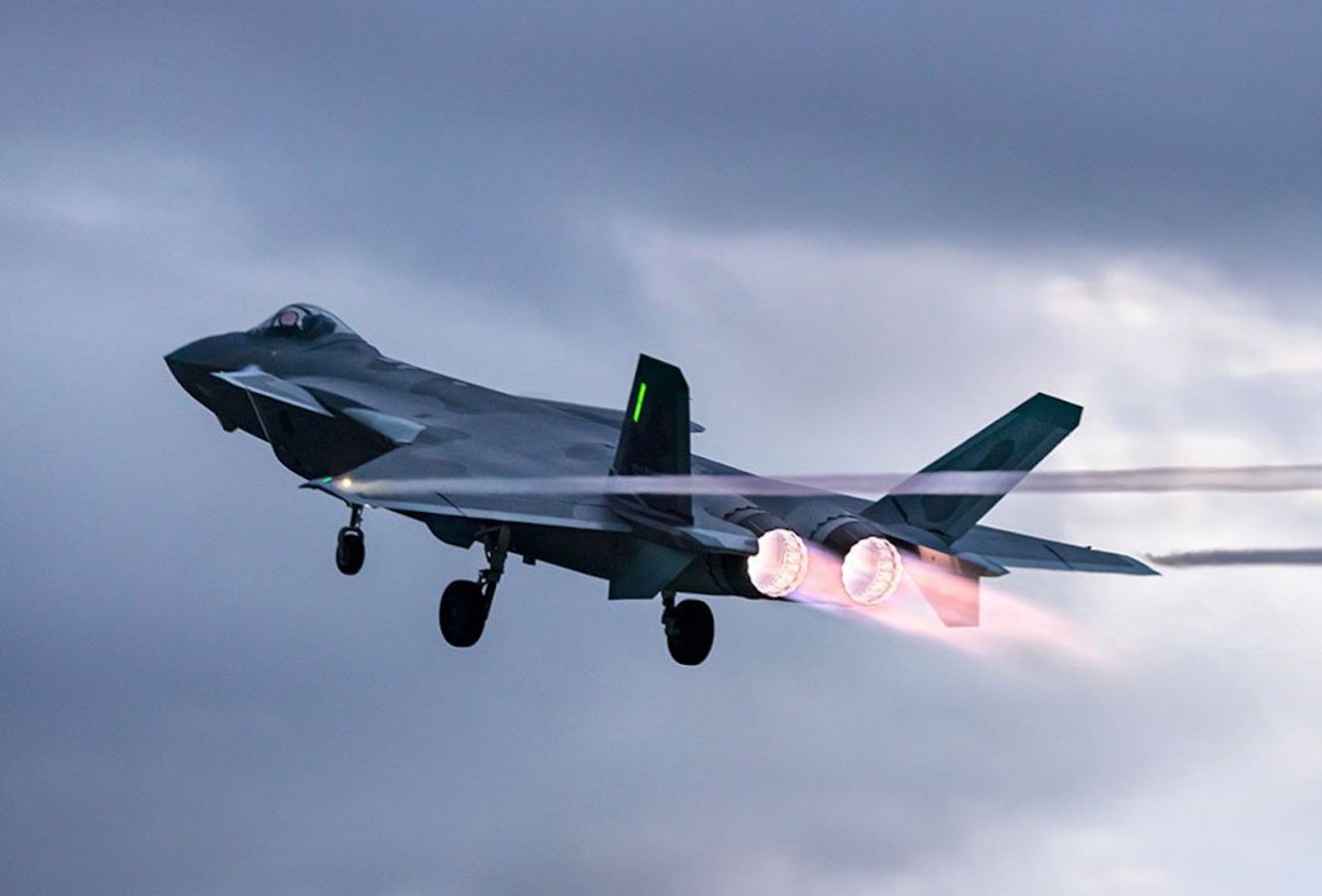
China Churns Out J-20, J-35 Stealth Fighters at Breakneck Speed; 1300 Jets Likely By 2030. A Wake-Up Call?
Nearly eight years after initiating procurement under the Multi-Role Fighter Aircraft (MRFA) programme, the Ministry of Defence (MoD) is finally poised to sign a ₹3.25 lakh crore ($36B) deal to procure 114 Rafale fighter aircraft for the Indian Air Force (IAF). Roughly speaking, India currently...
 www.eurasiantimes.com
cir
Registered Member
New Breakthroughs with the Fusion of Two New Types of Strength! AVIC Chengfei(CAC) Successfully Completes Systematized Test Flights
AVIC Chengfei
January 24, 2026 at 08:48
Recently, AVIC Chengfei(CAC) successfully completed a series of systematized test flights and training exercises involving 10 types of aircraft across five different locations. These included both manned and unmanned systems, indoor and outdoor test sites, as well as research and acceptance trials. Through scientific planning and comprehensive coordination, the company integrated all essential elements, including various aircraft models, test flight conditions, aircrew resources, and support capabilities. This achievement advances the development of the "fusion of two new types of strength"—new quality productive forces and new quality combat capabilities—and represents a robust test flight initiative by the company toward the systematized application of modern aviation equipment.
AVIC Chengfei
January 24, 2026 at 08:48
Recently, AVIC Chengfei(CAC) successfully completed a series of systematized test flights and training exercises involving 10 types of aircraft across five different locations. These included both manned and unmanned systems, indoor and outdoor test sites, as well as research and acceptance trials. Through scientific planning and comprehensive coordination, the company integrated all essential elements, including various aircraft models, test flight conditions, aircrew resources, and support capabilities. This achievement advances the development of the "fusion of two new types of strength"—new quality productive forces and new quality combat capabilities—and represents a robust test flight initiative by the company toward the systematized application of modern aviation equipment.

Pakistanithinktank
Registered Member

China Churns J-20, J-35 Stealth Jets at Breakneck Speed; 1,300 Fighters Likely By 2030. A Wake-Up Call?
January 16, 2026
Nearly eight years after initiating procurement under the Multi-Role Fighter Aircraft (MRFA) programme, the Ministry of Defence (MoD) is finally poised to sign a ₹3.25 lakh crore ($36B) deal to procure 114 Rafale fighter aircraft for the Indian Air Force (IAF).
Roughly speaking, India currently operates around 600 fighter aircraft and is now poised to acquire 114 more.
In contrast, in 2025 alone, the People’s Liberation Army Air Force (PLAAF) is estimated to have inducted an additional 120 J-20A and J-20S heavy stealth fighters. (The J-20A is the dual-seat variant of the J-20.)
Also in 2025, the PLAAF inducted between 100 and 170 additional fighters, including the J-16/D, J-15/T/DH/DT, and J-10A/B/C.
In other words, the PLAAF may have added up to 300 heavy stealth and non-stealth fighters to its inventory in a single year.
A Royal United Services Institute (RUSI) projection suggests that by 2030, around 1,000 J-20A/S fighters and 900 J-16s will be in service with the PLAAF.
The number of J-20s manufactured increased from around 150 in August 2022 to 208 in November 2023. Production rates likely reached 100 aircraft per year in 2023 and have since stabilised at approximately 120 aircraft annually.
In addition to the projected 1,000 J-20A/S stealth fighters, the PLAAF may also induct several hundred land-based J-35 variants.
The J-35 is believed to be in low-rate initial production, but output is expected to ramp up in the coming years. Based on the rapid ramp-up of J-20 production, between 200 and 300 J-35s could be operational by 2030.
Notably, the J-35 will field highly capable sensors and weapons derived from systems painstakingly perfected for the J-20.
India’s Foolhardy Nonchalance
Oblivious to this burgeoning threat, Indians are hotly debating the need for additional Rafale fighters. Worse still, the Indian government appears to be ignoring the Russian offer, despite the fact that the IAF has projected the need for two to three squadrons of an interim stealth fighter to plug a widening operational gap.
Frankly, the only plausible explanation for India sitting on the Russian offer appears to be deep Central Intelligence Agency (CIA) and United States military–industrial complex (MIC) penetration of Indian corporates, the bureaucracy, and the political leadership. If so, Indian sovereignty is largely illusory. I hope this assessment is wrong—but the issue warrants serious reflection.
Urgent Need to Delink ToT from Weapon Acquisition
The primary reason for the approximately 30 per cent decline in the IAF’s squadron strength—from 42 to 29 squadrons—has been persistent delays in the delivery of the Tejas fighter and its follow-on variants, including the Tejas Mk-1A and Tejas Mk-2.
Shockingly, the Ministry of Defence and the political leadership never moved beyond superficial tinkering with procurement procedures to address these crippling delays. The outcome was predictable: the process stalled and eventually ran aground. Was this paralysis by analysis? Possibly. More likely, despite the optics, defence has never been more than a desultory priority for the political leadership.
File Image: LCA Tejas Mk-1A
Let us focus on the optics. No one disputes the need—or urgency—of Make in India for defence-related equipment. But where is the logic in allowing defence procurement to collapse because Make in India timelines cannot be met?
The problems with Make in India cannot be addressed through procurement policy changes alone; they are endemic to the current state of India’s industrial base.
For many technologically advanced components used in modern weapon systems—such as aero and marine engines, sensors, and advanced materials—India possesses neither the industrial base nor the technical know-how required for local manufacture. Indeed, the absence of know-how is itself a consequence of the absence of a mature industrial base.
The industrial base of any country evolves in response to market dynamics. When substantial demand emerges, the private sector—driven by profit incentives—moves rapidly to meet it. Firms upgrade industrial capacity, enter technology transfer arrangements, raise capital, hire skilled personnel, and undertake a range of other, often complex, adjustments necessary to compete.
India’s inability to develop several critical weapon-system components is not a failure of intelligence or talent. It stems from the absence of a mature industrial base, which in turn limits engineering excellence, advanced semiconductor fabrication capability, materials science depth, and related competencies. The gap is so fundamental that India is not even positioned to reverse-engineer, let alone replicate, cutting-edge technologies.
Defence Procurement & Make in India Are Parallel Processes
For reasons that remain unexplained, the Ministry of Defence and the Government of India (GoI) have tethered India’s defence preparedness to the Make in India programme. This flawed linkage has allowed national security to be held hostage to industrial policy.
It is a dangerous and indefensible conflation.
A familiar refrain follows: India should not buy Rafales because France has not agreed to transfer technology. This framing is faulty. It is not France but Dassault Aviation that has declined extensive transfer of technology—and understandably so. How can a private design house be expected to part with its core intellectual property when India lacks the industrial base and the pool of trained, experienced personnel required to absorb it? Moreover, Dassault’s very survival depends on intellectual property accumulated painstakingly over decades.
File Image: Rafale
This raises a more fundamental question: why is India insisting on transfer of technology as part of every fighter aircraft procurement deal?
The Defence Research and Development Organisation (DRDO) and Hindustan Aeronautics Limited (HAL) already know how to design and manufacture fighter aircraft. They have done so twice—first with the HF-24 Marut, and later with the Tejas.
What they may need is targeted transfer of technology to plug specific capability gaps—high-temperature engine technology, for instance. Such transfers should be negotiated independently, rather than being tied to acquisitions meant to address urgent operational shortfalls.
Indeed, Safran and the Gas Turbine Research Establishment (GTRE) are reportedly poised to sign a contract to co-develop an engine for India’s Advanced Medium Combat Aircraft (AMCA) stealth fighter. The deal—reportedly cleared by the Ministry of Defence, the National Security Council, and the Finance Ministry—is awaiting final approval from the Cabinet Committee on Security (CCS).
The proposed agreement, valued at over ₹30,000 crore, reportedly involves full transfer of technology for a 120–140 kilonewton thrust-class engine, with joint intellectual property ownership and manufacturing in India.
So why does India need Rafale engine technology at all? After all, HAL has been assembling and partially manufacturing the AL-31F engine for the Su-30MKI locally for decades.
The core issue is this: if every fighter aircraft acquisition is made contingent on comprehensive transfer of technology, will India ever acquire fighters from abroad at all? Revisit the opening paragraphs and ask whether India can realistically counter the Chinese threat through local production of the Light Combat Aircraft (LCA) Mk-1A, LCA Mk-2, and Advanced Medium Combat Aircraft (AMCA), supplemented by roughly 150 Rafales and about 270 Su-30MKIs—many of which have not undergone a major upgrade in nearly 25 years.
Conclusion
China’s military build-up has already reached overwhelming proportions.
Indian Air Force light fighters such as the Tejas Mk-1 and Mk-1A lack the range and payload required to effectively defend Indian airspace against the PLAAF—particularly against its stealth fighters (J-20A/S, J-35) and heavy multirole aircraft (J-16/D, J-15/T/DH/DT).
The IAF must urgently rebuild its combat strength to the authorised level of 42 fighter squadrons—and not with just any aircraft, but with platforms capable of credibly countering the PLAAF’s current and emerging threat.
Make in India remains an important long-term objective. It cannot, however, be India’s immediate operational strategy.
China Churns Out J-20, J-35 Stealth Fighters at Breakneck Speed; 1300 Jets Likely By 2030. A Wake-Up Call?
Nearly eight years after initiating procurement under the Multi-Role Fighter Aircraft (MRFA) programme, the Ministry of Defence (MoD) is finally poised to sign a ₹3.25 lakh crore ($36B) deal to procure 114 Rafale fighter aircraft for the Indian Air Force (IAF). Roughly speaking, India currently...
India is planing to build 1000 Tejas by 2030, they have recently acquired aliens tech.

Fatman17
THINK TANK: CONSULTANT
- Thread starter
- #369
Is the dogfight DEAD?
- Aviation Features
- Is the dogfight DEAD?
25th January 2026
Feature
Close Combat
Mina Adel examines whether the potential demise of Within Visual Range combat within PLAAF doctrine is wise

A PLAAF pilot leads a mixed formation of J-10s and Gripens on a Falcon Strike sortie
Chinese Ministry of National Defense
In July 2017, the China Command and Control Society, along with the Yuanwang Think Tank, held a seminar on ‘Future Air Operations’ at the National Convention Centre. During the event, the invited experts from China’s aviation industry and Air Force were shown a picture depicting a conversation between an instructor and trainees: Instructor: “Why do you want to dogfight?” Student: “Because I have super manoeuvrability.” Instructor: “Wrong, because you are stupid!” These sentences wouldn’t seem unusual if presented to participants in the Red Flag exercises in the United States or the Tactical Leadership Programme (TLP) in Spain, but considering the audience at the Chinese event, it raises the question of whether the People’s Liberation Army Air Force (PLAAF) now considers within visual range (WVR) combat redundant. To seek answers, Airforces Monthly has consulted with expert pilots and specialists, among them Vincent ‘Jell-O’ Aiello, a retired US Navy F/A-18 Hornet pilot and TOPGUN instructor and Dave Kurtz, a US Navy tactics instructor with 2,500 flight hours in the EA-6B Prowler and EA-18G Growler.
From Dagger to Arrows
The Chinese strategic mindset of not fully embracing the concept of beyond-visual-range (BVR) aerial warfare is considered to have been due to the limited exposure to Western fighter aircraft – whether through joint training or minor skirmishes which never escalated into full combat. A wakeup call came during Falcon Strike exercises against the Royal Thai Air Force, which are widely regarded as a laboratory for the Chinese to evaluate their technologies and refine their tactics to keep pace with Western advancements.

A USAF F-35A in the cross hairs of a French Rafale during this year’s Atlantic Trident exercise
Armée de l'air et de l'espace
In December 2019, Alert 5 published slides from a talk given by Li Zhonghua, who is said to have participated in Falcon Strike 2015. One slide showed the score for each day of the exercise; on the first day Thai Gripen pilots were defeated 16-0 in dogfights. When it came to the BVR arena, the Gripen fared better, with 24% of the kills at range beyond 50km. In particular, Thai pilots achieved an 88% hit rate using AIM-120 AMRAAM missiles, downing 41 Chinese jets while losing only nine Gripens.
The outcomes of these exercises were significant enough to alter the Chinese position. Instead of deploying J-11 aircraft – China’s version of the Russian Su-27SK – they were replaced by the then new J-10 fighters, which are considered comparable in size and armament to the Gripen. Subsequent training editions continued to feature various J-10 variants, but were consistently drawn from the 131st Air Brigade, the oldest unit operating this aircraft and whose pilots were undoubtedly highly experienced.
Currently, the 132nd Air Brigade has assumed responsibility for participation in these exercises, following the transition of the 131st to operating J-20 fighters. Both brigades are based at Luliang Air Base.
The introduction of the J-10, especially the C variant, saw Chinese performance improve significantly. This version is equipped with the KLJ-7A AESA radar, estimated to have a range of 200km. The emergence of new air-to-air missiles, most notably the PL-15 with a range of 300km and an export variant reaching 145km. At this range, the domestic version theoretically surpasses all European competitors and matches American missiles in performance relative to the export model.
China continues to participate in the Thai exercises, albeit now sending a different mix of fighter jets, early-warning aircraft, reconnaissance platforms, and even strategic bombers such as the H-6 in this year’s 2025 edition. Additionally, the UAE Air Force joined the Falcon Shield 2024 drills in July 2024, deploying Mirage 2000-9 fighters.
Switching to guns
For those with long memories, the demise of WVR and the requirement to equip fighter jets with guns will no doubt draw a wry smile. The desire to achieve superior tactical advantage against adversaries through balancing technological advancement and combat adaptation has not changed, but once again the question of a gun is a subject of debate.
Often viewed as a last-resort weapon, its use is considered unsafe, except under specific conditions.
A frequently cited example in this context is the difference in performance between US pilots flying early variants of the F-4 Phantom, and the gun-equipped US Navy F-8 Crusader, and later the F-4E variant which reintroduced the internal gun. The readoption of a gun coupled with improved pilot training in air combat, resulted from a sustained effort that continues to this day, underscoring the importance of studying combat engagements and adversaries. One of the key outcomes to improve success and survivability learnt from the Vietnam War was the establishment of the Red Flag training exercises.
Providing American pilots at the time with a full range of options, along with the necessary training, was sufficient to achieve air superiority over Vietnam compared to earlier phases of the conflict. The number of engagements decreased and pilots felt more comfortable and less constrained by a single scenario or tactic. This was crucial because the adversary had studied them thoroughly and understood the risks well; the Vietnamese developed tactics aimed at denying the Americans effective use of their superior long-range missiles, forcing them into engagement rules that favoured Vietnam, using aircraft such as the MiG-17 and MiG-21.

A J-10C of 131 Brigade in low-viz markings
via Andreas Rupprecht

A J-10C of 131 Brigade
via Andreas Rupprecht

Falcon Strike exercises have always served as a testing ground for Chinese technology against its Western counterparts, prompting the Chinese to consistently deploy their most advanced aircraft to the drills
Chinese Ministry of National Defense
For Vincent Aiello, the days of WVR are not dead: “After World War Two, the rapid advance of air-to-air missile technology similarly portended the demise of dogfighting, and yet the US’s abysmal performance in Vietnam proved that fallacy. Next, it was stealth, and abundant situational awareness inherent in fifth- and soon, sixth-generation fighters.”
He continued: “There will always be a ‘next’, and yet there will always be a requirement for combat pilots to understand basic fighter manoeuvre (BFM) concepts and possess the ability to maximally perform their aircraft in dynamic and often chaotic air warfare. BFM/ Air Combat Manoeuvre is no more going away than aerial combat ‘writ large’ is. Any military force that diminishes its training in this vital area will be similarly humiliated as the US was in Southeast Asia.”
“A wake-up call arrived during Falcon Strike exercises against the Royal Thai Air Force”
War Wizards
From this a crucial question emerges: are the Chinese currently experiencing a state of euphoria over long-range air combat – especially following last year’s incident between Pakistan and India, and the downing of Rafale jets? Or are they simply going through the same lesson the Americans once learned?
The answer depends on whether the current Chinese, and even Russian, advantage in air-to-air missile range can be countered through specific tactics or modern countermeasures, much like the Vietnamese once did. It’s important to consider that the US has already developed new long-range air-to-air missiles, now available in its arsenal, such as the AIM-174, AIM-260, and updated variants of the AIM-120. So, with these missiles in play, will air combat devolve into solely missile exchanges?
Fatman17
THINK TANK: CONSULTANT
- Thread starter
- #370
Many jet fighter advocates tend to focus solely on the jet, as in many famous movies like Top Gun, overlooking the supporting systems, both electronic and logistical, that have become the most critical components of victory in modern aerial warfare.

Personnel load an AIM-120 AMRAAM onto an F-35A Lightning II fighter jet. The limited number of missiles carried by stealth aircraft risk their being drawn into close-range combat
US Air Force

A 131 Brigade J-10C pilot prepares for a training sortie
via Andreas Rupprecht
Among the most vital of these systems are electronic-warfare aircraft, which play a decisive role in shaping the outcomes of today’s air battles.
As reported in AFM (see Understanding the Rafale Kills, October 2025, pages 43-58) one of the key advantages identified by the Pakistanis in their aerial engagements with the Indian Air Force was not only the missile range of their aircraft, but also the deployment of specialised and powerful electronic warfare systems. These systems were effective in jamming the Rafales, neutralising their tactical advantages, and isolating their pilots from both command and fellow wingmen – an impact strong enough to deliver a decisive blow.
Dave Kurtz said: “Electronic Attack, the use of jamming to deny, degrade, or delay guided missile engagements, creates a temporary time and space sanctuary for aircraft to reach weapons release range.
“You wouldn’t be stupid to engage in a dogfight – but you would be dead if you were forced into one and weren’t prepared for it.”
Therefore, if an air-launched weapon has a shorter range than the air threat, jamming the right radars, either early warning or target engagement, can allow penetration, release, and egress, provided the jammers can stay on station long enough and avoid being shot at themselves.”
Therefore, electronic warfare, whether through dedicated systems or specialised aircraft, undoubtedly confers an advantage on the air formations it supports. But can survival against a fifth-generation adversary fighter equipped with long-range missiles be achieved even without such support?
To answer this question the author consulted a NATO fighter pilot with expertise in aerial combat. (For security reasons, he declined to disclose his name or callsign.) He told me: “With stealth planes, the number of missiles is minimal, and EW is getting better and better in making those missiles lose track, so scenarios where you end up in a merge with Infra-Red missiles or even guns are very possible. Finally, we can say with complete confidence: you wouldn’t be stupid to engage in a dogfight – but you would be dead if you were forced into one and weren’t prepared for it.”

An EA-18G Growler of VAQ-131 takes off from Nellis AFB, home of Red Flag. Electronic attack remains a valuable force multiplier
US Air Force
Personnel load an AIM-120 AMRAAM onto an F-35A Lightning II fighter jet. The limited number of missiles carried by stealth aircraft risk their being drawn into close-range combat
US Air Force
A 131 Brigade J-10C pilot prepares for a training sortie
via Andreas Rupprecht
Among the most vital of these systems are electronic-warfare aircraft, which play a decisive role in shaping the outcomes of today’s air battles.
As reported in AFM (see Understanding the Rafale Kills, October 2025, pages 43-58) one of the key advantages identified by the Pakistanis in their aerial engagements with the Indian Air Force was not only the missile range of their aircraft, but also the deployment of specialised and powerful electronic warfare systems. These systems were effective in jamming the Rafales, neutralising their tactical advantages, and isolating their pilots from both command and fellow wingmen – an impact strong enough to deliver a decisive blow.
Dave Kurtz said: “Electronic Attack, the use of jamming to deny, degrade, or delay guided missile engagements, creates a temporary time and space sanctuary for aircraft to reach weapons release range.
“You wouldn’t be stupid to engage in a dogfight – but you would be dead if you were forced into one and weren’t prepared for it.”
Therefore, if an air-launched weapon has a shorter range than the air threat, jamming the right radars, either early warning or target engagement, can allow penetration, release, and egress, provided the jammers can stay on station long enough and avoid being shot at themselves.”
Therefore, electronic warfare, whether through dedicated systems or specialised aircraft, undoubtedly confers an advantage on the air formations it supports. But can survival against a fifth-generation adversary fighter equipped with long-range missiles be achieved even without such support?
To answer this question the author consulted a NATO fighter pilot with expertise in aerial combat. (For security reasons, he declined to disclose his name or callsign.) He told me: “With stealth planes, the number of missiles is minimal, and EW is getting better and better in making those missiles lose track, so scenarios where you end up in a merge with Infra-Red missiles or even guns are very possible. Finally, we can say with complete confidence: you wouldn’t be stupid to engage in a dogfight – but you would be dead if you were forced into one and weren’t prepared for it.”
An EA-18G Growler of VAQ-131 takes off from Nellis AFB, home of Red Flag. Electronic attack remains a valuable force multiplier
US Air Force
sutton9999
Registered Member
bullshit narrative.Is the dogfight DEAD?
- Aviation Features
- Is the dogfight DEAD?
25th January 2026
Feature
Close Combat
Mina Adel examines whether the potential demise of Within Visual Range combat within PLAAF doctrine is wise
A PLAAF pilot leads a mixed formation of J-10s and Gripens on a Falcon Strike sortie
Chinese Ministry of National Defense
In July 2017, the China Command and Control Society, along with the Yuanwang Think Tank, held a seminar on ‘Future Air Operations’ at the National Convention Centre. During the event, the invited experts from China’s aviation industry and Air Force were shown a picture depicting a conversation between an instructor and trainees: Instructor: “Why do you want to dogfight?” Student: “Because I have super manoeuvrability.” Instructor: “Wrong, because you are stupid!” These sentences wouldn’t seem unusual if presented to participants in the Red Flag exercises in the United States or the Tactical Leadership Programme (TLP) in Spain, but considering the audience at the Chinese event, it raises the question of whether the People’s Liberation Army Air Force (PLAAF) now considers within visual range (WVR) combat redundant. To seek answers, Airforces Monthly has consulted with expert pilots and specialists, among them Vincent ‘Jell-O’ Aiello, a retired US Navy F/A-18 Hornet pilot and TOPGUN instructor and Dave Kurtz, a US Navy tactics instructor with 2,500 flight hours in the EA-6B Prowler and EA-18G Growler.
From Dagger to Arrows
The Chinese strategic mindset of not fully embracing the concept of beyond-visual-range (BVR) aerial warfare is considered to have been due to the limited exposure to Western fighter aircraft – whether through joint training or minor skirmishes which never escalated into full combat. A wakeup call came during Falcon Strike exercises against the Royal Thai Air Force, which are widely regarded as a laboratory for the Chinese to evaluate their technologies and refine their tactics to keep pace with Western advancements.
A USAF F-35A in the cross hairs of a French Rafale during this year’s Atlantic Trident exercise
Armée de l'air et de l'espace
In December 2019, Alert 5 published slides from a talk given by Li Zhonghua, who is said to have participated in Falcon Strike 2015. One slide showed the score for each day of the exercise; on the first day Thai Gripen pilots were defeated 16-0 in dogfights. When it came to the BVR arena, the Gripen fared better, with 24% of the kills at range beyond 50km. In particular, Thai pilots achieved an 88% hit rate using AIM-120 AMRAAM missiles, downing 41 Chinese jets while losing only nine Gripens.
The outcomes of these exercises were significant enough to alter the Chinese position. Instead of deploying J-11 aircraft – China’s version of the Russian Su-27SK – they were replaced by the then new J-10 fighters, which are considered comparable in size and armament to the Gripen. Subsequent training editions continued to feature various J-10 variants, but were consistently drawn from the 131st Air Brigade, the oldest unit operating this aircraft and whose pilots were undoubtedly highly experienced.
Currently, the 132nd Air Brigade has assumed responsibility for participation in these exercises, following the transition of the 131st to operating J-20 fighters. Both brigades are based at Luliang Air Base.
The introduction of the J-10, especially the C variant, saw Chinese performance improve significantly. This version is equipped with the KLJ-7A AESA radar, estimated to have a range of 200km. The emergence of new air-to-air missiles, most notably the PL-15 with a range of 300km and an export variant reaching 145km. At this range, the domestic version theoretically surpasses all European competitors and matches American missiles in performance relative to the export model.
China continues to participate in the Thai exercises, albeit now sending a different mix of fighter jets, early-warning aircraft, reconnaissance platforms, and even strategic bombers such as the H-6 in this year’s 2025 edition. Additionally, the UAE Air Force joined the Falcon Shield 2024 drills in July 2024, deploying Mirage 2000-9 fighters.
Switching to guns
For those with long memories, the demise of WVR and the requirement to equip fighter jets with guns will no doubt draw a wry smile. The desire to achieve superior tactical advantage against adversaries through balancing technological advancement and combat adaptation has not changed, but once again the question of a gun is a subject of debate.
Often viewed as a last-resort weapon, its use is considered unsafe, except under specific conditions.
A frequently cited example in this context is the difference in performance between US pilots flying early variants of the F-4 Phantom, and the gun-equipped US Navy F-8 Crusader, and later the F-4E variant which reintroduced the internal gun. The readoption of a gun coupled with improved pilot training in air combat, resulted from a sustained effort that continues to this day, underscoring the importance of studying combat engagements and adversaries. One of the key outcomes to improve success and survivability learnt from the Vietnam War was the establishment of the Red Flag training exercises.
Providing American pilots at the time with a full range of options, along with the necessary training, was sufficient to achieve air superiority over Vietnam compared to earlier phases of the conflict. The number of engagements decreased and pilots felt more comfortable and less constrained by a single scenario or tactic. This was crucial because the adversary had studied them thoroughly and understood the risks well; the Vietnamese developed tactics aimed at denying the Americans effective use of their superior long-range missiles, forcing them into engagement rules that favoured Vietnam, using aircraft such as the MiG-17 and MiG-21.
A J-10C of 131 Brigade in low-viz markings
via Andreas Rupprecht
A J-10C of 131 Brigade
via Andreas Rupprecht
Falcon Strike exercises have always served as a testing ground for Chinese technology against its Western counterparts, prompting the Chinese to consistently deploy their most advanced aircraft to the drills
Chinese Ministry of National Defense
For Vincent Aiello, the days of WVR are not dead: “After World War Two, the rapid advance of air-to-air missile technology similarly portended the demise of dogfighting, and yet the US’s abysmal performance in Vietnam proved that fallacy. Next, it was stealth, and abundant situational awareness inherent in fifth- and soon, sixth-generation fighters.”
He continued: “There will always be a ‘next’, and yet there will always be a requirement for combat pilots to understand basic fighter manoeuvre (BFM) concepts and possess the ability to maximally perform their aircraft in dynamic and often chaotic air warfare. BFM/ Air Combat Manoeuvre is no more going away than aerial combat ‘writ large’ is. Any military force that diminishes its training in this vital area will be similarly humiliated as the US was in Southeast Asia.”
“A wake-up call arrived during Falcon Strike exercises against the Royal Thai Air Force”
War Wizards
From this a crucial question emerges: are the Chinese currently experiencing a state of euphoria over long-range air combat – especially following last year’s incident between Pakistan and India, and the downing of Rafale jets? Or are they simply going through the same lesson the Americans once learned?
The answer depends on whether the current Chinese, and even Russian, advantage in air-to-air missile range can be countered through specific tactics or modern countermeasures, much like the Vietnamese once did. It’s important to consider that the US has already developed new long-range air-to-air missiles, now available in its arsenal, such as the AIM-174, AIM-260, and updated variants of the AIM-120. So, with these missiles in play, will air combat devolve into solely missile exchanges?
China knew J-11A's (100% = su27) Russian avinics is outdated. That's why China insisted change to domestic avionics on J-11B despite Russia's protest.
Only the result of this annual drill with Thai air force was intentionally leaked,
Nothing comes as surpise here.
Last edited:
This is pure BS even if these images are fine! The YJ-21 has never a range of "thousands of kilometers"
Users who are viewing this thread
Total: 3 (members: 0, guests: 3)
Pakistan Defence Latest


Country Watch Latest
-
Iran - Israel/US War: Israel-US declare war on Iran, Iran responds (97 Viewers)
- Latest: BananaRepublic
-

-

-
-

Latest Posts
-
-
Iran - Israel/US War: Israel-US declare war on Iran, Iran responds (97 Viewers)
- Latest: BananaRepublic
-
-