Chinese PLAAF News

What's even funnier is that PDF celestials actually believe this BS story... but then again it is their job not just to believe it but to spread this BS as fact.
 

China Claims Its J-16 Fighters Chased Off US F-22 Raptors

October 21, 2025

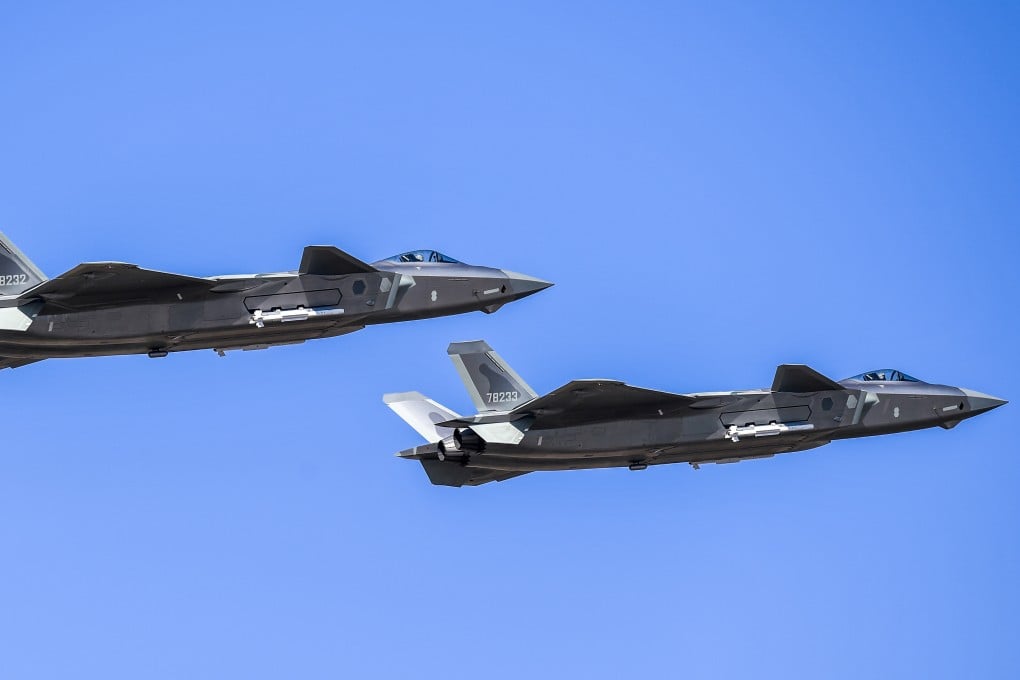
The Shenyang J-16 represents China’s 4.5-generation multirole strike fighter platform.

Chinese state-run media outlets recently claimed that it successfully forced two American-made F-22 Raptor fighter jets out of the nation’s Air Defense Identification Zone (ADIZ). As part of this so-called “close encounter,” a J-16 fighter pilot detected and locked on to a pair of Raptor jets before escorting them away. While Beijing has not confirmed the American jets were absolutely of the F-22 variety, former People’s Liberation Army colonel Yue Gang assessed that the aircraft were either Raptors or F-35 Lightning II jets. This report has yet to be verified; however, Beijing would clearly like it known that its military’s ability to detect, track, and even engage some of the most advanced stealth aircraft in service across the planet is only improving.


The J-16​

The Shenyang J-16, designated by NATO as the “Flanker-N,” represents China’s 4.5-generation multirole strike fighter platform. While the series was first manufactured in 2017, it was derived from Soviet-era technology. Following the collapse of the Cold War, China procured USSR-designed Sukhoi SU-27 and Su-30MKK fighters from the newly installed Russian government. As part of this deal, Beijing acquired those jets along with a license to produce them in China as the J-11A. The succeeding J-16 was born from this Soviet platform. Notably, the J-16 functions as a bridge between China’s aging airframes and its newer J-20 and J-31 stealth fighters. “These two new-generation jets would be too expensive to mass produce in the necessary numbers required to fully modernise the PLA Air Force’s combat fleet,” Collin Koh, a researcher at Nanyang Technological University in Singapore, told the South China Morning Post. “Hence, the J-16 is crucial to bridge this gap.” The J-16 features active electronically scanned array AESA radar and other enhancements that give it an edge over its Soviet-era counterparts. While the platform is not considered stealthy, some J-16 units have reportedly received radar-absorbent paint to help lower their detectability in the air.

The F-22​

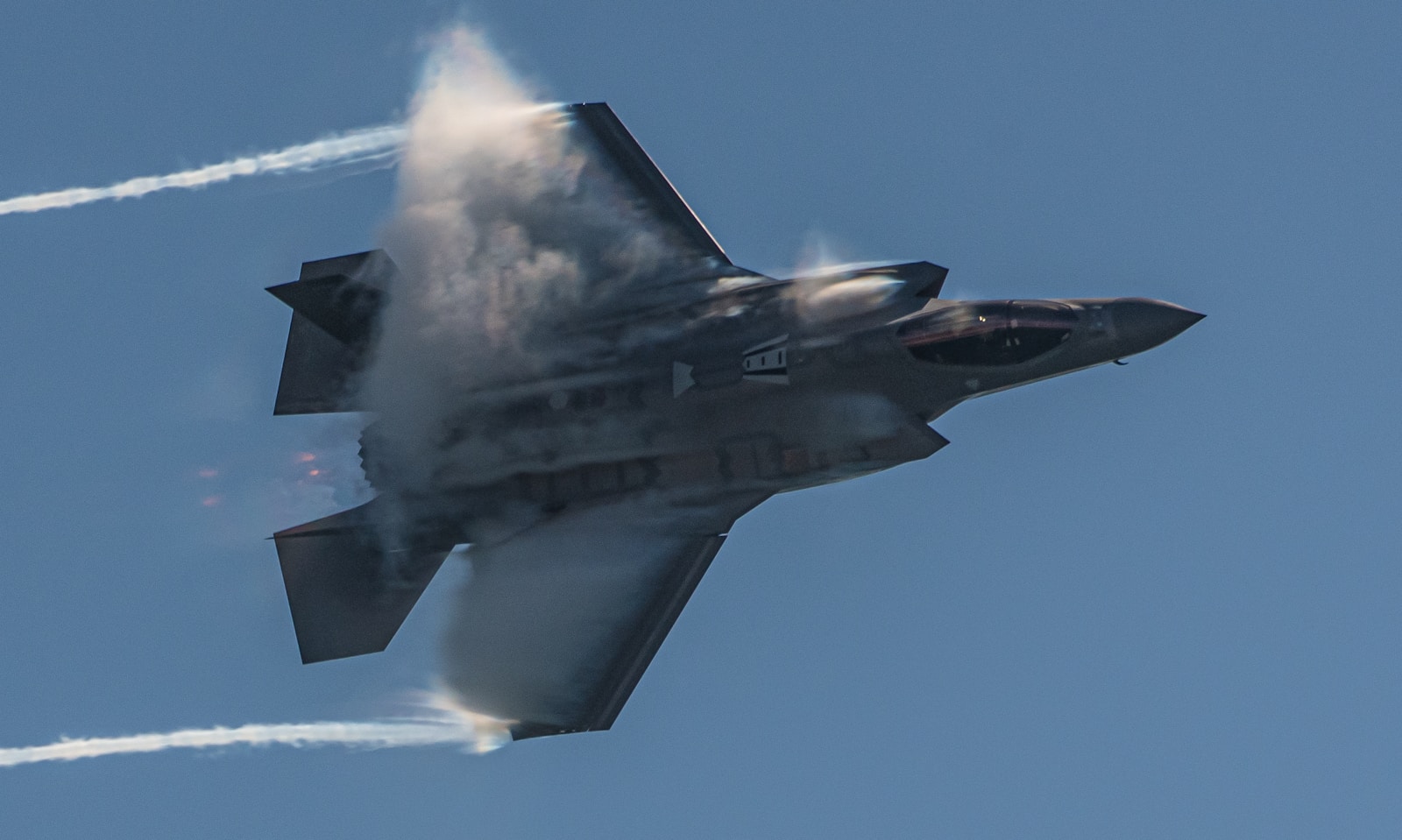
As the world’s first ever fifth-generation platform to fly the skies, the F-22 arguably remains the most recognizable aircraft. The supersonic stealth fighter was initially intended as an air superiority fighter, but it is also capable of serving in ground attack, signals intelligence, and electronic warfare roles. Today, the remaining Raptor jets remain a critical component of the US Air Force’s aerial strategy and are likely to remain relevant until the introduction of the upcoming F-47 platform in the next decade. The Raptor’s tiny radar cross-section enables the aircraft to fly at supersonic speeds without risking detection. Notably, the Raptor is considered to be stealthier than the newer F-35 Lightning II. In terms of power, a pair of Pratt & Whitney F110-PW-110 turbofan engines provides a total thrust of around 70,000 pounds, enabling the jet to outmatch any counterpart in a dogfight. The Raptor can pack a lethal armament load, also contributing to its dogfighting prowess. The F-22 can carry a range of air-to-air and air-to-ground weapons, including precision-guided bombs like the Joint Direct Attack Munitions (JDAM) and AIM-120 and AIM-9 Sidewinders.


Chinese Report Stealth-Detecting Quantum Radar Enters Mass Production​

a fighter jet flying through a blue sky


IAC
Insider Brief

  • Chinese researchers claim to have begun mass-producing a single-photon detector, a core component for quantum radar systems that could theoretically detect stealth aircraft.
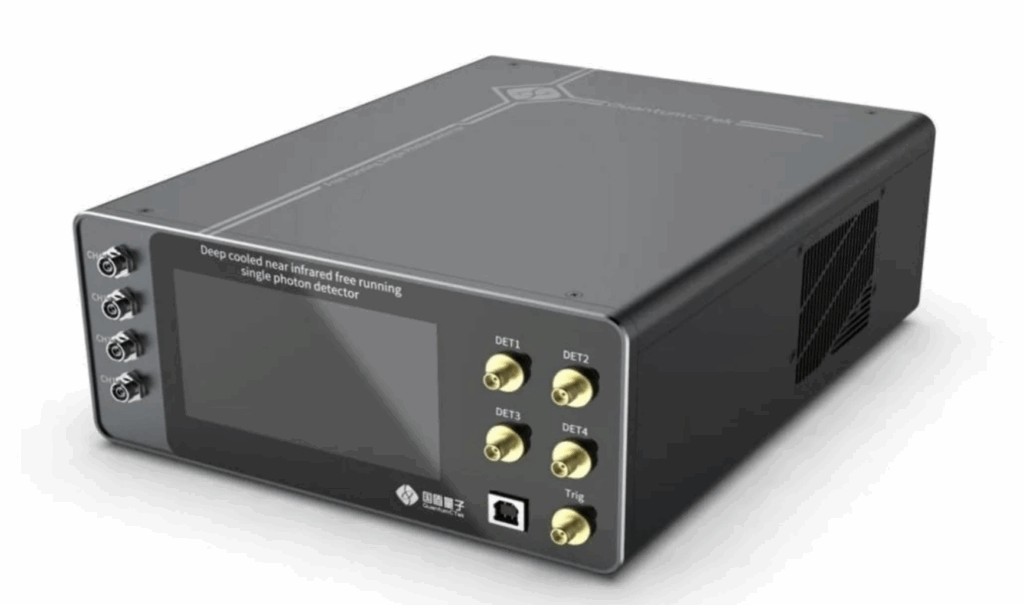
  • The device, developed at the Quantum Information Engineering Technology Research Center in Anhui province, is described as an ultra-low-noise, four-channel detector capable of isolating individual photons and resistant to electronic warfare interference.
  • Defense experts caution that without live, validated trials demonstrating consistent detection under real-world conditions, China’s assertions of neutralizing American stealth technology remain speculative.
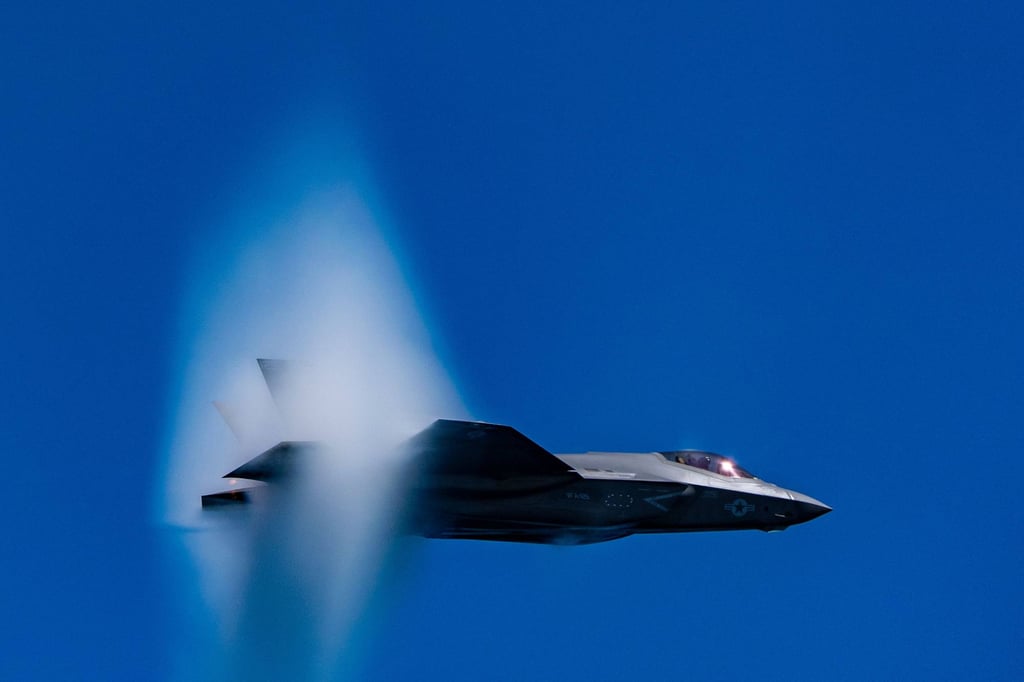
  • Photo by Anna B. Meyer on Unsplash
Chinese researchers say they have begun mass-producing a “single-photon detector,” a development that could enable a so-called quantum radar system capable of tracking stealth aircraft, according to a report by the National Security Journal, which draws on claims published in China’s own Science and Technology Daily.

According to the National Security Journal, the device — described by Chinese scientists as an ultra-low noise, four-channel single-photon detector — has entered mass production at the Quantum Information Engineering Technology Research Center in Anhui province. According to the article, the device is characterized as the core component of a future quantum-radar network, potentially defeating stealth technologies reliant on radar-absorbent coatings or air-frame shaping, such as the tech that is used in current U.S. stealth aircraft.

In theory, quantum radar uses quantum-mechanical properties — such as the indivisibility of photons — to detect objects that conventional radar might miss. Traditional radar sends out electromagnetic waves and interprets their echoes. For this, stealth aircraft reduce that echo by absorbing or deflecting radar energy. Quantum radar, on the other hand, aims to send out specially prepared photons and detect the changes in quantum properties when they return from a target. Because of the so-called no-cloning theorem of quantum mechanics, counterfeit or spoofed returns cannot exactly replicate the original quantum state. The National Security Journal article points out that detecting a single photon is “absolutely required” for any quantum-radar or quantum-communication system to work.

Responsive Image


According to the Chinese reporting cited in the article, the detector is dubbed the “photon catcher” and is reported to handle four channels of detection simultaneously, which suggests scalability and possibly use across networks.

Screenshot-2025-10-20-at-4.09.31-AM-1024x605.png
A single-photon detector, as the name suggests, is an ultra-sensitive device capable of detecting individual photons. Photo: Quantum Information Engineering Technology Research Centre
The Science and Technology Daily article claims the development marks self-sufficiency and “international leadership” in the components of quantum information technology. If the detector’s performance and deployment match the claim, this could challenge the stealth capabilities of aircraft such as the U.S. F‑22 Raptor and F‑35 Lightning II, which rely on low radar-cross-section design, coatings and signature management.

One key reason this development matters is that, according to the National Security Journal, a quantum-radar system would theoretically be immune to many forms of electronic warfare and jamming. Conventional radar systems can be deceived or overwhelmed by jammers or spoofed signals; by contrast, a quantum radar would rely on the unique quantum state of each photon and its return. Any attempt to spoof the return would break the quantum correlation, making deception far more difficult. The article also reports that quantum radar can operate at lower emission power and remain less detectable itself, while still maintaining sensitivity—another tactical advantage.

However, the National Security Journal piece also stresses that despite the bold claims, independent verification is not available. Many technical questions remain: How far can this detector reliably work in real-world conditions? What range, resolution, and reliability does it deliver in operational environments? Previous studies of quantum radar have shown significant theoretical promise but also notable engineering hurdles.

Indian Defense News reports that U.S. Space Force experts underscored the ability to use the radar in simulated conditions may or may not translate to battlefield success. Until live trials confirm consistent detection of stealth aircraft under realistic and complex conditions, China’s assertions of nullifying American stealth capabilities remain speculative, the defense experts report.
 

Chinese team unveils smart, super-tough coating for stealth aircraft

New material can withstand temperatures up to 1,000 degrees Celsius and could revolutionise fighter jet technology​


A new coating developed in China could potentially close a technological gap for stealth aircraft like the J-20. Photo: Xinhua

Zhang Tongin Beijing

Published: 2:00pm, 24 Oct 2025Updated: 2:11pm, 24 Oct 2025

China has developed a flexible, durable aircraft coating that absorbs radar waves, potentially closing a critical technological gap and redefining the future of aerial stealth.

A study published on October 14 in Advanced Materials details a scalable, flexible and ultra-thin (0.1 mm) metasurface capable of withstanding temperatures up to 1,000 degrees Celsius (1,832 degrees Fahrenheit).

The material features tunable impedance, making it suitable for aerospace electromagnetic wave absorption.

It shows balance between performance, durability and manufacturability, and could have potential applications in fighter aircraft, according to the paper.

The research was led by Cui Guang and Liu Zhongfan from Peking University, along with Wang Huihui from Peking University of Technology and Li Maoyuan from Harbin Engineering University.

maxresdefault.jpg


Liu’s team had previously discovered that chemical vapour deposition could be used for large-scale graphene production.

Building on this, the team deposited graphene directly onto a silica fabric substrate, forming a graphene@silica fibre membrane (G@SFM). The resulting material resembles a soft cloth but combines lightweight properties, flexibility and resistance to extreme heat.

However, the material’s uniform surface was initially ineffective at dissipating electromagnetic waves. To address this, the team applied a subtractive laser patterning technique, creating a metasurface with tunable surface impedance that enabled effective electromagnetic wave absorption.

The final material exhibits an ultra-thin profile (~0.1 mm), low surface density, excellent flexibility and tunable sheet resistance ranging from 50 to 5,000 ohms per square.

It is also stable, maintaining consistent wave-absorbing performance after exposure to 600 degrees Celsius in air for five minutes and long-term heating at 1,000 degrees in a vacuum. Under high-speed airflow of 200 metres per second, the material experienced less than 1 per cent loss, with the metasurface pattern and sheet resistance remaining intact.

These properties make the material particularly suitable for the thermal conditions encountered by high-speed aircraft.

“Integrating this metasurface directly into an aircraft’s thermal insulation layer can reduce radar reflection to -42 [decibels] without adding significant weight or altering the aircraft’s structure,” according to the researchers.

They said the material “not only offers structural and thermal stability for aerospace use but also holds potential for broader applications, including satellite payload protection, stealth surfaces for defence platforms and electromagnetic shielding for high-temperature electronics in extreme industrial or space environments”.

The laser patterning strategy can also be extended to millimetre-wave and terahertz frequencies, supporting next-generation wireless communications, space-based sensing and adaptive stealth systems.

Iron in the stealth coating of an F-35C is vulnerable to oxidation in the high-salinity, high-humidity environment of an aircraft carrier. Photo: AFP

Iron in the stealth coating of an F-35C is vulnerable to oxidation in the high-salinity, high-humidity environment of an aircraft carrier. Photo: AFP

This breakthrough stands in stark contrast to known challenges faced by United States stealth aircraft. During the 2025 Changchun Airshow, spectators observed maintenance personnel wiping the surface of a J-20 fighter with a dust-free cloth – suggesting the aircraft’s radar-absorbing coating is both weather resistant and easy to maintain.

Meanwhile, the maintenance of US stealth fighters remains a major concern. The F-22, the world’s first fifth-generation fighter, uses an iron-based radar-absorbent coating that, while effective, is fragile and prone to peeling because of airflow erosion or rust. It is widely reported that F-22s must be housed in specialised hangars with controlled temperature and humidity.

In July, photos of a rusty F-35C aboard the USS Carl Vinson went viral online. One possible cause is the iron content in the F-35’s stealth coating, which is vulnerable to oxidation in the aircraft carrier’s high-salinity, high-humidity environment. Once the coating is damaged, corrosive salt spray can penetrate, accelerating internal rust and creating a vicious cycle.

A US Department of Defence report noted that the F-35A incurred operating costs of US$28,500 per flight hour, second only to the F-22A’s US$33,500.

China’s research in next-generation stealth materials continues to advance across multiple fronts.

In June, a team led by Gui Xuchun at Sun Yat-sen University developed an MXene film just 2.25 micrometres thick.

It achieved an electromagnetic shielding effectiveness of 45 decibels in the gigahertz frequency band and 59 decibels in the terahertz band, while also exhibiting an extremely low infrared emissivity of 0.1 – close to that of aluminium – enabling excellent infrared stealth capability.
 
China’s new combat jet spotted in test flight

Oct 28, 2025
G4VOdR4W0AABcAS-589x420.jpg

A new aircraft during test flight (X/@Rupprecht_A)
Key Points
  • A new twin-engine, carrier-capable jet trainer developed by Hongdu Aviation was spotted during flight tests in China.
  • The aircraft features reinforced landing gear, twin vertical stabilizers, and structural adaptations for naval aviation.
China has conducted the maiden flight of a new jet trainer aircraft, as shown in recently published images circulating on Chinese social media.

The prototype aircraft was spotted during pre-flight preparations and later airborne, marking its debut in the People’s Liberation Army Navy’s expanding aviation program.

The jet, produced by Hongdu Aviation Industry Group (HAIG), features design elements tailored for naval operations, including twin engines, a reinforced landing gear system, and twin canted vertical stabilizers. While its general layout resembles the U.S.-made Boeing T-7A Red Hawk, the new trainer incorporates adaptations for carrier landings, such as a twin-nose wheel and structural modifications suitable for arrested recovery and catapult launch.

According to a 2023 Chinese patent filing, the aircraft is officially designated as a “twin-tail jet with side-mounted intakes.” The technical illustrations detail a tandem two-seat cockpit and prominent air intakes, consistent with naval aviation requirements.

Analysts suggest the aircraft is being developed as a universal platform for training naval aviators and potentially as the foundation for future light combat or patrol variants capable of performing air-to-air interception and ground strike missions. Industry observers highlight features such as its ruggedized landing gear, arrestor hook housing, and twin-engine configuration as clear indicators of its deck-based role.

The new trainer’s introduction comes amid China’s broader efforts to modernize its carrier aviation forces, currently reliant on the JL-9 and L-15 platforms, neither of which fully meet the operational needs of modern aircraft carriers.

A new aircraft during test flight (X/@Rupprecht_A)

HAIG, based in Nanchang, Jiangxi Province, is also the manufacturer of the L-15 Falcon trainer, a platform currently in service with the PLA Air Force and exported to multiple countries. While the L-15 has been used in advanced pilot training roles, it lacks the full capability required for carrier takeoff and landing operations.

By comparison, the new prototype offers design upgrades that suggest a focus on operational compatibility with carrier decks. With China’s third aircraft carrier, Fujian, undergoing sea trials, demand for a dedicated carrier-based jet trainer is increasing.

China’s JL-9 and L-15 trainers have seen limited effectiveness in maritime operations. The JL-9, a derivative of the older J-7 platform, lacks the performance envelope needed for realistic carrier operations, while the L-15, though more modern, is primarily optimized for land-based training.

This new HAIG jet is expected to fill that gap by offering an indigenous carrier-capable training aircraft for the PLAN. It could also serve as the foundation for a light strike or multirole platform in future iterations.

The emergence of the new trainer highlights China’s continuing investment in naval aviation as part of its long-term strategy to expand blue-water operational capabilities and reduce dependency on imported or modified land-based systems.
 
New report by TWZ. This trainer has been anticipated for a long time; it has finally materialized. Significant development in the growth of carrier operations with the coming type 003 and type 004


New Chinese Advanced Training Jet Breaks Cover​

Thomas Newdick
Tue, October 28, 2025 at 3:30 PM CDT
8 min read
Add Yahoo on Google

21

After a string of exotic stealthy combat jets, both crewed and uncrewed, the latest new Chinese military aircraft to break cover is somewhat different, but nonetheless interesting. The latest development concerns an advanced jet trainer, but one that clearly has considerable potential as a light combat aircraft, too.

After a string of exotic stealthy combat jets, both crewed and uncrewed, the latest new Chinese military aircraft to break cover is somewhat different, but nonetheless interesting.

The latest development concerns an advanced jet trainer, but one that clearly has considerable potential as a light combat aircraft, too.
More
Yahoo is using AI to generate takeaways from this article. This means the info may not always match what's in the article. Reporting mistakes helps us improve the experience.

Generate Key Takeaways
After a string of exotic stealthy combat jets, both crewed and uncrewed, the newest Chinese military aircraft to break cover is somewhat different, but nonetheless interesting. The latest development concerns an advanced jet trainer, but one that clearly has potential as a light combat aircraft, too.

828eac4f78e6ff8ee4c3bfc123967956

The new jet, the designation of which remains unknown, appears to be a product of the Hongdu Aviation Industry Group (HAIG), based in Nanchang, and best known for producing trainers. Initial imagery of the jet shows it both on the ground and under flight test, wearing a yellow primer paint finish.

The aircraft has a classic tandem two-seat trainer configuration, two engines, and a conventional layout with swept wings, horizontal stabilizers, twin outward-canted tailfins, and twin ventral fins. Unconfirmed reports suggest that the aircraft is powered by a pair of homegrown WS-17 turbofans, which are fed by caret-type engine intakes.

Another view of the new HAIG trainer in flight. <em>via X</em>

Another view of the new HAIG trainer in flight. via X
A large head-up display is visible in the front cockpit in at least one image. Other features point toward a combat role, at least as a secondary mission, including the overall size of the aircraft and wingtip hardpoints, presumably for air-to-air missiles.

The gray-colored nosecone may well accommodate a radar, a feature of both lead-in fighter trainers (LIFT) and combat jets.


Notably, there are also signs that the aircraft is intended to be suitable for carrier operations. It features notable robust tricycle landing gear, including twin nosewheels, while the prominent leading-edge root extensions would also help improve maneuverability at high angles of attack and at low airspeeds, such as during the approach to the carrier.
 
@Michael @Deino

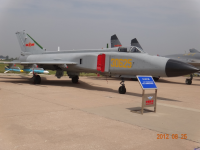
Does anyone know of the 40 J-8F/H still in service, which units are flying them and where?

And what is the projected date for the retirement of the J-8?

1761957591685.png
 
@Michael @Deino
Does anyone know of the 40 J-8F/H still in service, which units are flying them and where?
And what is the projected date for the retirement of the J-8?
View attachment 157267
The J-8 fighter jets still in service in China are primarily reconnaissance models. Official data does not provide specific numbers or service units.

They have not appeared in official news for a long time.

It is generally believed that they have been decommissioned from active duty. They are currently the assets of training or research units, but still belong to the Air Force.
 
The J-8 fighter jets still in service in China are primarily reconnaissance models. Official data does not provide specific numbers or service units.

They have not appeared in official news for a long time.

It is generally believed that they have been decommissioned from active duty. They are currently the assets of training or research units, but still belong to the Air Force.

when will they be fully retired? I heard 2030, wondering if it will be earlier considering the rate of production for other platforms should make retirement not too difficult.
 
when will they be fully retired? I heard 2030, wondering if it will be earlier considering the rate of production for other platforms should make retirement not too difficult.
They have effectively been decommissioned from combat and no longer participate in combat readiness missions. They are now assigned to training and research units, but remain part of the PLAAF's organizational structure.

According to analysis on the Chinese internet, they are being gradually phased out of the PLAAF's organization. It is expected that the decommissioning process will be completed within two years. ------ However, they are being replaced not by other types of fighter jets, but by UAVs. All of China's currently serving J-8 fighter jets are reconnaissance variants.
 

China’s Banner Year in Combat Aircraft

After massive developments in PLA aviation over the past year, it’s time for many observers to update their priors.
By Rick Joe
November 04, 2025

China’s Banner Year in Combat Aircraft

In this photo circulated on social media, PLA aircraft rehearse for China’s military parade, held in Beijing on Sep. 3, 2025.

“Updating priors” means revising an existing belief system in the face of new evidence. Much has been written of about the modernization of China’s military in recent years, particularly People’s Liberation Army (PLA) aviation (both the PLA Air Force and PLA Naval Air Force). However, the niche trade of tracking PLA news still causes significant lags in disseminating information among the wider defense journalism, think tank, and defense commentariat crowd.

Over the last twelve months – between October 2024 and October 2025 – the breadth, variety, and scale of PLA aviation developments have emerged at a speed that is difficult to contextualize and disseminate. This article will summarize major observed PLA aviation developments in a broadly chronological (but not exhaustive) manner. Consider it a baseline to update your priors on PLA aviation.

Manned Combat Aircraft

October 2024 saw the PLA Navy conduct its first dual carrier exercise and photo-op, consisting of CV-16 Liaoning and CV-17 Shandong and their escorts. The event was even more notable as the exercise displayed – in the characteristically dry and subdued manner of the PLA – multiple 4.5th generation catapult variant J-15T aircraft among the standard ski jump variant J-15s.

The existence of the J-15T (previously dubbed J-15B) was well accepted before this; I have previously documented its development and accurately projected its likely entry into service. However the official acknowledgement that the aircraft type was already in service, after multiple years of minimal imagery, was a relative surprise.

This was followed by Zhuhai Airshow 2024 in November, where more detailed views of the J-15T emerged as the aircraft type made a flying and ground appearance. However, the J-15T was upstaged by the J-35A, a land-based PLA Air Force variant of the J-35, a carrier-borne fifth-generation fighter. A land-based variant of the J-35 had been rumored for a few years, with a handful of grainy photos of prototype airframes. But this marked the first official acknowledgement of the type. Its flight display at the airshow in short order was somewhat unprecedented for new PLA projects, and was indicative of its maturity.

December 2024 brought the now-famous maiden flights of two next generation combat aircraft from the Chengdu and Shenyang Aircraft Corporations, respectively named the J-36 and J-XDS (for now). The PLA has yet to officially acknowledge these aircraft; however, the images are consistent with past aircraft of equivalent project demonstrators or engineering and manufacturing development prototypes.

In the year that followed, a steady drumbeat of flight tests have continued. Most observers, including the U.S. Air Force, describe both aircraft types as next-generation air superiority platforms.

Early 2025 was a period of relative calm for manned PLA combat aircraft, which was then broken by the Pakistan-India conflict. A large-scale aerial skirmish involving over a hundred modern fighter aircraft occurred on the night of May 7. Much about the outcome remains a matter of debate. However it is generally accepted that Pakistani Air Force J-10CE fighters (the same as the J-10C operated by the PLA Air Force) achieved multiple long-range air-to-air kills against Indian Air Force fighters while suffering no equivalent losses of its own. The starkest fact for defense observers was that one or more of these kills were modern French 4.5th-generation Rafale fighters.

The results of this India-Pakistan encounter were subject to tactics and rules-of-engagement both parties held in place, of course. But no one can deny that the Chinese-origin J-10C acquitted itself competently in the largest scale modern air engagement the world had seen in multiple decades.

The months leading to China’s Victory Day Parade on September 3 saw multiple rehearsals by the constituent aerial display. Imagery of rehearsals and the parade day itself allowed observers to confirm multiple new aircraft types and variants in active PLA service (all systems presented at a national level parade are in service, with initial operational tests and evaluations as a minimum requirement).

The J-20A upgraded single seat variant and the J-20S twin seat variant were both officially revealed at this time. While neither aircraft type is powered by the target WS-15 engine, they both hold other major advancements in avionics, materials, power, and thermal management compared to the standard baseline J-20.

The J-35A also flew in the parade, confirming the aircraft’s in-service status. Afterward, credible insiders conveyed that the J-35As were powered by their target WS-19 engines, a technological peer to the WS-15.

The PLA Navy’s carrier-borne J-35, J-15T, and J-15DT aircraft also flew, with the J-35 and J-15DT (the catapult compatible version of the J-15D carrier-borne electronic warfare fighter) marking their official unveilings. A few weeks after the parade, the PLA Navy released footage of their new electromagnetic catapult-equipped carrier, CV-18 Fujian, conducting launch and recovery of the J-35, J-15T and KJ-600, aviation trials that likely occurred months earlier in the year.

Apart from marking important testing milestones for the PLA Navy internally, the event also happens to be the first time that a fifth-generation fighter was launched and recovered by a carrier at sea using an electromagnetic catapult. Such a distinction is not necessarily consequential for imminent warfighting operational capability, but is remarkable from a program management perspective given the PLA Navy’s first ever carrier launch and recovery only occurred 13 years prior with a ski jump.

Unmanned Combat Aircraft

China’s unmanned combat aerial vehicles (UCAVs) saw a parallel drumbeat of emergent projects over this time. Multiple new surveillance and strike UCAVs and unmanned aerial vehicles (UAVs) were displayed at Zhuhai Airshow 2024 by Chinese industry, some of which may enter PLA service and augment their existing modest fleet of similar aircraft.

2025 revealed multiple higher-end UCAV and UAV types, either in or destined for PLA service. In June, commercial satellite imagery of Malan airbase captured a flying wing UAV with a 52-meter wingspan, similar to the B-2 in width. Later, in September, satellite imagery of the same airbase captured a cranked kite flying wing UAV with a 42-meter wingspan, in the same size class as the B-21. Both aircraft displayed gross planforms consistent with signature reduction.

At this stage the 52-meter flying wing is speculated to be a long endurance, stealthy reconnaissance UAV (dubbed WZ-X) similar to the much-rumored RQ-180 in its role, while the 42-meter cranked kite is speculated as a large, stealthy strike-bomber UCAV (dubbed GJ-X). Subsequent ground-based imagery corroborated their existence.

The fact that these airframes were caught by satellite in the open suggest a relatively advanced stage of flight testing, implying a high degree of PLA secrecy in prior years to keep development under wraps. It remains to be seen if the WZ-X and GJ-X will reach PLA service; however the benefits of a strategic stealthy reconnaissance UAV and a strategic bomber-sized stealthy strike UCAV both go without saying.

UCAVs made a high-profile appearance at the September 2025 Victory Day Parade as well. All UCAV and UAV types at the parade were transported upon display trucks, and some were mockup airframes (while some others were said to be real flying airframes), which is consistent with past practice. All hardware and aircraft displayed at national level parades are controlled by an onboard human being, and the missiles, drones, and other weapons alike are not fueled or armed, or are outright mockups. Nevertheless, all platforms must meet the requirement of being in PLA service to participate at the parade.

Thus, the parade confirmed the GJ-21 – a carrier-borne variant of the land based GJ-11 stealthy strike UCAV – is in service with the PLA Navy, although it is not known if it has launched or recovered from the Fujian yet.

Four different loyal wingman UCAVs (also known as CCAs or collaborative combat aircraft) were also displayed, of which two were of a large design approaching the size of a J-10 fighter. The PLA had been known to be developing and testing CCA type aircraft for multiple years, and designs had been shown at past airshows by the Chinese aerospace industry. However, this was the first occasion that various designs were confirmed to be in service, albeit likely in an initial evaluation phase at this time.

Miscellaneous

The past year also saw other, less easily categorized developments. A new, large airborne early warning and control (AEW&C) platform based on the Y-20B strategic transport flew in December 2024. Dubbed the KJ-3000, it signifies continued PLA Air Force commitment to their AEW&C fleet (already one of the largest and most modern in the world).

The Y-20B transport/tanker itself entered robust production for the PLA Air Force as well, enabling the target WS-20 high bypass engine to enter large scale service at last. As a multirole transport/tanker, the Y-20B can be fitted with wing refueling pods and a cargo bay fuel cell to convert to an aerial refueling tanker, akin to the A400M. While a Y-20B tanker is less optimized than a widebody commercial airliner such as the A330 MRTT or KC-46, China currently lacks a domestic widebody airframe. Meanwhile, the Y-20B can still provide credible fuel offload capability, and most importantly can do so at scale without compromising transport and tanker fleet size. Instead, each airframe can operate as a transport or a tanker on an as needed basis.

Two subscale, rotorcraft demonstrators emerged in August 2025: a tiltrotor with fixed engines (similar to the Bell MV-75 or Leonardo NGCTR), and a compound coaxial rotor with push propeller (similar to the Sikorsky SB-1 lineage), from Harbin and Changhe Aircraft Industry Groups, respectively. These manned demonstrators will likely risk reduce and verify new propulsion configurations, and provide a basis for future, larger aircraft to be developed for PLA use.

Interestingly, a privately developed unmanned tiltrotor with fixed engines named the R6000 was showcased at Zhuhai Airshow 2024, of a similar size to the Harbin design. It has yet to fly.

Finally, a folding fin variant of the PL-15/E long-range, beyond-visual-range (BVR) air-to-air missile was displayed at Zhuhai Airshow 2024, intended to enable Chinese fifth-generation aircraft to carry six weapons in their ventral weapons bay (as opposed to the current four). The subsequent high-profile kills of the PL-15E achieved by Pakistani J-10Cs have only elevated its stature.

However, credible rumors in 2025 state that a successor BVR weapon, named the PL-16, is already in PLA service. The PL-16 is said to have a smaller footprint (also enabling carriage of six weapons internally) but significantly greater capability, while using modern production to achieve lower costs than the PL-15. Considering the PL-15 was developed with late 2000s era Chinese technology and production methods, such a prospect is fairly reasonable, and will pose a natural response to the new U.S. AIM-260 JATM.

Perspective and Pondering

This scale of new military aviation developments from a single nation, across just 12 months, is unprecedented for the modern era. Stealthy manned and unmanned platforms, weapons, networking, AEW&C, and electronic warfare: Chinese aviation is running at high throttle in all of these domains. However, there are also areas in relative gestation, such as aeroengines, and especially commercial/civil aviation.

An accurate assessment of PLA aviation is not helped by articles exaggerating Chinese research projects as if they depict imminent gamechanging capabilities, or outright misinterpreting the Chinese language. Sober-mindedness is prudent, to ensure real PLA aviation advancements are not cast as ten feet tall.

On the other extreme, among generalist defense commentary, it is not uncommon to see obsolete narratives of PLA combat aviation. That includes outdated assumptions about limited flying hours and poor networking, AEW&C or electronic warfare capabilities; perceptions of new PLA projects as showboating displays; and underestimates of modern fighter fleets and procurement rates. It may come as a surprise that PLA Air Force pilot flight hours are now estimated to match or exceed U.S. Air Force counterparts, and the overall PLA possess the world’s largest modern land based AEW&C fleet, or that annual J-20 production had reached triple digits in recent years.

If one measured PLA aerospace projects at equivalent milestones with U.S., European, Indian, or Russian efforts, it only showcases how secretive the PLA remains. Images revealing new PLA projects are testament to their maturity rather than showing prototypes in an early development stage.

Based on a cursory inspection of fleet size, the PLA Air Force, at time of writing, possess over 400 fifth-generation J-20s and over 400 4.5th-generation J-16s and 250 J-10Cs in service. These are in turn complemented by multiple hundreds of fourth-generation fighters across the J-10A/B and Flanker families, many of which are likely to see upgrades themselves. About 200 dedicated JH-7A fighter bombers remain in service. Obsolete J-8II and J-7 aircraft are an endangered species, with only a handful of units remaining, in process of conversion to 4.5th- or fifth-generation aircraft.

For the PLA Navy, the J-15/T/D/DT family aircraft have been produced well in excess of 100 airframes by now. Low-rate production of the J-35A and J-35 likely began earlier this year, for the Air Force and Navy respectively.

Assuming a moderate fifth-generation production rate of 100 aircraft per year, the PLA is likely to reach 1,000 fifth-generation fighters in 2030, if not earlier, considering J-20 family production alone has exceeded 100 airframes annually and J-35/A production will be added on top. Oddly, the consequences of the PLA’s rapid fifth-generation fleet growth have yet to be flagged by mainstream defense observers.

The continued advancement of PLA land-based AEW&C aircraft (currently numbering nearly 80, all equipped with AESA radars, of which the vast majority were built within the last 10 years), advancement of air launched weapons (for aerial and surface targets alike), growth of standoff and tactical electronic warfare platforms, and potential integration of CCAs and UCAVs already in operational testing, should give pause as to the optimal procurement strategy for potential adversary nations, especially in context of PLA air defenses and multi-domain long-range PLA fires (particularly new aeroballistic, hypersonic glide, and hypersonic cruise missiles).

The maturation of strategic fixed wing aerial assets such as the unmanned WZ-X and GJ-X, and the emergence of the still-expected H-20 strategic bomber platform, will further advance the long-range, long-endurance reach of PLA combat aviation.

If there has ever been a period that should cause one to update prior beliefs about PLA combat aviation, the year from October 2024 to October 2025 would be it.
 
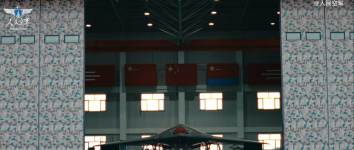
PLAAF released a short film trailer. At the end, it hinted at a "new toy" coming soon...
via Weibo@人民空军 Link
1762791405244.png

Discussions on Chinese social media are raging.

Some believe it's the GJ-11, but many more think the GJ-11 doesn't deserve this level of publicity.
Some think it's the H-20...
Others believe it's the 6th-Gen fighter jet about to be officially announced...

Regardless, I've grown accustomed to their suspenseful tactics. I remain calm and patient.
 
PLAAF released a short film trailer. At the end, it hinted at a "new toy" coming soon...
via Weibo@人民空军 Link
View attachment 158707

Discussions on Chinese social media are raging.

Some believe it's the GJ-11, but many more think the GJ-11 doesn't deserve this level of publicity.
Some think it's the H-20...
Others believe it's the 6th-Gen fighter jet about to be officially announced...

Regardless, I've grown accustomed to their suspenseful tactics. I remain calm and patient.


And I admire you how you could be so patient…

Anyway, IMO it looks very much like a GJ-11.

IMG_5620.png
 
And I admire you how you could be so patient…

Anyway, IMO it looks very much like a GJ-11.

View attachment 158760
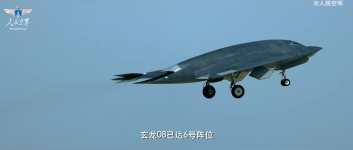
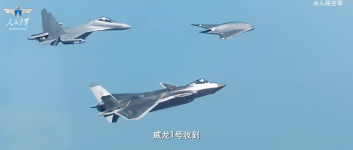
The official video has been released. It is indeed GJ-11. Link

1762827247971.png

Meanwhile, its Chinese name was given as "玄龙" (Xuanlong).
1762827313816.png
1762827489273.png


The video ends by indicating that "新家伙(the new guy)" refers to another one, not the GJ-11. However, no official images have been released.
 
Last edited:

Users who are viewing this thread

Country Watch Latest

Back
Top