Navigation
Install the app
How to install the app on iOS
Follow along with the video below to see how to install our site as a web app on your home screen.
Note: This feature may not be available in some browsers.
More options
Style variation
You are using an out of date browser. It may not display this or other websites correctly.
You should upgrade or use an alternative browser.
You should upgrade or use an alternative browser.
Chinese PLAAF News
- Thread starter Fatman17
- Start date
More options
Who Replied?


The SC
INT'L MOD

China is preparing to launch "Jiu Tian" - a mother ship drone plane capable of spreading 100 suicide drones

China plans to start the air tests of its revolutionary drone, "JIU Tian", also known as SS-UAV, by the end of June 2025. This plane is described as "the mother plane of the drones" or "the drone carrier", as it was designed to transport and launch more than 100 small drones while flying, in a step that represents a qualitative shift in the capabilities of air fighting.
China plans to start the air tests of its revolutionary drone, "JIU Tian", also known as SS-UAV, by the end of June 2025. This plane is described as "the mother plane of the drones" or "the drone carrier", as it was designed to transport and launch more than 100 small drones while flying, in a step that represents a qualitative shift in the capabilities of air fighting.

Fatman17
THINK TANK: CONSULTANT

- Thread starter
- #185
Chinese and Egyptian air forces conduct first exercise together
- Chinese and Egyptian air forces conduct first exercise together
By AirForces Monthly
28th May 2025
News
The Chinese and Egyptian air forces recently participated in a joint exercise – Eagle of Civilisation, which ran between mid-April and early May at Wadi Abu Rish Air Base in Egypt.
According to a Cairo military spokesperson, the exercise will “involve joint aerial assets, planning exercises, and simulated air combat management operations to exchange expertise and enhance the skills of the participating forces”.
This is the first time China’s People’s Liberation Army Air Force (PLAAF) has conducted a joint drill with the Egyptian Air Force (EAF) and according to the Chinese Ministry of National Defense (MND), the event is “of great significance to promoting pragmatic co-operation and enhancing mutual trust and friendship between the two militaries”.
Notable aircraft participating in the exercise were the Chinese Chengdu J-10C single-seat fighters, a J-10S two-seater, KJ-500 AEW&C aircraft, and YU-20/YY-20A tankers, with Egypt’s primary aircraft being MiG-29M/M2s.

Two days before the exercise, a PLAAF Y-20 airlifter arrived with spares and support, which with the YU-20/YY-20 tankers, would have been an interesting sight.
Egypt’s current fighter inventory comprises largely Western aircraft, with over 180 F-16s in service, but many are outdated and unable to use the latest cutting-edge weaponry. Most arrived in the 1980s/1990s, although 20 Block 52s were delivered in 2015. There are up to 54 Rafales delivered or on order. Meanwhile, rumours persist that Egypt will receive a number of Chengdu J-10CEs.
Topics
Read more about- AirForces Monthly June 2025
- China
- Egypt
- Egyptian Air Force
- People's Liberation Army Air Force (PLAAF)
Related articles


Michael
VIP Member
High-resolution photo of the Z-20KS helicopter.

Z-20KS.
The aerial search and rescue version of the Z-20. Its tail and top propellers can be folded, and after folding, it can be loaded into the cabin of the Y-20 transport aircraft.
In terms of folding, it is similar to the Z-20 naval ship-borne version. But the position of its tail wheel is different from that of the Z-20 naval ship-borne version.
Z-20KS.
The aerial search and rescue version of the Z-20. Its tail and top propellers can be folded, and after folding, it can be loaded into the cabin of the Y-20 transport aircraft.
In terms of folding, it is similar to the Z-20 naval ship-borne version. But the position of its tail wheel is different from that of the Z-20 naval ship-borne version.
Michael
VIP Member
Official News: (The English version is automatically translated by translation software and may contain incorrect translation content. Please refer to the Chinese version.)
近日,中国航空工业集团航宇承制的飞行员跳伞应急处置训练系统在上海通过验收。
该系统由虚拟跳伞环境训练系统、跳台跳伞训练系统、生理和力学数据采集与分析系统及教员综合控制台组成,可模拟飞行员从离机到落地的全过程。通过模拟跳伞过程中的生理和力学数据采集,从医学生物动力学角度对飞行员跳伞训练的姿态、动作规范性进行评估分析,从而提高飞行员特情应急处置能力和遇险生存能力。空军军医大学,空、陆军特色医学中心,中国航天员科研训练中心等多位专家参加了验收评审,一致认为该项目满足所有设计需求,同意项目通过验收。
Recently, the pilot parachute emergency response training system manufactured by China Aviation Industry Corporation Aerospace passed the acceptance in Shanghai.
The system consists of a virtual parachute environment training system, a platform parachute training system, a physiological and mechanical data acquisition and analysis system, and an instructor integrated console, which can simulate the entire process from the pilot leaving the aircraft to landing. By simulating the physiological and mechanical data acquisition during the parachute jump, the posture and movement standardization of the pilot's parachute training are evaluated and analyzed from the perspective of medical biodynamics, thereby improving the pilot's emergency response capabilities and distress survival capabilities. Many experts from the Air Force Medical University, the Air Force and Army Specialty Medical Center, and the China Astronaut Research and Training Center participated in the acceptance review and unanimously agreed that the project met all design requirements and agreed that the project passed the acceptance.
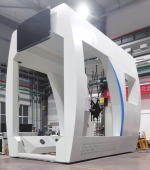
近日,中国航空工业集团航宇承制的飞行员跳伞应急处置训练系统在上海通过验收。
该系统由虚拟跳伞环境训练系统、跳台跳伞训练系统、生理和力学数据采集与分析系统及教员综合控制台组成,可模拟飞行员从离机到落地的全过程。通过模拟跳伞过程中的生理和力学数据采集,从医学生物动力学角度对飞行员跳伞训练的姿态、动作规范性进行评估分析,从而提高飞行员特情应急处置能力和遇险生存能力。空军军医大学,空、陆军特色医学中心,中国航天员科研训练中心等多位专家参加了验收评审,一致认为该项目满足所有设计需求,同意项目通过验收。
Recently, the pilot parachute emergency response training system manufactured by China Aviation Industry Corporation Aerospace passed the acceptance in Shanghai.
The system consists of a virtual parachute environment training system, a platform parachute training system, a physiological and mechanical data acquisition and analysis system, and an instructor integrated console, which can simulate the entire process from the pilot leaving the aircraft to landing. By simulating the physiological and mechanical data acquisition during the parachute jump, the posture and movement standardization of the pilot's parachute training are evaluated and analyzed from the perspective of medical biodynamics, thereby improving the pilot's emergency response capabilities and distress survival capabilities. Many experts from the Air Force Medical University, the Air Force and Army Specialty Medical Center, and the China Astronaut Research and Training Center participated in the acceptance review and unanimously agreed that the project met all design requirements and agreed that the project passed the acceptance.






The SC
INT'L MOD
The first of its kind in the world .. China reveals an electronic warfare weapon with 6G technology, which is able to disrupt the F-35 fighter radar within seconds
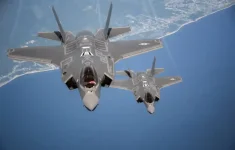
Researchers confirmed that the new 6G technology system is capable of disturbing the American F-35 fighter fighter radars.
Scientists in China have developed a new revolutionary weapon for electronic warfare that depends on the technology of the sixth generation, and the project organizers say that this advanced weapon, which uses a mechanism for addressing signals from the next generation, excels in terms of strength on modern military radars.
China tops the world in the techniques of the sixth generation, and it owns - according to a report published by the South China Morning Post - the largest patent patent in this field globally.
The report says that the new weapon project, led by Professor Deng Lee of Hyachong University of Science and Technology (HUST), has achieved unprecedented capabilities in the field of confusion and communications.
The new system targets advanced radars, such as the AN/APG-85 radar produced by Northrop Groman, which is used in the American F-35 ghost fighter, which works within the scope of X-PAND frequencies to 12 GHz.
While the traditional confrontation systems are fighting to deal with Radar with this development, the Chinese 6G weapon is able to generate more than 3,600 fake goals to deceive the pilots. The system also works as a ground jamming device and a high -speed communications center, capable of transferring huge amounts of battlefield data to more than 300 optical fiber platforms.
According to researchers, this is the first system in the world to be announced publicly to achieve the ability of communication and confusion at the same time and at the same frequency simultaneously. In a research paper published in the Acta Optica Sinica magazine, the team wrote that "the development of the sixth generation technology is pushing to integrate communication, radar and electronic warfare applications."
And they confirm that their new solution is "characterized by storing, sending and disturbing signals with high efficiency within a multi -functional structure, which provides a revolutionary approach to electronic warfare from the next generation."
The system depends on the microscopic photons systems, which mix photons and electrons to overcome the limits of traditional electronic systems. And unlike the old -functional systems, this device merges sensor, analysis and transportation capabilities using a few energy, with a built -in design that shortens complex equipment that required huge devices to a simplified brown.
Deng and his team developed a nucleus working with photons with a three -dimensional design, which includes a two -polarization IQ mode for signaling and jamming, and an active fibrous loop to produce fake goals with an accurate delay, as well as a smart style to rebuild the wavelength for the purpose of deceiving radars.
However, the team notes that "the current sixth generation technology is still facing the dilemma of the balance between simplifying the system and enhancing its functions."
The researchers aim to reduce the number of ingredients and energy consumption, while improving sign quality and treatment capabilities in future copies of the system.
According to the South China Morning Post report, the project received funding estimated at $ 10 million from the Chinese government, the Chinese army and local technical companies, with the aim of strengthening China's leadership in the field of sixth generation and opening a new era of war technologies.
Researchers confirmed that the new 6G technology system is capable of disturbing the American F-35 fighter fighter radars.
Scientists in China have developed a new revolutionary weapon for electronic warfare that depends on the technology of the sixth generation, and the project organizers say that this advanced weapon, which uses a mechanism for addressing signals from the next generation, excels in terms of strength on modern military radars.
China tops the world in the techniques of the sixth generation, and it owns - according to a report published by the South China Morning Post - the largest patent patent in this field globally.
The report says that the new weapon project, led by Professor Deng Lee of Hyachong University of Science and Technology (HUST), has achieved unprecedented capabilities in the field of confusion and communications.
The new system targets advanced radars, such as the AN/APG-85 radar produced by Northrop Groman, which is used in the American F-35 ghost fighter, which works within the scope of X-PAND frequencies to 12 GHz.
While the traditional confrontation systems are fighting to deal with Radar with this development, the Chinese 6G weapon is able to generate more than 3,600 fake goals to deceive the pilots. The system also works as a ground jamming device and a high -speed communications center, capable of transferring huge amounts of battlefield data to more than 300 optical fiber platforms.
According to researchers, this is the first system in the world to be announced publicly to achieve the ability of communication and confusion at the same time and at the same frequency simultaneously. In a research paper published in the Acta Optica Sinica magazine, the team wrote that "the development of the sixth generation technology is pushing to integrate communication, radar and electronic warfare applications."
And they confirm that their new solution is "characterized by storing, sending and disturbing signals with high efficiency within a multi -functional structure, which provides a revolutionary approach to electronic warfare from the next generation."
The system depends on the microscopic photons systems, which mix photons and electrons to overcome the limits of traditional electronic systems. And unlike the old -functional systems, this device merges sensor, analysis and transportation capabilities using a few energy, with a built -in design that shortens complex equipment that required huge devices to a simplified brown.
Deng and his team developed a nucleus working with photons with a three -dimensional design, which includes a two -polarization IQ mode for signaling and jamming, and an active fibrous loop to produce fake goals with an accurate delay, as well as a smart style to rebuild the wavelength for the purpose of deceiving radars.
However, the team notes that "the current sixth generation technology is still facing the dilemma of the balance between simplifying the system and enhancing its functions."
The researchers aim to reduce the number of ingredients and energy consumption, while improving sign quality and treatment capabilities in future copies of the system.
According to the South China Morning Post report, the project received funding estimated at $ 10 million from the Chinese government, the Chinese army and local technical companies, with the aim of strengthening China's leadership in the field of sixth generation and opening a new era of war technologies.


The first of its kind in the world .. China reveals an electronic warfare weapon with 6G technology, which is able to disrupt the F-35 fighter radar within seconds
View attachment 139393
Researchers confirmed that the new 6G technology system is capable of disturbing the American F-35 fighter fighter radars.
Scientists in China have developed a new revolutionary weapon for electronic warfare that depends on the technology of the sixth generation, and the project organizers say that this advanced weapon, which uses a mechanism for addressing signals from the next generation, excels in terms of strength on modern military radars.
China tops the world in the techniques of the sixth generation, and it owns - according to a report published by the South China Morning Post - the largest patent patent in this field globally.
The report says that the new weapon project, led by Professor Deng Lee of Hyachong University of Science and Technology (HUST), has achieved unprecedented capabilities in the field of confusion and communications.
The new system targets advanced radars, such as the AN/APG-85 radar produced by Northrop Groman, which is used in the American F-35 ghost fighter, which works within the scope of X-PAND frequencies to 12 GHz.
While the traditional confrontation systems are fighting to deal with Radar with this development, the Chinese 6G weapon is able to generate more than 3,600 fake goals to deceive the pilots. The system also works as a ground jamming device and a high -speed communications center, capable of transferring huge amounts of battlefield data to more than 300 optical fiber platforms.
According to researchers, this is the first system in the world to be announced publicly to achieve the ability of communication and confusion at the same time and at the same frequency simultaneously. In a research paper published in the Acta Optica Sinica magazine, the team wrote that "the development of the sixth generation technology is pushing to integrate communication, radar and electronic warfare applications."
And they confirm that their new solution is "characterized by storing, sending and disturbing signals with high efficiency within a multi -functional structure, which provides a revolutionary approach to electronic warfare from the next generation."
The system depends on the microscopic photons systems, which mix photons and electrons to overcome the limits of traditional electronic systems. And unlike the old -functional systems, this device merges sensor, analysis and transportation capabilities using a few energy, with a built -in design that shortens complex equipment that required huge devices to a simplified brown.
Deng and his team developed a nucleus working with photons with a three -dimensional design, which includes a two -polarization IQ mode for signaling and jamming, and an active fibrous loop to produce fake goals with an accurate delay, as well as a smart style to rebuild the wavelength for the purpose of deceiving radars.
However, the team notes that "the current sixth generation technology is still facing the dilemma of the balance between simplifying the system and enhancing its functions."
The researchers aim to reduce the number of ingredients and energy consumption, while improving sign quality and treatment capabilities in future copies of the system.
According to the South China Morning Post report, the project received funding estimated at $ 10 million from the Chinese government, the Chinese army and local technical companies, with the aim of strengthening China's leadership in the field of sixth generation and opening a new era of war technologies.
care to post at least the source so everyone can judge if this is credible or not?
Users who are viewing this thread
Total: 2 (members: 0, guests: 2)
Pakistan Defence Latest
-

-
 Pakistan blocks airspace for Russian flight carrying Bangladesh's nuclear fuel (10 Viewers)
- Latest: Musings
-
 PAF pilot highlights how chinese J10C fighters have left US F16's Obsolete (4 Viewers)
- Latest: imadul
-
-
Country Watch Latest
-
-
Greek media lays out first 24 hours of hypothetical clash with Türkiye (19 Viewers)
- Latest: hyperman
-

-
-

Latest Posts
-
-
Greek media lays out first 24 hours of hypothetical clash with Türkiye (19 Viewers)
- Latest: hyperman
-
 Far-right AfD party appears to be heading for its strongest result in Germany’s election (6 Viewers)
- Latest: Hamartia Antidote
-
OGDC finds geothermal lithium in Sindh formation water, a first for Pakistan (5 Viewers)
- Latest: RedRock
-
 India explores China’s Hotan corridor as Pakistan airspace ban drags on (16 Viewers)
- Latest: K2RULEZ