Chinese shipments of energy storage batteries outpace growth in EV batteries

冖_冖

Registered Member
Joined
May 31, 2024
Messages
1,526
Reaction score
513
Reputation
342.7
Country of Origin
Country of Residence

Chinese shipments of energy storage batteries outpace growth in EV batteries

November 1, 2024

China’s lithium battery shipments totaled 786 gigawatt hours (GWh) in the first three quarters of 2024, up from 605 GWh in the same period in 2023, according to the latest data from Shenzen-based research institute GGII.

The capacity of shipped ESS batteries amounted to 216 GWh in the first three quarters of the year, up by 70% compared with the 127 GWh shipped in the same period in 2023. In comparison, shipments of power batteries for electric vehicles (EVs) totalled 533 GWh in the first nine months of 2024, up by 20% from the 445 GWh in the same period in 2023.

Battery producers in China have been expanding the capacity of ESS batteries to offset the slowing EV growth rate amid falling costs for the production of lithium batteries, sources told Fastmarkets.

“We are seeing much higher production of energy storage batteries in China this year and we expect the future growth rate in the energy storage market to remain fast paced,” a Chinese cathode producer source said.

As China pushes for more advanced new power system, ESS batteries are gaining more attention due to their shorter production time and greater practicality compared with wind, solar and hydro power, Fastmarkets understands.

At the end of 2023, China had 86 GW of ESS in place, with energy from pumped hydro power accounting for more than 59% and battery storage nearly 40%, according to data from the China Energy Storage Alliance (CNESA).

Larger capacity ESS batteries​

China’s major battery producers, including EVE, have seen a huge spike in terms of ESS battery deliveries this year.

EVE delivered 14.80 GWh of ESS batteries in the third quarter of 2024, up by 95% compared with the 7.58 GWh in same period last year, according to its latest quarterly report.

EVE’s power battery deliveries for EVs, meanwhile, amounted to 7.20 GWh in the third quarter, up by just 1% year on year, putting its combined total lithium battery deliveries for the third quarter up 50% year on year to 22.00 GWh, compared with 11.00 GWh in the third quarter of 2023.

Over the first three quarters of 2024, the company’s battery deliveries totalled 56.44 GWh, a 55% increase year-on-year Among these, the company shipped 35.73 GWh of ESS batteries, up by nearly 110% compared with the 17.00 GWh delivered in the same period last year.

Growing momentum​

China’s largest battery producer CATL said the growth rate in its deliveries of ESS batteries was faster than EV batteries in terms of both domestic and overseas markets.

CATL has ranked first globally in terms of ESS battery deliveries since 2021, accounting for more than 40% of the global market share, its annual report said. And in 2023, CATL’s shipment of ESS batteries spiked by 46.8% to 69.00 GWh, outpacing the 32.6% growth in EV battery deliveries, which reached 321 GWh.

Its overall shipment volumes reached 125 GWh in the third quarter this year, up by 15% compared with 110 GWh in the second quarter. And the ESS sector currently accounts for around 24% of CATL’s total battery capacity, according to the company’s quarterly report.

From 2018 to 2023, CATL’s revenues from ESS grew from 189 million yuan ($27 million) to nearly 60 billion yuan ($8.60 billion) and now accounts for nearly 15% of its total revenues.

In addition, CATL said its gross margin from deliveries of ESS was 23.79% in 2023 – 1.5% higher than from its EV battery shipments.

The company said it will be supplying battery cells and packs to Tesla’s “Megapack” storage plant in Shanghai, which aims to make 10,000 Megapack units per year with a combined 40 GWh of storage capacity, according to media reports.

Emerging markets​

“In addition to major regions such as China, Europe and North America, the energy storage market in emerging [markets], such as the Middle East and Africa are also quite active,” EVE chief executive Liu Jincheng said at a battery conference this year.

And based on data from SNE Research, global shipments of ESS batteries reached 185 GWh in 2023, up by 53% compared with 121 GWh in 2022.

China’s major battery producers have also been steadily increasing their overseas market share amid growing demand, partly due to intense competition within China.

EVE announced in September that it had signed an agreement to deliver 19.50 GWh of LFP lithium batteries to American Energy Storage Innovations (AESI).

The agreement includes 13.39 GWh of LFP batteries American Battery Solution (ABS) in 2023, which has now been transferred to the agreement with AESI.

China’s other major EV and battery producer BYD has also signed up to a number of large-scale ESS projects in countries, including Brazil and Mexico, since 2017.

BYD’s global deliveries of ESS batteries reached 28.40 GWh in 2023, ranking it second globally behind CATL, an industry analyst told Fastmarkets.

And in early October this year, Spanish independent power producer, Grenergy Renovables, announced that it had secured financing for the first phase of the world’s largest ESS project in Chile, which will be BYD’s largest-ever ESS battery contract, and will supply 1.10-3.00 GWh of storage capacity.
 
Source:
/

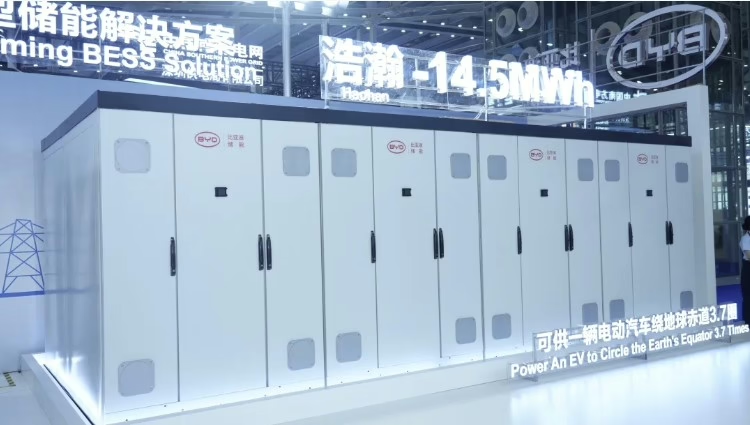
BYD unveils world’s largest 14.5 MWh DC energy storage system​

China’s EV giant has unveiled the “HaoHan” – a single-unit DC battery block with record-breaking capacity, aiming to disrupt the next generation of the energy storage market. The company also introduced its proprietary grid-forming inverter and advanced energy management system, designed to complement the HaoHan battery and optimize system performance.

Sep 19, 2025


Image: BYD

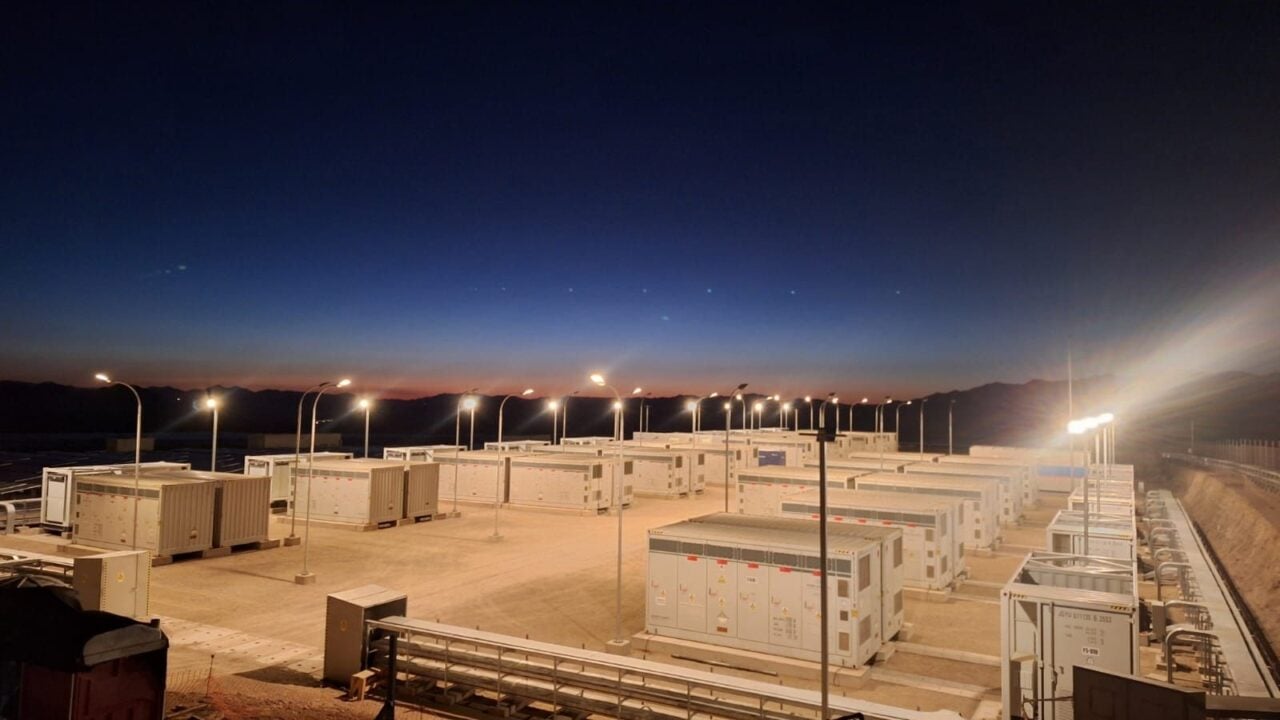
BYD has unveiled a new DC energy storage system with the world’s largest single-unit capacity of 14.5 MWh, raising the bar in the rapidly evolving utility-scale storage market. The system, named “HaoHan,” was officially launched on September 18 at the International Digital Energy Expo in Shenzhen.

The company said HaoHan’s minimum unit capacity of 14. 5MWh is more than double the industry norm of 6–7 MWh. When configured within a standard 20-foot container, the system delivers 10 MWh and achieves a volumetric energy density of 233 kWh per cubic meter, a 51% increase on the industry average. For a 1 GWh storage plant, HaoHan would cut the number of required units by more than half, reduce land use by one-third, and trim cell count by 76%, according to the manufacturer.

At the heart of HaoHan is BYD’s self-developed 2,710 Ah Blade Battery cell, which the company claims is the largest energy storage cell in the world. This next-generation cell delivers three times the capacity of conventional storage batteries, boasts a cycle life of over 10,000 cycles, and reduces the total lifecycle cost per kilowatt-hour to below CNY 0.1 ($0.014) – a milestone that could reshape the economics of large-scale storage.

The system achieves a 52% volumetric cell-to-system (VCTS) efficiency, maximizing energy density through integrated cell-to-system design in an approcah which reduces redunat component. Designed for harsh environments from deserts to coastal regions, BYD says HaoHan lowers system failure rates and maintenance costs by 70%. Combined with its in-house power conversion system and energy management software, the unit can provide millisecond-level response and grid-forming capabilities at gigawatt scale.

BYD says HaoHan can cut project-level levelized costs (LCOS) by 21.7%. For a typical 1 GWh installation, total costs related to equipment procurement, transportation, and installation are expected to drop by around 30%. Target applications include grid balancing, renewable energy integration at solar and wind hubs, and backup power for commercial and residential users.

HaoHan also incorporates a blockchain-based carbon tracking system to monitor the product’s lifecycle footprint. BYD claims the system’s carbon impact is 18% lower than the industry average, a feature designed to support compliance with EU carbon border tariffs and other evolving environmental regulations.

The launch of HaoHan comes amid a growing wave of next-generation energy storage systems entering the market. Earlier this year, CATL introduced its 9 MWh TENER Stack, Tesla rolled out its 20 MWh Megablock – a pre-engineered, medium-voltage AC utility-scale solution that combines four Megapack 3 units with an integrated megavolt transformer and switchgear, and Sungrow launched the 6.9 MWh PowerTitan 3.0, optimised for hot climates.

BYD plans to deploy the HaoHan system across multiple gigawatt-scale projects by the end of 2025, including a landmark 12.5 GWh installation in Saudi Arabia. The company is also accelerating its global expansion, targeting key markets in Europe, Latin America, Africa, and Southeast Asia.

Looking ahead, BYD’s technology roadmap includes the integration of liquid cooling, predictive maintenance, and hybrid solar-hydrogen-storage systems. These innovations are aimed at pushing overall system efficiency beyond 95% by 2026, further cementing the company’s position in the next generation of utility-scale energy storage solutions.

BYD-Haohan-BESS-02-002-jpg.avif

In addition, BYD has launched its new GC Flux grid-forming inverter solution, which covers the 2.5–10 MW capacity range.

According to BYD, the inverter boasts a performance level approximately 38% higher than common industry standards and a maximum power density of 1,474 kW/㎡, which is around 130% above typical values in today’s market. The system provides an overload capacity of up to 3x for 10 seconds and reaches a peak efficiency of 99.35%.

Beyond raw performance, the GC Flux PCS features advanced grid-forming capabilities, making it ideal for modern grid applications. It supports active inertia response up to 25 seconds, wide-band damping across 1–1500 Hz, and ultra-fast voltage and frequency regulation in under 100 milliseconds. These functions are critical for ensuring system stability, especially in hybrid or renewable-heavy networks that require seamless transitions between grid-connected and islanded modes.

Complementing the GC Flux PCS and BYD’s high-density HaoHan BESS, the company also introduced its new energy management system: GC Master EMS. Described as the “system brain”, the platform is tailored for intelligent scheduling and control of ultra-large-scale storage projects.

The manufacturer said that GC Master EMS supports integration of up to 10 million data points, roughly 25% above common industry benchmarks. In addition, it offers single-station capacity management of up to 15 GWh, a figure that represents a 400% increase in computing power compared to conventional EMS platforms.
 

Amidst Middle East Conflicts: What is the Path Forward for China's Energy Storage Exports?​

Published: Mar 9, 2026 17:58

Recent Middle East conflicts have disrupted the region's booming energy storage market, a major destination for Chinese exports. To assess the real impact on Chinese supply chains and project deliveries, we must analyze baseline demand amidst these geopolitical uncertainties.

The recent conflicts involving Iran and the surrounding Middle East region have directly disrupted the normal rhythm of the local energy storage market. Prior to the unrest, local energy storage demand in the Middle East was in a stage of rapid volume expansion, absorbing a massive amount of export capacity from Chinese energy storage enterprises. Faced with current geopolitical uncertainties, we need to break down the actual baseline demand for energy storage in the Middle East market to assess the substantive impact on domestic companies regarding supply chains and project delivery.

Assessment of the Energy Storage Baseline Demand and Export Scale in the Middle East

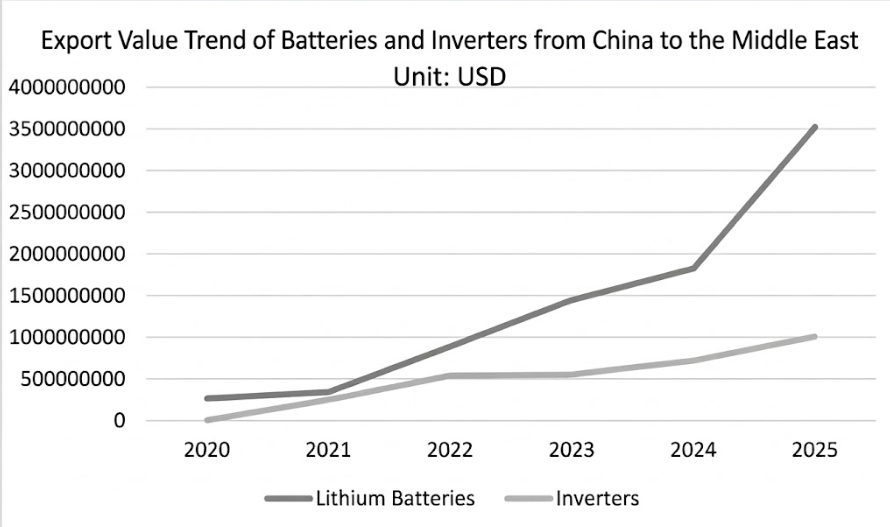
According to Global Trade Tracker (GTT) customs data, from 2020 to 2025, the cumulative total value of lithium batteries exported from China to the Middle East reached USD 8.308 billion. Looking at the timeline, the export scale grew rapidly from approximately USD 270 million in 2020 to about USD 3.534 billion in 2025, representing a compound annual growth rate (CAGR) of 53.5%.

imagesnKvKZ20260309180337.jpeg


Among them, Saudi Arabia and the United Arab Emirates (UAE) are the two core markets. Saudi Arabia accounted for 32.29% of total exports, with a staggering CAGR of 88.58%. The UAE held a 16.05% share, with its latest annual growth rate reaching 48.02%.

Meanwhile, inverter exports also showed a high-growth trend. Over the six-year period, China's total inverter exports to the region amounted to USD 3.164 billion. The UAE and Saudi Arabia ranked at the top with shares of 26.55% and 18.68% respectively, and their CAGRs reached 72.90% and 84.31%.

This sustained high growth indicates that the Middle East market is in a critical transition period from policy planning to large-scale grid-connected delivery. According to SMM estimates, the annual demand for energy storage battery cells in the entire Middle East region in 2026 will be around 50 GWh, accounting for 6% of global demand. System integration demand is approximately 38 GWh (about 6.5% globally). The actual installed capacity is projected to be between 25 and 30 GWh (about 7.5% globally). This massive demand relies heavily on the supply chain support of Chinese enterprises.

Substantive Impact of Short-Term Conflicts on Project Delivery and Supply Chains

According to public data, major large-scale projects currently under construction in the region include the UAE's EWEC solar-plus-storage project (19 GWh), Saudi Arabia's SEC-III energy storage project (12.5 GWh), Dubai's DEWA solar-plus-storage project (8.4 GWh), Saudi Arabia's SPPC Phase I energy storage project (8 GWh), and Egypt's Energy Valley project (4 GWh). Across these mega-projects, the total volume of orders secured by Chinese companies exceeds 40.8 GWh. However, directly impacted by the uncertainty of the recent warfare, numerous under-construction projects involving Chinese companies have been forced to halt operations, leaving all the aforementioned engineering projects facing delays.

According to the latest updates from SMM, regional turbulence has already transmitted upstream to the domestic manufacturing sector. Some top-tier system integrators and core component suppliers have encountered requests from Middle Eastern EPC (Engineering, Procurement, and Construction) contractors to cut orders or suspend taking deliveries. This has not only led to a backlog of massive customized inventory for these companies but also severely hindered expected cash flow collection, dramatically driving up working capital pressure and the risk of bad debts on advance payments. In terms of logistics and delivery, direct shipping routes to the Middle Eastern heartland are facing extremely high security risks. The sharp surge in war risk insurance premiums, increasingly chaotic freight capacity scheduling, and the potential threat of damaged inland road infrastructure in conflict zones collectively form insurmountable logistical constraints during the system delivery process.

Long-Term Energy Security Demands and Installed Capacity Outlook

While short-term conflicts have indeed disrupted the delivery rhythms of energy storage companies, in the long run, geopolitical turbulence is shifting the energy planning logic of both the Middle East and global markets. Traditional fossil fuels rely on centralized infrastructure such as refineries and oil pipelines, which are highly vulnerable to destruction in modern conflicts. This hidden energy security risk is prompting nations to re-examine their power grid structures. Moving forward, the primary driving force behind building distributed microgrids composed of solar PV and energy storage in the Middle East and other regions will shift from pure decarbonization goals to safeguarding national grid survivability and energy independence. Once the situation calms down, this paradigm shift will translate into sustained demand for energy storage installations.

Simultaneously, geopolitical gamesmanship has pushed up the risk premium on global crude oil supplies, keeping the maintenance costs of traditional fossil fuels stubbornly high. Consequently, in regions with abundant solar resources like the Middle East, the Levelized Cost of Energy (LCOE) advantage of solar-plus-storage projects is further amplified. On a global scale, energy price volatility will also drive capital to flow into the new energy infrastructure sector in search of deterministic returns. The dual considerations of economic efficiency and energy security ensure that the fundamentals for the expansion of the global energy storage market remain unchanged.

From the perspective of logistics and delivery, the impact of the current Middle East conflict on the global supply chain has obvious regional limitations. Affected by last year's Red Sea crisis, cargo ships sailing from China to Europe have long since been rerouted en masse around the Cape of Good Hope. After a prolonged period of adjustment, the capacity allocation and logistics cost systems for European routes have adapted to the new paths. Therefore, the current exchanges of fire have not caused substantive impacts on the delivery of energy storage by Chinese enterprises to the European market; the current disruptions primarily affect direct orders to the Middle East.

In summary, regional unrest does indeed pose challenges to short-term corporate deliveries. However, looking past the short-term impacts, the two core driving forces—energy independence and LCOE economics—have actually been strengthened. Local grid reconstruction in the Middle East and capital allocation towards new energy assets are both gathering momentum for subsequent installation demand. Once the conflict subsides, the rigid demand attribute of energy storage as essential energy infrastructure will be further validated by the market.
 

Grenergy Buys 2.6 GWh BYD Batteries For Chile Projects & More​

28 Mar 2026 by Grenergy

Spanish renewable energy company Grenergy has signed an agreement with BYD Energy Storage to procure 2.6 GWh of battery energy storage systems (BESS) for its Central Oasis platform in central Chile.

20260328102826948.png


(Photo Credit: Grenergy)​

  • A total of 468 MC Cube T batteries will be deployed across four phases of its platform in Central Chile: Gran Teno, Tamango, Planchón, and Monte Águila
  • The vessel Star Loen has departed from Da Chan carrying 168 batteries for Gran Teno, where foundation works to connect the batteries in Q2 are already underway

Madrid, March 26, 2026. Grenergy has signed a new agreement with BYD Energy Storage, a global energy solutions company, to supply 2.6 GWh of energy storage systems for its Central Oasis platform, located in central Chile.

Both companies are strengthening their partnership with this new purchase of 468 MC Cube T batteries, which feature the renowned Blade Battery technology. This agreement is in addition to the purchase made in May 2025 of 624 batteries (3.5 GWh) for Elena, phase VI of Oasis de Atacama, which was the largest supply of batteries in Latin America and the second largest worldwide last year.

The 468 batteries will be allocated to phases I, II, III, and IV of Central Oasis: Gran Teno (241 MW of solar capacity and 939 MWh of storage), Planchón (108 MW and 402 MWh), Tamango (49 MW of solar capacity and 168 MWh of storage), and Monte Águila (340 MW of solar capacity and 1.1 GWh of storage).

The Star Loen vessel has already departed from Da Chan carrying the 168 batteries destined for the Gran Teno plant, and it is expected to arrive in mid April. On site, foundation works are progressing to enable its connection during the second quarter of this year.
 

Chinese Battery-Storage Supplier Sees Shipments Doubling in 2026​

By Bloomberg News
April 6, 2026 at 10:29 AM GMT+8

Beijing HyperStrong Technology Co., one of China’s top suppliers of energy-storage systems, expects to more than double shipments this year on robust demand at home and abroad.

Total deliveries are projected to reach 70 gigawatt-hours in 2026, up from 26 gigawatt-hours last year, the company’s chairman and chief executive officer, Jianhui Zhang, said in an interview late last week.


Chinese Battery Maker Announces 11B Yuan Capacity Expansion Plan​

April 8, 2026 at 12:07 PM GMT+8

Chinese lithium-ion giant ramps up EV and stationary battery production amid surgingprofits

EVE Energy Co., one of China’s leading lithium-ion battery manufacturers,announced plans to build two new plants with a combined annual capacity of110 gigawatt-hours at a total investment of 11 billion yuan ($1.6 billion). The expansion includes a 6 billion-yuan joint venture with Fujian Longking Co. insouthern China, expected to produce 60 gigawatt-hours annually, and aseparate 5 billion-yuan facility in eastern China with 50-gigawatt-hourcapacity for both stationary and electric vehicle batteries, according tocompany filings on Tuesday.

The company said the expansion aims to “better seize the marketopportunities” in utility-scale and EV storage, enhancing EVE Energy’scompetitiveness in a rapidly growing sector. The announcements coincidedwith a strong earnings outlook: the company projected first-quarter netincome growth of up to 35%, sending its shares up 6.2% in early trading onWednesday, marking the largest intraday gain since March 20.
 
  • Like
Reactions: Waz

China throws the switch on battery buildout ‘equal to 10 times US capacity in 2025’
China’s battery expansion plans highlight a widening gap with the US, as renewable energy demand fuels rapid growth in storage systems

Published: 8:40pm, 9 Apr 2026Updated: 10:54pm, 9 Apr 2026

China’s leading battery makers have unveiled plans to add more than 600 gigawatt-hours (GWh) of new production capacity for the energy storage system (ESS) market in just the first two months of 2026, underscoring surging global demand for renewable energy infrastructure.

The planned facilities – spanning major players from Contemporary Amperex Technology Ltd (CATL) to Gotion High-tech – amount to roughly 10 times the 58GWh of total capacity installed across the US in 2025.

According to the GGII Energy Storage Research Institute, a Shenzhen-based consultancy, 19 mainland Chinese battery producers it tracks were set to invest a combined 180 billion yuan (US$26.3 billion) to build new lithium-ion battery factories.

Once completed – with some facilities due to come online in late 2026 – the projects will add up to 900GWh of annual production capacity. About 70 per cent of this would be dedicated to the ESS market, with the remaining 30 per cent serving the electric vehicle (EV) sector, GGII said in a report released on Wednesday.

ESS comprises batteries alongside battery management, power conversion and control systems that store excess energy generated from renewable sources, while providing backup power during outages and helping stabilise electricity grids.

One GWh of battery capacity can supply around 750,000 households for a year.

“The boom in artificial intelligence computing is driving a surge in demand for renewable energy, and the ESS infrastructure supporting these projects is set for rapid growth,” said Davis Zhang, a senior executive at Suzhou Hazardtex, a supplier of specialised batteries. “More ESS battery facilities will be built in the coming years as global decarbonisation efforts continue.”

China has emerged as the dominant force in the global ESS industry, with mainland companies accounting for more than 80 per cent of the market. According to Seoul-based SNE Research, global ESS battery demand rose 79 per cent year on year to 550GWh in 2025.

As China’s ESS sector expands rapidly with government backing, the US is racing to catch up, as Washington moves to restructure supply chains to exclude Chinese-made batteries and components.

In 2025, newly installed battery storage capacity on the mainland rose 40 per cent year on year to a record 174.2GWh, according to Benchmark Mineral Intelligence.

But as expansion accelerates, policymakers are starting to take notice.

Four Chinese government departments – including the Ministry of Industry and Information Technology – convened a symposium on April 9 to discuss early intervention measures aimed at curbing irrational competition in the power and energy storage battery sectors.

Officials said they would strengthen capacity monitoring, guide more orderly price competition and tighten regulatory oversight.

The meeting, which brought together major battery makers, reflects Beijing’s increasingly tough stance on domestic price wars amid persistent deflationary pressures over the past year.

Among the announced projects, CATL – the world’s largest supplier of EV and ESS batteries – plans to invest 20 billion yuan in a single zero-carbon production hub in Ningde, in eastern Fujian province, where it is headquartered.

The company aims to begin construction in the second quarter, with the facility expected to deliver up to 200GWh of annual capacity once operational.

SNE data showed CATL held a 30 per cent share of the global ESS battery market in 2025, followed by Shenzhen-based Eve Energy with 12 per cent.

Last week, Ganfeng Lithium – the world’s largest producer of lithium metal – said it expected “explosive growth” in the global ESS market in 2026, driven by a construction boom in renewable energy projects.

The bullish outlook comes as China ramps up battery exports. In the first 11 months of 2025, the country exported 4.25 billion lithium batteries worth more than US$69 billion, up 19.3 per cent and 25.6 per cent respectively from a year earlier, according to customs data.
 
Last edited:

Chinese energy storage firms push harder overseas as orders boom

Large-scale storage exports rise 130%; residential systems climb over 65%

Published: Apr. 10, 2026 3:14 p.m. GMT+8

Chinese energy storage manufacturers are experiencing a surge in overseas orders and accelerating their factory expansions to capture growing international demand.

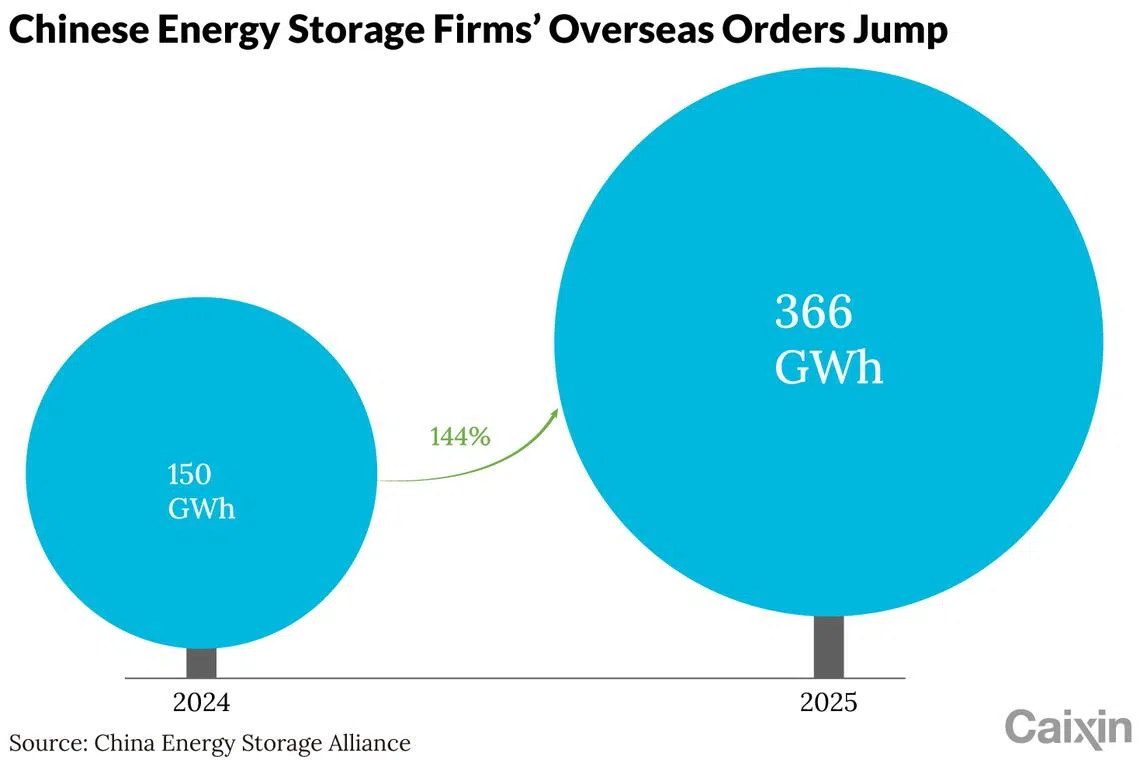
New overseas orders for Chinese energy storage companies reached 366 gigawatt-hours in 2025, marking a 144 per cent year-on-year increase, according to the China Energy Storage Alliance.

The momentum has continued into the first quarter of 2026, with exports of large-scale storage systems jumping more than 130 per cent and residential systems growing by over 65 per cent.

Over 70 Chinese companies have secured orders across more than 60 countries and regions, primarily targeting core markets in Europe, Australia, North America and the Middle East.

As the global energy transition and the artificial intelligence boom drive unprecedented demand for grid flexibility and backup power, Chinese manufacturers are dominating the international battery supply chain, even as they navigate mounting regulatory and geopolitical hurdles in Western markets.

596a13fe34ec4d01f46e7545282709135bd0f56738bf007c4d84afe5f6321b15

Demand explosion​

Wang Bing, product director at the research institute of Guangzhou Great Power Energy and Technology, told Caixin during the recent 14th Energy Storage International Conference and Expo that the company’s overseas business grew 300 per cent in 2025.

He noted that export production lines ran at full capacity during the first quarter of this year to meet demand across residential, commercial, industrial, and large-scale utility sectors. Wang said that several gigawatt-scale orders have overwhelmed the company’s capacity.

The broader industry is speeding up overseas factory construction. In March, Spanish media reported that Xiamen Hithium Energy Storage Technology plans to invest 400 million euros (S$596 million) to build a battery plant in Spain, which is expected to begin operations in 2027. Spain plans to deploy about 22 gigawatts of storage by 2030 to integrate more renewable energy.

Sungrow Power Supply signed an agreement in January with the Egyptian government and Norway’s Scatec ASA to build a 10-gigawatt-hour factory in the Suez Canal Economic Zone, slated for April 2027. On Feb 5, Sungrow announced a 230-million-euro plant in Poland designed to produce 20 gigawatts of inverters and 12.5 gigawatt-hours of storage systems annually.

The surge is largely driven by AI data centres, which need fast-acting battery systems to provide backup power within milliseconds if the grid becomes unstable, Wang said. He added that Great Power has developed a battery solution for a major overseas data centre client, following a request made in early 2025. Looking ahead, he expects demand from data centres worldwide to grow rapidly by the end of 2026, leading to fierce competition in the market.

Yang Bo, general manager of Hoymiles Power Electronics, told Caixin and other media at the expo that photovoltaics and energy storage drive each other. Storage is essential to stabilise grids strained by the rapid expansion of solar power, which explains why the overseas market is developing beyond many expectations.

Risks behind the opportunities​

Despite the surging demand, Chinese exporters face stringent regulatory barriers that carry significant operational risks. The European Union requires carbon footprint certification, battery passports, and corporate due diligence for imported batteries, Wang said.

The EU introduced carbon footprint requirements in February. The process is time-consuming, especially when it comes to verifying emissions across suppliers, Wang said.

Battery passport and due diligence rules, expected to take effect between 2027 and 2028, will require full traceability from raw materials to transport. Wang warned this could force companies to disclose sensitive commercial information, such as cell material ratios, while those that refuse may face high carbon tariffs.

European and North American clients also demand extensive green commitments, including 15-year to 20-year operational maintenance and battery recycling plans. An industry insider noted that making long-term service promises simply to secure orders could saddle Chinese companies with unaffordable future costs, despite their current price advantages.

In the US, strict national standards and trade barriers created by the Inflation Reduction Act pose further hurdles. Great Power is responding by establishing localised assembly plants with regional partners to process components shipped from China.

While direct overseas investment helps bypass trade barriers, Wang noted that building foreign plants remains difficult due to the lack of supporting supply chains. He suggested that expanding abroad as an integrated supply chain cluster is a more secure strategy than venturing out as an isolated company. CAIXIN GLOBAL
 

CATL and HyperStrong sign 3-year 60GWh sodium-ion storage partnership​

Edited by Yara From Gasgoo|April 29 , 2026 21:39 BJT

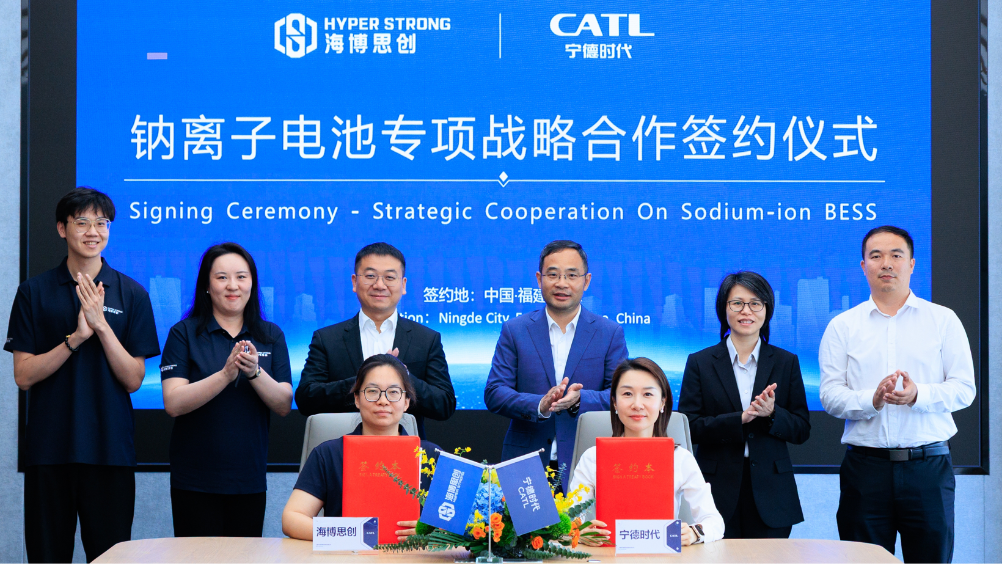
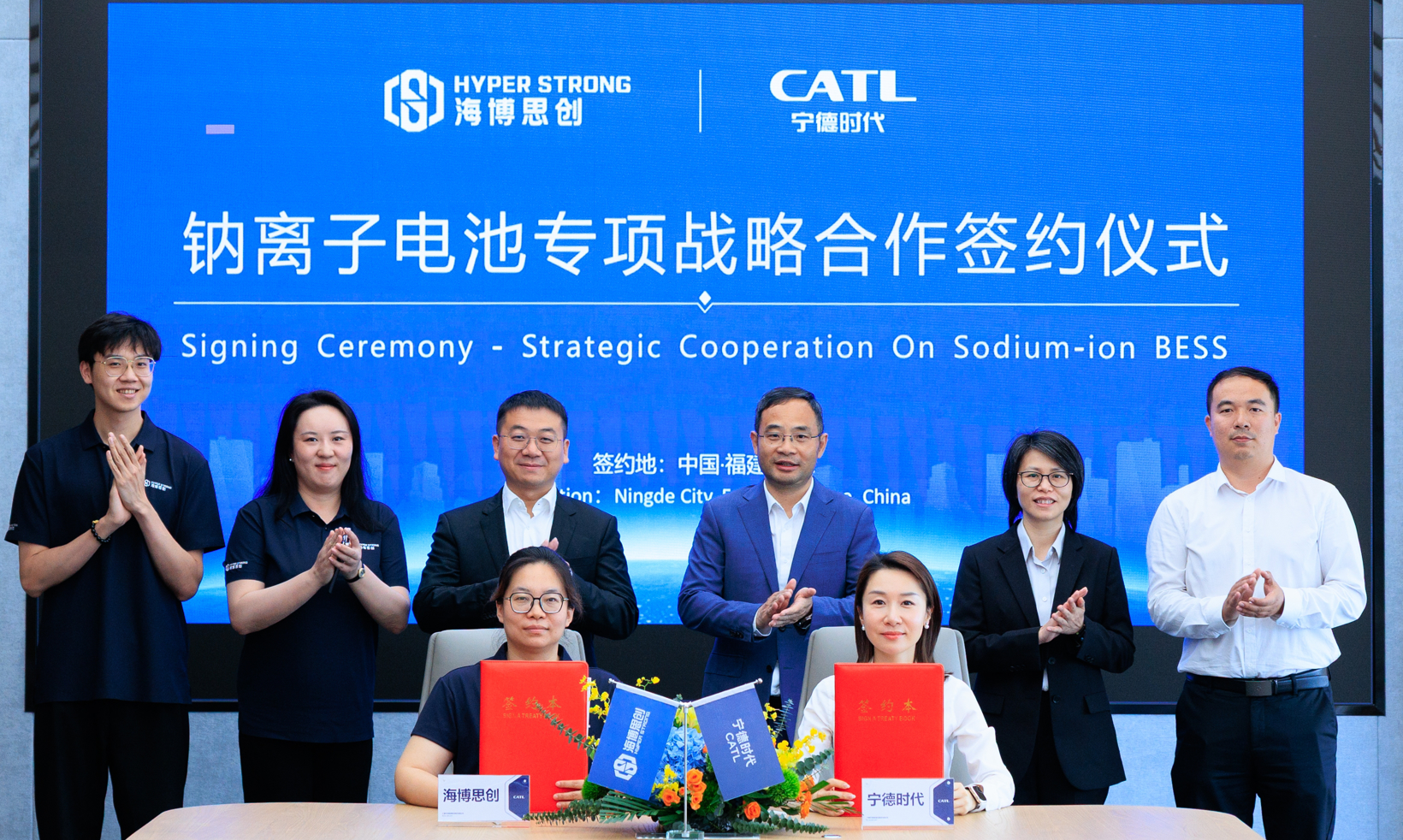
Gasgoo Munich- CATL and HyperStrong signed a strategic cooperation agreement for sodium-ion batteries in Ningde, Fujian, on April 27. The deal locks in 60GWh of orders over three years—a milestone that signals sodium-ion technology has reached an inflection point for mass adoption.

微信图片_20260427182344_270_1089.jpg

Image source: CATL

As CATL's first strategic partner for energy storage sodium-ion batteries, HyperStrong will collaborate closely with the battery giant on R&D, product application, and project execution.

The collaboration underscores CATL's success in cracking the full chain of mass-production challenges, confirming its ability to deliver at scale. It stands as the largest single order for sodium-ion batteries globally to date, kicking off a new phase of explosive growth for the industry.

CATL has significantly boosted energy density through morphology control and surface modification. On the manufacturing front, the company leveraged core technologies—such as angstrom-level pore adjustment, surface molecular water locking, and adaptive dynamic formation—to systematically resolve production hurdles like bubbling in hard carbon lines and moisture control. These advances ensure consistency across high-volume production runs.

Sodium battery materials offer superior temperature adaptability and excel in high-temperature cycle life. They generate less heat and experience lower cell expansion stress during operation, delivering enhanced safety and stability. For long-duration energy storage applications, this allows for a simplified system architecture that cuts auxiliary energy losses—ultimately boosting power station efficiency and overall economics.

Furthermore, CATL's energy storage sodium-ion batteries share a platform design with their lithium-ion counterparts, ensuring high compatibility with existing supply chains. This compatibility lowers integration costs and significantly shortens the timeline from production to power station deployment.

The 60GWh partnership represents a major breakthrough for both companies. As sodium-ion technology enters its scale-up phase, the two plan to deepen their collaboration to drive high-quality growth in the storage sector—providing a more resilient and diversified technical foundation for the global energy transition.
 
May 14, 2026

Global large-scale battery energy storage system (BESS) deployments reached 4.5 GW / 12.8 GWh last month, according to data from Benchmark Mineral Intelligence, as reported by ESN Premium.

China accounted for the largest share, bringing 2.5 GW / 7.2 GWh online, which represents slightly more than half of the worldwide total.

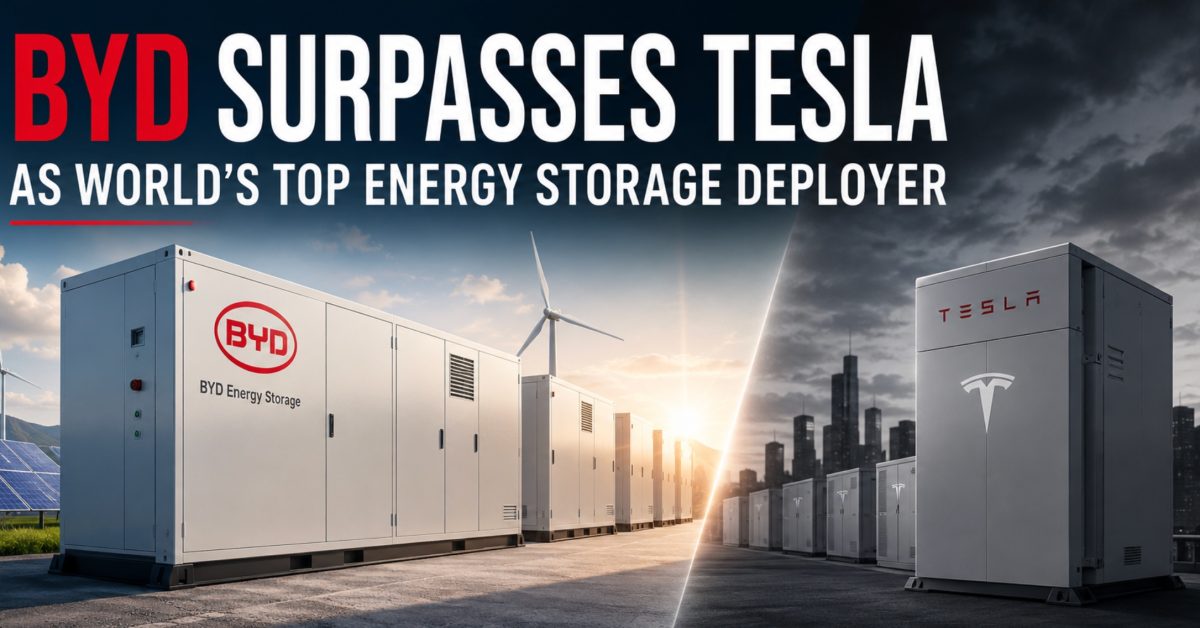
BYD surpasses Tesla as world’s top energy storage deployer​

May 13 2026 - 6:51 am PT

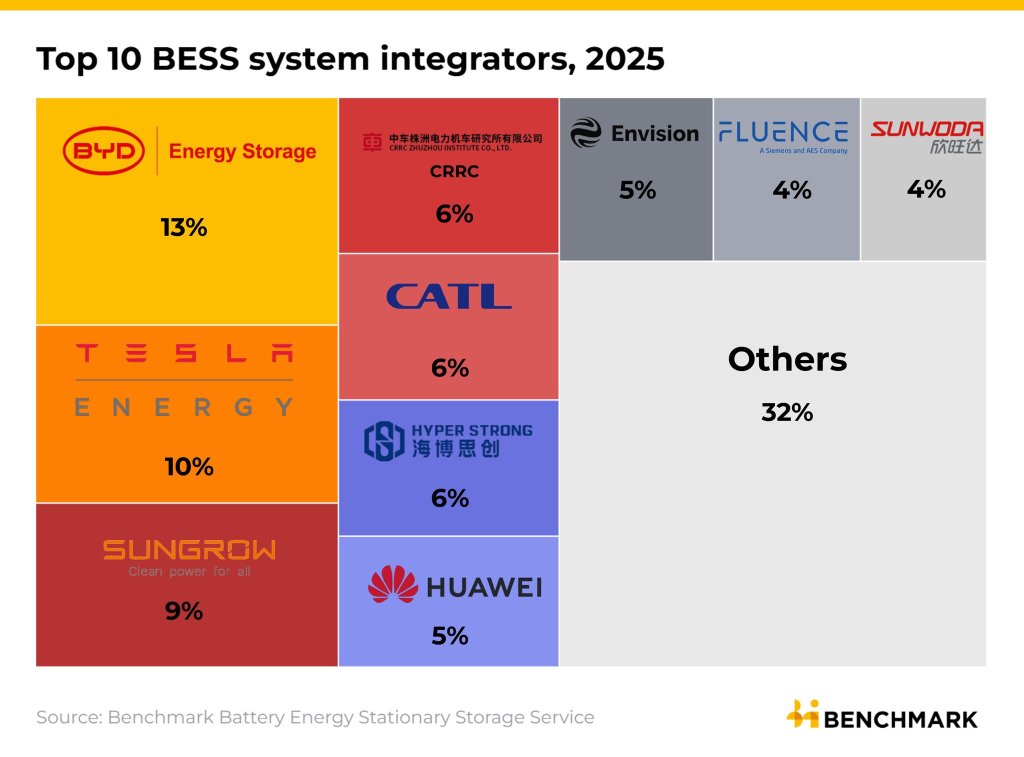
BYD has overtaken Tesla to become the world’s largest battery energy storage system (BESS) integrator, capturing 13% of the global market in 2025 compared to Tesla’s 10%, according to new data from Benchmark Mineral Intelligence.

Sungrow claimed the third spot with 9% market share, followed by three Chinese companies tied at 6% each: CRRC Zhuzhou, CATL, and Hyper Strong. Huawei (5%), Envision (5%), Fluence (4%), and Sunwoda (4%) rounded out the top 10.

HIGAelcWwAEoafJ.jpeg
 

China’s ZOE Energy to build Saudi Arabia’s first BESS manufacturing plant

ZOE Energy and Saudi partner to build BESS plant​

The facility will support Saudi renewable targets while training local talent and expanding regional battery supply.

May 26, 2026

ZOE Energy Storage has entered into a joint venture (JV) with a Saudi partner to establish the Kingdom’s first large-scale battery energy storage system (BESS) manufacturing facility.

The company will construct the plant in two phases, with the initial phase targeting a 6GWh production capacity set to begin operations in the first quarter of 2027.

The second phase aims to increase output to 18GWh, significantly expanding local storage manufacturing capacity and reducing reliance on imports for the Kingdom’s energy sector.

The facility, covering 150 acres, will operate according to leading European manufacturing standards and seek “Made in Saudi” certification, ensuring compliance with local grid requirements.

In line with Saudi Arabia’s Vision 2030, the project is expected to contribute to the country’s renewable energy ambitions, which include targets of 130GW of renewables, 48GWh of storage, and a goal of producing half the nation’s power from clean sources.

Beyond local production, the plant will supply BESS to markets across the Gulf region, the Middle East and North Africa, Central Asia, and Africa.

Plans include the establishment of a Green Energy Academy on site to train certified professionals, aiming to deepen domestic expertise in energy storage technologies.

This facility represents ZOE Energy Storage’s second international manufacturing base, following a similar project in Hungary.

The JV is part of the company’s global strategy to integrate its proprietary energy storage technology with local manufacturing and international service presence.

The upcoming plant is tailored for operation in extreme desert conditions, delivering specialised storage solutions to similar environments worldwide.

ZOE Energy Group chairman Huang Jun said: “The Middle East is a key engine of global energy transformation. This manufacturing base is a decisive step in our global strategy.”

He stated that ZOE will continue to provide its technology, maintain quality standards, and deliver comprehensive service to support the region’s transition to green energy and contribute to the development of a local energy storage ecosystem.

The move supports Saudi Arabia’s efforts to strengthen self-sufficiency in energy storage supply and is designed to boost regional and international progress toward lower-carbon energy systems.
 

CATL and HyperStrong sign 3-year 60GWh sodium-ion storage partnership​

Edited by Yara From Gasgoo|April 29 , 2026 21:39 BJT

Gasgoo Munich- CATL and HyperStrong signed a strategic cooperation agreement for sodium-ion batteries in Ningde, Fujian, on April 27. The deal locks in 60GWh of orders over three years—a milestone that signals sodium-ion technology has reached an inflection point for mass adoption.

微信图片_20260427182344_270_1089.jpg

Image source: CATL

As CATL's first strategic partner for energy storage sodium-ion batteries, HyperStrong will collaborate closely with the battery giant on R&D, product application, and project execution.

The collaboration underscores CATL's success in cracking the full chain of mass-production challenges, confirming its ability to deliver at scale. It stands as the largest single order for sodium-ion batteries globally to date, kicking off a new phase of explosive growth for the industry.

CATL has significantly boosted energy density through morphology control and surface modification. On the manufacturing front, the company leveraged core technologies—such as angstrom-level pore adjustment, surface molecular water locking, and adaptive dynamic formation—to systematically resolve production hurdles like bubbling in hard carbon lines and moisture control. These advances ensure consistency across high-volume production runs.

Sodium battery materials offer superior temperature adaptability and excel in high-temperature cycle life. They generate less heat and experience lower cell expansion stress during operation, delivering enhanced safety and stability. For long-duration energy storage applications, this allows for a simplified system architecture that cuts auxiliary energy losses—ultimately boosting power station efficiency and overall economics.

Furthermore, CATL's energy storage sodium-ion batteries share a platform design with their lithium-ion counterparts, ensuring high compatibility with existing supply chains. This compatibility lowers integration costs and significantly shortens the timeline from production to power station deployment.

The 60GWh partnership represents a major breakthrough for both companies. As sodium-ion technology enters its scale-up phase, the two plan to deepen their collaboration to drive high-quality growth in the storage sector—providing a more resilient and diversified technical foundation for the global energy transition.

CATL to deliver first sodium-ion storage systems in September as material costs halve​

Jun 5, 2026 4:58 PM CEST

Contemporary Amperex Technology Co. Limited (CATL) said it will deliver its first sodium-ion battery energy storage systems to customers in September and achieve GWh-level shipments of sodium batteries during 2026, providing one of the clearest commercialisation timelines yet for the technology, reports Y-Finance.

The schedule was disclosed by CATL’s domestic energy storage solutions CTO, Lin Jiubiao, during a sodium-ion battery industry event in China.

Falling material costs remain a key factor supporting broader adoption of sodium-ion batteries.

During the industry event, battery material suppliers said sodium-ion cathode materials are following a development path similar to lithium iron phosphate batteries during the early stages of scale-up. Production volumes continue to rise while manufacturing costs decline.

Hard-carbon anodes, one of the most important components in sodium-ion batteries, have also entered industrial-scale production. Industry estimates presented at the event suggest hard-carbon costs could decline from 60,000 to 70,000 yuan (8,300 to 9,700 USD) per tonne in 2024 to 35,000 to 40,000 yuan (4,850 to 5,550 USD) per tonne in 2026, with longer-term targets below 25,000 yuan per tonne.

Unlike lithium-ion batteries, sodium-ion batteries rely on abundant sodium resources, reducing dependence on lithium supply chains. Chemistry has also attracted attention for large-scale energy storage applications due to its safety characteristics, raw material availability, and low-temperature operating capabilities.
 

Users who are viewing this thread

Pakistan Defence Latest

Latest Posts

Back
Top