Chinese Society and Infrastructure

Status
Not open for further replies.
You think there isn't thousands of Chinese researchers still in the US?
No I didn't, but just because these two did research in US makes you think China has no good research facilities, your mind really works very strange. China contributes more high quality research results than US in recent years, only fools believe that just because some Chinese doing research in US means no good research facilities in China. Do all Americans share this funny idea?
 
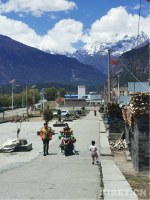
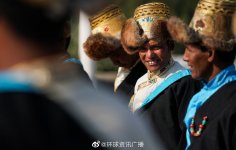
Daman village. China allowed them to become Chinese citizens but refuses to recognize them as a separately listed new ethnicity in China.

W020220729661955777680.png
62c13fbaly1g3901qowkgj21c40u0npm.jpg62c13fbaly1g3900t6entj21b10u0he2.jpg62c13fbaly1g39022lqwlj21e80u0b2m.jpg
 
Last edited:
CNN: Beneath the Great Wall of China lies the world's deepest high-speed railway station and the world's first self-driving high-speed train is already in action

Updated 3rd February 2022

调整大小 PHOTsBjz2OW7KJJtCml0cJbc231215.jpg


The Great Wall

(CNN) — With the 2022 Beijing Winter Olympics fast approaching, the world's first self-driving high-speed train is already in action, transporting athletes and officials between the two main cities hosting the games on the historic Beijing-Zhangjiakou intercity railway.

The fact that this bullet train can drive itself is remarkable enough. But partway through the 56-minute ride, it passes through another engineering marvel: the Badaling Great Wall Station.

Completed in 2019, the station is a stone's throw away from the entrance to Badaling, the most popular section of the centuries-old wall. To protect the iconic monument from structural damage, the railway line and its accompanying station were built deep underground.

http___cdn.cnn.com_cnnnext_dam_assets_220127091821-02-badaling-great-wall-station-highspeed-ra...jpg


Buried 102 meters (335 feet) below ground and covering an area of more than 36,000 square meters, the three-story structure is said to be the world's deepest and largest underground high-speed railway station.

Constructing such a complex station, which includes a 12-kilometer-long (7.45 miles) tunnel system, under a UNESCO World Heritage site was no easy feat.

According to China's state media, engineers used an electronic detonator to precisely time the explosives down to the millisecond. It was the first time the technology was used in China, and allowed workers to maintain a vibration velocity of below 0.2 centimeters per second.

That means every explosion was precisely calculated to ensure the impact would be no stronger than a single footstep on the Great Wall.

15117096.jpeg


Starting in 2016, construction of the tunnel and the station took around three years to complete.

The high-speed railway shortens the journey from China's capital city to the Badaling Great Wall from around 1.5 hours -- traffic congestion could make that time far longer -- to around 27 minutes.

The station is a few minutes away from the Great Wall cable car station and around 800 meters (0.5 miles) from the starting point of the Badaling Great Wall. It's also home to China's second-longest escalator, stretching 88 meters long and 42 meters high.

Because of the distance to the train platform, the station gate is closed to ticket holders 12 minutes before the departure of the final train, instead of the usual five minutes in other stations in China, to ensure that the passengers have enough time to make their way through the massive station.

Will the Great Wall be making an appearance at the Winter Olympics?​

While there won't be any Olympics sporting events taking place anywhere near the Badaling Great Wall, it will be part of the torch relay, taking place February 2-4.
As a result the station, as well as the Badaling section of the wall, is closed on February 2 and 3.

Badaling isn't the only portion of the Great Wall that will make an appearance on TV screens as part of the Winter Olympics ceremonies.
Chongli district and Yanqing district, two areas with Winter Olympics villages, are also home to parts of the ancient barricade.

Some tracks at the National Ski Jumping Centre in Chongli are as close as 20 meters to the Great Wall, offering a historic view for the skiers competing in the games.

调整大小 5ee7f6c778c3b8fdfc55eb975839381d.jpg


调整大小 Badaling_1280.jpg


6d8cbcfbgy1gmguwlej1wj212w0pxkjm.jpg


The Winter Olympics high-speed railway​

The 108-mile-long Beijing-Zhangjiakou railway is served by a new high-speed electric multiple-unit (EMU) Fuxing train developed and operated by the state-owned China State Railway Group.

Unveiled in early January, it can run up to 350 kilometers (or 217 miles) per hour and cuts travel time between two of the main Olympics host cities from three hours to 56 minutes.

Though the high-speed train is autonomous, a monitoring driver is on board at all times. The train can automatically start, stop and adjust to the different speed limits between stations.
The train's eight cars are equipped with 5G signals, intelligent lighting and 2,718 sensors to collect real-time data and detect any operational abnormalities.

Special carriages were designed with the needs of athletes in mind. For instance, some cabins feature larger storage areas for winter sports equipment, which can be accessed by QR code.

In addition to the main rail line, there are also two branches, Yanqing and Chongli, that connect authorized passengers to two key Winter Olympic villages.

A 55-day closed-loop management system, which started from January 21, has been implemented so those heading to the Olympic Games do not share the same train carriages as other passengers on the line. (Read more about Beijing's ambitious Olympics "bubble" here.)
 
World's first 5G smart high-speed railway launched for Beijing 2022 Winter Olympics
14:57, 06-Jan-2022

The brand new, state-of-the-art Olympic version of the Fuxing (Rejuvenation) intelligent electric multiple unit (EMU) was specially tailored for the Beijing 2022 Winter Olympics.

The bullet train is the world's first intelligent and autonomous high-speed train with a 5G live broadcast studio on board. The eight-car EMU was customized for the upcoming Winter Olympics and can carry up to 564 passengers, reaching speed of 350 kilometers per hour.

The train features four classes of seating, including first, second and business classes, and a media studio. It will travel along the high-speed line linking Beijing and Olympic co-host Zhangjiakou City in north China's Hebei Province. The bullet train will serve multiple locations and shuttle athletes, staff and volunteers.

To view this content we will need your consent to set third party cookies.
For more detailed information, see our cookies page.
 

China's bullet trains undergo shower, ultrasonic maintenance ahead of holiday season


To view this content we will need your consent to set third party cookies.
For more detailed information, see our cookies page.
To view this content we will need your consent to set third party cookies.
For more detailed information, see our cookies page.


In preparation for the imminent Spring Festival travel rush, considered the world's largest annual human migration, more than 50 maintenance centers for high-speed trains are working hard to guarantee a safe journey for Chinese passengers. CGTN reporter visits one of the centers, in central China's Wuhan, to learn about what happens behind the scenes.
 

Harbin - Is this REALLY China?​


To view this content we will need your consent to set third party cookies.
For more detailed information, see our cookies page.
 

Russians Flock to China’s Border City for Breakfast, Shopping as Visa-Free Group Travel Resumes​


To view this content we will need your consent to set third party cookies.
For more detailed information, see our cookies page.
 
170288787967189_480_320.jpg

To view this content we will need your consent to set third party cookies.
For more detailed information, see our cookies page.

To view this content we will need your consent to set third party cookies.
For more detailed information, see our cookies page.
 

Riding China's Bullet Train in FIRST CLASS (347 km/h) 🇨🇳


To view this content we will need your consent to set third party cookies.
For more detailed information, see our cookies page.
 

China's Malls are OUT OF THIS WORLD!​

We went to China Wanda Plaza to see the world's longest indoor escalator but we ended up experiencing one of the best malls we've ever been to.

To view this content we will need your consent to set third party cookies.
For more detailed information, see our cookies page.
 
Flying Taxi make trial run between Shenzhen and Zhuhai.
To view this content we will need your consent to set third party cookies.
For more detailed information, see our cookies page.


To view this content we will need your consent to set third party cookies.
For more detailed information, see our cookies page.
 
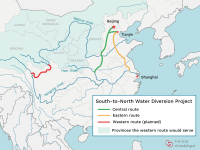
Has China ever considered linking the Iriwaddy with the Mekong and Yangtse? I know it’s a lot of engineering, and very expensive but it could be a solution to the Malacca dilemma. An adjustment to the north south water project could also be used to allow river ships to transport goods all the way to the Indian Ocean.


1711532551977.png
 
Has China ever considered linking the Iriwaddy with the Mekong and Yangtse? I know it’s a lot of engineering, and very expensive but it could be a solution to the Malacca dilemma. An adjustment to the north south water project could also be used to allow river ships to transport goods all the way to the Indian Ocean.


View attachment 29242
The Malacca dilemma is just an imagination. Now the stupid behavior of the West has led Russia to become an alliance with China. If coupled with the establishment of oil and gas pipelines between Pakistan and Iran extending to China, the opening of the Arctic route, and the completion of the Eurasian railway through the five Central Asian countries, the significance of Malacca will be very limited.
 
This is the China Society thread, so I figured this was as good a place as any other to ask this. How long did it take for the Chinese culture to shift under Mao and for people to be ok with the “women hold up half the sky” and “sons and daughters” surrounding the one child policy?

I ask because now that China is trying to go to a have as many kids as you can, I wonder how long that shift will take.

Women have been brought up with one set of expectations for their lives, and now they are told to focus on becoming moms.

Gen. Z girls and Gen. Alpha girls are young enough to adapt, but the millennial women seem to have been thrown a curveball in the progress.

For the jobs that don’t pay well, it would be wise of the government to stop making young people waste time getting education that isn’t necessary or wasting their youth struggling un-necessarily to build up funds to afford a home if they are willing to have kids. A tax break or voucher system to cover their rent should they have 2 or more kids would allow people to better afford to balance work and life, as well as move to the having kids in their mid 20s, which leave time for them to have a second kid in a few years afterwards.

Here is where the infrastructure part of the thread comes in; more apartments in the cities should be available to grandparents on a subsidized basis, so they can help with child care. China reports say they want to shift more people from the countryside to the cities, so taking the burden off families and especially women should help raise the birth rate

To view this content we will need your consent to set third party cookies.
For more detailed information, see our cookies page.
 
Last edited:
Status
Not open for further replies.

Users who are viewing this thread

Pakistan Defence Latest

Back
Top