Chinese Society and Infrastructure

Status
Not open for further replies.
Of course, such places will never escape from the smearing campaigns on China by the haters' media.
like the wide spread western reports that China is demolishing mosques, 8 years ago, UK , US and India media joined hands spreading the fake news that China was demolishing this Buddhist Academy.

微信图片_20230203000516.png调整大小 微信图片_20230203000749.jpg微信图片_20230203001041.jpg
 

China to Dominate 80% of Global Solar Manufacturing Capacity Until 2026​

November 15, 2023
50-of-Indias-Planned-Solar-Module-Capacity-to-be-in-Gujarat.jpg


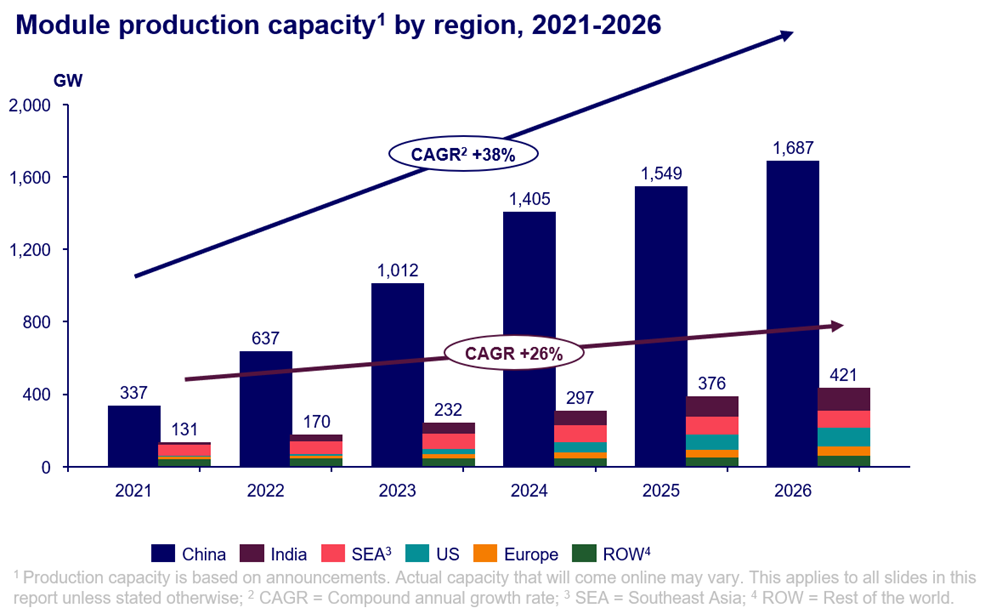
With an investment of $130 billion in the solar industry this year, China will hold more than 80% of the world’s polysilicon, wafer, cell, and module manufacturing capacity in the next three years.

According to a recent report by Wood Mackenzie, with more than 1 TW of wafer, cell, and module capacity forecasted to come online by 2024, China’s increased capacity will meet global demand until 2032.

Picture1-2.png


“China’s solar manufacturing expansion has been driven by high margins for polysilicon, technology upgrades, and for developing local manufacturing in overseas markets; China will still dominate the global solar supply chain and continue to widen the technology and cost gap with competitors,” said Huaiyan Sun, senior consultant at Wood Mackenzie.

China also has plans to build more than 1,000 GW of N-type solar cell capacity, which amounts to 17 times more capacity than the rest of the world, the report said.

Despite local solar supply across overseas markets increasing, it is yet to be as cost-effective as China’s. A module made in China is 50% cheaper than that produced in Europe and 65% cheaper than the U.S.

The U.S. and India, driven by the Inflation Reduction Act and Production Linked Incentive, respectively, have announced more than 200 GW of planned module capacity since 2022. However, this has not eliminated their dependence on China for wafers and cells in the next three years.

Looking outside China, India is forecasted to overtake Southeast Asia as the second-largest module production region by 2025.

Concerns about the market’s oversupply are mainly aimed at old production lines that produce lower-efficiency products, such as the P-type and M6 cells. Demand for P-type cells began to decline in 2023, and Wood Mackenzie analysts expect it to be only 17% of supply by 2026.

Sun said, “Oversupply will undeniably hinder some of the current expansion plans. More than 70 GW of capacity in China has been terminated or suspended in the past three months.”

The solar manufacturing industry in China is entering a challenging time. Module manufacturers will be forced to take orders at a loss, reduce capacity, or shut down entirely.

In the first half of 2023, Chinese solar manufacturers scaled up expansion plans across silicon wafers, rods, slices, solar modules, batteries, and silicon materials, which amounted to a total of ¥100 billion (~$13.89 billion).

In 2022, the country’s annual export of solar photovoltaic products surpassed $51 billion, registering an 80.3% year-over-year increase.


China to hold over 80% of global solar power manufacturing capacity from 2023-26​
November 7, 2023

Despite local manufacturing policies in overseas markets, China’s expansion will dominate global solar supply chain, and widen the technology and cost gap.

After investing over US$130 billion into the solar industry in 2023, China will hold more than 80% of the world’s polysilicon, wafer, cell, and module manufacturing capacity from 2023 to 2026, according to a recent report by Wood Mackenzie titled “How will China’s expansion affect global solar module supply chains?”.

imagefufq.png


Huaiyan Sun, senior consultant at Wood Mackenzie, and author of the report said: “China’s solar manufacturing expansion has been driven by high margins for polysilicon, technology upgrades and for developing local manufacturing in overseas markets, China will still dominate the global solar supply chain and continue to widen the technology and cost gap with competitors.”

More than one terawatt (TW) of wafer, cell and module capacity is forecasted to come online by 2024, meaning China’s capacity is sufficient to meet annual global demand now through to 2032, based on Wood Mackenzie forecasts of annual demand growth.

China’s capacity expansion will perpetuate its dominance in the global solar industry with its advanced technology, low costs and complete supply chain
Strong government policies in overseas markets have started to increase local solar manufacturing, but they are still not cost-competitive compared to Chinese supply. A module made in China is 50% cheaper than that produced in Europe and 65% cheaper than the US, according to the report.

The US and India have announced more than 200 gigawatts (GW) of planned module capacity since 2022, driven by the Inflation Reduction Act (IRA) in the US and the Production Linked Incentive (PLI) in India.
“Despite considerable module expansion plans, overseas markets still cannot eliminate their dependence on China for wafers and cells in the next three years,” Sun said.

China will continue to be the global technological leader with its announcements to build more than 1,000 GW of N-type cell capacity, the next-generation technology after P-type. This represents 17 times more capacity than the rest of the world.

Looking outside China, India is forecasted to overtake Southeast Asia as the second-largest module production region by 2025, which will be driven by India’s strong PLI incentives.

Oversupply and intense competition will characterise the solar supply chain going forward, and is already driving cancellations of some expansion plans
Concerns about the market’s oversupply are mainly aimed at old production lines that produce lower efficiency products, such as the P-type and M6 cells. Demand for P-type cells began to decline in 2023 and Wood Mackenzie analysts expect it to be only 17% of supply by 2026.

Sun added: “Oversupply will undeniably hinder some of the current expansion plans. More than 70 GW of capacity in China has been terminated or suspended in the past three months.”

The solar manufacturing industry in China is entering a challenging time. Module manufacturers will be forced to take orders at a loss, reduce capacity, or shut down entirely.


China’s solar production costs fall by 42% in last year

December 14, 2023 reve

New Horizons report says US and Europe can’t compete with Asia manufacturing powerhouse.

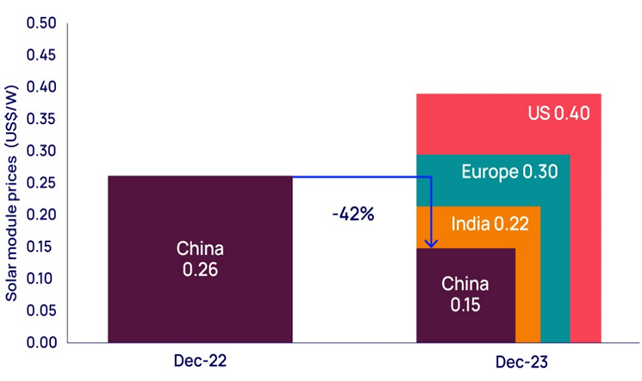
The cost of producing solar modules in China has dropped by 42% in the last 12 months to US$0.15 per watt (/W) giving manufacturers in the country an enormous cost advantage over international rivals according to a Horizons report from Wood Mackenzie.

The report: ‘Top of the charts: Five low-carbon tech trends worth tracking’ looks at five key charts and identifies some key underlying trends across the low-carbon landscape.

Alongside the fall in Chinese solar hardware costs the report looks at the meteoric rise of renewable energy, the efforts being made to diversify battery raw materials supply, the progress of carbon capture and storage and the growth of domestic heat pumps.

“With COP28 reaching its conclusion, these five charts highlight the vital importance of all facets of the energy transition process,” says co-author Dr Steven Knell, Vice President, Power & Renewables. “The charts [in the report] show the progress that is being made, but also underline how much still needs to be done.”

The report also states that policy is widening to support the build-out of domestic supply chains for low-carbon technologies and to develop new sources of critical minerals to reduce global dependence on China. While in some cases such as Chinese solar module production, costs are coming down, in others they will remain high.

“The charts contained in the report indicate the global scale of the energy transition process and identifies some of the challenges,” says co-author Malcolm Forbes-Cable, Vice President, Upstream and Carbon Management Consulting. “With US$70 billion needed to be invested in global CCUS [Carbon Capture, Utilisation and Storage] transport and sequestration infrastructure before 2030, the financial implications alone will require global solutions.”

imageca16u.webp


Solar module prices1 by manufacturing location

As the world’s solar module powerhouse, China already commands 80% of global capacity and this is being reflected in soaring domestic installations. This year its domestic solar additions will be double those of the US and the EU combined.

imagex662.webp


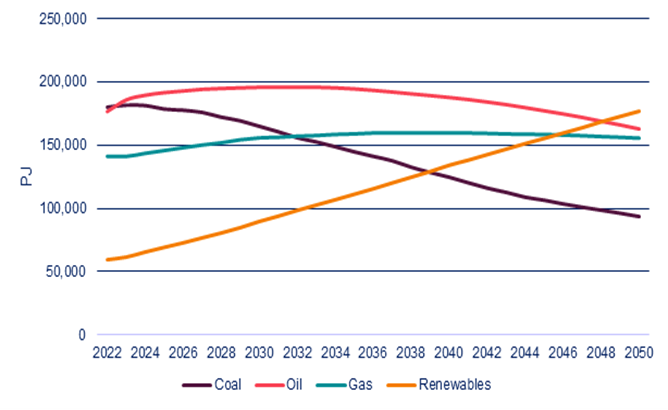
Total primary energy supply in petajoules (PJ)

The renewables success story continues to gather pace, led by the rapid growth of wind and solar. By 2050, they will account for more than 50% of the global power supply. The last decade has seen a transformation in power generation, with renewables delivering low-cost power at scale.

imagedlej.png


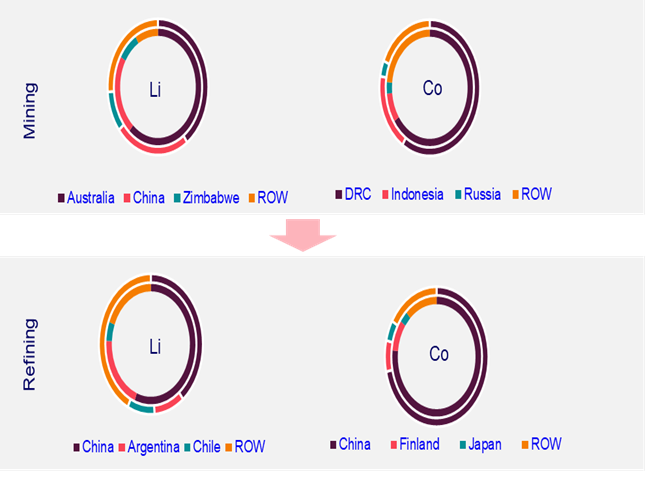
Lithium and cobalt mining and refining market 2023 (inner) to 2035 (outer)

Lithium and cobalt are compelling examples of the potential for a redistribution of the supply base. Thanks to price signals that are driving new investments and expanded capacity, the future value chains for base metals and battery raw materials will be both deeper and broader.

imageyoex9.webp


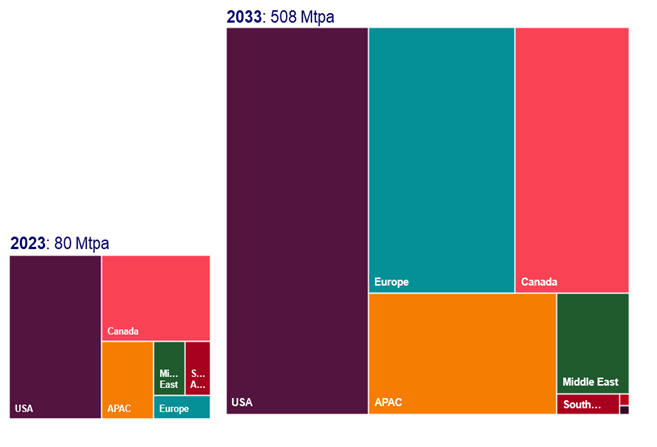
CO2 operational storage capacity 2023 to 2033 (Mtpa)

The next decade will see CCUS capacity rise from 80 million tonnes per annum (Mtpa) to 500 Mtpa as changing support and regulation inject significant momentum into the sector.

imaged1om.png


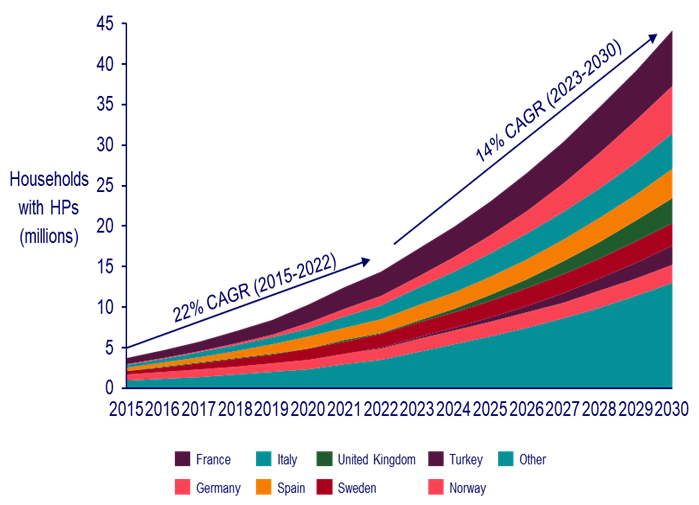
Installed European residential heat pumps, 2015 to 2030

The booming heat pump sector in Europe as further evidence that the shift to low-carbon alternatives across all sectors is gathering pace. Year-on-year growth has been in excess of 30%, while connections of air- and ground-source heat pumps are breaking records.

 
Sertar, Buddhist spiritual kingdom at 4,000 meters the altitude, high enough to touch the heavens

To view this content we will need your consent to set third party cookies.
For more detailed information, see our cookies page.
 
Western and Indian media is painting themselves into a corner. Too much lie would eventually kill the last shred of their credibility.
 
Chinese Style Grand Mosque in 张尕村 village in Qinghai province, strong Chinese architectural elements beautifully blended in

To view this content we will need your consent to set third party cookies.
For more detailed information, see our cookies page.
 
Last edited:
Hui Muslim girl Hui style dance in Hui traditional attire
Hui is the biggest Muslim ethnic group in China, their attire is also a mix of both Chinese traditional and Islamic elements.

To view this content we will need your consent to set third party cookies.
For more detailed information, see our cookies page.
 

The Huaisheng Mosque , the Oldest Mosque in China, built 1,300 years ago

The Huaisheng Mosque (Chinese: 广州怀圣寺; also known as the Lighthouse Mosque and the Great Mosque of Canton is the main mosque of Guangzhou. it was built over 1,300 years ago, which would make it one of the oldest mosques in the world.

To view this content we will need your consent to set third party cookies.
For more detailed information, see our cookies page.
 
Status
Not open for further replies.

Users who are viewing this thread

Pakistan Defence Latest

Latest Posts

Back
Top