Beijingwalker
VIP Member

China Now Leads World Submarine Construction
Published on 24/06/2026
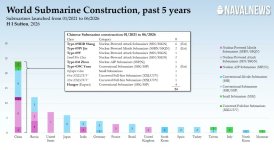
[Click to enlarge] China leads submarine construction with 24 boats in the past 5 years. This includes an estimated 12 nuclear boats. If the survey were extended to smaller ‘extra-large’ uncrewed underwater vehicles (XLUUVs), China’s lead would grow.
More countries are building and operating submarines today than at any point in modern history. Yet amid this global expansion, China has emerged as the dominant force, launching twice as many submarines as any other nation and introducing more new classes.
World submarine construction is growing to levels unseen since the Cold War in the 1980s. And in stark contrast to back then, today many more countries are involved. An estimated 77 submarines have been launched in the past 5 years (2021-present) by some 16 countries. This number includes 33 nuclear-powered submarines in 6 countries (China, Russia, United States, United Kingdom, France and India). Brazil and North Korea also have nuclear-powered boats under construction, but they have yet hit the water. Meanwhile South Korea and Australia have plans to operate nuclear boats.
But one country stands out for both their dramatic increase in volume and rapid pace of technical development. China has established a commanding lead in submarine production. Over the past five years, it has launched about 24 submarines. This is twice Russia’s 12 and more than triple the United States’ output of 7 boats.
Innovation
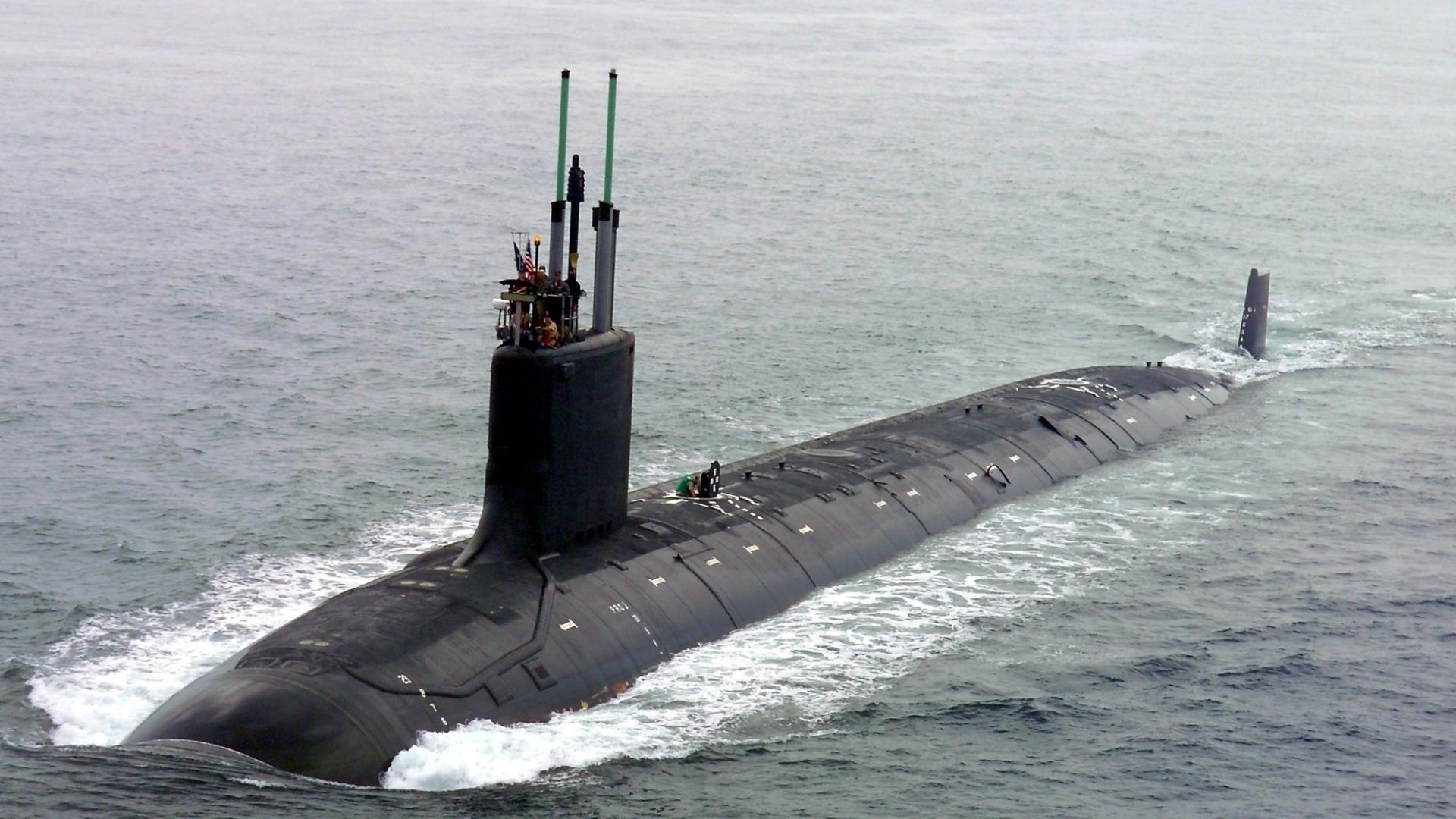
The contrast between China and Russia and the United States is in more than just numbers, it’s the rate of improvement. China’s construction includes 7 new classes of boat. Meanwhile, of the 12 boats launched in Russia, only one was of a new class, the Khabarovsk which had been in construction over 11 years. And for the United States, they were all the well-established Virginia Class. This is not to say that Chinese submarines are, on an individual level, more sophisticated but they are developing faster.One key area where China has a clear edge is the construction of extra-extra-large underwater drones (XXLUUVs). We haven’t counted the regular XLUUVs (with one ‘X’), but China is the only country building underwater drones which are the size of regular crewed submarines and these are included. China is also the first country to going for small nuclear power plants, termed nuclear-AIP (air independent power) which is seen on the Type-041 Zhou Class.
China’s submarine construction includes four Hangor class boats for export, part of a deal with Pakistan. Other countries building significant numbers of submarine for export are Germany and France, although the latter did not launch any export boats during the period. However, the general trend over the past 30 years has been technology transfers with local production and even the Chinese-Pakistan deal is shared production. This trend is driving the proliferation of countries building submarines.
China Goes Nuclear
Conventional non-nuclear submarines remain a key pillar of China’s submarine force, but the focus is changing to nuclear boats. Until very recently the sole shipyard building nuclear submarines was at Huludao in the north of the country. Now two shipyards on the Yangtze River, the Wuchang shipyard in Wuhan and the JN yard in Shanghai, have joined. Wuchang appears likely to focus on the Type-041 Zhou class ‘mini-nuke’ while JN has begun construction of much larger boats. The first nuclear powered boat launched at JN was a new class of attack submarine, known for its very small fin (sail), which is as-yet unnamed. An identical submarine was launched in Huludao just days apart. Exact details of the new class, and how it relates to the also new Type-095 have yet to emerge.Given the three yards now building nuclear submarines, the focus of construction is expected to shift to nuclear boats. China can already launch several each year, which a reasonable estimate now increasing to around six per year. This is triple the rate the United States is aiming for.
At the same time, China’s yards in the south of the country seem focused on uncrewed submarines. Although conventional submarines will remain a major force component for at least a decade, they are likely to become smaller and less emphasised part, displaced by more nukes at the top end and large uncrewed platforms at the lower end of their remit.
Outlook
More countries will be launching new submarines in the coming years. Many will be for local use but increasingly countries are also looking to export their designs, with Spain and South Korea being notable new entrants on the market. However China is likely to continue to dominate, even as major new classes start being launched in the United States and United Kingdom.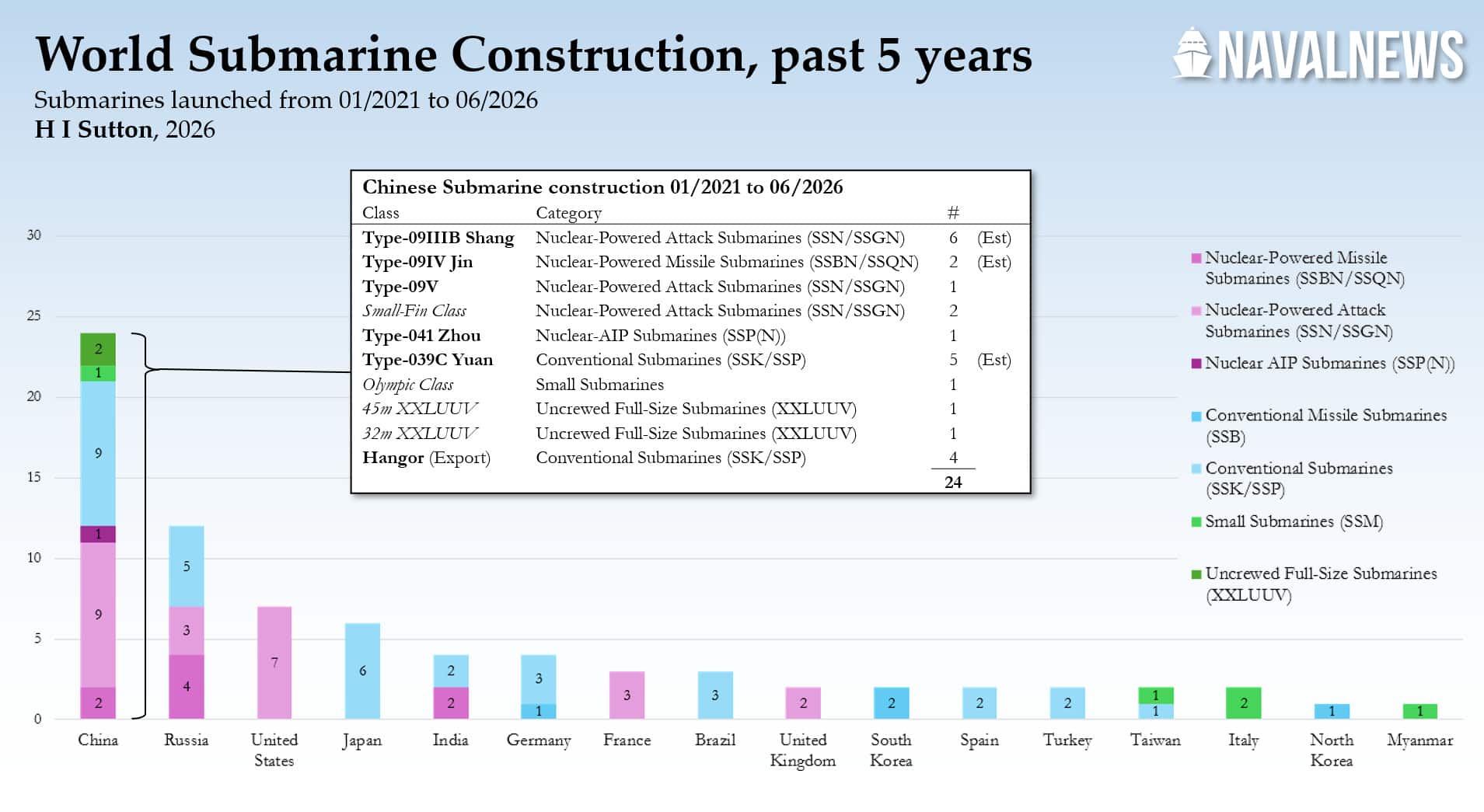
China Now Leads World Submarine Construction - Naval News
More countries are building and operating submarines today than at any point in modern history. Yet amid this global expansion, China has emerged as the dominant force, launching twice as many submarines as any other nation and introducing more new classes.
 www.navalnews.com