Navigation
Install the app
How to install the app on iOS
Follow along with the video below to see how to install our site as a web app on your home screen.
Note: This feature may not be available in some browsers.
More options
Style variation
You are using an out of date browser. It may not display this or other websites correctly.
You should upgrade or use an alternative browser.
You should upgrade or use an alternative browser.
Chinese Submarines News & Discussions
- Thread starter Michael
- Start date
More options
Who Replied?
ChineseTiger1986
Trusted Member

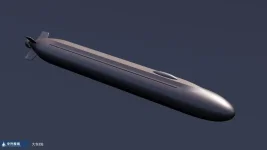
View attachment 206265
Is the control tower of China's Type 09X nuclear submarine so small?
The actual conning tower is bigger than that.
The Type 09X could be a variant of the Type 095.
ChillVein
Registered Member

Satellite image taken on 7/12. Four submarines are docked at the pier of Bohai Shipyard. Many of the submarines are new types, including a new 120m-class nuclear submarine, the Type 095 attack nuclear submarine, the Type 094/A strategic nuclear submarine, as well as a trimaran semi-submersible vessel. All appear to be undergoing outfitting or maintenance
ChillVein
Registered Member
Launching 8 to 10 nuclear-powered attack submarines (SSNs) per year. That’s a massive, unparalleled naval industrial capacity. With a standard 30- to 35-year lifespan for a nuclear submarine, sustaining this production rate means the Chinese navy could field and maintain a staggering fleet of 240-350 SSNs.
ChillVein
Registered Member
China built and launched five nuclear submarines since the year began, an all-time record.During the Cold War, the USSR was launching an average of six nuclear submarines a year.The U.S. is reportedly averaging 1.2 nuclear submarines launched yearly. China has the capacity to build 8-10 SSN and 4-6 type 039c AIP diesel-electric submarines per year and we are still at peace time production. China can probably ramp up to 12-16 SSNs per year during wartime.
ety
Trusted Member
China will unlikely to maintain over or near 100 SSN at anytime. Don't try to get ourselves ahead by unrealistic extrapolation on paper in the coming decades. China can't afford that huge number of SSN.Launching 8 to 10 nuclear-powered attack submarines (SSNs) per year. That’s a massive, unparalleled naval industrial capacity. With a standard 30- to 35-year lifespan for a nuclear submarine, sustaining this production rate means the Chinese navy could field and maintain a staggering fleet of 240-350 SSNs.
ChineseTiger1986
Trusted Member
China will unlikely to maintain over or near 100 SSN at anytime. Don't try to get ourselves ahead by unrealistic extrapolation on paper in the coming decades. China can't afford that huge number of SSN.
China can afford it, and you are severely underestimating its industrial capability.
China's military expenditure is still sitting less than 2% with the current rate of construction.
ety
Trusted Member
Does China really need over 200 SSN. China is not trying to dominate every corner of the oceans in the world. Besides, it costs lots money and China may end up like the USSR or US in the end and that's China trying to avoid.China can afford it, and you are severely underestimating its industrial capability.
China's military expenditure is still sitting less than 2% with the current rate of construction.
ChineseTiger1986
Trusted Member
Does China really need over 200 SSN. China is not trying to dominate every corner of the oceans in the world. Besides, it costs lots money and China may end up like the USSR or US in the end and that's China trying to avoid.
For now, the trajectory seems to be heading toward 100 nuclear subs including both SSBN and SSN.
Since China has too many businesses oversea that need to be protected.

Beijingwalker
VIP Member
Type 095, Type 09X: The Chinese Navy Is Preparing a Two-Model SSN Doctrine to Counter the US Navy
ByFabrice Wolf24 JUILLET 2026
Satellite imagery dated 12 July showed four units linked to the Chinese submarine fleet simultaneously moored at the fitting-out quay of the Bohai shipyard in Huludao, Liaoning. The site, operated by China State Shipbuilding Corporation, is China’s main known shipyard for the construction of nuclear-powered submarines. The joint presence of a previously unseen attack submarine, a Type 095, a Type 094A of the Jin class and a semi-submersible support vessel now provides a clearer framework for several recent observations.
Table of contents
- The Type 09X combines VLS and pump-jet propulsion
- The Type 095 would fulfil a submarine hunter mission
- Bohai is preparing several nuclear submarines in parallel
The Type 09X combines VLS and pump-jet propulsion
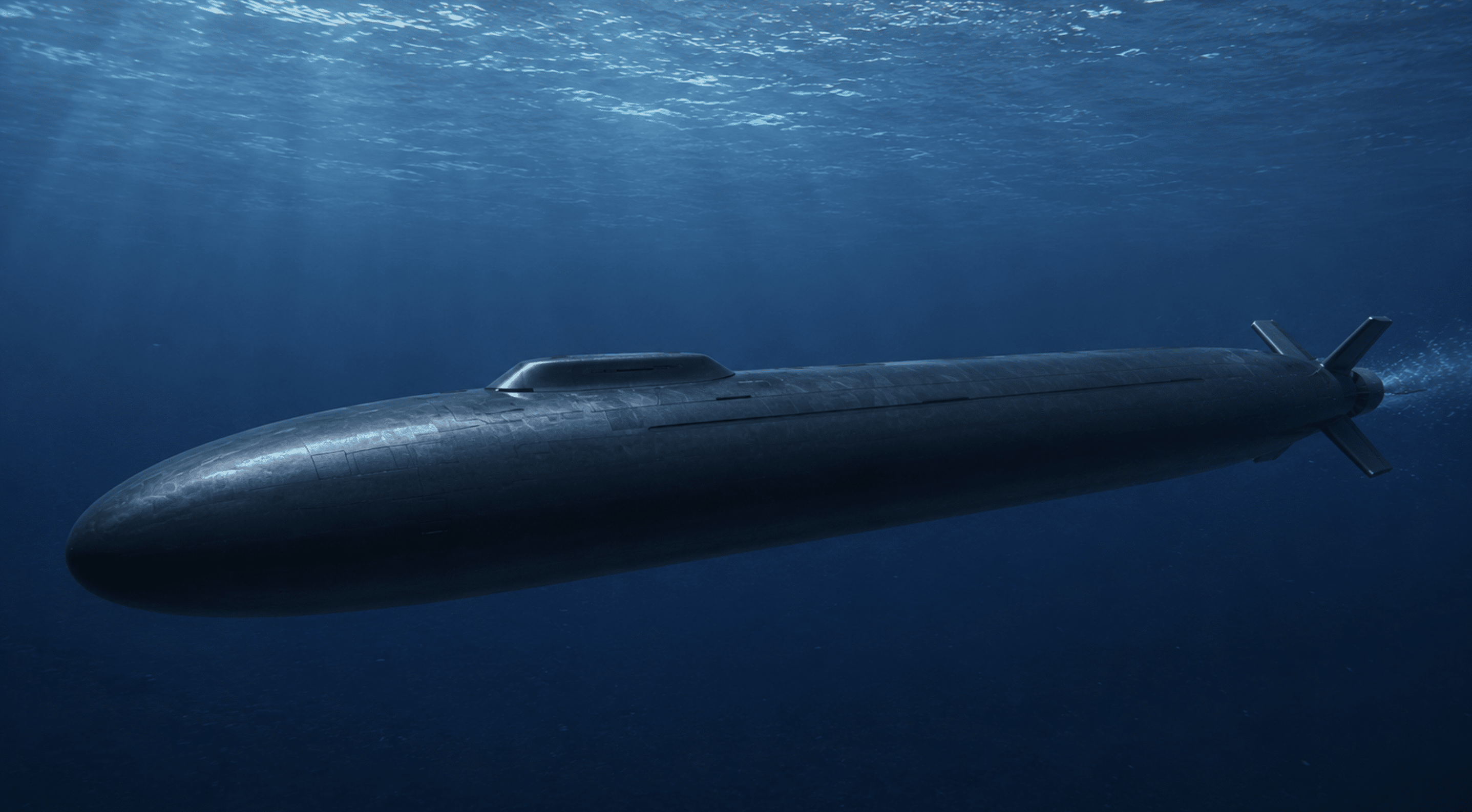
The most noteworthy unit is about 120 metres long and appears to be fitted with a vertical launch system, or VLS, as well as pump-jet propulsion. These features distinguish it from the Type 095, identified as a nuclear-powered attack submarine, or SSN, intended to hunt enemy vessels and conduct conventional submarine missions. Its presence in Huludao therefore suggests that the People’s Liberation Army Navy is not pursuing a single new generation of SSNs, but at least two distinct programmes.The second programme would correspond to the vessel observed in late May and early June in the basin of the Jiangnan shipyard near Shanghai, in commercial imagery from operator Vantor. Photographs taken from the ground between mid-June and late June subsequently showed that it was not a submarine without a sail, but a vessel fitted with an extremely low superstructure. Several observers have provisionally designated it as Type 09X, in the absence of official Chinese confirmation.
https://meta-defense.fr/en/2026/07/05/chinese-subs-threaten-us-navy-pacific/
This flattened superstructure, combined with a long hull, X-shaped stern control surfaces and a likely pump-jet, points interpretations towards a submarine designed to prioritise sustained submerged speed and reduced drag. The addition of VLS would nevertheless alter its role compared with a conventional SSN. A nuclear-powered vessel armed to rapidly launch several missiles would fall more into the SSGN category, meaning a nuclear-powered cruise missile submarine, even if its Chinese designation remains unknown.
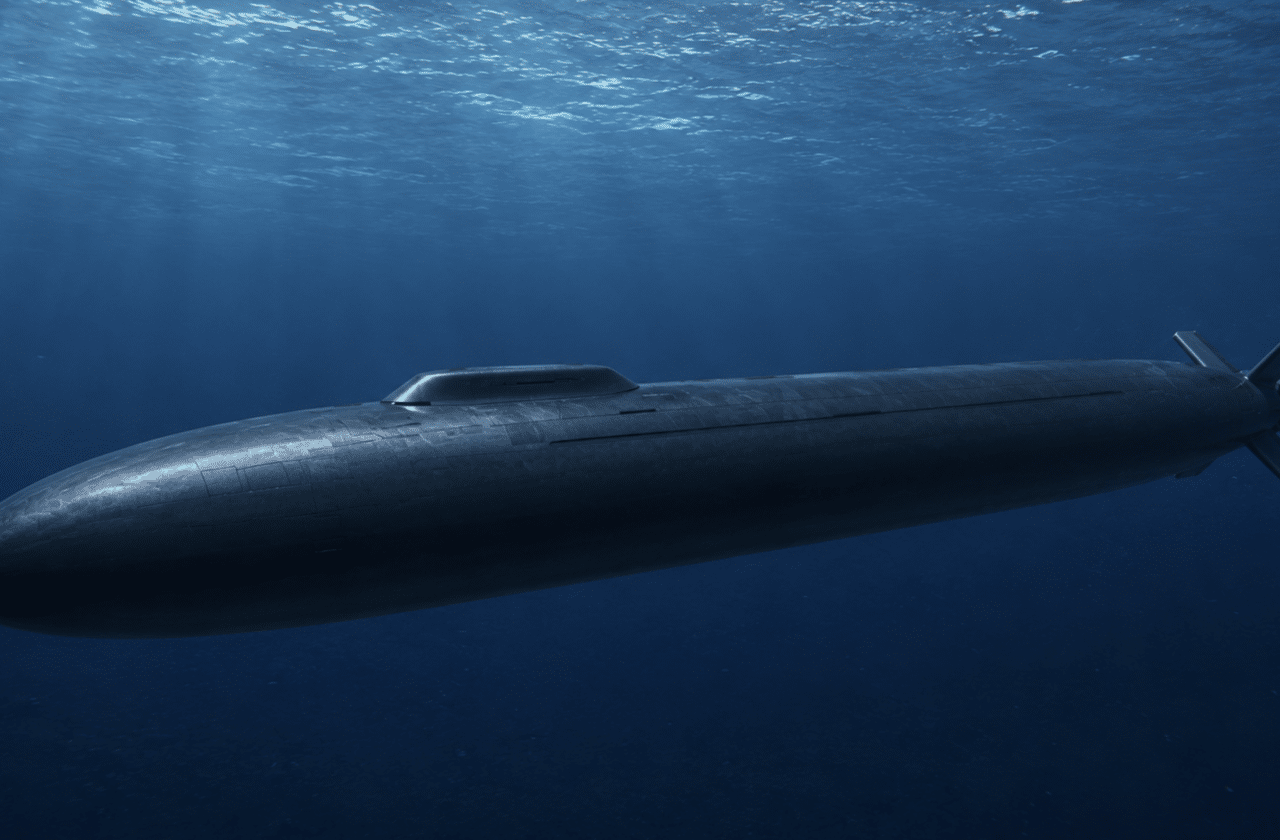
Type 095, Type 09X: The Chinese Navy Is Preparing a Two-Model SSN Doctrine to Counter the US Navy
The simultaneous presence of a Type 095 and a possible Type 09X at Bohai points to parallel Chinese nuclear submarine programmes with distinct roles.
 meta-defense.fr
Beijingwalker
VIP Member
New mystery Chinese submarine highlights efforts to build up force

A new type of Chinese submarine is seen in images taken May 29 at Jiangnan Shipyard in Shanghai and provided to The Japan Times by U.S. satellite company BlackSky. The mystery sub features a dramatically smaller sail and larger dimensions — approximately 120 meters long and 10 meters wide — than China’s Type 093 nuclear-powered attack submarine. | BLACKSKY
Jul 29, 2026
A new type of Chinese submarine spotted in satellite images puts a spotlight on Beijing’s efforts to improve both the quality and quantity of its boats, raising eyebrows in Tokyo and the region.
The sub, spotted in images taken May 29 at Jiangnan Shipyard in Shanghai and provided to The Japan Times by U.S. satellite company BlackSky, features a dramatically smaller sail and larger dimensions — approximately 120 meters long and 10 meters wide — than China’s Type 093 nuclear-powered attack submarine, according to several experts who examined the imagery.
The experts said that the vessel was highly likely to be a new type of nuclear-powered attack submarine with boosted stealth capabilities and improved range.
A smaller sail can reduce water resistance and noise while submerged, enabling the sub to travel at higher speeds and making detection more difficult.
“Based on the reported dimensions alone, I’d be surprised if this boat were not nuclear-powered,” said Thomas Shugart, a former U.S. Navy submarine commander now with the Center for a New American Security think tank. “A submarine around 120 meters long would be quite large for a conventional attack submarine.”
Masashi Murano, a Japan defense expert at the Hudson Institute think tank, also said the sub was most likely equipped with nuclear propulsion, pointing to the vessel’s small sail.
“A conventionally powered submarine has to snorkel from shallow depth, and that requirement is what drives sail geometry and mast placement,” he said. “Designing a boat this size with a sail this small only makes sense if it doesn’t need to do that.”
The news of the latest submarine, which first gained attention after a report by Naval News, comes after it emerged in February that China was also building what appeared to be the first example of its next-generation Type 095 nuclear-powered attack submarine at the Bohai Shipyard in Huludao, Liaoning province.
“The appearance of this submarine in addition to what we believe to be the Type 095 was genuinely surprising to me,” said Shugart. “I honestly don’t know why China would appear to be producing two separate new classes of SSN or SSGN at roughly the same time.”
SSN refers to nuclear-powered attack submarines, and SSGN, to nuclear-powered, guided-missile subs.
Observers said that the vessels could be competing designs or subs optimized for different missions, including carrying, deploying or controlling uncrewed systems and functioning partly as an undersea “mothership.”
They could also simply be experimental boats.
“Whichever explanation holds, one thing is certain: China has the margin to build boats for new experiments in parallel with its existing serial production programs,” said Murano. “Western shipyards don’t have that margin.”

A screen shows Chinese submarines at the opening of the Western Pacific Navy Symposium in Qingdao, in eastern China, on Monday, in April 2024. | AP / VIA AFLO
Indeed, between 2021 and 2025, China’s People’s Liberation Army Navy (PLAN) launched more nuclear-powered submarines — 10 — with a greater combined full-load displacement — roughly 79,000 tons — than that of the U.S. during the same period, the International Institute for Strategic Studies think tank said in a February report.
The revelations have thrown a spotlight on what the U.S. military says is the Chinese Navy’s move toward an all-nuclear-powered submarine fleet.
And given the limited information available on the new subs at this point, “the most interesting thing may simply be that China appears to have two distinct next-generation nuclear-powered attack submarine designs in the works,” said Shugart.
According to analysts, if the boat seen in the new images is nuclear-powered, that would suggest that China can now build nuclear submarines at three different locations: Bohai, Wuhan and now Shanghai.
The Bohai site has historically been the center of Chinese nuclear-submarine construction, so adding additional nuclear-capable shipyards “could have major implications” for how quickly the Chinese Navy can expand its nuclear submarine force, Shugart said.
The push also appears consistent with U.S. Navy intelligence chief Rear Adm. Mike Brookes’ assessment in March that Beijing “is executing a significant strategic shift from diesel-electric to all-nuclear construction, representing a fundamental departure from historical construction” of its submarines.
That would fit with China’s goal of building a world-class navy capable of operating at great distances and protecting Chinese interests across the globe.
“Nuclear submarines are much better suited to that kind of navy than conventional boats,” according to Shugart.
For Japan, the trajectory represented by the newly revealed submarine may prove to be a daunting challenge.
A much larger nuclear-submarine force would give China a much greater ability to maintain continuous undersea operations in the Philippine Sea and the wider western Pacific without the fueling constraints of conventional submarines.
“That would put greater demands on Japanese and allied anti-submarine warfare forces and make tracking Chinese submarines moving into the Pacific a larger and more continuous mission,” said Shugart.
“The combination I’d be watching is quantity and quality,” he added. “If China is both increasing the number of nuclear submarines it can build and making those boats significantly quieter, that would be a much more consequential development for Japan and the U.S.-Japan alliance than either trend by itself.”
Such a development would ultimately put a greater burden on Japan as it looks to defend itself on more fronts, observers say.
Assuming the Chinese Navy continues to operate more regularly beyond the “first island chain” — the string of islands stretching from Japan toward Borneo — then Japan would need to secure its Pacific-facing flank in addition to the East China Sea and the Sea of Japan.
The recent submarine revelation is likely to give further ammunition to proponents of Tokyo developing its own nuclear subs.
Japan currently maintains a fleet of 23 diesel-electric attack submarines. While it has long avoided the more pricey and politically sensitive option of nuclear-powered boats, calls have grown in recent months to develop vessels with “next-generation” power sources amid China’s own advances.
But Murano says that framing “misses the question of scale.”
“Given the constraints the Self-Defense Forces operate under — budget, capacity, personnel and time — even if Japan developed nuclear submarines, it could keep only one or two continuously deployable at best,” he said. “You cannot cover the vast western Pacific with one or two SSNs.”

Users who are viewing this thread
Total: 3 (members: 0, guests: 3)
Pakistan Defence Latest
-

-
 Federal cabinet gives nod to imposition of emergency in KP; summary sent to president (9 Viewers)
- Latest: Meengla
-

-

-

Country Watch Latest
-

-
-
India Has Lost Air Superiority to Pakistan, No Jets Left to Fight (25 Viewers)
- Latest: Aghor Warrior
-
Latest Posts
-
-

-
 Saudi Arabia Executes Two Bangladeshi Nationals Over 'Having Sex' Inside Mecca Mosque (50 Viewers)
- Latest: BigGazza
-
-
 Makkah Defence Alliance: Turkey, Saudi Arabia, and Pakistan, news & updates (27 Viewers)
- Latest: Starlord