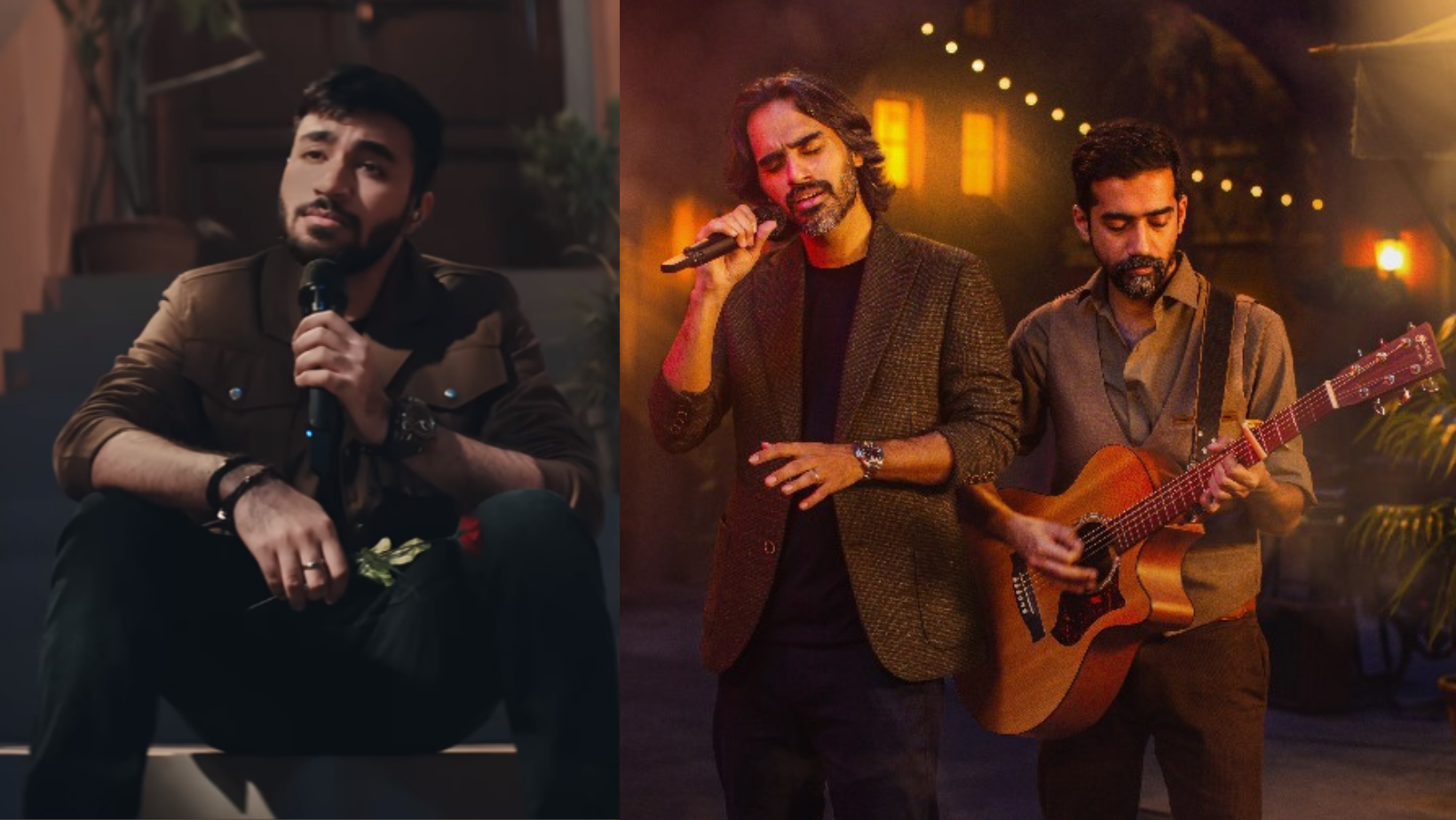
Coke Studio - Pakistan

To view this content we will need your consent to set third party cookies.
For more detailed information, see our cookies page.
 
To view this content we will need your consent to set third party cookies.
For more detailed information, see our cookies page.
 
One-song-every-week-or-on-alternate-weeks--Coke-St1715590883-0.png


‘O Yaara’ review: Kaavish, Abdul Hannan work magic in a dreamy collab on longing​

Combining lo-fi indie and melancholic blues, this partnership was always meant to be

Manahil Tahira
May 13, 2024

Earlier this year, we learned that Kaavish was back to performing live. Only a few months later, the beloved band that has made semi-classical their forte dropped a new track - little preamble, good old vibes. Those who welcomed the band with open arms only to be swept by the deep yearning of Tere Naam in April, May brings you tidings of a greater joy.

In the latest installment of Coke Studio's season 15, Kaavish teams up for a smooth, romantic collaboration with Abdul Hannan's much-awaited debut on the platform that makes you wonder if this was written in the stars. O Yaara is a composition for the tender-hearted, a soul-stirring tune that onboards elements of lo-fi indie and melancholic blues, melding them with traditional instrumentation. The result is almost 5 minutes of pure unadulterated sonic high that lingers long after the final note fades.

Beginning with a humble lo-fi indie intro, from the outset, the beat remains steadfast, delicately intertwining with the vocals. However, it is the subtle embellishments, intricately woven with local instruments, that truly elevate the listening experience. With each passing phrase, the arrangement gains depth, layering instruments, vocal harmonies with precision. This meticulous buildup creates a palpable sense of anticipation, culminating in the chorus with a crescendo of harmonies and the haunting resonance of the baansuri in the background. The payoff feels earned.

As the song gracefully transitions into its post-chorus segment, it retreats into a gentle and introspective ambiance, offering a moment of quiet reflection. It is here that the instrumental bridge takes centre stage, evoking a sense of melancholy with its fluid melodies and emotive nuances. The use of stringed instruments adds a distinct bluesy quality, further enhancing the song's emotional depth and resonance.

To little wonder and every bit as delightful, Kaavish's vocal performance shines brightly. Jaffer Zaidi’s deep, resonant voice commands attention, navigating the intricacies of the composition like a gentle breeze. With each verse, he infuses notes with raw emotion and sincerity. His skillful execution of vibrato adds an extra layer of texture, perfectly complementing the song's lyrical themes of longing and introspection. As the song reaches its climax, Jaffer’s vocals soar, enveloping the listener in a wave of heartfelt emotion before gently fading into silence.

The song would be decidedly amiss if not for Abdul Hannan's subtle contribution. His gentle humming in the song's denouement serves as a poignant reminder of the fleeting nature of human connection, adding a sense of vulnerability and authenticity to the song’s storytelling nature.

Only bit of the song to not impress has to be the accompanying music video. The calmly deserted streets at night that would otherwise be host to the day’s bustling businesses complement the heart of the song. However, one has to wonder when Coke Studio will decide what a music video must set out to do. With the talent onboard, and the resources, such visuals keep resurrecting the ghosts of many advertisements that already populate our television screens.
 
To view this content we will need your consent to set third party cookies.
For more detailed information, see our cookies page.
 
To view this content we will need your consent to set third party cookies.
For more detailed information, see our cookies page.
 

Chal Chaliye​

Coke Studio Pakistan | Season 15​

Sajjad Ali x Farheen Raza Jaffry​


To view this content we will need your consent to set third party cookies.
For more detailed information, see our cookies page.
 
To view this content we will need your consent to set third party cookies.
For more detailed information, see our cookies page.
 
To view this content we will need your consent to set third party cookies.
For more detailed information, see our cookies page.
 
To view this content we will need your consent to set third party cookies.
For more detailed information, see our cookies page.
 

REVIEW - Blockbuster | Coke Studio Pakistan | Season 15 | Faris Shafi x Umair Butt x Gharwi Group​


To view this content we will need your consent to set third party cookies.
For more detailed information, see our cookies page.
 
bb-(1)1716811851-0.jpg


‘Blockbuster’ or bust: Even Faris Shafi cannot salvage Coke Studio’s overproduced letdown​

‘Muaziz Saarif’ singer joins Umair Butt, Gharwi Group in high-tech triumph that lacks heart

Manahil Tahira
May 27, 2024

Seven episodes in, Coke Studio Season 15 seems intent on advancing a singular mantra: play it safe. For its latest release, Blockbuster, the global music franchise had to its disposable the dynamic pairing of Faris Shafi and Umair Butt (of Butt Brothers), alongside the Gharwi Group, an all-women folk ensemble. Yet, the track aims high but falters under the weight of its own ambition.

Right from the outset, the song's intro hooks the listener with a chorus that sounds like a distorted vintage radio clip—a nostalgic nod that quickly morphs into the familiar territory of Coke Studio’s tried-and-true formula. At this rate, even critiques of the platform’s familiar fizzle are becoming hackneyed. This rapid dive into the hallmark elements of their production is both the track's strength and its downfall.

The song attempts to speed-run through its main beats: flowy vocals from one artist, an edgier performance from another, leading to a pre-chorus with harmonising members of Gharwi Group in a quintessentially "desi" style. This formula, though effective, becomes glaringly apparent within the first minute, making the structure feel both rushed and overly predictable. From this point onwards, the track is so unabashedly basic one wonders if Xulfi is being deliberately mediocre.

Visually, the accompanying video mirrors this frenetic pace, employing a one-shot technique that constantly moves from one set piece to another. While this continuous motion adds to the song's energy, it also amplifies the feeling of an overproduced spectacle that is more dazzling than it is substantial.

Faris’ first verse and chorus suffer heavily from overproduction. The excessive autotune and melodic treatment strip away his unique punch, making his performance feel generic and replaceable. In stark contrast, Umair Butt's delivery is solid, grounded in the popular Punjabi rap style reminiscent of Sidhu Moose Wala, yet it too borders on the familiar and predictable.

The production team's penchant for digital effects is evident throughout the track. The vocal lines are frequently echoed by synth notes that linger just a bit longer than the vocals themselves—a blending effect that was intriguing at first but has since become a staple, if not a crutch, in their music. While this technique is interesting, its overuse across multiple songs has diminished its impact.

The Gharwi Group, providing the folk elements, performs decently within their two-line pre-chorus segment. However, their contribution feels like a checkbox ticked rather than a meaningful addition, bordering token representation of a set demographic one instinctively expects of Coke Studio by now.

Despite some bright spots, such as Faris’ more authentic and punchy second verse, Blockbuster ultimately suffers from the same issues plaguing many of Coke Studio's recent productions. The relentless pursuit of a grand, over-the-top sound has resulted in a track that feels overly sanitised and devoid of the raw, human touch that once defined the series. The music is polished to the point of being sterile, with too many effects and an overall mix that comes across as muddled and excessively digital.

However, mostly Blockbuster can be diagnosed as ‘playing it too safe,’ adhering too closely to a formula that has grown stale. While technically proficient, the song lacks the emotional resonance and memorable hooks that could elevate it from good to great. It’s a technically sound track that, unfortunately, feels empty and formulaic, missing that elusive je ne sais quoi that breathes life into music.
 

Magical Journey of Blockbuster | Coke Studio Pakistan​


To view this content we will need your consent to set third party cookies.
For more detailed information, see our cookies page.
 
To view this content we will need your consent to set third party cookies.
For more detailed information, see our cookies page.
 
To view this content we will need your consent to set third party cookies.
For more detailed information, see our cookies page.
 
To view this content we will need your consent to set third party cookies.
For more detailed information, see our cookies page.
 

Users who are viewing this thread

Pakistan Defence Latest

Back
Top