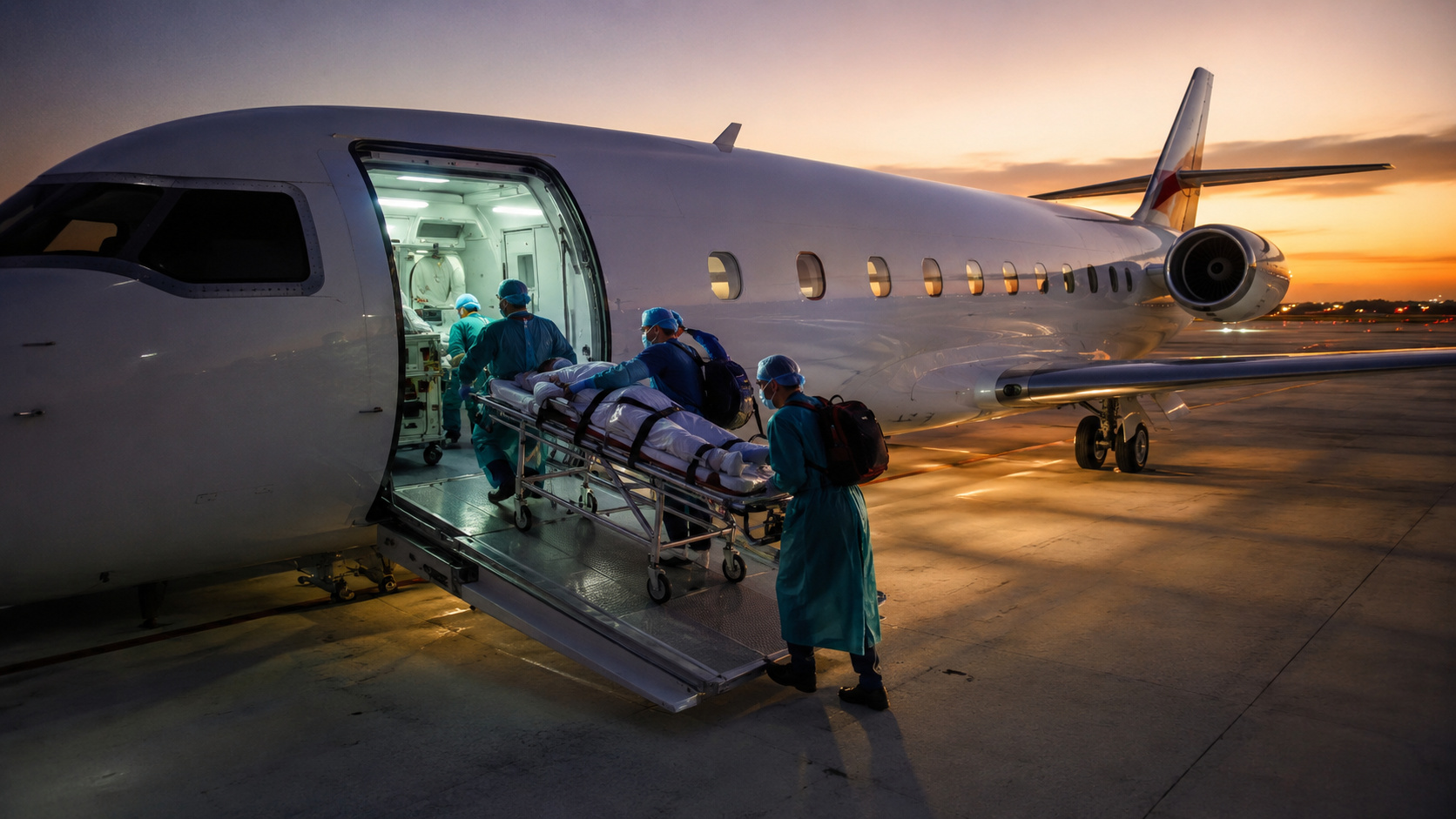
China transforms jet into flying hospital with sterile surgical center, adaptable medical structure, and capacity to provide care to remote regions.
Published on 16/07/2026 at 07:36
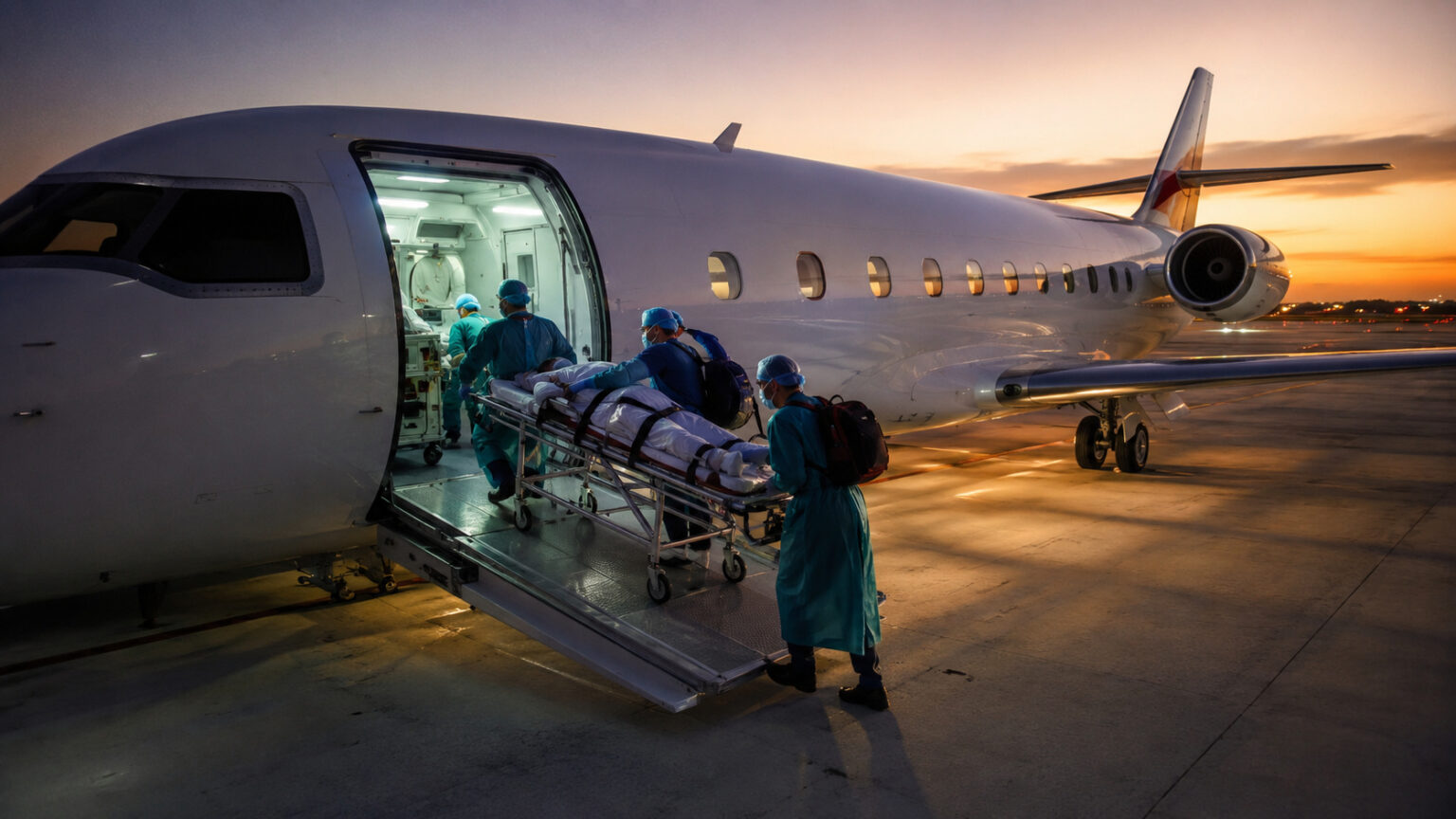
Some operations prioritize patient transport. Others take doctors, equipment, and instruments to remote communities or disaster-stricken areas.
The aircraft brings specialized services closer to people facing long journeys. Consequently, the project reduces geographical obstacles during urgent care.
How the medical structure installed in the Chinese jet works
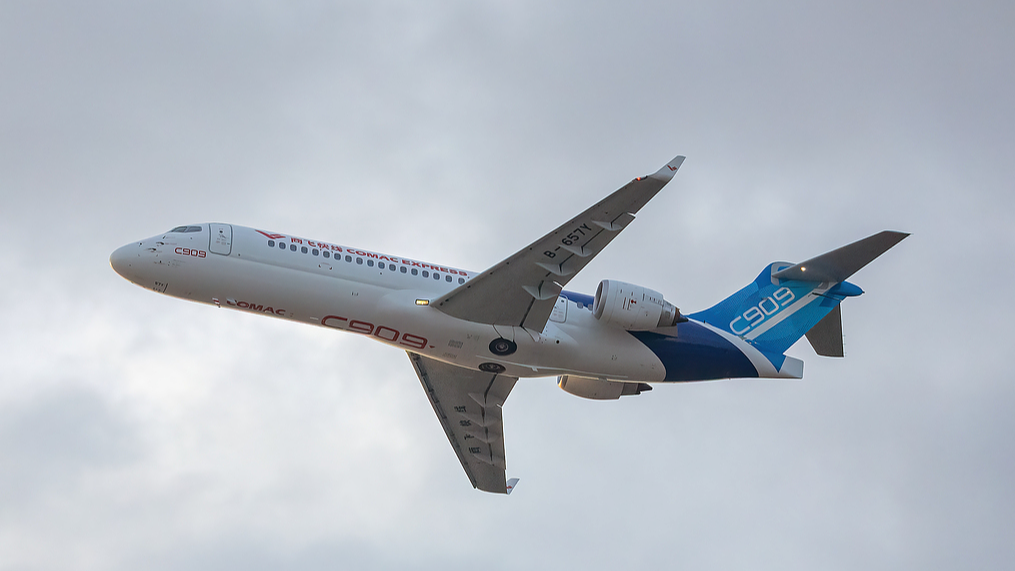
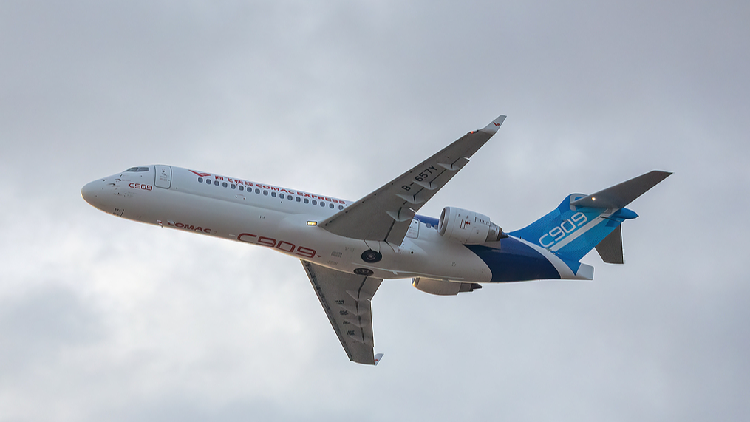
The flying hospital uses a regional jet, not a helicopter. The internal configuration offers areas for evaluation, monitoring, transport, and performing medical procedures.
The technical team reorganizes the space according to the type of operation. Thus, the plane can transport patients, professionals, hospital materials, or specialized equipment.
This flexibility expands the possibilities of use. The C909 can support transfers, humanitarian missions, and care provided far from major urban centers.
Sterile surgical center expanded the capacity of the air hospital
In November 2025, the project gained a Class I sterile surgical cabin. The new structure allowed for ophthalmological and otorhinolaryngological procedures.
COMAC worked with the Eye, Ear, Nose, and Throat Hospital of Fudan University. Together, the institutions adapted the space for specialized surgeries.
The C909 ceased to function only as a medical transport means. The plane also began to offer an area prepared for procedures within the cabin.
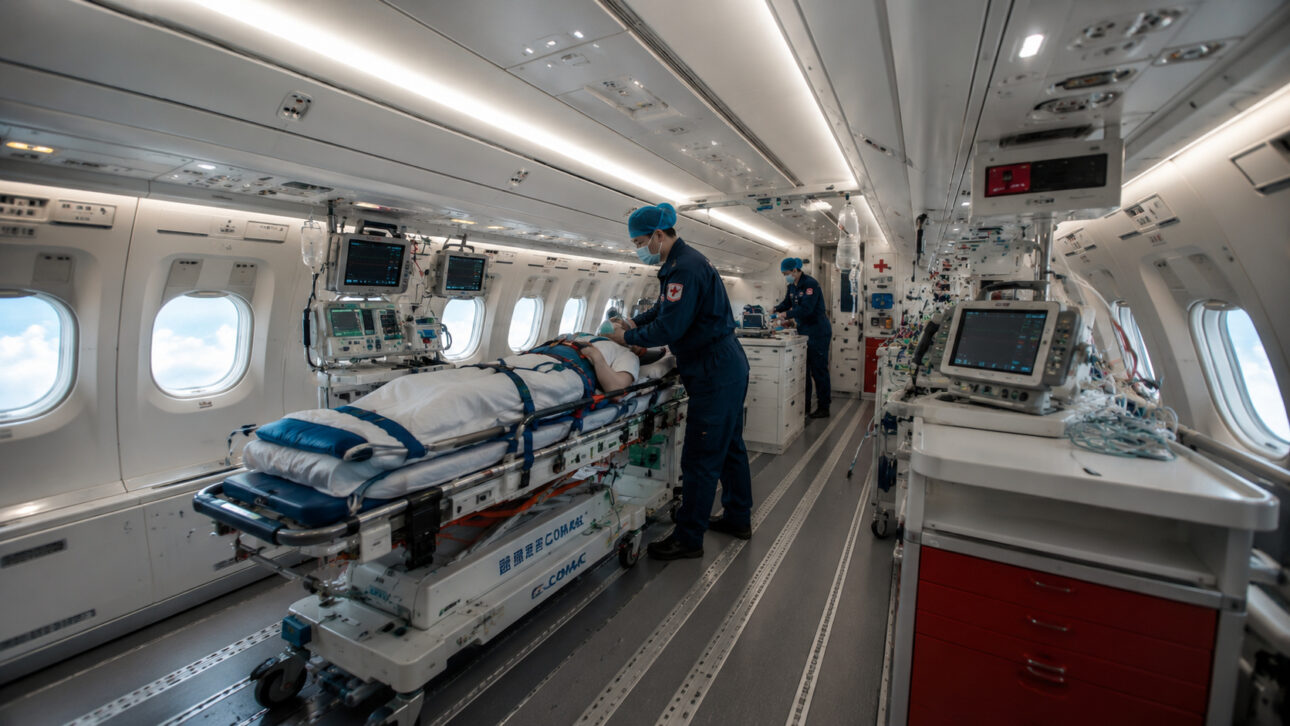
Simulation of the interior of the flying hospital with a medical team and intensive care structure.
First medical version of the C909 emerged in September 2025
COMAC delivered the first medical aircraft on September 9, 2025. China Flying Dragon General Aviation received the model for specialized operations.
On that occasion, the manufacturer reported a standard range of up to 3,700 kilometers. Additionally, the jet offers a maximum load capacity of 10 tons.
These characteristics allow the transport of teams, patients, and equipment over long distances. In this way, the aircraft can undertake different types of missions.
Mission in Laos showed practical application of the project
In February 2026, the C909 was already operating as an air hospital. During this period, medical teams conducted simulations and new procedures inside the plane.
Subsequently, the aircraft participated in a mission in Laos. During the operation, doctors performed an eye surgery inside the jet.
The procedure demonstrated the potential of the medical structure. Moreover, the mission showed how the platform can bring specialized assistance to other countries.
Surgeries take place on board, but not necessarily during flight
Some publications suggested that doctors would perform complex surgeries while the plane was flying. However, official sources do not confirm this practice as a routine procedure.
The available information confirms surgeries inside the aircraft. However, teams can also perform the procedures while the plane remains parked on the ground.
This distinction keeps the project description accurate. After all, the C909 functions as a mobile medical unit but does not completely replace a traditional hospital.
Flying hospital expands possibilities of emergency medicine
The air hospital can transport patients between cities, bring specialists to isolated areas, and support operations after disasters.
Additionally, the internal configuration adapts to different demands. Each mission defines the number of professionals, equipment, and patients transported.
The C909 represents a new application of regional aviation. In this way, the project brings together air mobility, hospital infrastructure, and specialized medical care.
COMAC, the Xinhua agency, CGTN, and Fudan University released the main information about the project.
Air hospital developed by COMAC transports patients, teams, and equipment, in addition to offering an adaptable structure for medical procedures and emergency missions. In September 2025, China presented a medical version of the regional jet C909. COMAC developed the aircraft to support rescues...

en.clickpetroleoegas.com.br