“We looked at it and we knew by the time it came into service it wasn’t going to be a competitor.”
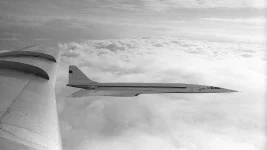
The USSR, however, won bragging rights over who got to fly a supersonic airliner first. The Tu-144 first took off in December 1968, and flew supersonic for the first time in June 1969. Concorde would not take to the air until March 1969, and did not go supersonic until October of that year. The Soviets had won a major diplomatic coup – but they soon encountered a series of headaches trying to get the nearly 100-tonne airliner into service.
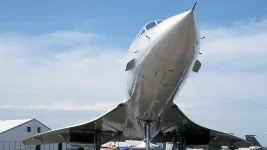
Western observers, used to the perceived superiority of technology west of the Berlin Wall, believed that the only way the Soviet Union could have come up with the Tu-144 was through industrial espionage; the Tu-144 was dubbed ‘Concordski’, and regarded as an almost carbon copy of Concorde, though with a cruder Soviet finish.
The truth, says Kamisnki-Morrow, wasn’t quite so clear cut. “There is no doubt that Soviet thinking on the Tu-144 was heavily influenced by Concorde – the absence of a horizontal stabiliser [tail planes], for example, was a radical departure from previous Soviet designs.
“But other aspects, such as the engine configuration, were notably different. The Tu-144 also needed to be more rugged to cope with tougher operating conditions.
Although espionage played a role in the Tu-144's development, the Soviets were still capable of exploring their own avenues to solve the multitude of technical problems thrown up by the project. The result was an aircraft which broadly resembled Concorde but which differed substantially in refinement and detail.”
The rivalry among the two supersonic airliner teams was immense
In 1973, the Soviet unveiled the Tu-144 to the West at the Paris Air Show. Tupolev flew the second of their production models to the airshow, pitting it head-to-head against a prototype Concorde already carrying out public flying displays (at this stage, the Western design was still waiting to go into production).
The rivalry among the two supersonic airliner teams was immense. "Just wait until you see us fly," Tu-144 test pilot Mikhail Koslov apparently taunted the Concorde team,
according to Time magazine. "Then you'll see something." On 3 June the Tu-144 took to the air, with Kozlov seemingly intent on surpassing Concorde’s flying display the day before, which had been somewhat cautious. Then disaster struck.
The Tu-144 took off, then approached the runway as if to make a landing, with its nose drooped and its undercarriage down – then climbed rapidly, with its engines at full power. Seconds later, it pitched over, broke up in the air and dived into a nearby village. All six of the crew and eight people in the village were killed.
There were several theories as to why the Tu-144 crashed; some believed the pilot had manoeuvred too hard at slow speed, causing the plane to lose lift. Others said the cloudy conditions might have confused the crew. Another theory was the plane had, at the last minute, had to swerve to avoid a French Mirage fighter jet that was flying close to take pictures of the Tupolev’s front canards, which were advanced for the time.
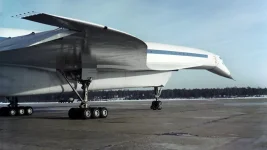
Alamy
The Tu-144 was intended to make a big impression at the 1973 Paris Air Show – but disaster struck (Credit: Alamy)
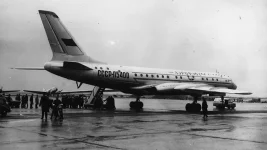
The crash only highlighted some ongoing issues with Tupolev’s pioneering design, and the Soviet state airline Aeroflot started to get nervous about bringing it into full service. Tupolev had to fix a myriad of issues before the aircraft could be signed off for service. Even then, the first airline flights in 1975 were still essentially test runs, carrying mail instead of passengers from Moscow to what is now Almaty in Kazakhstan.
It took until 1977 for the Tu-144 to start taking passengers.
The Soviets couldn’t find an elegant solution to reducing noise inside the passenger cabin. The engines, and the air conditioning units which drew air from the engine inlets, both created enormous noise. Air conditioning was vital – the cabin would otherwise have become dangerously hot from the heat generated by air friction on the plane’s skin.
Concorde used its fuel as a ‘heat sink’ to keep temperatures down, so didn’t need such powerful air conditioners – and this kept noise down to acceptable levels.
The difference between the Tu-144 and Concorde is apparent in Moon’s description of the first Tu-144 flight that carried foreign observers:
Passengers complained that the loud onrushing sound of wind made conversation impossible and communicated with each other by passing notes – Howard Moon
“The cabin had shortcomings: several ceiling panels were ajar, service trays stuck, and window shades dropped without being pulled. The five-abreast seating was criticised as cramped. Not all the toilets worked. These shortcomings were normal in a new airliner. A more serious problem remained. On-board speakers played the theme from Love Story, Gloomy Sunday, and Raindrops Keep Falling on My Head, but few aboard could hear it. Their dominant impression was not speed but noise.
“Fed by the onrushing air, the huge air-conditioners and the huge engines created ‘an ear-shattering roar that could almost have been heard in Queens’, according to the New York Times….Passengers complained that the loud onrushing sound of wind made conversation impossible and communicated with each other by passing notes.”
Tupolev had brought the Tu-144 into the air, but once in service, it seemed that the plane was more trouble than it was worth. The intensely political project had chewed through enormous resources. In 1977, Tupolev tried to buy some of the engine management computers Concorde used, but the British, fearing they could also be used on Soviet jet bombers, refused.
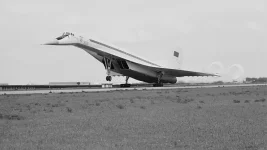
Getty Images
The Tu-144 was one of the last airliners to have to use a braking parachute to decelerate (Credit: Getty Images)
What had been one of the Soviet Union’s prized technological feats became a political hot potato. Aeroflot did not even make any reference to the aircraft in its five-year plan from 1976 to 1982. After a modified Tu-144 crashed on a pre-delivery test flight in June 1978, Aeroflot pulled the plug on the Tu-144’s airline career. It had flown only 102 commercial flights, and only 55 of those had carried passengers. Concorde, in comparison, flew for more than 25 years, racking up thousands of flights and becoming one of the most iconic designs of the 20th Century.
The Tu-144’s production officially ended in 1982. The 14 remaining Tu-144s had a brief second life, training crews for the planned Soviet space shuttle, the Buran. By the time the Berlin Wall fell in 1989, the remaining models were mostly mothballed, a few of them in storage at the Soviet aircraft testing base at Zhukovsky, near Moscow.
***
That should have been the end of the Tu-144’s story. But it wasn’t.
In the 1990s, Nasa began a multi-billion-dollar project to build the next generation of supersonic transports, called the High Speed Research (HSR) programme . Boeing and Lockheed had started building Concorde-like designs in the 1960s but they had been cancelled for various reasons, including fuel costs and noise concerns. Now, nearly 30 years later, Nasa hoped to pick up from where those projects left off.
One member of the programme was a Nasa test pilot called Rob Rivers. He was to become the only member of a very exclusive club – a pilot who would fly both Concorde and the Tupolev Tu-144.
I thought it would be a great idea to fly the Concorde – Robert Rivers, Nasa test pilot
“I was more or less the programme pilot for the HSR, working with Boeing and other partners. And that was a big project – about a $4bn project from the late 1980s to the early 2000s.
“While I was on the HSR a British Airways pilot came over to Langley to talk to us about Concorde and high-speed flying.
“I thought it would be a great idea to fly the Concorde, and was able to convince othe HSR programme officer the value of it as well. So in 1997, I flew up to JFK Airport and sat in the jumpseat of a Concorde and flew out. I was sat there with my stopwatches and a notebook and a tape measure and recorded all that I could of an Atlantic crossing in a supersonic airliner.” Rivers later flew a series of flights in the Concorde simulator near Bristol, and flew back to America in the cockpit of another Concorde.
Because the US had never built a supersonic airliner – its own plans in the 20th Century had fallen through – Nasa needed help from elsewhere to carry out flight tests.
There was one big problem. “Neither British Airways nor Air France had a spare Concorde we could use for experiments,” says Rivers.
The Soviet Union had collapsed only a few years before. Russia was in dire shape, with its economy in freefall. “President Bill Clinton and the Russians had talked about a huge project with the Russian aviation industry, so that their engineers didn’t float away to places like Iran,” says Rivers.
And what Russia did have was a supersonic airliner – albeit one that had had a chequered career, and was no longer flying.
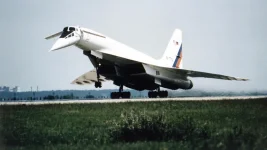
Science Photo Library
The Tu-144 gave Nasa the chance to use a real aircraft to help design a supersonic plane of the future (Credit: Science Photo Library)
“An agreement was made in 1993 to lease a Tu-144 a do a number of very sophisticated experiments,” says Rivers.
It was not easy to do business in Russia. The Tupolev had to be leased by a British company, IBP Aerospace, a contractual company that could act as a go-between.
“So here was the deal – Nasa had to pay Boeing to pay IBP to pay Tupolev. There were payments in the middle of the night to pay for fuel with US dollars – which were illegal in Russia at the time but the only currency that many vendors would accept,” says Rivers.
It would be an embarrassment if a Nasa pilot turned up on crutches – Rob Rivers
“The Tupolev we flew had only flown 83 hours and had been retired in 1990. It was mothballed in 1993, but just like a phoenix it rose again.”
The Tu-144 leased by Nasa was fitted with more reliable, modern engines and a whole suite of instruments, including a special ‘data bus’, one which could store all the data from the many experiments running as the plane flew its missions.
However, the early flights were a disaster in terms of data collection. The data bus recorded impossible flight characteristics. The Russian pilots, flying the plane on behalf of Tupolev, couldn’t be interviewed by Nasa.
“Interviews with the pilots hadn’t been written into the contract. And Tupolev was in such financial strife that they only paid you for what was in the contract. If you flew a flight, they paid you after the flight.”
It was decided that Nasa would have to send its own pilots to test the Tupolev.
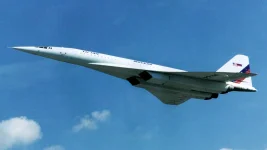
Nasa
The Nasa programme brought the Tu-144 back from the dead in the late 1990s (Credit: Nasa)
Rivers was confirmed, and his Russian visit was earmarked for September 1998. A few weeks beforehand, he took a short break with a few friends.
“I go trout fishing in Wyoming. And I have a really bad fall while I’m hiking in the back country – I break my tibia, I suffer a spiral fracture of the tibia and fibula and a broken ankle,” says Rivers.
“In Wyoming I tell the doctor ‘I’ve got to get to Russia in two weeks. You’ve got to fix me.’ He said ‘No way, you’re going to be in a cast for six to eight months.’” Eventually the doctor relented, and put a metal rod in Rivers’ leg so he could make the trip.
Nasa did not want Rivers to go to Russia while he was injured. “They felt it would be an embarrassment if a Nasa pilot turned up on crutches,” Rivers says. But it was too late to find someone else.
Rivers’ grimaced through his long-haul flight to Moscow, and was then whisked in a van straight from the airport by Alexander Pukhov, Tupolev’s design director who had worked on the Tu-144 programme in the 1960s. On his first night, he ended up being taken to Tupolev’s flight surgeon. There, Pukhov – a man with a formidable reputation – struck a deal with Rivers.
“Pukhov says to me ‘As long as you’re not on crutches in front of the press, and as long as you’re not on crutches when you walk to the airplane, you can fly.’
When I saw the aircraft for the first time - how big it was and how tall it was off the ground…it was just amazing – Rob Rivers
“My leg was killing me but I wouldn’t have missed it for the world. This was going to be the highlight of my test pilot career. I was going to be one of only two Western people to fly it.”
Rivers and fellow pilot Gordon Fullerton – along with Nasa engineers Bruce Jackson and Tim Cox – were billeted at a former KGB sanatorium near Zhukovsky, a former Soviet airbase used for testing experimental designs and prototypes.
“When I saw the aircraft for the first time – how big it was and how tall it was off the ground – it was just amazing.”
Rivers kept to his word that he wouldn’t walk to the plane for his first flight on his crutches, but walking on his ankle was agony. “I spent a lot of hours practising walking with a cane. I could not have done it without my friend Bruce Jackson. It was excruciating to put pressure on my ankle.
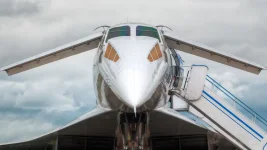
Alamy
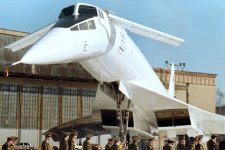
The Tu-144 lacked the sophistication of Concorde, but it was a much more powerful aircraft (Credit: Alamy)
“At the pre-flight party the day before my first flight I threw my crutches down. I walked out towards Professor Pukhov on my cane, and Pukhov gives this huge belly laugh, and there’s cheers from everyone, and it was just like something from a movie.”
Rivers and Fullerton (who died in 2013) flew the Tu-144 on a series on flights through to the end of 1998. And by the end of it Rivers was the only person on Earth who could lay claim to first-hand experience flying both the Tu-144 and its Western competitor. He says he could not have done it without the assistance of the Russian flight crew, pilot Serge Boresov, navigator Viktor Pedos and flight enginner Anatoli Kriulin, whose expert knoweldge helped make the flights a success.
The Nasa flights spelled the end of the Tu-144’s flying career. Despite the refinements added with Western help, the aircraft was too expensive and unreliable to fly passengers once more. The remaining 'Concordskis' are now in museums or stored in hangars. One now stands outside a
technical museum in Germany, right next to an example of its old rival, Concorde.
“The Concorde was more sophisticated,” Rivers says. “But there are many examples of sophisticated engineering on the Tu-144 as well,” he says.
“They were different. The Tu-144, it could carry more passengers, and it could fly them faster, and higher. Tupolev created a remarkable plane that could do what only one other plane in history could do.
“A Concorde was like a Kentucky thoroughbred – a delicate horse but very speedy. And the Tu-144 is like a Clydesdale, a massive horse with unbelievable power but not nearly as efficient.”







 you never know


