Navigation
Install the app
How to install the app on iOS
Follow along with the video below to see how to install our site as a web app on your home screen.
Note: This feature may not be available in some browsers.
More options
Style variation
You are using an out of date browser. It may not display this or other websites correctly.
You should upgrade or use an alternative browser.
You should upgrade or use an alternative browser.
Covid-19 News and Discussions
- Thread starter Yommie
- Start date
- Status
- Not open for further replies.
More options
Who Replied?


Yommie
Elite Member
- Thread starter
- #1,925

What to expect when you get reinfected with COVID: Symptoms to look for this fall
The gravity of your next COVID-19 episode and whether you develop long COVID depends on multiple personal and environmental factors, experts say.
 www.usatoday.com
What to expect when you get reinfected with COVID: Symptoms to look for this fall
 Adrianna Rodriguez
USA TODAY
AD
0:01
As the U.S. enters another respiratory virus season, Americans are likely to encounter the COVID-19 virus – again.
For many, this might be their second, third or even fourth time getting sick. So, what should people expect this time around?
Health experts say the gravity of your next COVID-19 episode depends on a variety of personal and environmental factors including your age, underlying medical conditions, vaccination status and the variants that happen to be circulating.
“There is really not a guarantee of what happens if you’re reinfected with COVID,” said Raynard Washington, director of the health department of Mecklenburg County, North Carolina and chair of the Big Cities Health Coalition, which represents local health departments nationwide.
Here are key things to keep in mind about repeat COVID infections as we approach the fall and winter months.
COVID symptoms after reinfection
The most common symptoms of a COVID-19 infection are fever, cough, muscle aches and sore throat, said Dr. Robert Hopkins, Jr., medical director for the National Foundation for Infectious Diseases.Some people also report diarrhea and fatigue but other symptoms common at the beginning of the pandemic, like the loss of taste and smell, are less common today.
This is partly due to the changing variants, health experts say. The variants circulating today have genetic mutations that cause certain symptoms but not others.
Get the Daily Briefing newsletter in your inbox.
The day's top stories, from sports to movies to politics to world events.
Delivery: Daily
Your Email
Long COVID:Teens and kids are showing surprising new symptoms
Different symptoms, and severity of symptoms, may also depend on a person’s immunity. A young, healthy person who is up to date on their COVID-19 vaccines and has had a previous infection will likely experience milder illness their second or third time. However, this isn’t everyone’s experience.
Others are at greater risk if they're reinfected. Hopkins said severe infections are more likely to occur among people who are unvaccinated, older, immunocompromised or have multiple chronic conditions.
“But I also see infections in people I wouldn’t expect, young and otherwise healthy,” he said. “As much as I’d like to say we have good predictors, we really don’t.”
Repeat infections and long COVID
Some studies suggest Americans are less likely to develop long COVID from the omicron variant than they would have from virus strains that appeared earlier in the pandemic.This is not a hard fast rule: the newer variants haven’t been around long enough to determine that for certain. But Hopkins said there's always a risk of developing long COVID with each new infection.
“The more infections, the more times you roll the dice, the more risk you have,” he said. “You don’t see the risk diminish as people have repeated infections.”
Studies show COVID-19 vaccines reduce the risk of developing long COVID, so health experts encourage Americans to get the updated shot when it becomes available this fall.
The role of vaccination
The Food and Drug Administration approved the latest version of the COVID-19 vaccine Thursday targeting the omicron variant KP.2 strain for Moderna's Spikevax and Pfizer's Comirnaty shots, both of which use messenger RNA technology.As the virus mutates, "We want to make sure our immune system is up to date, like our iPhone," Washington said. "You want those latest updates to protect your phone and make sure it's functioning properly."

In June, the Centers for Disease Control and Prevention recommended the new vaccine for all Americans 6 months old and older. Major pharmacy chains say they expect shipments of doses to arrive at stores in the upcoming days.
In addition to reducing long COVID risk, health experts say getting vaccinated also reduces the risk of developing severe symptoms that may lead to hospitalization or death.
"The huge success of these vaccines is that they're reducing severity of illness and saving lives," Washington said. "The vaccines protect us on the front end to give our body the best fighting chance to recover from the virus."
Adrianna Rodriguez can be reached at [email protected].
Yommie
Elite Member
- Thread starter
- #1,926

Summer surge of COVID-19 in Quebec, positivity rate highest since December
Quebec is experiencing a spike in COVID-19 outbreaks, with hospitalizations at their highest level since last winter.
 montreal.ctvnews.ca
Summer surge of COVID-19 in Quebec, positivity rate highest since December

The Canadian Press
Staff
Contact
Published Aug. 22, 2024 5:23 p.m. EDT
Quebec is experiencing a spike in COVID-19 outbreaks, with hospitalizations at their highest level since last winter.
The province’s national institute of public health is reporting outbreaks in 110 long-term care homes and 54 health-care centres.
There are currently more than 1,200 people with COVID-19 in hospital in Quebec, and more than 30 deaths reported each week.
More than 21 per cent of COVID-19 tests are returning a positive result, the highest rate since last December.
COVID-19 outbreaks have been on the rise in Quebec since April, following a spike last winter.
Experts say COVID-19 is here to stay, but it hasn’t yet adopted the same seasonal pattern as common cold and flu viruses, both of which are more prevalent in winter.
This report by The Canadian Press was first published Aug. 22, 2024.
Yommie
Elite Member
- Thread starter
- #1,927
The COVID Summer Wave Is Still Here—What Doctors Say It May Mean for Winter
The COVID-19 summer wave 2024 is still ongoing. Here’s what infectious disease doctors say could be next, and how to best protect against the latest variants.
The COVID Summer Wave Is Still Here—What Doctors Say It May Mean for Winter
Korin MillerThu, August 22, 2024 at 7:30 a.m. EDT·5 min read

The COVID Summer Wave Is Still Here—What Doctors Say It May Mean for Winter
- The summer COVID-19 wave is happening now.
- Experts anticipate this will continue for several more weeks.
- It's unclear how this will impact the winter respiratory virus season.
While the reprieve from soaring temperatures may make it seem like the season is coming to a close, the COVID-19 summer wave persists. In fact, COVID-19 cases in the U.S. have been elevated since June and are still high.
While summer COVID waves are nothing new—we’ve experienced them nearly every year since the pandemic began—this wave has been drawn out. With kids headed back to school, it’s only natural to wonder if this wave will stretch right into fall and winter, especially with the contagious KP.3.1.1. and LB.1 variants circulating.
Meet the experts: Thomas Russo, M.D., professor and chief of infectious disease at the University at Buffalo in New York; infectious disease expert Amesh A. Adalja, M.D., senior scholar at the Johns Hopkins Center for Health Security; Adriana Glenn, Ph.D., associate professor at the George Washington University School of Nursing.
So, what’s the latest on the COVID summer wave 2024 and what does this mean for this winter? Here’s what we know right now.
Where do things stand with the COVID-19 summer wave 2024?
There’s a lot happening with COVID-19 in the U.S. right now. Percent positivity—which is the percentage of all COVID-19 tests performed that are actually positive—stands at a whopping 18.1% right now, according to data from the Centers for Disease Control and Prevention (CDC). Right now, 2.4% of people who head to the emergency room are diagnosed with COVID-19 and nearly 2% of all deaths in the country are due to the virus, per CDC data.This is all being fueled by the so-called FLiRT variants, including KP.3. Currently variants KP.3.1.1, LB.1, and KP.2.3 are the most common ones circulating in the country, per the CDC.
How long will the COVID summer wave last?
It’s hard to say for sure how long the COVID-19 summer wave will last, but we probably have a few more weeks to go, according to Thomas Russo, M.D., professor and chief of infectious disease at the University at Buffalo in New York.“The wave has been hitting different parts of the country at different times,” he says. “The South and West coast were hit first.” In general, Dr. Russo says that the waves tend to rise over four to six weeks, plateau, and then decrease over six to eight weeks. “We’re still going to be in the middle of this for a few weeks, and certainly through Labor Day,” he says.
Infectious disease expert Amesh A. Adalja, M.D., senior scholar at the Johns Hopkins Center for Health Security, agrees. “COVID summer waves usually last into about September and then the virus diminishes its activity,” he says. Cases tend to ramp up again when the weather gets colder, Dr. Adalja adds.
“Hopefully we’ll have a respite before we hit the Thanksgiving and religious holiday seasons, which is the start of the winter waves,” Dr. Russo says.
What are the symptoms of the latest COVID-19 variants?
The official symptoms of COVID-19 have not changed. According to the CDC, those include:- Fever or chills
- Cough
- Shortness of breath or difficulty breathing
- Sore throat
- Congestion or runny nose
- New loss of taste or smell
- Fatigue
- Muscle or body aches
- Headache
- Nausea or vomiting
This cold-like experience is “a reflection of the level of immunity in the population in the virus, causing more cold-like symptoms as a person’s immune system is able to control it much better,” Dr. Adalja explains.
“Some people have a cough, but it tends to be more of a throat-clearing cough vs. something deep in the chest,” Dr. Russo says. “There’s a sense of not feeling well in the first few days. That tends to go away and leaves you with a head cold.”
But Dr. Russo stresses that people who are at high risk for serious COVID-19 infections may have a different experience. “Symptoms to watch out for include shortness of breath, chest pain, dizziness, and confusion, among others,” Dr. Russo says. While high-risk patients are the most likely to experience these, he points out that anyone can become seriously ill with COVID-19.
What does this mean for winter?
It’s not entirely clear at the moment. “This virus does tend to increase in circulation in the winter, so we have to anticipate that,” Dr. Adalja says. “This has occurred despite summer increases every year the virus has been with us.”But if you happen to get infected with the virus now and the same variants are still circulating this winter, it’s possible you’ll have a “reasonable degree of protection” in the winter, Dr. Russo says. “However, we know that immunity wanes over time,” he continues. “Protection against severe disease tends to last four to six months and protection against infections tends to last even less than that.”
It’s also entirely possible that a new variant will surface and cause a new wave of infections, Dr. Russo says. Glenn agrees. “The viruses’ year-long presence provides more opportunities for mutation and when that happens there are new variants that emerge,” she says.
So, what does this mean for you? Once the new COVID-19 vaccine is released, Dr. Russo recommends getting it. “The new formulation should be available soon,” he says. “We’re still seeing 400 to 500 deaths from COVID a week and they’re largely preventable. I’m hoping we can do a little bit better with vaccination as we move forward into the fall.”
Last edited:
Yommie
Elite Member
- Thread starter
- #1,928
@Sharma Ji

 makismd.substack.com
mRNA Injury Series - 30 year old Australian Youtube Star who pushed COVID-19 mRNA Vaccines died suddenly from lymphocytic myocarditis
YouTuber Who Pushed Covid Shots on Followers Dies Suddenly of Lymphocytic Myocarditis
makismd.substack.com
Yommie
Elite Member
- Thread starter
- #1,929

Just Say NO
Adverse events are now available in single dose servings. Only around 22.5% of U.S. adults received the latest round of shots that came out last fall. This insanity needs to STOP.
 jamesroguski.substack.com
Just Say NO
Adverse events are now available in single dose servings. Only around 22.5% of U.S. adults received the latest round of shots that came out last fall. This insanity needs to STOP.

James Roguski
Aug 22, 2024
233
33
Share

Subscribe
In June 2024, the CDC recommended that everyone over 6 months old receive an updated COVID-19 vaccine and flu jab this year.
On August 22, 2024, the Food and Drug Administration approved updated Covid vaccines from Pfizer and Moderna, putting the new shots on track to reach most Americans in the coming days amid a summer surge of the virus.
The new shots from Pfizer and Moderna are specifically approved for people ages 12 and older and are authorized under emergency use for children 6 months through 11 years old.
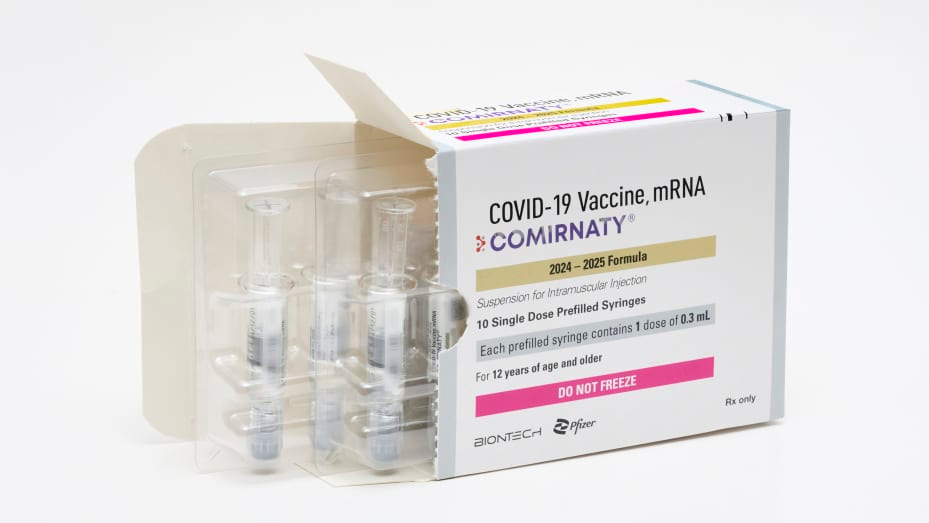
Pfizer Comirnaty®
Moderna Spikevax®
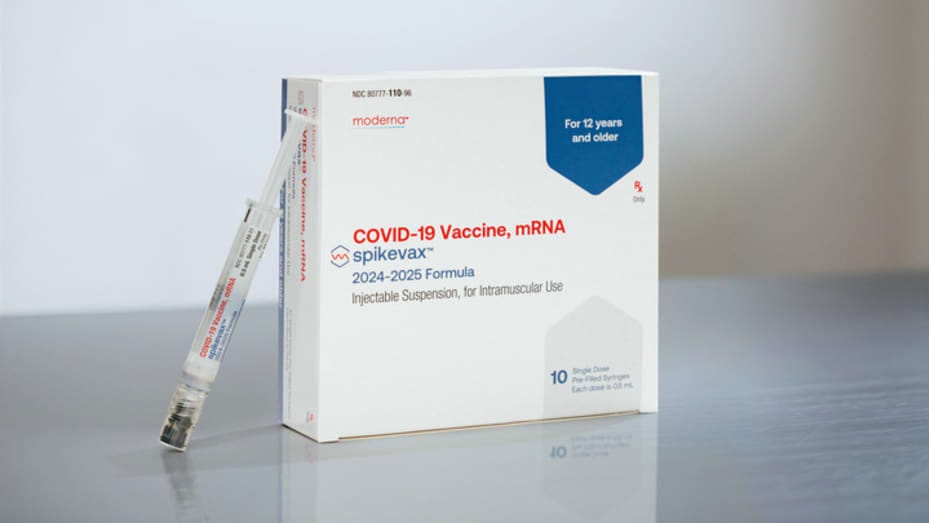
The jabs target a strain called KP.2, a descendant of the highly contagious omicron subvariant JN.1 that began circulating widely in the U.S. earlier this year. KP.2 was the dominant Covid strain in May, but now only accounts for roughly 3% of all U.S. cases as of Saturday, according to the latest Centers for Disease Control and Prevention data.
- Unvaccinated individuals 6 months through 4 years of age are eligible to receive three doses of the updated, authorized Pfizer-BioNTech COVID-19 Vaccine or two doses of the updated, authorized Moderna COVID-19 Vaccine.
- Individuals 6 months through 4 years of age who have previously been vaccinated against COVID-19 are eligible to receive one or two doses of the updated, authorized Moderna or Pfizer-BioNTech COVID-19 vaccines (timing and number of doses to administer depends on the previous COVID-19 vaccine received).
- Individuals 5 years through 11 years of age regardless of previous vaccination are eligible to receive a single dose of the updated, authorized Moderna or Pfizer-BioNTech COVID-19 vaccines; if previously vaccinated, the dose is administered at least 2 months after the last dose of any COVID-19 vaccine.
- Individuals 12 years of age and older are eligible to receive a single dose of the updated, approved Comirnaty or the updated, approved Spikevax; if previously vaccinated, the dose is administered at least 2 months since the last dose of any COVID-19 vaccine.
- Additional doses are authorized for certain immunocompromised individuals ages 6 months through 11 years of age as described in the Moderna COVID-19 Vaccine and Pfizer-BioNTech COVID-19 Vaccine fact sheets.
Individuals who receive an updated mRNA COVID-19 vaccine may experience similar side effects as those reported by individuals who previously received mRNA COVID-19 vaccines and as described in the respective prescribing information or fact sheets.
Pfizer will begin shipping its new shot immediately and expects it to be available in pharmacies, hospitals and clinics across the U.S. in the coming days.
Moderna also expects its shot to be available in a similar time frame.
A “high” or “very high” level of Covid is being detected in wastewater in almost every state, according to CDC data from wastewater monitoring.
It’s unclear how many Americans will actually roll up their sleeves to get another shot in the coming months.

SOURCES:
https://www.fda.gov/news-events/pre...-19-vaccines-better-protect-against-currentlyhttps://www.cnbc.com/2024/08/22/cov...es-pfizer-moderna-updated-kppoint2-shots.html
Yommie
Elite Member
- Thread starter
- #1,932
Weekly case numbers from around Australia: 4,966 new cases ( 8%)
8%)
Australia: Case Update- NSW 2,472 new cases (1%)
- VIC 802 new cases (10%)
- QLD 1,200 new cases (21%)
- WA 198 new cases (11%)
- SA 174 new cases (
 20%)
20%) - TAS 48 new cases (33%)
- ACT 57 new cases (26%)
- NT 15 new cases (64%)
This gives a 50% chance that at least 1 person in a group of 152 being infected with covid this week.
Note: data has been adjusted for a QLD data correction, the total reduced by 603 cases while expecting about 250 new cases that day.

Flu tracker tracks cold and flu symptoms (fever plus cough) and is another useful tool for tracking the level of respiratory viruses in the community. This decreased to 1.8% (
0.3%) for the week to Sunday and suggests 468K infections (1 in 56 people). This is lower than the seasonal average.- NSW: 1.5% (0.6%)
- VIC: 2.3% (0.1%)
- QLD: 1.7% (0.4%)
- WA: 1.8% (NC)
- SA: 1.7% (0.1%)
- TAS: 1.8% (1.0%)
- ACT: 2.1% (NC)
- NT: 1.2% (1.0%) Based on the testing data provided, this suggests around 133K new symptomatic covid cases this week (0.5% or 1 in 195 people).
- Status
- Not open for further replies.
Users who are viewing this thread
Total: 2 (members: 0, guests: 2)
Pakistan Defence Latest


Country Watch Latest
-
Iran - Israel/US War: Israel-US declare war on Iran, Iran responds (52 Viewers)
- Latest: BananaRepublic
-

-
 Trump orders military base mass shooter to be executed by firing squad (2 Viewers)
- Latest: SolarWarden
-

-

Latest Posts
-
Iran - Israel/US War: Israel-US declare war on Iran, Iran responds (52 Viewers)
- Latest: BananaRepublic
-

-
 Makkah Defence Alliance: Turkey, Saudi Arabia, and Pakistan, news & updates (36 Viewers)
- Latest: El Sidd
-

-