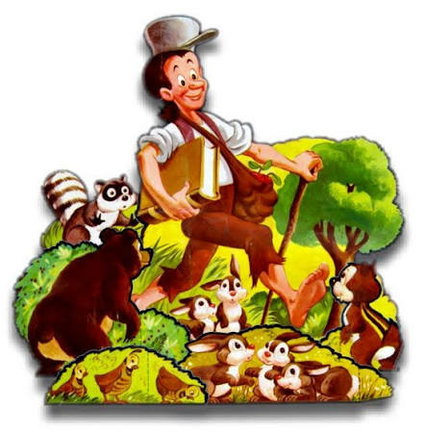
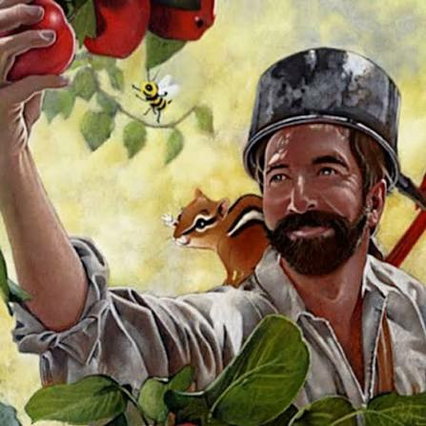
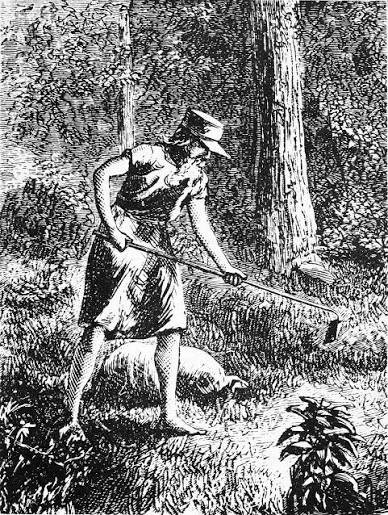
History Tidbit, 1774-1845 - Johnny Appleseed: A beloved folk hero in his lifetime, Johnny Appleseed, whose real name was John Chapman, became famous for planting apple nurseries across the American frontier.
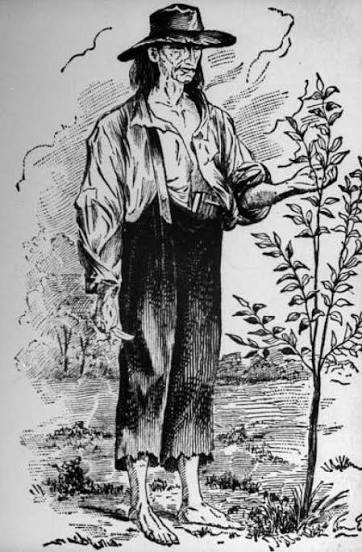
Born in Massachusetts in 1774, Chapman spread his apples from Pennsylvania, to Ohio, Indiana, Virginia, to Illinois, and even to Ontario, Canada. Chapman is described as a slender man of medium height, blue eyes, and light-brown hair. He loved animals and was a vegetarian. While the popular schoolhouse legend portrays him as a barefoot wanderer randomly scattering seeds, the truth is more complex.
The real John Chapman was a shrewd businessman, a successful nurseryman and landowner, establishing nurseries just ahead of westward-moving settlers. He planted orchards to sell to settlers. Establishing 50 apple trees was a requirement for settlers to claim 100 acres of land, and Chapman capitalized on this by planting orchards ahead of them.
Here’s a fact that might surprise you: The apples were not for eating, but rather for hard cider. The apples were tart, "spitter" apples, specifically grown for making hard cider and applejack, which were safer to drink than water at the time, which was often contaminated. Applejack was a strong alcoholic spirit made from fermented cider, produced primarily through a process called "jacking" which involved freezing the cider and removing the ice to increase alcohol concentration. It was a popular, highly-valued drink that improved with age, and could last through winter. Its production was a highly-valued part of 18th-19th century agricultural life.
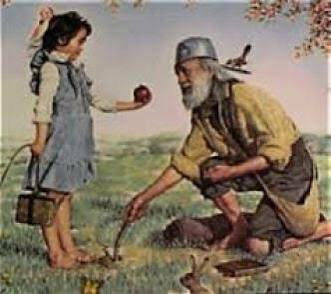
Chapman became quite well-known, and was popular among all groups of people. He maintained peaceful relationships with Native Americans and was a welcome visitor in settlers' homes, who enjoyed stories of his travels, and was a source of news from other settlements. His frequent visits to the settlements were looked forward to, and no cabin door was ever closed to him. To men and women he was a news carrier; to children he was a friend.
He was very religious and preached to people along the way, always carrying his Bible. Though he lived a simple life, and dressed modestly, Chapman was a wealthy landowner. At the time of his death in 1845 he owned more than 1,200 acres of nurseries.
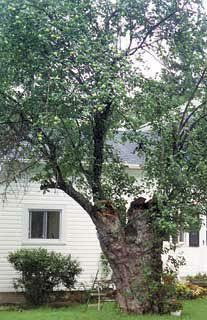
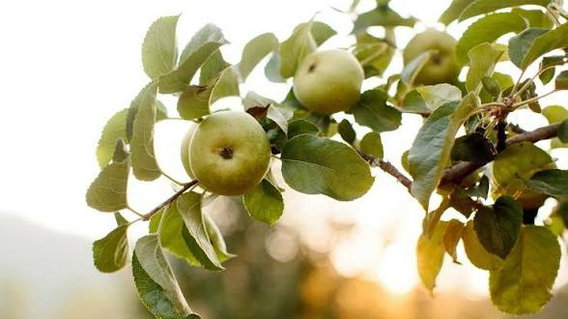
Unfortunately, Prohibition destroyed most of his surviving orchards. Many of his orchards were destroyed by federal agents during Prohibition in the 1920s to prevent making illegal alcohol. But there is still one of his apple trees that still stands - There is a near 200-year-old gnarled tree in Nova, Ohio, believed to be the last surviving tree planted by Johnny Appleseed himself. It still produces tart, green apples.
On March 18, 1845, Chapman died of pneumonia at the age of 71, ending his 50 year journey. There are various theories as to his final resting place, and although there is a memorial stone in Ft. Wayne, Indiana, the exact location of his grave site is unknown.