The historic background
Why did Emperor Qianlong adopt the reincarnation system?
2019-03-04 15:30:00China Tibet Online
The system of drawing lots from a golden urn to choose the reincarnation of a Living Buddha is an important measure taken by Emperor Qianlong(the 6th emperor of the Qing Dynasty,1711-1799) to prevent Tibetan and Mongolian upper-class nobles from using the reincarnation of Living Buddhas to seize religious power and to prevent great lamas from building up alliances with secular forces of Mongolia and Tibet.
So then, what is the historical background for how the Golden Urn System was formed?
Corrupt practices of great lamas “all from one family”
Since the Yuan Dynasty (1271-1368), Tibet has been formally incorporated under the direct jurisdiction of the central government. By the time of the Qing Dynasty (1616-1912), the long-standing tradition of reincarnation of Living Buddhas had become corrupt, which worried Emperor Qianlong (the sixth emperor of the Qing Dynasty 1711-1799).
Monks at the Yonghegong Lamasery Temple (Beijing) chant scriptures while sitting on either side of a statue of Master Tsongkhapa, the founder of the Gelug sect..
According to records, while searching for the eighth Dalai Lama following the death of the seventh, Emperor Qianlong appointed the third Zhangjia Living Buddha, whom he trusted, to be responsible for the issue. However, Jianbai Gyatso, who was closely related to the sixth Dalai Lama, was selected instead. After this, the Drebotsen Danba Living Buddha of Outer Mongolia also reincarnated as one of the eighth Dalai Lama’s relative, and the younger brother and nephew of the third Zhangjia Living Buddha were also recognized as Quezang Living Buddha and Lake Living Buddha.
Faced with this situation, Emperor Qianlong pointed out that “the great lamas in charge” “all come from one family, no different from conferring hereditary titles of nobility”. Considering the rise of the integration of politics and religion, Emperor Qianlong regarded it as a major concern. And later, an invasion accelerated the Qing Dynasty rulers’ determination to govern the reincarnation of Living Buddhas.
Gurkha's invasion
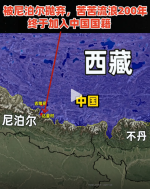
The Gurkhas are a tribe from Nepal in the southern foothills of the Himalayas. In the early years of Qianlong’s reign, the regime grew stronger and pursued a policy of outward expansion. The Gurkhas were interested in Tibet to their north.
In 1780, the sixth Panchen Lama went to Beijing to congratulate Emperor Qianlong on his 70th birthday. After an unfortunate illness, he passed away, leaving a large sum of money that had been given to him from Emperor Qianlong and the Manchu and Mongolian nobility. This caused his younger brother, the Sharmapa Hutu Ketu Living Buddha of the Karmapa Red Hat sect, and another elder brother, Zhongba Hutu Ketu, to fight over it. Because the Sharmapa failed in the fight, he grew resentful, and in 1784 he went to Gurkha under the guise of making a pilgrimage, He encouraged the Gurkhas to invade Tibet and rob Tashilhunpo Monastery as a way to vent his anger.
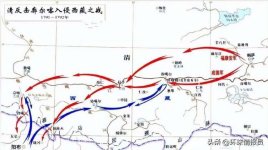
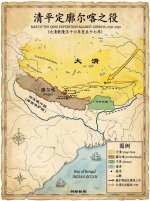
It was at this time that there was a trade dispute between Gurkha and Tibet, which provided an excuse for the Gurkhas to invade. From 1788-1789, Gurkha sent troops to invade. The Qianlong emperor sent Bazhong Hutu Ketu and others to lead troops into Tibet. However, Bazhong and them adopted a perfunctory attitude to the situation, tacitly agreeing to “three hundred ingots per year” in negotiations with Gurkha. In 1791, Gurkha again invaded Tibet on the grounds of “being rejected when asking for the three hundred ingots” and “getting the short end of the stick under the agreement”. After learning about the incident, Zhongba Hutu Ketu of Tashilhunpo Monastery carried his valuables and escaped”. Tashilhunpo Monastery suffered heavy losses due to a lack of effective organization.
Qianlong was furious after learning what happened, and he dismissed and investigated the Minister responsible for Tibet. He ordered General Fu Kang’an to lead his army into Tibet to fight the Gurkha. The Tibetan monks and leaders actively supported the actions of the Qing army. Nobles and tribal headmen from Gansu and Qinghai also offered horses and food to support the Qing army all the way into Tibet.
In April 1792, Fu Kang’an led his troops from Tingri, Tibet. In just one month, he annihilated the Gurkha army in Nyalam and Gyirong, recovering all lost ground.
China Tibet Online was founded in May of 2000. It is a comprehensive Tibet news website with the largest global audience, greatest impact and most authoritative reports. It currently has five languages: Chinese, English, German, French and Tibetan, as well as six subnets. It provides news about...
eng.tibet.cn