Davey's Odds and Ends

1766663854904.jpeg

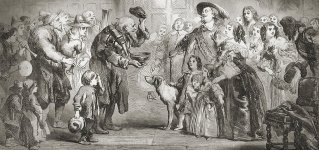
Wassail! wassail! all over the town,
Our toast it is white and our ale it is brown;
Our bowl it is made of the white maple tree;
With the wassailing bowl, we’ll drink to thee.

—“The Gloucestershire Wassail

 
Last edited:
Orderic Vitalis – an example here from his Historia Ecclesiastica:

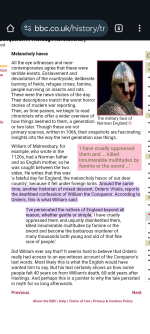
“In his anger (William the Conqueror) commanded that all crops and herds, chattels and food of every kind should be brought together and burned to ashes with consuming fire, so that the whole region north of Humber might be stripped of all means of sustenance. In consequence so serious a scarcity was felt in England, and so terrible a famine fell upon the humble and defenceless populace, that more than 100,000 Christian folk of both sexes, young and old alike, perished of hunger.”

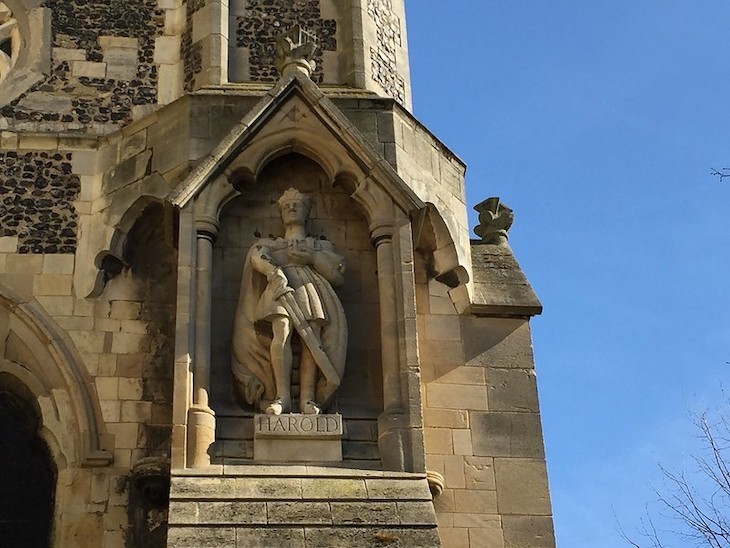
.. more relevant than this is perhaps the point that this was a time when a shared living from the land was revoked. Land access prior to William’s reign certainly happened through a complex pyramid of already feudal relationships, but with the harrying of the north serfs / peasants and landowners alike were removed from land that had sustained them, and land ownership passed absolutely to the Crown – with conditions of homage and new obligations of military service attached.

1766671416186.jpeg

 
Last edited:
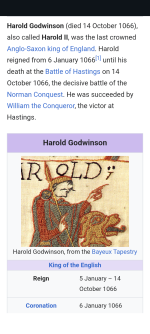
– in the aftermath of the Norman Conquest, it was the native land-owners who were dispossessed not the general population. It is estimated that only some 10,000 assorted French made England their home, settling among a population of perhaps 1.5 million. Did the Normans (and Bretons) bring cider-making and drinking with them? In passing, it is noteworthy that the Old English ‘ealuscerwen’ is thought to mean ‘sense of panic induced by lack of ale’ – there is a similar lack of mead concept, but I’m not aware of a cider equivalent.
 
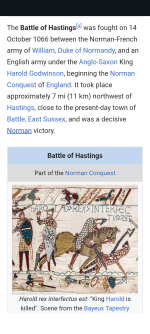
In our search for customs that describe an indigenous ‘honouring of the harvest’ for empire-building England, it is hard to find a reliable path back through the ancient dispossession of enclosures, witch hunts and clearances. The original systematic drive of England’s varied indigenous communities from their homes dates from the turn of the previous millennium and the harrying of the Norman Conquest. Unlike others in the awful now of this experience, the expulsions of the 1100s are an ancient grief, a trauma that has grown cold. It is in the interests of landowners that we should forget the mass exclusions from land that is our home

 
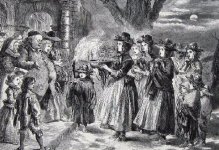
The house-wassailing tradition has evolved into what we now recognise as carolling, where groups of people go from door-to-door singing Christmas carols. Some aspects of the original practise however can still be detected in the words of these carols; listen carefully as the wassailers demands begin, “now give us some figgy pudding”, and then as those demands turn to threats “and we won’t go until we’ve got some”.

1766669096991.jpeg
 
To view this content we will need your consent to set third party cookies.
For more detailed information, see our cookies page.
 
1766671092036.jpeg

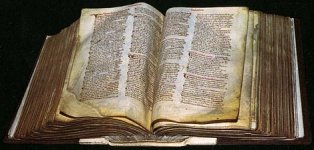
Domesday Book was a comprehensive survey and record of all the landowners, property, tenants and serfs of medieval Norman England. It was compiled in 1086-7 under the orders of William the Conqueror (r. 1066-87). The record is unique in European history and is packed full of statistics and snippets which reveal details of life in medieval England.

The precise purpose of the Domesday Book is not known but the most likely reason was to determine who legally owned what land, to settle disputes of ownership and to measure income, particularly agricultural income, in order to apply a future tax. The record continues to be invaluable to modern historians of medieval England. The two-volumed Domesday Book is currently housed in the UK National Archives, London.
 
1766672709064.jpeg

The house-visiting wassail, which traditionally occurs on the twelfth day of Christmastide known as Twelfth Night or Epiphany Eve (5 January), is the practice of people going door-to-door, singing and offering a drink from the wassail bowl in exchange for gifts; this practice still exists, but has largely been displaced by carol singing.
 
1766849212271.jpeg

Article 1, Section 8, Clause 4 (Citizenship)


Document 25


Joseph Story, Commentaries on the Constitution 3:§§ 1098--99


1833


§ 1098. The propriety of confiding the power to establish an uniform rule of naturalization to the national government seems not to have occasioned any doubt or controversy in the convention. For aught that appears on the journals, it was conceded without objection. Under the confederation, the states possessed the sole authority to exercise the power; and the dissimilarity of the system in different states was generally admitted, as a prominent defect, and laid the foundation of many delicate and intricate questions. As the free inhabitants of each state were entitled to all the privileges and immunities of citizens in all the other states, it followed, that a single state possessed the power of forcing into every other state, with the enjoyment of every immunity and privilege, any alien, whom it might choose to incorporate into its own society, however repugnant such admission might be to their polity, conveniencies, and even prejudices. In effect every state possessed the power of naturalizing aliens in every other state; a power as mischievous in its nature, as it was indiscreet in its actual exercise. In one state, residence for a short time might, and did confer the rights of citizenship. In others, qualifications of greater importance were required. An alien, therefore, incapacitated for the possession of certain rights by the laws of the latter, might, by a previous residence and naturalization in the former, elude at pleasure all their salutary regulations for self-protection. Thus the laws of a single state were preposterously rendered paramount to the laws of all the others, even within their own jurisdiction. And it has been remarked with equal truth and justice, that it was owing to mere casualty, that the exercise of this power under the confederation did not involve the Union in the most serious embarrassments. There is great wisdom, therefore, in confiding to the national government the power to establish a uniform rule of naturalization throughout the United States. It is of the deepest interest to the whole Union to know, who are entitled to enjoy the rights of citizens in each state, since they thereby, in effect, become entitled to the rights of citizens in all the states. If aliens might be admitted indiscriminately to enjoy all the rights of citizens at the will of a single state, the Union might itself be endangered by an influx of foreigners, hostile to its institutions, ignorant of its powers, and incapable of a due estimate of its privileges.


§ 1099. It follows, from the very nature of the power, that to be useful, it must be exclusive; for a concurrent power in the states would bring back all the evils and embarrassments, which the uniform rule of the constitution was designed to remedy. And, accordingly, though there was a momentary hesitation, when the constitution first went into operation, whether the power might not still be exercised by the states, subject only to the control of congress, so far as the legislation of the latter extended, as the supreme law; yet the power is now firmly established to be exclusive. The Federalist, indeed, introduced this very case, as entirely clear, to illustrate the doctrine of an exclusive power by implication, arising from the repugnancy of a similar power in the states. "This power must necessarily be exclusive," say the authors; "because, if each state had power to prescribe a distinct rule, there could be no uniform rule."


The Founders' Constitution
Volume 2, Article 1, Section 8, Clause 4 (Citizenship), Document 25
The University of Chicago Press


Story, Joseph. Commentaries on the Constitution of the United States. 3 vols. Boston, 1833.
 
– in the aftermath of the Norman Conquest, it was the native land-owners who were dispossessed not the general population. It is estimated that only some 10,000 assorted French made England their home, settling among a population of perhaps 1.5 million. Did the Normans (and Bretons) bring cider-making and drinking with them? In passing, it is noteworthy that the Old English ‘ealuscerwen’ is thought to mean ‘sense of panic induced by lack of ale’ – there is a similar lack of mead concept, but I’m not aware of a cider equivalent.
Have you acquired the taste for ale ?.....I tried it few times , too pungent for me
 
Screenshot_20251227-102831.png

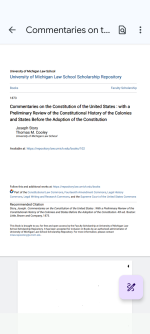
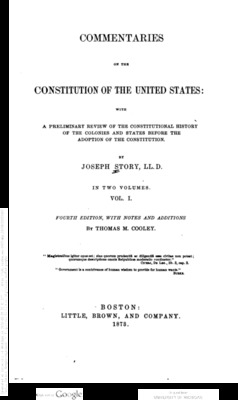
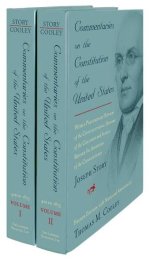
Commentaries on the Constitution of the United States : with a Preliminary Review of the Constitutional History of the Colonies and States Before the Adoption of the Constitution

 
Last edited:

Users who are viewing this thread

Latest Posts

Back
Top