Navigation
Install the app
How to install the app on iOS
Follow along with the video below to see how to install our site as a web app on your home screen.
Note: This feature may not be available in some browsers.
More options
Style variation
You are using an out of date browser. It may not display this or other websites correctly.
You should upgrade or use an alternative browser.
You should upgrade or use an alternative browser.
DeepSeek, China's AI model: News & Discussion
- Thread starter Beijingwalker
- Start date
More options
Who Replied?
神威98
Registered Member

I was in Shanghai a few weeks ago. This movie's poster was occuping the 4-6 main posters at the entrance of every in-mall theater I passed by.Hollywood movies suck like their AI models. Supergirl (2026) the movie only made USD 1 million so far over 6 days since airing in China. They keep recycling the stale costume design.
Just for fun, this is the first time I used an AI image generator (zimage.run no account on web browser).
They should have done what they did to Marvel Rivals by hiring a Chinese designer to redo her outfit.
I can imagine something as simple as a split red cape immediately attracts attention because it's much more refreshing than the classic one piece red cape. Back side needs a lot of rework though to enlarge the diamond "S" and make the split ends go around it.
View attachment 204317View attachment 204318View attachment 204319
I am shocked despite such in-your-face advertisment movie only made a cumulative of 1.07 million USD over 9 days of screening in China.
神威98
Registered Member
Deepseek to develop own AI chips. Translation: NVidia is banned and Huawei chips suck. (They learned real fast after one delayed release using Huawei chips -- they even sent a Huawei team to help them and that done jack).
The most disappointing experience I had with Huawei was their WiFi6 router didn't even work in a small home setting (no range/frequent connection drops). To me ppl who purchase Huawei are just as foolish as ppl who buy Apple or Tesla -- they all make overpriced junk!

 www.huaweicentral.com
The most disappointing experience I had with Huawei was their WiFi6 router didn't even work in a small home setting (no range/frequent connection drops). To me ppl who purchase Huawei are just as foolish as ppl who buy Apple or Tesla -- they all make overpriced junk!
DeepSeek to cut off reliance on Nvidia/Huawei with its own AI chips
DeepSeek has launched many models running on a combination of Huawei and Nvidia AI chips, but it looks like the startup firm is planning to break this reliance with its own product. A report says DeepSeek could begin developing its own AI chipsets. Reuters reported that DeepSeek is pushing to...
www.huaweicentral.com
冖_冖
Registered Member


Chinese AI models are gaining ground with U.S. companies as OpenAI, Anthropic costs surge
Recent model releases from Chinese companies including DeepSeek and Z.ai are seen by many as highly competitive compared to leading U.S. frontier systems.
 www.cnbc.com
Chinese-built AI models are gaining traction among U.S. companies as they narrow the performance gap with leading American rivals while remaining significantly cheaper to use.
Recent model releases from Chinese companies, including DeepSeek and Z.ai, are seen by many as highly competitive compared to leading frontier systems from the likes of Anthropic and OpenAI. Those advances in capability come as token prices for the most advanced models rise at many U.S. AI labs, leaving companies grappling with unexpectedly high costs associated with using the tech.
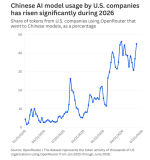
The share of tokens used by U.S. companies on Chinese AI models via OpenRouter — a platform that enables developers to access a range of AI models — has sat above 30% each week since Feb. 8, with that figure rising as high at 46%. The average across the previous 12 months was just 11%, falling to 4.5% in the first half of 2025.
冖_冖
Registered Member
Chinese AI models are gaining ground with U.S. companies as OpenAI, Anthropic costs surge
Recent model releases from Chinese companies including DeepSeek and Z.ai are seen by many as highly competitive compared to leading U.S. frontier systems.
Chinese-built AI models are gaining traction among U.S. companies as they narrow the performance gap with leading American rivals while remaining significantly cheaper to use.
Recent model releases from Chinese companies, including DeepSeek and Z.ai, are seen by many as highly competitive compared to leading frontier systems from the likes of Anthropic and OpenAI. Those advances in capability come as token prices for the most advanced models rise at many U.S. AI labs, leaving companies grappling with unexpectedly high costs associated with using the tech.
The share of tokens used by U.S. companies on Chinese AI models via OpenRouter — a platform that enables developers to access a range of AI models — has sat above 30% each week since Feb. 8, with that figure rising as high at 46%. The average across the previous 12 months was just 11%, falling to 4.5% in the first half of 2025.
View attachment 205144

Lawmakers probe growing use of Chinese AI models in U.S. companies
An ongoing House Committee investigation is probing the risks involved in the rise of AI built in China.
www.cnbc.com
Lawmakers probe growing use of Chinese AI models in U.S. companies
Published Wed, Jul 8 20261:00 AM EDTUpdated 26 Min Ago- U.S. lawmakers are considering strategies to halt the growing adoption of Chinese AI models by homegrown companies.
- Chinese models have gained traction among U.S. firms as they’ve closed the performance gap with American rivals while being cheaper to use.
- An ongoing House Committee investigation is probing the risks involved in the rise of AI built in China.
神威98
Registered Member
Deepseek continues to amaze me how useful it was.
In the first year, the most amazing thing it did for me was dig up company insider documents/employee manuals. Something I would have never found by simple internet search or even navigating the actual company's website.
Now in the second year, the most amazing thing it did for me was act as a research companion. Not to look up articles and information, but suggesting ideas and angles on a problem I never would have thought of. They say two brains are better than one at solving problems. It now acts as my second brain.
(Also now in the second year, I use it to write a draft of computer codes. It does all the scutwork I would have spent hours and maybe even days before without it, but I need to revise the results myself many many times before I was satisfied)
In the first year, the most amazing thing it did for me was dig up company insider documents/employee manuals. Something I would have never found by simple internet search or even navigating the actual company's website.
Now in the second year, the most amazing thing it did for me was act as a research companion. Not to look up articles and information, but suggesting ideas and angles on a problem I never would have thought of. They say two brains are better than one at solving problems. It now acts as my second brain.
(Also now in the second year, I use it to write a draft of computer codes. It does all the scutwork I would have spent hours and maybe even days before without it, but I need to revise the results myself many many times before I was satisfied)
神威98
Registered Member
I don't know how ChatGPT "performs" relative to Deepseek. I always been skeptical of Western products. I have an inherent mistrust of Western products. My Dell laptop keyboard lost a key cap after only a few weeks. I had to tape it to the surrounding keys. Never gotten another Dell laptop computer since.
They say it's much better to know what to do than how to do it. These types of situations always amaze me when I sought Deepseek for help.
Like for example if you feed Plato's analogy of the divided line into Deepseek: Divide a line into two unequal parts so that the smaller to the larger is as the larger to the whole. Deepseek will reply that's the Golden Ratio and give you the exact value. That's friggin brillant!
It "saved my arse" numerous times with these types of problems where I knew exactly what to do but NOT how!
They say it's much better to know what to do than how to do it. These types of situations always amaze me when I sought Deepseek for help.
Like for example if you feed Plato's analogy of the divided line into Deepseek: Divide a line into two unequal parts so that the smaller to the larger is as the larger to the whole. Deepseek will reply that's the Golden Ratio and give you the exact value. That's friggin brillant!
It "saved my arse" numerous times with these types of problems where I knew exactly what to do but NOT how!

Beijingwalker
VIP Member
- Thread starter
- #638

神威98
Registered Member
Personally I'm actually scared for the future. Companies like DeepSeek are only offering their services for free becoz they haven't reached a critical mass of customers yet. I can imagine its features will become more and more restricted, and eventually you have to pay even for the basic features. This is why I'm trying to get as much done using it now while most of its features are still free!
Beijingwalker
VIP Member
- Thread starter
- #640
DeepSeek founder Liang Wenfeng’s wealth doubles to $36 billion, surpassing AI rivals
14 July 2026 18:37 (UTC+04:00)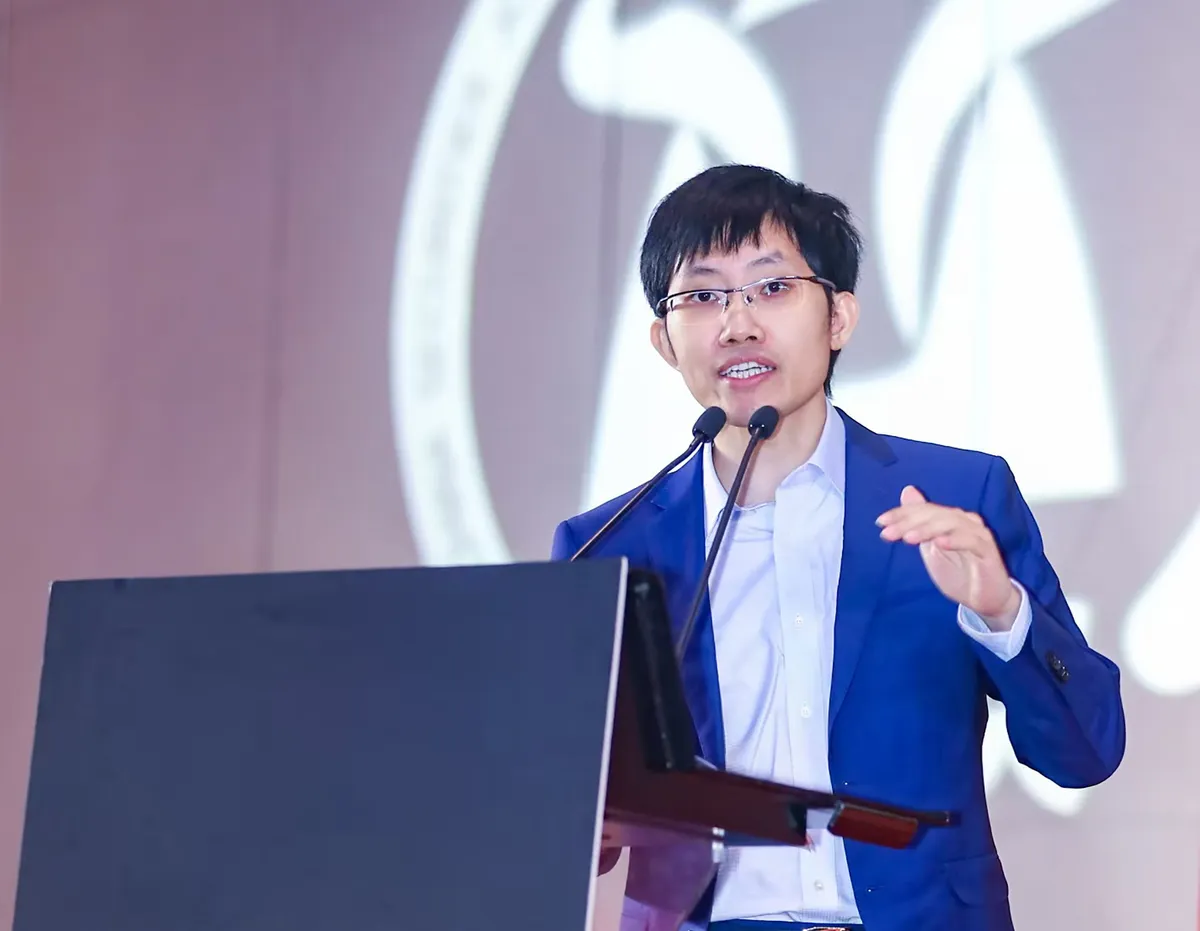
Liang Wenfeng, founder of Chinese artificial intelligence company DeepSeek, has become the world’s richest entrepreneur among creators of AI models, AzerNEWS reports.
The Bloomberg Billionaires Index estimates that Liang’s fortune has more than doubled, rising from $16.7 billion to $36 billion, allowing him to surpass Anthropic co-founder Dario Amodei and OpenAI co-founder Greg Brockman.
The majority of Liang’s wealth comes from his stake in DeepSeek. According to Bloomberg, strong investor interest has increased the company’s valuation by roughly five times compared with April, when it was valued at $10 billion.
Following DeepSeek’s $7.4 billion investment round in June 2026, which pushed the company’s valuation to $50 billion, Liang invested $3 billion himself. As a result, his ownership stake fell to approximately 78%.
With a net worth of $36 billion, Liang Wenfeng ranks as the eighth-richest person in China. Among entrepreneurs working in the artificial intelligence sector, he is second only to Chen Tianshi, founder of Cambricon Technologies.
DeepSeek was founded in 2023 as an artificial intelligence research unit spun out from the hedge fund Zhejiang High-Flyer Asset Management, which Liang Wenfeng established together with two former university classmates.
DeepSeek founder Liang Wenfeng’s wealth doubles to $36 billion, surpassing AI rivals
Liang Wenfeng, founder of Chinese artificial intelligence company DeepSeek, has become the world’s richest entrepreneur among creators of AI models,
 www.azernews.az

Hamartia Antidote
Elite Member
Most of those are nobodies compared to large Chinese companies like Alibaba, Baidu and Tencent Holdings that use American AI.
OpenAI, Google provided advanced AI models to Chinese firms on U.S. watchlist via overseas units
OpenAI and Google provided AI services to overseas subsidiaries of Chinese companies on a U.S. Defense Department watchlist, including Singapore entities linked to Alibaba, Baidu and Tencent Holdings. The issue highlights a gap in U.S. China-focused AI controls that target chip exports but leave...
 www.digitaltoday.co.kr
Last edited:

Goenitz
Elite Member


Why A Nobel Laureate Is Leaving UC Berkeley For China
Nobel Laureate Omar Yaghi's move from UC Berkeley to Tsinghua University highlights China's growing appeal to elite scientists amid shifting U.S. research policies.
 www.forbes.com
He is a Material guy. Not sure which AI sector he will be working
Beijingwalker
VIP Member
- Thread starter
- #643
China's Open-Source Models Hit 41% of Global Downloads, Surpassing US for First Time and Igniting AI Strategy Debate
2026-07-15 11:46 (GMT+8)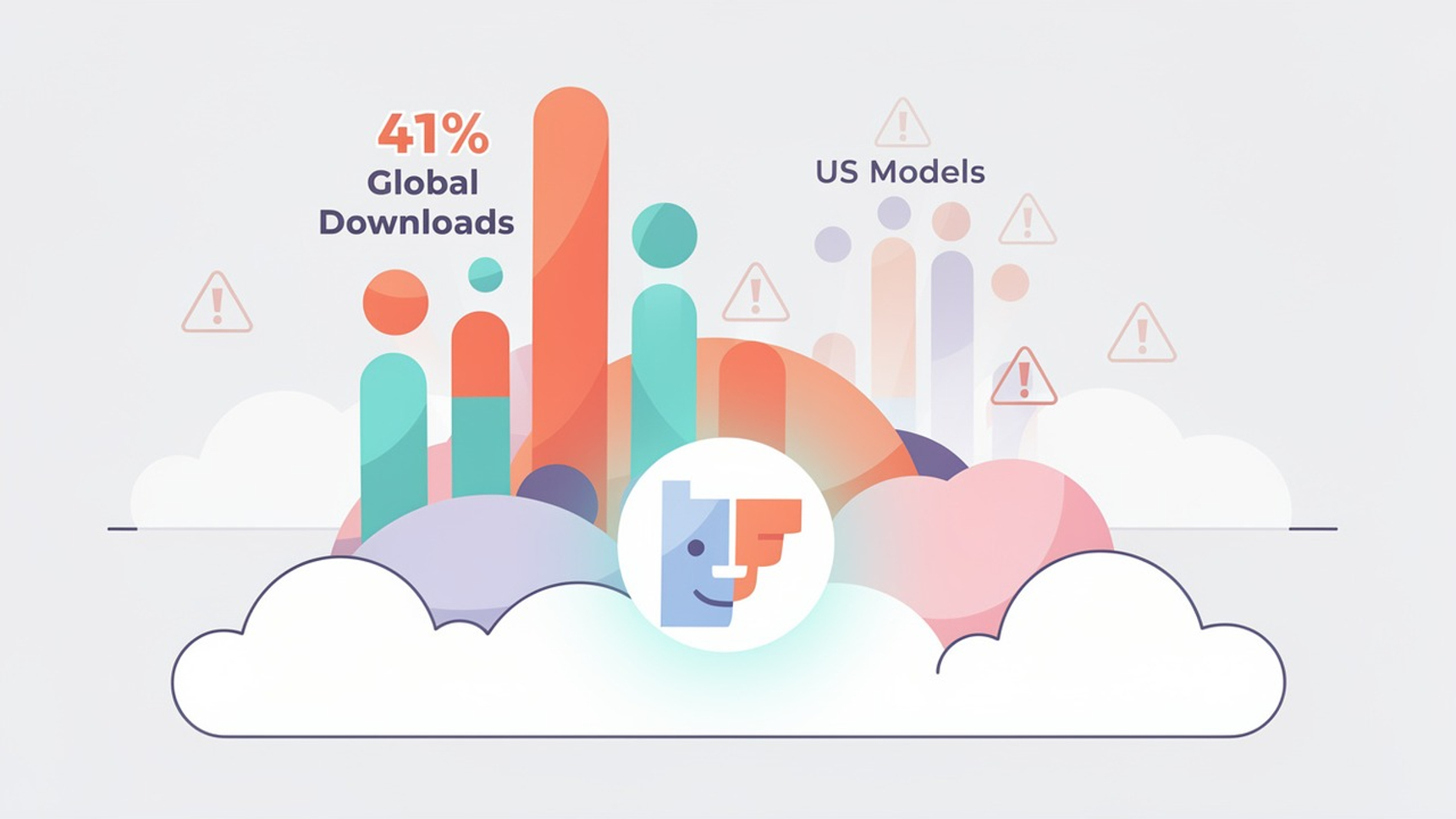
Chinese open-source AI models have captured 41% of global downloads on Hugging Face, the world's largest open-source AI platform, surpassing US models for the first time.
On OpenRouter, the top six most popular models all come from Chinese institutions including Tencent, Xiaomi, DeepSeek, MiniMax, and Zhipu AI, with Anthropic ranking seventh.
Corporate cost pressures are driving widespread adoption of "model routing" strategies, with approximately 60% of enterprises already capping AI spending.
Simple tasks are increasingly shifted to lower-cost Chinese open-source models, while only complex tasks invoke premium closed-source models. Microsoft CEO Satya Nadella has warned enterprises against single-vendor dependency.
Hugging Face CEO Clem Delangue views open-source as an accelerator for AI leadership, suggesting that if China continues to lead in open-source, it could achieve overall AI leadership within one to two years. Anthropic's CEO, however, has raised concerns about the safety risks of open-source models.
Chinese open-source models are now being added en masse to procurement menus on global cloud platforms including AWS and Azure.
In another dimension of the artificial intelligence race, Chinese open-source models are rewriting the global competitive landscape with staggering download figures.
According to Hugging Face's Spring 2026 report, Chinese open-source models now account for 41% of the platform's monthly and cumulative downloads, surpassing US models for the first time. The data was recently highlighted again by Hugging Face CEO Clem Delangue, sparking widespread discussion on social media.
Hugging Face currently hosts nearly 3 million public models and 1 million public datasets, with a new repository created every seven seconds on average. Half of Fortune 500 companies have already deployed their own private or open-source models on the platform. Shifts in data on this platform largely reflect the real technology adoption trends within the global AI developer community.
Chinese Models Dominate Top Six Spots on OpenRouter
Beyond download figures, changes in actual usage are equally striking. On the AI model routing platform OpenRouter, the six most popular models currently all come from Chinese institutions, including Tencent, Xiaomi, DeepSeek, MiniMax, and Zhipu AI. Anthropic's Claude Opus 4.7 ranks seventh, collectively outpaced by the Chinese contingent.
Zhipu AI recently released its open-source model GLM-5.2, positioned for agentic coding tasks. In relevant benchmarks, it competes at the same tier as Anthropic's latest models, further demonstrating the ability of Chinese open-source models to keep pace at the technological frontier.
Infrastructure data corroborates this trend. According to Vercel platform data, as of June 2026, open-source models handled nearly one-third of the platform's AI requests, taking on a large volume of infrastructure-intensive workloads, while closed-source models gradually retreated to the high-cost premium tier.
Cost Pressures Drive Enterprises Toward "Proprietary Models"
The core logic driving this shift is cost and control. Delangue stated bluntly: "If you're an AI company or a tech company, you don't want to outsource your core capabilities to a black-box API you can't control." He noted that enterprises, after seeing the bills for scaling closed-source frontier models, are reassessing the value of proprietary AI.
Microsoft CEO Satya Nadella issued a similar warning against single-vendor dependency. He stated: "If learning flows in only one direction, economic value concentrates with the owners of the learning infrastructure, not the creators of knowledge." He advocates distributing learning infrastructure across every enterprise, allowing companies to control their own learning loops.
A team of UBS Securities analysts led by Karl Keirstead noted in an AI research report published on June 23, 2026, that approximately 60% of enterprises have already restricted AI spending in some way, with the core action being the implementation of guardrails on token usage.
"Model Routing" Strategy Reshapes the Industry Chain
Enterprise coping strategies are systematically reshaping the beneficiary landscape of the AI industry chain. According to the UBS report, "model routing" has become the core technical action for token optimization—assigning different tasks to different models, invoking the most expensive models only for complex reasoning, critical code, and long-context analysis, while shifting simple tasks to lower-cost or even Chinese open-source models.
Price differentials are the direct driver. Taking Anthropic as an example, the output price gap between its different model tiers is substantial:
From the low end to the high end, output token prices differ by as much as 10 times. It is against this backdrop that Chinese open-source models are entering corporate procurement considerations. According to a case described in the UBS report, a large global bank has deployed Alibaba's Qwen locally to balance the usage costs of high-end models like Claude.
At the cloud platform level, AWS Bedrock's model menu now includes MiniMax, Kimi, Qwen, DeepSeek, and GLM; Microsoft Azure AI Foundry also offers DeepSeek access. Chinese open-source models are entering the procurement options of global enterprises en masse.
Open-Source vs. Closed-Source Debate Intensifies
Delangue's assessment is more direct. According to PodcastAlpha, which cited his views, he believes open-source is an accelerator for AI leadership: "If China continues to lead in open-source, it could achieve overall AI leadership within one to two years."
Anthropic CEO Dario Amodei holds a different position. He believes that releasing increasingly capable open-source models carries risks, as once released they are difficult to control and could be used by malicious actors to spread disinformation or conduct cyberattacks.
Delangue countered: "Locking it behind the doors of a few players doesn't make it safe. You instead create asymmetries of power and capability, making the situation more dangerous." He added that transparency allows defenders to "patch cybersecurity risks that open-source models have already exposed."
In Delangue's view, the greatest risk in the AI field is the concentration of power. Keeping models closed-source does not eliminate the risks posed by advanced AI systems, because bypassing the guardrails of frontier model APIs and stealing model weights is not particularly difficult. Restricting powerful models only concentrates technology in the hands of a few companies while reducing transparency into how systems operate.
This debate over the open-source versus closed-source path is becoming the next critical battleground in the global AI race. As Chinese enterprises declare leadership in the open-source domain with a 41% download share, the AI industry's value chain is accelerating its shift from "a few giants monopolizing frontier models" to a "flourishing open-source ecosystem."
China's Open-Source Models Hit 41% of Global Downloads, Surpassing US for First Time and Igniting AI Strategy Debate — BigGo Finance
Chinese open-source AI models have captured 41% of global downloads on Hugging Face, the world's largest open-source AI platform, surpassing US models…
Beijingwalker
VIP Member
- Thread starter
- #644
Users who are viewing this thread
Total: 1 (members: 0, guests: 1)
Pakistan Defence Latest
-
 Federal cabinet gives nod to imposition of emergency in KP; summary sent to president (6 Viewers)
- Latest: Goenitz
-

-
-
-
Country Watch Latest


Latest Posts
-

-

-
Federal cabinet gives nod to imposition of emergency in KP; summary sent to president (6 Viewers)
- Latest: Goenitz
-

-