Developments in armament and military industry in the Kingdom of Morocco

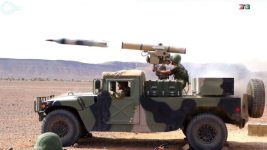
Chinese anti-tank missile in Morocco: HJ-9A appears on US Humvee

1794853363097.png

Chinese military commentator Dianbo described the missile as Chinese for export, and the operating crew directs it to the target.
A camera on the launch pad monitors the missile's path as it flies, and the system sends guidance corrections to a receiver in its tail via a millimeter-wave radio link.
This link constitutes the main difference from the original HJ-9 (HJ-9) missile, which transmits its commands with a laser.
According to Dianbo, millimeter waves are more reliable in extreme weather conditions, such as dense fog and rain, and through battle smoke.
The HJ-9A has a maximum range of 5,500 meters (3.4 miles), according to Dianbo, and carries a tandem warhead designed to defeat explosive reactive armor, additional blocks mounted on many tanks. The main charge penetrates 1,200 mm (47 in) of steel, it was said.
 
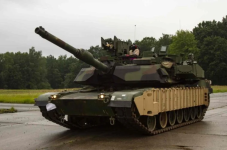
Morocco and the United States are moving to expand military manufacturing and transfer defense technology​

1794950900729.png

17 November 2026

Moroccan Foreign Minister Nasser Bourita affirmed the Kingdom's commitment to expanding its strategic partnership with the United States in the defense industry, alongside advanced technology, artificial intelligence, and the energy sector.

Bourita explained that the exchange of letters between King Mohammed VI and US President Donald Trump in July 2026 charted a new course for developing bilateral cooperation, focusing on strengthening industrial and technological partnerships and opening avenues for expanding investments and collaboration in the production of defense equipment and technologies.

This commitment is part of the new roadmap for defense cooperation between Morocco and the United States for the period 2026–2036, signed by the two countries on April 16, 2026, at the US Department of Defense (the Pentagon), in the presence of the Minister Delegate in Charge of National Defense Administration, Abdellatif Loudiyi, and the Inspector General of the Royal Armed Forces, Lieutenant General Mohamed Berrid.

This roadmap aims to elevate military cooperation between the two countries to the level of a long-term strategic partnership by expanding cooperation in defense industries, technology transfer, and integrating Morocco into US defense supply chains, as well as opening the door to joint production projects. It also includes supporting the modernization of the Royal Armed Forces' equipment through the acquisition of US defense equipment and systems, strengthening cooperation in cybersecurity, protecting critical infrastructure, and countering cyberattacks, in addition to developing information exchange and operational coordination between the two militaries and enhancing their capabilities to conduct joint operations.

The proposed directions also include establishing a center of excellence in the field of unmanned aerial vehicles (UAVs), dedicated to multi-domain joint operations, including developing drone operation technologies, coordinating their operations, and enhancing capabilities to counter this type of aircraft. Furthermore, it includes studying the feasibility of establishing cooperative security sites in Morocco, exploring the renovation of strategic airfields previously used by US forces, and establishing a multi-domain training complex, without necessarily implying the establishment of permanent US military bases in the Kingdom.

In a related development, the U.S. Africa Command (AFRICOM) and the Royal Moroccan Armed Forces signed a Memorandum of Understanding on July 13, 2026, to establish the African Multi-Domain Training and Testing Center (AMTEC) in Morocco. The center is slated to be located in the Tan-Tan region by 2030. The project comprises three main components: a multi-domain training area, a drone academy, and an innovation and testing center. Its objectives include fostering collaboration between Moroccan and American industries, developing joint innovation and defense technologies, and testing new systems and technologies in training and operational environments.

Regarding joint military exercises, Bourita noted that preparations have begun for the next iteration of the African Lion 2027 exercises, scheduled for May 2027. These exercises are considered the largest multinational military exercise on the African continent. This edition is expected to see the participation of more than 45 countries, with the scope of the exercises expanded to include six operational areas: land, sea, air, space, cyberspace and intelligence.

The maneuvers will include training on joint operations and the use of live ammunition, air and naval operations, command, control and operational planning, along with electronic warfare, cybersecurity, special operations and intelligence capabilities development, as well as the integration of modern defense technologies into military exercises.

This approach reflects Morocco's shift in defense cooperation with the United States from a traditional focus on acquiring military equipment to a broader partnership encompassing manufacturing, technology transfer, training, and defense innovation. This shift will provide Morocco with opportunities to develop its defense industrial base, enhance its capacity to manufacture military equipment and technologies locally, and benefit from American expertise and technology. This will contribute to reducing reliance on imports and increasing the local content in military deals. It also allows the Kingdom to gradually transform from an arms importer to an industrial partner in the development and production of certain defense systems, while opening new avenues for attracting American investment, developing Moroccan talent, and strengthening the country's position as a regional hub for defense industries in Africa.
 
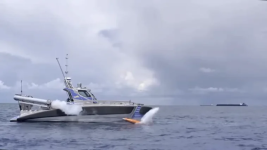
Morocco acquires two Israeli-designed unmanned ships for 13 million euros to strengthen the fight against submarines and sea mines​

1794951392597.png

The Royal Moroccan Navy is preparing to introduce unmanned maritime capabilities into its fleet by acquiring two Seagull-class unmanned vessels designed for anti-submarine warfare and mine detection. This move aims to enhance surveillance and anti-submarine warfare capabilities in the waters surrounding the Kingdom, particularly the Strait of Gibraltar and the western Mediterranean.

According to a report published by the Spanish newspaper El Español, the deal, valued at €13 million, received an export license from the Dutch government. It includes the supply of two autonomous vessels, along with advanced sensors, a joint control station, spare parts, technical support, and crew training.

The deal involves the Seagull unmanned maritime platform, developed by the Israeli company Elbit Systems, and manufactured and equipped by Dutch naval facilities in collaboration with the De Haas Maassluis shipyard.

This industrial cooperation between Israel and the Netherlands allows Morocco to acquire a platform based on Israeli technologies, through a manufacturing and supply chain that passes through a European company.

The two vessels are expected to enhance the capabilities of the Moroccan surface fleet, as they are designed to operate in coordination with manned naval vessels, providing advanced reconnaissance and surveillance capabilities without exposing warship crews to direct risks.

In this context, these platforms can be integrated into the maritime operations of the FREMM-class multi-mission frigate "Mohammed VI," the largest vessel in the Royal Moroccan Navy, built by the French Naval Group. They can also be operated in conjunction with SIGMA-class corvettes and naval helicopters specializing in anti-submarine warfare.

The Seagull unmanned vessel


The Seagull platform incorporates a suite of sensors designed for anti-submarine warfare and mine countermeasures, with the capability to be configured to meet the specific requirements of each mission.

For anti-submarine warfare, the vessel can be equipped with variable-depth towed sonar systems, including active and passive TRAPS systems, as well as submersible sonar systems and sonars specifically designed for detecting submarines in coastal and shallow waters.

These systems enable the detection of underwater targets and the collection of acoustic data necessary for their location and classification, providing manned warships with additional information about potential threats.

For mine countermeasures, the platform can be equipped with the KATFISH synthetic aperture sonar system, used for surveying and mapping the seabed, and detecting various types of sea mines, including bottom mines, seabed mines, and floating mines.

These capabilities can be complemented by unmanned underwater vehicles (UUVs) designed for mine detection, handling, and neutralization, as well as systems specifically designed to detect threats posed by combat divers.

The Seagull's equipment extends beyond reconnaissance and sensing. The manufacturer's specifications indicate the possibility of equipping it with a remotely controlled, vibration-resistant weapon station armed with a 12.7 mm machine gun, along with non-lethal weapons, long-range electro-optical systems, support equipment, and electronic warfare countermeasures.

The platform can also be configured to accommodate lightweight torpedo tubes, enabling it to address certain maritime threats depending on the chosen equipment and the mission requirements.

These systems are managed through a unified mission control system that relies on direct line-of-sight communication links, along with satellite communications (SATCOM), enabling remote ship control and monitoring of sensor data.

A key feature of the package acquired by Morocco is that the command and control station can be installed on a land-based facility or a mobile vehicle, or integrated into the combat information center of the frigate "Mohammed VI."

According to the platform's operational design, this station allows for the simultaneous management and coordination of operations between the two ships, enabling them to operate within a single network and distributing tasks between submarine detection and mine countermeasures.
 
1795030164979.png

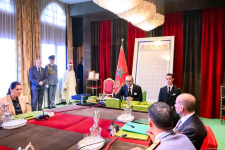
The Royal Palace in Rabat witnessed, on Wednesday, November 18, 2026, a working session chaired by His Majesty King Mohammed VI, accompanied by His Royal Highness Crown Prince Moulay El Hassan, dedicated to presenting the "Morocco Offer" project and the roadmap for developing the national defense and security industry.

In my view, we are at a significant juncture in the development of the Kingdom's defense capabilities. The focus is no longer solely on acquiring military systems and modernizing the arsenal, but rather on building a national industrial and technological base capable of contributing to the production of defense equipment, developing local expertise, and reducing dependence on foreign sources.

Most importantly, the project includes a clear institutional, industrial, and financial vision, with specific objectives extending to 2035.

1. Strategic Vision: Transitioning from Import to Production

The roadmap is based on establishing a national defense industrial and technological base, which will strengthen the Kingdom's defense sovereignty and pave the way for research and innovation development and job creation.

One of the key strengths upon which this approach can be based is the gains Morocco has accumulated in recent years in the automotive, aerospace, and electronics sectors. These sectors provide a crucial foundation for developing defense industries based on advanced technology and dual-use applications, both civilian and military.

In other words, Morocco seeks to leverage and develop its existing industrial infrastructure to become part of a more integrated defense system.

2. Five Priority Industrial Branches

The roadmap identifies five key areas that will form the cornerstones of the national defense industry development:

- Drones and autonomous systems.

- Land systems, including armored vehicles and military vehicles.

- Naval systems.

- Defense electronics and cybersecurity.

- Artificial intelligence.

These areas are of particular importance given the transformations in modern warfare, where unmanned systems, electronic warfare, artificial intelligence, and the integration of sensor, command, and control systems have become fundamental elements in building military power.

3. Infrastructure Expansion: Nouaceur, Benguerir, and Benslimane

At the infrastructure level, the Kingdom is focusing on strengthening defense-focused industrial zones. The project includes adding two new industrial zones in Benguerir and Benslimane, in addition to those already established, such as the Nouaceur zone.

This expansion is not simply about providing industrial land; it aims to create an integrated environment to attract investment, localize industrial activities, and encourage partnerships between Moroccan and international companies.

Furthermore, distributing these projects across multiple regions can contribute to the creation of specialized industrial hubs linked to research and development, manufacturing, and training.

4. Governance and Financing: New Project Management Structures

Among the most significant developments of the "Morocco Offer" is the establishment of new institutional mechanisms to support this initiative. These include:

- A dedicated strategic agency responsible for implementing the national strategy and supporting investors and industrial stakeholders. An industrial holding company will be established to restructure the defense industry ecosystem, mobilize public and private capital, and contribute to the emergence of competitive national industrial players.

On the financial front, His Majesty the King instructed the Hassan II Fund for Economic and Social Development to contribute 4 billion dirhams to support the implementation of the roadmap.

This highlights the project's importance. It goes beyond simply announcing an industrial direction; it also includes financing mechanisms and institutional frameworks, essential elements for ensuring the continuity of investments and transforming objectives into tangible projects.

5. Training and Scientific Research: Investing in National Talent

A genuine defense industry cannot be built solely through industrial facilities and financial investments. Therefore, the roadmap includes the creation of a specialized academy to train highly qualified personnel, in partnership with industrial stakeholders.

National civilian and military expertise will also be mobilized, along with Moroccan talent residing abroad.

This point, in particular, warrants attention, as developing advanced military systems requires engineers, technicians, and experts in the fields of electronics, software, composite materials, autonomous systems, and artificial intelligence. 6. Strategic Objectives for 2035

The Kingdom has set three key digital targets to measure the results of this strategy:

- Creating 50,000 direct and indirect jobs.

- Covering 40% of the needs of the Royal Armed Forces and security services with local production.

- Generating more than 65% of revenues through exports.

These figures reflect that the goal is not only to meet a portion of the military establishment's needs locally, but also to transform the defense industry into an economic sector capable of generating added value, attracting investments, and accessing international markets.

Analytical Reading

What is striking about this project is the interconnectedness of its various components. It includes industrial zones, financing mechanisms, management institutions, a training academy, specific technological fields, and clearly defined quantitative targets within a defined timeframe.

However, a distinction must be made between launching the roadmap and reaching the stage of advanced defense manufacturing. Possessing the capability to assemble certain systems or manufacture components differs from possessing the technology and the capacity for independent design, development, and production.

Therefore, the real challenge for Morocco will be to gradually transition from manufacturing linked to partnerships and technology transfer to building national expertise capable of developing its own defense products and systems, while maintaining cooperation with international partners.

Conclusion:

The "Morocco Offer" represents a strategic direction that transcends the concept of modernizing the military arsenal, aiming instead to build a national defense industrial system that integrates investment, technology, training, and scientific research.
 

Users who are viewing this thread

Back
Top