
RescueRanger
Meme Lord

Have you ever wondered how people communicate with one another across hundreds or even thousands of kilometres using nothing more than a radio, an antenna and a little technical knowledge?
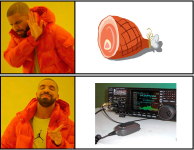
Welcome to the fascinating world of Amateur Radio, commonly known as HAM Radio!
Amateur radio is a hobby that combines electronics, wireless communications, computers, physics, engineering and a healthy dose of experimentation. It allows enthusiasts to communicate locally, nationally and internationally without relying on mobile networks, the internet or conventional telecommunications infrastructure.
It's also a hobby that can be enjoyed at several different levels. You don't need to be an engineer, have expensive equipment or even own a radio to get started!
1. What is HAM radio?
Amateur radio is a regulated radio communication service intended for self-training, technical experimentation, communication and international goodwill.
Depending on your interests and equipment, you can:
2. How much does it cost to get started as a hobbyist?
One misconception is that amateur radio requires expensive equipment and a dedicated radio room.
That couldn't be further from the truth.
A basic handheld radio can provide an affordable introduction to VHF/UHF radio technology. One commonly discussed entry-level manufacturer is Baofeng.
Some models worth researching include:
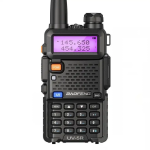
Baofeng UV-5R
What does a beginner set-up look like?
A sensible initial budget would be approximately Rs. 15,000–25,000 for a basic handheld radio and a few useful accessories.
You don't necessarily need to purchase everything immediately. Start with the radio, learn the basics and expand your setup as your interest develops.
Important: Owning a radio does not automatically give you permission to transmit. Please check PTA requirements and obtain the appropriate authorisation before transmitting. Also verify that the particular equipment is permitted for the intended amateur service.
3. How to obtain an amateur radio license in Pakistan?
This is an important consideration for anyone who wants to transmit.
In Pakistan, amateur radio is regulated by the Pakistan Telecommunication Authority (PTA).
The Pakistan Amateur Radio Society (PARS) is also an important organisation for people interested in the hobby.
The existing published licensing procedure includes requirements such as:
The examination covers subjects such as:
The PTA's Draft Radio-Based Services Licensing Regulations 2026 reportedly propose:
For anyone considering applying, I would strongly recommend contacting PARS or PTA to confirm the latest requirements and fees.
Useful resources:
Pakistan Amateur Radio Society: https://pars.pk/
PTA: https://www.pta.gov.pk/
4. Interested in radio but don't want to transmit or invest in equipment?
Here's where things get particularly interesting!
You don't actually need to own a radio or obtain an amateur radio transmitting licence to begin learning about radio communications.
One of the best ways to explore the hobby is through something called WebSDR.
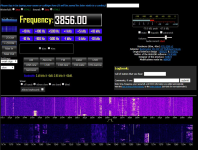
Essentially, enthusiasts and organisations around the world operate radio receivers connected to the internet. These receivers allow anyone with a web browser to tune into radio frequencies and listen to real radio signals.
You can listen to:
It's an excellent way to learn about frequencies, radio propagation, modulation and how actual radio communications sound.
A directory of online SDR receivers around the world.
University of Twente WebSDR
One of the better-known online SDR receivers, operated by the University of Twente in the Netherlands.
KiwiSDR
A directory of publicly accessible KiwiSDR receivers.
OpenWebRX
 www.openwebrx.de
An open-source software-defined radio receiver platform.
All you need to start is a computer, tablet or smartphone, an internet connection and a pair of headphones.
Listening to publicly accessible receivers is a particularly good way to familiarise yourself with amateur radio before investing any money.
5. Educational videos and resources for beginners:
If you're new to amateur radio, there are some excellent educational resources available online.
Here are a few worth watching:
80% of Ham Radio Basics in 14 Minutes
A good introduction covering radios, antennas, repeaters, propagation and getting started.
Starting Out in Ham Radio
An introduction to operating procedures, equipment and what to expect when beginning the hobby.
ARRL Amateur Radio Video Library
The American Radio Relay League has a collection of educational videos covering amateur radio, communications and technical topics.
https://www.arrl.org/library-video
Other useful learning resources:
Welcome to the fascinating world of Amateur Radio, commonly known as HAM Radio!
Amateur radio is a hobby that combines electronics, wireless communications, computers, physics, engineering and a healthy dose of experimentation. It allows enthusiasts to communicate locally, nationally and internationally without relying on mobile networks, the internet or conventional telecommunications infrastructure.
It's also a hobby that can be enjoyed at several different levels. You don't need to be an engineer, have expensive equipment or even own a radio to get started!
1. What is HAM radio?
Amateur radio is a regulated radio communication service intended for self-training, technical experimentation, communication and international goodwill.
Depending on your interests and equipment, you can:
- Communicate with other radio enthusiasts across Pakistan.
- Make contacts with people in other countries.
- Experiment with antennas and radio propagation.
- Communicate through amateur radio satellites.
- Listen to shortwave broadcasts and distant radio stations.
- Explore digital radio modes and computer-controlled communications.
- Learn about emergency communications and disaster preparedness.
- Experiment with electronics, radio receivers and software-defined radio.
2. How much does it cost to get started as a hobbyist?
One misconception is that amateur radio requires expensive equipment and a dedicated radio room.
That couldn't be further from the truth.
A basic handheld radio can provide an affordable introduction to VHF/UHF radio technology. One commonly discussed entry-level manufacturer is Baofeng.
Some models worth researching include:
Baofeng UV-5R
- An inexpensive dual-band handheld radio.
- VHF and UHF reception and transmission capabilities.
- Rechargeable battery.
- Programmable memory channels.
- Can be programmed using a computer and suitable programming cable.
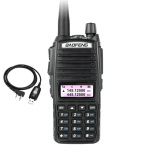
- Another popular handheld model.
- Dual-band VHF/UHF operation.
- Larger form factor and dual push-to-talk controls.
- A reasonable alternative to the UV-5R.
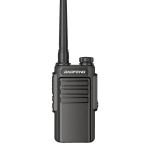
- A basic UHF handheld radio.
- Worth understanding as an entry-level two-way radio, although it is not a substitute for a dual-band amateur radio transceiver.
| Equipment | Approximate price |
| Baofeng UV-5R | Rs. 12,000–13,500 |
| Baofeng UV-5R | Rs. 15,000 |
| Baofeng BF-888S | Rs. 7,500–15,000 |
| Programming cable | Rs. 3,000–6,000 |
| Spare battery | Check with retailer |
| Better antenna | Depends on model and type |
What does a beginner set-up look like?
A sensible initial budget would be approximately Rs. 15,000–25,000 for a basic handheld radio and a few useful accessories.
You don't necessarily need to purchase everything immediately. Start with the radio, learn the basics and expand your setup as your interest develops.
Important: Owning a radio does not automatically give you permission to transmit. Please check PTA requirements and obtain the appropriate authorisation before transmitting. Also verify that the particular equipment is permitted for the intended amateur service.
3. How to obtain an amateur radio license in Pakistan?
This is an important consideration for anyone who wants to transmit.
In Pakistan, amateur radio is regulated by the Pakistan Telecommunication Authority (PTA).
The Pakistan Amateur Radio Society (PARS) is also an important organisation for people interested in the hobby.
The existing published licensing procedure includes requirements such as:
- Pakistani citizenship for individual applicants.
- Minimum age of 16 under the existing published procedure.
- Membership of PARS or an acceptable radio club.
- A period of experience as a Short Wave Listener (SWL).
- Technical and operational knowledge.
- Passing the prescribed written examination and interview, unless exempted.
- Relevant application documentation and security clearance.
The examination covers subjects such as:
- Basic electricity and electronics.
- Radio theory and practice.
- Amateur radio operating procedures.
- International Q-codes.
- Phonetic alphabet.
- Morse code conventions.
- Relevant radio regulations.
Important regulatory update – November 2026
There have been reports of proposed changes to Pakistan's radio licensing framework.The PTA's Draft Radio-Based Services Licensing Regulations 2026 reportedly propose:
- A 10-year amateur radio licence.
- A proposed licence fee of Rs. 2,000.
- A minimum age of 18 for a full amateur licence.
- A junior licence category for applicants aged 14–17.
- Valid PARS membership and police clearance.
- An online application process.
For anyone considering applying, I would strongly recommend contacting PARS or PTA to confirm the latest requirements and fees.
Useful resources:
Pakistan Amateur Radio Society: https://pars.pk/
PTA: https://www.pta.gov.pk/
4. Interested in radio but don't want to transmit or invest in equipment?
Here's where things get particularly interesting!
You don't actually need to own a radio or obtain an amateur radio transmitting licence to begin learning about radio communications.
One of the best ways to explore the hobby is through something called WebSDR.
What is WebSDR?
WebSDR stands for Web Software Defined Radio.Essentially, enthusiasts and organisations around the world operate radio receivers connected to the internet. These receivers allow anyone with a web browser to tune into radio frequencies and listen to real radio signals.
You can listen to:
- Amateur radio operators communicating around the world.
- Shortwave broadcasts.
- International radio stations.
- Various digital radio transmissions.
- Different amateur radio bands.
It's an excellent way to learn about frequencies, radio propagation, modulation and how actual radio communications sound.
Some useful websites
WebSDRA directory of online SDR receivers around the world.
University of Twente WebSDR
One of the better-known online SDR receivers, operated by the University of Twente in the Netherlands.
KiwiSDR
A directory of publicly accessible KiwiSDR receivers.
OpenWebRX
OpenWebRX web-based software defined radio | Homepage
OpenWebRX web-based software defined radio receiver, remote HF spectrum monitoring with a wide variety of demodulators.
An open-source software-defined radio receiver platform.
All you need to start is a computer, tablet or smartphone, an internet connection and a pair of headphones.
Listening to publicly accessible receivers is a particularly good way to familiarise yourself with amateur radio before investing any money.
5. Educational videos and resources for beginners:
If you're new to amateur radio, there are some excellent educational resources available online.
Here are a few worth watching:
80% of Ham Radio Basics in 14 Minutes
A good introduction covering radios, antennas, repeaters, propagation and getting started.
Starting Out in Ham Radio
An introduction to operating procedures, equipment and what to expect when beginning the hobby.
ARRL Amateur Radio Video Library
The American Radio Relay League has a collection of educational videos covering amateur radio, communications and technical topics.
https://www.arrl.org/library-video
Other useful learning resources:
- RTL-SDR tutorials: https://www.rtl-sdr.com/
- WebSDR: https://www.websdr.org/
- Pakistan Amateur Radio Society: https://pars.pk/


