Drones Section

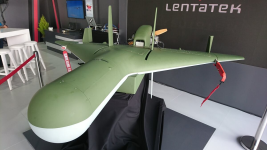
Turkish KARGI anti-radiation Drone


Full of indigenous

-- Range of 800+ km
-- RF seeker
-- Datalink
-- SATCOM
-- Home-of-jam during target search

SEAD (Suppression of Enemy Air Defenses)
DEAD (Destruction of Enemy Air Defenses)

KARGI can suppress and destroy the radars of the enemy's integrated air defense Systems

1725875415050.png
 

Rise of the Drones FULL SPECIAL | NOVA | PBS America​


Anduril’s Roadrunner Drone Hunting Drone Gets Expanded Order From Pentagon​

The optionally reusable Roadrunner jet interceptor drone has been tested overseas in real world circumstances and now the DoD wants more.

Posted on Oct 8, 2024

Anduril’s Roadrunner counter-drone interceptor drone just got a further stamp of approval from the Pentagon in the form of an order worth hundreds of millions of dollars to deliver additional units. This is a major win for Anduril, still a newcomer to the defense industry, whose rapidly growing product catalog largely aims at disrupting the existing marketplace. While some remain skeptical of the company’s ambitious aspirations, continuing support from DoD is a signal that whatever they are doing is worth continued investment. You can read our deep dive on Roadrunner in our past feature linked here.


Over 500 Roadrunner-Ms, as well as Pulsar electronic warfare systems, will be supplied as part of the nearly quarter-billion dollar deal, with deliveries beginning in 2024. Pulsar is a modular, AI-infused, networked, electronic warfare system that can be mounted on base stations, vehicles, and aircraft. The new order is roughly two and a half times the size of the DoD’s past expenditures on both systems, which appears to have focused more on testing, demonstrations, and early integration work. The company’s Lattice open architecture autonomy command and control software can be integrated with both systems.

This order shouldn’t be too big of a surprise as the Pentagon continues to grapple with the rapidly expanding threat posed by lower-end drones and long-range one-way attack munitions. Roadrunner is vertically launched and recovered, and possesses a high degree of maneuverability thanks to its vectored thrust turbojets. It’s optionally reusable. If one is launched and it is not needed to take down a threat, which could include drones, as well as cruise missiles and low-flying manned aircraft, it can be recovered and refueled for another mission. Depending on the configuration, it could also be used to surveil and strike targets on the ground or carry non-kinetic payloads. Roadrunners in ‘Nest’ launcher boxes can be distributed around a broad area to maximize response time and protection coverage. The idea is that Roadrunner can be launched on initial warning, or even preemptively, to get after a threat immediately without the possibility of wasting an effector in doing so if the intercept is not needed.

Beyond defending troops and installations in forward locales, Roadrunner could be extremely useful aboard ships that have become top targets for drone attacks. We lay out this entire use case in great detail in this past feature.

In a press release, Anduril says that “Roadrunner has been operationally deployed for Combat Evaluation since January 2024 and Pulsar has been operationally deployed in multiple regions since August 2023.” In other words, Roadrunner and Pulsar have been used in the field, at least in an evaluative manner, which appears to have been a success. Similar kinetic counter-UAS systems, such as Raytheon’s Coyote, as well as electronic warfare systems, have been put into operational use for years now, most notably at high-threat locations in the Middle East. Smaller past contracts related to Roadrunner and Pulsar likely involved more limited use case deployments that have subsequently led to this expanded buy.

1728592583370.webp


1728592609385.webp


https://www.twz.com/air/andurils-roadrunner-drone-hunting-drone-gets-expanded-order-from-pentagon
 

Counter-Drone Stryker Armored Vehicle Armed With Lasers, Rockets, Guns Unveiled

The new Stryker aims to offer the Army another layer of highly mobile lower-tier air defense capability to help rebuff drone attacks.
Joseph Trevithick
Posted on Oct 11, 2024
06:19 PM EDT
1728849640405.webpLeonardo DRS capture

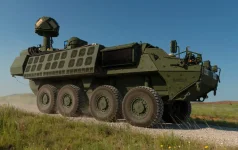
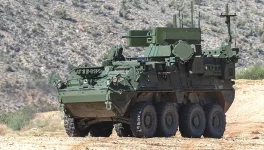
A new counter-drone focused variant of the 8×8 Stryker light armored vehicle armed with a laser directed energy weapon, laser-guided 70mm rockets, a 30mm automatic cannon, radars and other sensors has broken cover. Defense contractor Leonardo DRS and its industry partners are actively pitching the vehicle to the U.S. Army, which is looking to significantly grow its short-range air defense capabilities in the coming years. That service is also very interested in new laser-armed options, specifically, after lackluster field tests of a different Stryker-based system earlier this year.

Leonardo DRS, the U.S.-based subsidiary of Italy’s Leonardo, released a video, seen below, detailing what it is currently calling the Counter-Uncrewed Aerial Systems Directed Energy (C-UAS DE) Stryker earlier today. The company says seven other partners – BlueHalo, EOS Defense Systems USA, Northrop Grumman, BAE Systems, Arnold Defense, AMPEX, and Digital Systems Engineering – contributed to the development of the prototype in around eight months.


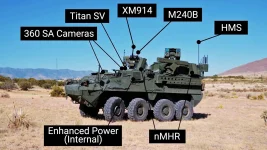
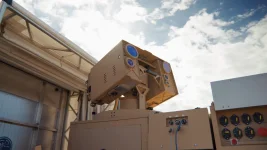
The laser directed energy weapon, a 26-kilowatt version of the LOCUST from BlueHalo installed on a retractable mount on top of the rear of the hull, is clearly the centerpiece of the new counter-drone Stryker prototype.

“It’s going to provide a directed energy capability that can kill group ones, twos, three UASs at very long range,” Ed House Senior Director of Business Development at Leonardo DRS says in the video.


Per the U.S. military’s definitions, drones in these three categories, collectively, can weigh up to 1,320 pounds, fly at altitudes up to 18,000 feet, and get up to top speeds of 250 knots. BlueHalo does not appear to have disclosed a maximum engagement range for the LOCUST.

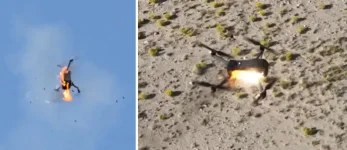
1728849669819.webpScreen captures showing quadcopter-type drones being destroyed by the LOCUST on the C-UAS DE Stryker during testing. Leonardo DRS capture

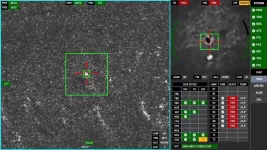
1728849684168.webpA view of LOCUST engagement through the system’s user interface. Leonardo DRS capture

The C-UAS DE Stryker also has a four-round launcher from Arnold Defense for 70mm laser-guided Advanced Precision Kill Weapon System II (APKWS II) rockets on a semi-retractable mount on top of the left side of the rear of the hull. This is a combination that is found on other counter-drone systems, including L3Harris VAMPIREs now being actively employed in Ukraine. APWKS II rockets with new proximity-fuzed warheads optimized for knocking down uncrewed aircraft are in the works.


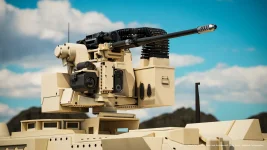
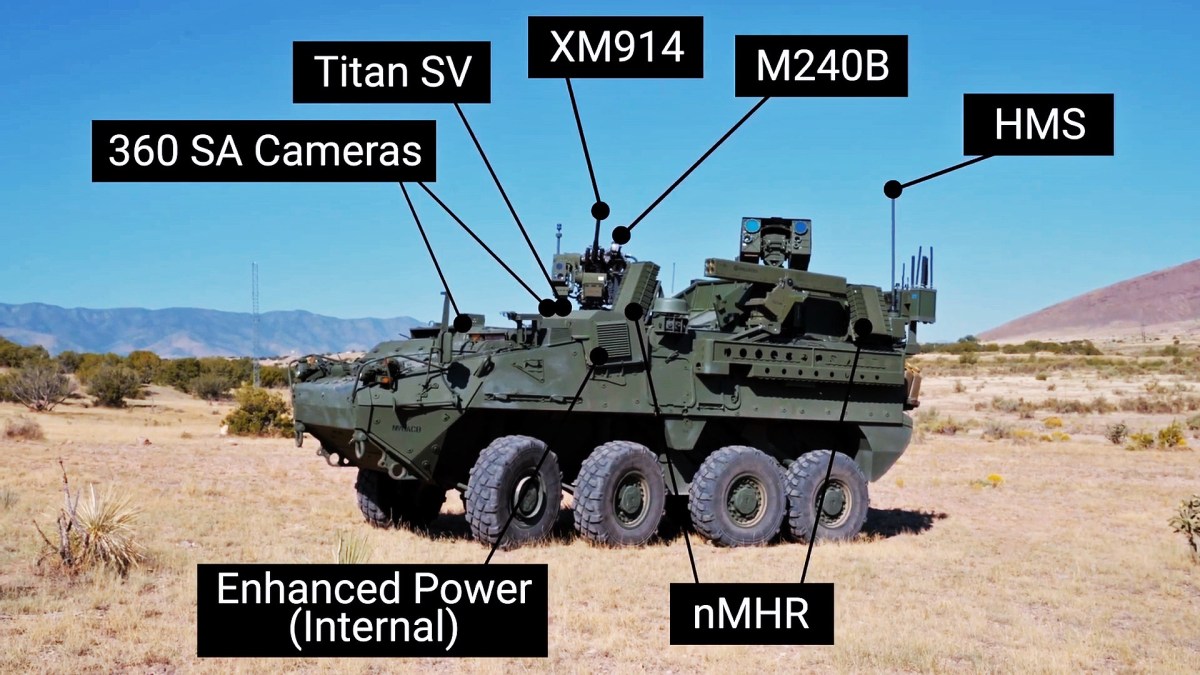
The Stryker prototype from Leonardo DRS and its partners also has an EOS R400-series remote weapon station armed with a 30mm XM914 automatic cannon and 7.62x51mm M240B machine gun on top of the front end of the hull. The XM914 is another increasingly common feature in counter-drone systems and can now fire proximity-fuzed shells, further increasing its effectiveness in this role.


The cannon’s manufacturer Northrop Grumman just recently rolled out a new dual-feed system that allows operators to remotely switch between two ammunition types, such as the proximity rounds and ones better suited for use against targets on the ground.

1728849759038.webpA picture of an XM914 configured with the new dual-feed system. Northrop Grumman

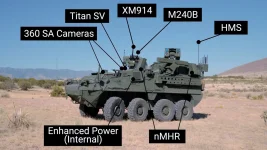
BlueHalo has also supplied a Titan SV system for the new Stryker prototype, which is a radiofrequency sensor to help detect and track hostile drones. In addition, the vehicle also has Next-Gen Multi-Mission Hemispheric Radars (nMHR), which are small form factor active electronically scanned array (AESA) types, as well as a 360-degree array of cameras, to help spot, classify and track targets. The promotional video labels another antenna at the rear as an “HMS,” but it is not immediately clear what that system is.

1728849768921.webpAn annotated image of the C-UAS DE Stryker Leonardo DRS capture

No explicit mention is made in the video about networking capabilities, but being able to feed in targeting data from off-board sources, including other C-UAS DE Strykers, and/or share the information that its sensor suite is collecting with other assets would make good sense.

Still, it is “this directed energy [that] gives commanders options. It increases the stowed kills [magazine depth] available to a unit commander, and this is technology that’s available to the warfighter today,” House stresses in the video. “You can see we’re out in the desert in New Mexico now. We’ve shot several drones down with the laser weapon system.”

Functionally unlimited magazine depth, which Leonardo DRS’ House refers to in the video, is regularly cited as a key benefit of laser directed energy weapons, as well as high-power microwave types, when compared to traditional guns or surface-to-air missiles. There is also some amount of cool down/recharge time between ‘shots,’ but each engagement costs dollars rather than the tens of thousands or hundreds of thousands of dollars compared to more traditional surface-to-air interceptors. Firing traditional guns can be costly, as well.

Lasers are not without pitfalls, however. In general, they are sensitive to smoke, clouds, rain, and other environmental factors that can disrupt the beam and reduce its effectiveness. The beam’s power also drops the further away it gets from the source. Directed energy weapons often come along with substantial power generation and cooling requirements, as well.

Though the technology has advanced by leaps and bounds in the last decade, U.S. military laser directed energy weapon programs, in particular, have been experiencing new and significant reality checks in the past year or so. This includes issues uncovered with another Stryker variant the Army has been acquiring already, called the Directed Energy Maneuver-Short Range Air Defense (DE M-SHORAD), which is armed with a 50-kilowatt laser weapon from Raytheon. Four of those vehicles were deployed to the Middle East for a field test in March, according to Breaking Defense.

1728849786329.webpOne of the Army’s initial prototype DE M-SHORAD vehicles. US Army One of the Army’s initial prototype DE M-SHORAD vehicles. US Army
“What we’re finding is where the challenges are with directed energy at different power levels,” Dough Bush, Assistant Secretary of the Army for Acquisition, Logistics, and Technology, told members of Congress in May, per Breaking Defense. “That [50-kilowatt] power level is proving challenging to incorporate into a vehicle that has to move around constantly – the heat dissipation, the amount of electronics, kind of the wear and tear of a vehicle in a tactical environment versus a fixed site.”

At that time, Bush that “some” unspecified users were seeing other laser weapons emplaced at fixed sites “proving successful.” The Army Assistant Secretary did not name those systems. It is worth noting here that the service has already procured at least two 20-kilowatt LOCUST variants, called Palletized High Energy Lasers (P-HEL), and sent them overseas for limited field testing.
 
Last edited:
1728850568531.webp
The BlueHalo LOCUST laser weapon system. BlueHalo

“We’ve worked with industry to increase reliability across a number of those systems,” Army Lt. Gen. Robert Rasch, head of the service’s Rapid Capabilities and Critical Technologies Office (RCCTO), said in a more recent interview with Breaking Defense in August. “For the enduring high-energy laser, we believe — based on what we’ve seen and collected data – that industry is ready to produce systems that can reach the reliability levels and the affordability levels, to get in that group one through three UAS range.”

This certainly seems to be what Leonardo DRS and its partners are aiming for now with the new C-UAS DE Stryker.

“What this shows is when industry works together we can help the army solve problems, and, in this case, we’re moving directed energy forward for the Army,” Leonardo DRS’ House says in the video released today.

The Army is in the midst of a larger push to expand and modernize its air defense capabilities, especially shorter-range systems, and with a heavy focus on defeating drones.

In addition to the DE M-SHORAD Stryker, the Army has also been fielding a baseline M-SHORAD Stryker variant, now named the Sgt. Stout, which is armed with a combination of Stinger heat-seeking short-range surface-to-air missiles, radar-guided AGM-114L Hellfire missiles, and an XM914 cannon, as well as an array of small AESA radars. Sgt. Mitchell William Stout gave his life during the Vietnam War protecting his fellow soldiers from a grenade and was posthumously awarded the Medal of Honor.


The original M-SHORAD vehicle and the DE M-SHORAD are also known as Increments 1 and 2 of the overall M-SHORAD program. Increment 3 is focused on integrating a replacement for the venerable Stinger, which you can read more about here, into the family of the systems.

Increment 4, the requirements for which the Army publicly laid out in May, calls for a new, lighter system that can be air-dropped or lifted by helicopters to better support airborne and airmobile operations. The Army has said that the Increment 4 system could be fitted to a 4×4 Joint Light Tactical Vehicle (JLTV), an uncrewed ground vehicle, or a combination of both depending on the exact configuration of the components. The future Stinger replacement, Raytheon’s Coyote counter-drone interceptor, APKWS II, and the XM914 have all been presented as possible armament options.

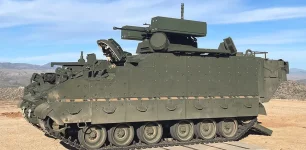
The idea of porting over the Incerment 1 M-SHORAD system onto a variant of the tracked Armored Multi-Purpose Vehicle (AMPV) has also been discussed. The Army has also been eying a Sytryker equipped with a high-power microwave directed energy weapon for use against drones.

1728850614108.webpA SHORAD-configured AMPV. BAE Systems A prototype of a variant of the AMPV armored vehicle with the same turret as the Stryker M-SHORAD vehicle. BAE Systems

1728850633730.webpA rendering of a Stryker armed with a high-power microwave directed energy weapon. GDLS

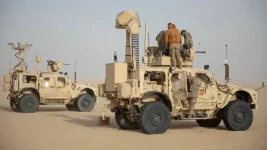
Beyond M-SHORAD, the Army also has a growing force of Mobile, Low, Slow, Unmanned Aircraft Integrated Defeat System (M-LIDS). M-LIDS currently consists of various components, including Coyote interceptors and XM914 cannons, as well as electronic warfare systems and sensors, split between a pair of 4×4 M-ATV mine-resistant light tactical vehicles. The service is now moving to consolidate M-LIDS onto a single Stryker. This, in turn, is causing the line between the dedicated counter-drone M-LIDS and the broader short-range air-defense-focused M-SHORAD efforts to become increasingly blurred.

1728850647972.webpA complete M-ATV-based M-LIDS system. US Army The Coyote-armed M-LIDS vehicle, in front, along with an example of the other M-LIDS configuration. US Army

1728850661581.webpA prototype for the Stryker-based M-LIDS. Leonardo DRS

Threats posed by drones, including weaponized commercial types, are not new, as The War Zone regularly highlights. However, the ongoing war in Ukraine has been central to a clearer understanding of these issues finally entering the mainstream discourse. The regular use of various tiers of drones by both sides of that conflict has caused an explosion in demand for new and improved capabilities to destroy or at least disrupt uncrewed aerial threats. The need now to defend tanks and other armored vehicles against drones, especially highly maneuverable first-person view (FPV) kamikaze types, has become particularly visible. On-vehicle capabilities and ones that can be used on the move are increasingly critical, as you can read more about in these past features.


The fighting in Ukraine has also underscored the need for layered defenses to help tackle different kinds of drones and large volume attacks. Its worth pointing out here that high-power microwaves offer advantages over lasers when it comes to engaging swarms. Swarming and other capabilities, further enabled by advances in artificial intelligence, are pushing drones, in general, toward a major new evolutionary, if not revolutionary moment. Increasingly more capable uncrewed aerial systems are set to continue proliferating globally, too. At the same time, the barrier to entry when it comes to acquiring and employing weaponized commercial drones, which can still be very threatening, remains extremely low.

This is a reality that is not lost on other branches of the U.S. military beyond the Army. In terms of ground-based systems, the U.S. Marine Corps is also particularly active on this front. That service has plans now to at least test a LOCUST-equipped JLTV of its own, as well as a high power microwave system one of those 4×4 vehicles can tow in a trailer.


Still, despite the obvious flurry of activity, the Army, as well as the rest of the U.S. military, continue to very much lag behind in their efforts to actually field various tiers of anti-drone defenses. This was underscored just recently by the appearance of an apparent Chinese-made laser directed energy weapon that is similar in some respects to the LOCUST, at least on paper, in actual use in the Iranian capital Tehran along with other new counter-drone capabilities. The actual capabilities that system offers are unclear, but it does highlight the active work that is going on in this arena now outside of the United States, especially in China.

As already noted, the Army, especially, is trying now to really push forward with dramatic expansion of its air defense and counter-drone capabilities and capacity. Time will tell, but C-UAS DE Stryker, or a similar configuration, could well be part of that future ecosystem.


Contact the author: [email protected]


Bolt-M Aims To Make Kamikaze Drone Attacks More User Friendly, Effective


In the next six months the U.S. Marine Corps will start testing the advanced quadcopter loitering munition, designed to put easy-to-use aerial firepower into the infantry's hands.

Thomas Newdick, Tyler Rogoway
Posted on Oct 10, 2024

1728852121379.webp
Anduril screencap

Newcomer defense contractor Anduril has revealed its Bolt-M, an machine-learning infused strike drone, a quadcopter-type design that’s easily transportable and aims to put lethal precision firepower in the hands of individual soldiers. Bolt-M is already being lined up for testing by the U.S. Marine Corps, as that service looks to harness the capabilities of kamikaze drones, while its autonomous features point the way to a new generation of loitering munitions that are easier to use and more reliable than those currently fielded. The promise and dangers of AI-enabled lower-end aerial drones on the battlefield is something that TWZ has explored in depth in the past. Anduril is now looking to secure its position in this fast-changing field.

Announced yesterday, the Bolt-M is part of a wider family of autonomous air vehicles that are man-portable and use the same basic vertical takeoff and landing (VTOL) quadcopter platform. While the baseline Bolt is intended for surveillance and search and rescue, the Bolt-M (for munition) is more intriguing, building on the success and proliferation of smaller strike drones that have been used to great effect in Ukraine and elsewhere.


Unlike the low-end kamikaze drones that are proliferating in Ukraine, which are primarily improvized first-person view (FPV) types, the Bolt-M uses machine learning and automation from the outset to make it easier to employ. Onboard software is used to “automate the flight behaviors required to accurately track and strike a target, while providing human operators with four simple decisions: where to look, what to follow, how to engage, and when to strike,” the company explains in a press release.

While the pilot of an FPV drone requires extensive training to successfully find and strike targets, the Bolt-M aims to provide soldiers with a much simpler way of achieving similar effects.
1728852207813.webp
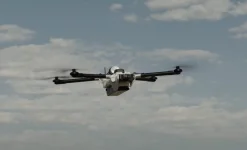
The Bolt-M employs the now-familiar quadcopter configuration widely used in smaller drones. Anduril/YouTube screencap

At the heart of Bolt-M is Anduril’s Lattice software platform that leverages AI and machine learning technologies. This automates the flight behaviors required to navigate to, find, track, and strike dynamic targets.

While the drone features semi-autonomous waypoint navigation, the operator can also modify the flightpath using a touchscreen interface, although more basic navigation decisions are still made by the Lattice software, allowing the user to concentrate on other tasks. The operator can also select the distance from the target at which the drone should loiter, and the type of engagement profile to execute, depending on the target type and battlefield conditions.

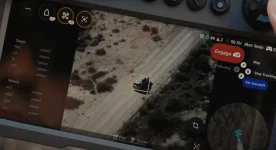
The drone’s object tracking capability means that the operator can draw a bounding box around any visually-acquired target using the drone’s dual electro-optical and infrared camera. Bolt-M will then follow that target autonomously, but if a new threat emerges, the soldier can select it instead, meaning that time-sensitive and pop-up threats can be prosecuted. Bolt-M can also be used multiple times for reconnaissance in this manner.
1728852238677.webp
A target is selected on the Bolt-M ground control station (GCS). Anduril/YouTube screencap

Automated target tracking of this kind is already making its way to the battlefield in Ukraine, albeit in a more rudimentary form. Being able to lock on to a target and complete the attack even if a communications link is degraded or lost entirely is extremely beneficial. First, it overcomes major issues with line-of-sight connectivity as the drone dives low to the ground to hit its target, where the feed to its controller degrades due topography and structures. It also makes the drone far less vulnerable to short-range electronic warfare systems, especially those mounted on vehicles themselves. The drone can continue its terminal attack run even if its communications link is totally disrupted via electroinc attack during the terminal phase of its attack run.

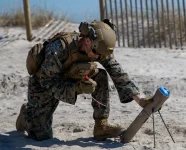
There are other precedents for this kind of technology, notably the AeroVironment Switchblade, a series of miniature loitering munitions that have been in production for well over a decade and used extensively in Ukraine. These also offer a limited degree of autonomous attack capability, since, like the Bolt-M, the drone can fly itself to its target once it is designated by a human. In the Switchblade, this feature serves, above all, to improve the probability of a kill, especially when striking moving targets, but it is more austere than the suite of technology Anduril is brining forward with its Bolt-M.
1728852256967.webp
A U.S. Marine Corps anti-tank missile gunner prepares to launch a Switchblade drone during Littoral Exercise II (LEX II) on Camp Lejeune, North Carolina, March 3, 2022. U.S. Marine Corps photo by Lance Cpl. Ryan Ramsammy U.S. Marine Corps Cpl. Julian Alvarado, prepares to launch a Switchblade unmanned aircraft system during Littoral Exercise II (LEX II) on Camp Lejeune, North Carolina, March 3, 2022. U.S. Marine Corps photo by Lance Cpl. Ryan Ramsammy

More complex engagements can be carried out by the Bolt-M, too. For example, once a target is identified in Lattice, the soldier can select a standoff position for the drone. Bolt-M will remain there, typically out of visual or acoustic detection range, keeping track of the target and then striking it once instructed by the operator to do so. The soldier operating the drone can also optimize that terminal attack, selecting the most effective engagement angle and warhead fuzing, for example.

Throughout, the operator can intervene in the engagement process, ensuring that the drone retains a human-in-the-loop, at least till the attack order is finalized, in line with U.S. Department of Defense protocol for lethal autonomous weapons.

1728852276132.webp
A screencap from a promotional video shows the detonation of a Bolt-M above a utility vehicle. Anduril/YouTube screencap

It’s worth noting that profusion of videos showing the successful employment of FPV drones in Ukraine — sometimes achieving accuracy that is hard to believe — belies the fact that many of these drones fail to hit their target. The need to make this class of weapon more reliable and resilient is pressing, although it remains a factor that will be balanced against cost and quality.


Anduril also envisages Bolt-M feeding targeting coordinates and other battlefield information into a broader data-sharing network, via Lattice. In this way, information gathered by Bolt-series drones can be shared with third-party platforms and commanders. Operating on a common software platform and across a common network, it’s also possible that Bolt-M could be rapidly adapted to make cooperative ‘swarming’ attacks with a high degree of autonomy, although such a function hasn’t been disclosed yet.

In terms of performance, the Bolt-M drone has more than 40 minutes of endurance and a range of around 12 miles. The types of warheads include anti-personnel and anti-materiel, each of which can weigh up to three pounds. Different munition payloads can be carried, including some developed in collaboration with Kraken Kinetics, and others from Anduril. Typical targets include static or moving ground-based targets, including light vehicles, dismounted personnel, trenches, and more, Anduril says.

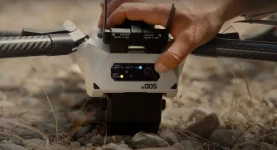
The Bolt-M is provided with a mountable ground control station (GCS), and it’s designed for user safety, including an electronic safe and arm device (ESAD), meaning it can be transported across the battlefield without risk of detonation, and can be unpacked and launched in only five minutes. The same GCS can also be used for training and simulation, using the handheld interface.
1728852318330.webp
The safety interface for the Bolt-M as seen in a company video. Anduril/YouTube screencap

Clearly, Bolt-M is inspired by the effectiveness of FPV drones in Ukraine and in other combat theaters but expands on the advantages of these kinds of lightweight, man-portable loitering munitions. By introducing a refined user interface powered by very capable and rapidly adaptable software, it should be far more reliable, easier to operate, and effective than an improvised FPV drone. That being said, cost remains a glaring unknown. While added features are great to have and better effectiveness on the battlefield is always a good thing, brining the price down to a point where Bolt-M can be bought in very large numbers could be critical to its success. This is also a field that is rapidly growing in terms of competition and is bound to get very price competitive in the near future.

So far, we don’t know the exact developmental status of Bolt-M, however, Anduril has confirmed that the U.S. Marine Corps will start testing it over the next six months, as part of “a pretty rigorous test and evaluation campaign,” according to Anduril Chief Strategy Officer Chris Brose. This compressed timeline suggests that Bolt-M may well be informed by the company having tested similar capabilities already in Ukraine, as has been suggested.

In April this year, Anduril was one of three companies (the others being Teledyne FLIR Defense and AeroVironment) that received a U.S. Marine Corps Systems Command (MARCORSYSCOM) contract under its Organic Precision Fires-Light (OPF-L) program. While OPF-L doesn’t specifically call for autonomous operations, it is looking for easy-to-use, explosives-laden, man-portable loitering munitions, as well as launchers for these weapons on ground vehicles and uncrewed surface vessels.

Regardless, the appearance of Bolt-M is another very clear indicator that highly automated, feature rich, production class lower-end strike drones are fast becoming a reality.
 
The US Army has achieved 170 successful interceptions in global operations using Coyote interceptor drones. These systems play a key role in countering drones and serve as a testbed for technology demonstrators, which is particularly important against the backdrop of growing threats from drones around the world. At the Falcon Peak 2025 air defense capabilities demonstration, it was noted that Coyotes are already deployed in 36 locations outside the United States, including the Middle East, Africa and Europe. The Army is also developing LIDS, a multi-layered air defense system that includes mobile and fixed components to detect and destroy drones. In addition to the Coyotes, the units are planned to be equipped with more powerful systems, such as laser and microwave systems, as well as electronic warfare technologies to suppress enemy drones.

 
1732054009082.webp
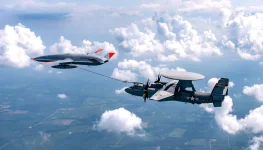
Boeing MQ-25 Stingray tanker drone refuels Grumman E-2D Hawkeye
 
The first in the World


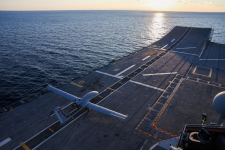
Bayraktar TB-3 UCAV performed both landing and take-off on TCG ANADOLU short-runway Ship


1732054649913.png
 
WZ-9: The world's first airborne anti-stealth aircraft system

1735478282327.webp

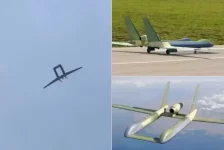
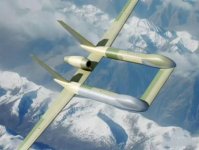
According to a video posted today, a Chinese WZ-9 drone, known as Divine Eagle, has been spotted, a large, long-range, high-altitude aircraft specially designed to detect stealth aircraft. This development reflects the rapid progress China has made in drone technology over the past decade.

Developed by the 601st/SAC Institute, the WZ-9 represents a significant step in China's efforts to enhance its detection capabilities for stealth aircraft used by advanced militaries globally. The aircraft features an innovative design, represented by a double fuselage connected to a small wing that enhances aerodynamic efficiency. Its 35-meter main wing extends across the rear fuselage, supported by twin vertical tail fins and a medium-thrust turbofan engine mounted above the wing and between the tail fins. It is also equipped with a prominent SATCOM antenna to improve its communication capabilities.

1735478508715.jpeg

The aircraft is also equipped with an advanced radar system specially designed to detect stealth aircraft. This system features the integration of two rows of antennas extending along the fuselage, working in conjunction with an electronic radar, allowing the detection of stealth targets at long ranges. Although the accuracy of this system may be lower compared to conventional platforms, the aircraft can operate in a grid formation with several WZ-9 units, enhancing detection range and accuracy by amplifying radar reflections from multiple angles.


As a mobile early warning platform, the WZ-9 offers unique capabilities in modern air warfare, being designed to operate in groups connected via secure data links operated by ground stations or AWACS aircraft far from the front lines. When deployed, the WZ-9 will be the world's first stealth airborne anti-aircraft system, giving China a strategic advantage in countering these threats.

The history of the WZ-9 dates back to 2015, when the prototype was built and initial tests were carried out, which included the first flight in October of the same year. Later, the aircraft underwent further development at Guizhou Aircraft Industry Corporation (GAIC). By late 2023, production units bearing the Chinese army's colors appeared in dark grey, indicating their transition to active service.

The estimated specifications of the WZ-9, with a length of 14 metres, a height of 6 metres, a wingspan of 35 metres, the ability to fly for more than 20 hours and an altitude of 18 kilometers, show that it is ideally designed for extended surveillance and early warning missions across vast areas.
 

Hybrid-Electric GHOST Strike-Recon Drone In The Works For USAF​


1748413405016.webp

The U.S. Air Force Research Laboratory (AFRL) has awarded General Atomics a contract for work on what is described as a “hybrid-electric propulsion ducted fan next-generation intelligence, surveillance, reconnaissance/strike unmanned aerial system,” or GHOST. A propulsion system of this kind can offer a very high degree of efficiency, which can translate to significant unrefueled range, as well as being very quiet. General Atomics has publicly touted work in this area in the past, tied in part to its Gambit modular drone family, which it has said could lead to a design capable of staying aloft for up to 60 hours, at least.

https://www.twz.com/air/hybrid-electric-ghost-strike-recon-drone-in-the-works-for-usaf
 
China produces approximately 500,000 FPV drones per month, with its ability to raise production to 700,000 aircraft per month in the event of war, according to media reports.

 
Talay” is the first naval running changing the rules of engagement

1752268844162.png

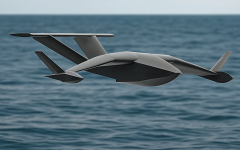
The Turkish Defense Company Solidaero revealed the first experimental clip of its running plane, the Aria Talay, which is specifically designed for marine tasks and coastal attacks; She appeared to be flying at a height of less than a meter above sea level using the "Wing-In-Groung Effect" principle.


Users who are viewing this thread

Pakistan Defence Latest

Country Watch Latest

Back
Top