Navigation
Install the app
How to install the app on iOS
Follow along with the video below to see how to install our site as a web app on your home screen.
Note: This feature may not be available in some browsers.
More options
Style variation
You are using an out of date browser. It may not display this or other websites correctly.
You should upgrade or use an alternative browser.
You should upgrade or use an alternative browser.
Egyptian Military Industries & Products
- Thread starter The SC
- Start date
More options
Who Replied?

The SC
INT'L MOD
- Thread starter
- #499
VILA-1 and the Egyptian-Serbian partnership: Did Egypt begin a new phase in the power of cruise missiles?
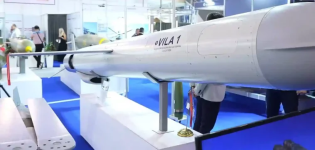
VILA-1 .. Serbian cruise missile that could open the door to long-range deterrence for the Egyptian army
Reports, including one by Danube Intel, have indicated that tests of the system have been conducted on Egypt soil. The importance of these statements increases in light of talk of broader defense cooperation that may include developing MOAB-class heavy munitions under local guidance, in addition to working on upgraded versions of the second generation VILA-2, with the possibility of considering their future integration into Egyptian Rafale fighters, a scenario that was previously presented during Last year.
A partnership in developing a heavy and advanced cruise missile could represent an opportunity for Egypt to build a local or joint capability in this area. A system that combines networked guidance, artificial intelligence technologies, and large payload would give the Egyptian Air Force a more independent option in the field of long-range strikes, and support Cairo's move towards reducing its dependence on the political and technological constraints of external suppliers.Most importantly, the value of the project will not be limited to possessing a single missile, but rather to the possibility of building an industrial base capable of developing a family of cruise missiles that differ in range, warhead, guidance systems, and launch methods.
As for talking about VILA-2, it opens the door to a greater ambition, which is to develop an improved version with a higher range and capabilities.
Some analyses suggest scenarios for increasing the range to very far levels.
If Egypt can develop a long-range cruise missile domestically or in partnership with Serbia, the strategic value will be greater than simply adding new munitions to the air force; it could help reduce reliance on external suppliers and give Cairo greater capacity to develop munitions according to its operational needs.
The Egyptian Rafale also represents a potential platform for launching such munitions, but integrating any new missile requires technical and software compatibility with the aircraft's systems, including avionics, data link, navigation, and armament management. If the integration is successful, the Rafale could become a more important component of Egypt's air deterrence system, especially given its possession of local or combined Stand-Off munitions.
Unlike many mobile munitions designed for tactical roles with limited endurance and relatively small payloads, the vILA 1 comes close in its characteristics to the category of strategic cruise missiles, such as the Russian Kh-55 or the American AGM-158 JASSM. However, its modular structure and loitering-based design in the area of operations give it a distinct operational advantage. In deprived or complex environments, characterized by dense radar coverage and electronic warfare systems, the combination of low-altitude, terrain-aligned flight, AI-powered target recognition, and real-time mission adjustments provides a platform that is difficult to intercept or deceive electronically.
The SC
INT'L MOD
- Thread starter
- #500
Pride of Egypt.. Engineer Neha Shawqi Makes History in the Alexandria Arsenal! Engineer **Neha Shawqi** leads the construction management of the frigate *"Sajm Al-Jabbar" (MEKO A200)**, the largest warship being manufactured locally at the Alexandria Arsenal, presenting a model of honor for the Egyptian woman and a national achievement we are proud of.
The SC
INT'L MOD
- Thread starter
- #502
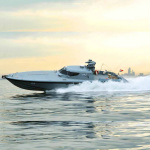
Alexandria Shipyard Company announces the launch of the first launch out of a total of 5 launches of the ASY(20) model, manufactured within the company, for the Egyptian Naval Forces.The launch is one of the latest launches manufactured by Alexandria Shipyard Company from fiberglass (GRP) material, with an overall length of 22.5 meters and a beam of 4.76 meters, a draft of 1.33 meters, a displacement of 37,737 kg, and it is capable of reaching a range of 385 nautical miles, at a maximum speed of up to 54 knots.

The SC
INT'L MOD
- Thread starter
- #505
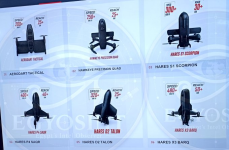
Egyptian company AREGSA Aviation has unveiled six new prototypes of interceptor drones, with operating ranges ranging from 25 to 50 kilometers and speeds ranging from 200 to 480 kilometers per hour.
The company also demonstrated a prototype of a launcher consisting of three launch cells, capable of launching three interceptor drones.
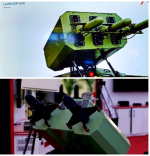
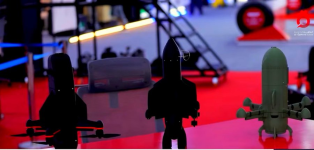
The company also demonstrated a prototype of a launcher consisting of three launch cells, capable of launching three interceptor drones.
The SC
INT'L MOD
- Thread starter
- #506
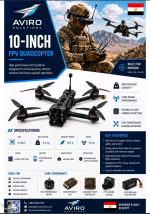
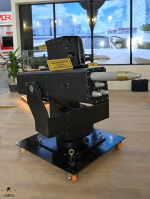
Elsewedy Intelligence - Neurobotix, new footage from the company's booth shows an additional product not seen in previous footage: a quadcopter for reconnaissance, with the ability to be equipped with mortar ammunition for free-throwing missions.
It is also noteworthy that snapshots of product experiences already in the pavilion are displayed on displays, providing additional insight into the capabilities and practical uses of these systems.
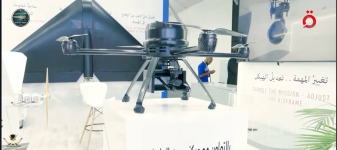
It is also noteworthy that snapshots of product experiences already in the pavilion are displayed on displays, providing additional insight into the capabilities and practical uses of these systems.
The SC
INT'L MOD
- Thread starter
- #510
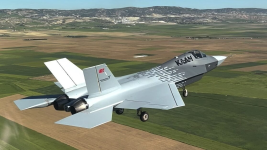
The Turkish KAAN fighter jet program stands out as one of the most prominent defense projects that could usher in a new era of military and industrial cooperation between Turkey and Egypt, especially given the shift in relations between the two countries in recent years from cooperation in supplying systems to exploring broader opportunities in joint manufacturing and technology transfer.
Turkish Aerospace Industries (TAI) is developing the KAAN as a fifth-generation multirole fighter, with ongoing testing and development in preparation for serial production for the Turkish Air Force. In May 2026, Turkey signed an initial production contract for 20 of the aircraft, a move that advanced the program significantly.
On the Egyptian side, interest in the KAAN fighter jet began following President Abdel Fattah al-Sisi's visit to Turkey in 2024, before reports emerged suggesting Cairo might move from simply being interested in acquiring the aircraft to actively participating in the program itself.
During 2025 and 2026, defense sources and specialized reports increasingly published information about negotiations between Cairo and Ankara regarding the form of potential Egyptian participation. Some of these reports discussed the possibility of Egypt joining the program as an industrial partner, which could include technology transfer, manufacturing some fighter jet components within Egypt, and participating in stages of production and development.
In July 2026, the Greek newspaper Kathimerini went even further, reporting that Turkey had agreed to Egypt joining the Kaan program as a full partner and developer, with the possibility of technology transfer and the production of fighter jet components in Egypt. However, these details remain within the realm of media reports, and no comprehensive Egyptian-Turkish announcement has yet been issued officially defining the nature and extent of Egyptian participation and the commitments of each party.
The engine issue is of particular importance to any future exports or international participation in the program. Initial versions of the Kaan relied on American-made F110 engines, before the planned transition to the Turkish-made engine. In July 2026, Turkish Aerospace Industries (TAI) announced that the United States had approved the export of F110 engines intended for the aircraft's serial production, a development directly linked to the possibility of exporting the fighter jet to other countries.
Should the Egyptian negotiations lead to a final agreement, potential participation could extend beyond simply purchasing ready-made fighter jets, taking the form of broader industrial cooperation. This is especially relevant given the expanding defense collaboration between Cairo and Ankara in other areas, from drones to air defense systems and the joint production of certain defense products.
Reports circulating suggest several possible levels of Egyptian involvement, including acquiring the fighter jets, contributing to the industrial program, manufacturing some components locally, and transferring technology and technical expertise. However, details regarding the number of aircraft Egypt might acquire, its financial contribution, the percentage of local manufacturing, and the specific components that could be produced domestically have not yet been officially announced in detail.
In July 2026, the Greek newspaper Kathimerini went further, reporting that Turkey had agreed to Egypt joining the Kaan program as a full partner and developer, with the possibility of technology transfer and the production of fighter jet parts in Egypt. However, these details remain within the realm of media reports, and no comprehensive Egyptian-Turkish announcement has yet been issued officially defining the nature and extent of Egyptian participation and the commitments of each party.
The engine issue is of particular importance to any future export or international participation in the program. Early versions of the Kaan fighter jet relied on American-made F110 engines, with a planned future transition to the aircraft's Turkish-made engine. In July 2026, Turkish Aerospace Industries (TAI) announced that the United States had approved the export of F110 engines intended for serial production of the aircraft, a development directly linked to the possibility of exporting the fighter to other countries.
If the Egyptian negotiations lead to a final agreement, potential participation could extend beyond simply purchasing ready-made fighters, taking the form of broader industrial cooperation. This is especially relevant given the expanding defense cooperation between Cairo and Ankara in other areas, from drones to air defense systems and the joint production of certain defense products.
Reports circulating suggest several possible levels of Egyptian participation, including acquiring the fighter jet, contributing to the industrial program, manufacturing some components locally, and transferring technology and technical expertise. However, details regarding the number of aircraft Egypt might receive, the size of its financial contribution, the percentage of local manufacturing, and the specific components that could be produced domestically have not yet been officially announced in detail. This comes at a time when Turkey itself is expanding its international partner base in the Kaan program, in parallel with the fighter jet's transition from the prototype and testing phase to serial production. For Egypt, any official joining of the program would represent a shift from traditional defense cooperation to a more advanced level based on industrial participation, technology transfer, and the development of local capabilities.
Therefore, talk of Egypt joining the Kaan program is currently based on a series of reports indicating progress in communications and discussions between Cairo and Ankara. Some of these reports mention extensive industrial participation, while the final form of the partnership, the number of aircraft, the scale of local manufacturing, and the implementation timeline remain contingent on future official announcements from both sides.
Users who are viewing this thread
Total: 2 (members: 0, guests: 2)
Pakistan Defence Latest
-

-

-

-
KP govt backs out of counterterrorism commitments during talks: Naqvi (7 Viewers)
- Latest: SteppeWolff
-

Country Watch Latest
-
 Iran - Israel/US War: Israel-US declare war on Iran, Iran responds (114 Viewers)
- Latest: Persian Gulf
-
-

-
-

Latest Posts
-

-

-

-
 Afghans yet to receive ‘genuine justice’ for Western coalition abuses: HRW (5 Viewers)
- Latest: K2RULEZ