Egyptian Military Industries & Products

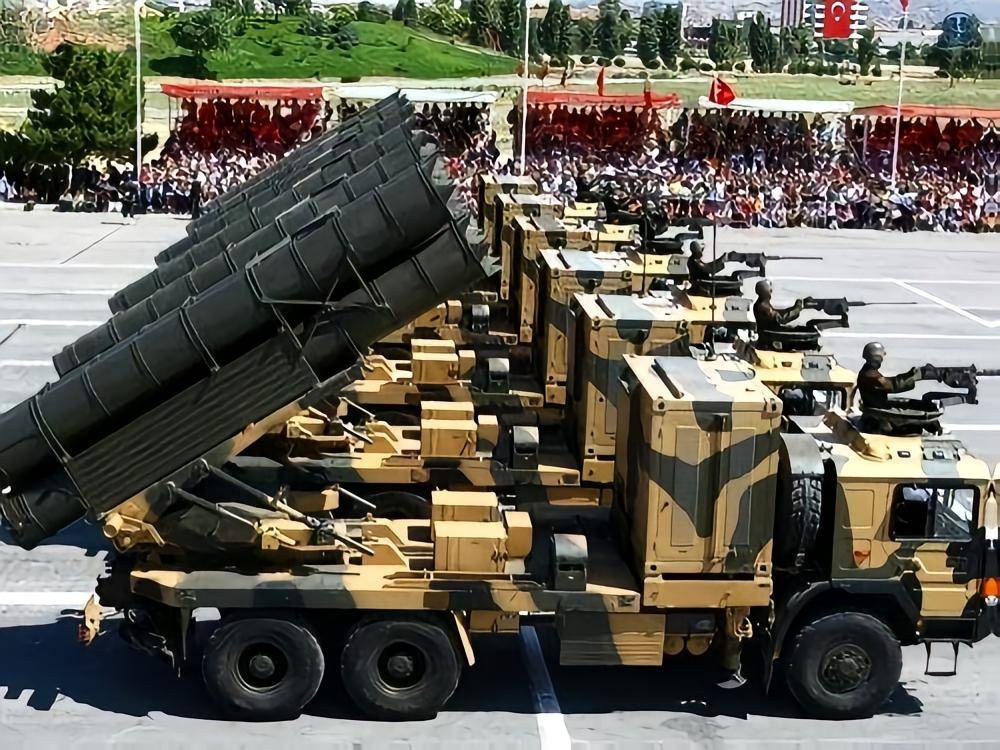
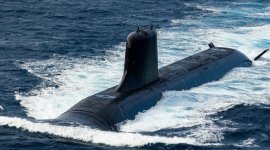
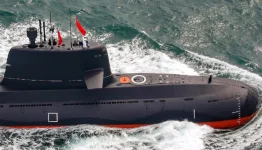
China is interested in developing military relations with Egypt, as it has great interest in a wide range of weapons, including frigates, submarines, fighters, air defense systems, a wide range of missile ammunition, radar systems, and electronic warfare.

Why Major General Wu Qian promoted "hot search", its special identity is of concern

2025-07-29 10:13
Posted in: Shanxi Province

According to the website of the Chinese Embassy in Egypt, on July 24, the Chinese Embassy in Egypt held a reception to celebrate the 98th anniversary of the founding of the Chinese People's Liberation Army and the appointment of defense attachés. Liao Liang was able to attend and introduce the new defense attaché, Major General Wu Qian, to Chinese and foreign guests.

The above information shows that Wu Qian has been appointed as the defense attaché of the Chinese Embassy in Egypt. The news quickly went hot.

Our army promoted to the major general every year more than 300, why Wu Qian's normal adjustment will cause such a big sensation.

He was born in 1973, 52 years old, and promoted to major general not too young. He served as deputy military attaché of the National Defense Department of the Chinese Embassy in the United States, participated in the "Tiger class" training of promoted to major generals at the National Defense University, served as the director of the Information Bureau of the Ministry of National Defense (the main division) for 8 years, and the qualifications and qualifications were enough, so why did the promotion come to the end of the public opinion?

Mainly because of identity.

The identity of the press speaker. The press spokesman is a "high-risk occupation", which has strict requirements for learning level, expression ability, research and judgment ability, body language, and image temperament, and if you don't pay attention, you will jump into the pit dug by others.

Wu Qian, who served as the director of the Information Bureau and spokesman of the Ministry of National Defense for eight years, pushed him to the forefront of China's military image communication. This position is far from a simple microphone, but a figurative incarnation of the country's voice and military will. Every appearance, is a blade walk: in the face of the problem, need to have a deep knowledge and agile thinking; interpret complex military conditions, test accurate judgment and strategic determination; in front of the camera, raise your hand to throw foot, but also need to convey the unquestionable authority temperament. The spokesman was a little careless, lightly caused a storm of public opinion, which seriously damaged the national majesty.

In past cases, whether Chinese or foreign, it is not uncommon for speakers to be caught in controversy or even forced to leave due to inappropriate wording or inappropriate posture. With his consistent steady and sharp performance, Wu Qian has built a trustworthy "spokesman benchmark" image in the public mind. The high degree of recognition and emotional connection that this special identity naturally makes any change in its position attract the public eye.

The second is the Egyptian military officer. This appointment is more important because of the word "Egypt". Egypt is by no means an ordinary host country – it is choking the throat of the Suez Canal, it is a strategic crossroads connecting Europe and Asia, and it is a major country with a bellwether significance in the Middle East.

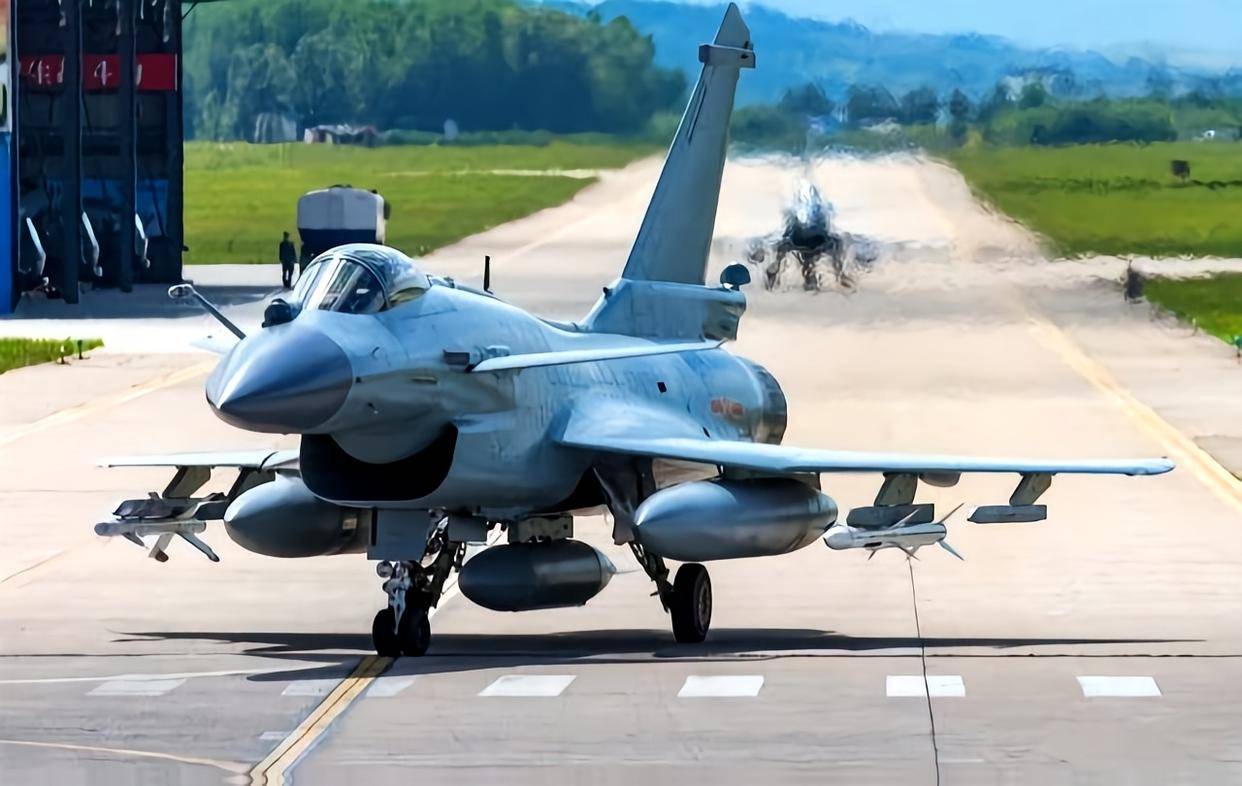
Recently, China-Egypt military interaction has frequently heated up: joint military exercises have sharpened synergy capabilities, and the intention of Egypt to purchase J-10C fighters has further demonstrated the depth of military cooperation. The deployment of a major general-level military attaché at this time is not an ordinary arrangement, but an important signal for China to go through the Middle East and strengthen the strategic fulcrum of North Africa.

According to our military and diplomatic practice, Major General military attachés are stationed in major countries or core strategic directions, such as permanent members of the UN Security Council such as the United States, Russia, Britain and France, as well as South Korea, Pakistan and other special friendly countries. The presence of Chinese Major General Military attachés in Egypt has undoubtedly announced to the world that Egypt's weight in China's global security layout is increasing significantly, and North Africa and the Middle East are becoming a new fulcrum for the international pattern.

One appointment, multiple meanings.

The "turn" of Major General Wu Qian is not accidental. It is not only the emotional projection and continuous attention of the public to an excellent speaker, and a clearer reflection of the subtle adjustment and aggressive attitude of China's military diplomacy strategic focus.

From the "spokesmen" in the spotlight to the "military attachés" in key areas, Wu Qian's trajectory is a vivid microcosm of the increasingly open, transparent and confident Chinese army to the world.

Behind this is the more refined layout of China's strength on the global chessboard, and it is inevitable that the frontier of national interests will continue to expand with the growth of strength.

When a "star spokesperson" is given the responsibility of garrisoning as a strategic hub, it is itself a silent declaration of the soft and hard power of China's military diplomacy - it announces to the world that China's determination to maintain peace and shape security is not only in the rhetorical confrontation of press conference halls, but also in the power projection and deep cultivation in key regions.

061379777de8496ea0fe989256b9cd02.jpeg
https://www.sohu.com/a/918618348_12...pc.content/354_2.fd-d.19.1753947223580p6kUuiq
 
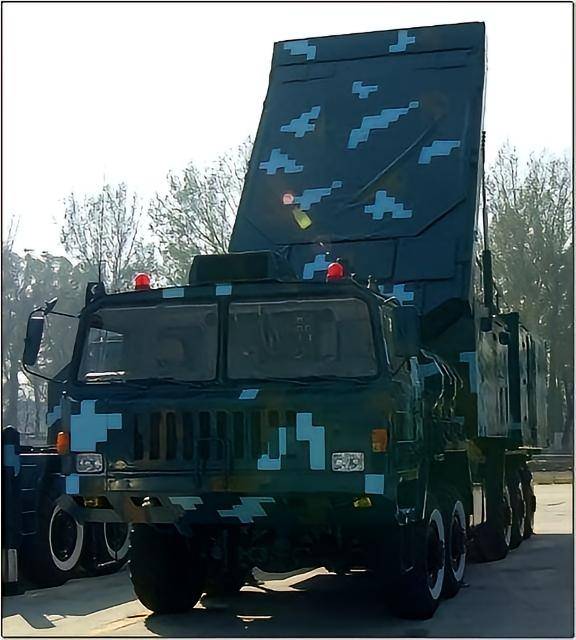
News related to an Egyptian company producing the HQ-9BE system locally, with an 80% manufacturing locally . This news is perhaps consistent with an Egyptian statement several years ago that they had allocated 7.3 billion Egyptian pounds to produce a local air defense system and a local tank. I was expecting a Chinese system because it is related to the Chinese HT-200 radar family and its derivatives, which have been available in Egypt for years. Developing an air defense system using this radar, which is believed to have been licensed for production under the S-75 upgrade program, was a natural development.

Part of the Chinese article

The most significant impact lies in the "technology transfer + local production" model led by Chinese military companies, which cultivates the industrial capabilities of Middle Eastern countries. The new Egyptian Tahrir Company has managed to produce 80 percent of the HQ-9B's components, a more strategic industrial upgrade than simply purchasing weapons. As Ahmed Kamal, a professor of international relations at Cairo University, put it, "We are not buying weapons; we are buying the keys to Western monopolies."


Full article

Egypt recently did something that made us very happy: to buy Chinese equipment in large quantities with US aid.

2025-07-12 00:19
Posted in: Guizhou Province

Egypt's recent military procurement trends have aroused widespread concern in the international community. The North African country has officially put the Chinese-developed HQ-9B long-range air defense system into the active equipment sequence, which means a major change in its military strategy. The system has the ability to intercept ballistic missiles and high-altitude targets, and its technical performance can be comparable to the Russian S-400 and the US Patriot system, but the procurement conditions and the follow-up guarantee system show a very different cooperation mode.

894d8617f0184b0f827ddbd2824189af.jpeg


Washington’s military aid to Cairo appears to be generous, but it hides its yoke. Although Egypt receives $1.3 billion in annual military aid, ranking second among U.S. allies in the Middle East, the use of critical equipment has always been limited. The F-16V fighter purchased in 2015 has so far been unable to be equipped with AIM-120 medium-range air-to-air missiles, and the French Rafale fighter purchased in 2021 has been forced to abandon the "meteor" over-the-horizon missile due to Israeli intervention. This "castrated version" model of arms sales exposes the nature of political kidnapping in American military cooperation.


The decision-making level in Cairo has gradually realized that China's military technology system has unique advantages. The HQ-9B's JT-2000 coordinate alert radar can track 100 air targets at the same time, and its data link system seamlessly docks with the J-10CE. More importantly, Chinese military enterprises provide "turnkey engineering" services - from early warning aircraft to UAV command system, from equipment operation training to local production line construction, the formation of a complete technology transfer chain. This model is in stark contrast to the Western "technology blockade + after-sales monopoly".

e1ae77a757e84bc2b1ef2ad914d9807d.jpeg


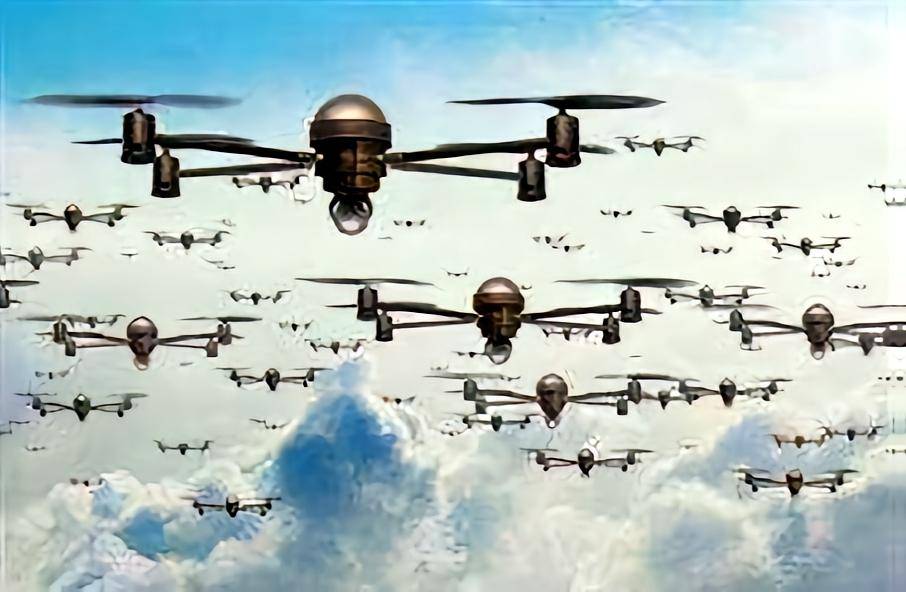
The Middle East military procurement market is undergoing a 30-year-old change. Russia's sanctions on the Ukrainian crisis have extended the delivery cycle of the S-400 system to 48 months; the single price of the US Patriot system has soared to $1.2 billion, and it needs to bundle $4 million each for PAC-3 missiles. China's military industry has launched a "modular customization" program: the Saudi introduction of the "Silent Hunter" laser air defense system is only 3 million US dollars, and the "Pterosaur-3" drone cluster ordered by Qatar can access the HQ-9B's tactical command network in real time.

c023022a6d9c4b589fe7906e1568e676.jpeg


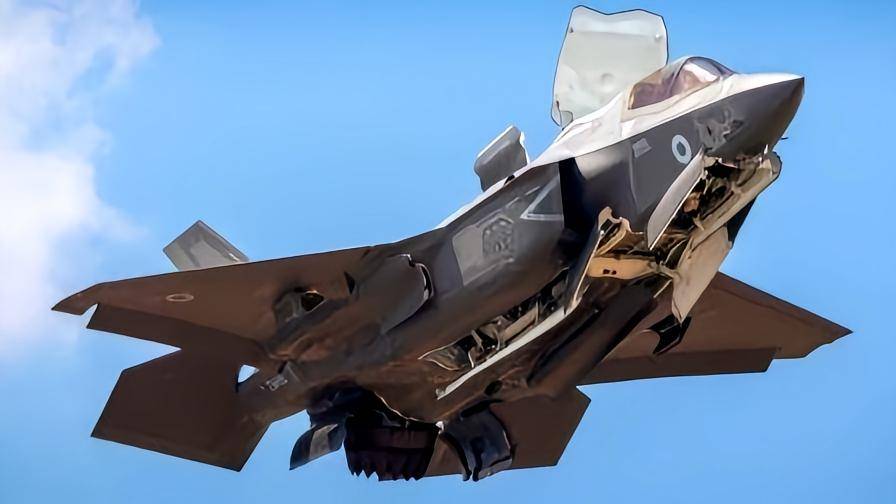
The strategic transformation of the Egyptian Air Force is even more symbolic. Previously, its main fighter aircraft has been in a passive situation in the face of the Israeli F-35I, due to the lack of effective air defense system. Now the HQ-9B and the incoming J-35 stealth fighter form a "shield combination": the former can build an air defense barrier 150 kilometers away, and the latter achieves precision strikes 200 kilometers away with PL-15E missiles. The integration capability of this combat system is the core competitiveness of China's military exports - unlike the Western "piece" arms sales, China provides systematic solutions that have been verified by actual combat.

637f0cf8312f4d4b80ea7f1508ba6b92.jpeg


International military and trade market data confirm the trend change: China's arms exports in 2023 reached 28.3 billion US dollars, of which the Middle East accounted for 37%. The Saudi-introduced DF-26 medium-range missile system has the same modular design as the HQ-9B chassis; the L15 advanced trainer aircraft purchased by the UAE can simulate the flight characteristics of the J-10C. The versatility of this technology greatly reduces the logistics maintenance costs of the customer's country, and forms the synergy effect of "buying a set of equipment and integrating a system".

9a875efa60c54bfc9f4394226c61641a.jpeg


The rise of China’s military trade is breaking down the technological barriers built by the West. In the case of the HQ-9B, it uses active radar guidance technology that is one generation ahead of the American Patriot system, but its unit price is only 58% of the Patriot system. This combination of "cost-effective + technology-leading" allows Egypt to build an air defense system comparable to Israel's with a limited budget.

3043aae5998e44e49b3611a9428b4781.jpeg


The more far-reaching impact lies in the "technology transfer + local production" model pioneered by Chinese military enterprises, which is cultivating the industrial capabilities of countries in the Middle East. Egypt’s new Tahrir Missile Company has been able to produce 80 percent of its HQ-9B components, an industrial upgrade that is more strategic than simply buying weapons. As Ahmed Kamal, a professor of international relations at Cairo University, said, “We don’t buy weapons, we buy the keys to Western monopolies.”

In this silent military revolution, Egypt’s choice reflects a profound change in the international order. When Chinese-made missiles were erected on the banks of the Nile, it not only rewrote the air defense pattern in the Middle East, but also heralded the rise of emerging forces in a multipolar world. For Egypt, which has suffered from the technological blockade, this breakthrough is really refreshing, and it is better to see them spending US assistance to buy Chinese equipment.

https://www.sohu.com/a/913037958_12...mpc.content/354_2.fd-d.4.1753948515799PB9Uqdz
 
Pakistan obtained the technology for the Fateh missile from Iran.

You are mixing these with Iran's Fateh missile. Pakistan's Fatah missiles are GMLRS based (multiple missiles in single launcher and of short range upto 400 KMs). Iran's Fateh missile is totally different.

Pakistan build its missile program much earlier then Iran. Pakistan had built 1500 KM range missiles by late 1990's when it carried out its nuclear tests. As it wanted to have a delivery system for nukes. Iran matured in its Ballistic missile program much later. Pakistan had build Shaheen-3 (2750 KM range) and Ababeel Multiple independent Re-entry Vehicle (MIRV-missile with 10 warheads by mid -2010s. Iran only recently is reaching this advance level. So Iran and Pakistan ballistic missile programs are separate. These 2 countries don't help each other in military affairs. Pakistan spend most of its budget to its massive nuclear and missile manufacturing organisations since 1980s. This is Pakistan's very own specific expertise.

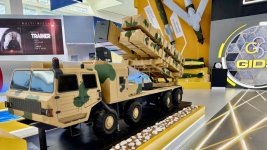
I mentioned Pakistan's Fatah GMLRS for egypt because Pakistan is recently offering it for exports. Its short range upto 400 KM is ideal to overwhelm Israel's defenses and hit its major facilities.

Model-of-GIDS-Fatah-GMLRSSSM-1536x864.jpg

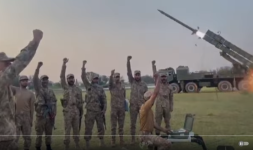
Image from actual combat:

fatah__.PNG
 
Last edited:
You are mixing these with Iran's Fateh missile. Pakistan's Fatah missiles are GMLRS based (multiple missiles in single launcher and of short range upto 400 KMs). Iran's Fateh missile is totally different.

Pakistan build its missile program much earlier then Iran. Pakistan had built 1500 KM range missiles by late 1990's when it carried out its nuclear tests. As it wanted to have a delivery system for nukes. Iran matured in its Ballistic missile program much later. Pakistan had build Shaheen-3 (2750 KM range) and Ababeel Multiple independent Re-entry Vehicle (MIRV-missile with 10 warheads by mid -2010s. Iran only recently is reaching this advance level. So Iran and Pakistan ballistic missile programs are separate. These 2 countries don't help each other in military affairs. Pakistan spend most of its budget to its massive nuclear and missile manufacturing organisations since 1980s. This is Pakistan's very own specific expertise.

I mentioned Pakistan's Fatah GMLRS for egypt because Pakistan is recently offering it for exports. Its short range upto 400 KM is ideal to overwhelm Israel's defenses and hit its major facilities.

View attachment 138220

Image from actual combat:

View attachment 138221
In general, there is no objection to cooperation as long as it is beneficial to both parties. I explained that Egypt has been producing Chinese WS-2D and DF-12/M20 missiles in various versions for years. If the Pakistani side were to offer something with better performance and lower costs than manufacturing Chinese models, of course, no one would object. I saw a video in Arabic talking about Egypt and Pakistan expanding cooperation in the field of missiles and drones. Pakistan is famous for producing drone components at low costs, so Turkey manufactures components in Pakistan to benefit from the lower manufacturing costs.
There are also negotiations with South Korea regarding the K-239 systems. The goal is to transfer some of South Korea's missile technology to Arab countries and export it to local production, in addition to meeting Egypt's needs for 227 mm caliber ammunition.

Regarding ballistic missiles, I hear there is cooperation between Pakistan and Egypt, but there is no precise information, as the ballistic missile program and even rocket artillery in calibers larger than 122 mm are not published and are prohibited during wartime inspections. The parades were originally banned from the media. In general, the Pakistani delegation's visit to Egypt is related to expanding cooperation between the two countries.
 
Egypt is on the line of Pakistan ... a Chinese weapon awaiting experimentation

To view this content we will need your consent to set third party cookies.
For more detailed information, see our cookies page.
 
News related to an Egyptian company producing the HQ-9BE system locally, with an 80% manufacturing locally . This news is perhaps consistent with an Egyptian statement several years ago that they had allocated 7.3 billion Egyptian pounds to produce a local air defense system and a local tank. I was expecting a Chinese system because it is related to the Chinese HT-200 radar family and its derivatives, which have been available in Egypt for years. Developing an air defense system using this radar, which is believed to have been licensed for production under the S-75 upgrade program, was a natural development.

Part of the Chinese article

The most significant impact lies in the "technology transfer + local production" model led by Chinese military companies, which cultivates the industrial capabilities of Middle Eastern countries. The new Egyptian Tahrir Company has managed to produce 80 percent of the HQ-9B's components, a more strategic industrial upgrade than simply purchasing weapons. As Ahmed Kamal, a professor of international relations at Cairo University, put it, "We are not buying weapons; we are buying the keys to Western monopolies."


Full article

Egypt recently did something that made us very happy: to buy Chinese equipment in large quantities with US aid.

2025-07-12 00:19
Posted in: Guizhou Province

Egypt's recent military procurement trends have aroused widespread concern in the international community. The North African country has officially put the Chinese-developed HQ-9B long-range air defense system into the active equipment sequence, which means a major change in its military strategy. The system has the ability to intercept ballistic missiles and high-altitude targets, and its technical performance can be comparable to the Russian S-400 and the US Patriot system, but the procurement conditions and the follow-up guarantee system show a very different cooperation mode.

894d8617f0184b0f827ddbd2824189af.jpeg


Washington’s military aid to Cairo appears to be generous, but it hides its yoke. Although Egypt receives $1.3 billion in annual military aid, ranking second among U.S. allies in the Middle East, the use of critical equipment has always been limited. The F-16V fighter purchased in 2015 has so far been unable to be equipped with AIM-120 medium-range air-to-air missiles, and the French Rafale fighter purchased in 2021 has been forced to abandon the "meteor" over-the-horizon missile due to Israeli intervention. This "castrated version" model of arms sales exposes the nature of political kidnapping in American military cooperation.


The decision-making level in Cairo has gradually realized that China's military technology system has unique advantages. The HQ-9B's JT-2000 coordinate alert radar can track 100 air targets at the same time, and its data link system seamlessly docks with the J-10CE. More importantly, Chinese military enterprises provide "turnkey engineering" services - from early warning aircraft to UAV command system, from equipment operation training to local production line construction, the formation of a complete technology transfer chain. This model is in stark contrast to the Western "technology blockade + after-sales monopoly".

e1ae77a757e84bc2b1ef2ad914d9807d.jpeg


The Middle East military procurement market is undergoing a 30-year-old change. Russia's sanctions on the Ukrainian crisis have extended the delivery cycle of the S-400 system to 48 months; the single price of the US Patriot system has soared to $1.2 billion, and it needs to bundle $4 million each for PAC-3 missiles. China's military industry has launched a "modular customization" program: the Saudi introduction of the "Silent Hunter" laser air defense system is only 3 million US dollars, and the "Pterosaur-3" drone cluster ordered by Qatar can access the HQ-9B's tactical command network in real time.

c023022a6d9c4b589fe7906e1568e676.jpeg


The strategic transformation of the Egyptian Air Force is even more symbolic. Previously, its main fighter aircraft has been in a passive situation in the face of the Israeli F-35I, due to the lack of effective air defense system. Now the HQ-9B and the incoming J-35 stealth fighter form a "shield combination": the former can build an air defense barrier 150 kilometers away, and the latter achieves precision strikes 200 kilometers away with PL-15E missiles. The integration capability of this combat system is the core competitiveness of China's military exports - unlike the Western "piece" arms sales, China provides systematic solutions that have been verified by actual combat.

637f0cf8312f4d4b80ea7f1508ba6b92.jpeg


International military and trade market data confirm the trend change: China's arms exports in 2023 reached 28.3 billion US dollars, of which the Middle East accounted for 37%. The Saudi-introduced DF-26 medium-range missile system has the same modular design as the HQ-9B chassis; the L15 advanced trainer aircraft purchased by the UAE can simulate the flight characteristics of the J-10C. The versatility of this technology greatly reduces the logistics maintenance costs of the customer's country, and forms the synergy effect of "buying a set of equipment and integrating a system".

9a875efa60c54bfc9f4394226c61641a.jpeg


The rise of China’s military trade is breaking down the technological barriers built by the West. In the case of the HQ-9B, it uses active radar guidance technology that is one generation ahead of the American Patriot system, but its unit price is only 58% of the Patriot system. This combination of "cost-effective + technology-leading" allows Egypt to build an air defense system comparable to Israel's with a limited budget.

3043aae5998e44e49b3611a9428b4781.jpeg


The more far-reaching impact lies in the "technology transfer + local production" model pioneered by Chinese military enterprises, which is cultivating the industrial capabilities of countries in the Middle East. Egypt’s new Tahrir Missile Company has been able to produce 80 percent of its HQ-9B components, an industrial upgrade that is more strategic than simply buying weapons. As Ahmed Kamal, a professor of international relations at Cairo University, said, “We don’t buy weapons, we buy the keys to Western monopolies.”

In this silent military revolution, Egypt’s choice reflects a profound change in the international order. When Chinese-made missiles were erected on the banks of the Nile, it not only rewrote the air defense pattern in the Middle East, but also heralded the rise of emerging forces in a multipolar world. For Egypt, which has suffered from the technological blockade, this breakthrough is really refreshing, and it is better to see them spending US assistance to buy Chinese equipment.

https://www.sohu.com/a/913037958_121984596?scm=10008.1479_13-1479_13-68_68.0-0.0.0&spm=smpc.content/354_2.fd-d.4.1753948515799PB9Uqdz
The article is OK..but it is faulty (or just provocative to the US) about the US military aid to Egypt.. this aid does not come in cash.. it is solely for buying US military equipment..
 
Just an interesting info via a good friend ... There are still four J-10C and one YY-20A at Spinx International Airport in Kairo; Egypt since May, seems almost as if they never went back! :unsure:
 
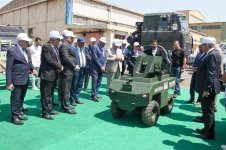
Some of the new Egyptian military products, produced by the Arab Organization for Industrialization, include the combat tower for vehicles and armored vehicles equipped with a 25/30 mm cannon and uninhabited land combat vehicles (UGV), which was called "Anopis".

To view this content we will need your consent to set third party cookies.
For more detailed information, see our cookies page.


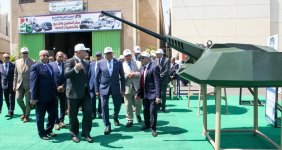
The Arab Organization for Industrialization revealed, during an inspection visit, its latest local products, including a 30 mm combat turret still in the production stage...It is scheduled to be provided with advanced vision and correction systems, and warning systems, with the possibility of arranging it with two anti -armor missiles.

1754986255198.jpeg

The authority also displayed a small, remotely controlled robot called "Anopis", equipped with a remote controlled combat turret, which can be equipped with 7.62 mm or 12.7 mm, or a bombs, with the ability to redesign it to carry guided missiles or even drones.

1754986481636.jpeg
 
To view this content we will need your consent to set third party cookies.
For more detailed information, see our cookies page.
 
August 8, 2025:

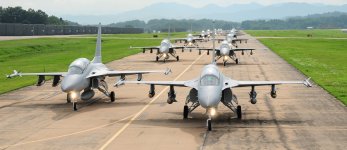
Reliable sources announced to the "China Military" network that negotiations between Egypt and South Korea on the purchase of 100 FA-50 light fighter planes have witnessed great progress. The initial agreement is to ship the first 36 -air aircraft at once, while Egypt will assemble the remaining 64 aircraft at its factory in Helwan.

1754899907627.jpeg

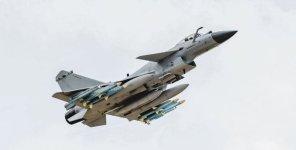
But this does not mean that J-10CE lost its position or that China has declined in the armament market. The two planes are serving different purposes, as Egypt seeks to cover the needs of pilots and light tasks, while the J-10CE remains an advanced option to modernize its air force in the future.

J-10CE has a high technical performance and proven in the battlefields, and it is a fourth-generation fighter, while FA-50 in its essence is an advanced training plane that was converted into a light fighter, according to Chinese media reports. it said that in terms of performance, J-10CE is faster and with further range and carrying more weapons, and its missiles are more advanced and accurate, and they are dedicated to comprehensive combat tasks such as air superiority and land and maritime attack, while FA-50 is mainly used in training and some light tasks.

1754900353796.jpeg
 
Steps towards localizing arms industry technology in Egypt in cooperation with China and Serbia

To view this content we will need your consent to set third party cookies.
For more detailed information, see our cookies page.
 
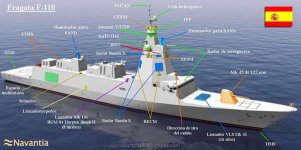
Egypt is considering procuring F-110-class frigates from Navantia, which are multi-purpose vessels designed for the Spanish Navy. The discussions include the initial number of frigates Egypt aims to acquire and potential agreements for further naval cooperation.

1755065110947.jpeg

Overview of Egypt's Interest in F-110 Frigates​

Egypt is currently exploring the procurement of F-110-class frigates from Spain's Navantia. This initiative is part of a broader strategy to enhance its naval capabilities.

Key Details of the F-110 Frigates​

Specifications​

AttributeDetails
Class NameF-110 (Bonifaz class)
TypeGuided missile frigate
Displacement6,100 tons
Length145 meters
SpeedOver 25 knots
Complement150 crew members
Armament- 16-cell VLS for missiles
- 1 × 127 mm naval gun
- Anti-submarine capabilities
SensorsSCOMBA combat management system

Procurement Status​

  • Egypt is in discussions with Spain regarding the initial number of F-110 frigates it aims to acquire.
  • The talks may also include an expanded agreement on naval technology cooperation.

Strategic Importance​

The F-110 frigates are designed for multi-mission roles, including anti-air, anti-surface, and anti-submarine operations. Their advanced technology and capabilities make them a valuable addition to the Egyptian Navy, enhancing maritime security and operational readiness.

To view this content we will need your consent to set third party cookies.
For more detailed information, see our cookies page.
 

Current Status of the Barracuda Deal​


1755067723187.jpeg

Ongoing Negotiations​

Egypt is actively engaged in discussions with France regarding the acquisition of Barracuda-class submarines. Both countries are working on a legal framework to address key obstacles that have arisen during negotiations.

Key Objectives​

The negotiations focus on three main objectives:

  • Finalizing the legal framework for the deal
  • Establishing a timeline for completion
  • Addressing any remaining concerns from both parties

Timeline Expectations​

While specific dates have not been disclosed, there is an expectation that the deal could be finalized in the near future, as both sides appear committed to reaching an agreement.

Competition and Alternatives​

Egypt's interest in Barracuda submarines comes amid a broader strategy to modernize its aging submarine fleet. Other contenders for Egypt's submarine needs include options from Germany and South Korea, which could influence the final decision.

The situation remains dynamic, with ongoing developments expected as negotiations progress.
 
The Egyptian Ministry of Military Production is currently in discussions with Korea Aerospace Industries (KAI) regarding the procurement of a custom-built satellite based on the Compact Advanced Satellite 500 (CAS-500). These talks are focused on finalizing the details of the deal and the specifications of the satellite, which is intended for various Earth observation purposes.

1755068377419.png

Overview of the CAS-500 Satellite Deal​

The Egyptian Ministry of Military Production (MoMP) is currently in negotiations with Korea Aerospace Industries (KAI) regarding the procurement of a custom-built satellite based on the Compact Advanced Satellite 500 (CAS-500). This satellite is part of a broader initiative to enhance Egypt's capabilities in satellite technology and defense.

Specifications of the CAS-500 Satellites​

The CAS-500 series includes several satellites, each designed for specific Earth observation tasks. Here are key details:
Satellite ModelPurposeKey Features
CAS500-1Land surface imageryHigh Resolution Optical Sensor, 50 cm resolution
CAS500-2Similar to CAS500-1Enhanced optical payload for land observation
CAS500-4Agricultural monitoringCompact Advanced Payload Wide Swath
CAS500-5Water resource surveyingC-band Synthetic Aperture Radar
Each satellite weighs around 500 kg and utilizes a common platform, allowing for various payloads tailored to specific missions.

Current Status of Negotiations​


As of now, discussions between Egypt and KAI are ongoing, with expectations of reaching an agreement soon. The deal aims to bolster Egypt's satellite capabilities, which are crucial for applications such as disaster monitoring, agricultural management, and environmental observation.
The CAS-500 satellites are part of a larger strategy to enhance Egypt's defense and technological infrastructure through international cooperation.
 
Egypt is in the final stages of negotiations to acquire the Type 039A Yuan-class submarines from China, which would enhance its naval capabilities and signify a shift in its defense procurement strategy. This deal is expected to include technology transfer agreements, allowing Egypt to modernize its submarine fleet significantly.

1755070590786.webp

Overview of the Yuan-class submarine Deal​

Egypt is in advanced negotiations with China to acquire the Type 039A Yuan-class submarines. This deal represents a significant shift in Egypt's defense procurement strategy, moving away from traditional Western suppliers.

Key Features of the Type 039A Submarine​

Specifications​

AttributeDetails
Displacement3,600 tons (submerged)
Length77.6 meters
Beam8.4 meters
Draft6.7 meters
PropulsionDiesel-electric, AIP
Speed20 knots
Test Depth250 meters
Armament6 × 533 mm torpedo tubes
Additional WeaponsAnti-ship missiles

Capabilities​

  • Stealth: The Type 039A is known for its low acoustic signature, allowing for stealthy operations.
  • AIP System: This technology enables prolonged submerged operations without surfacing, enhancing operational endurance.
  • Versatile Armament: It can launch heavyweight torpedoes and anti-ship cruise missiles, making it effective against surface and underwater threats.

Strategic Implications​

If the deal is finalized, it will replace Egypt's aging fleet of Type 033 Romeo-class submarines. This acquisition will not only bolster Egypt's naval capabilities but also increase China's influence in the Middle East and North Africa. The negotiations also include technology transfer agreements, allowing Egypt to integrate locally manufactured systems into the submarines.
The introduction of these advanced submarines could shift the balance of power in the Mediterranean, enhancing Egypt's maritime prestige and operational capabilities.
 

Users who are viewing this thread

Pakistan Defence Latest

Back
Top