Egyptian Military Industries & Products

Egypt and Turkey move to strengthen military cooperation through Kaan and Turkha

Egypt and Turkey agree on a plan to raise trade volume to $15 billion and enhance military cooperation, while producing a Turkish drone locally in Egypt and enhancing the localization of the defense industry.

Arab Defense Website - September 3, 2025: Egyptian Foreign Minister Badr Abdel Aati held a bilateral consultation session with his Turkish counterpart, Hakan Fidan, on the sidelines of the extraordinary session of the Council of Foreign Ministers of the Organization of Islamic Cooperation in Jeddah, to discuss bilateral relations and regional developments. The two ministers stressed strengthening the strategic partnership between Egypt and Turkey, activating bilateral cooperation mechanisms, including the Joint Planning Group meeting, and preparing to hold the second session of the High-Level Strategic Cooperation Council. The Egyptian Minister also stressed the importance of enhancing Turkish investments in Egypt and raising the volume of trade exchange between the two countries to $15 billion over the next five years.

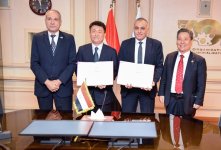
Areas of cooperation included military industries, as the Egyptian Ministry of Military Production signed an agreement with the Turkish company Havelsan to produce the Turkha drone locally in Egypt. This vertical take-off and landing drone is an advanced reconnaissance and surveillance system, and is distinguished by its ability to operate in complex environments, while integrating artificial intelligence systems to analyze data in real time.

The Turkish Ambassador to Cairo, Salih Mutluşan, confirmed that the self-sufficiency rate in Turkish defense industries has reached 85%, stressing that Ankara shares its defense capabilities and technologies with friendly and allied countries, led by Egypt. The Turkish diplomat added that Egypt and Turkey have great potential for cooperation in the field of defense industries, pointing to the great experience that Egypt possesses in this sector thanks to its distinguished infrastructure.

Economic coordination between the two countries is witnessing a remarkable rise, with intensive meetings being held between Egyptian officials representing the Ministry of Investment and Foreign Trade and their Turkish counterparts to maximize the use of all capabilities and enhance bilateral cooperation at all levels, especially in light of the current increase in the volume of trade exchange between the two countries to about 8 billion dollars, and based on the directives of the political leaderships in Cairo and Ankara to raise this number to 15 billion dollars.

The report indicated that there are about 1,300 Turkish companies operating in Egypt, specifically in the Suez Canal Economic Zone, with investments estimated at about $4 billion, distributed across various fields including the automotive and technology industries, within an environment that supports the localization of various industries and exports to attract foreign currencies.

On the military level, cooperation extends to the highest levels between Egypt and Turkey, and includes the manufacture of Turkish military products inside Egypt, within the framework of a partnership between the Egyptian Ministry of Military Production and the Turkish company "Havelsan" to manufacture the "Turkha" drone, which uses the latest artificial intelligence systems to collect information, reconnaissance and surveillance on the borders, as part of Egypt's efforts to localize the military industry and diversify sources of armament to ensure its national security.
1757194715324.webp

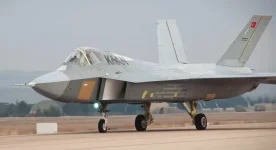
Egypt is close to joining the project to develop the Turkish fifth-generation stealth fighter "Kaan", which is considered one of Turkey's most important strategic defense projects, and which Ankara is expected to compensate for being prevented from possessing "F-35" aircraft by an American decision following its purchase of the Russian "S-400" air defense system.

The Tactical Report website, which specializes in defense industries, energy and geopolitical issues in the Middle East and North Africa, reported that Egypt's desire to join the project began to become clear during President Abdel Fattah El-Sisi's visit to Turkey in September 2024, where he expressed his interest in the fighter jet being developed by the Turkish Aerospace Industries Corporation (TAI), while an Egyptian team inspected the prototype expected to enter service in 2030.

As the Arab Defense website reported earlier, it is likely that a memorandum of understanding will be signed at the end of 2025 to establish the partnership and for Egypt to join the "Kaan" development program, with the participation of Egyptian parties in the project. The two countries share a vision of technological independence in the defense industries and share concerns about Israeli air superiority, especially after the 12-day Israeli-Iranian war, which prompted the Turkish Intelligence Academy to warn against such superiority and recommend developing air capabilities.

Both countries also seek to diversify sources of arms purchases away from the complexities of US arms deals. After Turkey purchased the S-400 system, it completed an agreement to purchase 40 German Eurofighter Typhoon aircraft competing with the F-35 aircraft, while Egypt headed towards China through joint exercises under the name "Eagles of Civilization" last April, during which Beijing displayed a wide range of weapons, including KJ-500 reconnaissance aircraft and J10C fighter aircraft. Although Beijing denies selling the aircraft to Cairo, the failure of the deal to purchase the Russian Su-35 may make Chinese models a debatable and viable option in the future.

The idea of the Egyptian partnership in the "Kaan" development program comes after teams of Egyptian experts inspected the aircraft, which possesses superior capabilities in air-to-air and ground-to-ground combat, with a supersonic speed of up to Mach 1.8, and combat capabilities supported by artificial intelligence, in addition to the ability to engage and fight without a drone, an integrated command and control center, and low radar stealth, making it one of the advanced fifth-generation aircraft.

Kaan conducted its first test flight on February 21, 2024, which lasted 13 minutes and reached an altitude of 8,000 feet at a speed of 230 knots, followed by a second test on May 6, 2024, for 14 minutes and an altitude of 10,000 feet at the same speed. These successes prompted the continued development of the models and their introduction into service in 2030.

Indonesia signed a deal to purchase 48 aircraft of this model on the sidelines of the International Defense Industries Exhibition "IDF 2025" in Istanbul, while Turkey seeks to export "Qan" to other countries at competitive prices and less complex conditions. Internally, the Turkish Air Force plans to use 250 aircraft of this model, which will bring Turkey into the club of fifth-generation fighter aircraft manufacturers alongside the United States, China and Russia.
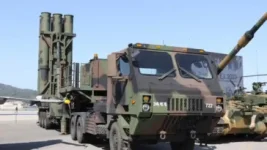
 
Egypt and the Gulf cooperate to produce an advanced air defense system

1757366803224.webp

Egypt begins a partnership with the Gulf states to develop an advanced air defense system, in cooperation with international companies and Gulf funding, based on the success of the previous "Amun" system.

September 2025: The intelligence website "Tactical Report" (Tactical Report), which specializes in arms deals, revealed that Egyptian President Abdel Fattah El-Sisi succeeded in convincing a number of leaders of the Gulf Cooperation Council countries to enter into a partnership with Cairo to manufacture air defense systems on Egyptian territory. According to the report, this new medium-range system will be deployed in the Arab countries participating in the joint project.

The website explained that a group of major American, European and Chinese defense industry companies have expressed their willingness to cooperate and invest in this program, on the basis that the Gulf countries will finance it, while Egypt will undertake manufacturing and development operations. The project is seen as an extension of Egypt's previous successful experience in designing and manufacturing the famous "Amun" air defense system, which was later acquired by Kuwait and the Sultanate of Oman.

The report indicates that Cairo has been moving forward with this project with deliberate steps for years, as it did not come out of the moment, but rather preparations were made for it since the announcement of the first Egyptian-made radar, the ESR-32A, which was displayed at the Defense Industries Exhibition "EDEX 2018", and was a surprise at the time as the first two-dimensional radar designed entirely by Egyptian civilian and military hands. Two years later, the latest version, the ESR-32B, appeared at EDEX 2021, with an announcement of a more advanced 3D version expected to be unveiled at EDEX 2023.

Egypt is expected to repeat Amon's successful experience, but this time with a new foreign partner who may be from Belarus, China, or even one of the major European companies. Observers believe that Egyptian research in the field of developing air defense systems is not new, as it was launched years ago in national development centers, during which a number of prototypes were selected, while the transition to the final modeling stage depends on securing the necessary funding.

The Gulf States Partnership is considered a fundamental pillar for the success of this program, not only through financial support, but also by contributing to attracting a strong foreign partner capable of introducing the latest global technologies, ensuring that the expected system is at an advanced level of technology.
 
1757470188412.jpeg

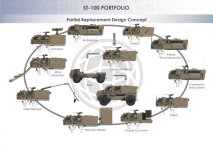
In recent years, Egypt has witnessed a qualitative boom in the defense industries, during which the ST-100 and ST-500 armored vehicles emerged as one of the most important achievements of cooperation between the Ministry of Military Production and the private Egyptian company IMUT. The strong appearance of these vehicles in regional and international defense exhibitions, most notably the Egypt International Air and Space Exhibition, was not just a display of technical capabilities, but rather a strategic message that Cairo is moving confidently towards possessing a national military industry with international standards, which places it among the countries that manufacture modern combat vehicles.

The ST-100 and ST-500 armored vehicles demonstrate that Egypt is not content with importing or assembling, but rather seeks to provide innovative solutions in the field of defense industries, based on local design, the ability to adapt to the requirements of modern battles, and the ambition for regional and international export. This transformation reflects a strategic vision based on self-sufficiency first, then global competitiveness second.

1757470334788.jpeg

ST-100

.. Multi-mission platform and tank hunter The Egyptian ST-100 armored vehicle has proven to be not just a traditional armored personnel carrier, but a versatile combat platform that can be adapted to more than ten different missions: from a personnel carrier and field ambulance, to a reconnaissance platform, a command and control vehicle, and even a rocket launcher and tank hunter. Its innovative design demonstrates a clear focus on maximum protection, adopting a V-shaped structure to resist mines and explosive devices, in addition to separating the crew compartment from the vehicle body when exposed to strong explosions, which increases the chances of soldiers' survival. The ST-100 was also equipped with a remote-controlled weapons station, capable of carrying multi-caliber machine guns or grenade launchers, and even anti-tank and anti-aircraft missiles. These capabilities are integrated with active protection systems that include electronic jamming of explosive devices, advanced sensors to monitor sources of fire, and a defense system that relies on thermal and optical jamming and smoke shells.

ST-500
.. Light and fast special forces In contrast to the heavy capabilities of the ST-100, the ST-500 armored vehicle came to provide a lighter and more flexible option, intended for rapid tactical missions, most notably special forces operations and field ambulance. The armored vehicle can accommodate a crew of three plus five soldiers, or it can be equipped with a medical version that accommodates two stretchers. It can also be configured to carry various weapons such as machine guns, grenade launchers and anti-tank missiles, as well as a mortar-carrying version.

To view this content we will need your consent to set third party cookies.
For more detailed information, see our cookies page.


A shift in the Egyptian defense industries The ST-100 and ST-500 armored vehicles represent a qualitative shift in the Egyptian defense industries, as they combine combat flexibility, modern design, and advanced protection systems, which makes them real competitors in the armored vehicle market. The ST-100's multitasking makes it an ideal platform for irregular battles and city wars, while the ST-500 provides agility and rapid support to special forces. This combination of "heavy" and "light" reflects a strategic understanding of the requirements of modern battles, which require a variety of combat tools depending on the nature of the operational environment. Egypt's strategic vision The significance of these projects does not stop at the limits of technical capabilities, but rather extends beyond them to the strategic dimension. According to official statements, Egypt plans to reach a production capacity of 1,000 armored vehicles annually, a figure that reflects the country's move to:

1. Defense self-sufficiency and reducing dependence on imports.
2. Strengthening export capabilities, especially to Arab and African markets.
3. Deepening cooperation between the public and private sectors in the field of defense industries.

This approach is consistent with Egypt's policy of diversifying sources of armament and establishing its position as a regional power capable of developing and producing combat systems with national capabilities.
 
A memorandum of understanding was signed between the Arab Organization for Industrialization and the South Korean international company Samkwang.

1758703786209.jpeg

During the signing ceremony, Major General A.Engineer Mukhtar Abdel Latif, Chairman of the Arab Organization for Industrialization, expressed his appreciation and pride in this cooperation with Samkuang Company, praising its global manufacturing expertise in various manufacturing fields, noting that this cooperation represents an important step to deepen local manufacturing and localize the latest technologies by benefiting from the advanced manufacturing capabilities of the Arab Organization for Industrialization's factories and companies.

He pointed out the importance of achieving joint integration and implementing industrial investment projects that enhance trade exchange and serve comprehensive development plans.

He stated that it was agreed to cooperate in several industrial fields, including defense industries, automobiles, automobile feeder industries, electronic industries, digital transformation, electronic payment systems, and other topics of common interest.

He explained that we aim to meet the needs of the local market, which contributes to reducing dependence on imports, in addition to opening export outlets to foreign markets with products that meet international quality standards and competitive market prices, noting the agreement to begin the executive steps for manufacturing according to clear time stages.

For their part, senior officials of the South Korean international company Samkwang expressed their appreciation for this cooperation with the Arab Organization for Industrialization, the industrial backer of the Egyptian state, expressing their aspiration to achieve industrial and commercial integration, implement investment projects, work to meet the needs of the local market, and work to open new export outlets to foreign markets.

They also praised the Arab Organization for Industrialization's commitment to all international quality standards through its distinguished experience in implementing various industrial and economic development projects.

Samkwang
http://www.skmcltd.com/en/
 
Nasr 1 Manufacturing in cooperation between the Arab Organization for Industrialization and Ameston International

Cooperation between the Arab Organization for Industrialization and Ameston International In various manufacturing fields

The successful steps of the Arab Organization for Industrialization are still ongoing to enhance partnerships with major international companies, in accordance with a clear vision pursued by the organization to attract investments, meet the needs of the local market, and open new export outlets, in accordance with Egypt's Vision for Sustainable Development 2030.

In this context, a framework agreement for cooperation was signed between the Arab Organization for Industrialization and Ameston International Group Trading Company.

During the signing ceremony, Major General A.Engineer Mukhtar Abdel Latif, Chairman of the Arab Organization for Industrialization, expressed his appreciation and pride in this cooperation with Ameston International, pointing out that this cooperation represents an important step to deepen local manufacturing and localize the latest technologies by benefiting from the advanced manufacturing capabilities of the factories and companies of the Arab Organization for Industrialization.

He explained that we aim to meet the needs of the local market and open export outlets to African and Arab markets.

For his part, senior officials of Ameston International Group Trading Company expressed their appreciation for this cooperation with the Arab Organization for Industrialization, the industrial backer of the Egyptian state, expressing their aspiration to localize the latest defense industry technologies and enhance cooperation in other industrial fields.

1758705552591.jpeg

* Ameston is a private company and it is very excellent that Egypt provide opportunities for private companies to be creative

Ameston International​


  • Role: Partner in the Nasr 1 project, contributing expertise and technology.
  • Focus: Engages in various sectors, including defense and technology.

Objectives of the Collaboration​


  • Production Enhancement: Increase the manufacturing capacity for advanced defense systems.
  • Technology Transfer: Facilitate the transfer of modern technologies to improve local production.
  • Economic Development: Support Egypt's industrial growth and self-sufficiency in defense manufacturing.

This partnership reflects a strategic move to bolster Egypt's defense capabilities while fostering local industry through international collaboration.
 
Turkish media outlets are confirming the approaching agreement on a joint defense pact between Egypt and Turkey, and Hakan Fidan, the Foreign Minister, says: Egyptian-Turkish relations have now reached their best levels in modern history, and we have succeeded in reaching common visions on the Libyan and Sudanese files, and there is close coordination on the Palestinian file, and he added: There is more that can be done and must be done, as both countries have begun to discover what we can achieve if we can combine each other's potentials.

To view this content we will need your consent to set third party cookies.
For more detailed information, see our cookies page.
 
Meet the Egyptian-made suicide boat HYDRA B5
1759116597346.webp

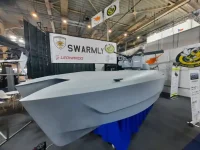
September 2025: The Egyptian defense industry presented an advanced model in the field of unmanned boats through the development of the boat "HYDRA B5", which was produced by the Egyptian company Amiston in cooperation with the Italian company Leonardo and the Cypriot company Swarmley. This project is based on the idea of combining high speed and large payload capabilities with flexible compatibility for changing naval operation patterns, making it suitable for both attack and surveillance missions.

Hydra B5 has well-thought-out dimensions; its length does not exceed 8.9 meters, while its total weight is about 1,500 kg, with a carrying capacity of up to 600 kg. This payload-to-volume ratio allows for diverse combat and reconnaissance equipment without significantly affecting motor performance, as its maximum speed is about 85 knots, which gives it a high ability to maneuver and relative disappearance while approaching targets or withdrawing.

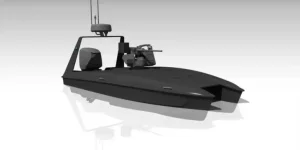
Armament wise, the boat carries a main armament base of a 12.7 mm remotely operated machine gun, providing immediate reaction capability against surface threats or hostile fire points. The launch system also includes a small drone that can take off for close reconnaissance purposes, giving the Hydra B5 system the ability to collect tactical information in real time before or during the implementation of missions.

1759116729127.webp

Armament systems did not neglect advanced offensive options; The boat can be equipped with light Black Scorpion torpedoes, and it can also perform unmanned suicide missions (kamikaze) by loading it with explosive charges used to strike specific surface targets. This variety of settings allows the field commander to transform the platform from a reconnaissance boat into an offensive tool in light of field requirements.
 

Egypt advances sovereign SatCom-C2 capabilities with Thales partnership​


1759121522639.webp

Egypt is collaborating with Thales to enhance its satellite communication systems for command and control (C2) capabilities, aiming to improve defense and operational efficiency. This partnership is part of Egypt's broader strategy to localize advanced technologies and strengthen its defense production.
 
Egypt may sign F-110 frigates from Spain


1759123426710.jpeg

In the corridors of strategic planning, the Spanish frigate F-110 appears as a qualitative step towards enabling the Egyptian Navy to have modern and advanced capabilities capable of facing renewed challenges in the vicinity of the Suez Canal and the Mediterranean Sea. This naval weapon embodies a technological and intelligent leap through the integration of cyber warfare systems and smart radars and advanced armament.

In this article, we highlight its technical specifications, operational capabilities, and potential strategic motives behind Egypt's interest in it..

Spanish frigate F110 specifications:

The F-110 (Bonifaz class) is a new generation multi-mission frigate designed and built by the Spanish company Navantia as an anti-submarine warfare platform with strong air defense, surface strike, command and communication capabilities. Its technical specifications and equipment make it suitable for securing strategic sea routes, protecting economic zones and gas pipelines/platforms, and synergies with allied forces - but its price, and the nature of the US-origin control and radar systems (Aegis/AN/SPY-7) require international approvals and coordination (FMS) which affects the rapid transferability of technology or delivery.

Engineering and stealth
- Advanced radar stealth design: radar reflection coefficient does not exceed 1% compared to conventional ships
- Multi-angle structure: reduces the radar cross-section (RCS) to less than 500 square meters
- Radar radiation absorbing materials: in the structure and superstructures

Propulsion and performance systems

- Hybrid propulsion system (CODLAG):
- 4 gas turbines (total 43,000 hp)
- 2 electric motors (total 12,000 hp)
- Top speed: 32 knots
- Working range: 5,000 nautical miles at a speed of 16 knots, long survival rate at sea (thousands of nautical miles designed to work 240 days a year in terms of availability).
- Crew: approximately 120-160 personnel (depending on mission configuration and additions).
- Aircraft and viewing/robot platforms: compartment and landing strip for a Seahawk/NH-90 helicopter and support for aircraft/c-UAVs and unmanned ships/vehicles systems.

Standard displacement and full load
The F-110 frigates have advanced displacement specifications consistent with their classification as high-performance multi-mission frigates:

- Standard displacement (Standard Displacement): ≈5,800 metric tons
- Full displacement (Full Load Displacement): ≈6,500 metric tons
- Maximum displacement (Maximum Displacement): ≈6,900 metric tons in maximum loading conditions

Navantia is considering options to increase the displacement of the F-110 in future designs via:
- Structure expansion: by adding 8-10 meters to increase VLS capacity
- Improved weight distribution: to accommodate future laser systems
- Hybrid electric options: may reduce the weight of propulsion systems

Integrated combat systems
- SCOMBA Command and Control System:
- Processing capacity 10^12 operations/second
- Integration with compatible NATO systems
- Integrated sensor package:
- SPY-7(V)2 multi-function radar
- Kingklip Mk.2.1 sonar for ship
- Thales CAPTAS-4 Side Scan Sonar

Main armament
- Vertical launch system (48 cells):
- Aster 30 BMD missiles (range 120 km)
- NSM cruise missiles (range 185 km)
- Main gun: 127/64 LW (Vulcano capable) gun to give it coastal strike capability and defense against mobile boats

Anti-submarine systems
- MU90 Impact torpedoes (range 12 km)
- MALAKIT anti-missile system
- Anti-Submarine Warfare (ASW): Integrated sonar system (Hull-mounted + CAPTAS-4 Towed Array from Thales and BlueMaster) with advanced audio processing, the ability to operate submerged sonar systems, and the integration of data from helicopters, submarines, and patrols. This particular point makes the F-110 an advanced platform for countering submarine threats.


***Egypt's strategic motives for purchasing the F-110 frigate :

1- Securing the Suez Canal and vital corridors
The presence of a multi-mission frigate such as the F-110 increases Egypt's ability to protect navigation in the Arabian Gulf and the Suez Canal from air or subsurface threats or missile attacks.

2- Protecting Egypt's marine resources
Extending the effort towards securing resources in the Eastern Mediterranean and gas fields requires a platform with offensive pursuit and anti-submarine capability, which the F-110 provides.

3- Deterring and consolidating regional influence
The presence of a high-tech ship sends a message of strength to competing regional countries, and enhances Egypt's negotiating ability on the regional stage, especially in the face of the proliferation of advanced submarines and ships.

4- Building an industrial base
As previously with the MEKO A-200EN frigates, the purchase of the F-110 could be an entry point for future technology transfer and local assembly, supporting the national industry.


**As of June 2025, there are no announced agreements between Egypt and Navantia on F-110 frigates, but there are initial indications of interest and potential partnerships in the Spanish maritime industries. However, the timing or size of these deals is not yet clear, and it is likely a long-term future step..
 
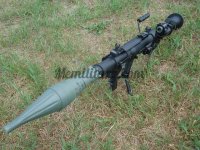
The last update to the modified Egyptian version was in the Bright Star maneuver..
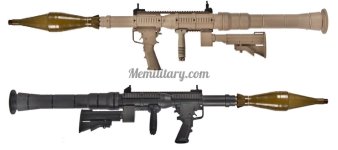
It is more similar to the American version PSRL.

1759294369320.jpeg

1759294399460.jpeg
 
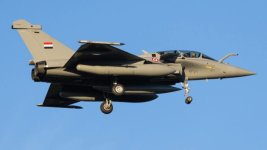
Dassault Aviation (Dassault Aviation) delivered 3 additional Rafale (Rafale F3R) fighters to Egypt, according to photos circulating on social media.

1760420032027.jpeg

This batch comes within the contract signed in November 2021, which stipulates supplying Egypt with 30 new Rafale aircraft with the F3R standard, with the aim of strengthening the current Egyptian fleet of these fighters.

The latest batch delivered includes two single-seat aircraft with registration numbers "EM10" and "EM11", as well as one double-seat aircraft with registration number "DM21".

Deliveries of the new Rafale aircraft began at the end of 2024, and are all scheduled to be completed by 2026.Once all deliveries are completed, the Egyptian Air Force will have a fleet of a total of 54 Rafale aircraft, including the 24 units previously acquired under the first contract signed in 2015.
 
The Russian electronic warfare system "Repelent-1" appears in Sharm El-Sheikh


1760420360007.webp

October 2025:

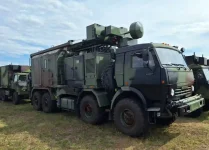
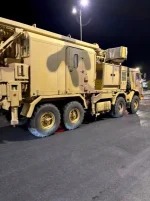
On October 12, 2025, the Russian electronic warfare system known as "Repelent-1" (Repelent-1) appeared in a military convoy that toured the city of Sharm El-Sheikh, where vehicles carrying jamming equipment were observed, along with vehicles designated for reconnaissance.

The system, which entered service in Russia in 2016, is considered one of the electronic warfare systems designed primarily to deal with the growing threat resulting from drones.

The main function of Repelent-1 is to detect, cut off or jam hostile communications frequencies to prevent operator control, video data transmission or reception of navigation signals. Technically, the system can detect a frequency spectrum extending from 200 MHz to 6 GHz, and performs interference with an emission power ranging from 200 watts to 1 kilowatt. The system's declared jamming range is approximately 35 kilometers, while the number of frequencies that can be targeted for jamming simultaneously is estimated at 12, with a maximum frequency detection and jamming start time of approximately 25 seconds.

1760420570374.webp

Drones' wireless control links typically operate on common frequency bands such as 2.4 GHz and 5.8 GHz, while Global Navigation Systems (GNSS) navigation signal receiving links rely on bands approximately between 1.1 GHz and 1.6 GHz. Frequencies ranging from about 900 MHz to 5.8 GHz are also used to transmit video images from the drone to the ground control station or other users. Based on the coverage range and announced frequencies of the Repilent-1 system, it is theoretically capable of monitoring and jamming these frequencies, making it an effective tool in disrupting drones' ability to communicate and navigate in certain ranges.

The image shows a vehicle equipped with jamming antenna arrays, along with another vehicle carrying reconnaissance antennas, which is an expected technical integration between reconnaissance and braking capabilities in modern electronic warfare systems.

In general, the emergence of "Repelent-1" within military convoys reflects a progressive approach in adopting anti-drone technologies and protecting ground and sensitive assets from their threats.
 
Egypt useless F16 fleet of 220 fighters


A very strange and funny fact. Egypt doesn’t have BVR missiles in its F-16s. Sounds unbelievable, but it’s true. The country operates over 220 F-16s, yet not a single one can fire a proper beyond visual range missile.

The reason goes back to American restrictions. When the U.S. supplied F-16s to Egypt, they made sure the jets would not carry advanced missiles like the AIM-120 AMRAAM. Instead, Egypt was only allowed to use the older AIM-7 Sparrow — a missile that belongs to another era.

The AIM-7 can technically reach around 60 to 70 km in ideal conditions, but its real effective range is about 25 to 40 km. And it’s not fire-and-forget. The pilot has to keep radar lock on the target until the missile hits, which means staying exposed and unable to maneuver freely. In modern air combat, that’s a serious disadvantage.

The political reason behind this is simple. The United States wanted to make sure Israel maintained its technological edge in the region. So while Egypt got the numbers — hundreds of F-16s — it didn’t get the full capability that other countries enjoy. In short, quantity was allowed, but quality was restricted.

That’s also why Egypt later turned to other suppliers. They bought MiG-29M/M2 fighters from Russia, which can use R-77 BVR missiles, and Rafales from France, which carry MICA and Meteor missiles. Those aircraft finally gave Egypt the long-range strike capability their F-16s never had.

Still, it’s strange when you think about it. So many modern-looking F-16s, yet none capable of hitting beyond 40 km. Even older jets like Pakistan’s Mirage ROSE, upgraded with Chinese BVR missiles, would have the upper hand in a long-range engagement.
 
Egypt is moving towards advanced Spanish submarines with AIP technology and high stealth capabilities


1760422445788.webp

October 13, 2025:

In a remarkable development in defense relations between Cairo and Madrid, the Spanish King's visit to Egypt last September received widespread attention, not only because of its protocol, but also because of the strategic messages it conveyed related to the Egyptian Navy's armament file. The royal visit, which came at a very sensitive regional time, had a direct impact in moving sensitive negotiations forward regarding an advanced submarine deal between Cairo and Madrid, according to what was revealed by the Tactical Report website, which specializes in defense and intelligence affairs.

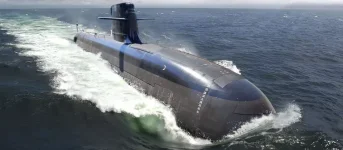
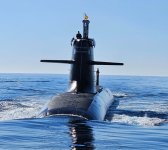
According to the website's report, Egypt places among its priorities the acquisition of advanced Spanish S-80 submarines, which are among the largest non-nuclear submarines in their class, with a length of approximately 81 meters and a displacement weight of approximately 3,200 tons. The submarine is capable of carrying a variety of torpedoes, guided missiles and sea mines, with the possibility of carrying out long-range reconnaissance missions in the depths of the sea.

The website indicated that Cairo is not merely seeking to purchase new naval units, but rather aims to transfer manufacturing technology domestically, through a partnership with the Spanish side that allows the production of parts for submarines at the Alexandria Shipyard. This trend comes within a broader Egyptian plan to localize military industries, especially naval ones, and make the Egyptian arsenal a regional production and maintenance center.

1760422364632.jpeg

Technically, the Tactical Report explained that the S-80 submarine relies on an air-independent propulsion system (AIP) that allows it to remain underwater for long periods without having to climb to the surface to charge batteries, giving it the advantage of stealth and the ability to carry out surveillance and attack operations with a very low detection probability. It is also equipped with thermal footprint reduction systems, which makes monitoring it via thermal sensors or sonars more difficult.

Regarding the negotiation process, the report reported that competition for the deal was intense between several European companies, especially French and German, but the Spanish royal visit to Cairo restored momentum to the Spanish process after a period of stagnation due to differences in the terms of technology transfer and financing. The report explained that Madrid offered Cairo an agreement that includes the supply of two primary units as a first phase, in addition to training, operation and field supervision programs for Egyptian engineers in Spanish manufacturing basins.

However, obstacles, according to Tactical Report, remain some Spanish reservations about fully transferring sensitive technologies, as well as complications related to financing and insurance arrangements, points currently being negotiated. However, signs of understanding have increased in recent weeks, especially as the Spanish side opens up to giving Cairo a broader role in local manufacturing.

1760422579859.jpeg

Experts believe that Cairo views the Spanish submarine project as part of a broader strategy to enhance Egyptian naval deterrence in the face of regional challenges, most notably Ethiopia's growing activities in the Red Sea and its attempts to establish a naval infrastructure in the Gulf of Aden with external support. It is believed that Cairo seeks, through this deal, to establish an advanced maritime presence that protects its vital interests in the south, and secures navigation lines from the Suez Canal to the Bab al-Mandab Strait, in light of the escalation of unconventional threats in the region.

The report concludes that the deal, if completed, will not merely represent an enhancement of Egypt's naval capabilities, but rather a strategic step towards building an integrated defense industrial base. Experts also believe that the entry of Spanish submarines into Egyptian service will enhance the balance of power in the Red Sea and the Mediterranean, and give Cairo greater ability to protect its maritime interests and vital supply lines.


S-80 NATO’s Most Advanced Operational Submarine.

https://s80.ca/


The Insane Engineering Behind Spain’s Deadly S-80 Submarine​


To view this content we will need your consent to set third party cookies.
For more detailed information, see our cookies page.
 

Users who are viewing this thread

Back
Top