Electric vehicle ( EV ) Industries

Malik Khuda Bakhsh, Convenor of the #Energy Standing Committee of the Federation of Pakistan Chambers of Commerce and Industry (FPCCI), has announced that they are planning to set up 3,000ElectricVehicle (EV) charging stations in the country with the cooperation of a Chinese company.

1734541093568.png
 
A fleet of 27 electric buses for Lahore, manufactured in China, ready to be shipped. Around 600 buses for other districts of Punjab to follow Insha’Allah

To view this content we will need your consent to set third party cookies.
For more detailed information, see our cookies page.
 

Chinese company to invest $350 million for EV and charging stations in Pakistan​


ADM group to set electrical vehicle plant and 3000 charging facilities in all provinces

News Desk
December 21, 2024

tribune


Chinese company ADM Group has unveiled a major investment of $350 million in Pakistan, with backing from the Special Investment Facilitation Council (SIFC).

As part of the initiative, ADM Group plans to establish more than 3,000 electric vehicle (EV) charging stations across the country. The project will see 1,000 stations set up in Sindh, 1,500 in Punjab, and 750 in Khyber Pakhtunkhwa and Balochistan.

In addition, the company will invest $250 million in building an electric vehicle manufacturing plant in Pakistan. A further $90 million will be allocated to develop the necessary charging infrastructure.

The new electric vehicles, capable of traveling up to 300 kilometers on a single charge, are expected to contribute significantly to reducing carbon emissions and decreasing Pakistan’s reliance on traditional fuel sources.
 

160 electric buses allocated for Bus Rapid Transport network in capital: CDA


Ikram Junaidi
December 29, 2024

ISLAMABAD: The Capital Development Authority (CDA) has allocated 160 electric buses for all the feeder routes of the Metro Bus Service, basically integrating and connecting them to various lines of the Bus Rapid Transport (BRT) network.

Under the project, 216 bus stops and four depots would be established at strategic locations, complemented by a robust charging infrastructure to support operations.

This was stated in a briefing to CDA Chairman Mohammad Ali Randhawa at a meeting held to discuss the operations of the electric and feeder buses on Saturday.

The meeting was informed that four feeder routes, inaugurated in July this year, were already operational with a significant increase in their daily ridership. On December 25 this year, an additional four routes were introduced, further expanding the network.

Four feeder routes inaugurated in July already operational with a significant increase in their daily ridership, meeting told

A charging infrastructure has already been established at Jinnah Convention Centre and H-9 while the construction of a bus depot at Zero Point was in progress.

According to a statement, the CDA chairman expressed satisfaction with the progress made so far and directed the officials concerned to launch the remaining 13 feeder routes soon.
 

First shipment of 146 electric buses lands in Islamabad​

Business Recorder
Dec 30, 2024

ISLAMABAD: The first batch of 146 out of 160 electric buses reached Islamabad to provide smooth travel experience to the people.

According to the Capital Development Authority (CDA) officials, the last batch of 14 electric buses has departed for Islamabad from China.

CDA officials said that the construction of the zero-point charging station has started.

CDA officials said that earlier the construction of the charging station was delayed due to the cancellation of the tender twice and now CDA has issued a tender for the charging station at reduced rates. Officials said that first, chargers and parking areas will be prepared for the new routes.

CDA officials said that in the first phase, offices will be set up in containers and operations will be started. They said that one month will be required to train drivers on the new routes.

Officials said that buses will soon be operated on Park Road, B-7, PWD, I-8 and I-9 routes, while approval has already been given to operate buses on these four routes.

On December 4, the Punjab government announced a plan to operate 102 electric buses in Rawalpindi.

The electric buses will play on an 84-km route that will include 10 major public transport routes. So far, the provincial government has allocated Rs 200 million for this. Rs 4.7 billion for the initiative. The project is expected to significantly improve air quality in the region by curbing environmental pollution.

Punjab Transport Minister Bilal Akbar Khan confirmed in June that the e-bus service will start next year. These buses will cover several major routes, one of which connects Taxila, Wah Cantt, and IJP Road to Aktree 26, and the other connects Daulatala to Rawalpindi.
 

Punjab plans e-taxi service on Chinese pattern​


In the initial phase, the e-taxi service will launch in Lahore

News Desk
January 02, 2025

photo ev taxi

EV taxi

Punjab Chief Minister Maryam Nawaz Sharif has instructed Provincial Transport Minister Bilal Akbar Khan to implement an e-taxi service across the province, following the model of China’s electric taxi system.

The Punjab transport department has already started laying the foundation for the project, with discussions underway with multiple electric vehicle manufacturers.

Major stakeholders, such as the Deewan Group and the National Radio & Telecommunication Corporation (NRTC), have shown interest in partnering for the initiative, according to local media report.

In the initial phase, the e-taxi service will launch in Lahore and divisional headquarters, with plans to extend the service to other major cities across Punjab. The service will operate 24/7, offering citizens an affordable, eco-friendly transportation alternative.

Officials anticipate that the introduction of e-taxis will enhance access to cost-effective travel options while slightly affecting employment in the traditional taxi industry. This project is part of the government's wider effort to promote sustainable urban mobility across the province.

Additionally, the Punjab government has initiated the procurement of electric buses for Faisalabad and Bahawalpur. This initiative aims to tackle significant transportation issues, including the shortage of quality public transport, heavy traffic congestion, and environmental concerns such as smog.

The project prioritises sustainability by introducing eco-friendly electric buses to public transportation in these cities. To ensure high-quality standards, the procurement process will include a rigorous pre-qualification of firms, based on strict criteria.

Eligible firms must meet several requirements: a minimum net worth of $200 million, an annual turnover of $600 million from bus production, and at least five years of experience manufacturing buses (7.5 meters and above).
 
The internal war in China's new energy vehicle sector is brutal.

In 2018, there were close to 500 electric vehicle manufacturers in China.
In 2023, there are only 40 or so electric vehicle manufacturers left in China.
In 2024, China closed down several more electric vehicle manufacturers.
More than 400 companies were eliminated in just a few years. Industry sources analyze that there should be around 10 Chinese EV makers surviving in the future. Of course, these companies that can survive this kind of competition are definitely very powerful companies.

If sometime in the future news breaks in Pakistan that a Chinese automaker's plant in Pakistan is closed.
Please don't be surprised!
 

Hub Power Holdings partners up with Mega conglomerate​


December 7, 2024

Mega Motor Company (Private) Limited has taken significant steps to establish itself in Pakistan’s growing electric vehicle (EV) sector. The company has entered into a supply and manufacturing agreement, as well as a technical license agreement, with BYD Auto Industry Company Limited, the world’s largest EV manufacturer. Furthermore, in June 2024, Mega Motor finalized a distribution agreement to bring BYD vehicles to the Pakistani market.

Building on this momentum, Hub Power Holdings Limited (HPHL), a wholly owned subsidiary of The Hub Power Company Limited, has entered into a shareholders’ agreement with Mega Conglomerate (Private) Limited (MCPL). Through this agreement, MCPL will acquire a 50% stake in Mega Motor Company. This partnership aims to consolidate the expertise of both HPHL and MCPL to strengthen their collaboration with BYD and establish a robust EV ecosystem in Pakistan.

BYD, a publicly listed Chinese multinational, leads the global EV market with record-breaking sales of 1.57 million battery electric vehicles and 1.44 million plug-in hybrid units in 2023, reflecting a 73% year-on-year growth. Its entry into Pakistan, supported by this strategic partnership, represents a pivotal step toward advancing clean energy mobility in the country.
 

Pakistan seeks France’s support to begin electric vehicles transition

Govt seeks access to French Green Fund to support the transition.

Plan to electrify conventional vehicles

Khaleeq Kiani
January 17, 2025

Power Minister Awais Ahmed Leghari with France Ambassador Nicolas Galey — PID


Power Minister Awais Ahmed Leghari with France Ambassador Nicolas Galey — PID
https://whatsapp.com/channel/0029VaMc238IiRov8okfYy3n
ISLAMABAD: A day after announcing a reduction in power rates for electric vehicle charging stations (EVCS), Pakistan on Thursday sought France’s support for access to its Green Fund to enable the transition of conventional small vehicles to electric technology to ensure a cleaner environment and savings in oil imports.

Power Minister Awais Ahmad Khan Leghari formally discussed the proposal with France’s Ambassador Nicolas Galey to support the transition of small vehicles to electric technology in Pakistan.

The government estimates that about Rs50,000-150,000 investment could enable the conversion of bikes, three-wheelers and small vehicles of up to 800cc from fossil fuels to electric engines. About $6bn worth of petrol is reportedly imported annually to meet the requirements of around 10 million motorbikes alone.

A day earlier, the minister announced a 44pc reduction in power rates for EVCS to Rs39.70 from Rs71.10 per unit, including taxes that must go through the formal regulatory process for implementation.

Govt seeks access to French Green Fund to support the transition

Mr Leghari briefed the ambassador about the recent introduction of the Electric Vehicle Policy aimed at annual fuel savings of billions of dollars and contribution to environmental protection. Additionally, it will cut transportation costs, easing the financial burden for the public.

An official statement said the French ambassador appreciated Pakistan’s effective negotiations and the amicable review of agreements with Independent Power Producers (IPPs). Mr Leghari told the envoy that negotiation with 28 IPPs will result in a total national savings of Rs1.4 trillion.

The minister told the ambassador that the government was set to introduce a Wheeling Policy for electricity transmission and distribution soon, ensuring efficient distribution of surplus power. Furthermore, plans are being made for the auction of additional electricity. “These initiatives will allow the government to exit from the power business in Pakistan, promoting a competitive environment”, he said.

Mr Galey was also informed that Pakistan had hired independent boards across most of the distribution companies, helping improve recovery rates and significantly reducing line losses. The minister added that the government is also prioritising promoting solar energy.

The minister said all reforms were implemented with the utmost transparency, creating substantial investment opportunities in the power sector.

The French ambassador told the minister that France would consider providing every possible technical and financial assistance for Pakistan’s EV initiatives and other energy reforms as he had been encouraged by these reforms that would hopefully give positive results.
 

Aurangzeb chairs meeting on New Energy Vehicle Policy 2025​

By Staff Reporter | The Nation
Jan 18, 2025

Federal Minister for Finance and Revenue Senator Muhammad Aurangzeb Thursday chaired a meeting on the New Energy Vehicle (NEV) Policy 2025 which aims to address key challenges in the adoption and production of electric vehicles (EVs) and sets ambitious targets for transitioning to clean energy in the transport sector.

Secretary Industries and Production delivered a detailed presentation outlining the current state of the electric vehicle industry. The presentation emphasized policy interventions to ensure smooth adoption of NEVs in line with national priorities. Discussions focused on overcoming barriers to electric vehicle production and adoption, improving manufacturing processes, addressing infrastructure needs, necessary policy corrections to streamline EV production, addressing supply chain issues, and encouraging private sector investment.

The finance minister stressed the importance of the timely development and implementation of the NEV Policy 2025-30. The minister stressed the importance of coordinated efforts to achieve policy targets and align them with Pakistan’s environmental and economic priorities.

The meeting concluded with a commitment to expedite efforts for the successful implementation of the NEV Policy, paving the way for a cleaner, greener, and more sustainable future for Pakistan.

The meeting was attended by Federal Minister for Industries and Production Rana Tanveer Hussain, Governor State Bank of Pakistan, Secretary Finance, Secretary Commerce, Secretary Climate Change, Member Custom Policy, Additional Secretary Trade Policy (Ministry of Commerce), and senior officers from relevant ministries and divisions.

Meanwhile, Federal Minister for Finance and Revenue Senator Muhammad Aurangzeb held a meeting with Japanese Ambassador to Pakistan Akamatsu Shuichi who called on the minister at Finance Division.

The meeting provided an opportunity for both sides to discuss ongoing economic reforms, bilateral relations, and opportunities for deeper economic cooperation.

Minister Aurangzeb welcomed Akamatsu on assuming his diplomatic responsibilities in Islamabad, commending Japan’s longstanding partnership with Pakistan. The minister highlighted the positive momentum in Pakistan’s macroeconomic stability, which he attributed to key reforms and structural adjustments across various sectors, including fiscal framework, taxation, Special Economic Zones (SEZs), energy, rightsizing of the federal government, and privatization efforts.

The minister emphasized that the government remains committed to continuing its reform agenda, focusing on critical issues such as population growth and climate change vulnerability. He noted the importance of the 10-year Country Partnership Framework signed with the World Bank, aimed at addressing these challenges and fostering sustainable, inclusive economic growth.

Minister Aurangzeb reaffirmed Pakistan’s commitment to maintaining the trust and credibility of its bilateral and multilateral development partners, including Japan. He expressed appreciation for Japan’s diplomatic, economic, and technical support and urged Japanese investors to explore investment opportunities in Pakistan, particularly in manufacturing and production, which would contribute to the country’s exportable surplus.

Ambassador Akamatsu expressed his appreciation for the progress made in Pakistan’s macroeconomic stability and the government’s reform efforts. He provided an update on the scope of ongoing Japanese investment in Pakistan, noting that around 80 Japanese companies currently operate in the country, employing over 65,000 local workers, and significantly contributing to the Pakistani economy.

Minister Aurangzeb acknowledged Japan’s valuable contributions and assured the Ambassador of Pakistan’s continued engagement with Japanese investors to incorporate their input in the upcoming federal budget’s policy framework.

Both sides expressed a strong desire to further strengthen bilateral economic ties and explore new avenues for collaboration.
 

Chinese firm to install 3,000 EV charging stations in Pakistan​


Each charging station is expected to cost around Rs8 million

News Desk
January 29, 2025

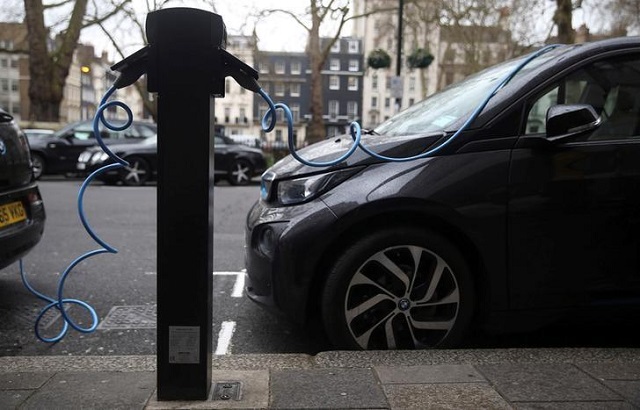
electric cars are plugged into a charging point in london britain april 7 2016 photo reuters


Electric cars are plugged into a charging point in London, Britain, April 7, 2016. PHOTO: REUTERS

A Chinese company has announced plans to install 3,000 electric vehicle (EV) charging stations across Pakistan, aiming to boost green energy adoption and create employment opportunities.

A delegation from China’s ADM Group met with Sindh Energy Minister Nasir Hussain Shah and other stakeholders to discuss the expansion of EV infrastructure in the country.

Speaking to the media, Nasir Shah confirmed that the charging stations would be set up in urban areas and along highways, with full support from the provincial government.

Each charging station is expected to cost around Rs8 million, with an initial deposit of Rs1 million required for installation.

The initiative is expected to generate around one million jobs, providing a major boost to Pakistan’s employment sector.

ADM Group also plans to establish EV manufacturing plants in Pakistan and has already signed an agreement with the federal government for the development of charging infrastructure.

If the company sets up production facilities in Sindh, the provincial government is considering purchasing at least 20% of the locally manufactured electric vehicles.

CEO of ADM Group, Yasir Bhambhani, stated that the company is ready to start local EV production this year if given approval.

He added that “Made in Pakistan” electric vehicles could be exported to seven countries, including India, as part of future expansion plans.

The firm aims to set up three manufacturing plants in Karachi, Punjab, and Balochistan, with a projected annual production capacity of 72,000 units.

The investment is expected to enhance Pakistan’s EV industry, reduce reliance on fossil fuels, and contribute to environmental sustainability.
 

Government aims for 30% electric vehicles by 2030​


Prime Minister Shehbaz Sharif announced a 44% reduction in electricity rates for EV charging stations

News Desk
February 02, 2025

photo file

Photo :

Pakistan has introduced new rules and regulations to promote electric vehicle (EV) charging stations and the wider EV industry, with support from the Special Investment Facilitation Council (SIFC), officials said on Sunday.

The government aims to have 30% of the country's vehicles running on electric power by 2030, a move expected to boost infrastructure development, including EV manufacturing, motorcycle production, and charging networks.

Prime Minister Shehbaz Sharif announced a 44% reduction in electricity rates for EV charging stations, a measure intended to encourage investment in the sector.

Additionally, the government has introduced a fifteen-day fast-track registration process for charging stations, which is expected to attract both domestic and foreign investors.

As part of a broader initiative, Pakistan plans to convert ten million motorcycles to electric, a shift that could save the country $6 billion annually by reducing fuel imports.

Officials say EV adoption will also strengthen the local manufacturing industry while cutting carbon emissions and improving environmental conditions.

The establishment of EV infrastructure marks a significant step in Pakistan’s clean energy transition, with policymakers banking on long-term economic and environmental benefits.
 

Pakistan aims to convert 30% of vehicles to electric by 2030​


The Frontier Post

electric-vehicles1732209293-0-810x540.jpg

F.P. Report

KARACHI: In a major step towards sustainable transportation, Pakistan plans to shift at least 30% of its vehicles to electric power by 2030.

The initiative, backed by the Special Investment Facilitation Council (SIFC), aims to promote the electric vehicle (EV) industry by implementing new rules and regulations for EV charging stations and manufacturing.

According to sources, the government is actively working on infrastructure development, including the production of electric vehicles and motorcycles, as well as establishing a network of charging stations across the country.

To encourage the transition, Prime Minister Shehbaz Sharif has announced a 44% reduction in electricity rates for EV charging stations.

Additionally, a fast-track registration process has been introduced, allowing domestic and foreign investors to register charging stations within 15 days.

This initiative is expected to boost investment in the EV sector and accelerate the adoption of clean energy transportation in Pakistan.

One of the key components of this plan is the conversion of ten million motorcycles to electric power, which is projected to save the country an estimated $6 billion annually.

The transition to EVs will not only reduce reliance on fuel imports but also strengthen the local manufacturing industry.

Beyond economic benefits, the shift to electric vehicles is expected to have a significant environmental impact, helping to lower carbon emissions and improve air quality across Pakistan.

The establishment of a robust EV infrastructure is a crucial step towards achieving the country’s sustainability goals and reducing its dependence on fossil fuels.
 

First-ever commercial shipment: BYD electric vehicles arrive at port


Recorder Report
February 12, 2025

12043844b981eb0.jpg


KARACHI: Karachi Port Trust (KPT) has successfully handled the imports of Completely Built-Up (CBU), Build Your Dreams (BYD ), electric vehicles .

The vehicles have arrived at KPT’s private terminal, Karachi International Container Terminal (KICT).

This marks the arrival of first ever commercial shipment of BYD electric vehicles in Pakistan. It reaffirms KPT’s commitment to environmental sustainability contributing to climate sustainability and a greener future. It is also expected to bring in significant advancements in Pakistan’s auto industry.

This shipment of BYD first commercial shipment of vehicles is indeed an important step towards promoting electric vehicles in Pakistan, ensuring a positive transformation in the local automobile market.

BYD was founded in November 1994 and holds a leading position globally in the electric and plug-in hybrid vehicle industry. The company is renowned for its innovation and technological advancements in electric vehicle production.
 

Hubco Green, PSO collaborate to setup EV charging infrastructure across Pakistan


BR Web Desk

1415165261ce335.jpg


HUBCO Green (Private) Limited (HGL), a wholly owned subsidiary of Hub Power Holdings Limited (HPHL), Pakistan’s largest Independent Power Producer (IPP), is entering into a collaboration agreement with Pakistan State Oil Company Limited (PSO) for the installation of electric vehicle (EV) charging infrastructure at PSO locations across Pakistan.

The IPP shared the development in notice to the Pakistan Stock Exchange (PSX) on Friday.

“Hub Power Holdings Limited, a wholly owned subsidiary of The Hub Power Company Limited, through its newly incorporated subsidiary HUBCO Green (Private) Limited (Hubco Green), is entering into a new line of business which pertains to establishing and operating electric vehicle charging infrastructure, including but not limited to, importing, manufacturing, and assembling charging accessories.

“With respect to the aforesaid, Hubco Green is entering into a collaboration agreement with Pakistan State Oil Company Limited (“PSO”) for the installation of EV charging infrastructure at numerous PSO locations across Pakistan,” read the notice.

PSO is the largest fuel marketing company in the country.

Last month, Hubco Green inaugurated its first EV Charging Station at Ocean Mall, Karachi.

The company, which aims to become Pakistan’s largest EV Charging Network, shared back then that it plans to establish advanced and reliable EV charging infrastructure across the country, including motorways, highways, major cities and destination charging avenues including upscale malls and commercial areas.

It said that the automotive landscape is rapidly evolving with the introduction of New Energy Vehicles (NEVs) Battery Electric Vehicles (BEVs), Plug-in Hybrid Electric Vehicles (PHEVs) and Hybrid Electric Vehicles (HEV)) globally.
 

Users who are viewing this thread

Pakistan Defence Latest

Back
Top