Pakistan expects to meet EV adoption target ahead of schedule due to costly fuel
Petrol and diesel prices have increased by 54% and 43%, respectively, since February; government considers new tax incentives for electric vehicles in upcoming auto policy
Pakistan expects to achieve its electric vehicle (EV) adoption target ahead of schedule as rising petrol and diesel prices accelerate the shift towards electric mobility, with the government preparing a new automobile policy that could introduce additional tax incentives for EV buyers.
Adviser to the Prime Minister on Industries and Production Haroon Akhtar told
Bloomberg that higher fuel costs had significantly improved the economic case for switching to electric vehicles, reducing the time needed to recover their higher purchase prices.
“I feel that the target we had set in our electric-vehicle policy last year, we will achieve it much earlier as the rise in oil prices has brought cost recovery of EVs to one to one-and-a-half year,” Akhtar said.
According to Pakistan State Oil Company, domestic petrol and diesel prices have increased by 54% and 43%, respectively, since the Middle East conflict began in February.
The increase has narrowed the overall ownership cost difference between electric and conventional vehicles, making EVs a more attractive option for consumers seeking to reduce fuel expenses.
Akhtar said the government was also preparing a new automobile policy that could be submitted to the federal cabinet within the next two weeks.
The proposed policy may include additional tax incentives to reduce the upfront price difference between electric vehicles and petrol- or diesel-powered alternatives.
Pakistan has introduced successive policy measures to encourage electric mobility, aiming to reduce dependence on imported petroleum products, improve environmental conditions and support the development of a more sustainable transport sector.
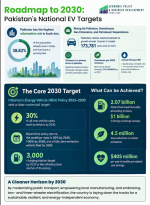
Under the National Electric Vehicles Policy approved in 2019, the government initially targeted a 30% share for electric vehicles in passenger vehicle and heavy-duty truck sales by 2030, increasing to 90% by 2040.
The government subsequently introduced the National Electric Vehicle Policy 2025–30 in June 2025 to accelerate the transition towards electric transport.
The latest expectations of faster EV adoption come as the Middle East conflict continues to disrupt global energy markets and increase fuel costs.
International oil prices rose again on Thursday amid concerns over supply disruptions following attacks on shipping in the Gulf and the Strait of Hormuz, alongside reduced United States production as a hurricane threatened offshore operations.
Brent crude futures increased by $2.28, or 2.28%, to $102.28 per barrel, while US West Texas Intermediate crude rose by $1.66, or 1.88%, to $89.94 per barrel by 0427 GMT.
The continued increase in international petroleum prices has added to the financial incentives for Pakistani motorists to consider electric alternatives, potentially accelerating the government's planned transition towards EVs.